THIS DATA HAS NOT BEEN VERIFIED BY AN EXPERT. Use at your own risk.
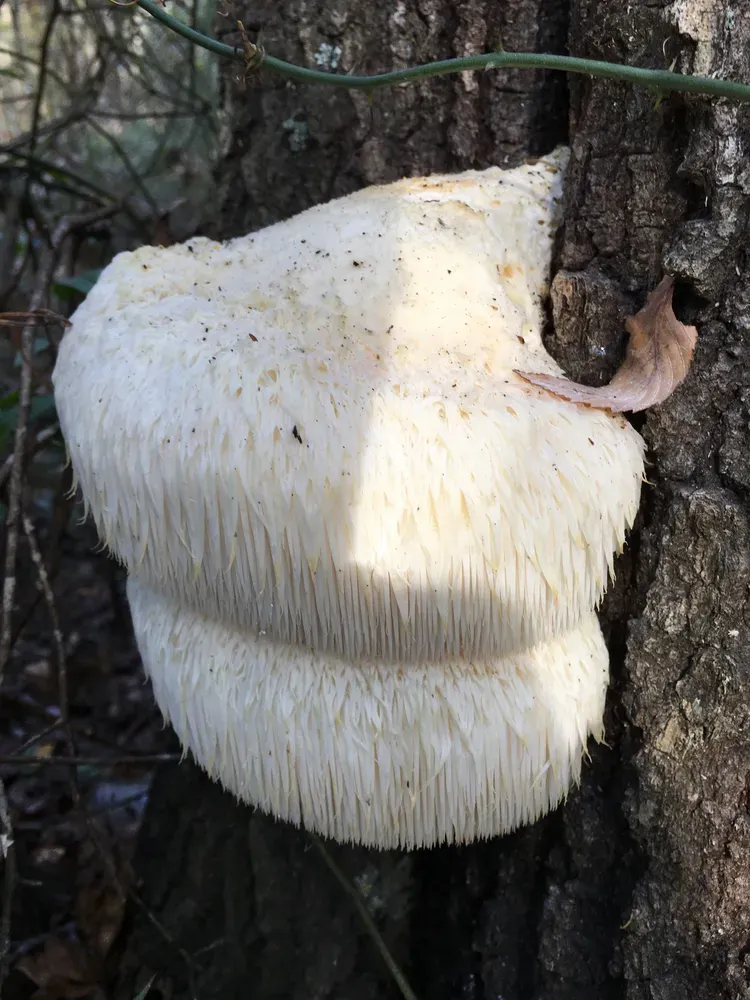
Lion's maneHericium erinaceus
Under reviewUpdated October 3, 2026
Passport
- Edibility
- Edible
- Season
- Aug — Oct
- Hymenophore
- Spiny
- Cap color
- White
- Size
- Medium (5–15 cm)
- Smell
- Pleasant
- Reviewed
- Under review
Quick answers
Where to look?
Deciduous forest, Mixed forest
When does it appear?
Aug — Oct
Active months: August, September, October.
How to recognize it? Three signs
- Cap color: White, Cream
- Cap shape: Irregular
- Smell: Pleasant
Fruiting season
August – October
Description
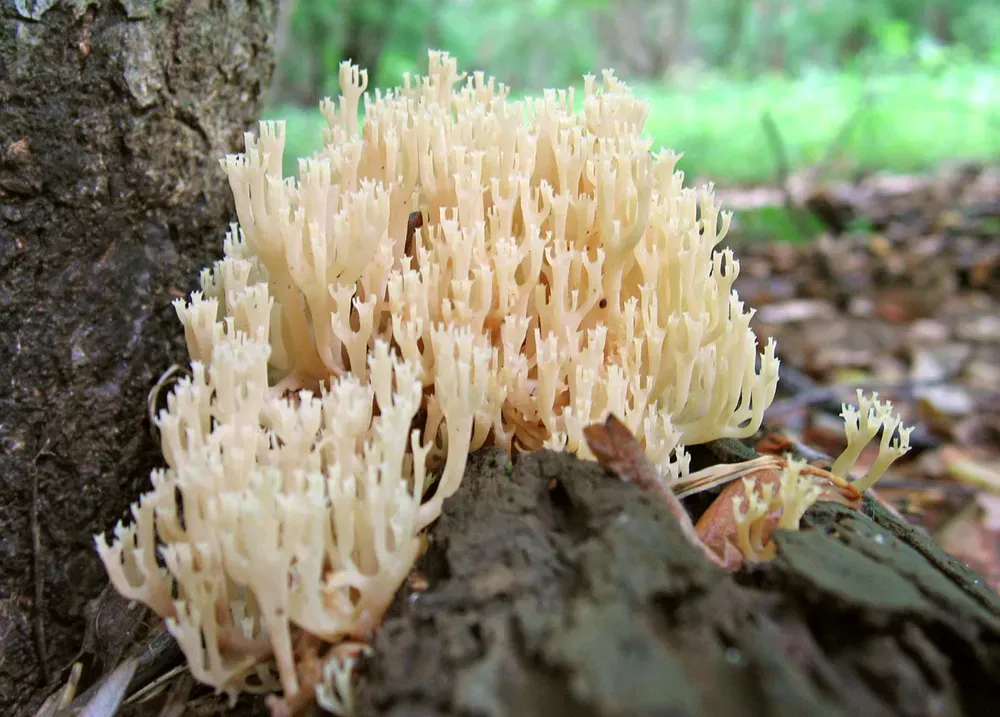
Lion's mane, known to science as Hericium erinaceus, is an astonishing mushroom that looks nothing like a mushroom: its white fruiting body is a solid cushion from which a thick beard of long, soft spines hangs down, which is why people call it "lion's mane," "bearded hedgehog" or "monkey head." Unlike its branched relative, coral tooth, lion's mane doesn't branch but grows as a single compact mass. It is a saprotroph and weak parasite that settles on the trunks of living and dead broadleaf trees — oak, beech, elm, maple — most often at wounds and breaks.
In Ukraine, lion's mane is found in old broadleaf and mixed forests, where it grows high up on the trunks of old trees. It fruits in late summer and autumn — from August to October. It is a rare species, listed for protection in many countries, so in the wild it's better to photograph it than to pick it; on the other hand, the mushroom is successfully cultivated, and it's the farmed fruiting bodies that end up in kitchens and pharmacies.
In terms of edibility, lion's mane is an excellent edible mushroom. Its tender white flesh has a pleasant taste and a texture reminiscent of crab or lobster meat, and it is wonderful fried or stewed. Beyond its culinary value, the mushroom is widely known as a medicinal one: folk and Eastern medicine use it to support the nervous system and digestion, although the scientific evidence for these properties is still considered inconclusive. Only gather wild specimens where it is permitted.
Cap
There is no true cap. The fruiting body is a solid, rounded, cushion-like mass 5 to 25, occasionally up to 40 centimeters across, attached to the trunk by a short base. From the underside and front, numerous dense, soft spines 1 to 5 centimeters long or longer hang down like a beard or mane. The color is pure white when young, cream or yellowish with age, and brownish when old. The white "beard" of long spines makes this mushroom unlike anything else.
Hymenophore
The hymenophore consists of long, hanging spines, on whose surface the spores form. There are no gills or tubes. The spore print is white. Long, soft spines gathered into a single beard (rather than on branches, as in coral tooth) are the key diagnostic feature of the species.
Stem
There is no distinct stem; the fruiting body is attached to the wood by a short lateral base. The whole mass is fairly dense and springy when young, becoming brittle with age, and the spines turn fragile. Because it grows high on trunks, the mushroom is often noticed only from below, as a white fluffy cushion on an old tree.
Flesh
The flesh is white, tender and springy-fibrous, and doesn't change color when cut. The taste is pleasant and delicate, and the texture is reminiscent of crab or lobster meat, which is why chefs especially prize this mushroom. With age, as the fruiting body turns yellow, the flesh becomes bitter and tough, so only young white specimens are chosen for the table.
Smell
The smell is faint, pleasant and mushroomy, with no sharp notes. Aroma is not a defining feature; the mushroom is recognized by its unique white cushion with a long beard of hanging spines and by its growth on the trunks of old broadleaf trees.
›Scientific synonyms (1)
Hydnum erinaceus Bull. (1781)
Lookalikes
_Pers_58068_crop.webp)
Related species
Mushrooms of the same genus and habitat — to study side by side and never mix up.
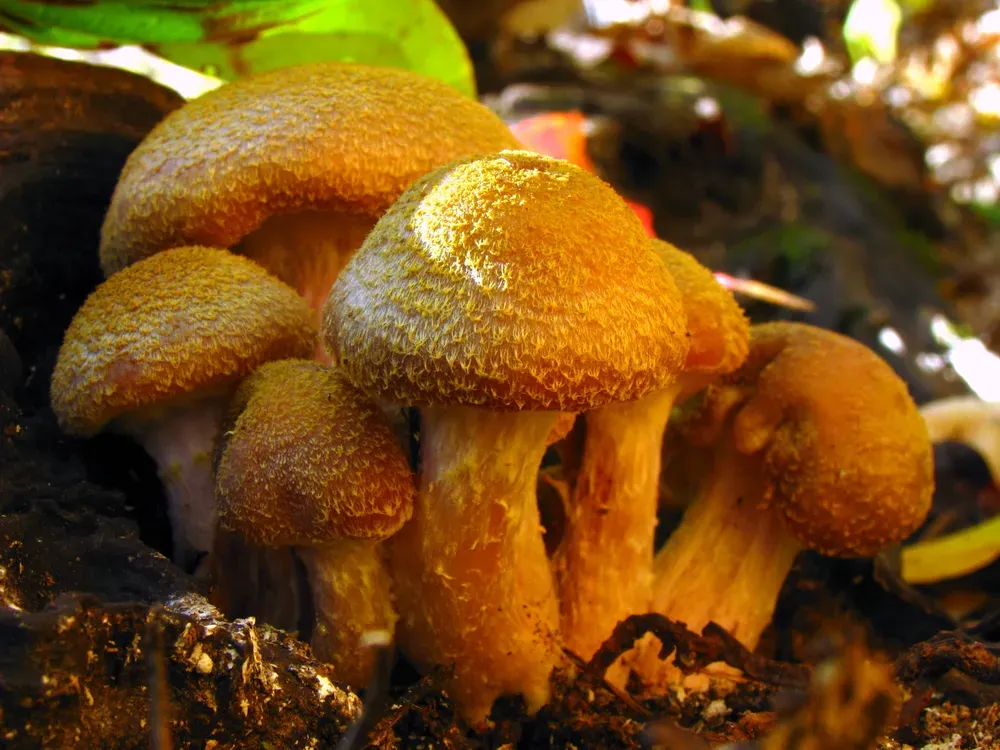
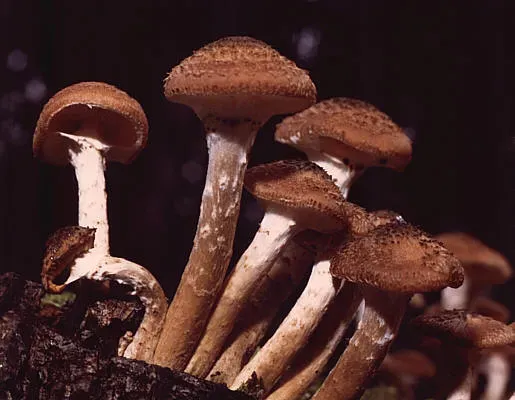
Bulbous honey fungus
Armillaria gallica
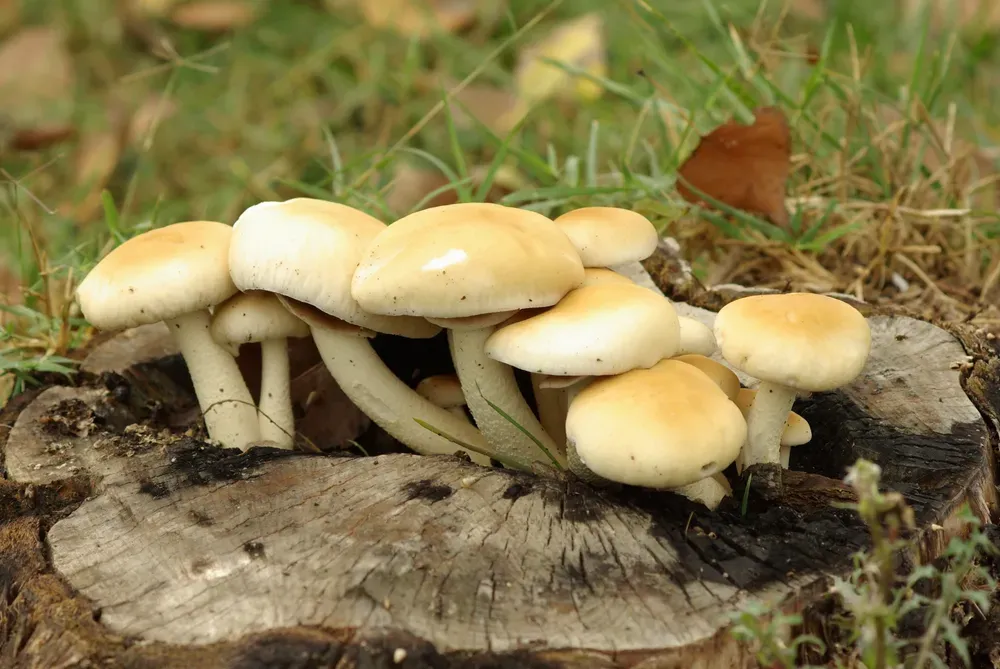
Dark honey fungus
Armillaria ostoyae
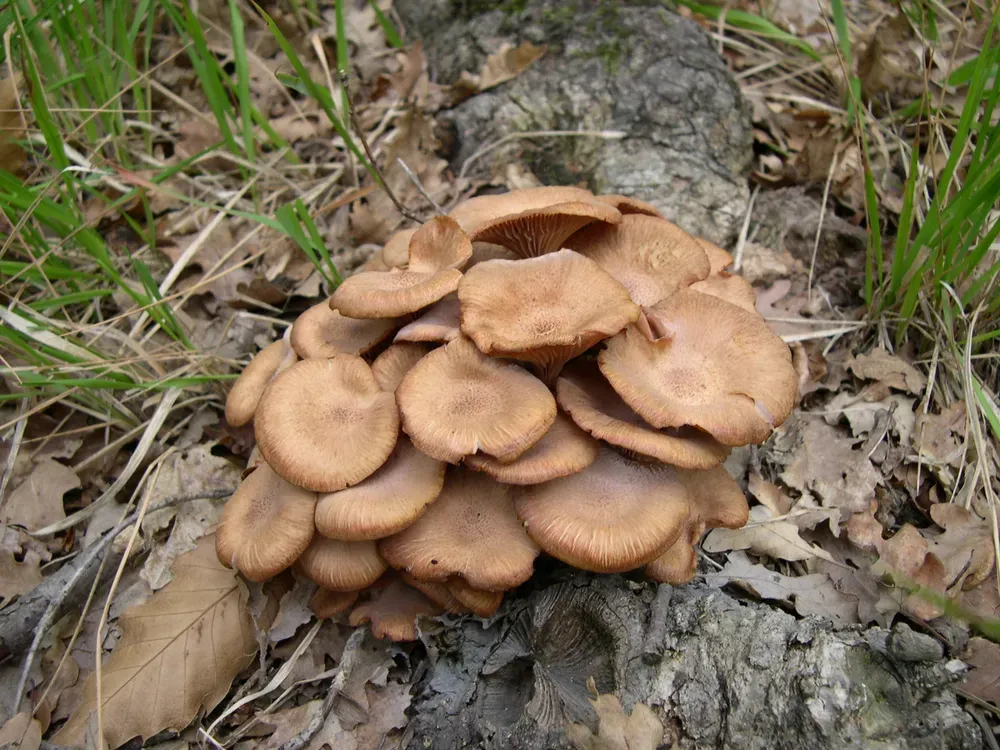
Poplar fieldcap
Cyclocybe aegerita
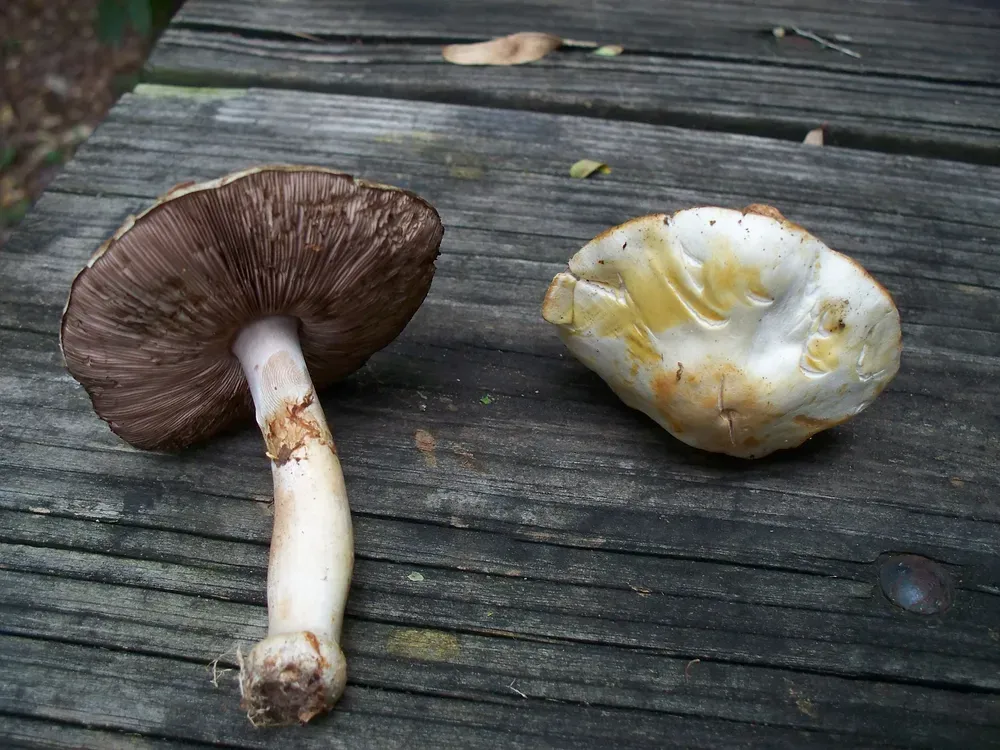
Ringless honey fungus
Desarmillaria tabescens
Agaricus abruptibulbus
Agaricus haemorrhoidarius
Agaricus haemorroidarius
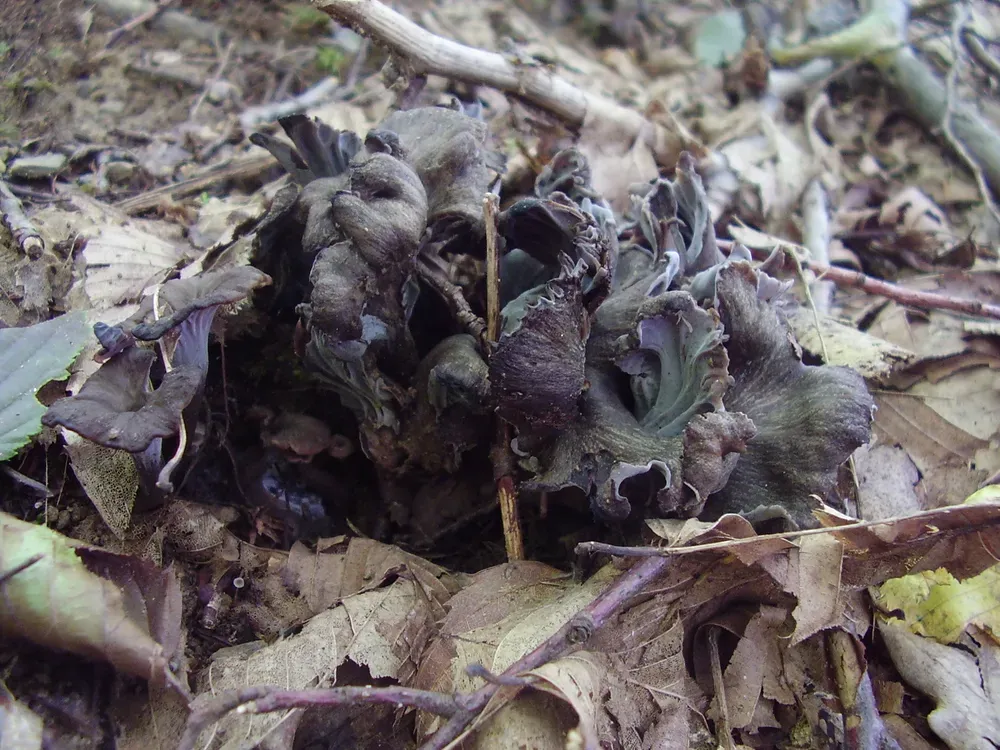
Ashen chanterelle
Cantharellus cinereus
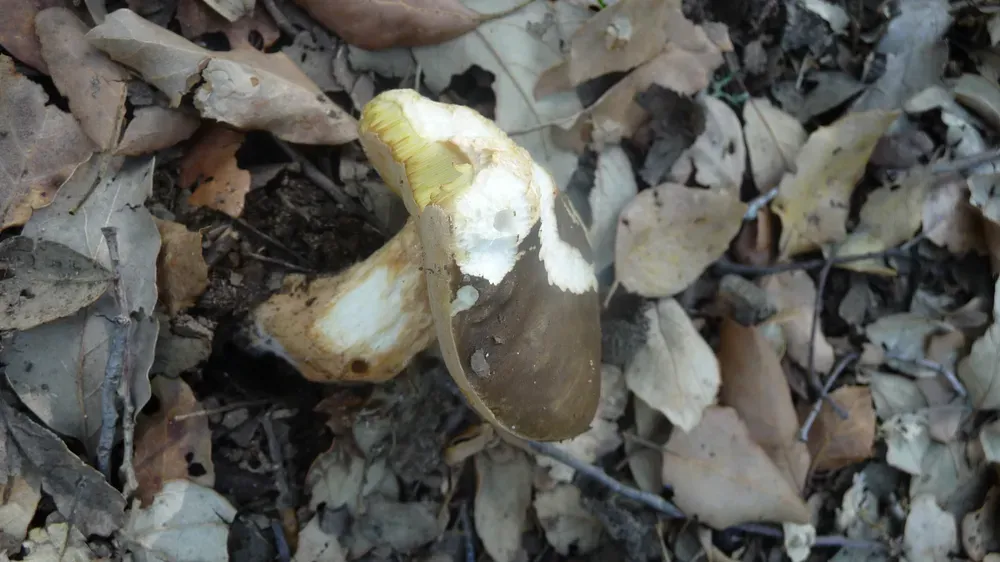
Blushing bolete
Leccinum roseofractum
Frequently asked questions
Is Lion's mane edible or poisonous?
What kind of spore-bearing surface does Lion's mane have?
What does the cap of Lion's mane look like?
What does the stem of Lion's mane look like?
What do Lion's mane smell and taste like?
Where does Lion's mane grow?
Which trees does Lion's mane grow under?
When should you pick Lion's mane?
What can Lion's mane be confused with?
How do you cook Lion's mane?
Can you dry Lion's mane?
What is the scientific name of Lion's mane?
Sources
- [1]Вікіпедія (українська)
- [2]Атлас грибів України, Зеров Д.К. (1979)
- [3]MycoBank Database
- [4]Index Fungorum
- [5]GBIF
- [6]iNaturalist Ukraine