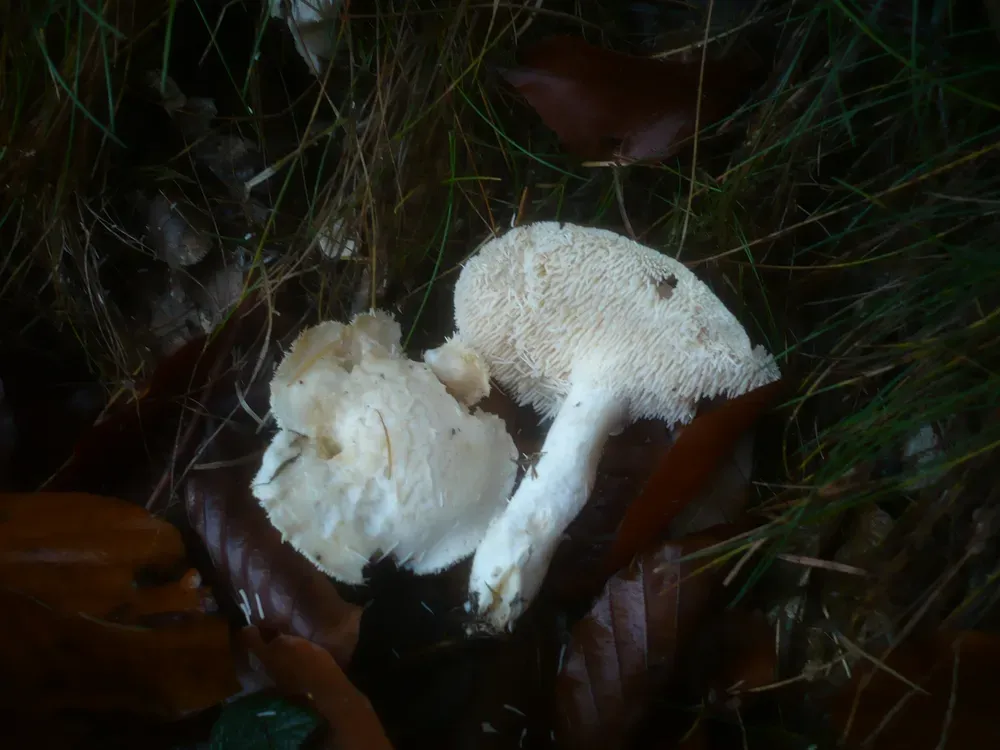
White hedgehogHydnum albidum
Expert-verifiedUpdated June 13, 2026
Passport
- Edibility
- Edible
- Season
- Aug — Oct
- Hymenophore
- Spiny
- Cap color
- White
- Size
- Medium (5–15 cm)
- Smell
- Pleasant
- Reviewed
- Yes ✓
Quick answers
Where to look?
Deciduous forest, Mixed forest
When does it appear?
Aug — Oct
Active months: August, September, October.
How to recognize it? Three signs
- Cap color: White, Cream
- Cap shape: Convex
- Smell: Pleasant
Fruiting season
August – October
Description
The white hedgehog (Hydnum albidum) is a less conspicuous and less familiar relative of the famous wood hedgehog. Instead of bright orange or ochre coloring, it wears a restrained creamy white. The cap is uneven, often irregular in outline, and its underside is covered with distinctive soft spines (teeth) on which the spores form — that's what gives the hedgehog its name.
A mycorrhizal species, it associates with oak and beech, less often with conifers. In Ukraine it grows in broadleaf and mixed forests: Polissia, the Forest-Steppe, the Carpathians, Prykarpattia. It loves rich soils with a thick layer of forest litter. Unlike the wood hedgehog, which is common, the white hedgehog is a much rarer species. Finding one is a nice bonus for an attentive forager.
Edibility — good, a category 3 mushroom. The flesh is white and springy, with a nutty taste (like all Hydnum). Young specimens are tender and fragrant; old ones are toughish and slightly bitter. It's great fried, stewed or added to soups. Before cooking, it's worth boiling it for 5–10 minutes and discarding the first water — this will reduce any bitterness. You can dry it, but the aroma afterward is weaker than in the fresh mushroom.
Cap
Cap 3–12 cm, plano-convex in young mushrooms, in old ones often with an uneven wavy margin or slightly depressed. Creamy white, pale yellowish, in some specimens almost pure white. Surface matte, slightly sticky in wet weather, dry and faintly rough in dry weather.
Hymenophore
Instead of gills or tubes — distinctive soft spines (teeth) hanging from the underside of the cap. The spines are creamy white, turning yellowish with age. Spine length 2–7 mm. Spore print white.
Stem
Stem 2–7 cm tall, 1–2 cm thick, cylindrical or slightly narrowing toward the base. Same color as the cap or slightly paler. Surface smooth, with no ring or volva.
Flesh
Flesh white, springy and juicy in young mushrooms, toughish and brittle in old ones. Does NOT change color when cut. Texture fibrous, with a pleasant resistance under the knife.
Smell
Smell pleasant, with a nutty note (a hallmark of all Hydnum). Taste mild, sweetish in young mushrooms, possibly slightly bitter in old ones.
Lookalikes
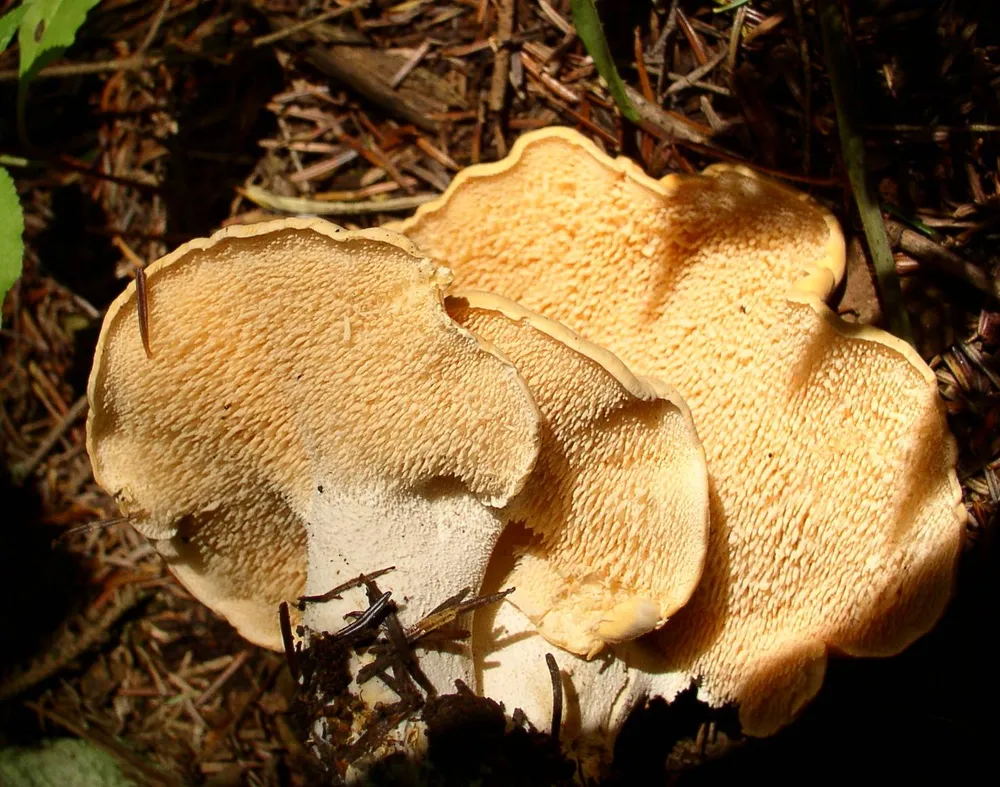
Related species
Mushrooms of the same genus and habitat — to study side by side and never mix up.
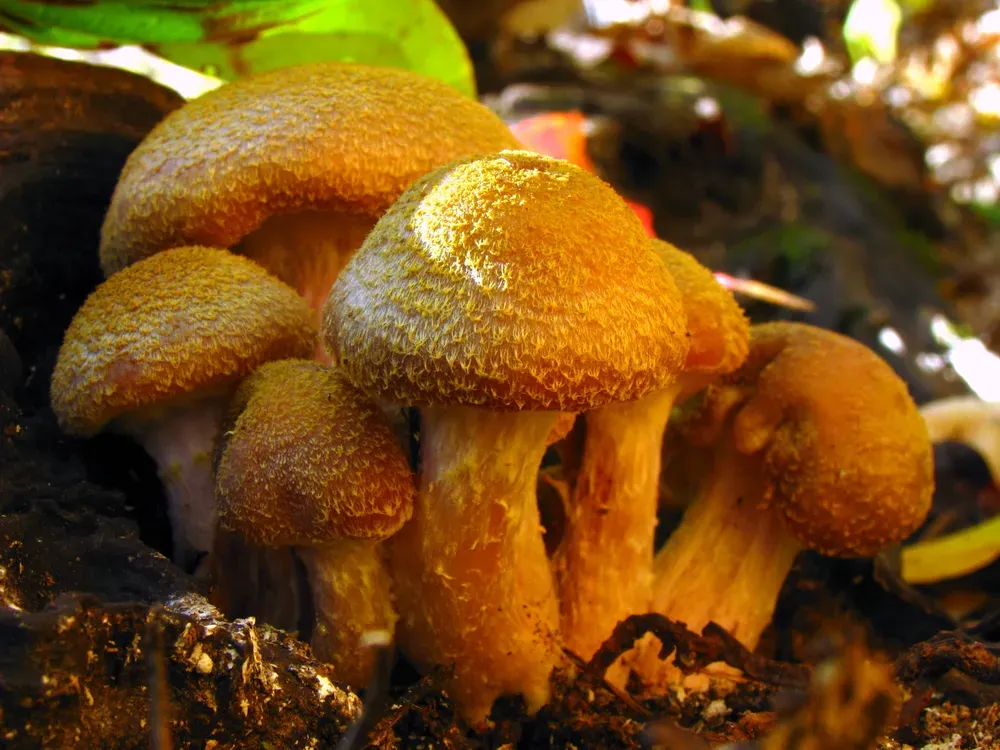
Bulbous honey fungus
Armillaria gallica
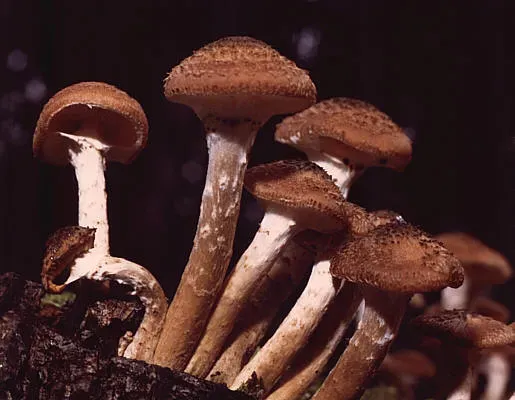
Dark honey fungus
Armillaria ostoyae
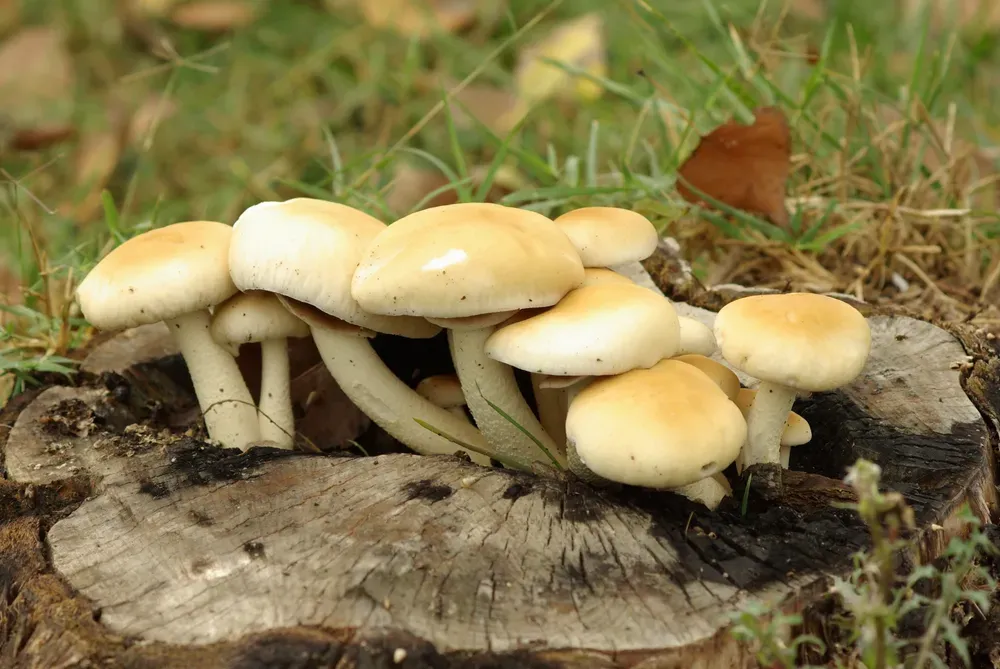
Poplar fieldcap
Cyclocybe aegerita
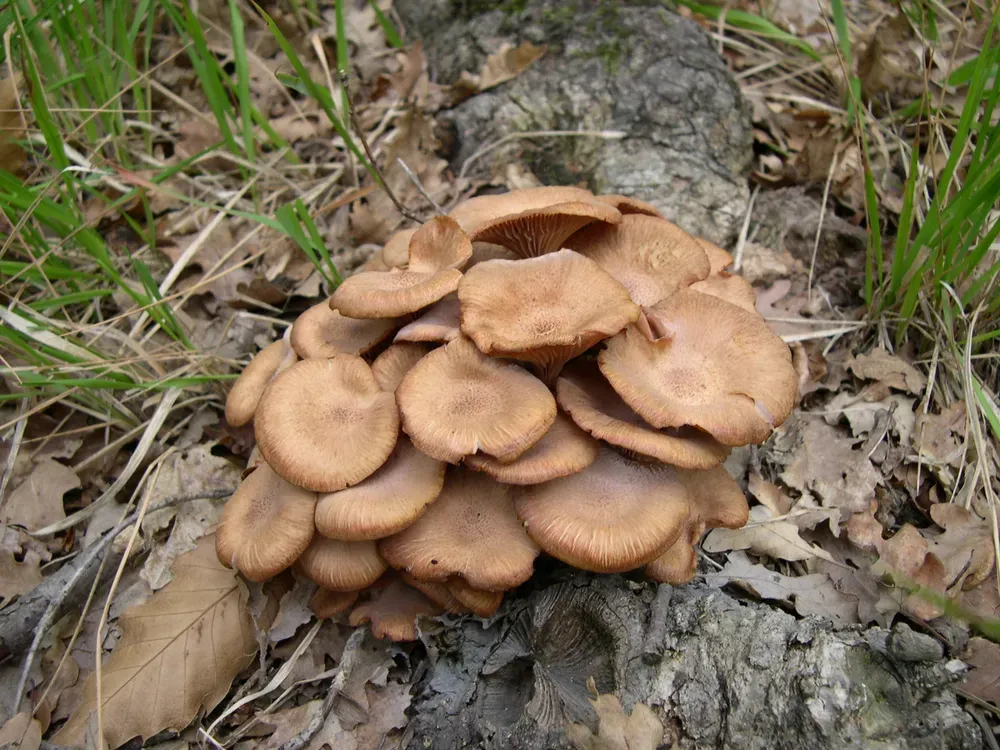
Ringless honey fungus
Desarmillaria tabescens
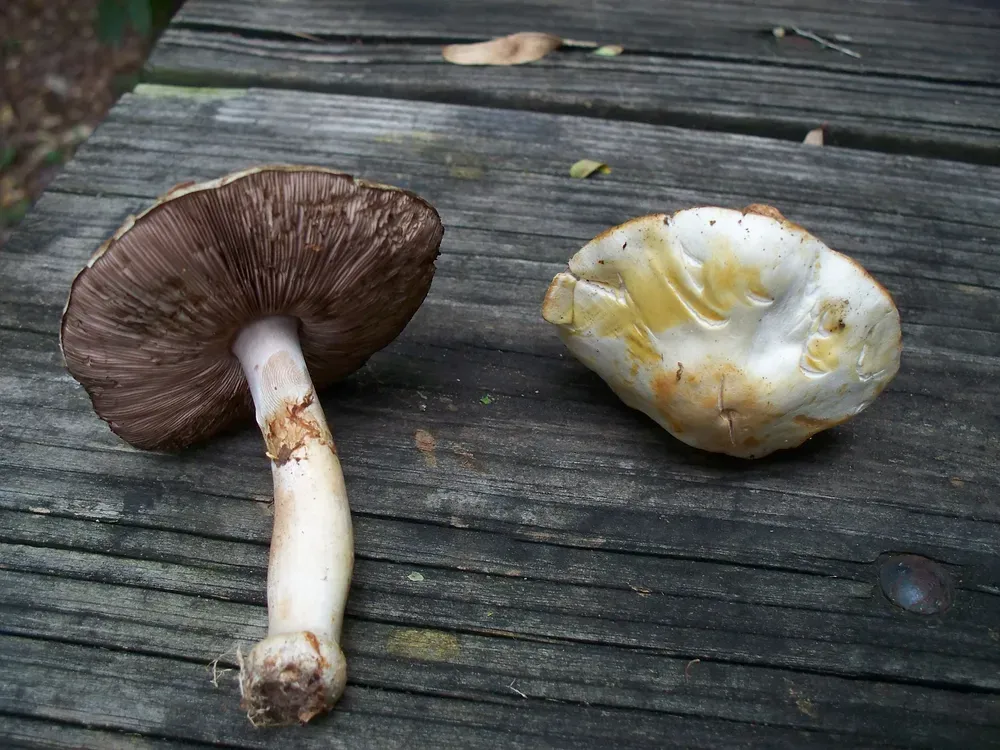
Agaricus abruptibulbus
Agaricus haemorrhoidarius
Agaricus haemorroidarius
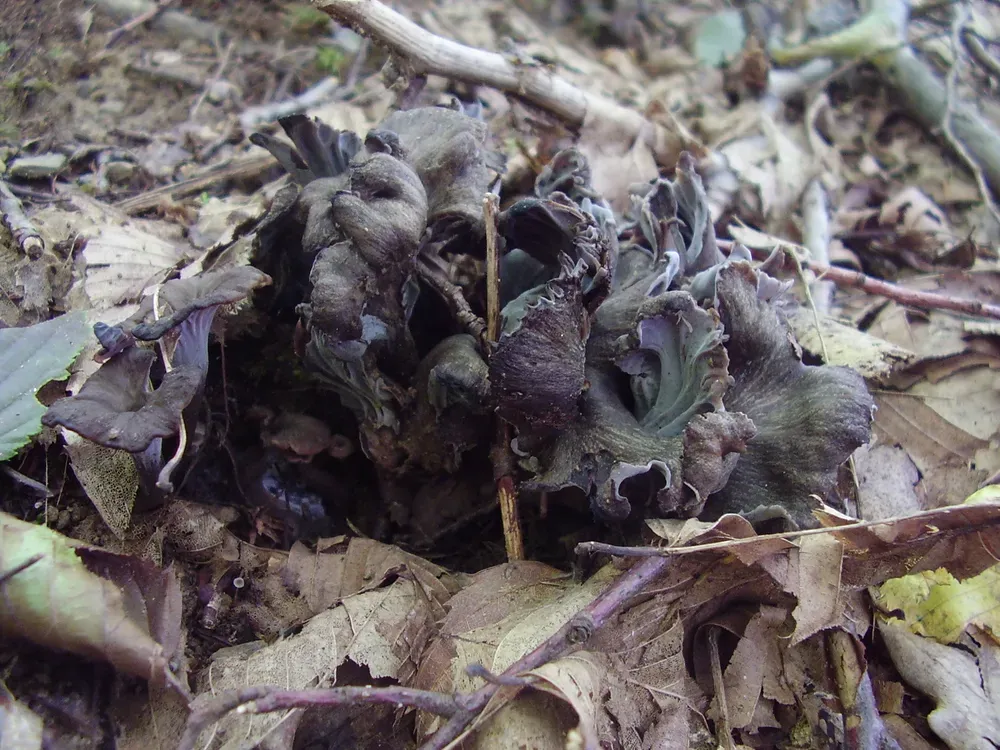
Ashen chanterelle
Cantharellus cinereus
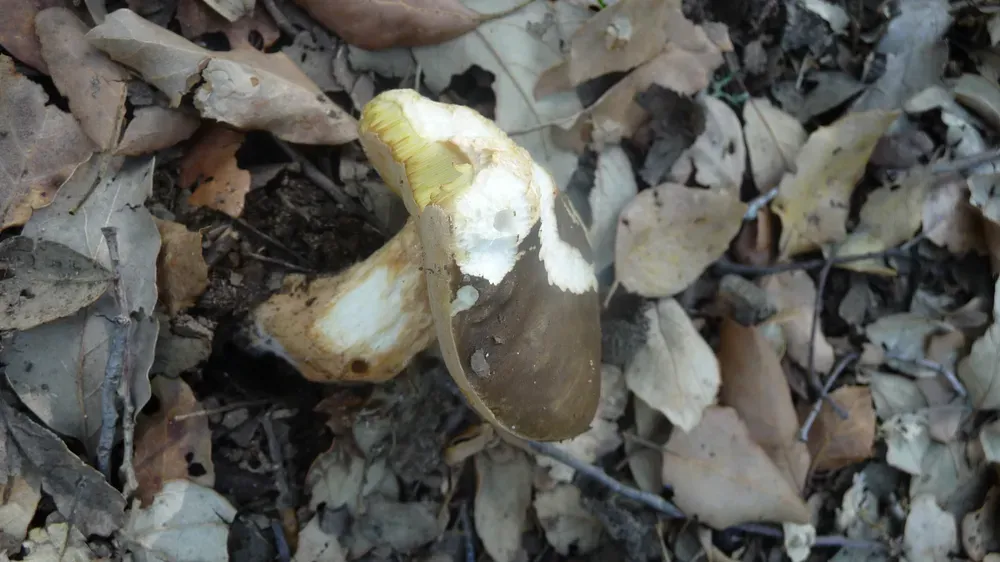
Blushing bolete
Leccinum roseofractum
Frequently asked questions
Can it be confused with a poisonous mushroom?
Among mushrooms with spines instead of gills (the genus Hydnum and its relatives) there are no dangerous lookalikes. All hedgehog mushrooms in Ukraine are edible. Only avoid the tough, corky Hericium and Sarcodon, which also have spines but a different fruiting body shape.
How do you tell a hedgehog mushroom from other mushrooms?
Look at the underside of the cap: if there are soft spines (teeth) there, like tiny needles, it's a hedgehog mushroom. This is a unique feature of the genus. If there are gills, tubes or a smooth surface, it's a different genus that needs to be identified separately.
Where to look in Ukraine?
Broadleaf and mixed forests with oak and beech, less often with conifers. Polissia, the Forest-Steppe, the Carpathians, Prykarpattia. It loves rich soils with a thick layer of forest litter. Rare in the steppe and in pure coniferous forests.
When does it fruit?
August — October, peaking in September. It loves a moderately moist, warm autumn. Fruiting stops after the first hard frosts. It can come up in flushes after prolonged rain.
How is it different from the wood hedgehog?
The wood hedgehog (Hydnum repandum) has a distinct ochre-yellow or orange-yellow color. The white hedgehog is creamy white, with no yellow or orange tints. Both are edible, both are tasty, but the white one is rarer.
Which trees does it form mycorrhiza with?
Mainly oak and beech, less often hornbeam and hazel. It is less common in coniferous forests — other hedgehog species dominate there.
How do you cook it?
Brush off the forest debris (don't wash it — the flesh quickly soaks up water). Young ones can be fried right away. Old ones should first be boiled for 5–10 min with the water discarded (to remove any bitterness). Fry with onion and carrot, stew in cream, add to soups.
Should you remove the spines?
Not necessarily. In young mushrooms the spines are tender and add texture. In mature ones they can fall apart during cooking and make the dish “grainy”. If you don't like that, cut the spines off with a knife before cooking.
Is White hedgehog edible or poisonous?
What kind of spore-bearing surface does White hedgehog have?
What does the cap of White hedgehog look like?
What does the stem of White hedgehog look like?
Sources
- [1]Вікіпедія (українська)
- [2]Атлас грибів України, Зеров Д.К. (1979)
- [3]MycoBank Database
- [4]Index Fungorum
- [5]GBIF
- [6]iNaturalist Ukraine