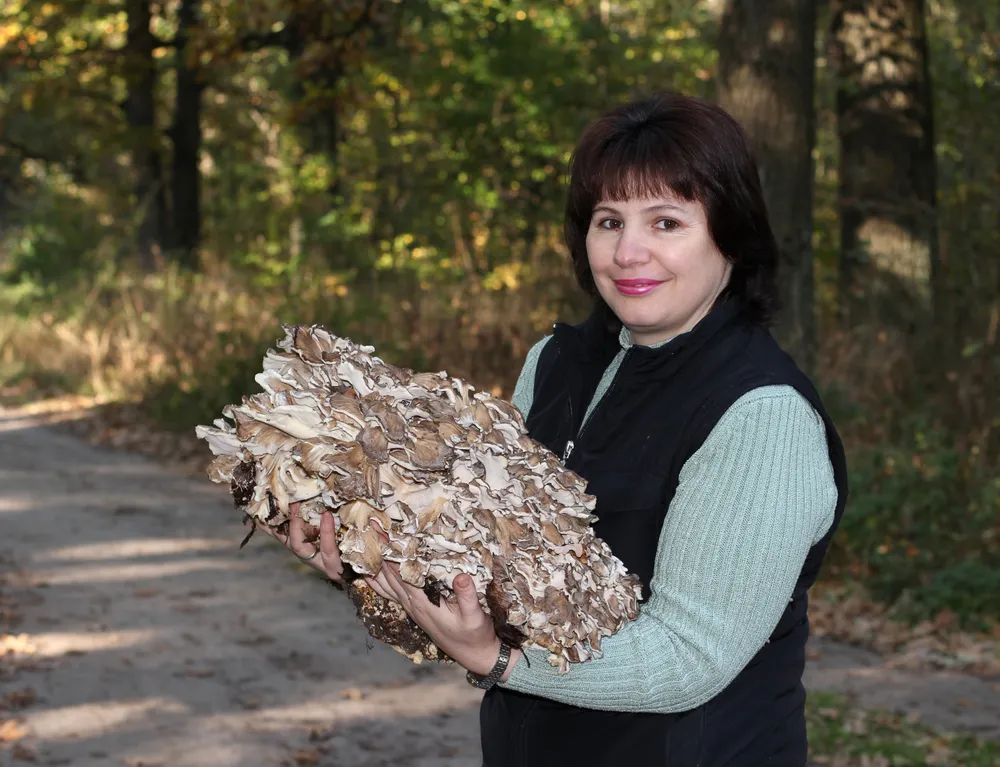
Hen of the woodsGrifola frondosa
Expert-verifiedUpdated October 3, 2026
Passport
- Edibility
- Edible
- Season
- Aug — Oct
- Hymenophore
- Pored
- Cap color
- Grey
- Size
- Giant (>25 cm)
- Smell
- Pleasant
- Reviewed
- Yes ✓
Quick answers
Where to look?
Deciduous forest, Mixed forest
When does it appear?
Aug — Oct
Active months: August, September, October.
How to recognize it? Three signs
- Cap color: Grey, Brown
- Cap shape: Irregular
- Smell: Pleasant
Fruiting season
August – October
Description
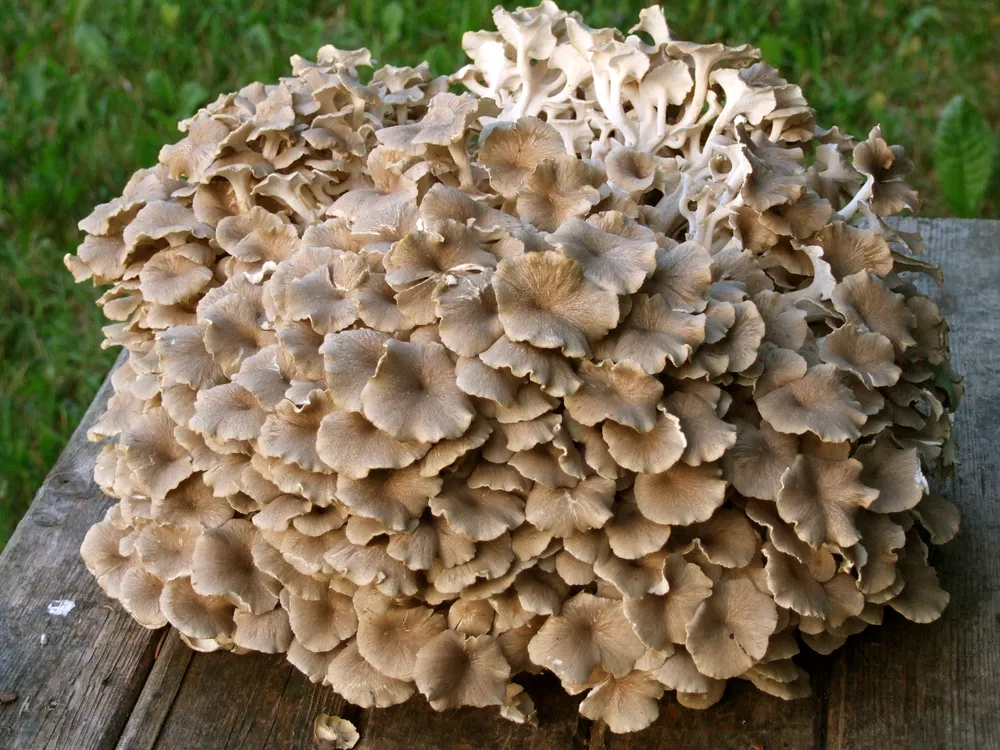
Hen of the woods, also called “sheep's head” or, in Japanese, “maitake,” is one of the most beautiful and prized mushrooms of European oak forests. Its fruit body has a unique shape: dozens or even hundreds of fused gray-brown fronds, or “petals,” on a shared branching trunk, together forming a large, bushy cluster. One such “bouquet” can weigh 5-15 kg, sometimes up to 30 kg — a truly gigantic mushroom. It grows at the base of living or recently dead oaks, less often chestnuts or beeches — it is a weak root parasite.
It is an outstanding edible mushroom, a delicacy. When young, the flesh is tender and springy, with a subtle nutty or woody flavor — reminiscent of chicken with a mushroomy note. In Japanese and Korean cuisine maitake is valued on a par with shiitake and has the status of a “medicinal mushroom” — it is being studied for its immunomodulating properties (beta-glucans). Pick only young fruit bodies, while the fronds are still light gray and springy. Old ones (dark brown, tough) are no good for eating. Safe for foragers: its characteristic shape is not shared by any dangerous species.
In Ukraine it is rare but turns up reliably in old oak forests. It occurs mainly in the Forest-Steppe and Polissia, where 80-100-year-old oaks still survive. One hen of the woods often fruits year after year on the same tree — the mycelium is long-lived. Season: August-October, peaking in September.
Cap
The fruit body is a large bushy cluster of 30-200 fused, frond-like “caps” on a shared branching trunk. Individual caps are 4-10 cm wide, fan-shaped, thin, with a wavy margin. Color gray-brown or gray-olive, paler (ash-gray) in young specimens, dark brown in old ones. The surface is smooth or finely radially fibrous. Total weight of the cluster is 2 to 15 kg.
Hymenophore
pored hymenophore — an important feature that sets it apart from frond-like gilled species. The tubes are short (2-4 mm), uneven, running down onto the stalks of the caps. Color whitish to yellowish. Spore print white.
Stem
The shared trunk of the cluster is thick, fleshy, whitish and repeatedly branched, each branch ending in a separate cap. The cluster is 15-30 cm tall. There are no separate stems as such — it is a single, segmented structure.
Flesh
flesh is white to pale cream; springy and fleshy in young ones, stringy and tough in old ones. Does not change color when cut. Young flesh has a pleasant nutty taste, similar to chicken.
Smell
Pleasant mushroomy smell with a nutty note, with a hint of fruit in some clusters. Mild taste, with subtle nutty and woody notes.
Lookalikes
Related species
Mushrooms of the same genus and habitat — to study side by side and never mix up.
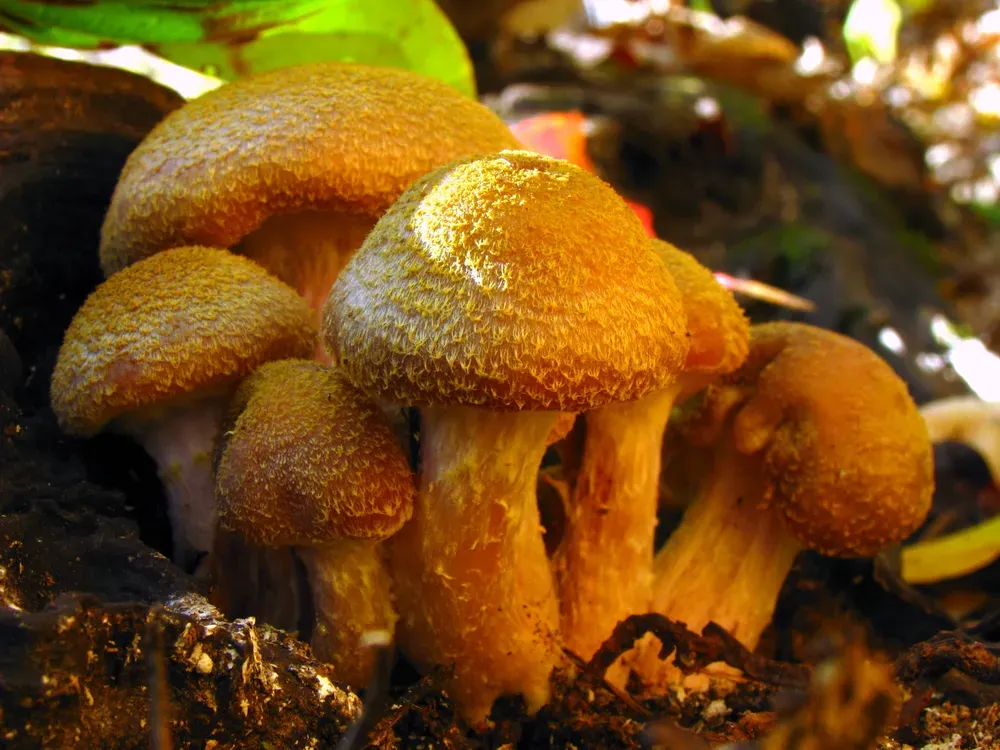
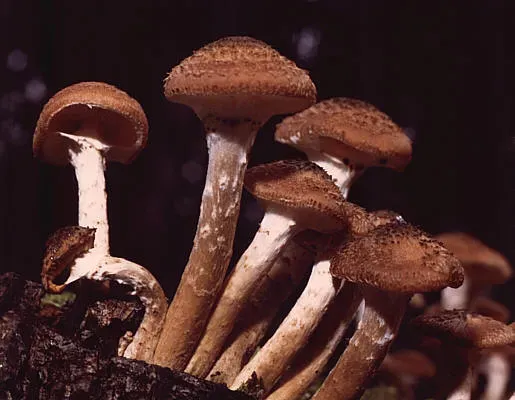
Bulbous honey fungus
Armillaria gallica
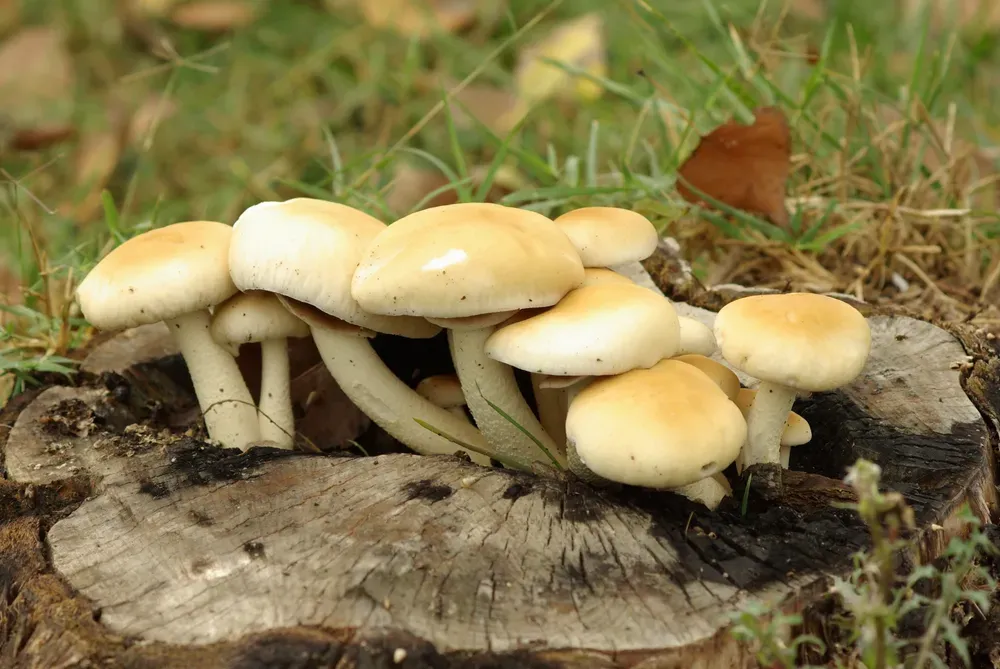
Dark honey fungus
Armillaria ostoyae
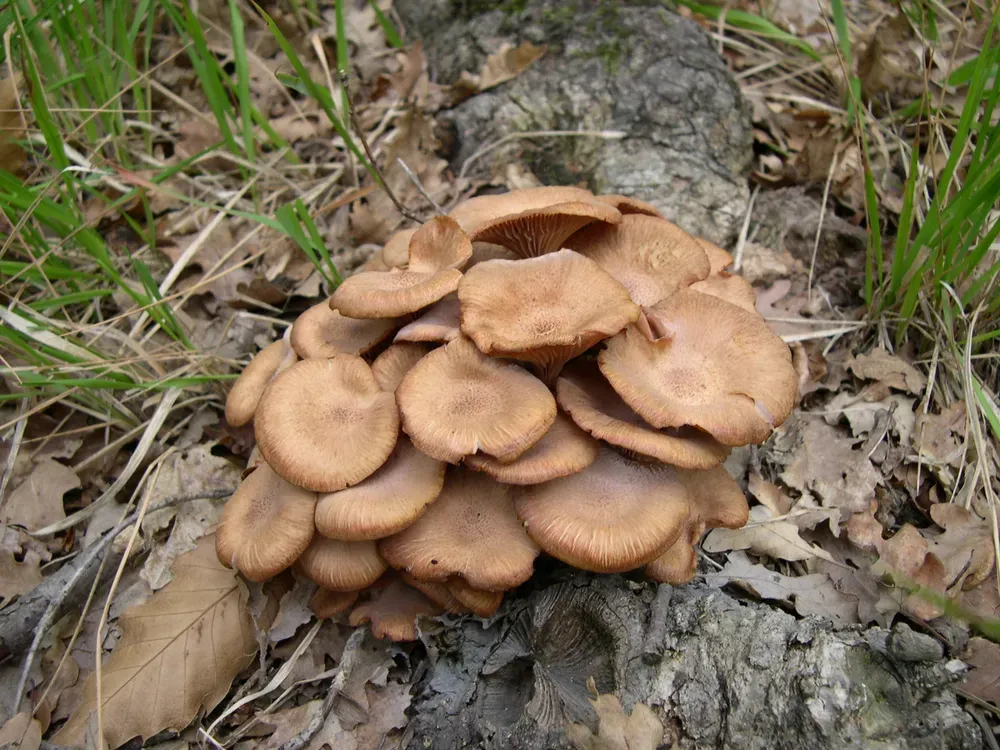
Poplar fieldcap
Cyclocybe aegerita
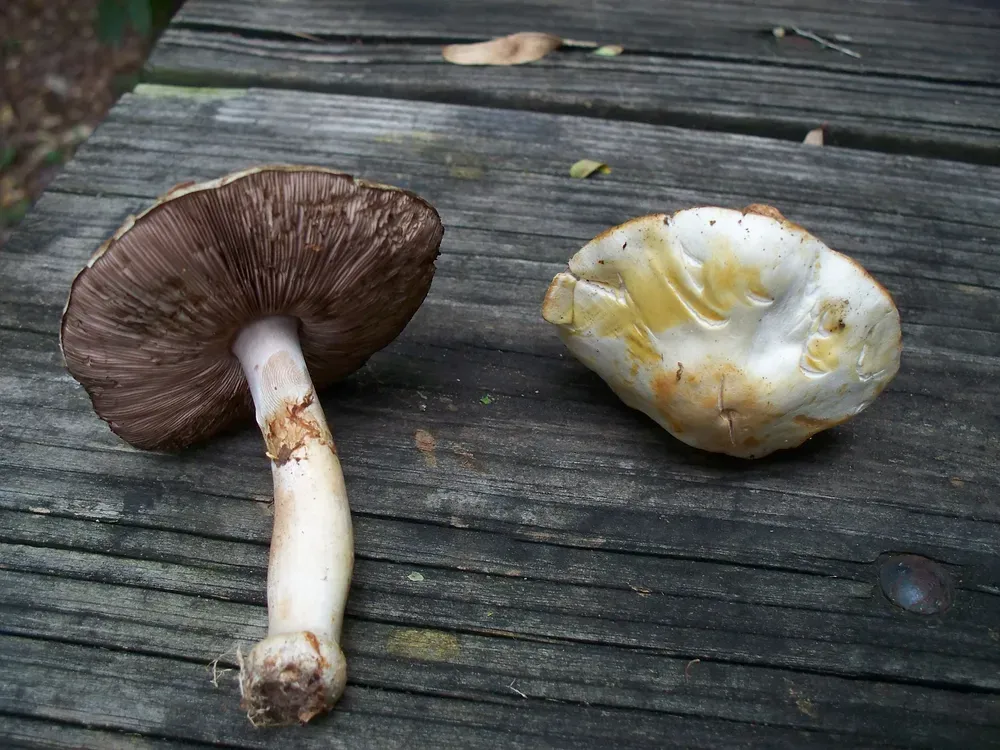
Ringless honey fungus
Desarmillaria tabescens
Agaricus abruptibulbus
Agaricus haemorrhoidarius
Agaricus haemorroidarius
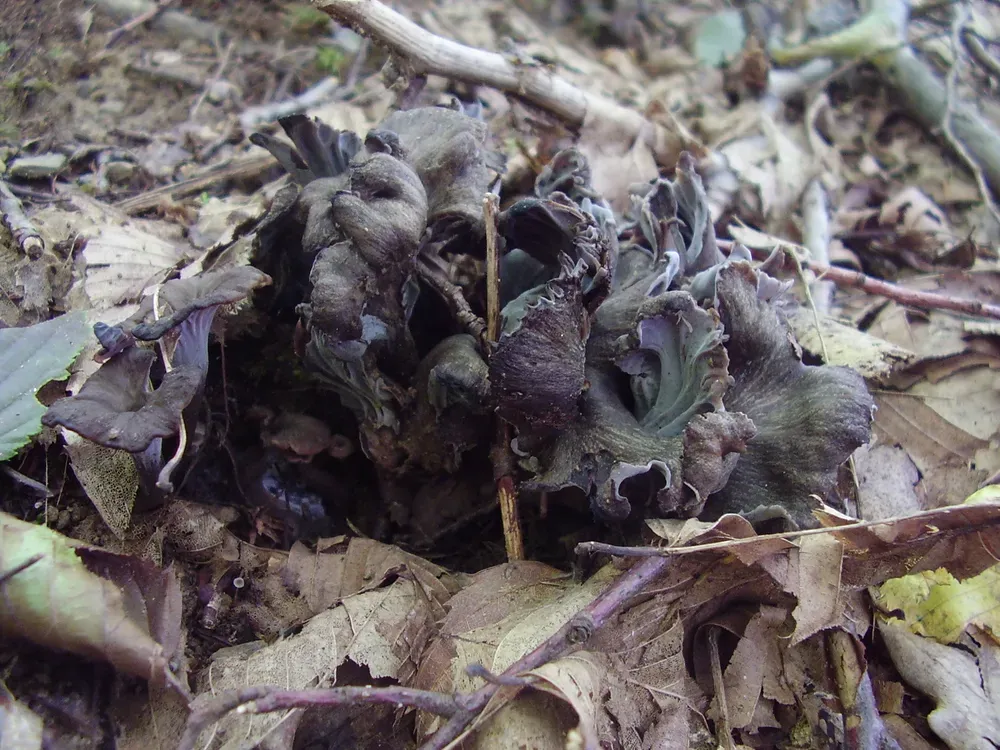
Ashen chanterelle
Cantharellus cinereus
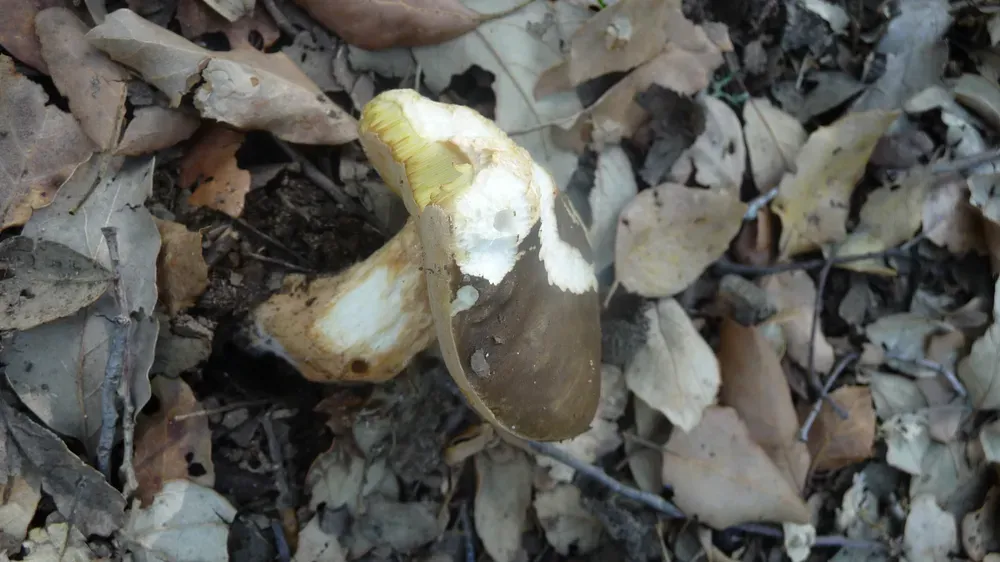
Blushing bolete
Leccinum roseofractum
Frequently asked questions
Is it safe to eat?
Yes, it's one of the best edible mushrooms. Safe for foragers — the characteristic shape of a cluster of dozens of fused fronds is not shared by any dangerous species. In Japanese and Korean cuisine maitake is considered a medicinal mushroom and is being studied for its immunomodulating properties.
How do you prepare it properly?
Take only young fruit bodies with light gray, springy fronds. Break the cluster into separate segments and wash well (sand and needles can get between the caps). Slice, fry for 15-20 min with onion and oil, stew with vegetables, add to soups. It's good pickled, too. Drying intensifies the flavor — the Japanese use dried powder as a seasoning.
Where should you look for it?
at the base of old living or recently dead oaks, less often chestnuts and beeches. A weak root parasite. Needs trees 80+ years old. It does not occur in young oak woods. One mycelium can fruit on the same tree for many years — it's worth remembering “your” tree.
In which regions of Ukraine does it grow?
A rare species, but reliably present in old oak forests. Most documented finds are in the Forest-Steppe (Khmelnytskyi, Vinnytsia, Cherkasy, Kyiv, Poltava, Sumy and Kharkiv oblasts), in Polissia (Zhytomyr, Chernihiv), and on old oaks in the Carpathians and Prykarpattia.
When should you look for it?
August-October. Peak fruiting is in September. The season is short — an individual fruit body lives 2-3 weeks. In a warm autumn, occasional finds turn up into October.
Does it appear in summer?
The first fruit bodies sometimes appear at the end of July, in a wet summer. But the typical season is early to mid autumn. The best time to search is from the second half of August to mid-September.
What is it confused with?
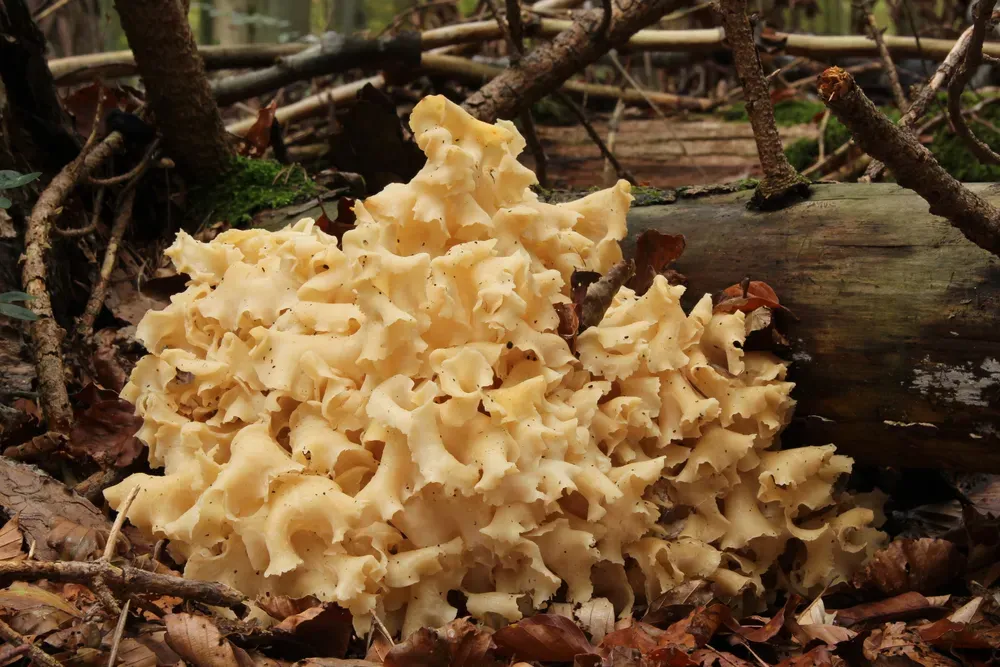
With Sparassis crispa (cauliflower fungus) — also a large cluster of fused fronds, but white or cream in color, with thin, wavy ribbons, and it grows by pines. Hen of the woods is gray-brown and grows on oak. Both are edible. With bracket fungi (polypores) — they have leathery, tough flesh, while hen of the woods has fleshy, springy flesh.
Are there dangerous look-alikes?
In Ukraine there are practically no dangerous look-alikes among similarly shaped mushrooms. Its unique structure — “a heap of fused fronds at the base of an oak” — is rarely repeated. Meripilus giganteus (giant polypore) is similar and also edible when young, but it is darker and its flesh turns black when damaged (hen of the woods does not blacken).
Is Hen of the woods edible or poisonous?
Does Hen of the woods have gills or pores?
What does the cap of Hen of the woods look like?
What does the stem of Hen of the woods look like?
Sources
- [1]Вікіпедія (українська)
- [2]Атлас грибів України, Зеров Д.К. (1979)
- [3]MycoBank Database
- [4]Index Fungorum
- [5]GBIF
- [6]iNaturalist Ukraine