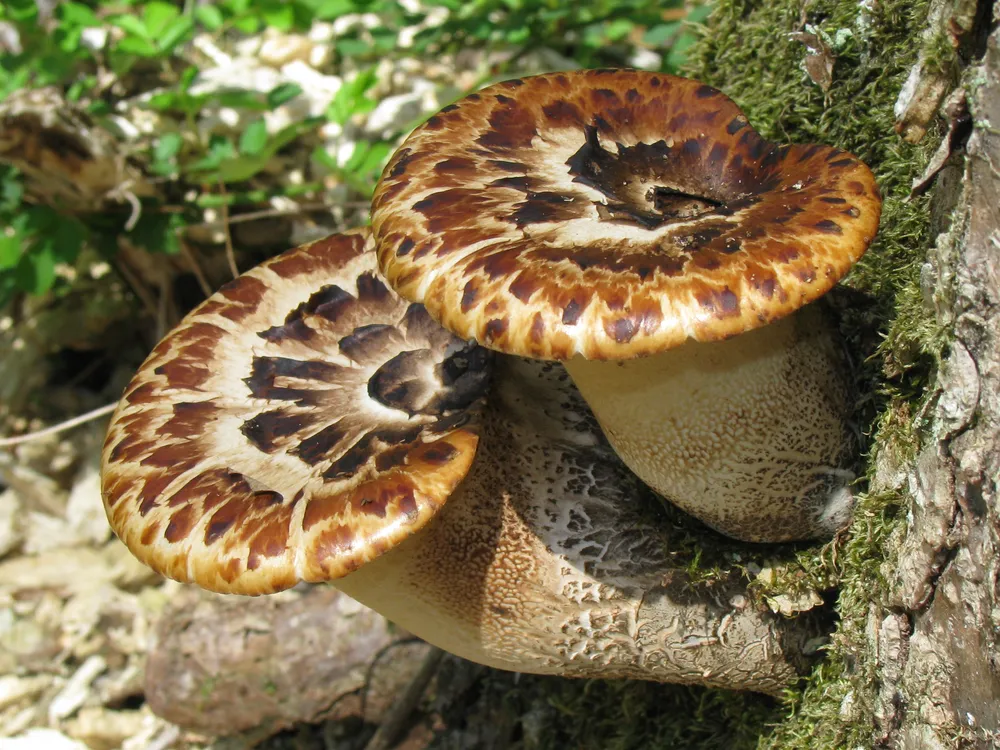
Dryad's saddleCerioporus squamosus
Expert-verifiedUpdated October 3, 2026
Passport
- Edibility
- Edible
- Season
- Apr — Oct
- Hymenophore
- Pored
- Cap color
- Cream
- Size
- Giant (>25 cm)
- Smell
- Pleasant
- Reviewed
- Yes ✓
Quick answers
Where to look?
Deciduous forest, Mixed forest
When does it appear?
Apr — Oct
Active months: April, May, June, July, August, September, October.
How to recognize it? Three signs
- Cap color: Cream, Yellow, Brown
- Cap shape: Flat
- Smell: Pleasant
Fruiting season
April – October
Description
Dryad's saddle (Polyporus squamosus, known in English as "dryad's saddle" or "pheasant back mushroom") is a large, distinctive polypore with striking dark brown scaly patterns on a yellowish-cream cap that look like the markings on a pheasant's back. The Latin epithet squamosus means "scaly" — spot on. One of the most recognizable polypores in Europe, it often turns up on weakened and dead trunks of broadleaf trees — especially elms, poplars, maples and others.
Fruiting body large, fan-shaped to semicircular, 10-50 cm across (sometimes up to 70 cm!), with a short side stem. It can weigh up to 5 kg. Cap color yellowish cream, ochre-cream, with striking brown and ochre-brown scaly patterns arranged in concentric rings. Young fruiting bodies are especially beautiful, with a high-contrast pattern.
Edible — ONLY young fruiting bodies (1-3 days after they appear, up to 10-15 cm). In older fruiting bodies the flesh very quickly turns tough, leathery and inedible. Young flesh is tender, with a distinctive smell of fresh cucumber and watermelon — a key diagnostic feature and very recognizable! The taste is mild and mushroomy.
In the kitchen: when young — fry with onions and cream (an excellent dish), stew, or add to soups. Older ones go into broths (the flesh adds flavor, then gets thrown out). Folk tradition values it only modestly, because the edible window is short — literally 2-3 days after it appears, then it toughens.
Key features of Polyporus squamosus: Large (10-50 cm) fan-shaped fruiting body with a side stem Striking brown scaly concentric patterns on a yellowish-cream cap White tubular underside with large pores (1-2 mm) Distinctive smell of fresh cucumber and watermelon — a key diagnostic feature! Flesh pure white, tender when young, tough when old Grows on weakened and dead broadleaf trees (especially elm, poplar, maple, ash)
The main thing is to recognize it by its cucumber smell and not mix it up with similar large polypores. It has no seriously poisonous lookalikes.
In Ukraine, Polyporus squamosus is common in broadleaf and mixed forests, parks and planted broadleaf stands: the Carpathians, Prykarpattia, Polissia, the forest-steppe and the steppe (shelterbelts). Season: April — October, with peaks in April-May and August-September (two flushes of fruiting).
Cap
Cap 10-50 cm across (sometimes up to 70!), fan-shaped to semicircular, flat and spreading. Young caps have a slightly inrolled margin; older ones have a drooping, wavy margin. The surface is matte, with striking brown scaly concentric patterns on a yellowish-cream background. Base color yellowish cream, ochre-cream, the scales dark brown to chestnut brown, densest at the center. Mature caps show a clear radially striped pattern.
Hymenophore
Tubular hymenophore — large white pores on the underside of the cap (1-3 mm, notably large for a polypore), running down the stem. Color white to cream. Spore print white.
Stem
Stem 3-7 cm tall, 1.5-4 cm thick, lateral, off-center, short and thick. Color whitish at the top, dark brown to blackish at the bottom (hence the typical "black tail" at the base).
Flesh
Flesh when young: tender, soft, white, with a distinctive cucumber-and-watermelon smell; when old: very quickly turns tough, leathery and useless in cooking. Does not change color when cut.
Smell
Distinctive smell of fresh cucumber and watermelon in young specimens — a key diagnostic feature. In old ones it is faint and neutral.
›Scientific synonyms (2)
Polyporus squamosus, Polyporus squamosus (Huds.) Fr.
Lookalikes
Related species
Mushrooms of the same genus and habitat — to study side by side and never mix up.
Artist's bracket
Ganoderma applanatum
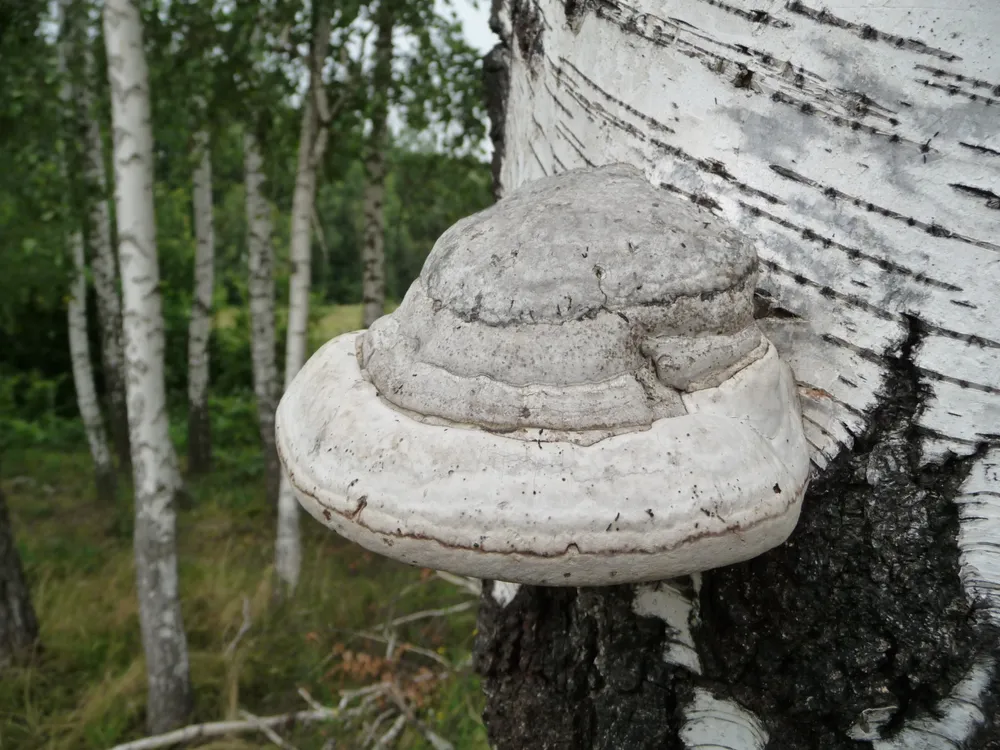
Tinder fungus
Fomes fomentarius
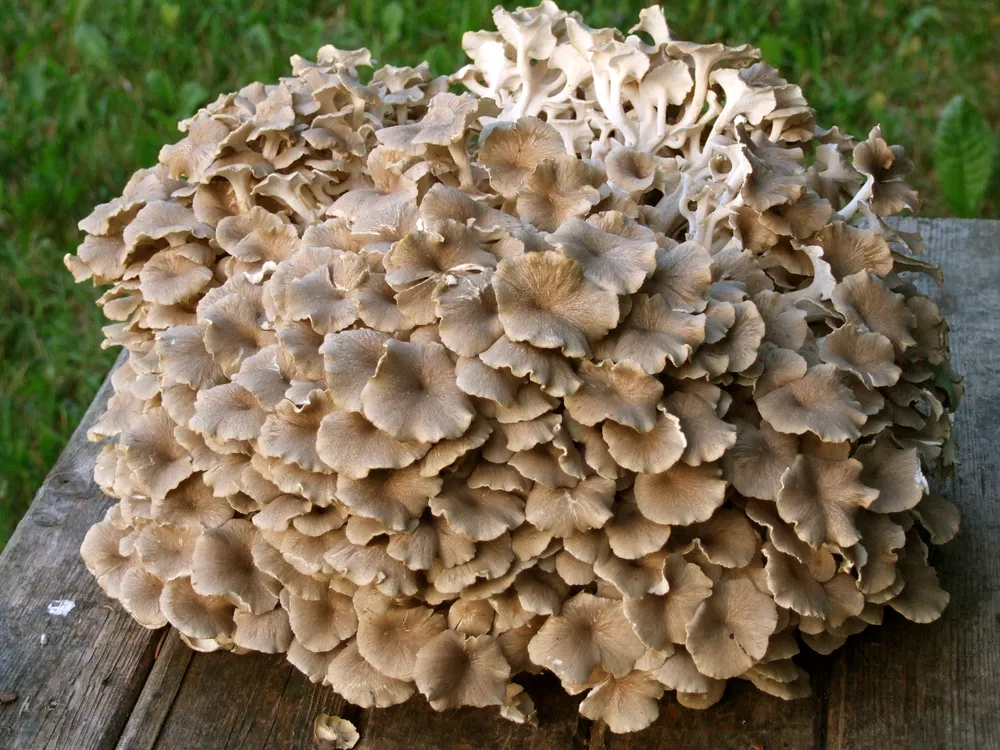
Umbrella polypore
Polyporus umbellatus
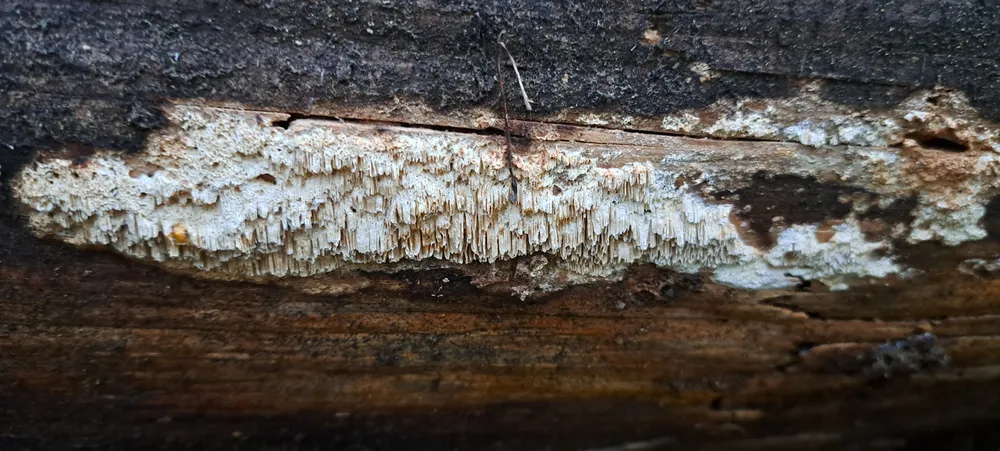
Amyloporia sinuosa
.webp)
Aurantiporus fissilis
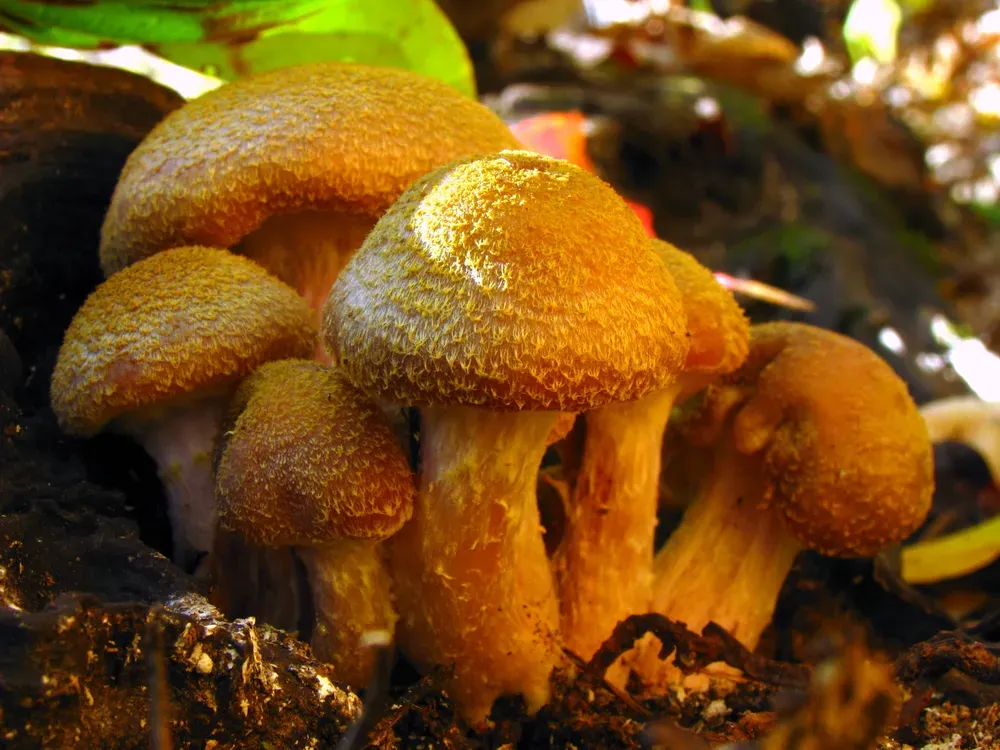
Bulbous honey fungus
Armillaria gallica
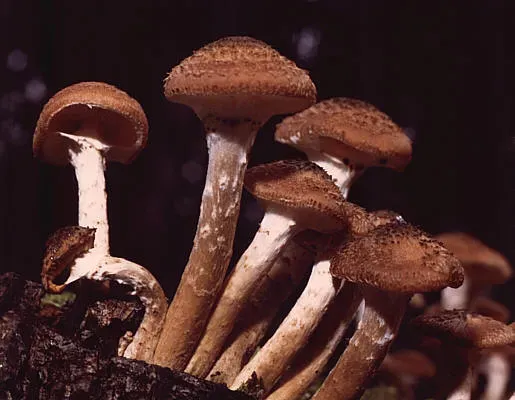
Dark honey fungus
Armillaria ostoyae
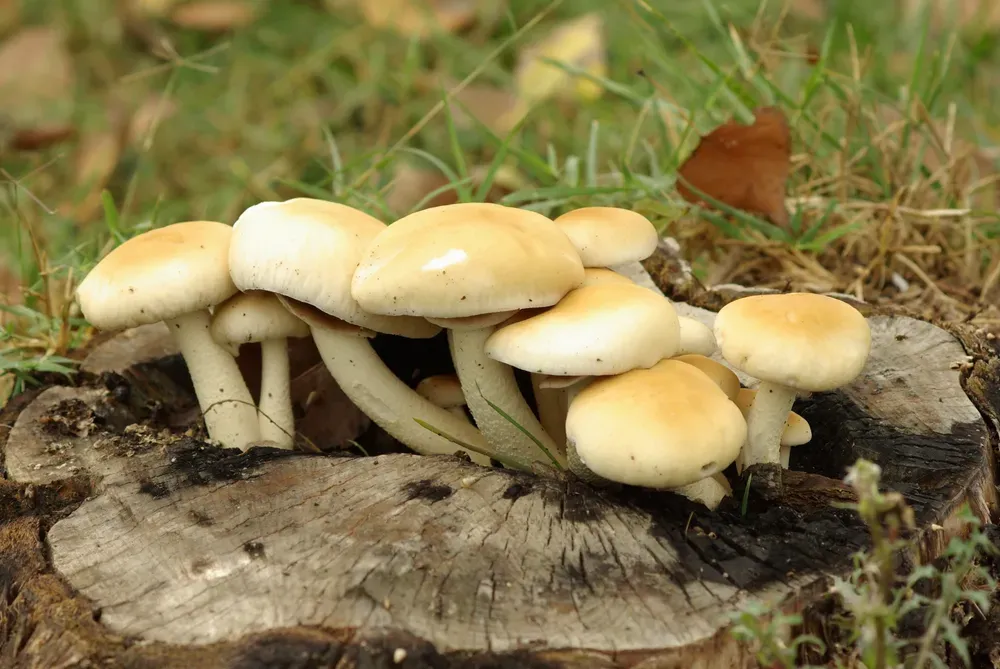
Poplar fieldcap
Cyclocybe aegerita
Related reading

Frequently asked questions
How can you tell it is young and still edible?
The key test is to press it with your fingernail. If the flesh dents easily, feels springy and bounces back — it is young and edible. If it is tough as leather and will not dent — it is old, do not eat it. The second check is smell: a young one has a distinctive fresh cucumber-and-watermelon smell; an old one smells faint and neutral or musty. The third is size: young ones are 5-15 cm and not yet fully opened.
Does it have dangerous lookalikes?
No seriously poisonous ones. Similar large polypores (Polyporus tuberaster, Lentinus) are also edible, with limitations. Phaeolus schweinitzii (dyer's polypore) — on conifers, orange-brown in color, inedible. The essential check is the cucumber smell + brown scales on a yellow cap + large pores underneath.
How do you cook it?
Young ones (5-15 cm) — no need to boil first. Cut off the tender outer parts (10-15 cm from the edge); the tougher inner part goes into broths. The classic is to fry it in strips with onions and cream (its texture is reminiscent of chicken breast). Stew it, add to soups, or pickle it. Young ones are especially tasty.
What does it taste like?
Mild and mushroomy, with a distinctive fresh cucumber-and-watermelon note, especially in young ones. Somewhat bland, without much depth, so it works well mixed with more aromatic mushrooms or in cream sauces.
Where should you look for it?
On weakened and dead broadleaf trees — especially elms, poplars, maples and ash, less often on oaks and beeches. In natural forests, parks, gardens and shelterbelts. Often 1-5 m above the ground on the trunks of living trees or on fallen trunks.
Which regions of Ukraine is it found in?
Common throughout the forest zone: the Carpathians, Prykarpattia, Polissia, the forest-steppe and the steppe (in shelterbelts, parks and gardens).
When should you look for it?
April — October, with two peaks: April-May (the spring flush, especially noticeable) and August-September. The first fruiting bodies appear as soon as the weather warms up, even in April.
What can it be confused with?
With Cerioporus squamosus (this is Polyporus squamosus itself under the new taxonomy). With Polyporus tuberaster (tuberous polypore) — smaller, with a hairy margin. With Phaeolus schweinitzii — on conifers, inedible. The essential check is the distinctive cucumber-and-watermelon smell of young specimens.
Is Dryad's saddle edible or poisonous?
Does Dryad's saddle have gills or pores?
What does the cap of Dryad's saddle look like?
What does the stem of Dryad's saddle look like?
Sources
- [1]Вікіпедія (українська)
- [2]Атлас грибів України, Зеров Д.К. (1979)
- [3]MycoBank Database
- [4]Index Fungorum
- [5]GBIF
- [6]iNaturalist Ukraine