
Bracket fungi are the woody "shelf" mushrooms that foragers usually walk right past: most of them are tough, woody and inedible. But a few exceptions hide among them — prized for their flavor when young and even called "forest meat" or "chicken mushroom".
Let's look at which bracket fungi are edible, how to recognize them and when to pick them.
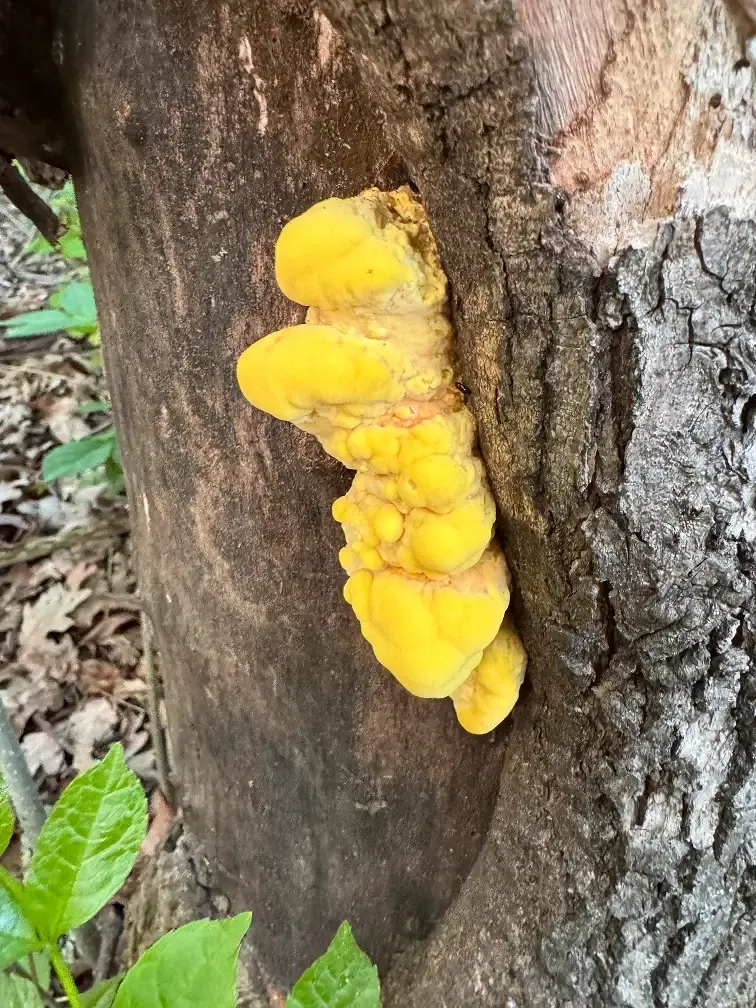
Chicken of the woods (sulphur shelf)
The best-known edible bracket fungus.
- Appearance — bright orange-yellow wavy "shelves" that grow on trunks in overlapping tiers.
- The flesh of a young mushroom is soft and juicy, with a fibrous texture reminiscent of chicken meat — hence the name.
- Trees — oak, willow, poplar, less often other broadleaf trees.
You'll find more on chicken of the woods in a separate article. Only the young edges are eaten: an old mushroom turns tough and sour.
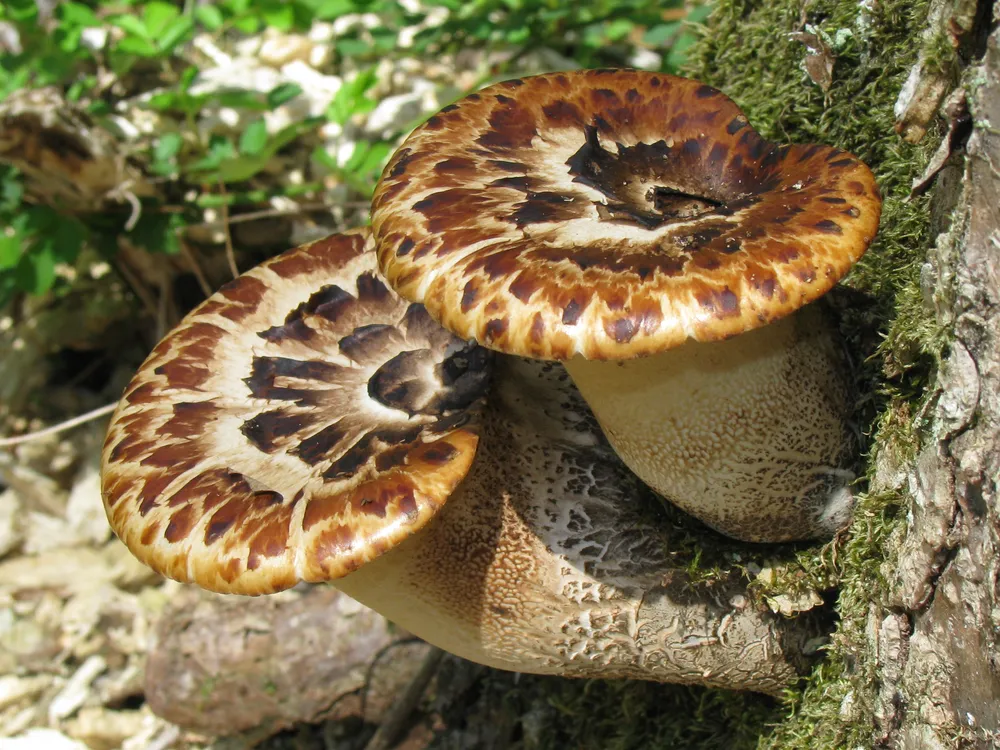
Dryad's saddle (pheasant's back)
- Appearance — a large semicircular cap with brown scales on a short, off-center stem.
- Smell — distinctively cucumber-like or mealy when young.
- Trees — elm, maple and other broadleaf trees, often in spring.
Edible only when very young, while the flesh is soft; later it turns woody.
When and how to pick
- Season — from May to September, peaking in summer; dryad's saddle often appears in spring.
- Take only young, soft edges — old bracket fungi are tough and inedible.
- Cook them thoroughly — bracket fungi are never eaten raw; in some people even edible species can cause stomach upset, so try a little at a time.
What to watch out for
- Only young, soft mushrooms — the golden rule for all edible bracket fungi.
- They grow on living and dead trees — don't mistake the tree species for poisonous neighbors.
- Try a little the first time — individual tolerance varies.
Sources
- “Key to the Fungi of Ukraine” (Kyiv, Naukova Dumka publishing house).
- Laetiporus sulphureus in GBIF, the global biodiversity database.
- Cerioporus squamosus in MycoBank, the international fungal nomenclature database.
- Laetiporus sulphureus on Wikipedia.
Frequently asked questions
Which bracket fungi are edible?
The best known are chicken of the woods and dryad's saddle (pheasant's back). Both are edible only when young.
Why is it called chicken of the woods?
Because the fibrous, juicy flesh of a young mushroom resembles chicken meat in texture.
When should you pick edible bracket fungi?
From May to September, peaking in summer. Dryad's saddle often appears as early as spring.
Why are bracket fungi eaten only when young?
Because with age their flesh turns woody, tough and tasteless. Only the young, soft edges are worth eating.
Where do edible bracket fungi grow?
On the trunks of broadleaf trees: chicken of the woods on oak, willow and poplar; dryad's saddle on elm, maple and others.
Are edible bracket fungi safe?
Yes, when young and thoroughly cooked. But in some people even edible species can cause stomach upset, so try a little the first time.
How do you recognize dryad's saddle?
By its large semicircular cap with brown scales on a short, off-center stem and its distinctive cucumber smell when young.
Can an edible bracket fungus be confused with a poisonous one?
They have no dangerous deadly lookalikes, but it's important to identify the exact species and take only young mushrooms, checking against the features.
Mushrooms in this article
Related articles
 How to identify
Truffles in Ukraine: do they grow here, and where to look
Truffles aren't just a French delicacy. Several species grow in Ukraine too. Here's which ones, where they occ…
August 24, 2026·2 min Recipes & cooking
How to store fresh mushrooms, and for how long
Fresh mushrooms spoil faster than you might think. Here's how long they keep in the fridge, how to store them…
August 21, 2026·4 min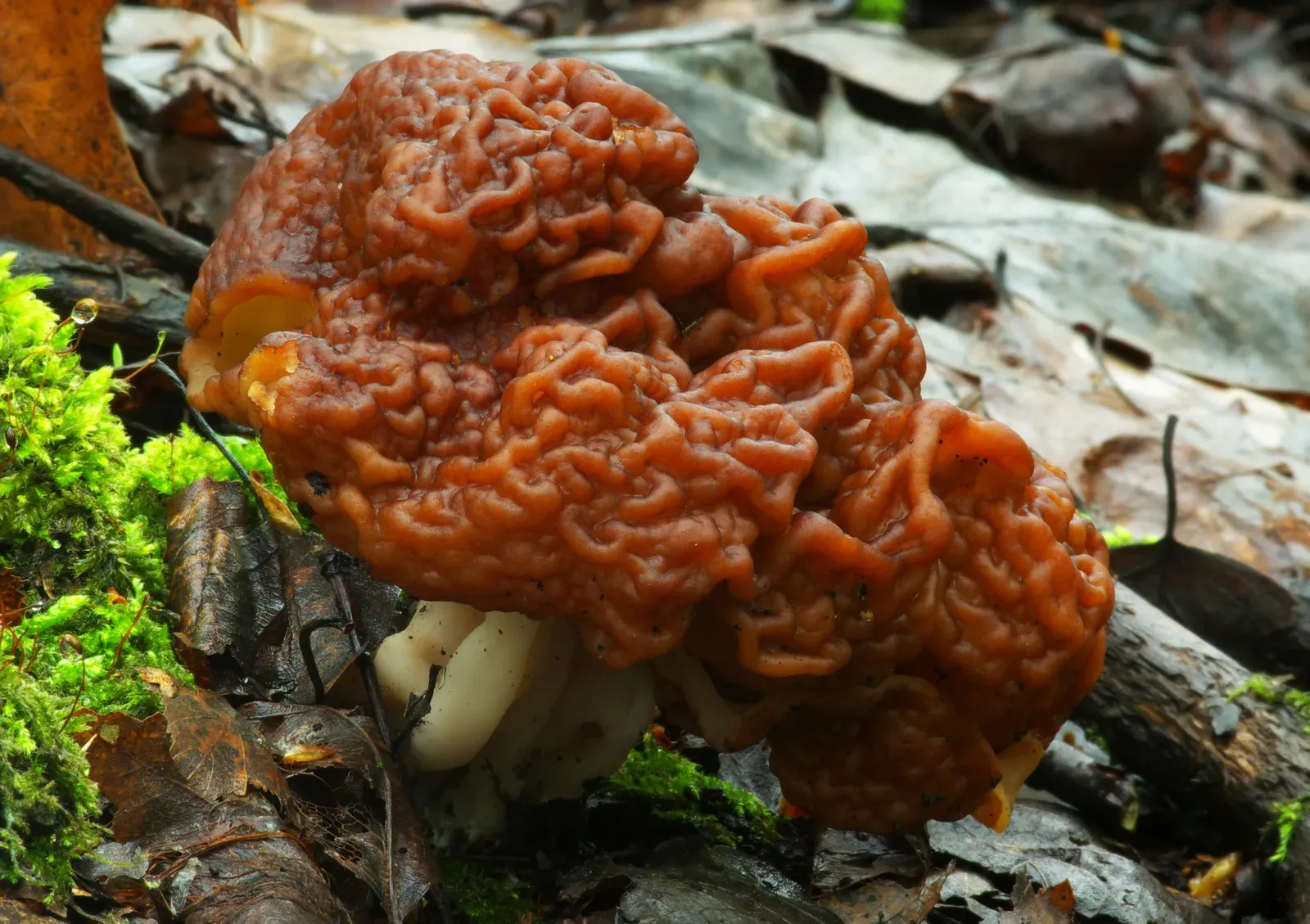 Safety
False morel: why this spring mushroom is dangerous
The false morel looks like a morel, but it contains a poison. Here's how to recognize it, why it's dangerous a…
August 24, 2026·2 min