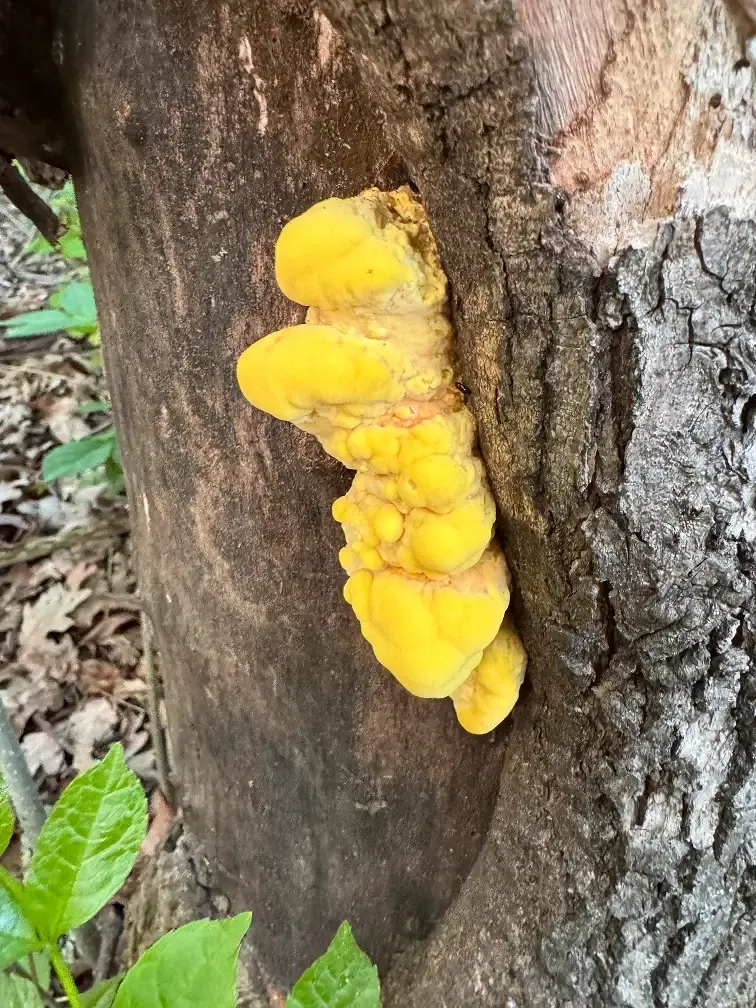
Chicken of the woodsLaetiporus sulphureus
Expert-verifiedUpdated October 3, 2026
Passport
- Edibility
- Edible
- Season
- Apr — Oct
- Hymenophore
- Pored
- Cap color
- Yellow
- Size
- Giant (>25 cm)
- Smell
- Pleasant
- Reviewed
- Yes ✓
Quick answers
Where to look?
Deciduous forest
When does it appear?
Apr — Oct
Active months: April, May, June, July, August, September, October.
How to recognize it? Three signs
- Cap color: Yellow, Orange
- Cap shape: Flat
- Smell: Pleasant
Fruiting season
April – October
Description
Chicken of the woods (Laetiporus sulphureus, known in English-speaking countries as "chicken of the woods" — a "forest chicken" — or "sulphur shelf") — the best-known edible polypore, with a distinctive flavor reminiscent of chicken! One of the most recognizable mushrooms in Europe thanks to its very bright sulphur-yellow-orange color. The Latin epithet sulphureus means "sulphurous" — a perfect description of its color.
The fruiting body is large and bushy, made up of several overlapping fan-shaped caps that form a single colony. Individual caps are 10-30 cm across, 6-30 cm tall, thick and fleshy. Color: bright sulphur-yellow to orange-yellow in young ones, with a characteristic shift from a rich orange center to a yellow or cream margin. In old fruiting bodies it gradually fades to pale yellow and cream, and the flesh turns tough.
Edible — ONLY young fruiting bodies (3-7 days after they appear, while the flesh is still soft and juicy). Young ones have tender, meaty flesh with a characteristic taste of delicate chicken breast or fish; they fry, boil and pickle well. In mature and old ones the flesh turns tough and leathery, with a sourish aftertaste — useless in the kitchen.
Classic culinary uses: Fried like chicken breast — cut into 1-2 cm pieces, dredge in flour, fry with onion and cream In vegetarian and vegan cooking — as a "meat substitute" with natural protein Pickling — keeps its shape and color well In Asian stir-fries — in a hot pan with vegetables and soy sauce In soups — as a base for a broth with a "chicken" flavor
IMPORTANT CAUTION: in some people this species can cause gastrointestinal discomfort (nausea, mild diarrhea) — especially if: (1) the mushroom came from an oak (some sources consider these less safe because of tannins); (2) it is old rather than young; (3) it is undercooked; (4) it was eaten in large amounts. The first time — a small portion (50-100 g), to check how you react. Don't eat it fresh/raw.
Diagnostic features of Laetiporus sulphureus: A large cluster of overlapping fan-shaped caps on trunks of living or dead broadleaf trees Strikingly sulphur-yellow-orange color in young ones Flesh meaty in young ones, tough in old ones Underside with small sulphur-yellow pores Spore print white Flesh cream-yellow Characteristic smell with a hint of fresh cucumber and something sourish Grows on trunks of oak, willow, poplar, maple (less often on conifers, which is dangerous!)
IMPORTANT: on conifers, L. sulphureus has a variant, L. huroniensis, with a higher concentration of irritants — eating it is NOT recommended, the risk of gastroenteritis is much higher. The key check is the species of tree the mushroom grew on.
In Ukraine, Laetiporus sulphureus is common in broadleaf and mixed forests: the Carpathians, Prykarpattia, Polissia, the forest-steppe, the steppe (in shelterbelts, parks, orchards). Season: April — October, with peaks in May-June and August-September (two flushes).
Cap
The fruiting body is bushy, with 5-30 overlapping fan-shaped caps on a common base. Individual caps are 10-30 cm across, 6-30 cm tall, flat and spreading, fan-shaped, fleshy. The surface is smooth or with fine felty fibers; in young ones it's glowing yellow-orange, like fresh sulphur, glossy in wet weather. Color: strikingly sulphur-yellow to orange-yellow, with a characteristic shift from a rich orange center to a yellow or cream margin. In old ones it fades to pale yellow and cream.
Hymenophore
Tube layer — fine sulphur-yellow pores on the underside (2-4 pores/mm). Color: sulphur-yellow to orange. Spore print: white.
Stem
No distinct stem — the caps attach to the substrate by a broad base or a short lateral stem.
Flesh
Flesh: in young ones: tender, meaty, juicy, cream-yellow, characteristically reminiscent of chicken breast. In old ones: tough, leathery, fibrous, inedible. It doesn't change color when cut. Smell: characteristic, sourish-fruity-mushroomy with a hint of fresh cucumber, taste: mild, delicately mushroomy with a hint of chicken.
Smell
Characteristic sourish-fruity with a hint of fresh cucumber — a recognizable feature.
Lookalikes
Related species
Mushrooms of the same genus and habitat — to study side by side and never mix up.
_Singer_279454.webp)
Amylocystis lapponica
Amylocystis lapponicus
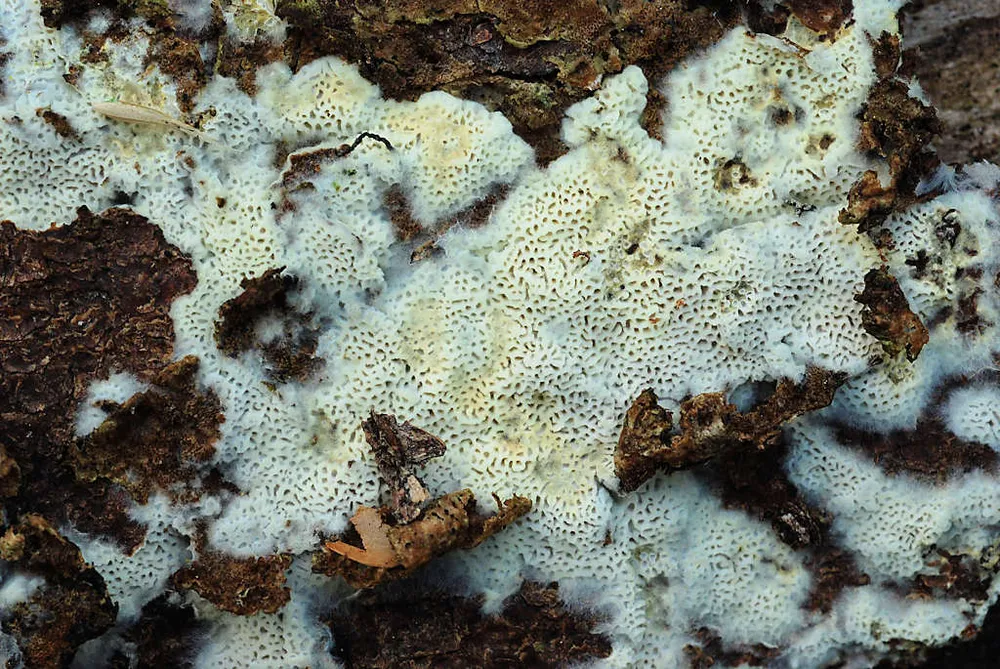
Anomoporia bombycina
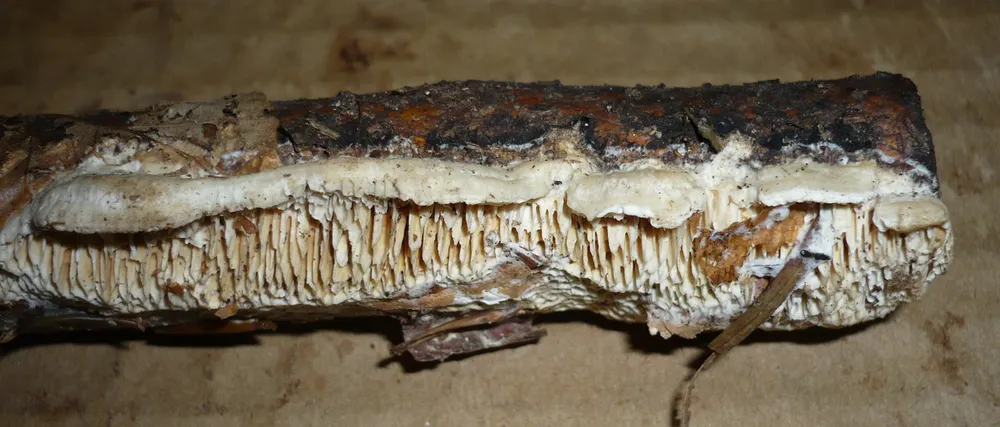
Antrodia albida
_(d.j.b.)_02.webp)
Birch polypore
Fomitopsis betulina
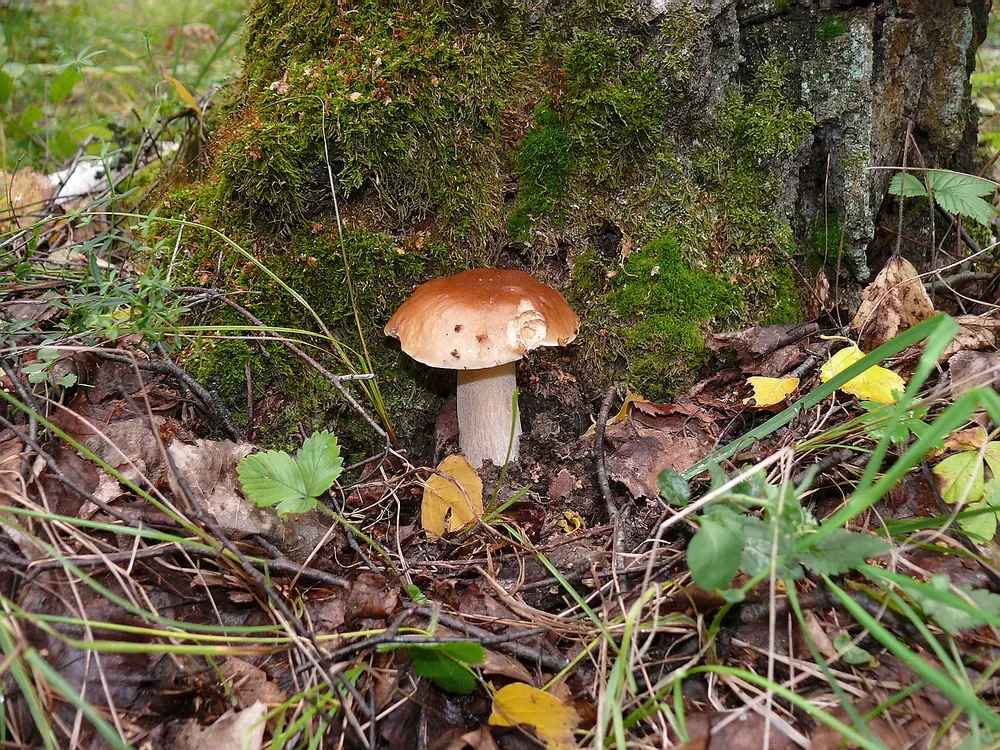
Boletus betulicola
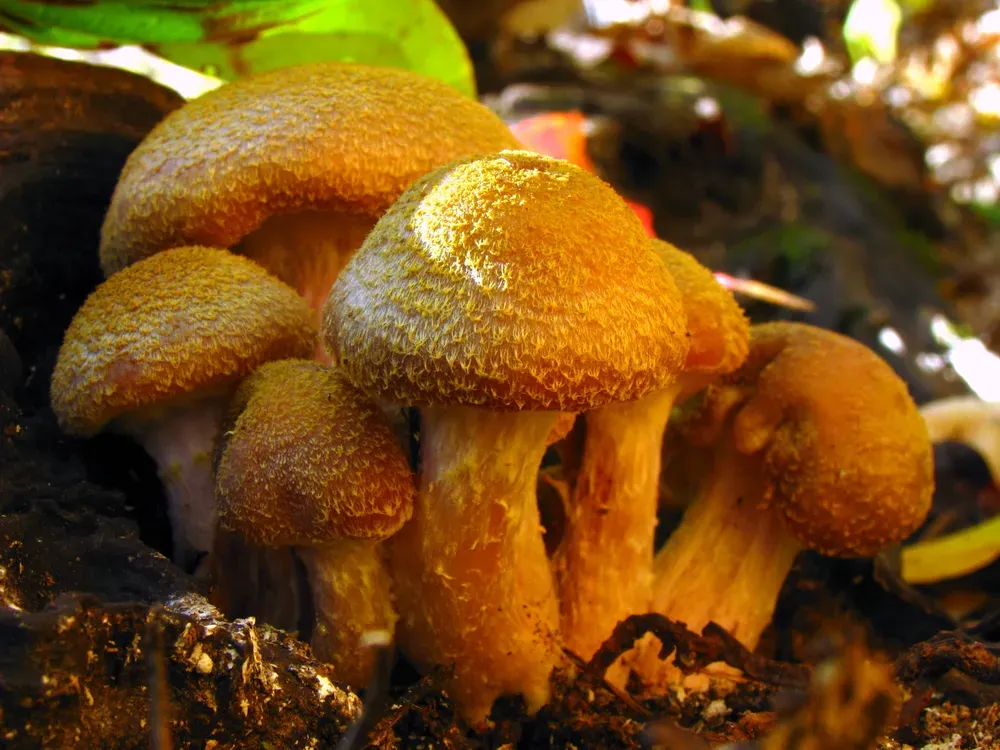
Bulbous honey fungus
Armillaria gallica
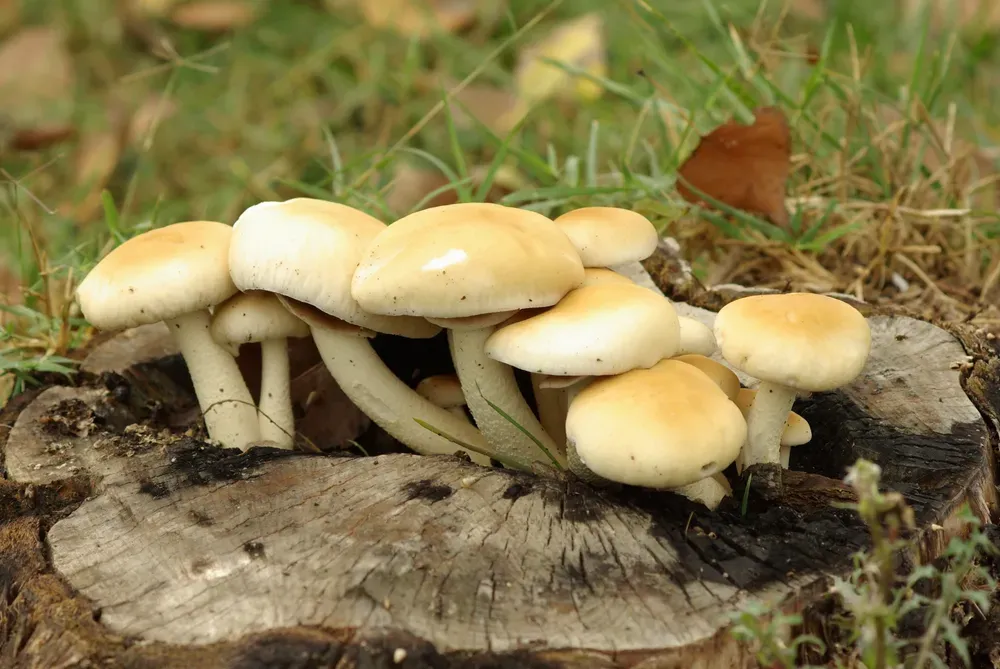
Poplar fieldcap
Cyclocybe aegerita
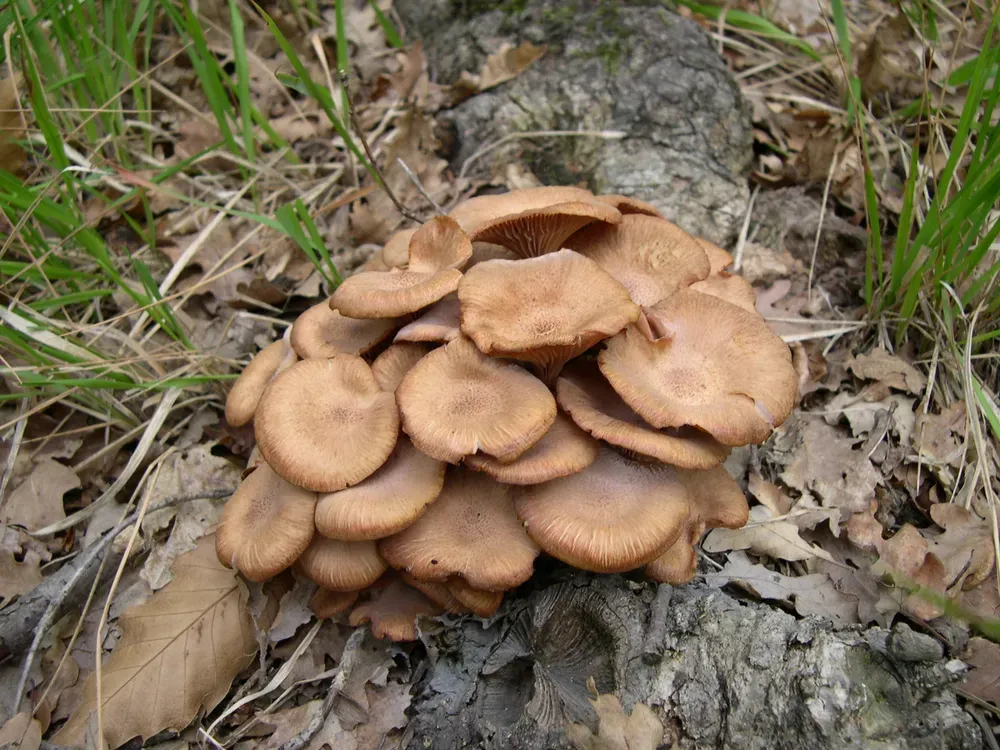
Ringless honey fungus
Desarmillaria tabescens
Related reading
 How to identify
Edible mushrooms that grow on trees and stumps
Plenty of mushrooms grow on trunks and stumps, and some of them are delicious. Here's which tree mushrooms are…
August 13, 2026·2 min How to identify
Chicken of the woods: how to identify it
Bright yellow chicken of the woods grows right on tree trunks and tastes like chicken. Here's how to identify…
August 8, 2026·2 min How to identify
Edible bracket fungi: chicken of the woods and dryad's saddle
Most bracket fungi are tough and inedible, but a few species are a real delicacy when young. Here's which brac…
July 29, 2026·2 min
Frequently asked questions
How can you tell a young one that's still edible?
Press it with a fingernail — the flesh should be springy and bounce back. If it's hard as wood, don't eat it. Second check — color: a young one is strikingly sulphur-yellow-orange, with a glossy moist surface; an old one is pale yellow to cream, with a matte surface. Third — the age of the fruiting body: 3-7 days after it appears. If in doubt, press it and look at the color.
How do you cook it?
Cut young ones into 1-2 cm pieces, boil for 10-15 min (for safety), then fry with onion and cream — the classic; it tastes like chicken breast. Experienced foragers skip the mandatory boiling, but for beginners it's a must. Pickling — good. Drying — poor (it turns leathery). First portion — small (50-100 g), to check your reaction.
Should you pick it from conifers?
No — L. huroniensis (the conifer variant) has a much higher concentration of irritants, and serious gastroenteritis has been described. As a rule, pick it ONLY from broadleaf trees (oak, willow, poplar, maple, ash). If you find it on a pine or spruce, walk on by.
Is it safe for children?
Not recommended for children under 5. Their digestive tract is more sensitive, with a risk of vomiting and dehydration. For older children — small portions, and check their reaction.
Where should you look for it?
On the trunks of living weakened and dead broadleaf trees — especially oak, willow, poplar, maple, ash. In forests, parks, shelterbelts and orchards. Often 1-5 m above the ground. It often grows on the same tree every year — remember your spots.
Which regions of Ukraine is it found in?
Common throughout the forest zone: the Carpathians, Prykarpattia, Polissia, the forest-steppe, the steppe (in shelterbelts and parks).
When should you look for it?
April — October, with two peaks: May-June (early summer flush) and August-September. One of the few mushrooms that appears as early as April-May, when there are practically no other mushrooms around.
What mushrooms is it confused with?
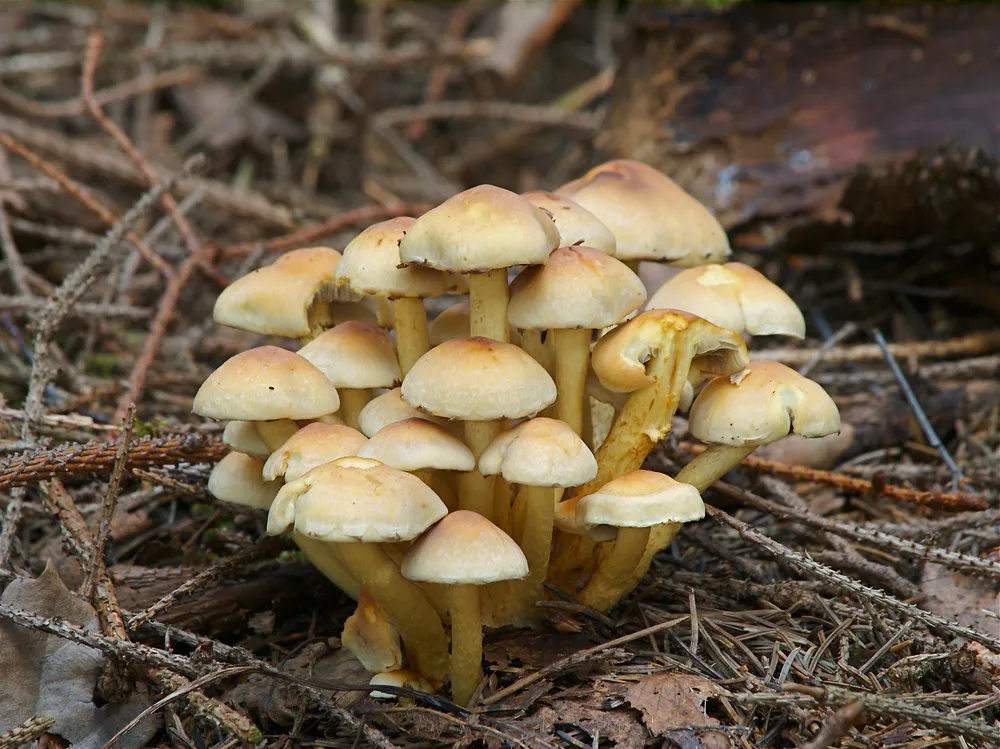
With Polyporus sulphureus var. huroniensis (on conifers) — dangerous, do not eat. With Pycnoporus cinnabarinus (cinnabar polypore) — smaller, leathery, inedible. With Hypholoma fasciculare (Sulphur tuft) — a completely different build (with a stem, on stumps), poisonous. The key check: a large, fleshy fruiting body on a broadleaf trunk, with no stem, strikingly sulphur-yellow.
Is Chicken of the woods edible or poisonous?
Does Chicken of the woods have gills or pores?
What does the cap of Chicken of the woods look like?
What does the stem of Chicken of the woods look like?
Sources
- [1]Вікіпедія (українська)
- [2]Атлас грибів України, Зеров Д.К. (1979)
- [3]MycoBank Database
- [4]Index Fungorum
- [5]GBIF
- [6]iNaturalist Ukraine