_Singer_279454.webp)
Amylocystis lapponicaAmylocystis lapponicus
Expert-verifiedUpdated October 3, 2026
Passport
- Edibility
- Inedible
- Season
- Jul — Aug
- Hymenophore
- Pored
- Cap color
- White
- Size
- Medium (5–15 cm)
- Smell
- Odorless
- Reviewed
- Yes ✓
Quick answers
Where to look?
Conifer forest
When does it appear?
Jul — Aug
Active months: July, August.
How to recognize it? Three signs
- Cap color: White, Pink, Red, Brown
- Cap shape: Convex
- Smell: Odorless
Fruiting season
July – August
Description
Amylocystis lapponica is a substantial polypore of conifer forests. Unlike its relatives, the crust-like films, it has a real cap: a semicircular bracket 5–15 cm wide and up to 3 cm thick. In the forest you can see it from several meters away.
It grows on fallen and rotting conifer trunks, especially spruce. It causes brown rot — returning old trees to forest humus. Young fruiting bodies are pale: whitish-pinkish, rusty-white. With age they darken to a brownish brick-red.
A circumboreal species — it grows across the whole boreal belt: Northern Europe, Northern Asia, western North America. In Ukraine it has been found only in Transcarpathia, in old spruce forests. A find for an attentive naturalist-forager, not for the basket.
Cap
Semicircular cap 5–15 cm wide, up to 3 cm thick. At first white with a pinkish tinge, a rusty-white tone. It darkens with age, becoming brownish brick-red.
Hymenophore
Tubular pore surface. Tubes 1–4 mm long. Spore print white.
Stem
The stem is absent or very short and lateral. The cap is attached to the substrate by a broad base.
Flesh
flesh fleshy in young fruiting bodies, hardening with age and turning corky. Its color changes from white to reddish.
Smell
Mushroomy, faint. When dry it has practically no smell.
›Scientific synonyms (5)
Tyromyces lapponicus (Romell) J. Lowe 1975, Leptoporus lapponicus (Romell) Pilát 1938, Ungulina lapponica (Romell) Pilát 1934, Polyporus ursinus Lloyd 1915, Polyporus lapponicus Romell 1911
Lookalikes
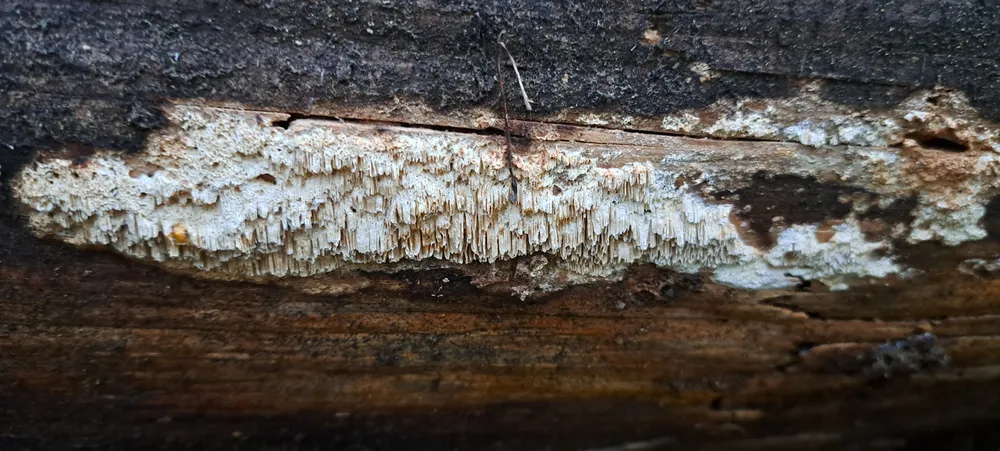
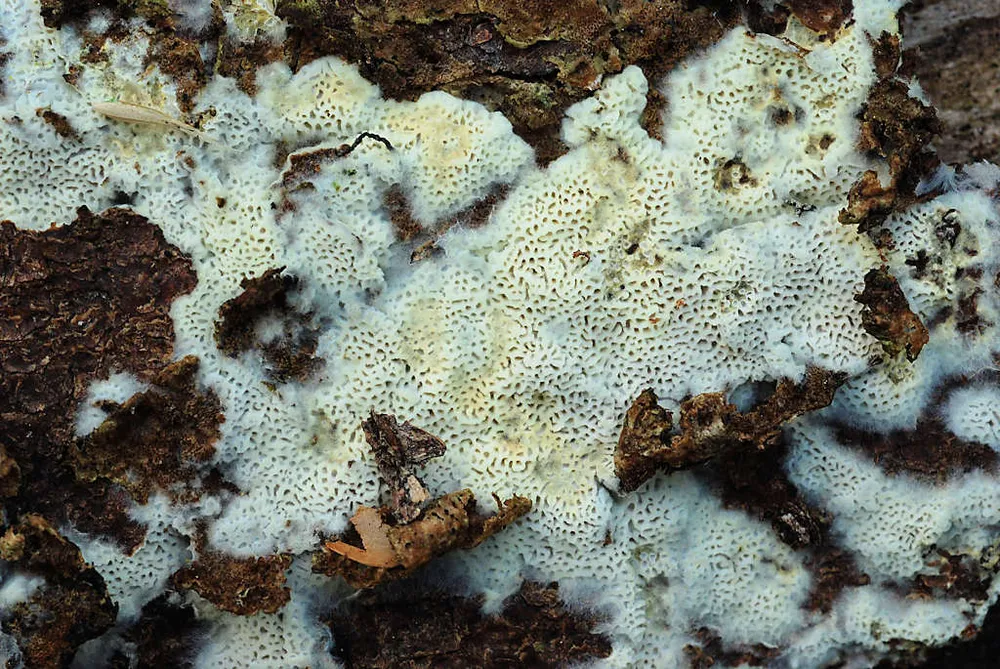
Related species
Mushrooms of the same genus and habitat — to study side by side and never mix up.
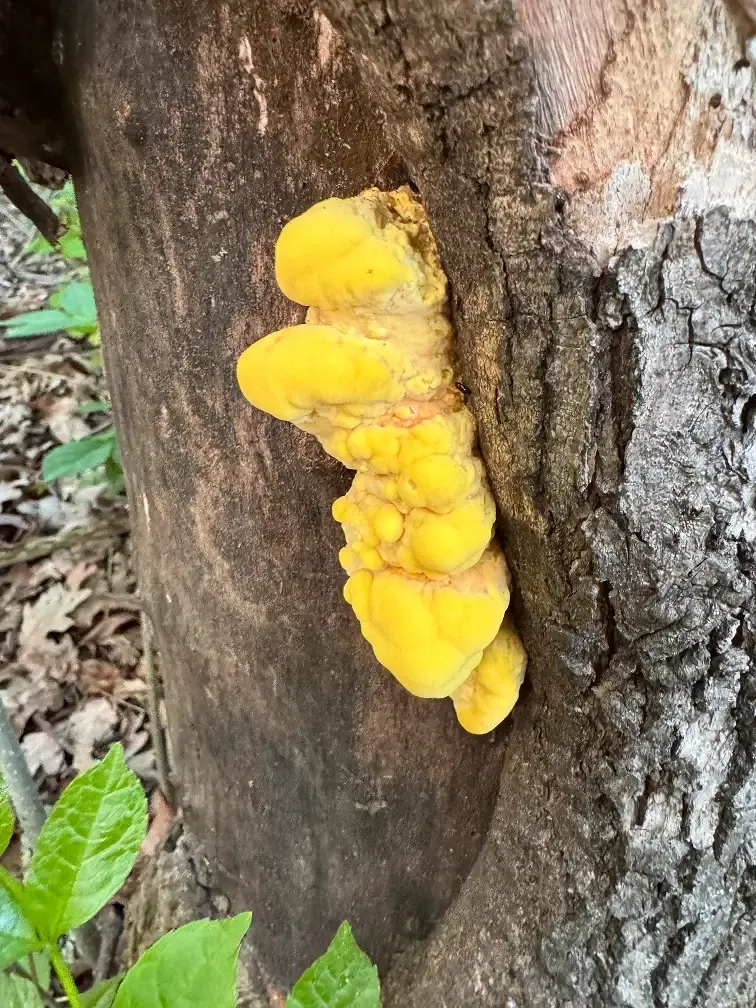
Chicken of the woods
Laetiporus sulphureus
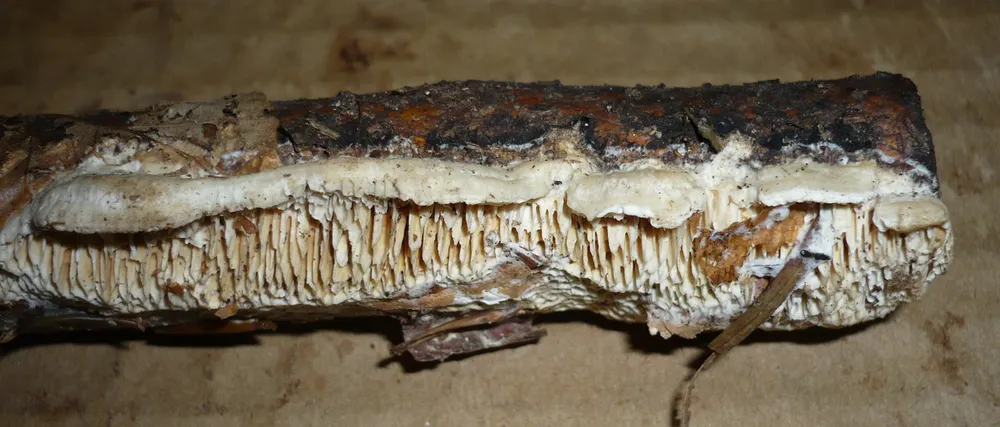
Antrodia albida
_(d.j.b.)_02.webp)
Birch polypore
Fomitopsis betulina
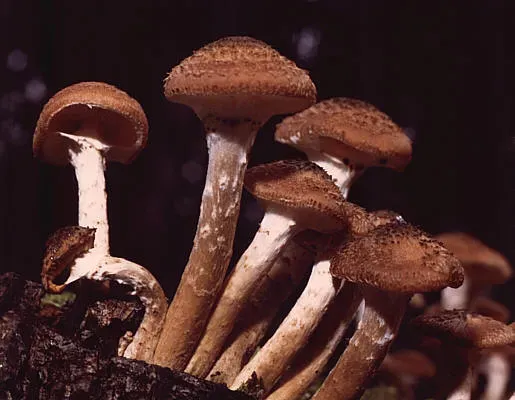
Dark honey fungus
Armillaria ostoyae
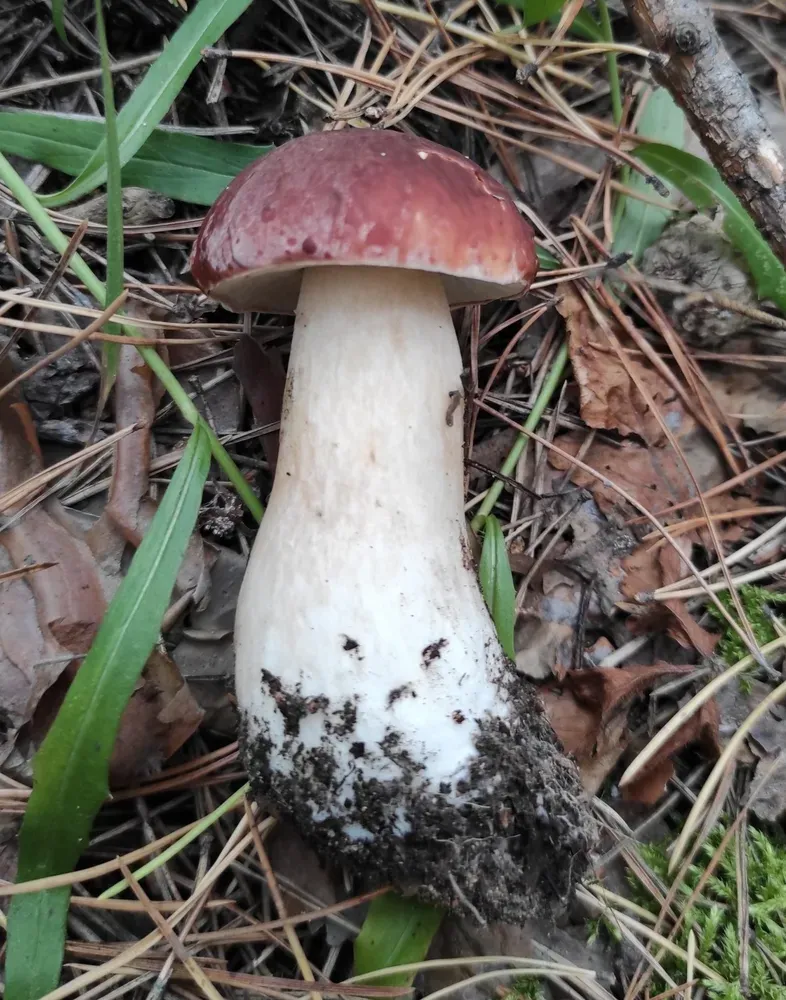
Pine bolete
Boletus pinophilus
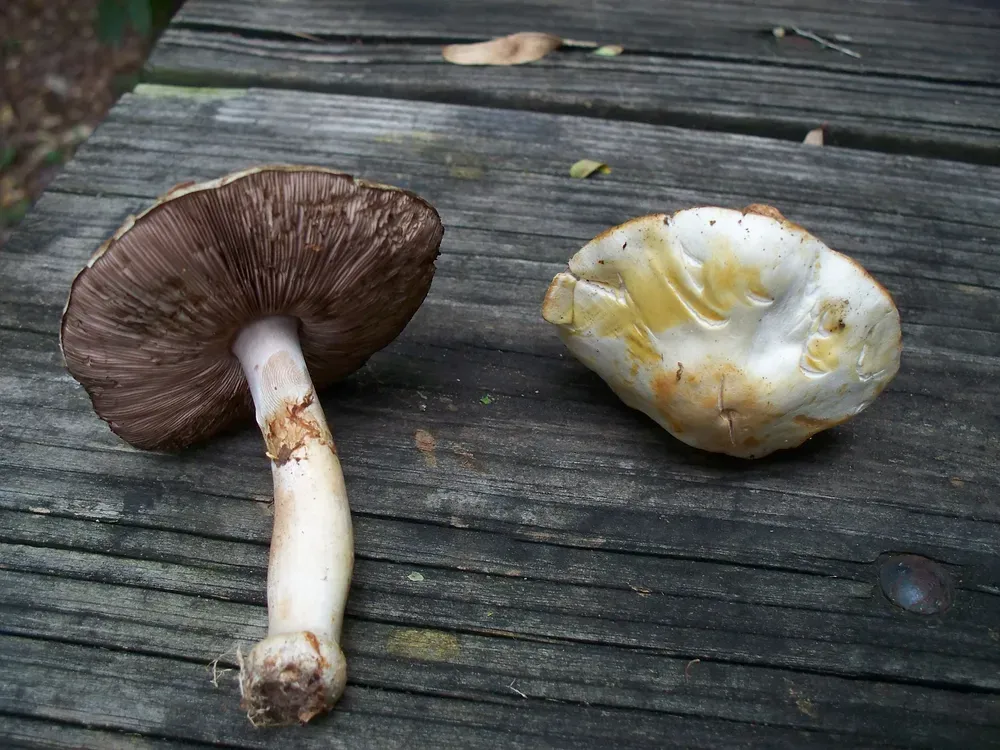
Agaricus abruptibulbus
Agaricus haemorrhoidarius
Agaricus haemorroidarius
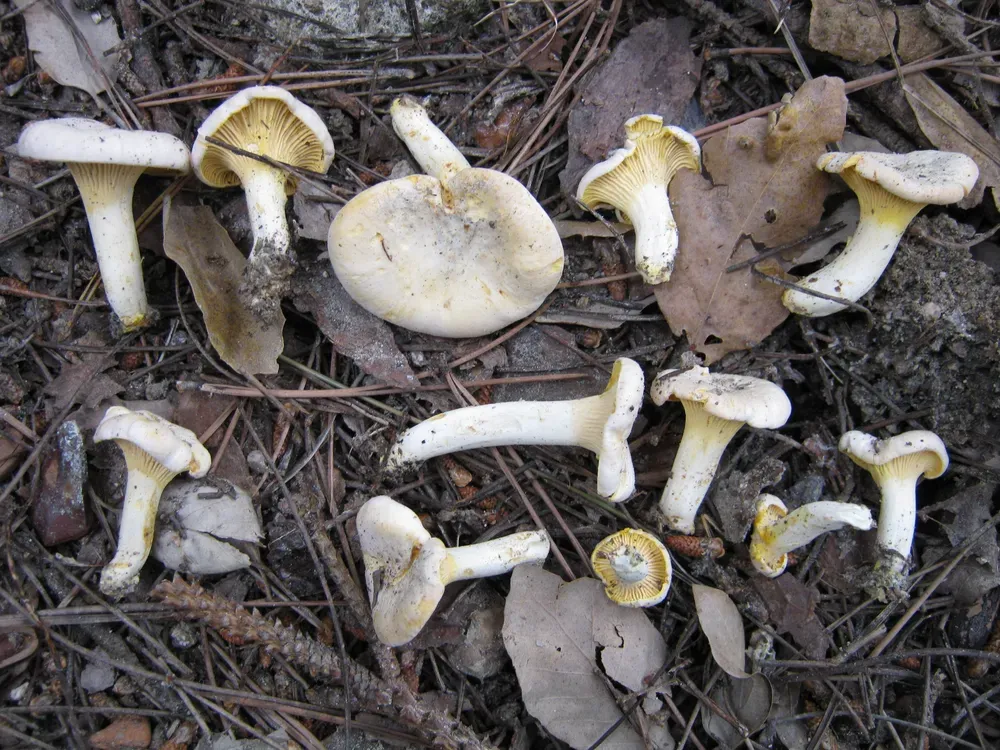
Cantharellus pallens
Frequently asked questions
Can you eat it?
No. flesh is hard and has no culinary value. Old fruiting bodies turn corky — material for decay, not for the kitchen.
Is it poisonous?
No specific toxins have been described, but it is not an edible species. No cases of poisoning have been recorded.
Where should you look for it?
On fallen trunks and stumps of conifers — especially spruce. In old mountain spruce forests of Transcarpathia.
Does it grow in other regions of Ukraine?
Known finds in Ukraine come only from Transcarpathia. It does not occur in lowland pine forests.
When does it fruit?
From July to the end of August — a short summer window. If you are planning a hunt, aim for early to mid-summer.
Can you see old fruiting bodies out of season?
Yes, darkened corky bodies stay on the trunks long after fresh ones have gone.
What is it confused with?
With other polypores of the families Fomitopsidaceae and Polyporaceae. In the damp season, color helps — that typical brownish brick-red tint.
Are there dangerous look-alikes?
No, there are no seriously poisonous species among its polypore relatives. But they are all inedible, so there is no point in picking them.
Is Amylocystis lapponica edible or poisonous?
Does Amylocystis lapponica have gills or pores?
What does the cap of Amylocystis lapponica look like?
What does the stem of Amylocystis lapponica look like?
Sources
- [1]Вікіпедія (українська)
- [2]Атлас грибів України, Зеров Д.К. (1979)
- [3]MycoBank Database
- [4]Index Fungorum
- [5]GBIF
- [6]iNaturalist Ukraine