_(d.j.b.)_02.webp)
Birch polyporeFomitopsis betulina
Expert-verifiedUpdated October 3, 2026
Passport
- Edibility
- Inedible
- Season
- Jul — Dec
- Hymenophore
- Pored
- Cap color
- White
- Size
- Medium (5–15 cm)
- Smell
- Odorless
- Reviewed
- Yes ✓
Quick answers
Where to look?
Deciduous forest, Mixed forest
When does it appear?
Jul — Dec
Active months: July, August, September, October, November, December.
How to recognize it? Three signs
- Cap color: White, Cream, Brown
- Cap shape: Irregular
- Smell: Odorless
Fruiting season
July – December
Description
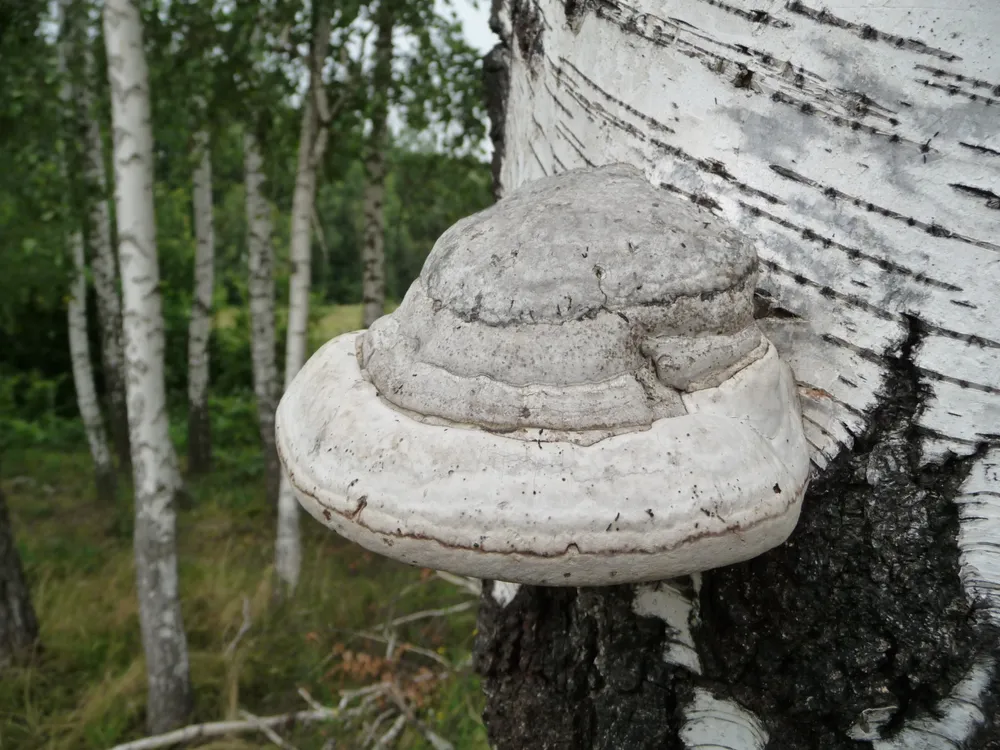
The Birch polypore, or birch bracket (Fomitopsis betulina, formerly Piptoporus betulinus), is a distinctive whitish, hoof-shaped bracket fungus that grows exclusively on birches, and only on them. It is one of the most recognizable bracket fungi in Ukraine — a firm, hoof-shaped fruiting body with a pale cream upper surface and a finely porous white underside. It’s easy to find: almost any old or fallen birch in the forest is very likely to carry a birch polypore.
Inedible for cooking — the flesh is corky, bitter and unpleasant. But it is one of the best-known medicinal mushrooms of Ukrainian and European folk medicine. It contains betulinic acid, polysaccharides (β-glucans) and a number of triterpenoids with anti-inflammatory, antibacterial and antitumor properties demonstrated in laboratory studies. Ötzi the Iceman (~3300 BC), found in the Alps, carried two pieces of birch polypore with him — the oldest documented use of a mushroom as a remedy by humans.
In Ukraine it is widespread throughout the forest zone and very abundant in Polissia, the Carpathians, the Carpathian foothills and the forest-steppe — wherever there are birches. Fruiting bodies appear in late summer (July–August), stay on the tree for many months and often survive the winter. You can harvest it practically all year round, but late summer is best, while the flesh is still white and springy.
Cap
The fruiting body is hoof-shaped or hemispherical, attached to the birch at the side. Size 5-20 cm across, 3-8 cm thick. The surface is smooth, pale cream to flesh-gray or light brown, often with a thin, papery crust that cracks with age. The margin is even and rounded, slightly curved downward in mature specimens.
Hymenophore
Tubular hymenophore. Tubes short, 0.3-0.5 cm deep, with round or oval pores, 3-5 per millimeter. White to cream, turning yellowish or brownish as it dries. Does not separate easily from the flesh.
Stem
The stem is absent or very short and fused to the tree. The fruiting body attaches to the birch bark at its side through a knobby outgrowth.
Flesh
Flesh of young fruiting bodies is white, springy, fleshy and soft to the touch, with a characteristic “marshmallow-like” edge. With age it becomes corky, hard and light. Dried flesh resembles cork — historically it was used for razor strops, for carrying embers (Ötzi carried fire with it) and for mounting surgical instruments.
Smell
Odor faint, mushroomy; in fresh specimens slightly pleasant with a sourish note. The taste of the flesh is bitter and astringent, unpleasant, with a quinine-like aftertaste. This is one of the reasons the mushroom is inedible.
›Scientific synonyms (8)
Piptoporus betulinus (Bull.) P.Karst., Boletus betulinus Bull., Polyporus betulinus (Bull.) Fr., Placodes betulinus (Bull.) Quél., Fomes betulinus (Bull.) Gillot & Lucand, Ungulina betulina (Bull.) Pat., Boletus suberosus Wulfen, Agarico-pulpa pseudoagaricon Paulet Traité des champignons
Lookalikes
Related species
Mushrooms of the same genus and habitat — to study side by side and never mix up.
Chicken of the woods
Laetiporus sulphureus
_Singer_279454.webp)
Amylocystis lapponica
Amylocystis lapponicus
Anomoporia bombycina
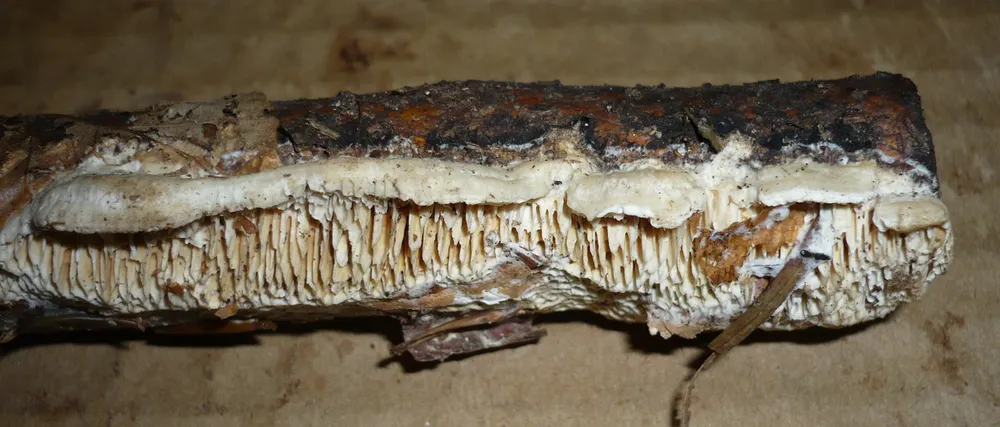
Antrodia albida
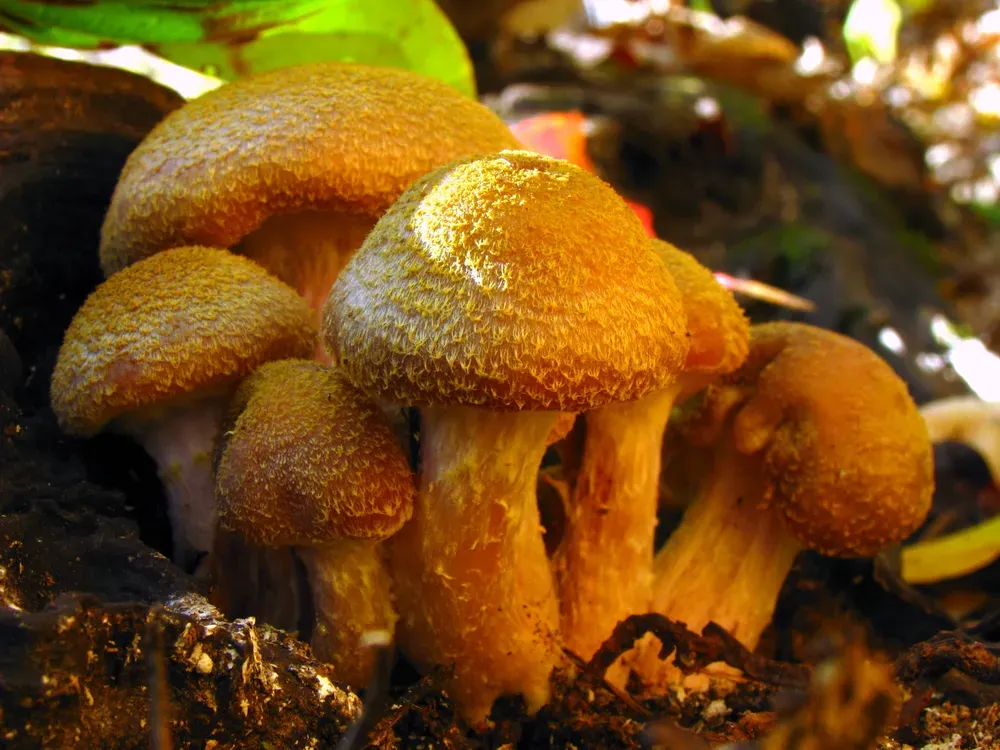
Bulbous honey fungus
Armillaria gallica
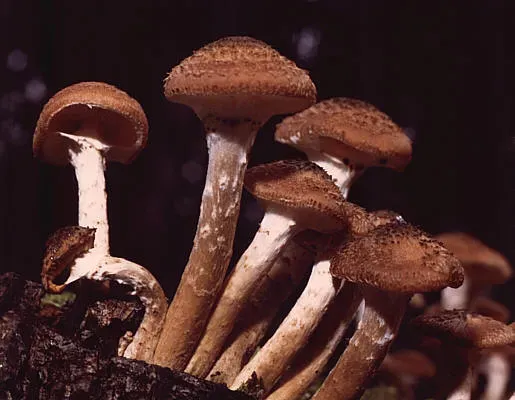
Dark honey fungus
Armillaria ostoyae
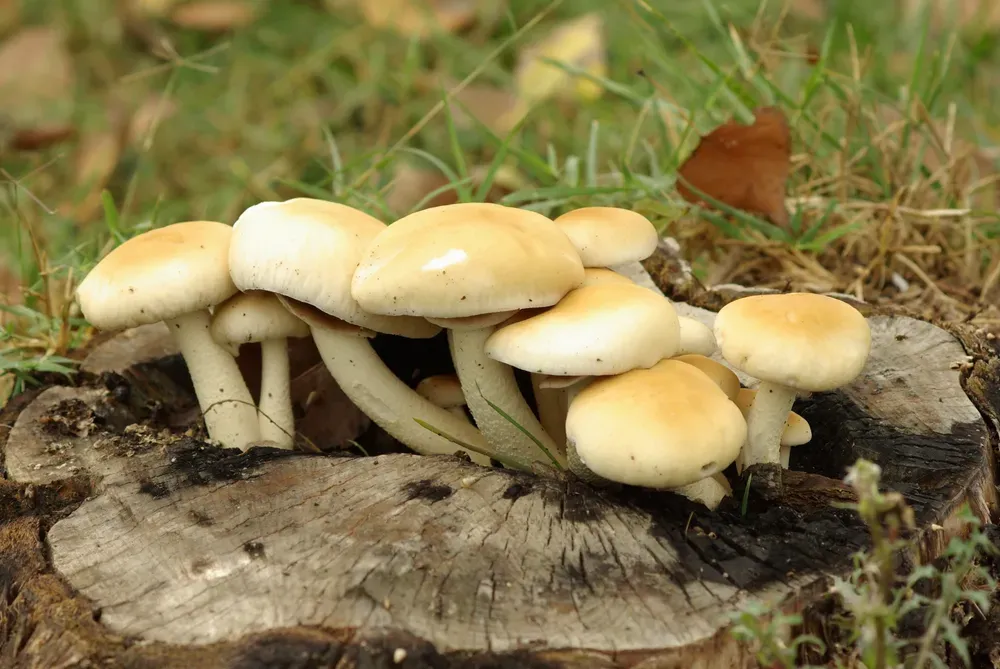
Poplar fieldcap
Cyclocybe aegerita
Ringless honey fungus
Desarmillaria tabescens
Frequently asked questions
Can you eat it?
No, it is inedible for cooking — the flesh is corky, very bitter and astringent. It is not poisonous — there are no acute symptoms — but the taste is so unpleasant that it’s simply impossible to eat. In folk medicine it is used only as a tea, decoction or tincture, not as food.
Is tea made from it safe?
In moderate amounts — yes. The folk tradition is to steep 1-2 pieces of dried flesh in 0.5 liters of boiling water for 10-15 minutes and drink a cup 1-2 times a day for a course of 2-4 weeks. Hot tea during a high fever has a pain-relieving and anti-inflammatory effect. Important: with cancer or other serious diagnoses, this is not an alternative to evidence-based treatment, only a supplementary remedy after consulting your doctor.
What makes it useful in medicine?
Betulinic acid and its derivatives (from birch bark and the mycelium), β-glucan polysaccharides (immune-stimulating), and triterpenoids (fomitopsic acids) with anti-inflammatory action. In laboratory studies it has shown activity against Borrelia (Lyme disease), some bacteria and tumor cells. There is not yet enough epidemiological evidence of its effectiveness in humans, so it is not officially registered as a medicine in Ukraine or the EU.
Where does it grow?
Exclusively on birches — an obligate parasite/saprotroph that lives only on this genus of trees. It starts as a weak parasite on still-living but weakened birches, then carries on living on the dead wood. It does not occur on other trees — it’s an absolute marker of the host tree.
Which regions of Ukraine?
Throughout the forest zone wherever there are birches. Especially abundant in Polissia (Chernihiv, Kyiv, Zhytomyr, Volyn and Rivne oblasts), the Carpathians, the Carpathian foothills and the forest-steppe. In the steppe — in planted birch stands. One of the most common bracket fungi.
When should you harvest it?
Young white fruiting bodies appear in July–August and mature by October. The best time to harvest is late summer and September, while the flesh is still white and springy. Old fruiting bodies that have survived the winter are usable too, but are less pharmacologically active. Collect only from dead or fallen birches — never from a living tree.
How do you recognize it?
Three features together: 1) a hoof shape; 2) growth only on birch; 3) a white, finely porous underside. If all of these match — it’s definitely a birch polypore. The host tree is the most important diagnostic feature.
What is it confused with?
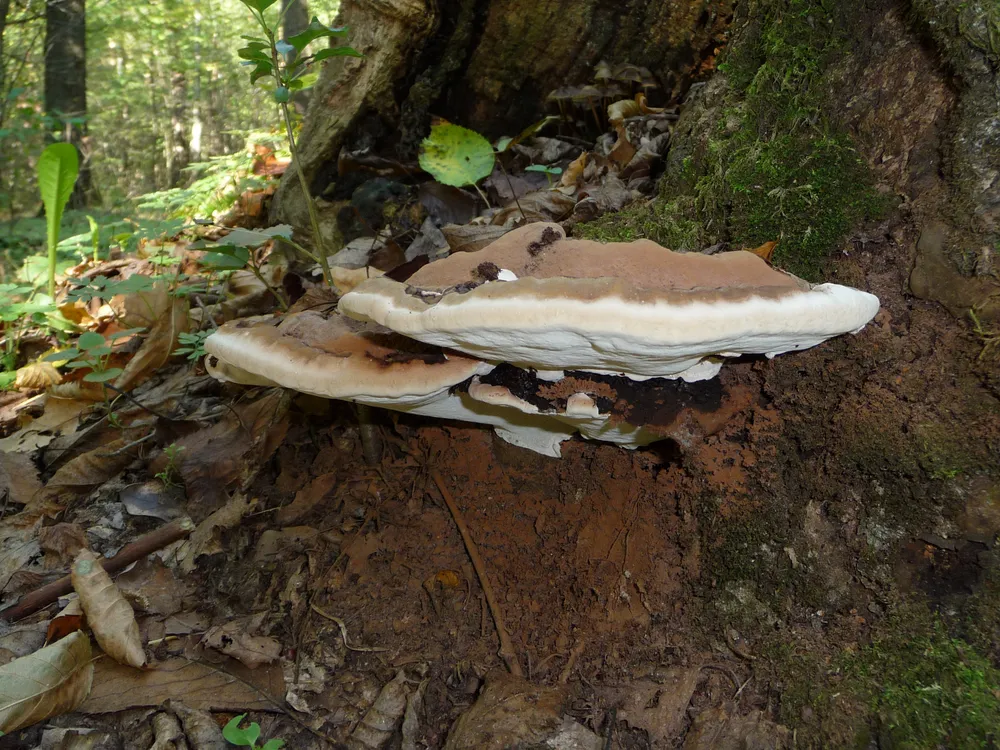
With the Tinder fungus (Fomes fomentarius) — that one is gray-black, with a hard, “stony” surface, and grows on beech and birch. With the Artist’s bracket (Ganoderma applanatum) — that one has a yellowish-white margin and a brown surface, on broadleaf trees. With chaga (Inonotus obliquus) — that one is dark, sooty black, on birches. A white, hoof-shaped bracket on a birch = only F. betulina.
Is Birch polypore edible or poisonous?
Does Birch polypore have gills or pores?
What does the cap of Birch polypore look like?
What does the stem of Birch polypore look like?
Sources
- [1]Вікіпедія (українська)
- [2]Атлас грибів України, Зеров Д.К. (1979)
- [3]MycoBank Database
- [4]Index Fungorum
- [5]GBIF
- [6]iNaturalist Ukraine