.webp)
Aurantiporus fissilis
Expert-verifiedUpdated June 13, 2026
Passport
- Edibility
- Inedible
- Season
- Jul — Oct
- Hymenophore
- Pored
- Cap color
- White
- Size
- Large (over 15 cm)
- Smell
- Odorless
- Reviewed
- Yes ✓
Quick answers
Where to look?
Deciduous forest, Mixed forest
When does it appear?
Jul — Oct
Active months: July, August, September, October.
How to recognize it? Three signs
- Cap color: White, Yellow, Brown
- Cap shape: Irregular
- Smell: Odorless
Fruiting season
July – October
Description
Aurantiporus fissilis is a fleshy polypore of broadleaf trees, most often found on apple trees, aspens and birches. It doesn't shy away from living trunks either — in orchards it's a common sign of internal rot in the tree.
The fruiting bodies are broad: up to 20 cm wide, up to 10 cm long, 2–8 cm thick. Young Aurantiporus is white and soft to the touch, turns yellow over time, then brown. As it dries it becomes hard and leathery.
The species is widespread in Central and Northern Europe. In Ukraine it occurs in Polissia, the Forest-Steppe and the Carpathians — mostly where there are old orchards and broadleaf woodlands. It has no culinary value, but for a gardener it's a signal: the tree needs attention.
Cap
Cap up to 20 cm wide, up to 10 cm long, 2–8 cm thick. White and soft at first, turning yellow with time, then brown. Hardens as it dries.
Hymenophore
Tubular hymenophore. The tubes change color in step with the cap — white → yellow → brown. Spore print white.
Stem
No stem. The fruiting body is attached to the trunk by its lateral base.
Flesh
flesh fleshy and soft in young fruiting bodies, becoming hard and leathery in old ones. White, yellowing with time.
Smell
Faint mushroomy smell; in old fruiting bodies it may disappear entirely.
Lookalikes
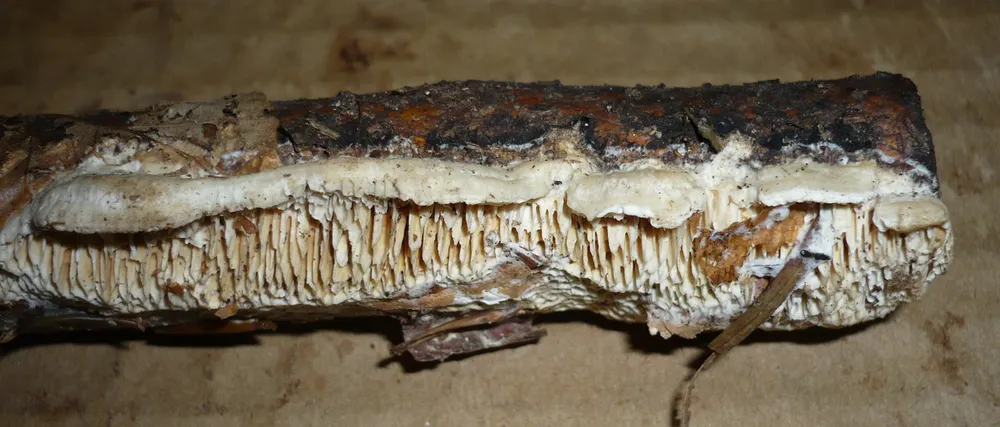
Related species
Mushrooms of the same genus and habitat — to study side by side and never mix up.
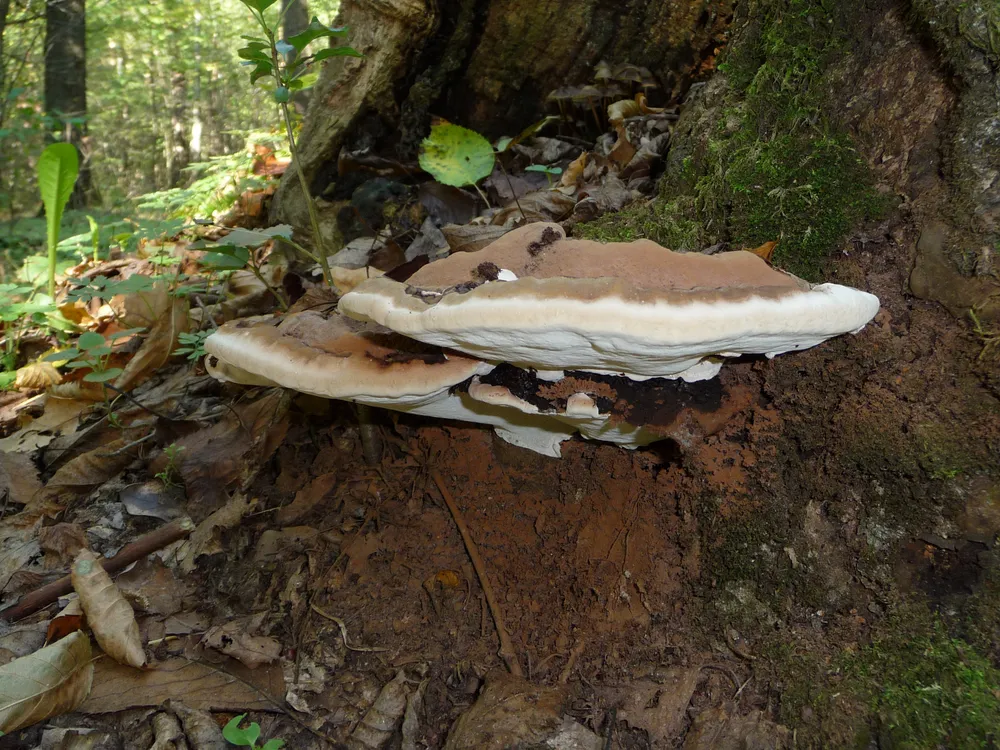
Artist's bracket
Ganoderma applanatum
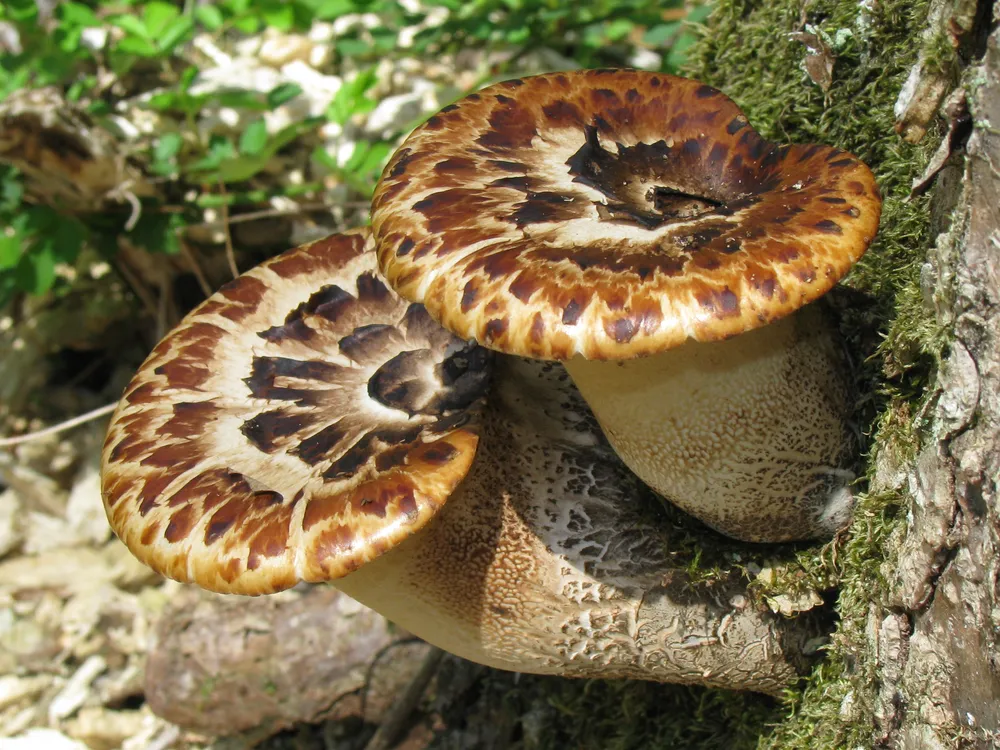
Dryad's saddle
Cerioporus squamosus
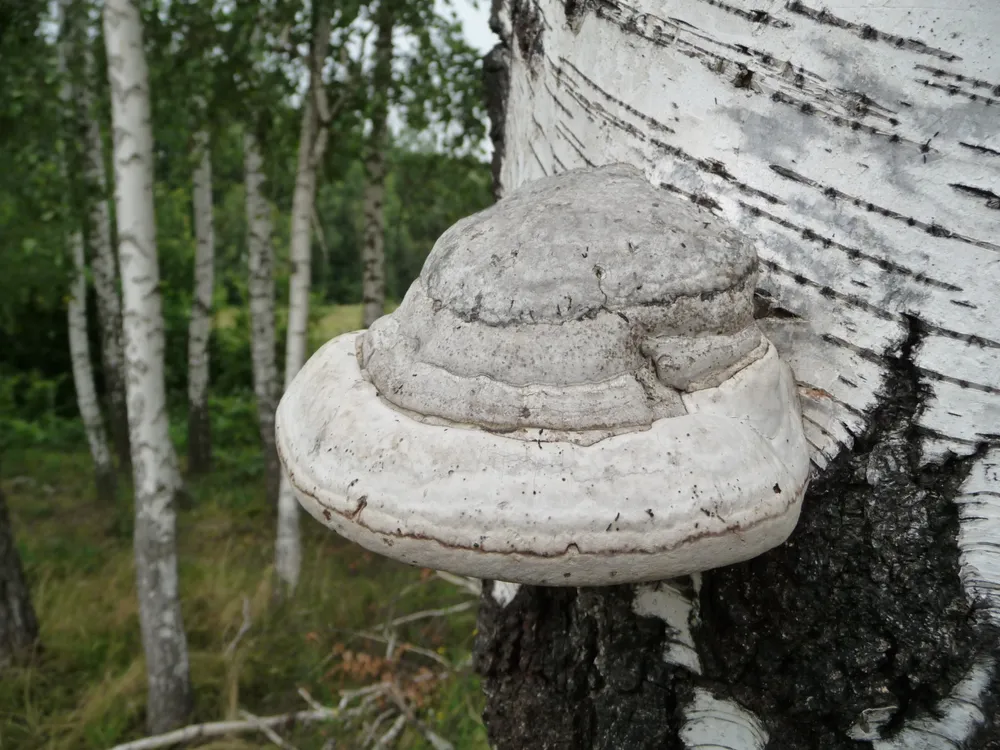
Tinder fungus
Fomes fomentarius
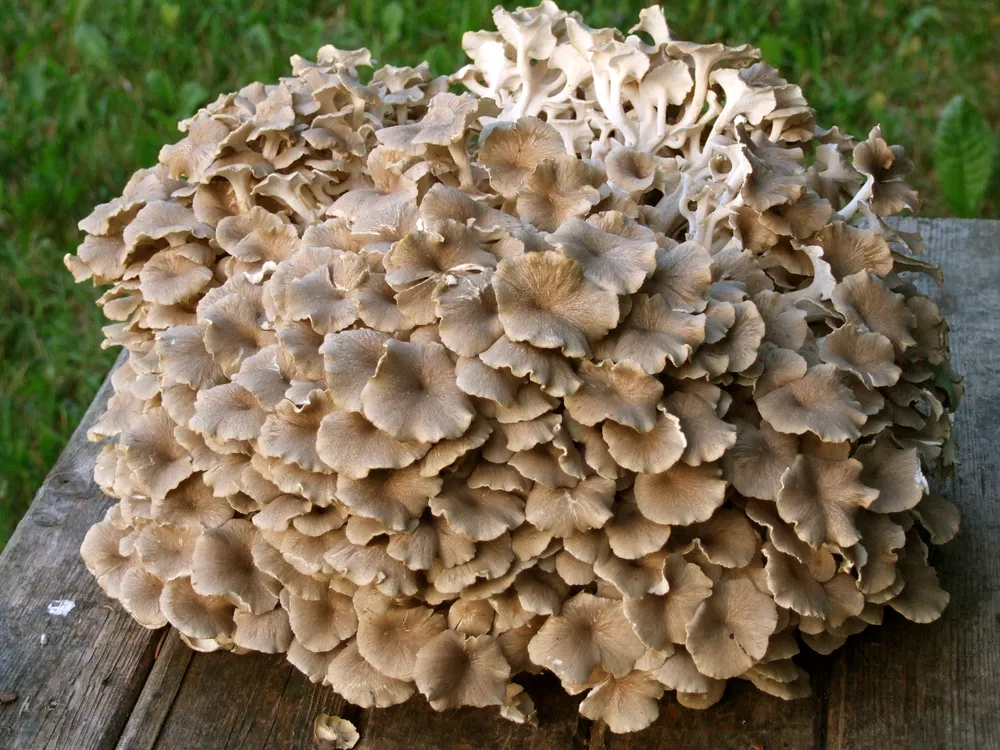
Umbrella polypore
Polyporus umbellatus
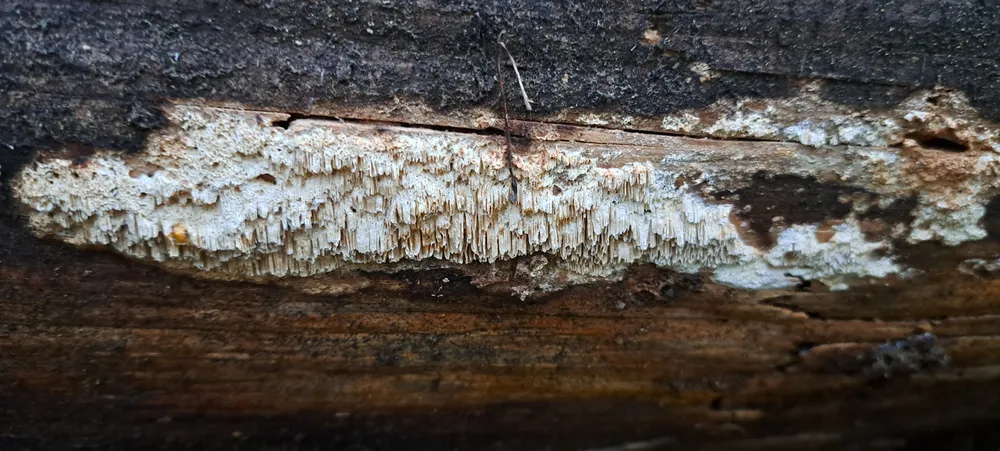
Amyloporia sinuosa
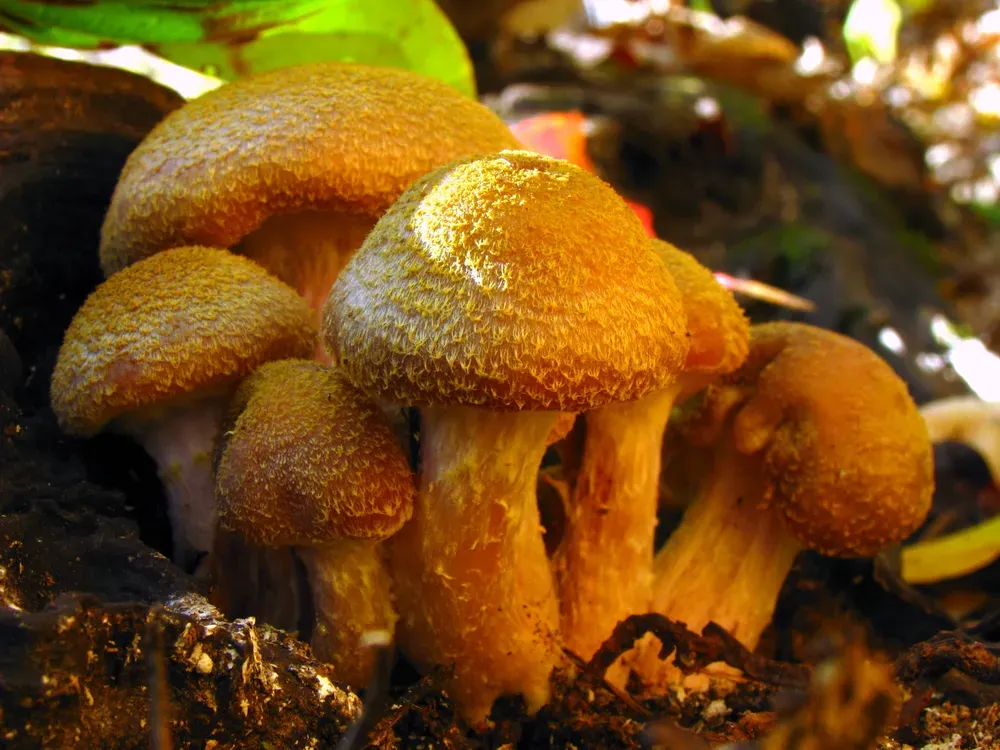
Bulbous honey fungus
Armillaria gallica
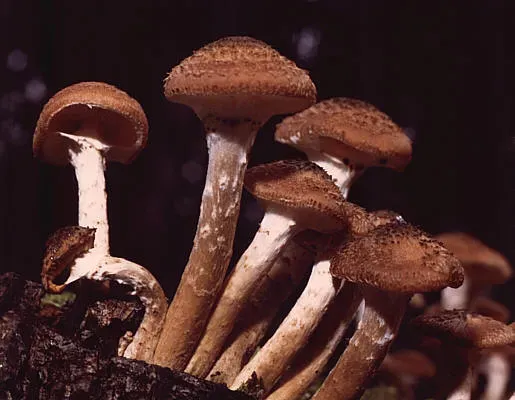
Dark honey fungus
Armillaria ostoyae
Poplar fieldcap
Cyclocybe aegerita
Frequently asked questions
Can you eat it?
No. flesh quickly becomes hard and leathery. No food value.
What does it mean when it appears on my apple tree?
It's a bad sign: the mycelium is already inside the wood and breaking it down. A mature tree with Aurantiporus is at risk, especially after strong winds. Old orchard trees are worth inspecting.
Where should you look for it?
On trunks of living and dead broadleaf trees — most often apple, aspen, birch. In old orchards, broadleaf and mixed forests.
In which regions of Ukraine?
Polissia, the Forest-Steppe, the Carpathians. Rare in the steppe zone, where there are fewer suitable trees.
When can you see it?
Fresh fruiting bodies appear in late summer and autumn. Dried ones stay on the trunk for months and even years.
Is it better after rain?
Yes, in damp weather the soft white stage is more vivid. In a drought the fruiting body quickly yellows and hardens.
What is it confused with?
With other fleshy polypores — Tyromyces, Postia, Climacocystis. Many of them have a similar soft white stage. Exact identification is by mature fruiting bodies and spores.
How do you tell it apart from conifer polypores?
Aurantiporus sticks to broadleaf trees — that's your first filter. You won't find it on pine or spruce.
Is Aurantiporus fissilis edible or poisonous?
Does Aurantiporus fissilis have gills or pores?
What does the cap of Aurantiporus fissilis look like?
What does the stem of Aurantiporus fissilis look like?
Sources
- [1]Вікіпедія (українська)
- [2]Атлас грибів України, Зеров Д.К. (1979)
- [3]MycoBank Database
- [4]Index Fungorum
- [5]GBIF
- [6]iNaturalist Ukraine