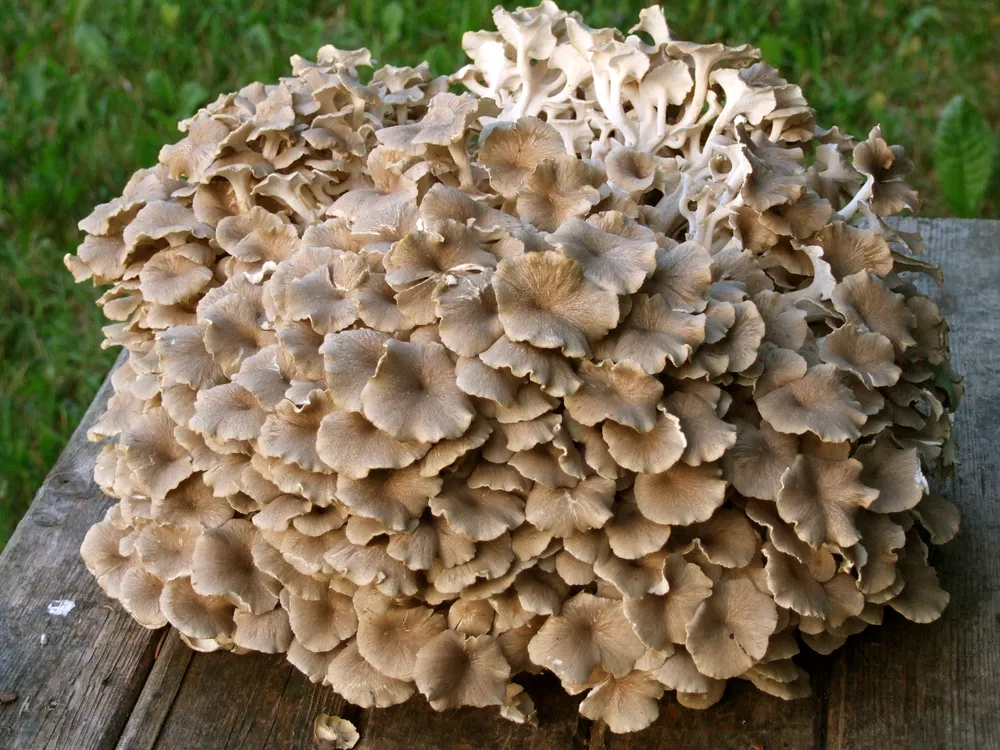
Umbrella polyporePolyporus umbellatus
Expert-verifiedUpdated October 3, 2026
Passport
- Edibility
- Edible
- Season
- Jul — Sep
- Hymenophore
- Pored
- Cap color
- Brown
- Size
- Giant (>25 cm)
- Smell
- Pleasant
- Reviewed
- Yes ✓
Quick answers
Where to look?
Deciduous forest
When does it appear?
Jul — Sep
Active months: July, August, September.
How to recognize it? Three signs
- Cap color: Brown, Grey
- Cap shape: Convex
- Smell: Pleasant, Floury
Fruiting season
July – September
Description
The umbrella polypore (Polyporus umbellatus, synonyms — Grifola umbellata, Dendropolyporus umbellatus) is a rare and valuable edible and medicinal mushroom with a distinctive large, bushy fruiting body made up of many (50-200) small caps on a shared branching stem. The Latin epithet umbellatus means "umbrella-like" — a nod to the cluster's many small caps, like little umbrellas. The whole cluster measures 20-50 cm across, the fruiting body weighs up to 3-4 kg (individual giants reach 10 kg!).
In Ukraine it is listed in the Red Data Book (category "vulnerable"). Picking it in the wild is not recommended; if you find one, photograph it for iNaturalist UA and leave it to grow. Its decline is linked to the felling of old oak and beech forests (its usual habitat) and pressure from foragers (because of its high culinary and medicinal value).
A superb edible mushroom of excellent culinary quality — the flesh is tender, with a pleasant mushroomy taste and no bitterness. It is cooked like porcini: fried, stewed, pickled, dried. No need to boil first. Young ones are especially tasty (old ones get tough and lose their aroma).
Medicinal use — in traditional Chinese medicine it is known as "Zhū Líng" (猪苓) — "pig mushroom" — and has been used for millennia: diuretic, antitumor, immunomodulating. Modern research confirms the presence of polysaccharides with antitumor potential; in Japan it is used in combination therapy for hepatitis B and some cancers (as a dietary supplement, not instead of standard treatment). In folk medicine — for treating edema and hepatitis.
Key features of Polyporus umbellatus: Large (20-50 cm) bushy fruiting body made of 50-200 small caps Caps 1-4 cm across, each with a central stem Shared branching stem at the base Caps gray-brown, ochre-brown Underside of the caps — fine white pores (a polypore) Flesh pure white, brittle Pleasant mushroomy smell with a hint of flour Grows near the trunks of old oaks and beeches from a sclerotium in the soil
A distinctive feature: the mushroom grows from an underground sclerotium (a potato-like mass of mycelium) that can live for decades and fruit from time to time. This makes the species long-lived — a single sclerotium can fruit for 30-50 years.
In Ukraine, Polyporus umbellatus is rare, known from a few dozen sites: mainly in old beech and oak forests of the Carpathians, Prykarpattia and western Podillia, less often in Polissia. Season: July — September.
Cap
Large bushy fruiting body 20-50 cm across, with 50-200 small caps on a shared stem. Individual caps 1-4 cm across, round, convex-flat with a slightly depressed center. The surface is smooth or with fine felty fibers. Color gray-brown, ochre-brown, with fine radial fibrous patterns. Lighter when young, darker when old.
Hymenophore
Tubular hymenophore — fine, tiny white pores on the underside of the caps (1-3 pores/mm). Color white to cream, running down the stem. Spore print white.
Stem
Each little cap has a thin central stem 1-3 cm tall and 0.3-0.5 cm thick, white or grayish white. Shared branching stem at the base joins all the little caps and grows down into the underground sclerotium.
Flesh
Flesh pure white, brittle when young, somewhat tough when old. Does not change color when cut. Smell pleasantly mushroomy with a hint of flour or cucumber, taste mild, sweetish, not bitter.
Smell
Pleasantly mushroomy with a hint of flour and fresh cucumber. A characteristic feature of the species.
›Scientific synonyms (9)
Boletus umbellatus Pers., Polyporus umbellatus (Pers.) Fr., Polypilus umbellatus (Pers.) P. Karst., Cerioporus umbellatus (Pers.) Quél., Grifola umbellata (Pers.) Pilát, Boletus ramosissimus Scop., Boletus ramosus Vahl, Polyporus chuling Shirai, Polyporus chu-ling Shirai (1905)
Lookalikes
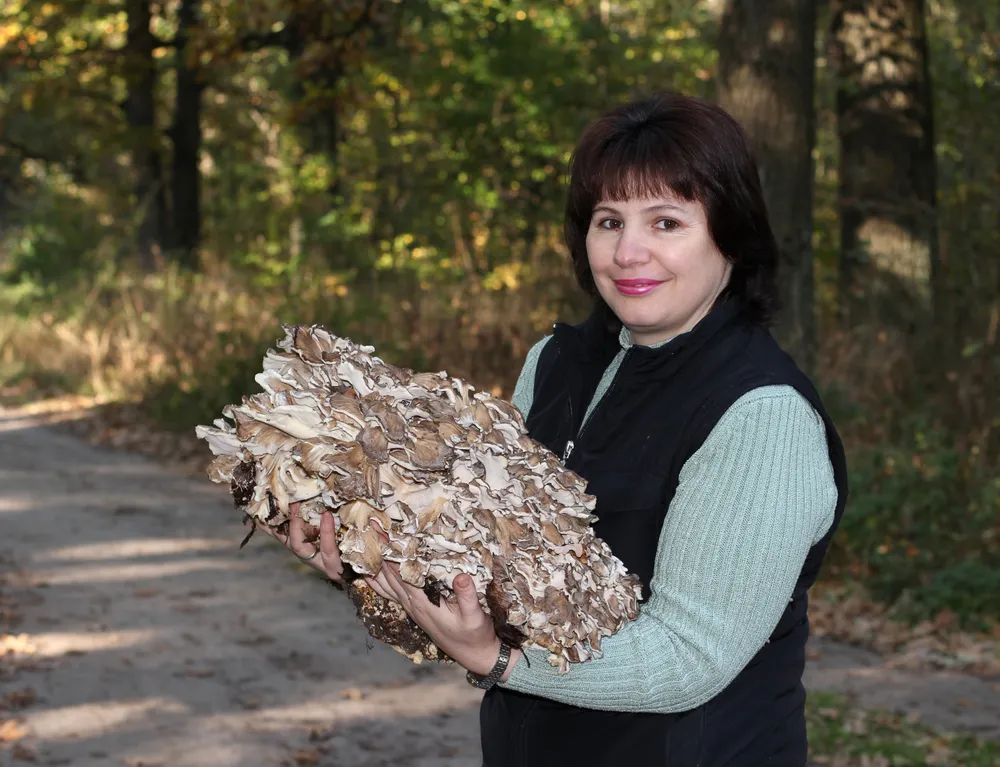
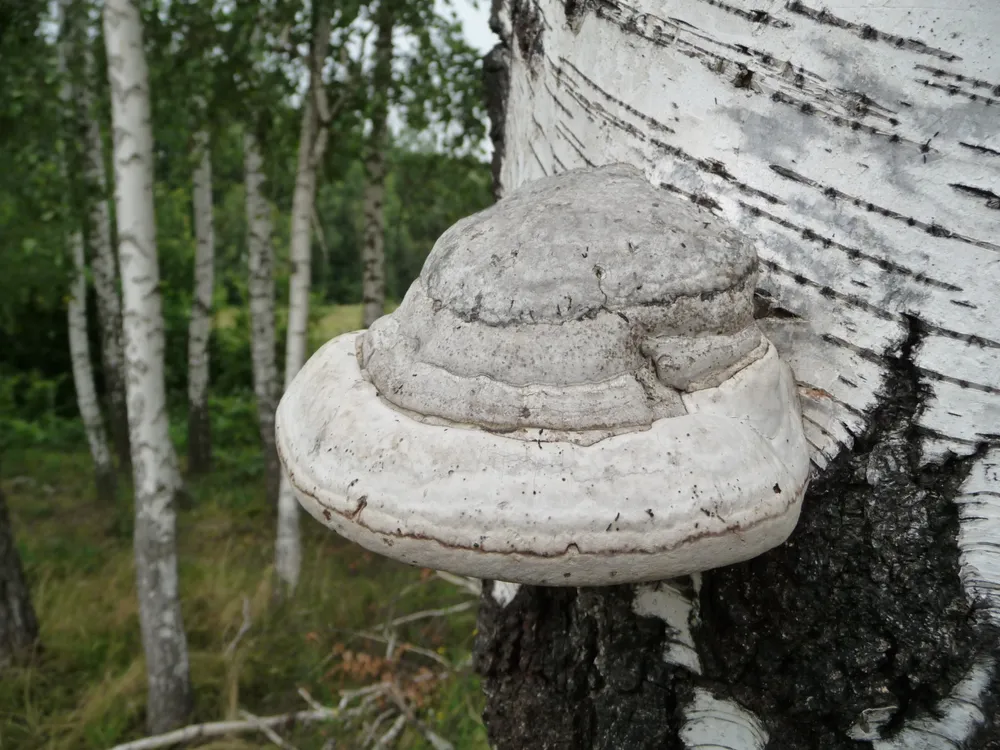
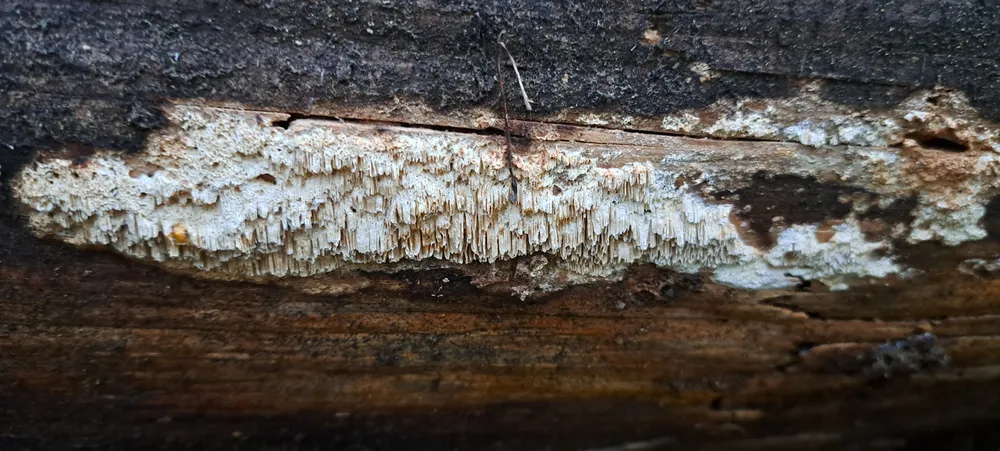
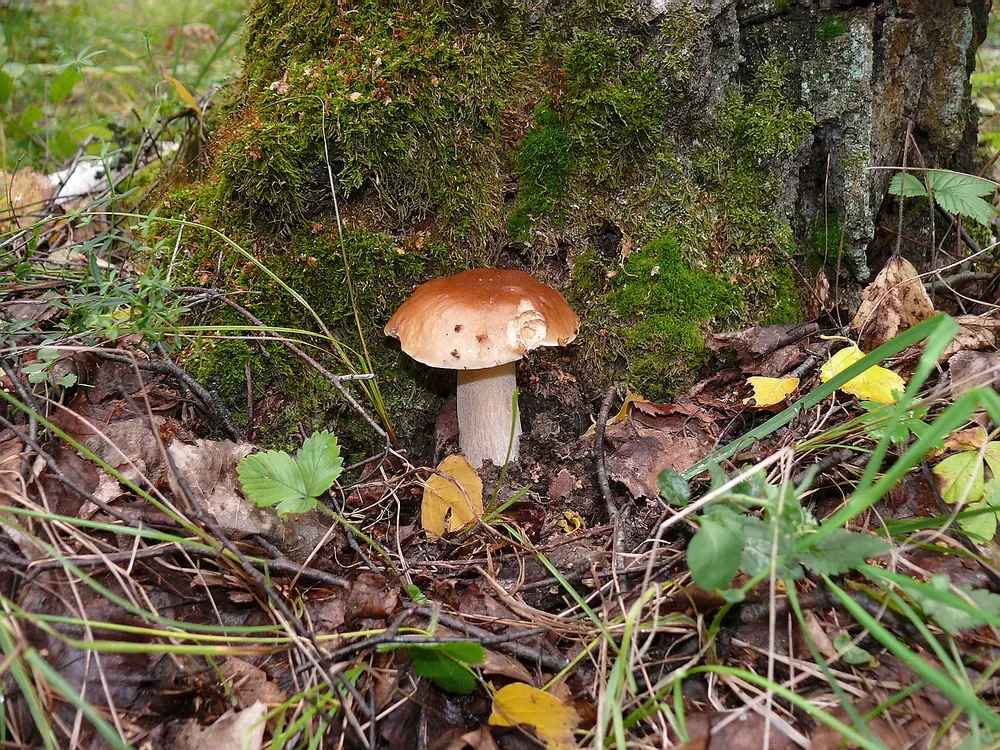
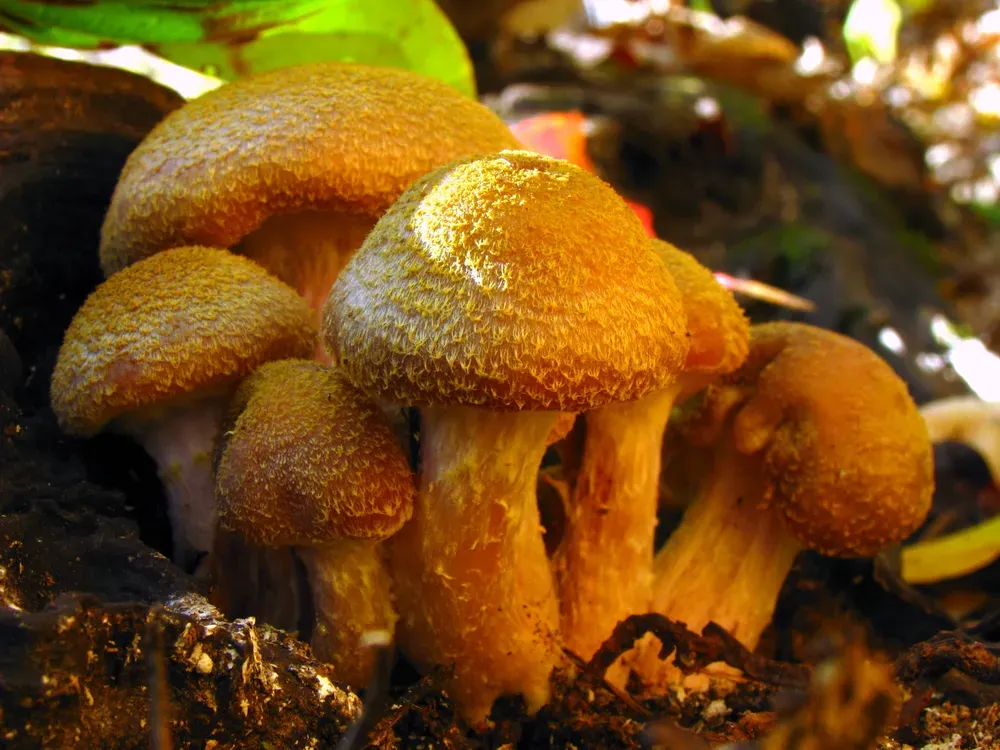
Related species
Mushrooms of the same genus and habitat — to study side by side and never mix up.
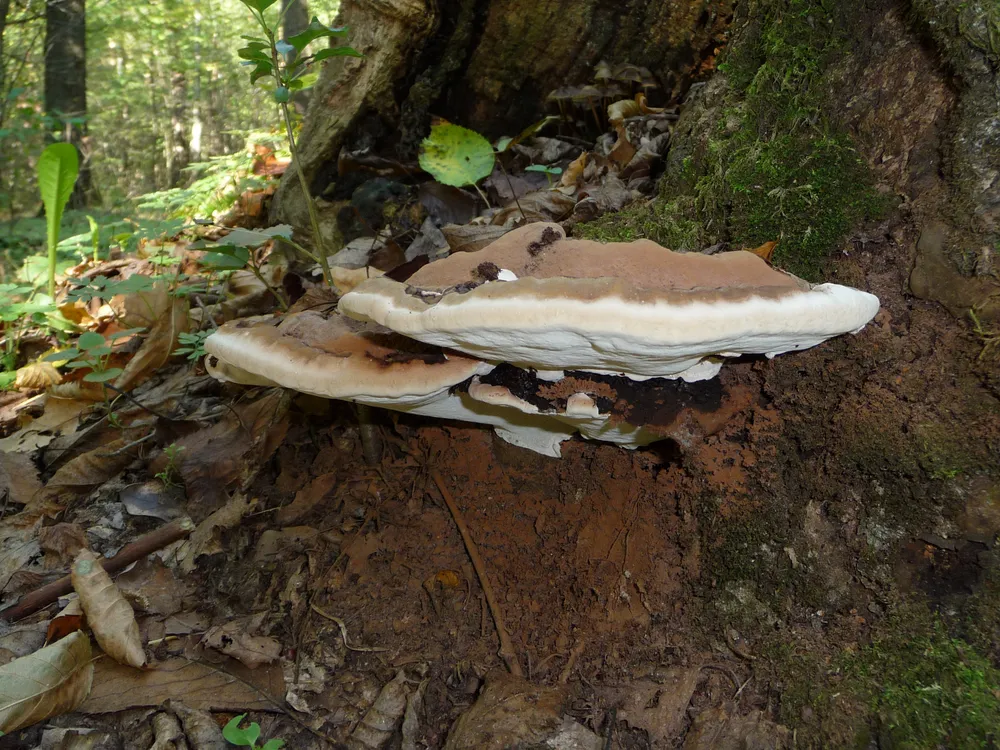
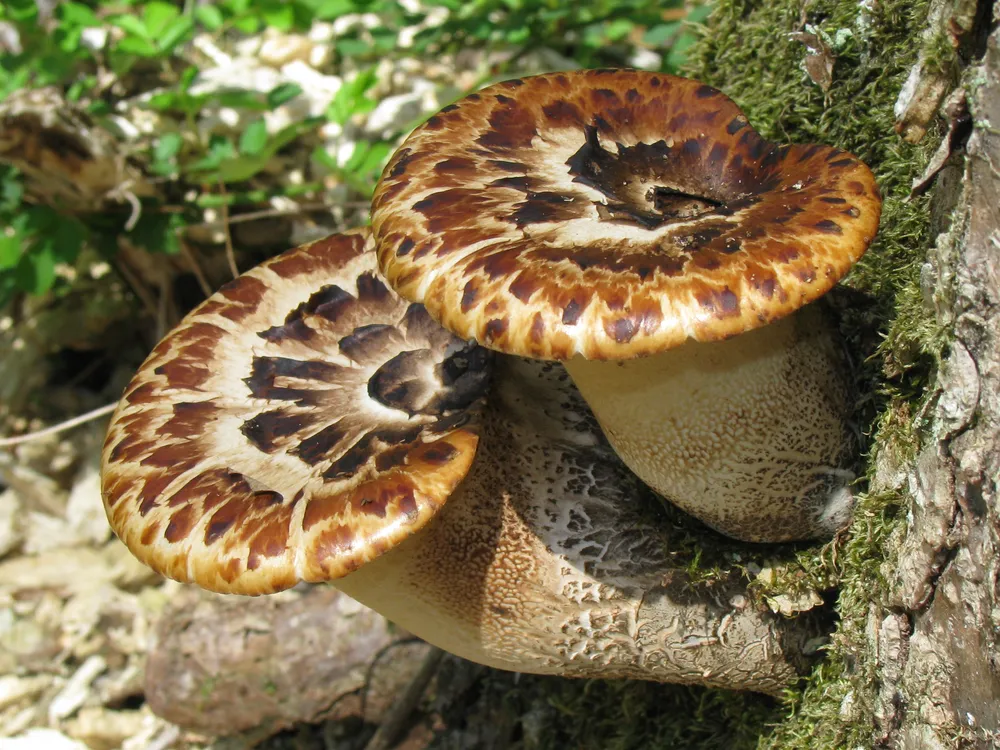
.webp)
Frequently asked questions
Should you pick it?
Not recommended — the species is listed in the Red Data Book of Ukraine (category "vulnerable"). If you find one, photograph it for iNaturalist UA with coordinates and leave it to grow. If you find a large cluster in the Carpathians, you can take 1-2 little caps to taste and leave the rest. The species is worth more in nature than in the pan.
How can you identify it for sure?
Four signs. (1) Large bushy fruiting body made of 50-200 small caps. (2) Individual caps 1-4 cm with a central stem, a shared branching stem. (3) White tubular underside. (4) Grows near the trunks of old oaks and beeches on the ground.
Does it have dangerous lookalikes?
No seriously poisonous ones. A close relative, Grifola frondosa (hen of the woods, "maitake"), is also bushy but has leaf-like wavy caps (not round ones), grows on oaks, and is also a valuable edible. Polyporus umbellatus has round caps on thin stems — that is the essential difference.
How do you cook it?
Young ones — no need to boil first. Slice the little caps, fry with onions and cream (an excellent dish), stew with potatoes, or add to soups. It dries well, keeping its aroma. In Asian cooking it goes into "sharan-yuna" soups (with chicken and garlic). The tougher stem is used for broths and then thrown out.
Is it true that it cures cancer?
It has antitumor potential under study, but it does not "cure cancer". In studies, Polyporus umbellatus polysaccharides have shown an immunomodulating effect and synergy with standard chemotherapy. In Japan it is part of combination therapy for some cancers as a dietary supplement, not instead of standard treatment. Self-treatment is dangerous. Without an oncologist, it is at your own risk.
Where should you look for it?
Near the trunks of old oaks and beeches on the ground, on roots, in broadleaf and mixed forests. Often at forest edges and in young plantings on the site of old forests. The same sclerotium can fruit for 30-50 years in a row — if you find a patch, it will be there in the following years too.
Which regions of Ukraine is it found in?
Rare: mainly in the Carpathians, Prykarpattia and western Podillia (Ternopil and Khmelnytskyi regions) — in natural beech and oak forests. Rarely in Polissia.
When should you look for it?
July — September, peaking in August. A single cluster grows from tiny to full size in 1-2 weeks.
What can it be confused with?
With Grifola frondosa (hen of the woods, maitake, edible) — also bushy, but with leaf-like wavy caps and no distinct stems. With Polyporus brumalis — single small caps, not a cluster. With Meripilus giganteus (giant polypore) — a bigger cluster of thick lobes, on oaks and beeches.
Is Umbrella polypore edible or poisonous?
Does Umbrella polypore have gills or pores?
What does the cap of Umbrella polypore look like?
Sources
- [1]Вікіпедія (українська)
- [2]Атлас грибів України, Зеров Д.К. (1979)
- [3]MycoBank Database
- [4]Index Fungorum
- [5]GBIF
- [6]iNaturalist Ukraine