Artist's bracketGanoderma applanatum
Expert-verifiedUpdated October 3, 2026
Passport
- Edibility
- Inedible
- Season
- Jan — Dec
- Hymenophore
- Pored
- Cap color
- Brown
- Size
- Giant (>25 cm)
- Smell
- Odorless
- Reviewed
- Yes ✓
Quick answers
Where to look?
Deciduous forest, Mixed forest
When does it appear?
Jan — Dec
Active months: January, February, March, April, May, June, July, August, September, October, November, December.
How to recognize it? Three signs
- Cap color: Brown, Grey
- Cap shape: Flat
- Smell: Odorless
Fruiting season
January – December
Description
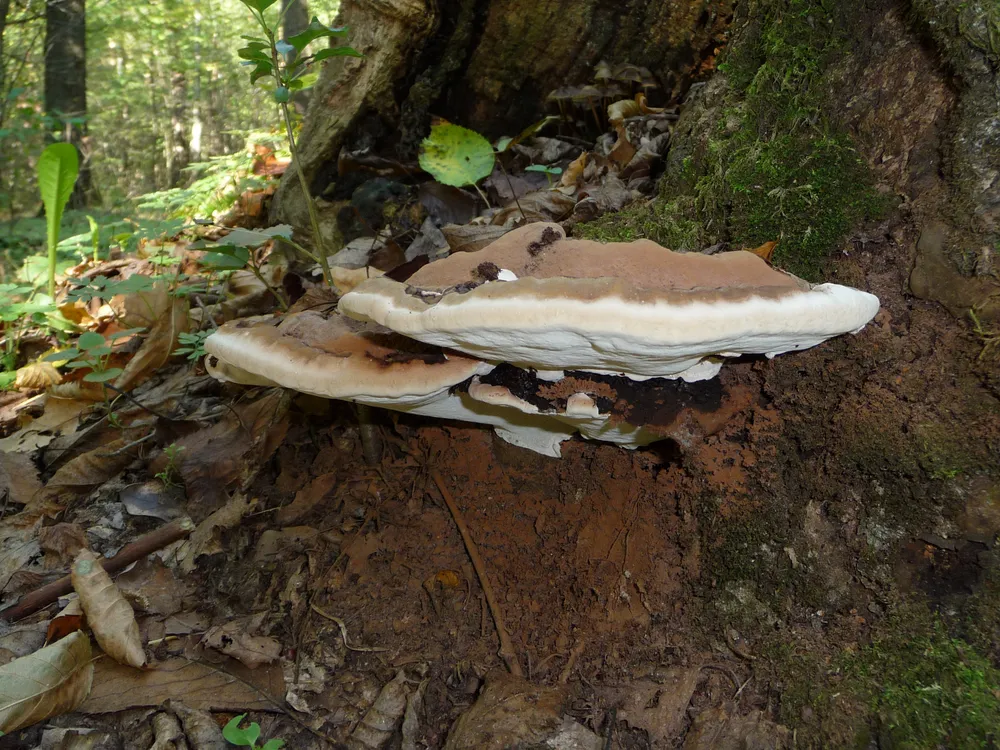
Artist's bracket (Ganoderma applanatum, known in English as "artist's conk" or "artist's bracket") is one of the most recognizable perennial polypores in Europe, with a distinctive large (10-50 cm) flat fruiting body attached sideways to the trunk. The Latin epithet applanatum means "flattened" — a perfect description of its shape. The crust of the fruiting body is brownish gray, with clear concentric zones, very hard, like bark. The underside is whitish cream, finely pored, and when pressed or scratched it turns distinctly dark — hence the name "artist's bracket" (you can draw pictures on the underside that last for years).
Inedible — the flesh is very tough, corky-fibrous and leathery, like wood. It has no culinary value. Perennial — a single fruiting body lives 5-30 years, adding a new concentric zone on the upper surface every year (like tree rings). This lets you tell the mushroom's age.
Uses in medicine and tradition: In traditional Chinese medicine it goes by the name "Líng Zhī" (壁灵芝) and has been used for millennia as a tonic (although the true "Líng Zhī" is Ganoderma lucidum, the lacquered species) Polysaccharides of G. applanatum are being studied for immunomodulating and antitumor activity "Artist's bracket" — you can etch pictures into the underside with a needle or simply scratch them — the lines darken and last for years A parasitic fungus — it slowly kills weakened broadleaf trees, especially beeches and oaks
Key features of Ganoderma applanatum: Large flat fruiting body (10-50 cm, sometimes 70+) on the trunks of broadleaf trees Attached sideways to the substrate, with no distinct stem Hard, corky, brownish gray upper surface with concentric zones Whitish cream underside, darkens when pressed — a key diagnostic feature Perennial (5-30 years) Spore print rusty brown, and the fruiting bodies are sometimes dusted with rusty spores
The main thing is to recognize it as a sign of weakened old trees. People sometimes cut it into little shelves or souvenirs (since it lasts so long).
In Ukraine, Ganoderma applanatum is common in broadleaf and mixed forests: the Carpathians, Prykarpattia, Polissia, the forest-steppe and the steppe (in shelterbelts). Year-round — the fruiting body lives for years.
Cap
Fruiting body 10-50 cm across (sometimes up to 70 cm), flat and spreading, fan-shaped or semicircular, attached sideways to the substrate (the trunk of a broadleaf tree). No stem. The upper surface is hard and corky, with clear concentric zones of annual growth, each zone marking a separate year of life. Color brownish gray, olive gray, with a rusty coating of spores in mature specimens. The margin is whitish when young and darkens with age.
Hymenophore
Tubular hymenophore — tiny white pores on the underside (4-6 pores/mm). Color whitish cream, turns distinctly dark when pressed or scratched — a key diagnostic feature. Spore print rusty brown (often visible as a rusty coating around the fruiting body on the trunk).
Stem
No stem. The fruiting body is attached to the substrate by its side edge.
Flesh
Flesh very tough, corky-fibrous, brownish chestnut, leathery and hard as wood. Not usable in cooking. Faint woody smell.
Smell
Faintly woody, nothing distinctive.
›Scientific synonyms (12)
Boletus applanatus Pers., Boletus fomentarius var. applanatus (Pers.) Pers., Polyporus applanatus (Pers.) Wallr., Placodes applanatus (Pers.) Quél., Phaeoporus applanatus (Pers.) J. Schröt., Elfvingia applanata (Pers.) P. Karst., Friesia applanata (Pers.) Lázaro Ibiza, Boletus lipsiensis Batsch, Polyporus merismoides Corda, Polyporus stevenii Lév., Polyporus leucophaeus Mont., Polyporus leucophaeum Mont. (1856)
Lookalikes
_(d.j.b.)_02.webp)
Related species
Mushrooms of the same genus and habitat — to study side by side and never mix up.
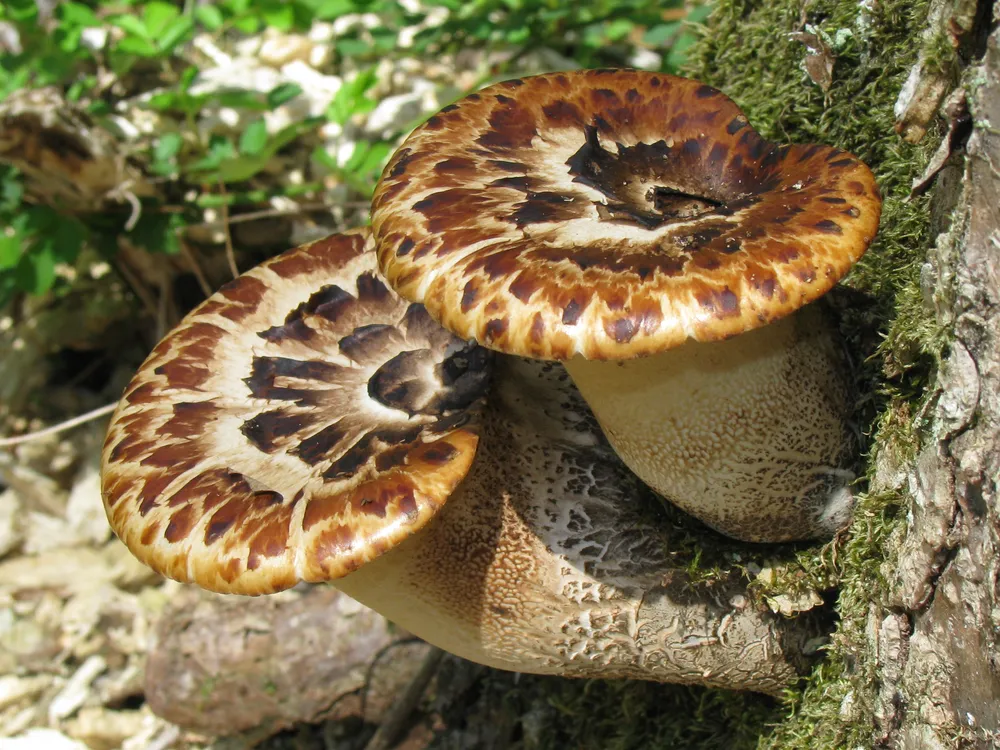
Dryad's saddle
Cerioporus squamosus
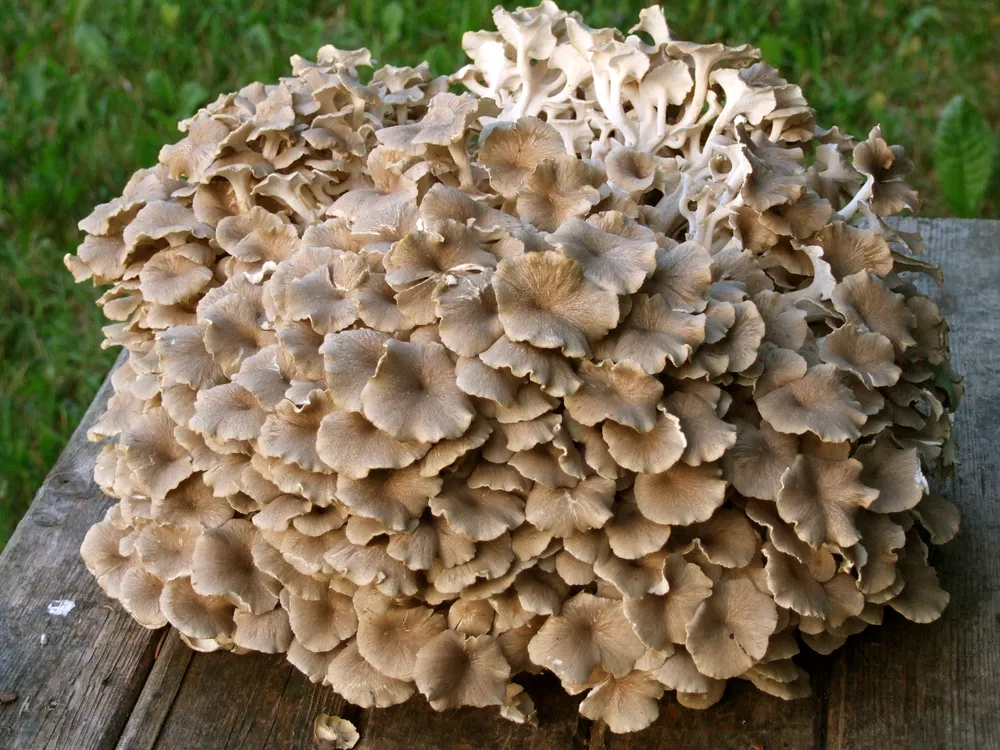
Umbrella polypore
Polyporus umbellatus
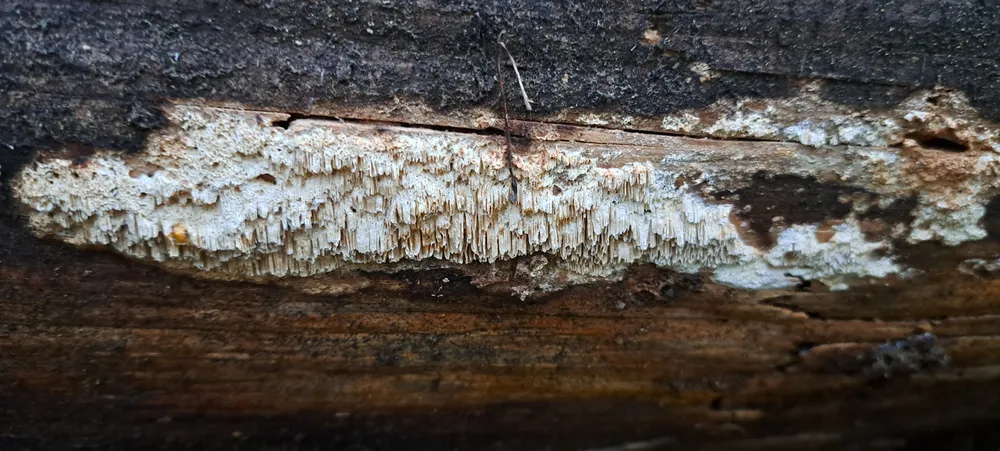
Amyloporia sinuosa
.webp)
Aurantiporus fissilis
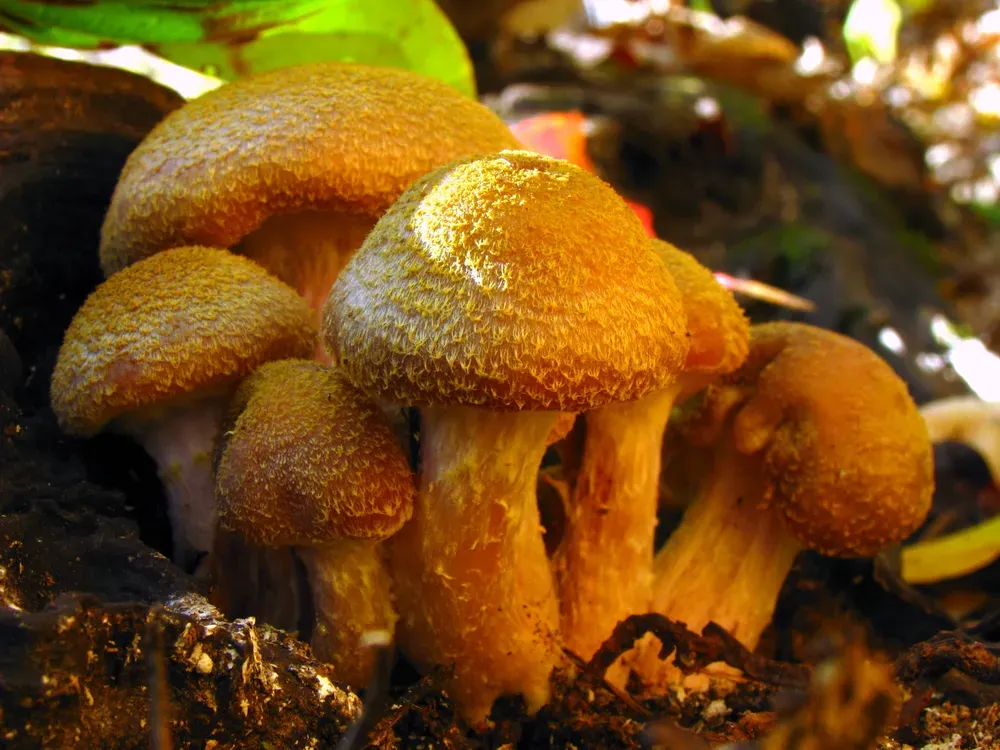
Bulbous honey fungus
Armillaria gallica
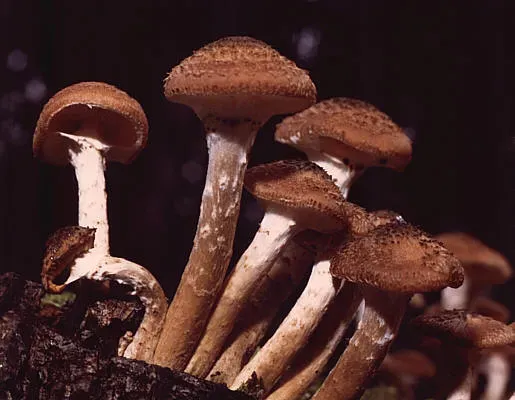
Dark honey fungus
Armillaria ostoyae
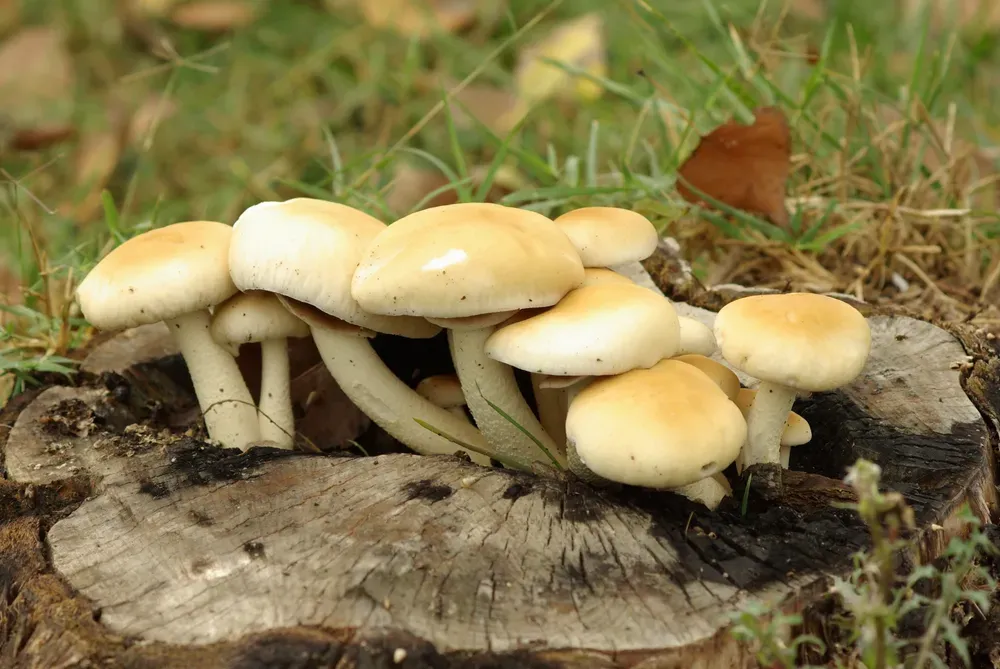
Poplar fieldcap
Cyclocybe aegerita
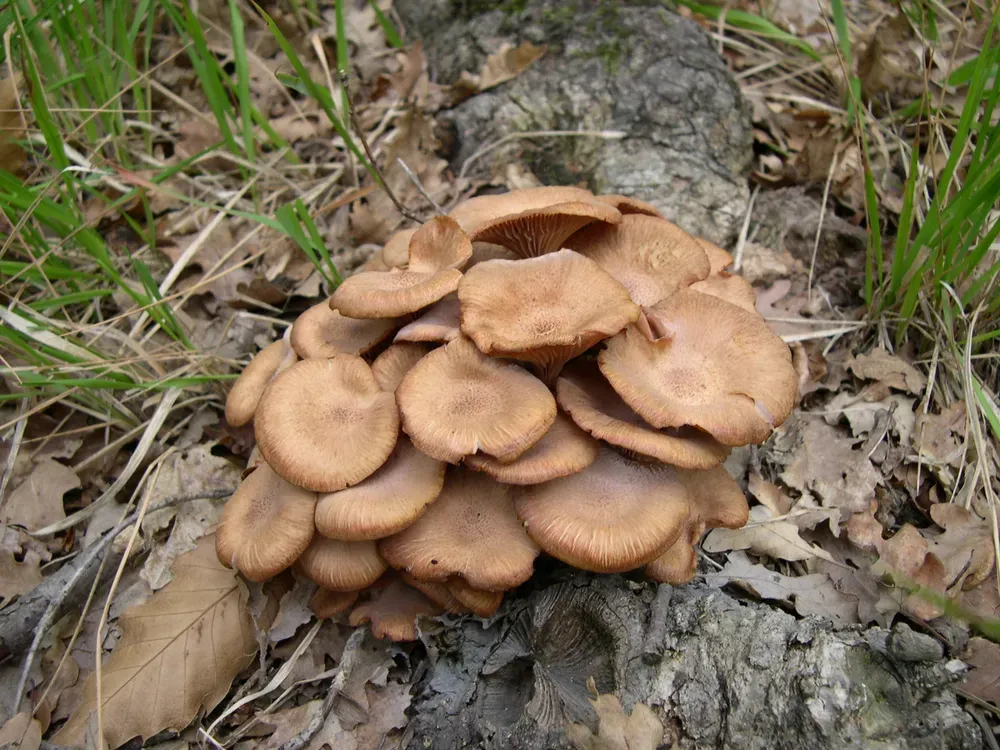
Ringless honey fungus
Desarmillaria tabescens
Related reading
Frequently asked questions
Can you eat it?
No — the flesh is as tough as wood and useless in cooking. Not poisonous, but inedible.
Is it a medicinal mushroom?
It has pharmacological potential under study (polysaccharides, triterpenoids, an immunomodulating effect), but it is not the real "mushroom of immortality" — that is Ganoderma lucidum (the lacquered one), which also does not grow in the wild in Ukraine. Self-treatment is at your own risk; its effectiveness for self-medication has not been clinically proven.
Why is it called the "artist's bracket"?
Because of a property of its underside: the whitish cream pores turn distinctly dark when pressed or scratched. You can etch pictures into it with a needle — the lines turn dark and last for years (the fruiting body dries out, but the drawings remain). In Europe and America it is a traditional material for nature souvenirs and "eco-paintings".
Where should you look for it?
On the trunks of weakened and dead broadleaf trees — especially beeches, oaks, maples, poplars and elms. It is usually attached to the trunk 0.5-5 m above the ground. In forests, parks and shelterbelts. Year-round — the fruiting body lives 5-30 years.
Which regions of Ukraine is it found in?
Common throughout the forest and forest-steppe zones: the Carpathians, Prykarpattia, Polissia, the forest-steppe and the steppe (in shelterbelts and parks).
When can you find it?
Year-round — a perennial fruiting body. Active spore release happens in warm spells in summer and fall. Dried fruiting bodies can be seen at any time of year.
What can it be confused with?
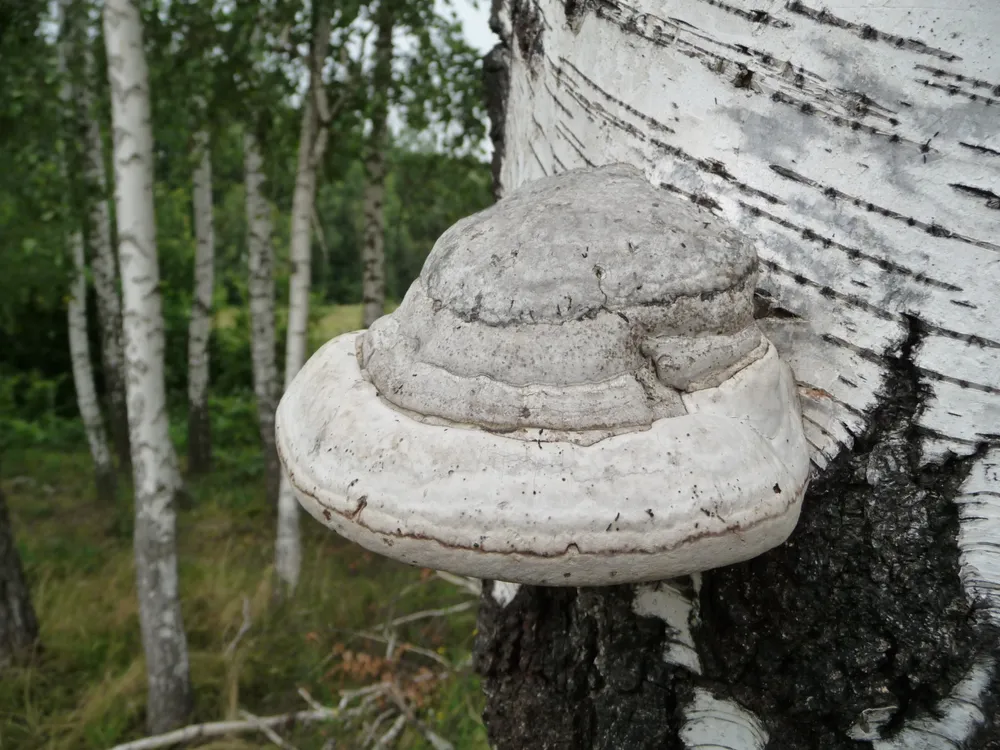
With Ganoderma lucidum (lacquered, the true "reishi") — smaller, with a glossy reddish-brown lacquered upper surface and a distinct stem. With Fomes fomentarius (tinder fungus) — hoof-shaped, not flat. With Trametes versicolor (turkey tail) — smaller, with a clearly multicolored, velvety surface.
Is Artist's bracket edible or poisonous?
Does Artist's bracket have gills or pores?
What does the cap of Artist's bracket look like?
What does the stem of Artist's bracket look like?
What do Artist's bracket smell and taste like?
Sources
- [1]Вікіпедія (українська)
- [2]Атлас грибів України, Зеров Д.К. (1979)
- [3]MycoBank Database
- [4]Index Fungorum
- [5]GBIF
- [6]iNaturalist Ukraine