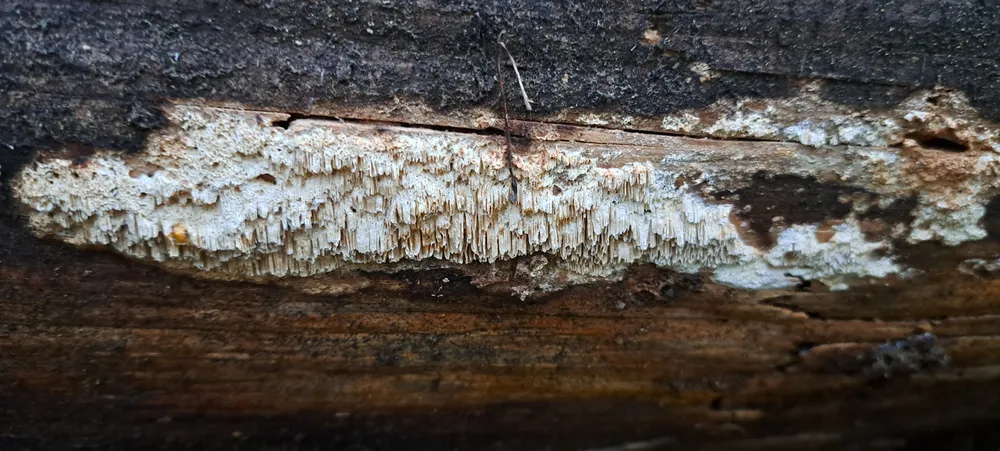
Amyloporia sinuosa
Expert-verifiedUpdated October 3, 2026
Passport
- Edibility
- Inedible
- Season
- Jan — Dec
- Hymenophore
- Pored
- Cap color
- White
- Size
- Medium (5–15 cm)
- Smell
- Odorless
- Reviewed
- Yes ✓
Quick answers
Where to look?
Conifer forest
When does it appear?
Jan — Dec
Active months: January, February, March, April, May, June, July, August, September, October, November, December.
How to recognize it? Three signs
- Cap color: White, Yellow, Brown
- Cap shape: Irregular
- Smell: Odorless
Fruiting season
January – December
Description
Amyloporia sinuosa is a polypore that lives on conifer wood. It was once placed in the genus Antrodia (Antrodia sinuosa), but in 2011 the species was moved to a separate genus, Amyloporia.
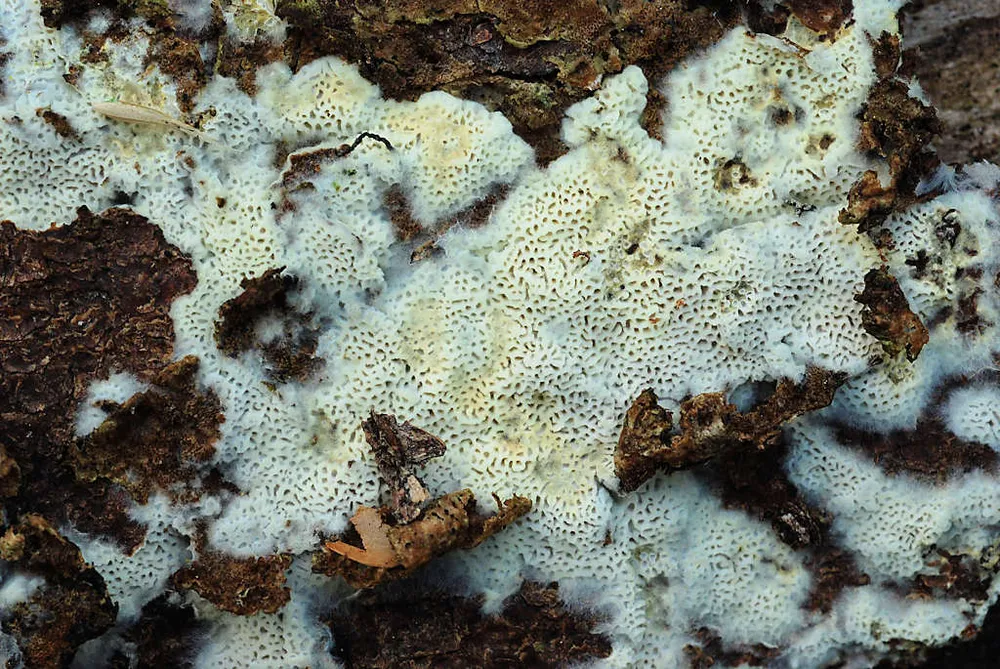
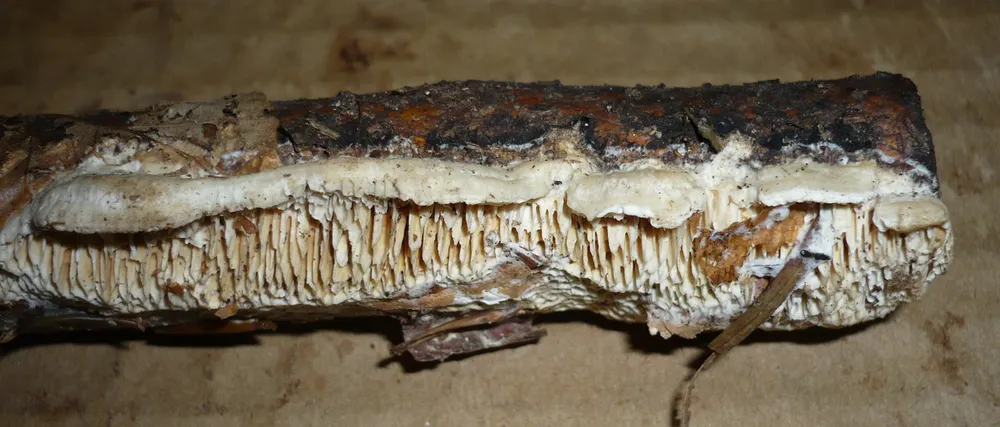
The fruiting bodies are flat, fused to the substrate and can spread up to 20 cm across. The color is white at first, yellows over time and finally turns light brown. The pore surface is tubular — that is what sets Amyloporia apart from its purely crust-like relatives.
The species causes brown rot of conifer wood. In Ukraine it is known from the Carpathians and occasionally turns up in the western Forest-Steppe. It has no culinary value, but plays an important role in breaking down dead trunks.
Cap
The fruiting body is spread out, flat, up to 20 cm across. Color changes: white when young, yellowing over time, light brown as it dries.
Hymenophore
Tubular pore surface. Tubes short, 0.5–2.5 mm. Spore print whitish. Spores cylindrical, colorless, 4–5.5 × 0.75–1.5 µm.
Stem
There is no stem. The body is spread out and attached to the substrate over its whole surface.
Flesh
flesh white, yellowing over time. The mycelium penetrates deep into the wood along cracks — hence “sinuous” (winding) in the name.
Smell
No distinctive smell. When dried it has no smell at all.
Lookalikes
_Singer_279454.webp)
Related species
Mushrooms of the same genus and habitat — to study side by side and never mix up.
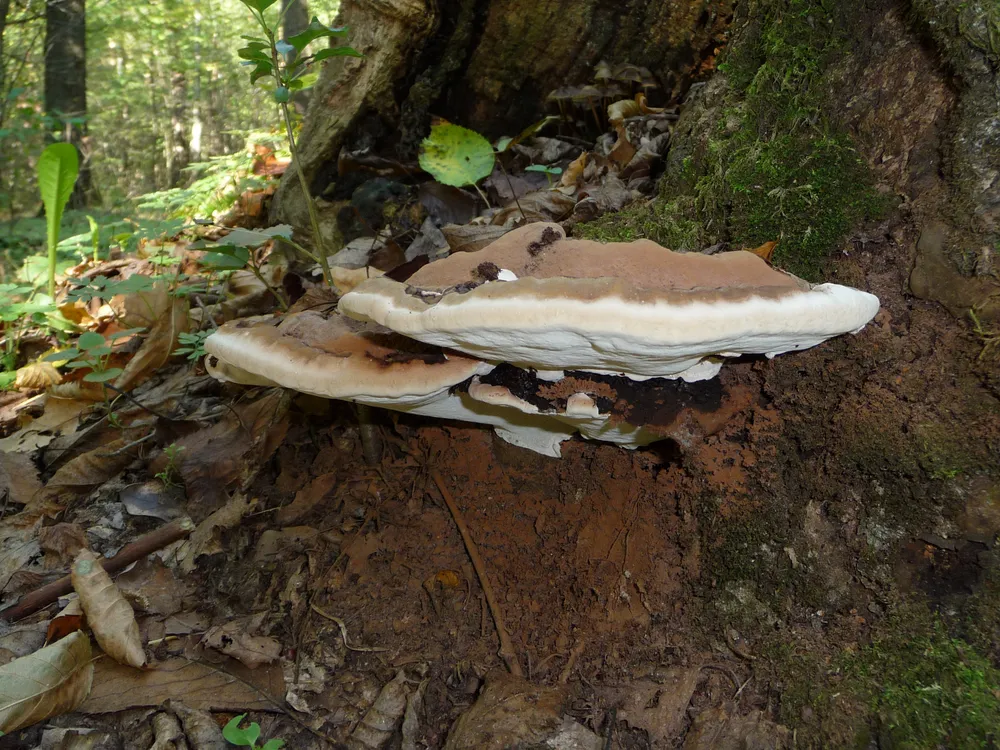
Artist's bracket
Ganoderma applanatum
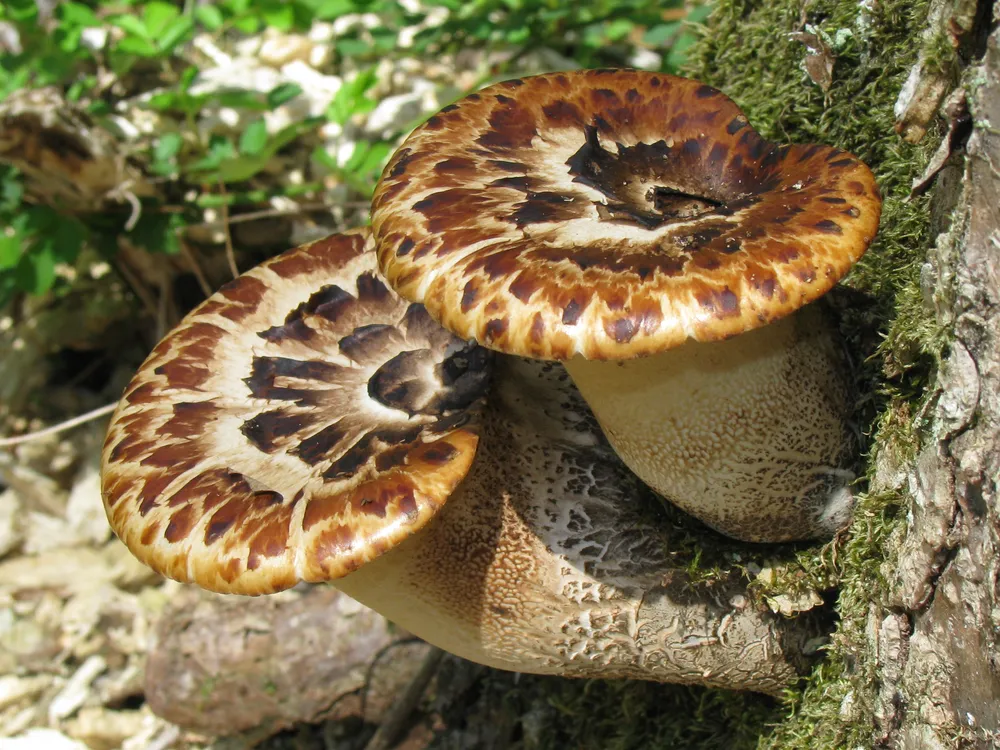
Dryad's saddle
Cerioporus squamosus
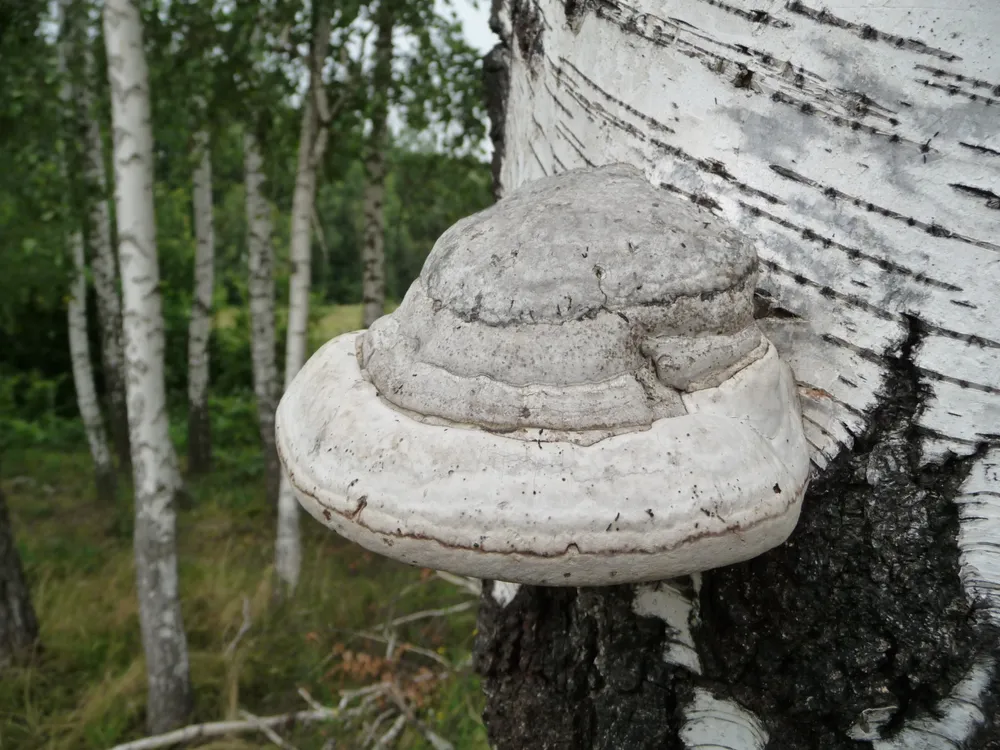
Tinder fungus
Fomes fomentarius
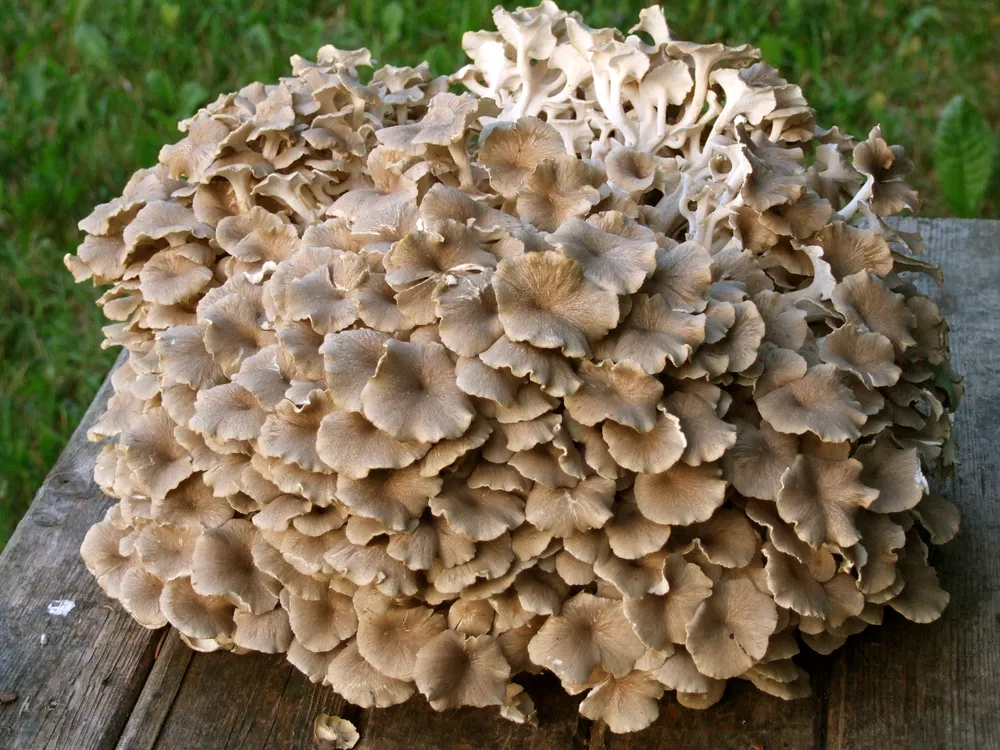
Umbrella polypore
Polyporus umbellatus
.webp)
Aurantiporus fissilis
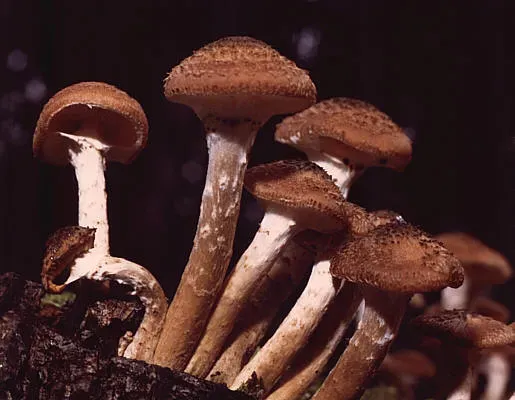
Dark honey fungus
Armillaria ostoyae
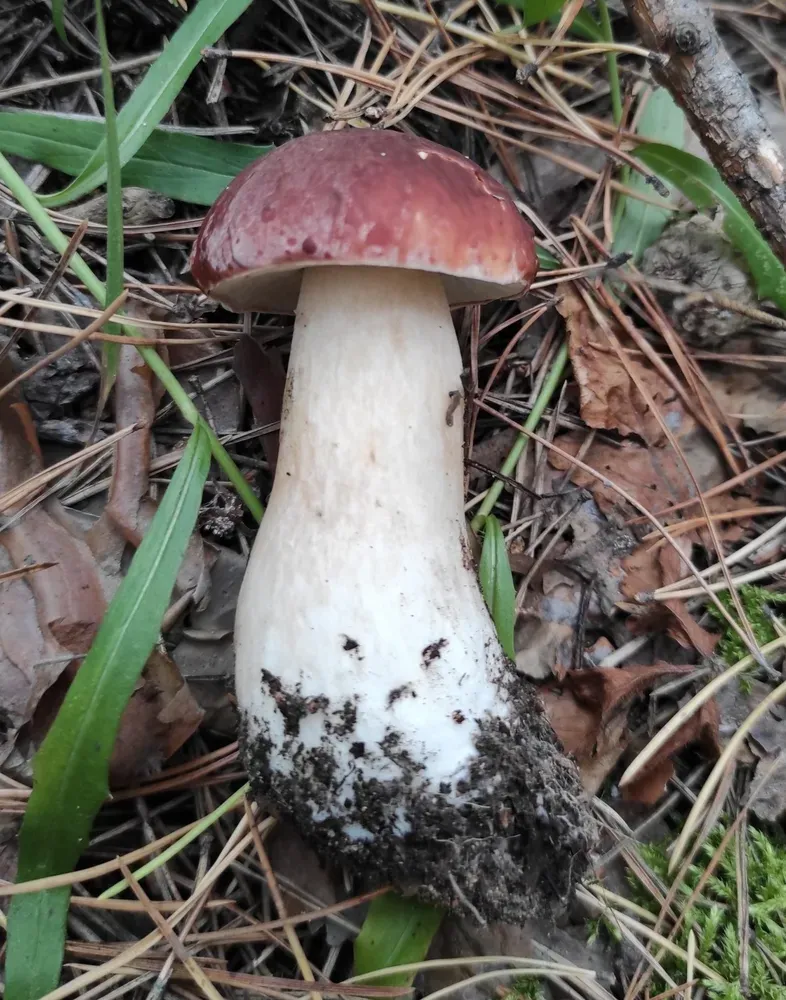
Pine bolete
Boletus pinophilus
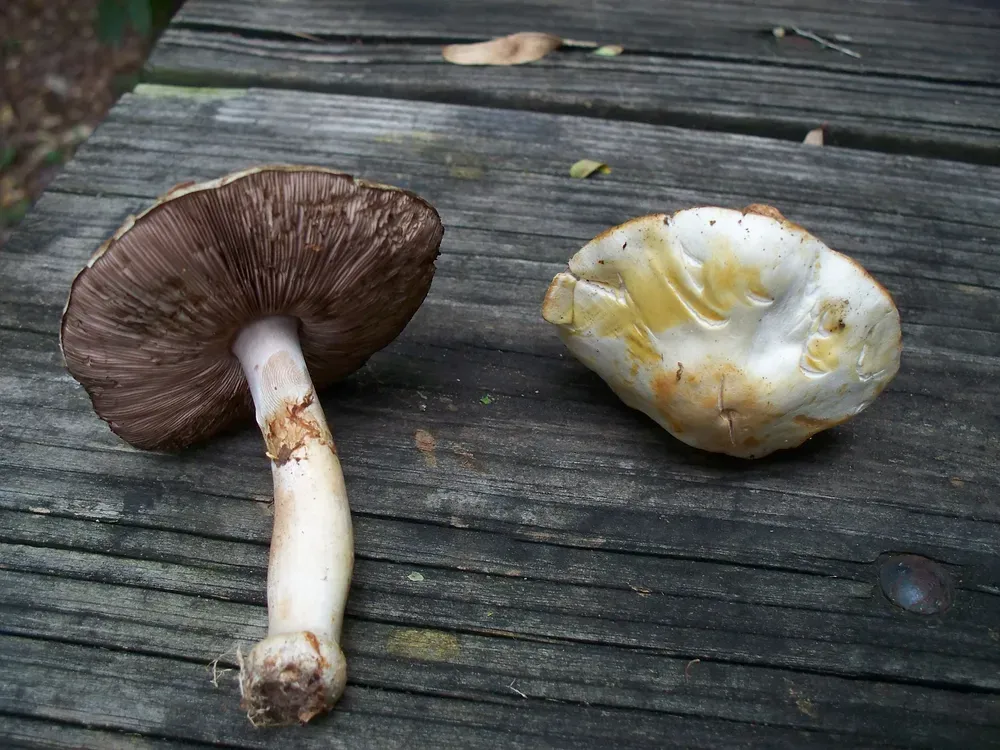
Agaricus abruptibulbus
Frequently asked questions
Can you eat it?
No. It is a tough conifer polypore with no culinary value.
Is it dangerous to trees?
For the living forest — no, it breaks down dead wood. For timber structures (log houses, repair beams), brown rot is a serious problem.
Where should you look for it?
On conifer wood — pine and spruce trunks, especially fallen ones. Look on the bark and the underside of logs.
Which regions of Ukraine is it found in?
Mostly in the Carpathians, occasionally in the western Forest-Steppe. In the east it is rare.
When can you see it?
The perennial fruiting bodies are visible all year round. Fresh white layers grow in the damp, warm season.
Is it more noticeable at certain times?
In damp weather the color is brighter and the pore surface softer. In a dry summer the fruiting bodies shrink and darken.
What is it confused with?
With other species of the genera Antrodia and Amyloporia, and with thin polypores of the family Fomitopsidaceae. Exact identification relies on spores and hyphal structure under a microscope.
How do you tell it from similar species?
The winding pattern of mycelium inside the wood, flat fruiting bodies with a tubular pore surface, a white spore print. And growth specifically on conifer wood.
Is Amyloporia sinuosa edible or poisonous?
Does Amyloporia sinuosa have gills or pores?
What does the cap of Amyloporia sinuosa look like?
What does the stem of Amyloporia sinuosa look like?
Sources
- [1]Вікіпедія (українська)
- [2]Атлас грибів України, Зеров Д.К. (1979)
- [3]MycoBank Database
- [4]Index Fungorum
- [5]GBIF
- [6]iNaturalist Ukraine