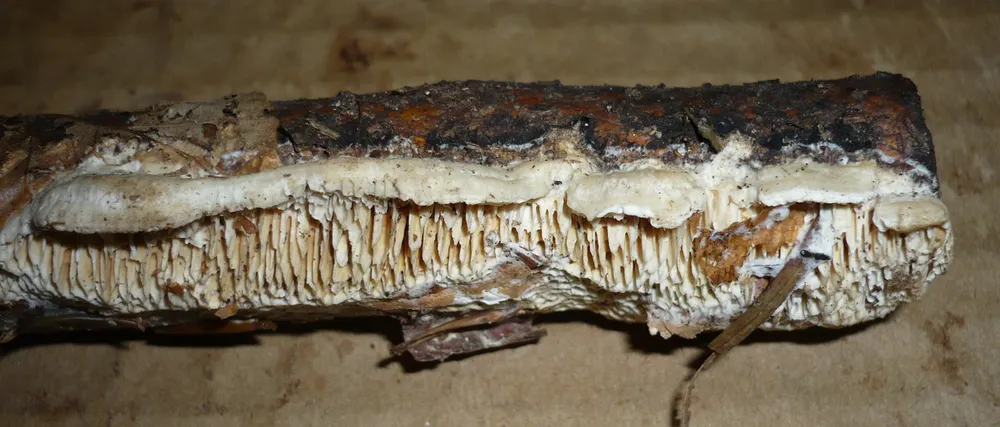
Antrodia albida
Expert-verifiedUpdated October 3, 2026
Passport
- Edibility
- Inedible
- Season
- Jul — Nov
- Hymenophore
- Pored
- Cap color
- White
- Size
- Small (up to 5 cm)
- Smell
- Odorless
- Reviewed
- Yes ✓
Quick answers
Where to look?
Deciduous forest, Mixed forest
When does it appear?
Jul — Nov
Active months: July, August, September, October, November.
How to recognize it? Three signs
- Cap color: White, Yellow
- Cap shape: Irregular
- Smell: Odorless
Fruiting season
July – November
Description
Antrodia albida is an annual polypore that lives mainly on trunks of broadleaf trees. Occasionally it moves onto conifers, but that's not its typical choice.
The fruiting bodies are flat and attached to the substrate. They spread in overlapping, tile-like groups or in long rows along the bark. Young ones are whitish, fading to pale yellow with age. Moderate size — up to 8 cm long, 2–3 cm wide.
In Ukraine there's a known find from Zakarpattia. Overall, the species is present on every continent except Australia — a typical decomposer of broadleaf wood in the temperate zone. It has no culinary value; its role in the forest is breaking down dead trunks.
Cap
Fruiting body annual, spread out. Caps up to 8 cm long, 2–3 cm wide. Color: whitish at first, turning pale yellow with time. Often grows in overlapping, tile-like groups or long rows.
Hymenophore
Tubular hymenophore. Spore print white. Spores cylindrical, colorless, 8–14 × 3.5–6 µm.
Stem
No stem. The fruiting body is attached to the substrate by its whole base.
Flesh
flesh thin, leathery. Whitish when young, yellowing with age.
Smell
No distinctive smell.
›Scientific synonyms (1)
Daedalea albida Fr. (1815)
Lookalikes
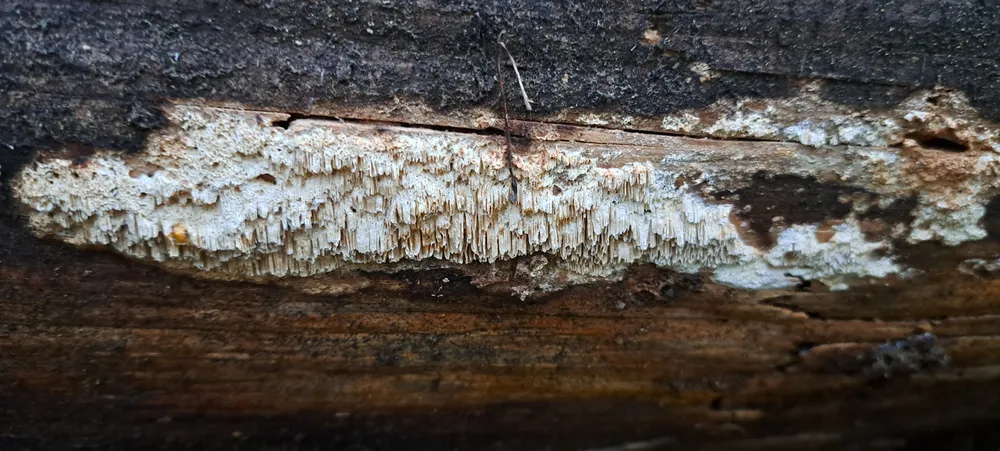
.webp)
Related species
Mushrooms of the same genus and habitat — to study side by side and never mix up.
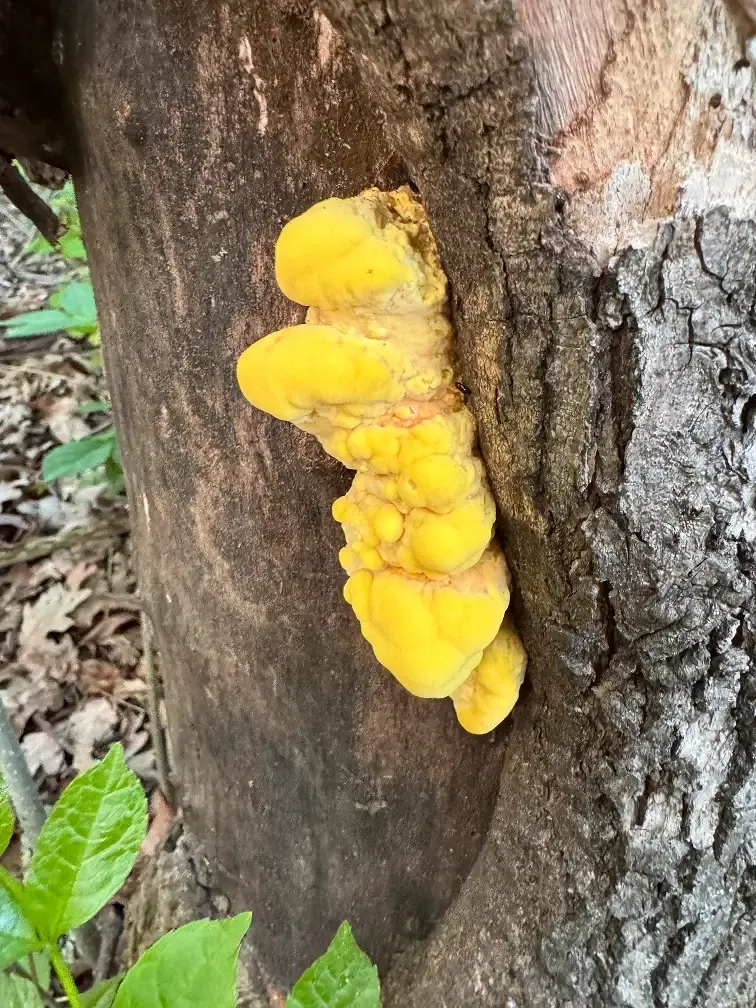
Chicken of the woods
Laetiporus sulphureus
_Singer_279454.webp)
Amylocystis lapponica
Amylocystis lapponicus
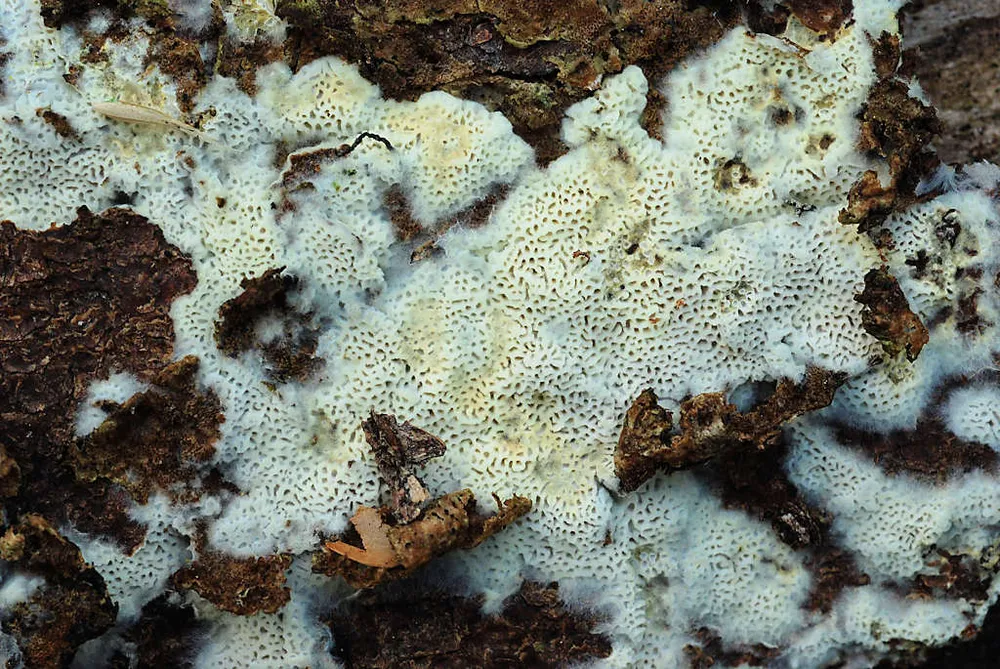
Anomoporia bombycina
_(d.j.b.)_02.webp)
Birch polypore
Fomitopsis betulina
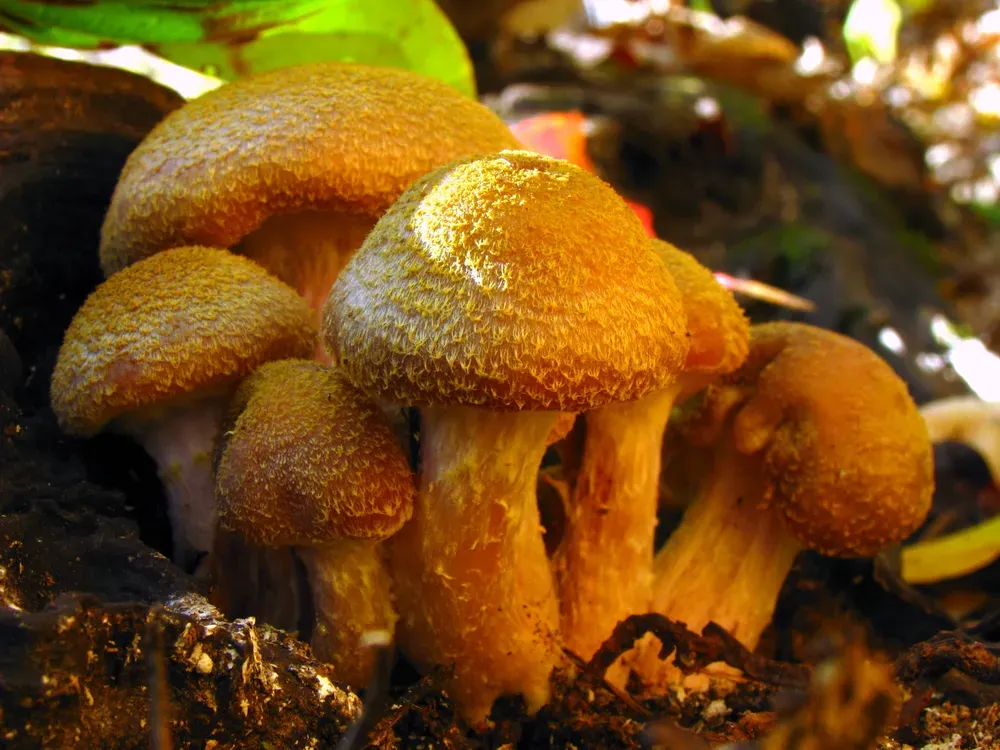
Bulbous honey fungus
Armillaria gallica
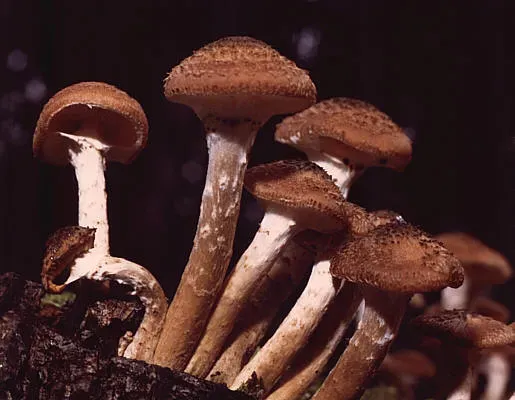
Dark honey fungus
Armillaria ostoyae
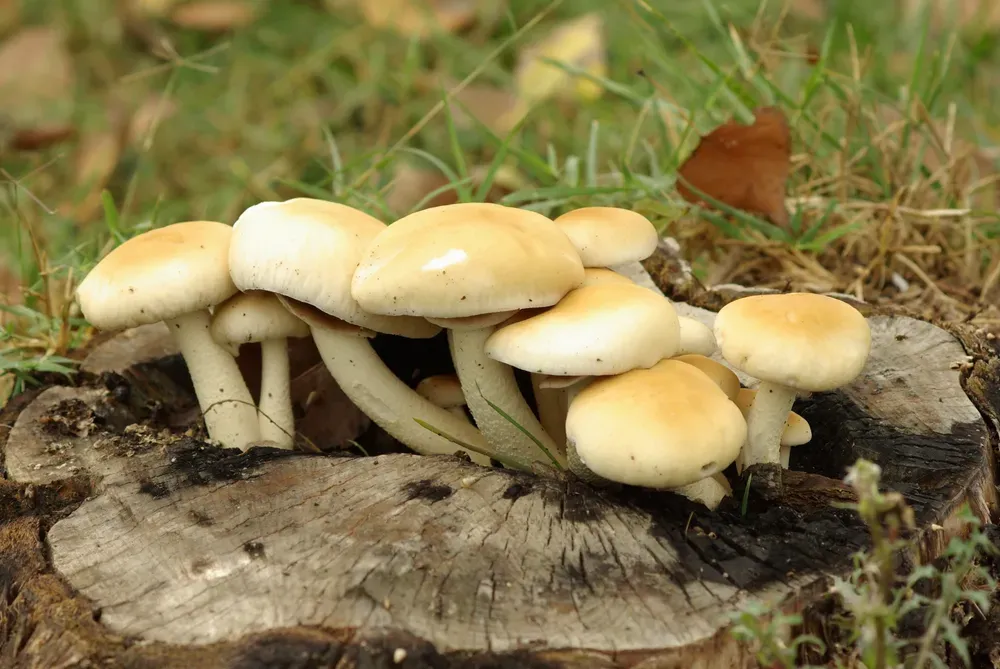
Poplar fieldcap
Cyclocybe aegerita
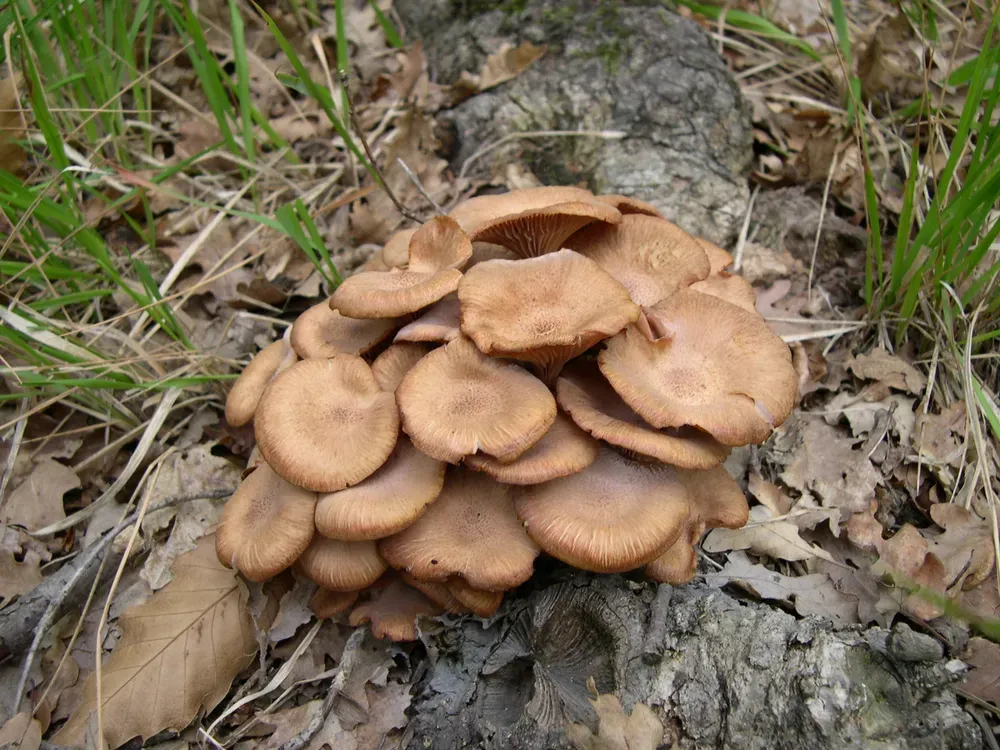
Ringless honey fungus
Desarmillaria tabescens
Frequently asked questions
Can you eat it?
No. It's a tough polypore with no food value.
Is it dangerous for a garden?
As a decomposer of dead wood — no. If you see it on a healthy garden tree, that's a sign rot is already underway inside the trunk, and the tree needs inspecting.
Where should you look for it?
On trunks of broadleaf trees — oak, birch, aspen, less often on conifers. In old forests and on fallen logs.
In which regions of Ukraine?
Known finds come from Zakarpattia. Elsewhere in the country it's rarely documented, though in theory it may occur in other western and Polissia forests too.
When can you see it?
The fruiting bodies are annual, but dried remains stay on the trunks for a long time. Fresh white layers grow during warm, damp spells.
Is autumn the best time to look?
In late summer and autumn the fruiting bodies are most noticeable. In a drought they shrink and blend into the bark.
What is it confused with?
With other thin white polypores of the family Fomitopsidaceae — especially the genera Antrodia and Amyloporia. Exact identification is by spores under a microscope.
How do you tell it apart from its conifer relatives?
Antrodia albida sticks to broadleaf trees — that's your first clue. Found a white polypore on an oak or birch? Most likely, it's this one.
Is Antrodia albida edible or poisonous?
Does Antrodia albida have gills or pores?
What does the cap of Antrodia albida look like?
What does the stem of Antrodia albida look like?
Sources
- [1]Вікіпедія (українська)
- [2]Атлас грибів України, Зеров Д.К. (1979)
- [3]MycoBank Database
- [4]Index Fungorum
- [5]GBIF
- [6]iNaturalist Ukraine