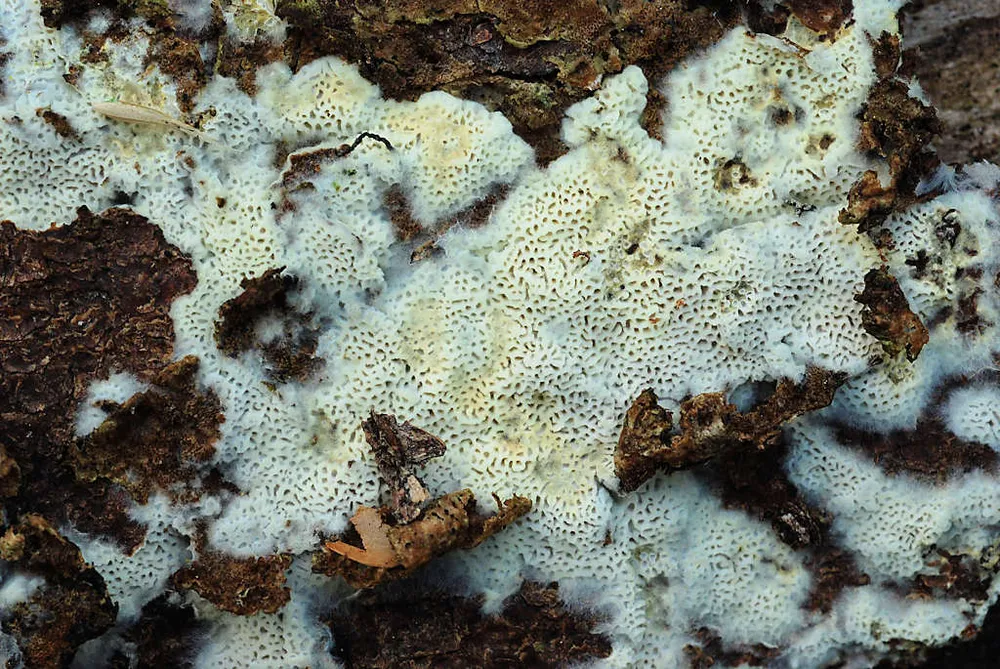
Anomoporia bombycina
Expert-verifiedUpdated June 13, 2026
Passport
- Edibility
- Inedible
- Season
- Jan — Dec
- Hymenophore
- Pored
- Cap color
- White
- Size
- Small (up to 5 cm)
- Smell
- Odorless
- Reviewed
- Yes ✓
Quick answers
Where to look?
Conifer forest
When does it appear?
Jan — Dec
Active months: January, February, March, April, May, June, July, August, September, October, November, December.
How to recognize it? Three signs
- Cap color: White, Yellow, Brown
- Cap shape: Irregular
- Smell: Odorless
Fruiting season
January – December
Description
Anomoporia bombycina is a rare polypore that grows on dead and standing dead conifer wood: pines and spruces. The fruiting bodies are membranous, flat and fused to the substrate — in favorable conditions they spread up to 30 cm across, though the typical size is 3–10 cm.
A curious feature of this species is how its pore surface develops. At first it is net-like, like a cobweb, and over time it becomes tubular. It is an in-between form linking its crust-fungus relatives and true polypores.
The color changes: a young fruiting body is whitish, yellows with age and turns gray-brown as it dries. The species turns up sporadically in conifer forests of Europe and North America. In Ukraine it is known from the Carpathians — a find for an attentive forager-mycologist, not for the basket.
Cap
The fruiting body is spread out, thin and membranous. Size 3–10 cm, up to 30 cm across in favorable conditions. Color whitish → yellowish → gray-brown as it dries.
Hymenophore
At first the pore surface is net-like, and over time it becomes tubular. Its color shifts the same way as the whole fruiting body. Spores ellipsoid, colorless, 5.5–7 × 3.5–5 µm.
Stem
There is no stem. The body is spread flat over the substrate.
Flesh
flesh thin, membranous; soft in young fruiting bodies, tougher in old ones.
Smell
No distinctive smell.
Lookalikes
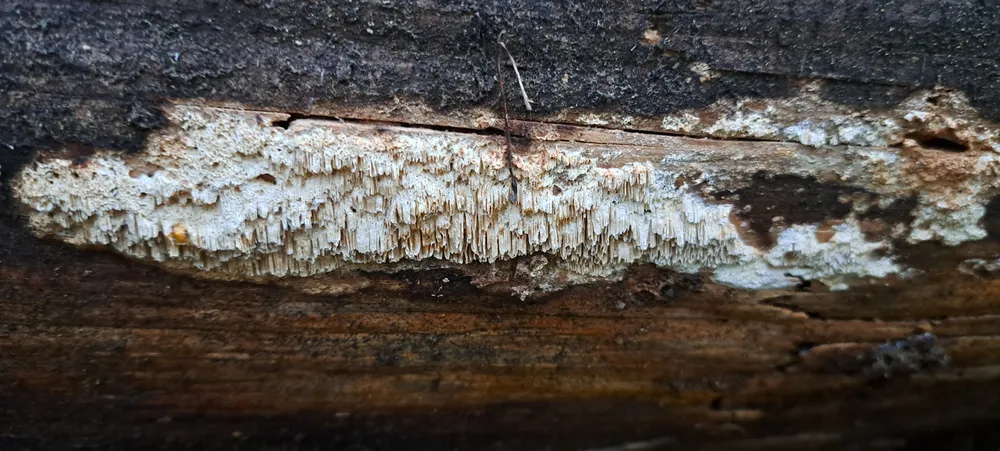
_Singer_279454.webp)
Related species
Mushrooms of the same genus and habitat — to study side by side and never mix up.
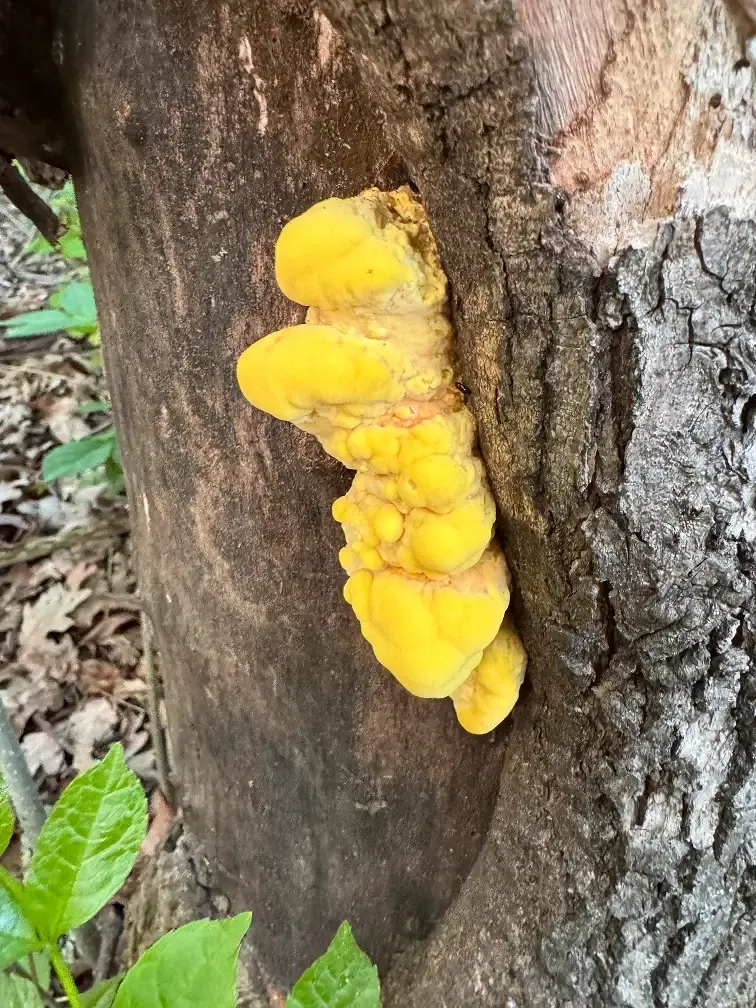
Chicken of the woods
Laetiporus sulphureus
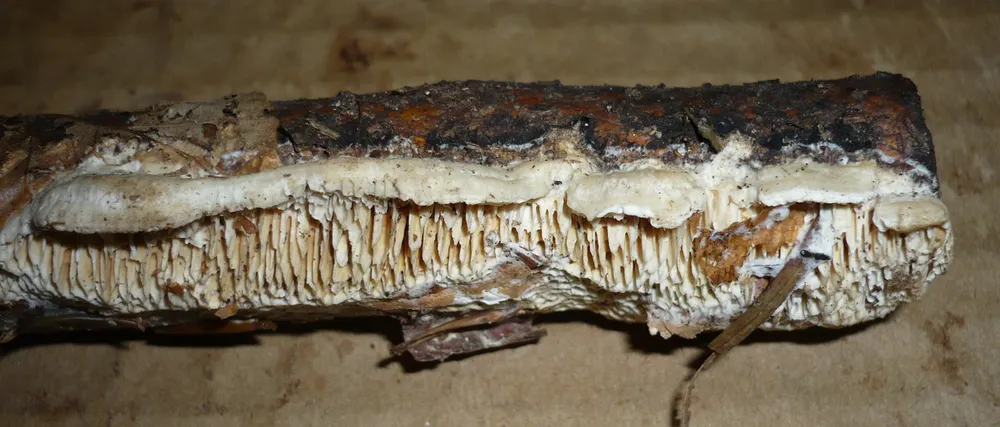
Antrodia albida
_(d.j.b.)_02.webp)
Birch polypore
Fomitopsis betulina
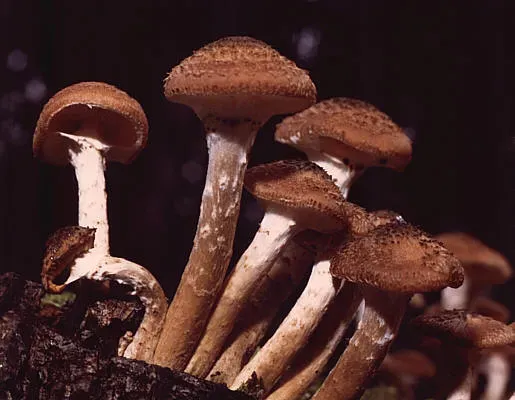
Dark honey fungus
Armillaria ostoyae
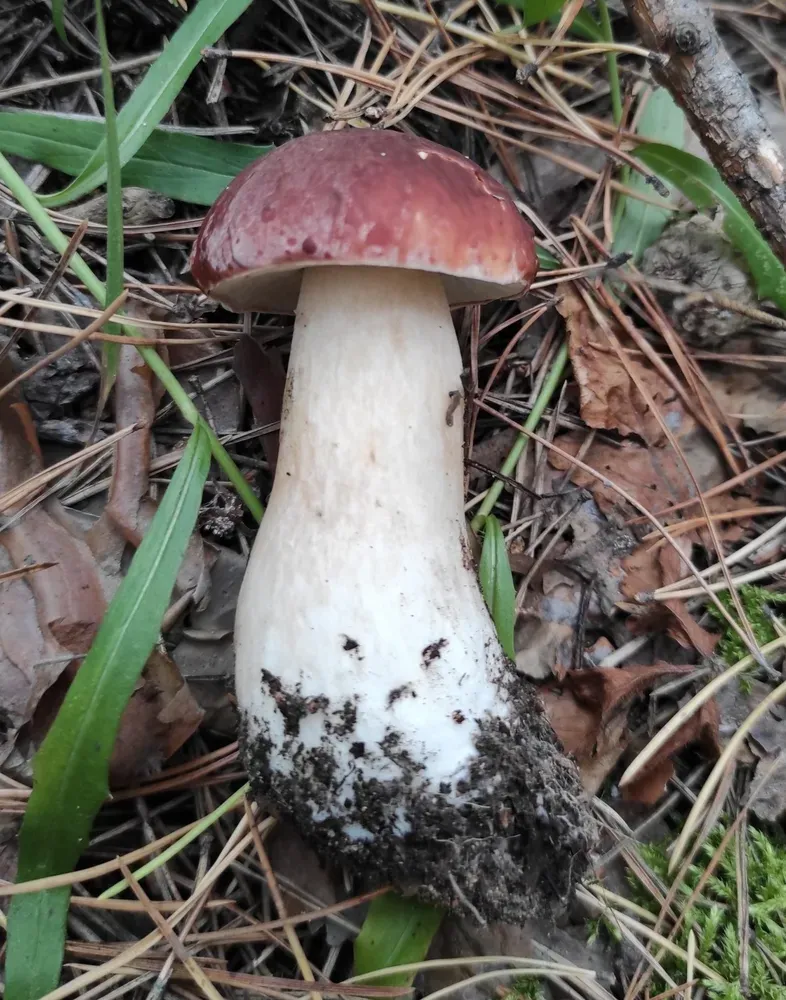
Pine bolete
Boletus pinophilus
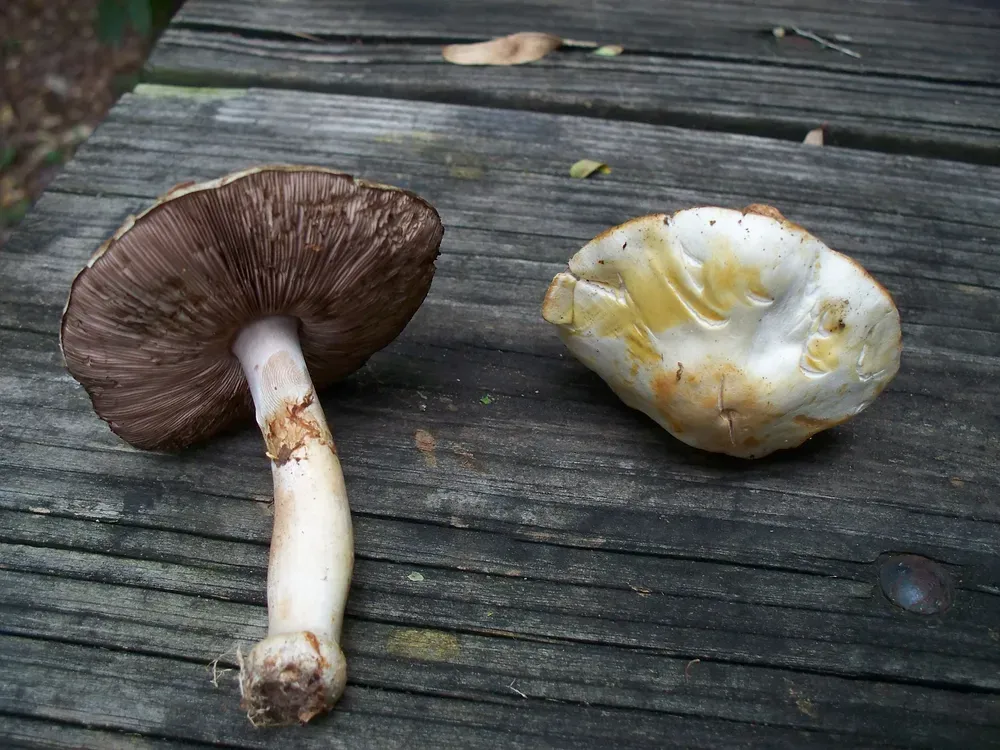
Agaricus abruptibulbus
Agaricus haemorrhoidarius
Agaricus haemorroidarius
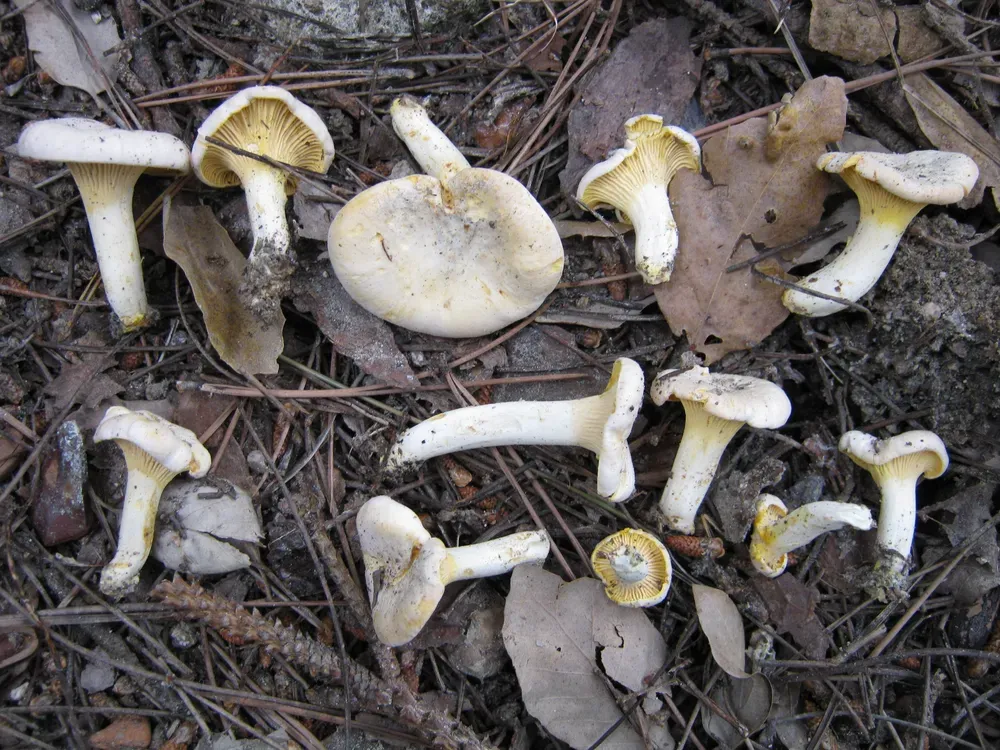
Cantharellus pallens
Frequently asked questions
Can you eat it?
No. It is a tough, membranous polypore with no culinary value.
Is it poisonous?
No specific toxins have been described. No cases of poisoning have been recorded — it is simply an inedible species.
Where should you look for it?
On dead and standing dead conifer wood — trunks, branches, stumps. Mostly pine and spruce.
Which regions of Ukraine is it found in?
Known finds come from the Carpathians. It is a sporadic species and is not found evenly across the country.
When can you see it?
The fruiting bodies stay visible for a long time — fresh films appear in the warm, damp season, and old ones remain on the trunks long afterward.
Is it better after rain?
Yes, in the damp season the film is fresher and brighter. In a dry summer it shrinks and turns gray-brown.
What is it confused with?
With other thin polypores, especially of the genera Amyloporia and Antrodia. The net-like-to-tubular pore surface is a telltale feature.
How do you identify it for sure?
By microscopic features — spore size (5.5–7 × 3.5–5 µm) and how the pore surface develops. Without a lab, identification is only approximate.
Is Anomoporia bombycina edible or poisonous?
Does Anomoporia bombycina have gills or pores?
What does the cap of Anomoporia bombycina look like?
What does the stem of Anomoporia bombycina look like?
Sources
- [1]Вікіпедія (українська)
- [2]Атлас грибів України, Зеров Д.К. (1979)
- [3]MycoBank Database
- [4]Index Fungorum
- [5]GBIF
- [6]iNaturalist Ukraine