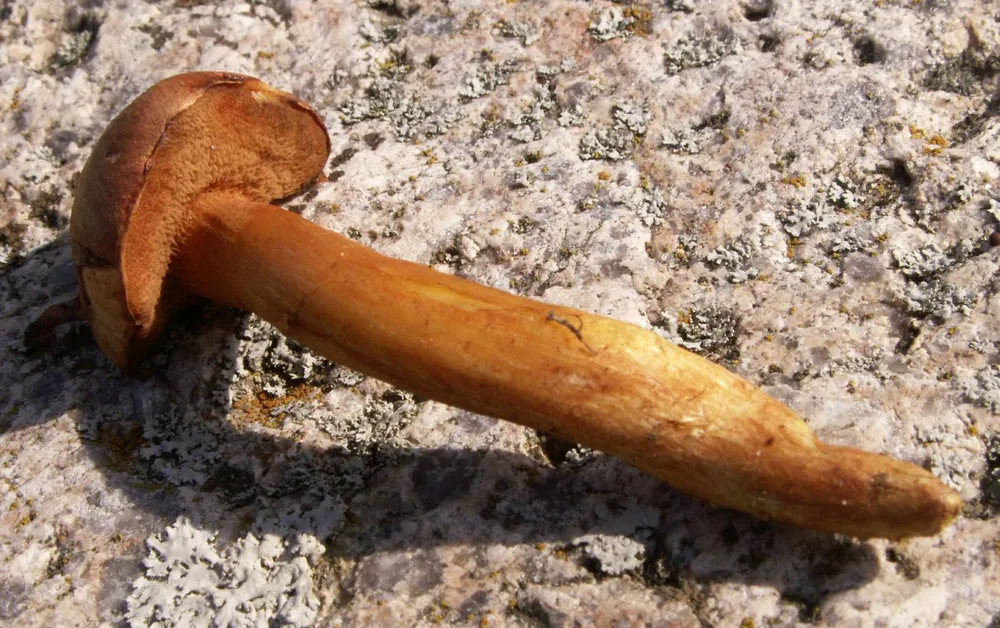
Peppery boleteChalciporus piperatus
Expert-verifiedUpdated October 3, 2026
Passport
- Edibility
- Inedible
- Season
- Aug — Nov
- Hymenophore
- Pored
- Cap color
- Brown
- Size
- Small (up to 5 cm)
- Smell
- Odorless
- Reviewed
- Yes ✓
Quick answers
Where to look?
Conifer forest, Mixed forest
When does it appear?
Aug — Nov
Active months: August, September, October, November.
How to recognize it? Three signs
- Cap color: Brown, Orange, Red
- Cap shape: Convex
- Smell: Odorless
Fruiting season
August – November
Description
The peppery bolete (Chalciporus piperatus, in some literature Suillus piperatus or Boletus piperatus) is a small reddish-brown pored mushroom with a characteristic burning, peppery, bitter-hot taste to the flesh that does not go away with cooking. The name says it all: one bite and your mouth is on fire, as if you'd eaten hot pepper. In some Western cuisines it is used dried, in small amounts, as a spicy seasoning for meat dishes and sauces, but as a mushroom to cook on its own it is entirely inedible.
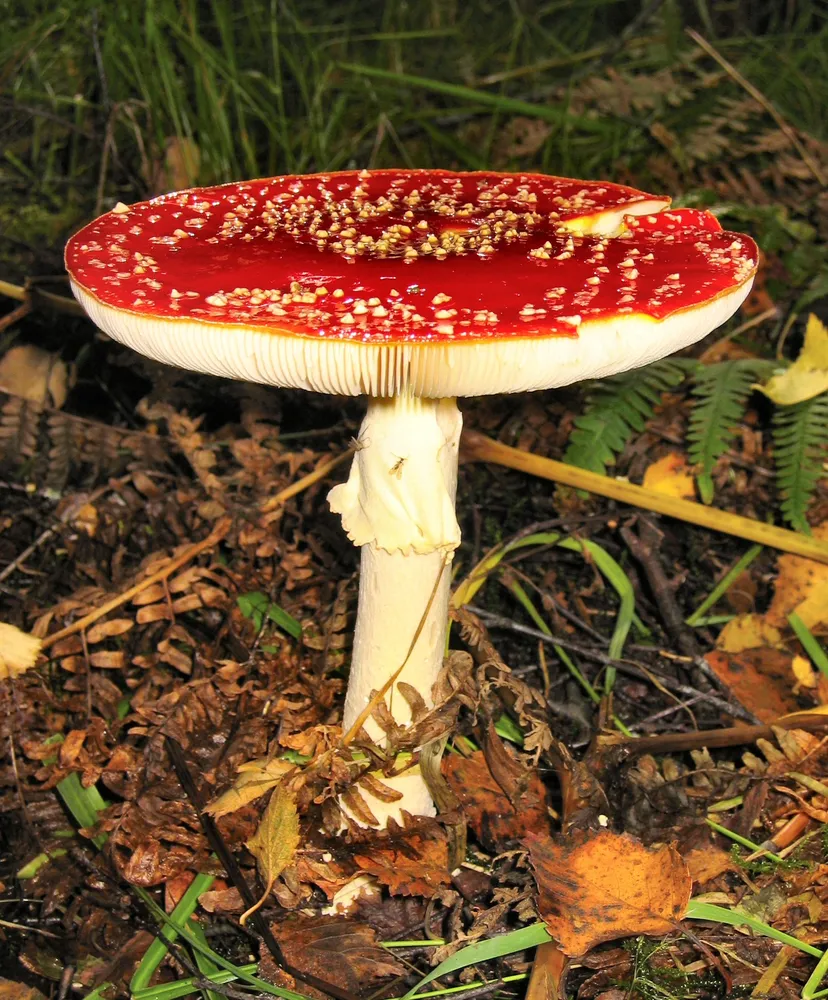
Biologically fascinating: for a long time it was thought to be a mycorrhizal partner of pine, but modern research has shown it is a parasite on the mycelium of the fly agaric (Amanita muscaria). In other words, it grows next to fly agarics because it draws nourishment from their mycorrhiza, an example of a subtle interaction between species that science has only recently come to understand.
In Ukraine it is widespread in pine forests and mixed forests with pine: Polissia, the Carpathians, Prykarpattia, and in places the forest-steppe. Season August to November, peaking in September-October. It often keeps company with the fly agaric: if you spot a group of bright red fly agarics among the pines, look around: a few small reddish-brown peppery boletes are often hiding in the moss.
Cap
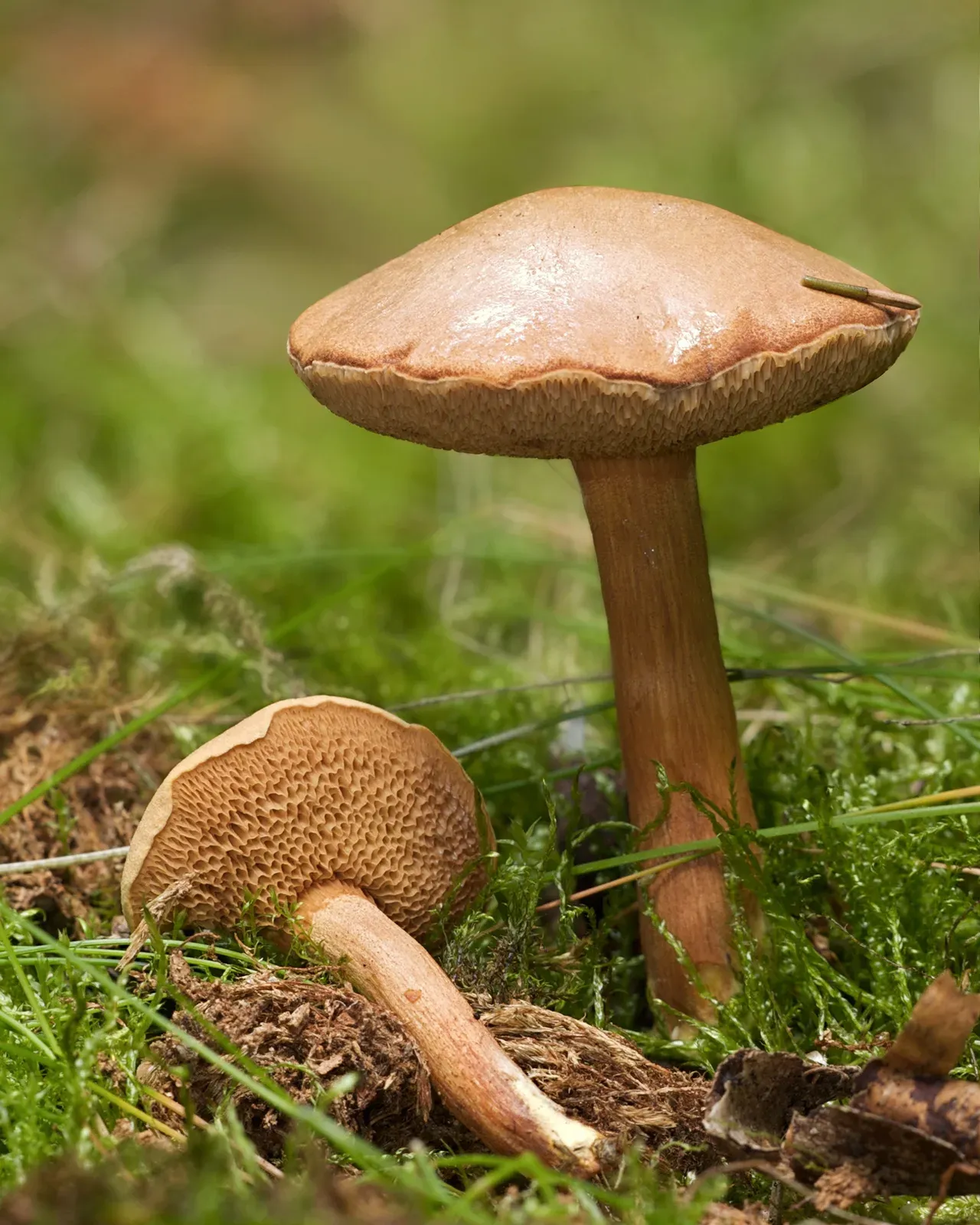
Cap 2-6 cm across, hemispherical when young, becoming convex-flat with age. Color yellowish-rust to copper-brown, reddish-orange, darker when young, fading with age. Surface smooth, slightly sticky in wet weather, dry and matte in dry weather.
Hymenophore
Pored hymenophore: tubes decurrent down the stem, copper-red, rusty orange, a distinctive rich tube color that shows from every angle. Pores wide, angular, the same color as the tubes. Spore print copper-brown.
Stem
Stem 3-7 cm tall, 0.5-1 cm thick, cylindrical, often narrowing toward the base. Color yellowish-rust to orange-brown, in the lower part lemon-yellow (a distinctive feature: a bright yellow patch at the base of the stem, as in the ruby bolete). No ring.
Flesh
Flesh thin, yellowish to yellow-pink, at the base of the stem bright yellow, lemon. When cut it turns faintly pink in the upper part. The taste is distinctly burning and peppery, hot like chili pepper: the main diagnostic feature of the species.
Smell
Faint, pleasant and mushroomy, with no distinctive notes. The smell is not pronounced, unlike the taste.
›Scientific synonyms (6)
Boletus piperatus Bull. (1790), Leccinum piperatum (Bull.) Gray (1821), Viscipellis piperata (Bull.) Quél. (1886), Ixocomus piperatus (Bull.) Quél. (1888), Suillus piperatus (Bull.) Kuntze (1898), Ceriomyces piperatus (Bull.) Murrill (1909)
Lookalikes
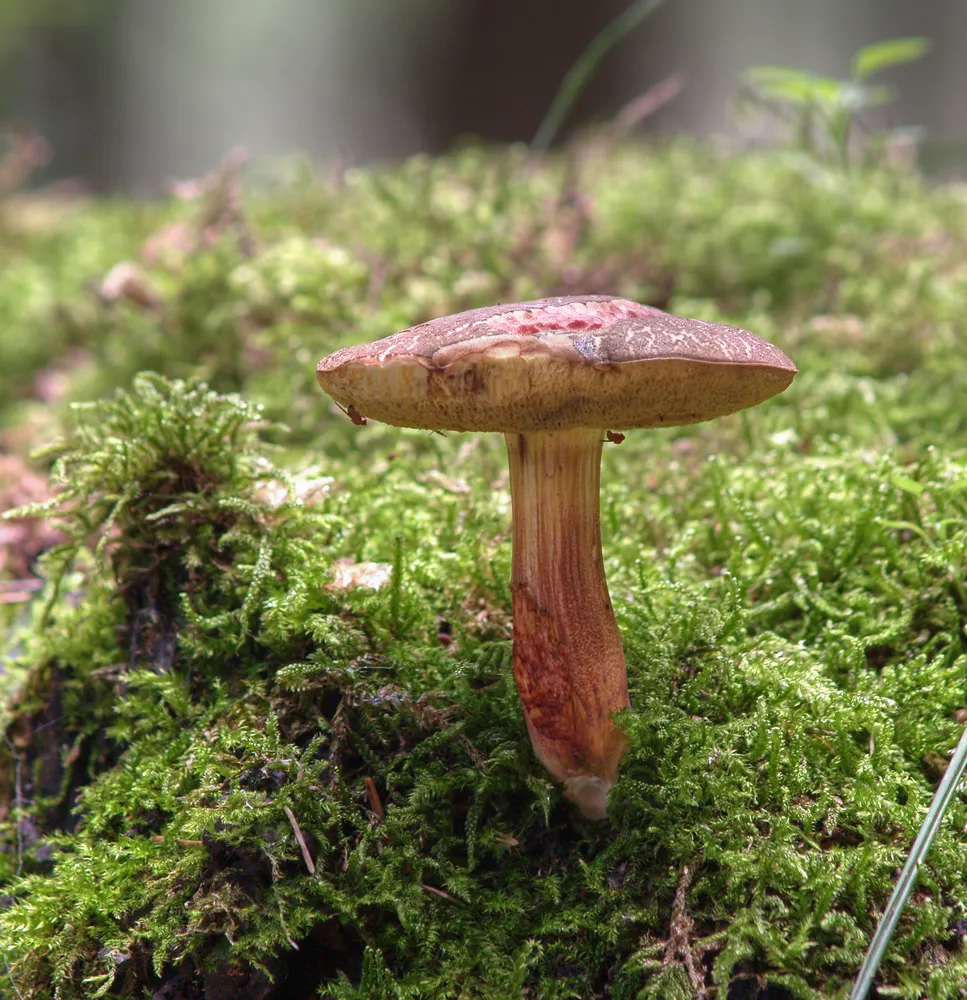
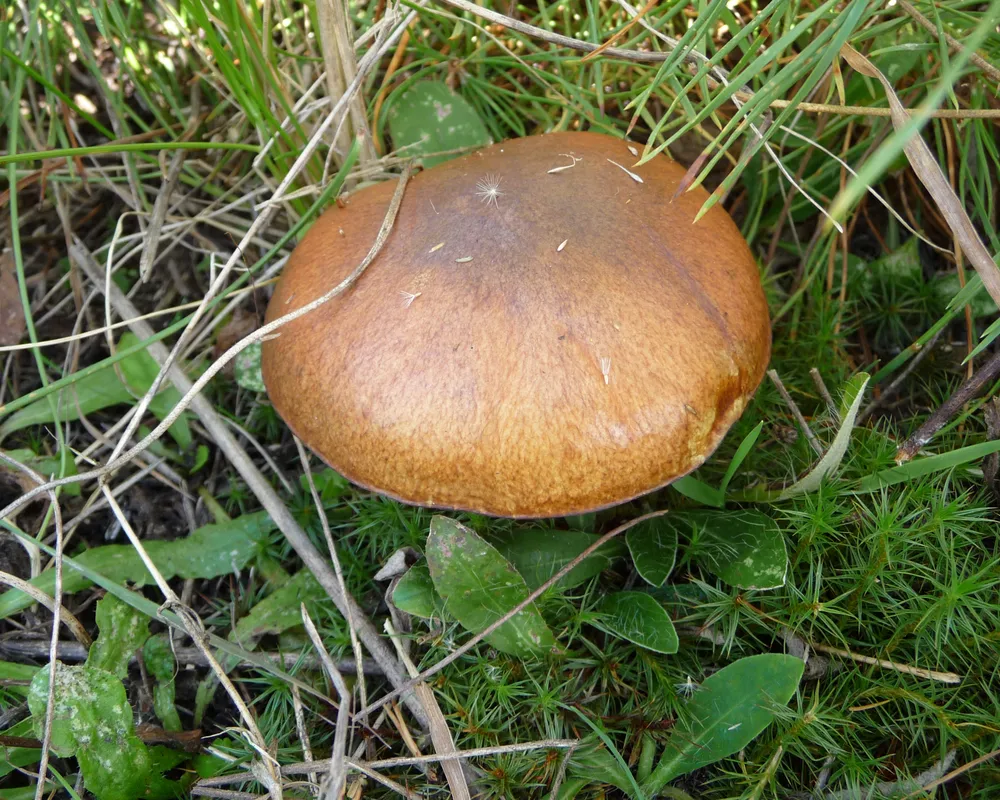
Related species
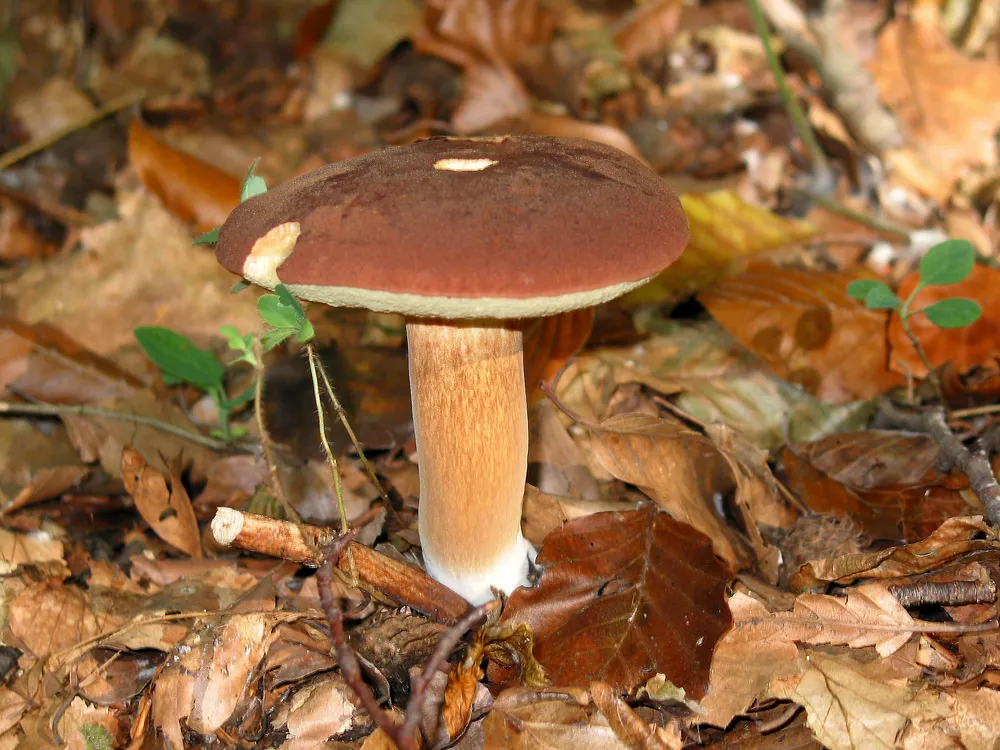
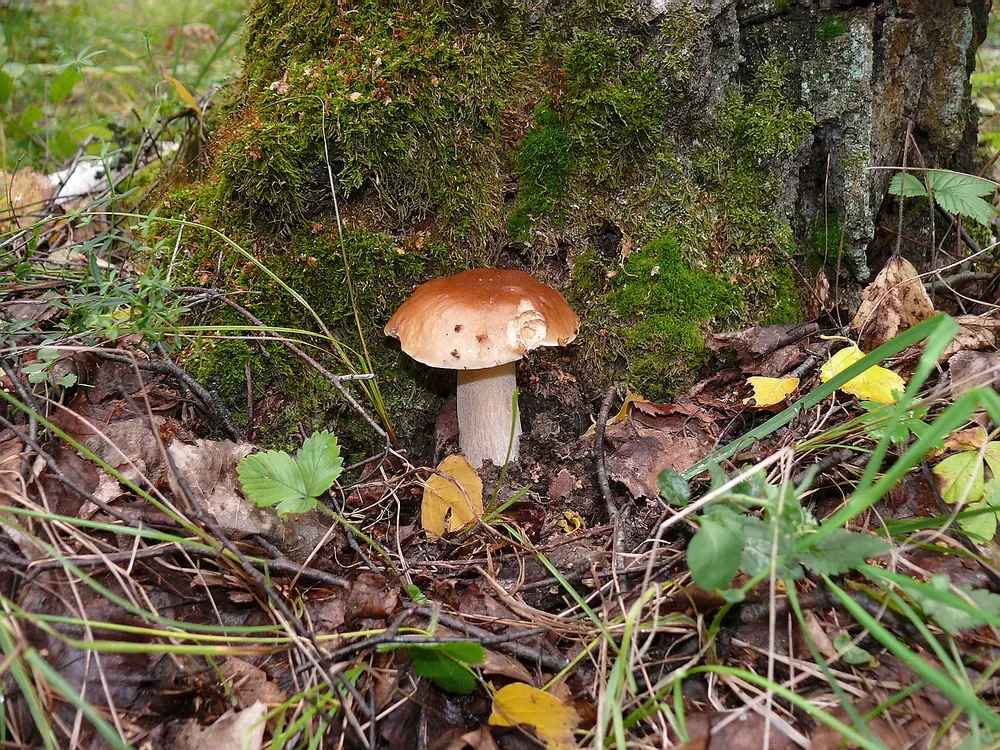
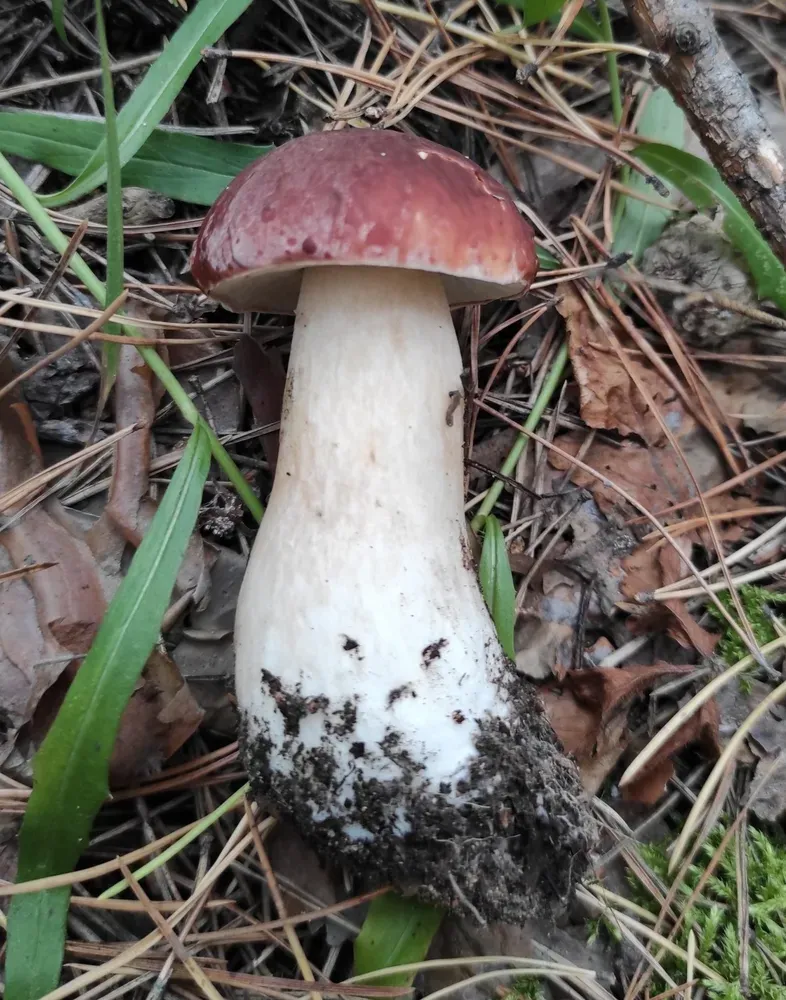
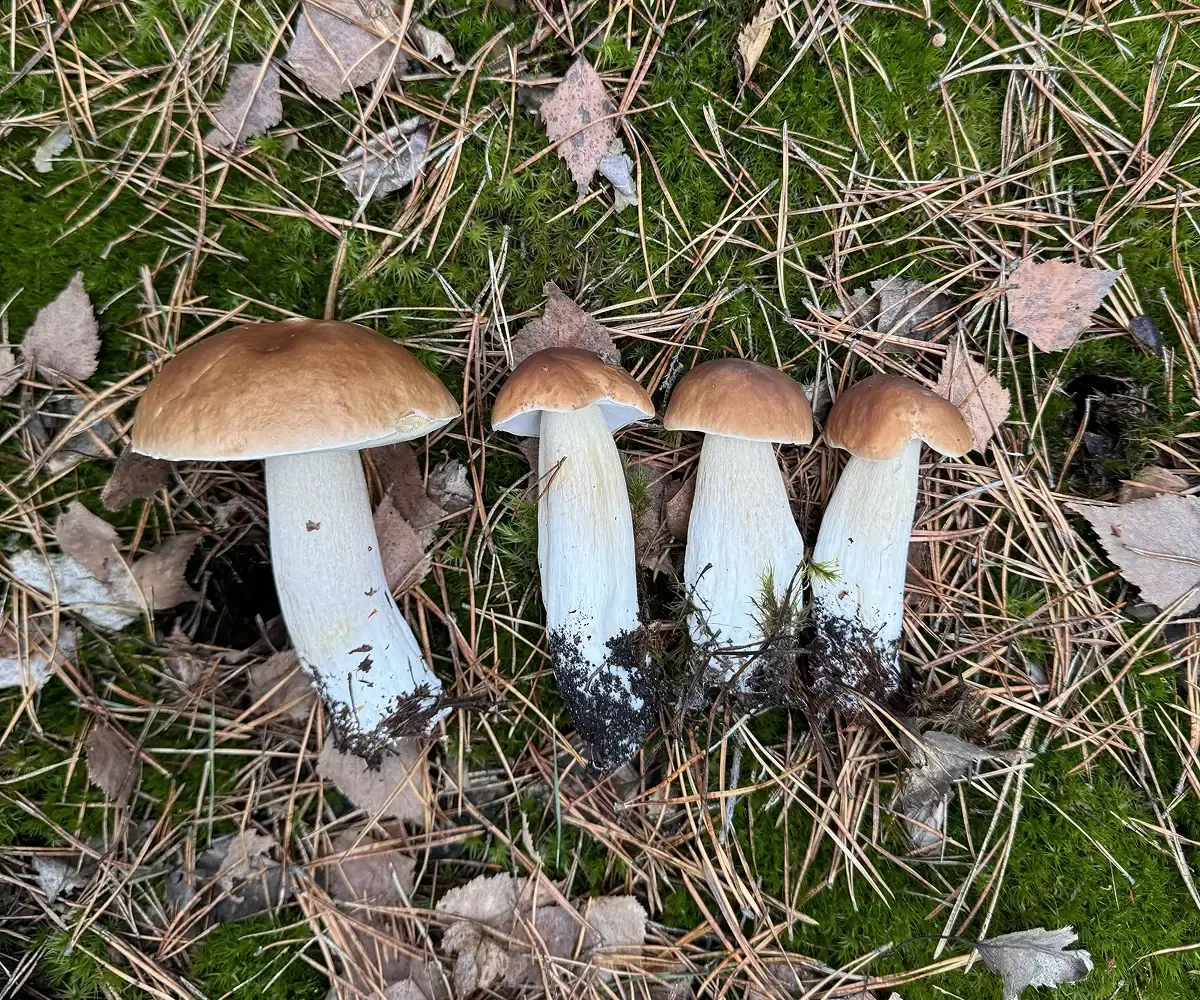
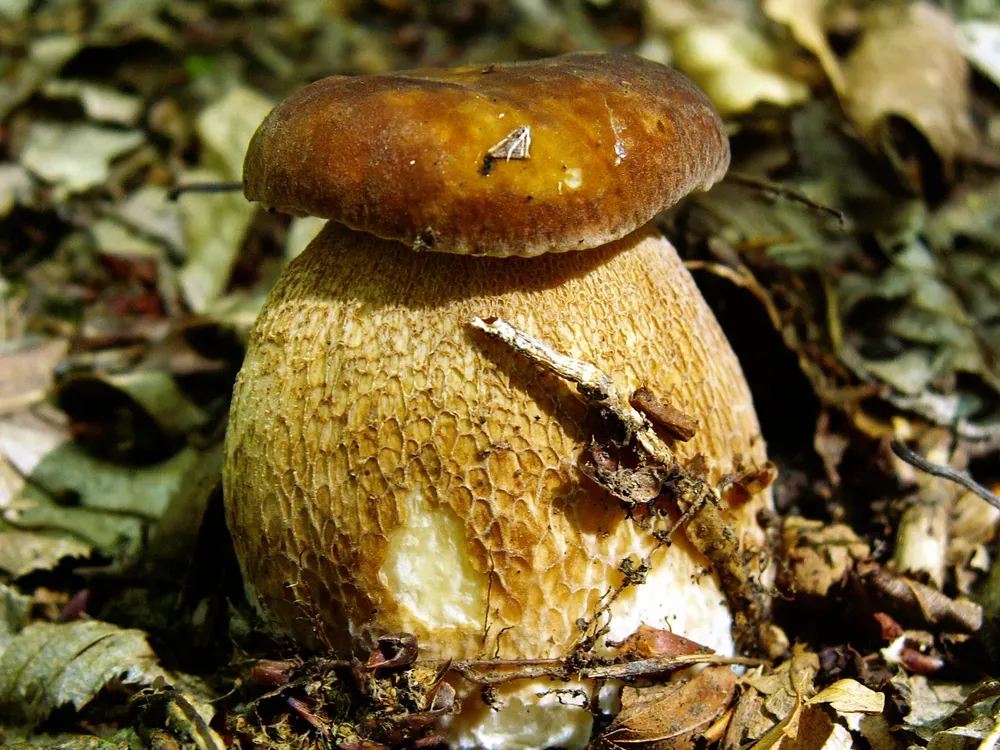
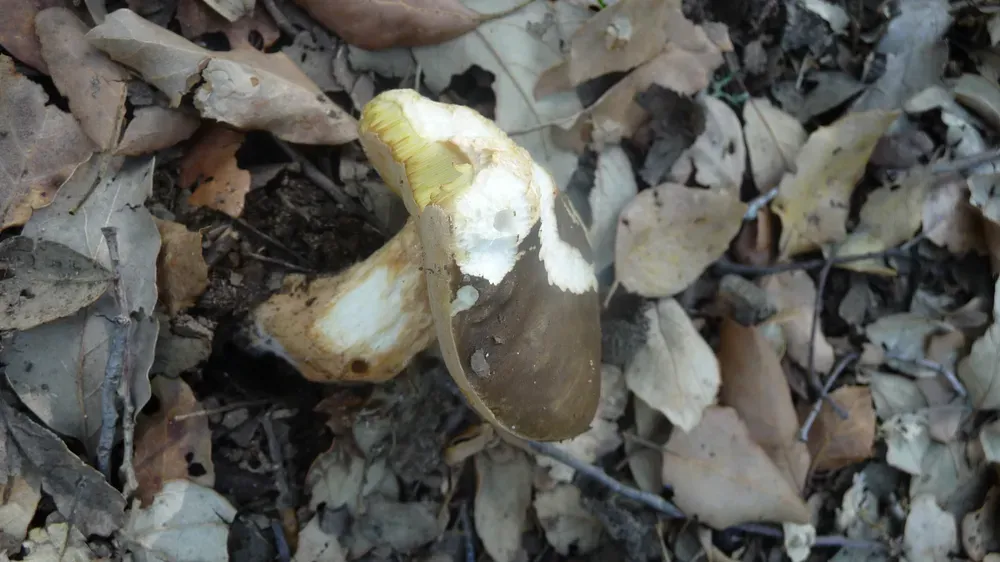
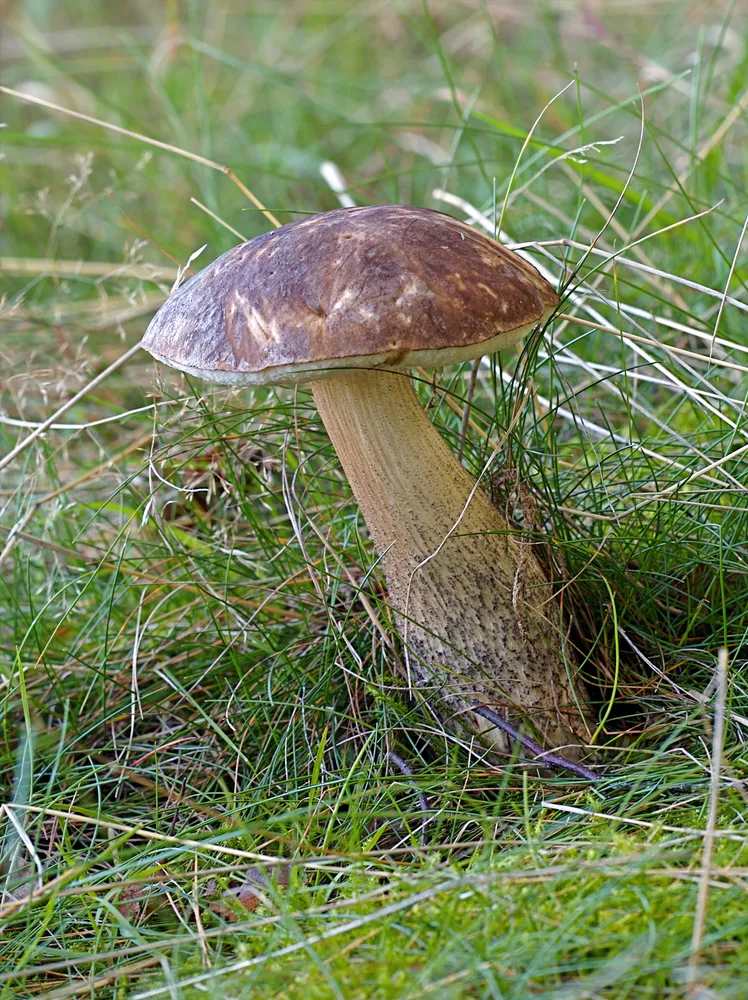
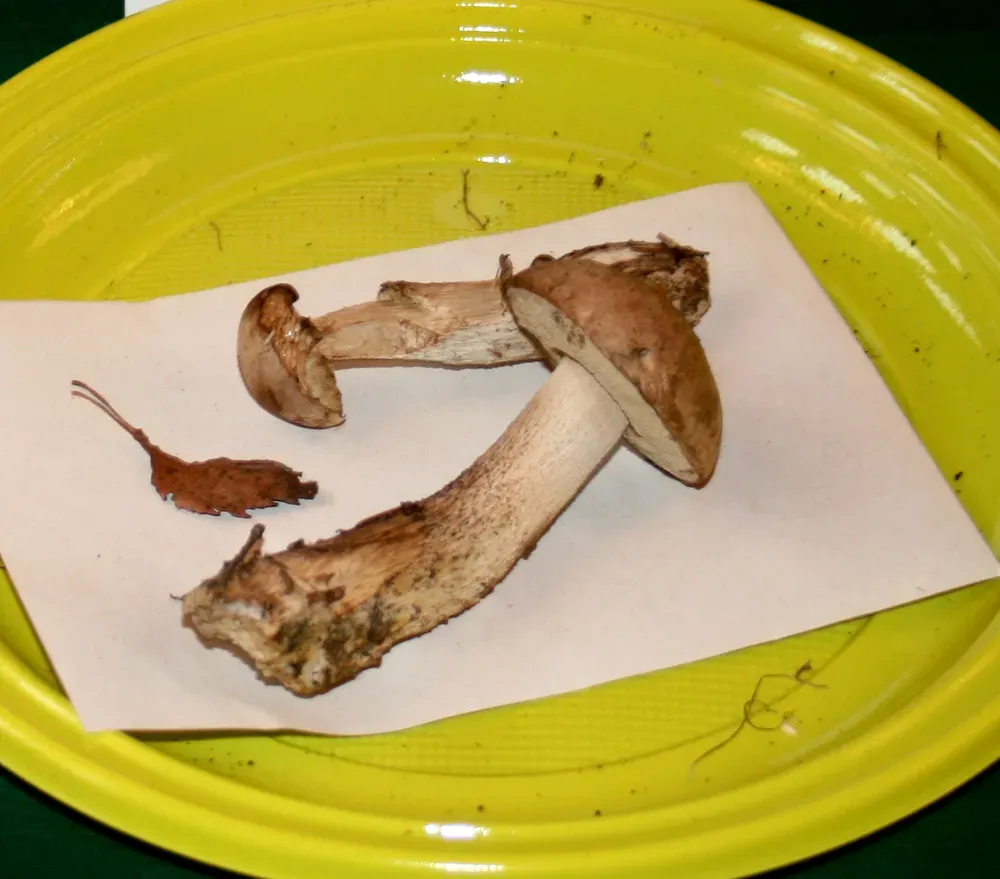
Mushrooms of the same genus and habitat — to study side by side and never mix up.
Related reading
 Safety
Xerocomus lookalikes and how to spot them
Xerocomus boletes have no deadly lookalikes, but a few similar mushrooms are worth knowing. Here's what they c…
May 24, 2026·3 min Safety
Are Xerocomus boletes edible, and what are they good for?
Xerocomus boletes are edible and tasty, if humbler than porcini. Here's which ones you can eat, how they're go…
May 20, 2026·3 min
Frequently asked questions
Can you eat it?
Not on its own, because of its burning, peppery taste and a mild irritant effect on the digestive tract. It contains no serious toxins and no fatal cases have been described, but in large amounts it may cause stomach discomfort. In Western cuisines it is sometimes used dried, in small amounts, as a seasoning for meat: about a peppercorn's worth per serving.
How do I use it as a seasoning?
Dry it at a low temperature (40-50°C) for 2-3 days. Grind it into a fine powder. Store it in a tightly closed jar. Add it by the knife-tip to ground meat, pâtés, sauces and stews, as a substitute for black pepper. Don't overdo it: even in small amounts the taste is very intense. One mushroom 4-5 cm across = seasoning for 2-3 servings of stew.
Is it true that it parasitizes the fly agaric?
Yes: modern molecular studies (2014-2018) have confirmed that the peppery bolete does not form its own mycorrhiza with pine but draws nourishment through the mycelium of Amanita muscaria (the fly agaric), in what is effectively a parasitic or commensal interaction. That explains why it always grows next to fly agarics among the pines: without them, it simply wouldn't be there. A classic source of amazement on mushroom walks.
Where should I look for it?
In pine forests and mixed forests with pine, mostly in mossy pine woods with sparse grass. Always next to the fly agaric (Amanita muscaria), a guaranteed indicator. If you find fly agarics among the pines, look around in the moss nearby: the peppery bolete is often there too.
Which regions of Ukraine is it found in?
Throughout the pine zone: Polissia (especially abundant), the Carpathians and Prykarpattia in pine stands, and in places the forest-steppe in pine plantations. One of the less common but steady species of pine woods.
When should I look for it?
August to November, peaking in September-October. Its season coincides with the main season of its partner, the fly agaric.
Which mushrooms is it confused with?
With young Xerocomus boletes, especially the red cracking bolete and the ruby bolete, which are also reddish. The key difference: Xerocomus boletes have yellow pores, the peppery bolete has copper-red ones. Xerocomus boletes taste mild, the peppery bolete is fiery. With the red-capped scaber stalk (Leccinum aurantiacum): also reddish, but much larger, found in birch forests, with black-and-white scales on the stem.
Is it worth picking at all?
For gastronomy, as a seasoning: if you like, in small amounts. For your main basket: no, because there is little flesh and the taste is too fiery. It is more interesting for mycological education: an introduction to parasitic interactions between fungi, a step toward understanding forest mycorrhiza.
Is Peppery bolete edible or poisonous?
Does Peppery bolete have gills or pores?
What does the cap of Peppery bolete look like?
What does the stem of Peppery bolete look like?
Sources
- [1]Вікіпедія (українська)
- [2]Атлас грибів України, Зеров Д.К. (1979)
- [3]MycoBank Database
- [4]Index Fungorum
- [5]GBIF
- [6]iNaturalist Ukraine