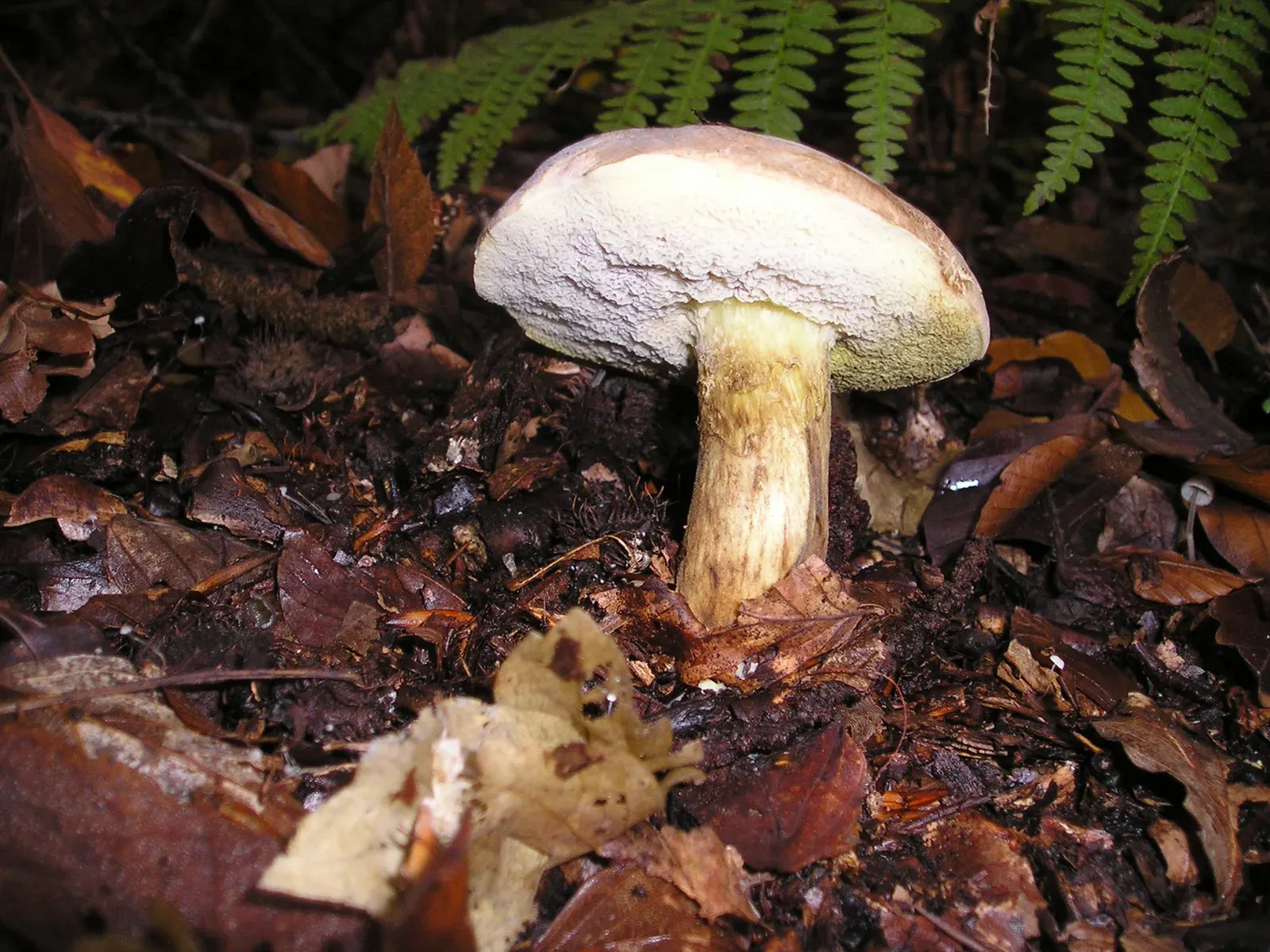
“A Xerocomus bolete, is it even edible?” is one of the most common questions beginners ask. It's a modest mushroom, turns blue when cut, and isn't as famous as porcini or slippery jacks, so the doubts are understandable.
The answer is simple: yes, the Xerocomus bolete is an edible and tasty mushroom. Let's look at exactly which ones you can eat, how they're good for you, what to keep in mind in the kitchen, and why the bluing has nothing to do with it.
Can you eat Xerocomus boletes
All true Xerocomus boletes in our forests are edible. There are no deadly poisonous species among them, so poisoning yourself with one is almost impossible.
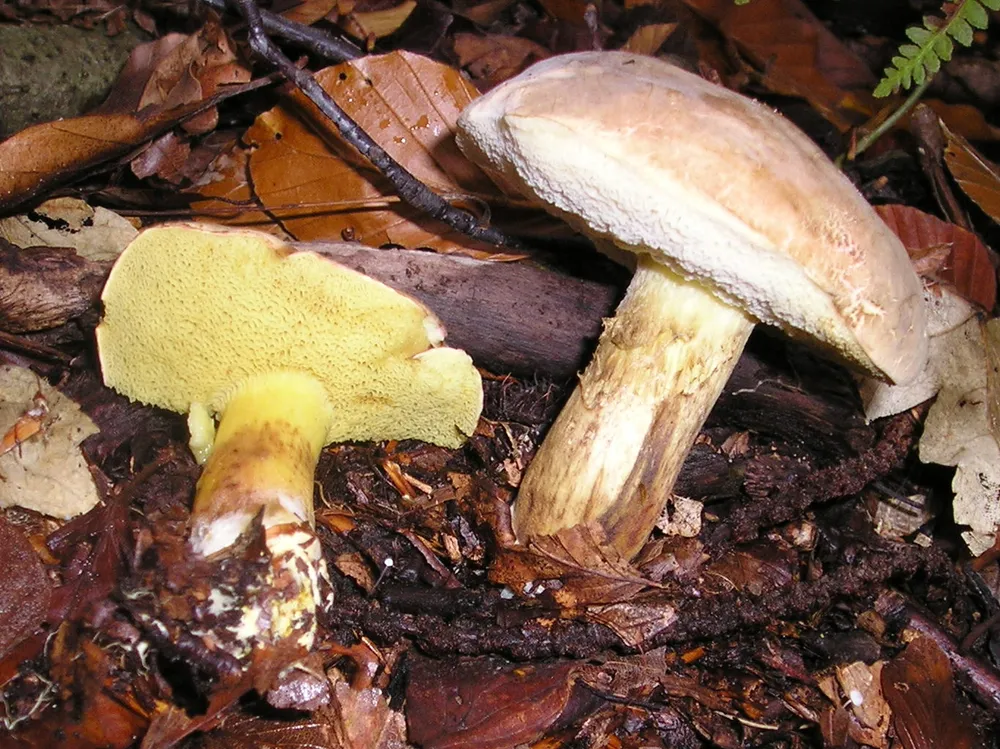
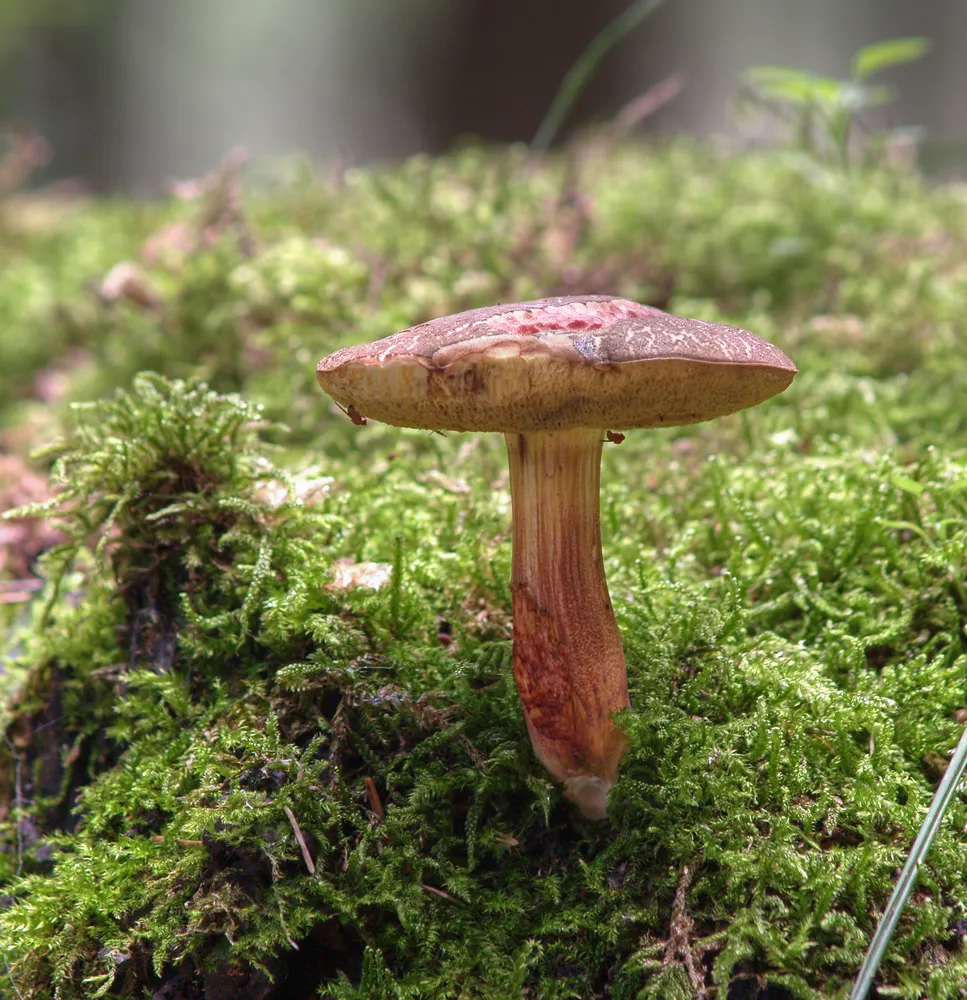
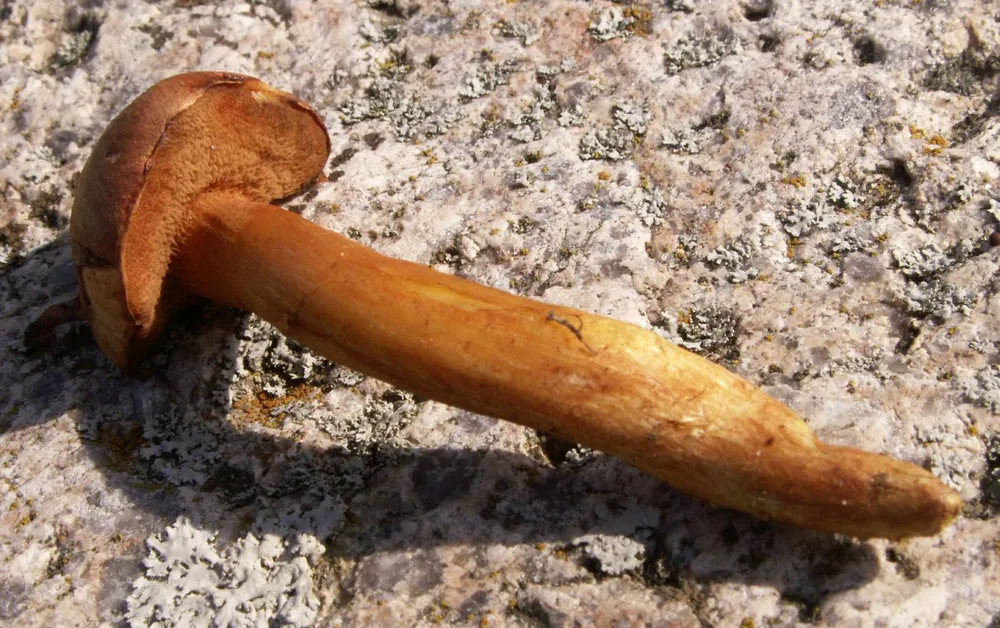
The ones that most often end up in the basket are the suede, red cracking and ruby boletes. All of them are good edible mushrooms for frying, boiling and adding to mushroom dishes.
Xerocomus boletes are among the mushrooms people rarely get wrong. The main thing is to pick young, firm specimens and not confuse them with the fiery peppery bolete, more on that below.
Does bluing mean poison
A beginner's biggest fear is watching the cut flesh turn blue. It looks as if the mushroom is “going bad” or is poisonous. In fact, it isn't.
Bluing is an ordinary oxidation reaction of compounds in the flesh when exposed to air. Most edible Xerocomus boletes turn blue to some degree, and it's completely harmless.
The blue disappears during cooking, and the dish comes out its usual color. So bluing is no reason to throw a mushroom away; on the contrary, it's one of the typical signs of a Xerocomus bolete.
What Xerocomus boletes taste like and how they're good for you
Xerocomus boletes have a pleasant, mild mushroom flavor and a light nutty aroma. It's not as pronounced as porcini, but it's not bitter or harsh either.
Like all wild forest mushrooms, they're a source of plant protein, dietary fiber and minerals. They're low in calories and add welcome variety to your diet.
Still, don't overdo mushrooms: they're hard to digest, so keep portions moderate and the mushrooms fresh and thoroughly cooked. Give them to children and people with sensitive stomachs with caution.
What to keep in mind in the kitchen
The key thing about Xerocomus boletes is their soft, watery flesh, which ages quickly. So there are a few rules.
- Pick young mushrooms. Old ones with sagging, spongy tubes turn mushy and taste bad.
- Cook them right away. They spoil quickly, so don't leave them sitting for long.
- Don't be put off by darkening. Because of the bluing, a dish may darken, and that's normal.
- Mix them with other mushrooms. That way their wateriness is less noticeable.
Xerocomus boletes are great fried or in soup, but for pickling and drying they're not as good as firmer mushrooms. To know exactly when to head into the forest for them, check our mushroom radar: it shows when moisture and warmth line up just right for mushrooms to appear.
Sources
- “Identification Guide to the Fungi of Ukraine” (Kyiv, Naukova Dumka publishers).
- Xerocomus subtomentosus on GBIF, the global biodiversity database.
- Xerocomus on MycoBank, the international fungal nomenclature database.
- Xerocomus subtomentosus on Wikipedia.
Frequently asked questions
Are Xerocomus boletes edible?
Yes, all true Xerocomus boletes in our forests are edible. There are no deadly poisonous species among them. The ones people pick most often are the , and boletes.
Can you eat a Xerocomus bolete that turns blue when cut?
Yes. Bluing is an ordinary oxidation reaction of the flesh in the air and is harmless to people. Most edible Xerocomus boletes turn blue, and the blue disappears during cooking.
What do Xerocomus boletes taste like?
They have a mild mushroom flavor and a light nutty aroma. They're humbler than porcini, but not bitter or harsh, and work well fried and in soups.
How are Xerocomus boletes good for you?
Like all wild forest mushrooms, they contain plant protein, dietary fiber and minerals while being low in calories. But mushrooms are hard to digest, so eat them in moderation.
Are there poisonous Xerocomus boletes?
There are no deadly poisonous Xerocomus boletes. The only unpleasant relative is the fiery , which isn't poisonous but ruins a dish with its hot taste.
Why should you pick Xerocomus boletes young?
Because their flesh is soft and watery, so old mushrooms quickly turn mushy, spongy and tasteless. Young specimens are firmer and tastier.
Can Xerocomus boletes poison you?
It's practically impossible to be poisoned by true Xerocomus boletes, because they're edible. The only danger comes from old, spoiled mushrooms, as with any other kind, so pick fresh, young ones.
Are Xerocomus boletes good for preserving?
They're great fried or in soup, but for pickling and drying they're not as good as firmer mushrooms, because they turn mushy and darken from the bluing.
Mushrooms in this article
Related articles
 Recipes & cooking
How to store fresh mushrooms, and for how long
Fresh mushrooms spoil faster than you might think. Here's how long they keep in the fridge, how to store them…
August 21, 2026·4 min How to identify
Truffles in Ukraine: do they grow here, and where to look
Truffles aren't just a French delicacy. Several species grow in Ukraine too. Here's which ones, where they occ…
August 24, 2026·2 min Safety
False morel: why this spring mushroom is dangerous
The false morel looks like a morel, but it contains a poison. Here's how to recognize it, why it's dangerous a…
August 24, 2026·2 min