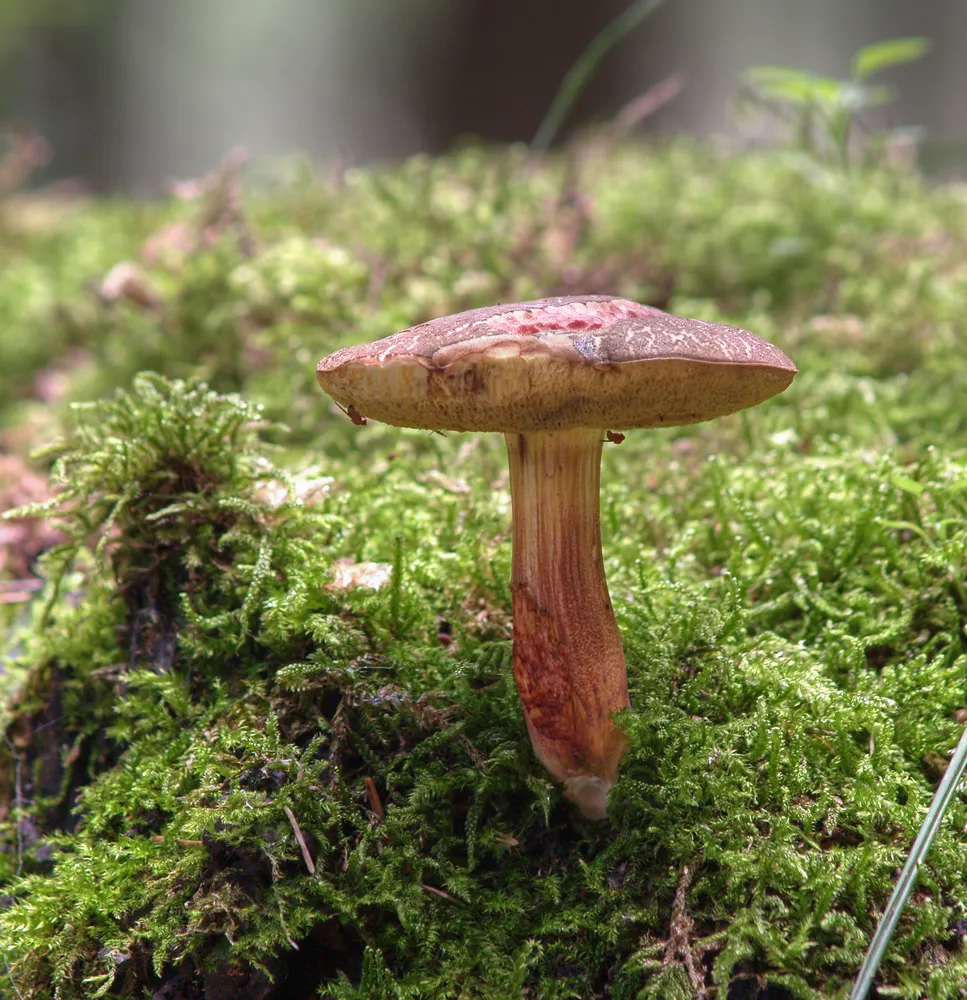
Red cracking boleteXerocomellus chrysenteron
Expert-verifiedUpdated October 3, 2026
Passport
- Edibility
- Edible
- Season
- Jun — Nov
- Hymenophore
- Pored
- Cap color
- Brown
- Size
- Medium (5–15 cm)
- Smell
- Pleasant
- Reviewed
- Yes ✓
Quick answers
Where to look?
Deciduous forest, Mixed forest
When does it appear?
Jun — Nov
Active months: June, July, August, September, October, November.
How to recognize it? Three signs
- Cap color: Brown, Olive, Red
- Cap shape: Convex
- Smell: Pleasant
Fruiting season
June – November
Description
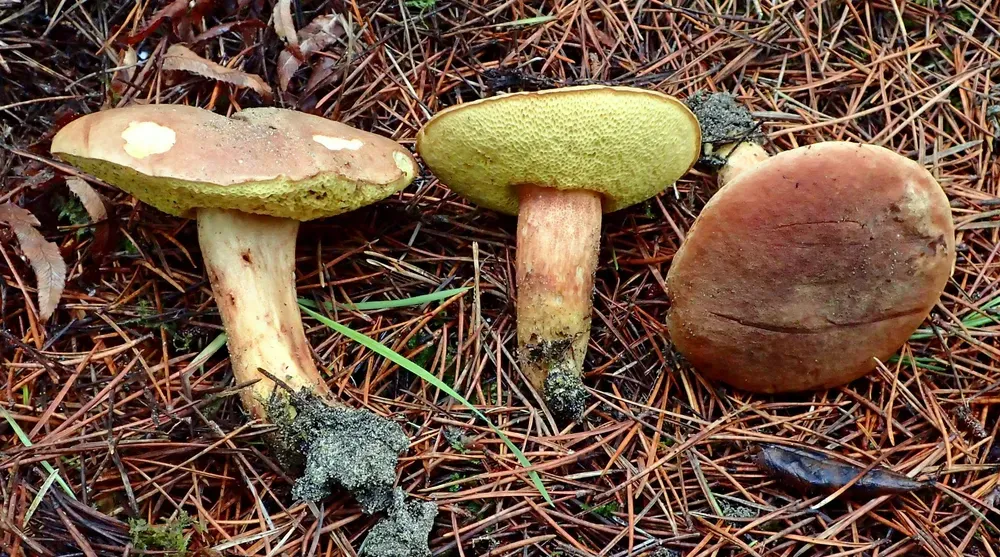
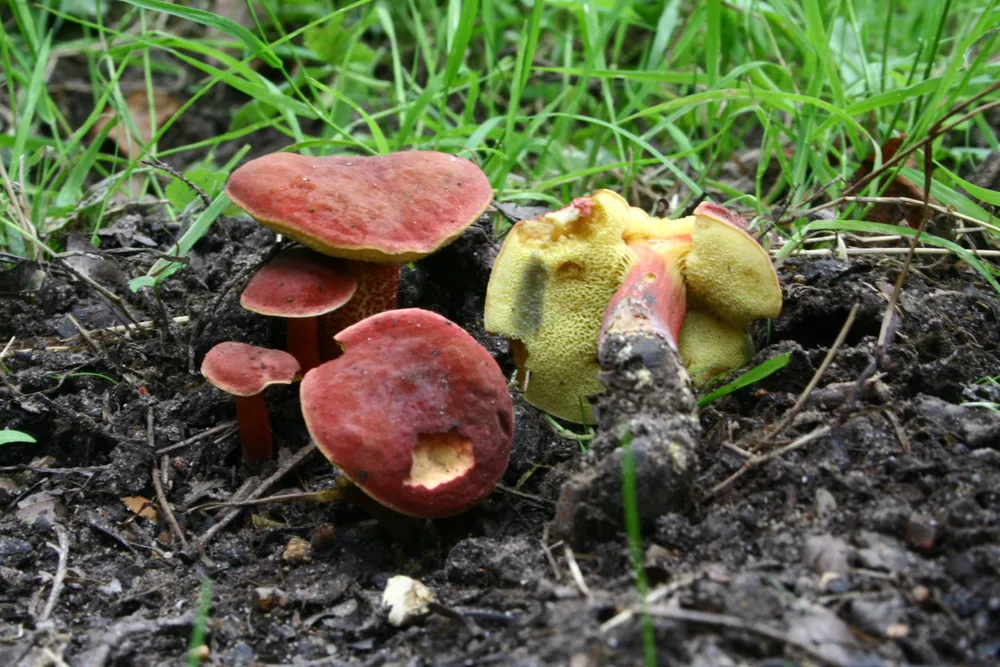
The red cracking bolete (Xerocomellus chrysenteron, in some literature Boletus chrysenteron) is the most recognizable of the boletes thanks to two telltale features: a cap that cracks into polygons with a distinct pinkish-red layer (visible in the cracks) and a noticeable pink or reddish lengthwise band on the stem. The Latin name chrysenteron means "with golden insides" — a nod to the bright yellow flesh of a young mushroom. It is one of the most common pored mushrooms in European forests.
Edible, of middling culinary value. The flesh is soft, thin and neutral in taste, and turns slimy when cooked. It stains strongly blue when cut — a normal reaction. Good for frying and for pickling in a mix with other mushrooms. On its own it's an uninteresting dish — watery and with no real aroma. Old specimens with soft, maggoty caps — skip them right away.
In Ukraine it is widespread throughout the forest and forest-steppe zones. It forms mycorrhiza with oak, beech, hornbeam and birch. Season: June — November, peaking in August–September. One of the most frequent boletes in city parks — it grows on lawns under oaks and lindens, even in the centers of big cities. It often grows in groups of 3-10 fruiting bodies.
Cap
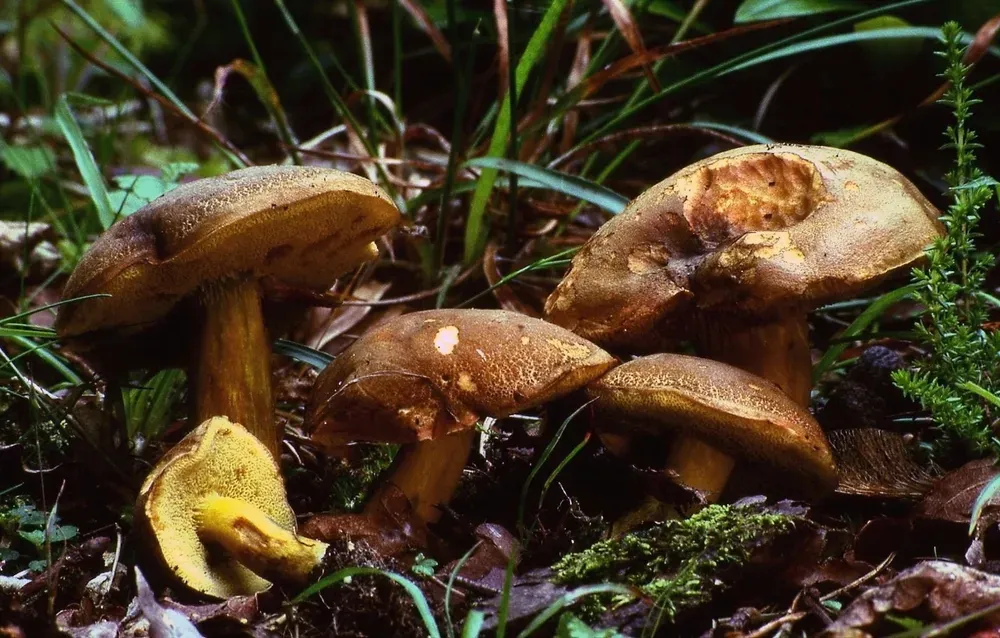
Cap 3-10 cm across, hemispherical in young mushrooms, later becoming convex to flat. Color chestnut-brown to olive-brown, darker when young. The surface is velvety; in old mushrooms it typically cracks into polygons with a distinct pinkish-red layer in the cracks — this is the most reliable diagnostic feature of the species. In damp weather it's slightly sticky.
Hymenophore
The hymenophore is made of tubes attached to the stem. Color yellow when young, turning yellow-olive with age. The pores are small and stain strongly blue when pressed. Spore print olive-brown.
Stem
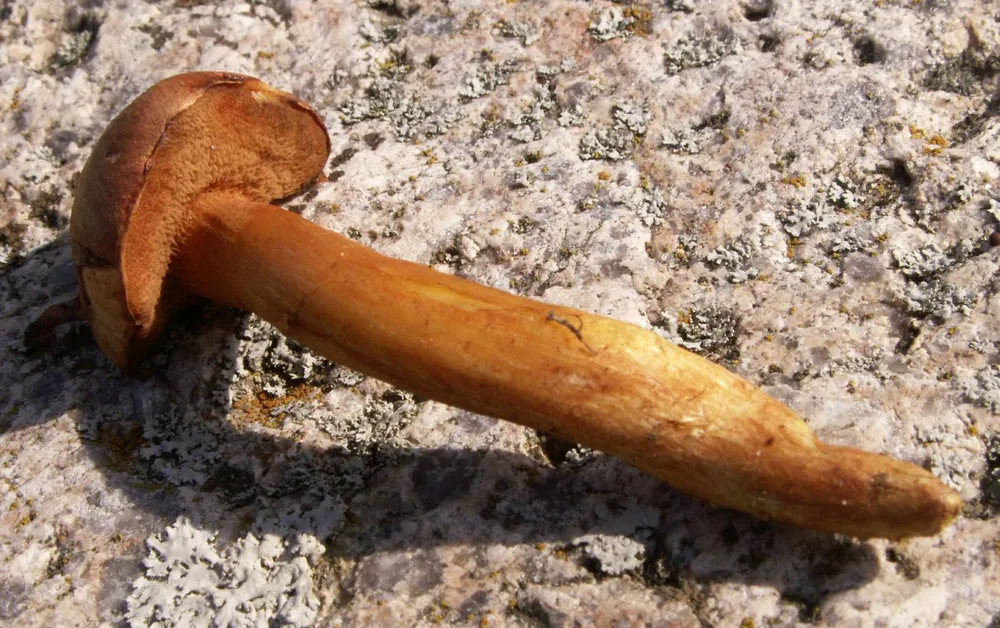
Stem 5-8 cm tall, 0.8-1.5 cm thick, cylindrical, often thickened toward the base. Color yellow at the top, with a characteristic lengthwise pinkish-red band or zone in the lower half. When cut, it turns blue.
Flesh
The flesh is yellow in the cap, soft and watery, and in the lower part of the stem has a pinkish-red zone. When cut, it turns blue (within 30-60 sec). The smell is faintly mushroomy.
Smell
Faint, pleasant and mushroomy, with no distinct notes.
›Scientific synonyms (3)
Boletus chrysenteron Bull. (1789), Xerocomus chrysenteron Quél. (1888), Boletus pascuus (Pers.) Krombh.
Lookalikes
Related species
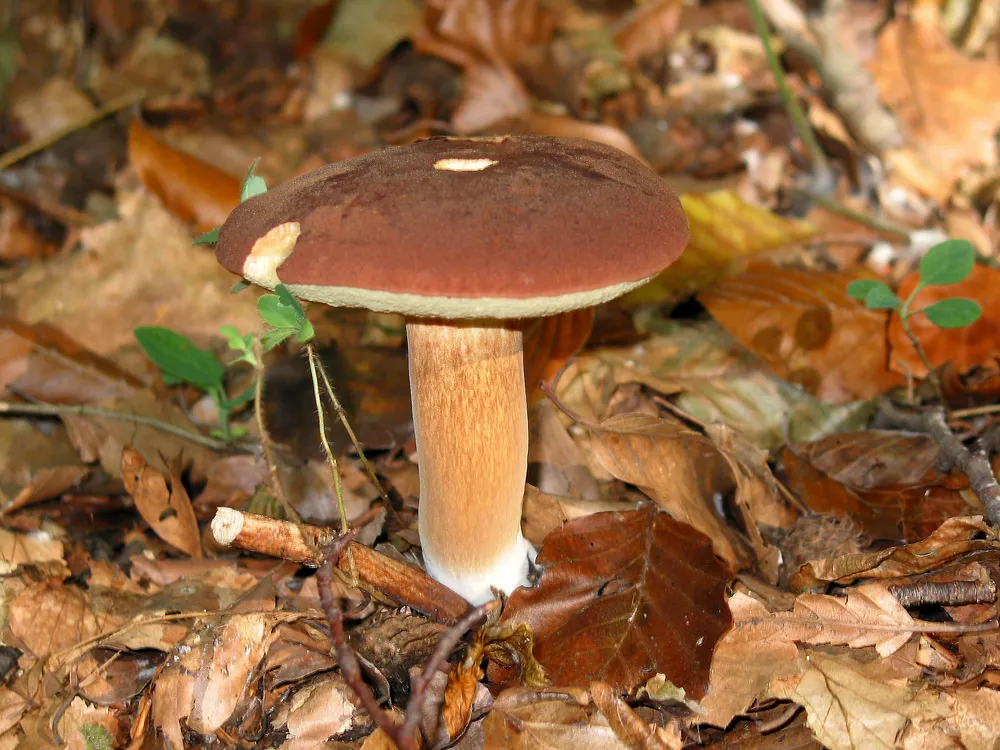
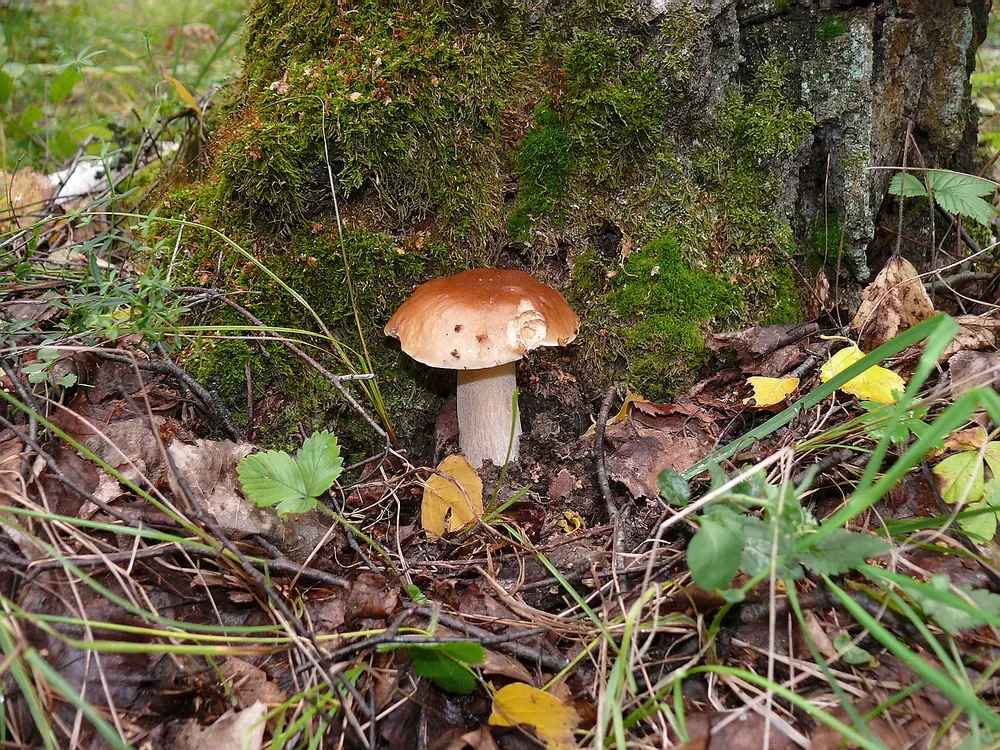
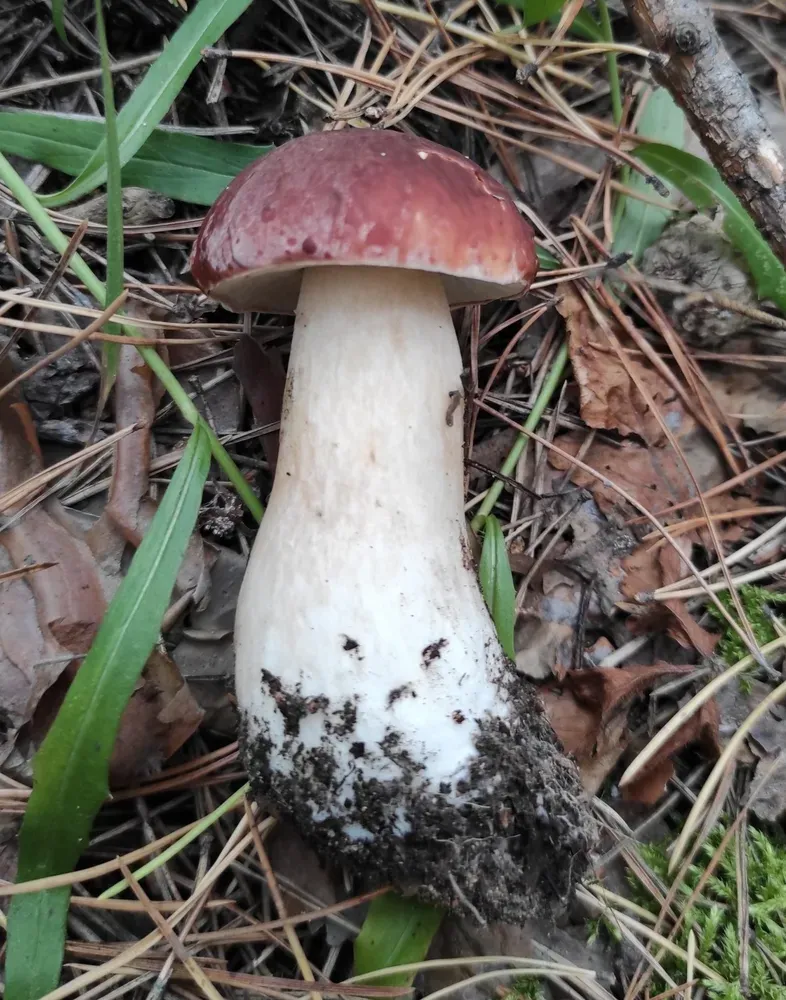
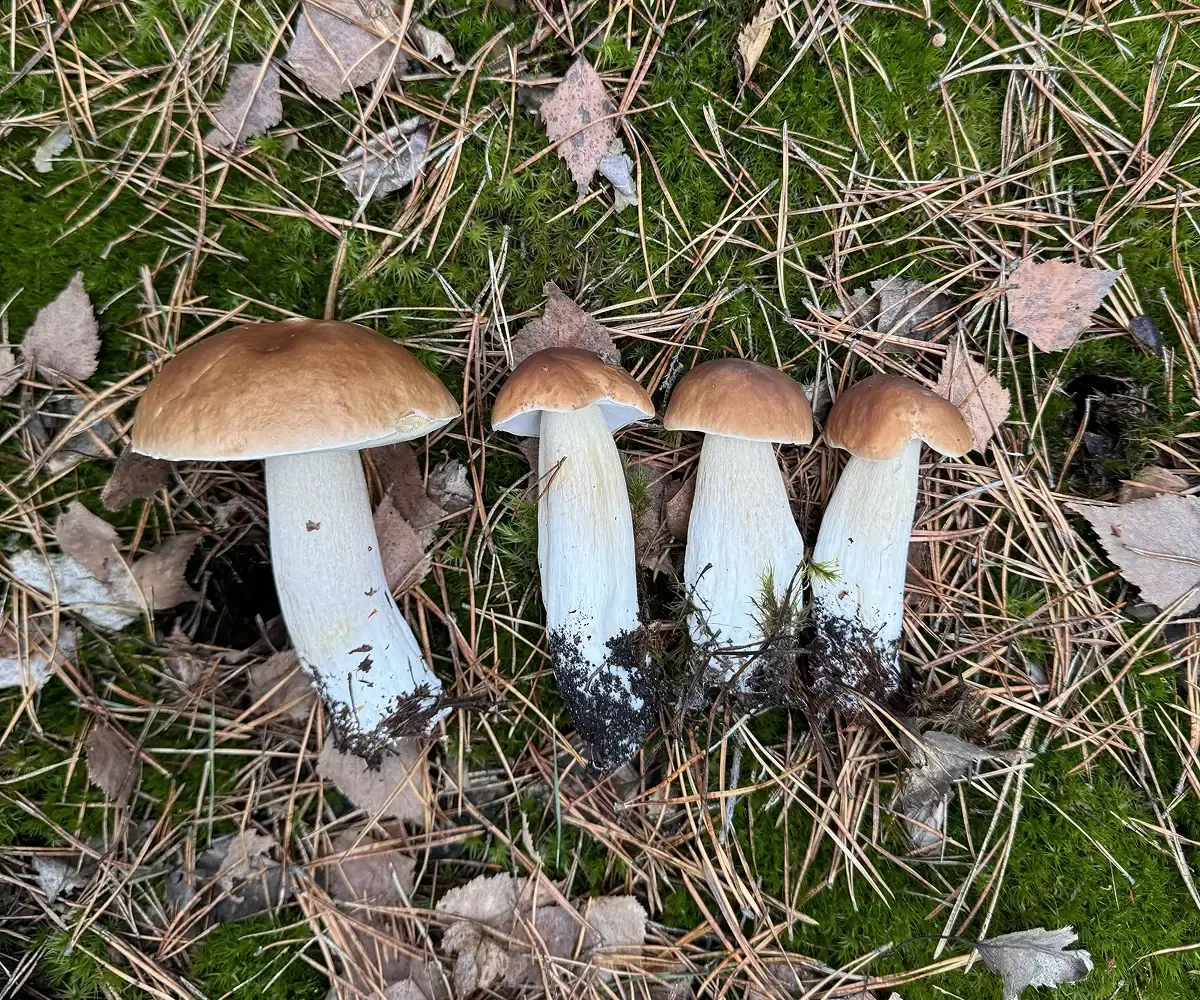
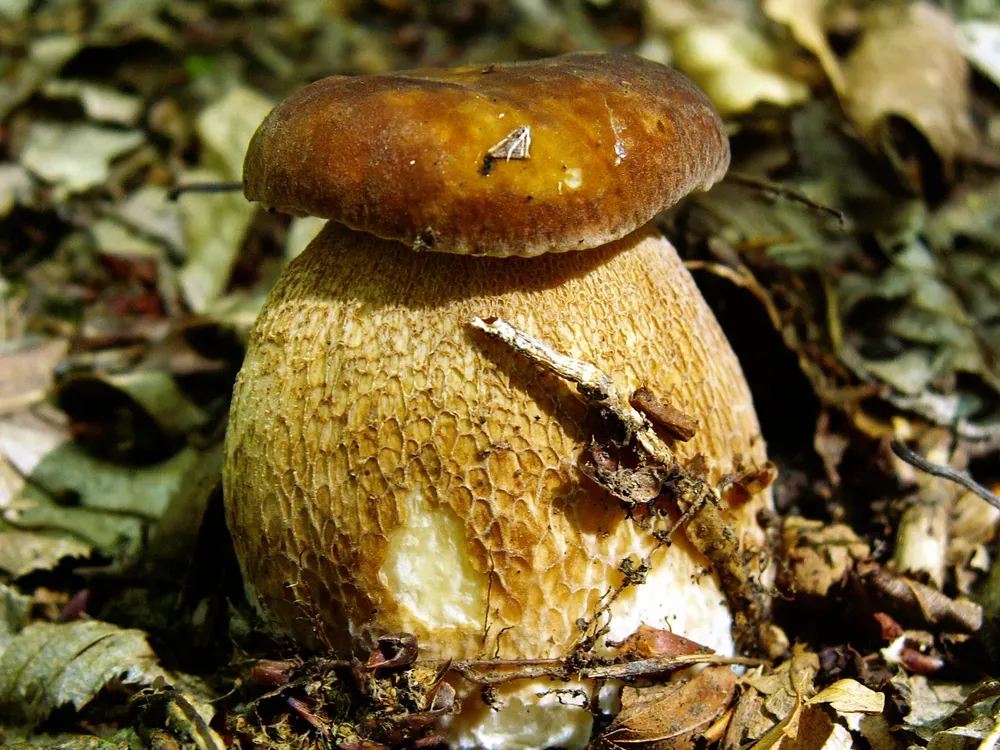
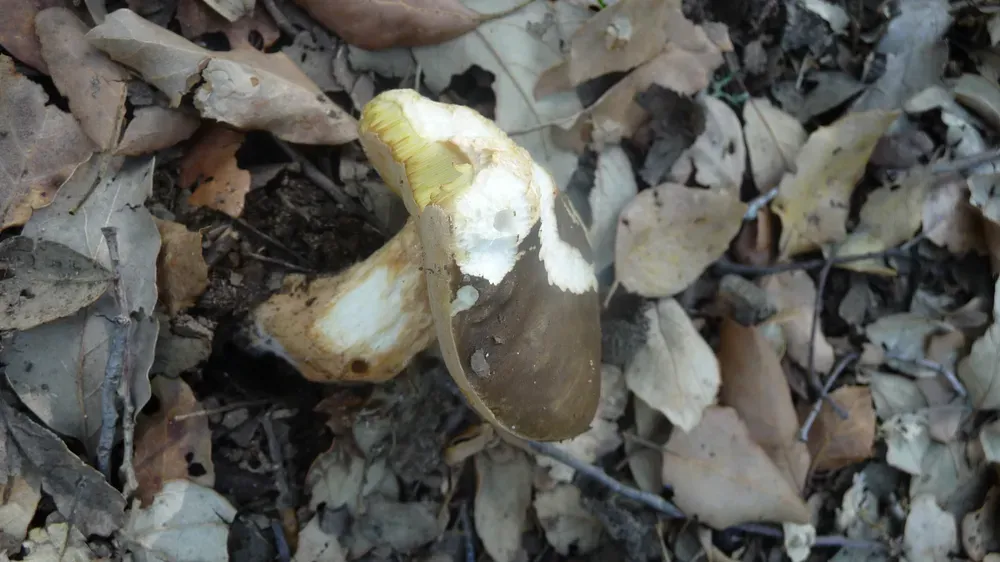
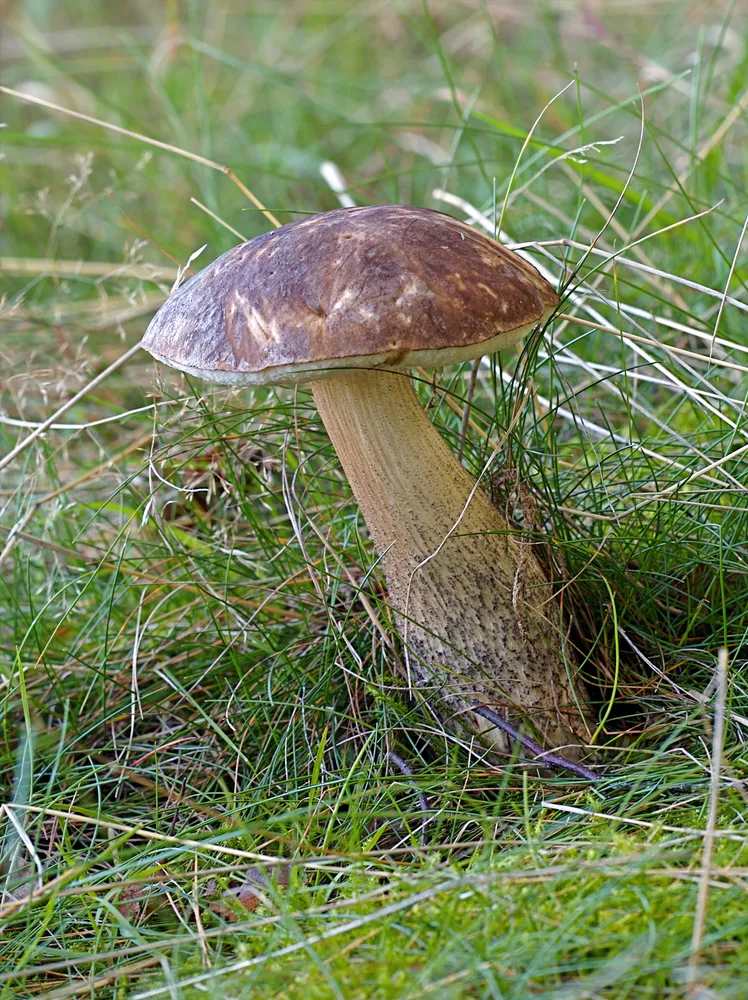
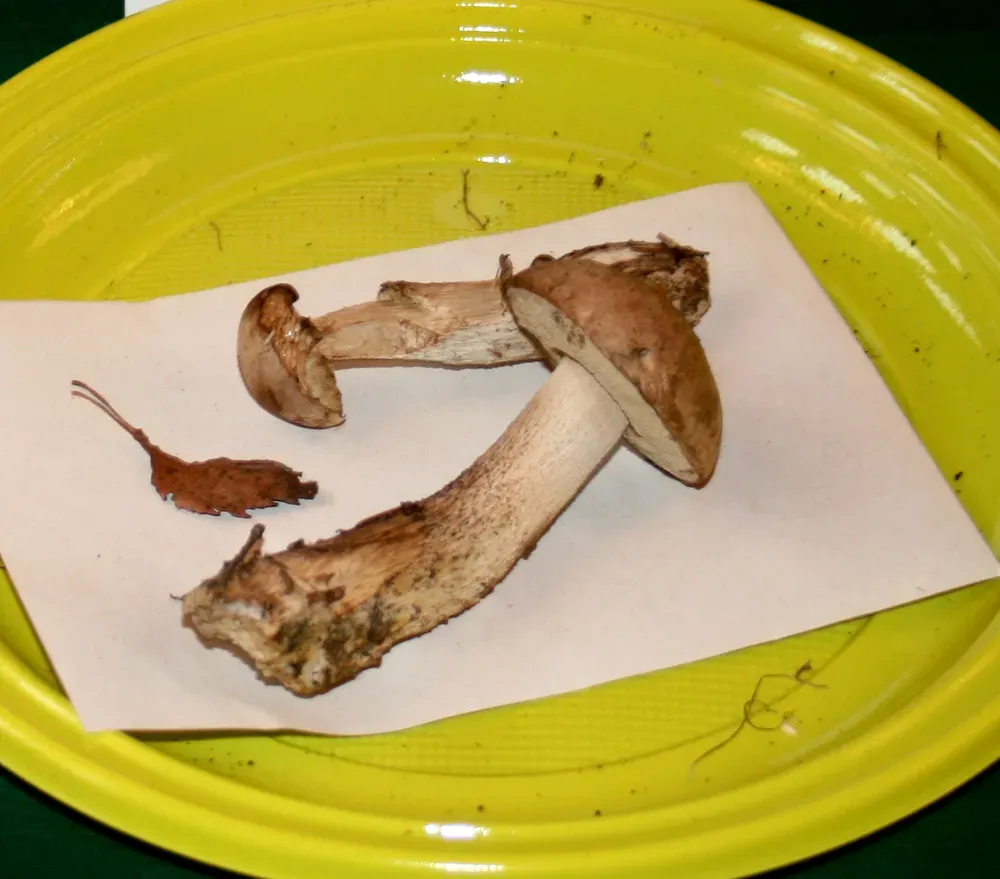
Mushrooms of the same genus and habitat — to study side by side and never mix up.
Related reading
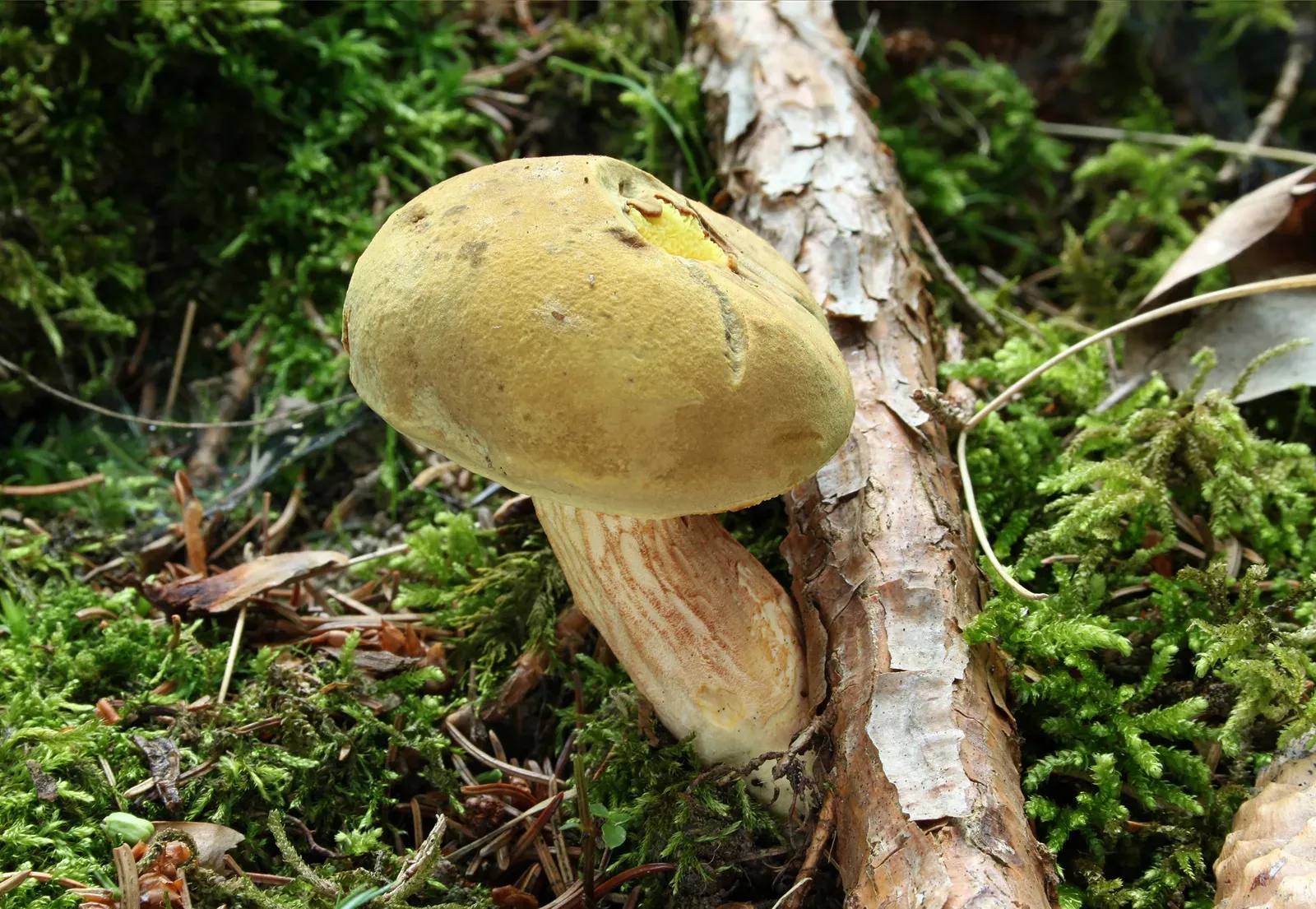 Recipes & cooking
How to clean and cook Xerocomus boletes
Xerocomus boletes quickly darken and turn mushy unless you know a few tricks. We show you how to clean them, w…
May 28, 2026·4 min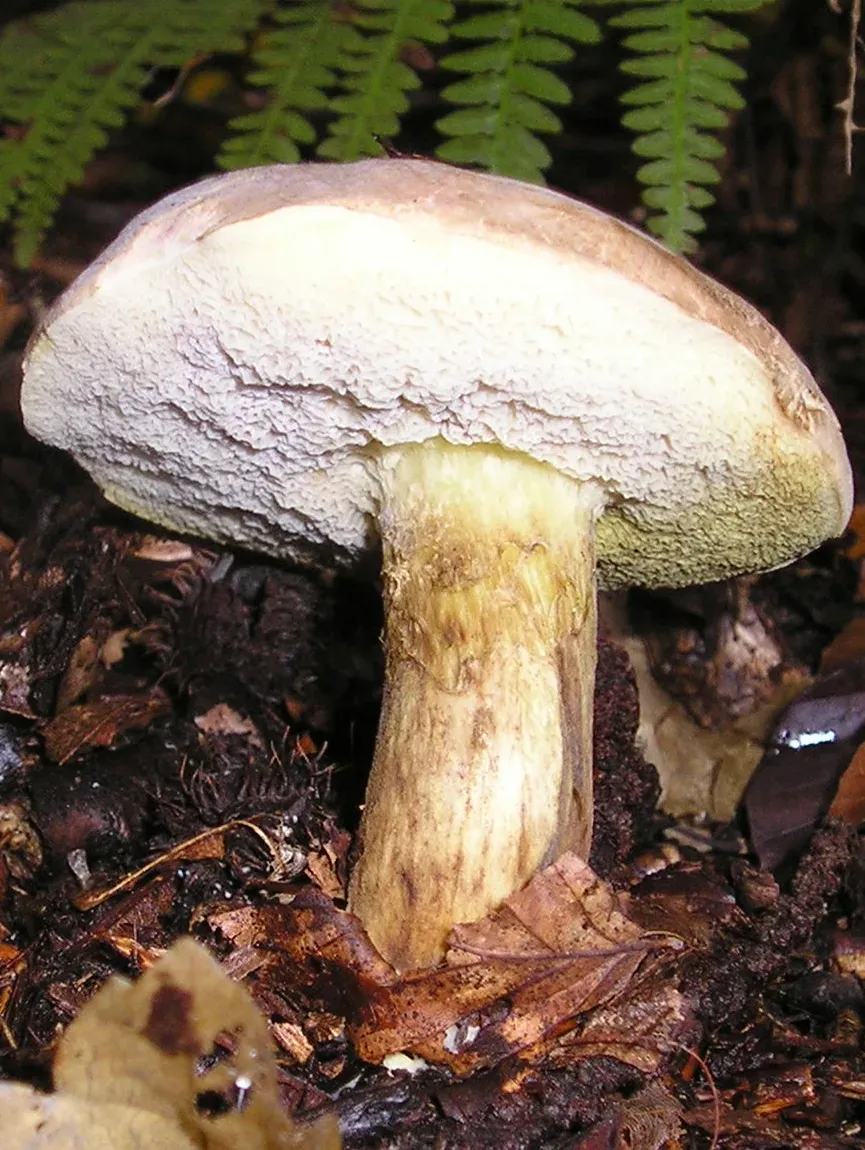 Where & when to forage
Where and when to pick Xerocomus boletes
Xerocomus boletes love moss, bright forests and warm rain. Here's which forests, spots and months to search so…
May 26, 2026·4 min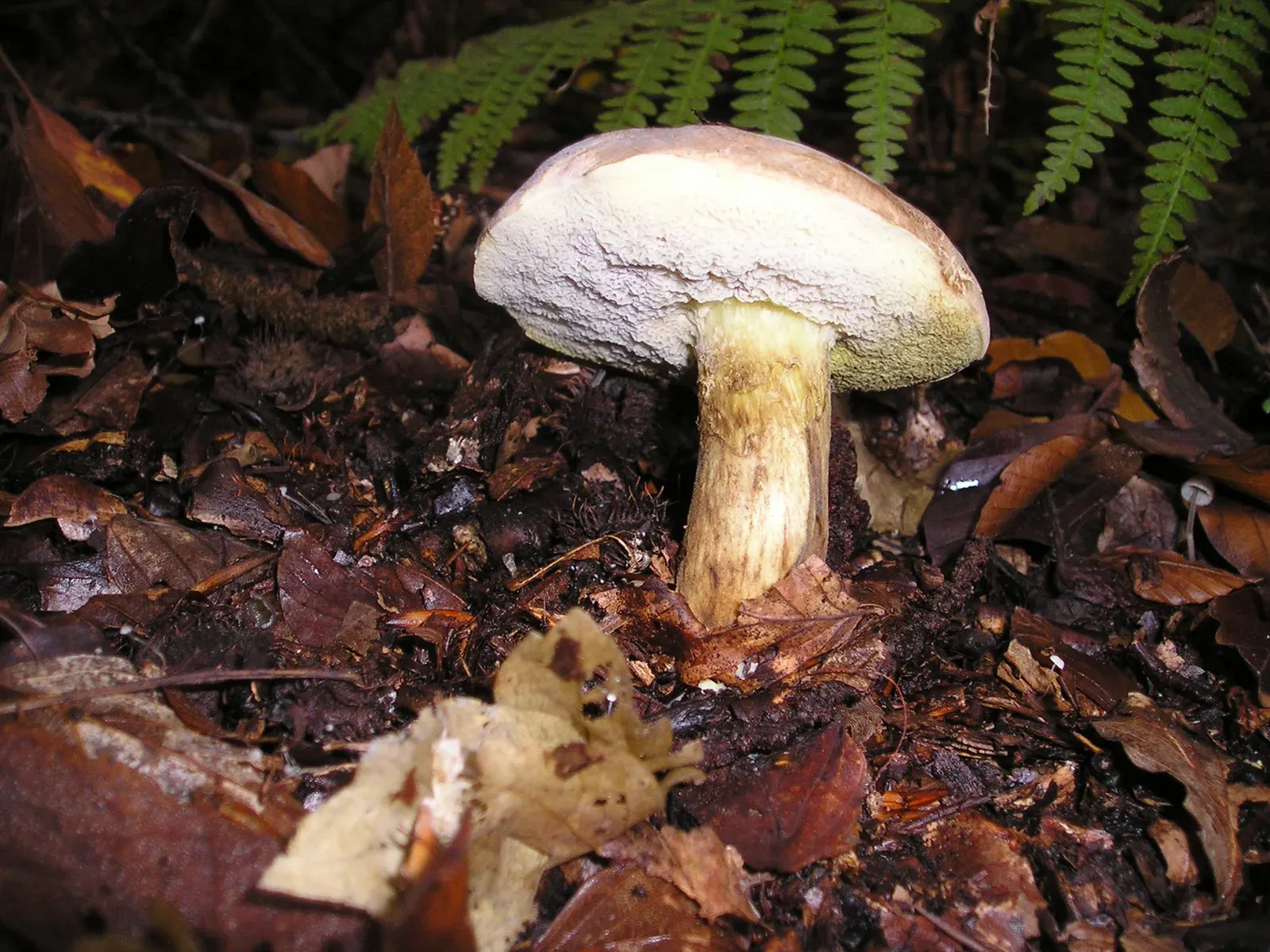 Safety
Are Xerocomus boletes edible, and what are they good for?
Xerocomus boletes are edible and tasty, if humbler than porcini. Here's which ones you can eat, how they're go…
May 20, 2026·3 min
Frequently asked questions
Is it safe to eat?
Yes, without restrictions. Young mushrooms are the best for cooking. Old specimens with soft caps and maggoty tubes — skip them right away; the flesh turns slimy and tasteless.
Why is the cap cracked?
It's a natural trait of the species — the cap skin is sensitive to drying out, and in a dry summer it cracks into polygonal patches. A pinkish-red layer shows in the cracks — a key feature for identification. It has nothing to do with spoilage: young mushrooms with an uncracked cap are normal too, just younger.
Does it have dangerous look-alikes?
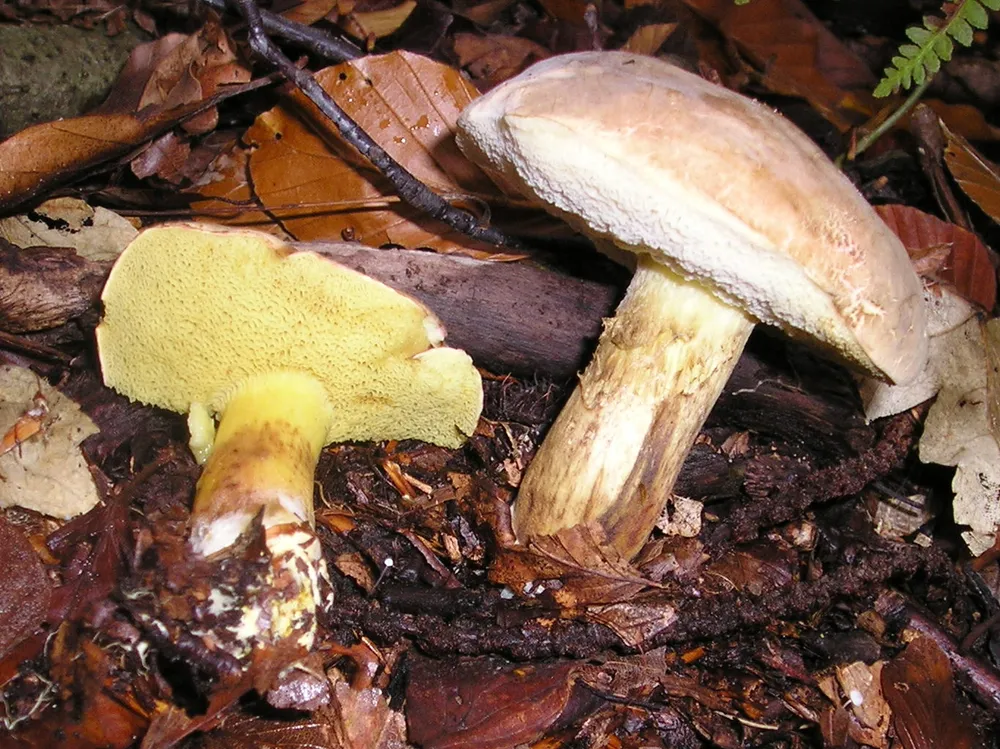
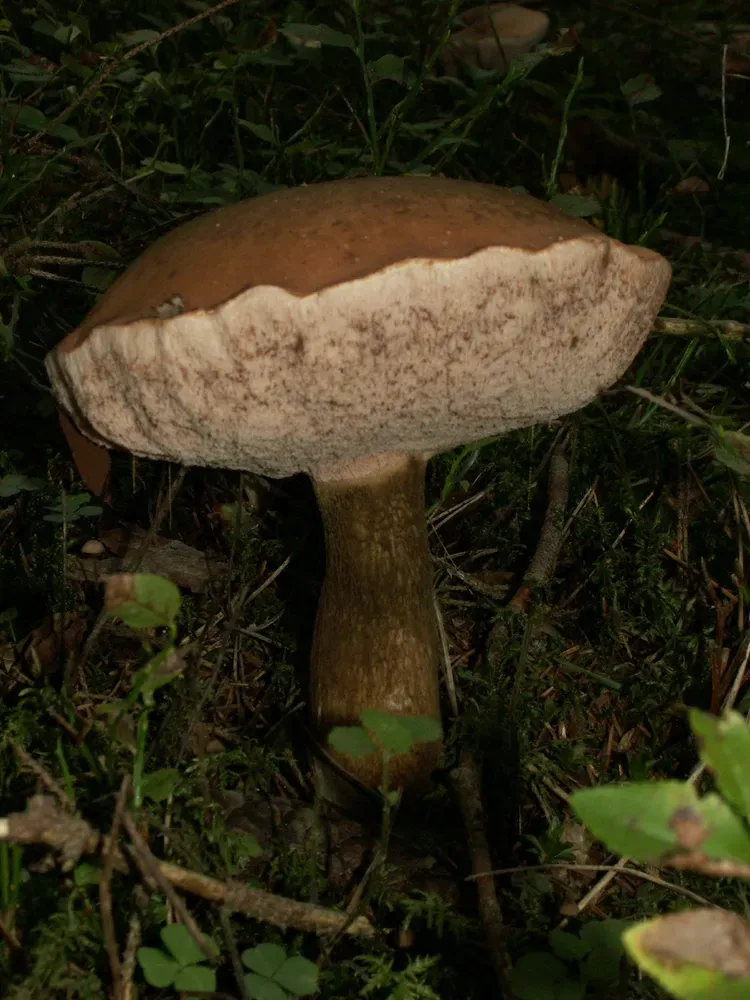
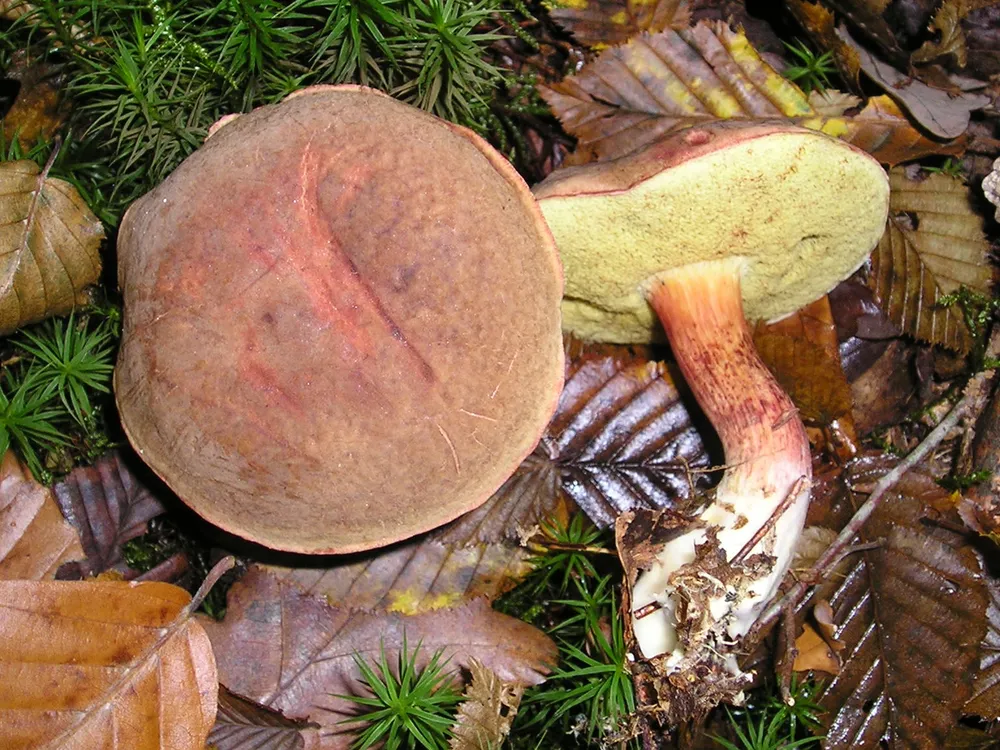
None serious. All boletes in our flora are edible. You could confuse it with the bitter bolete (Tylopilus felleus) — not poisonous, but very bitter. The difference: the bitter bolete has pink pores (not yellow) and a pronounced dark net on the stem. Or with a young devil's bolete — that one is rare, with red pores and a swollen stem.
Where should you look for it?
In all types of forest — broadleaf, mixed, and parks. It's especially abundant on mossy forest edges under oak, beech and hornbeam. In city parks it grows on lawns under old lindens and oaks, even in the centers of big cities. It isn't fussy about conditions.
Which regions of Ukraine is it found in?
All over the country: the Carpathians, Prykarpattia, Polissia, the forest-steppe, and parks and shelterbelts in the steppe. One of the most cosmopolitan mushrooms.
When should you look for it?
June — November, peaking in August–September. It survives the first frosts. One of the longest seasons among the boletes.
How do you tell it apart from the suede bolete?
Red cracking bolete (X. chrysenteron) — a chestnut-brown cap with cracks and a red layer in the cracks, and a stem with a pinkish-red band. Suede bolete (X. subtomentosus) — an olive-green velvety cap WITHOUT cracks, and a yellow-ocher stem with a fine reddish net. Both are edible, so a mix-up is not critical.
How should you cook it?
On its own — not interesting (soft, watery flesh). In a mix with porcini, suede boletes and slippery jacks — it's fine. Fry it, or pickle it after boiling for 10 min. Drying works less well — the flesh is thin. To freeze, be sure to boil it first.
Is Red cracking bolete edible or poisonous?
Does Red cracking bolete have gills or pores?
What does the cap of Red cracking bolete look like?
What does the stem of Red cracking bolete look like?
Sources
- [1]Вікіпедія (українська)
- [2]Атлас грибів України, Зеров Д.К. (1979)
- [3]MycoBank Database
- [4]Index Fungorum
- [5]GBIF
- [6]iNaturalist Ukraine