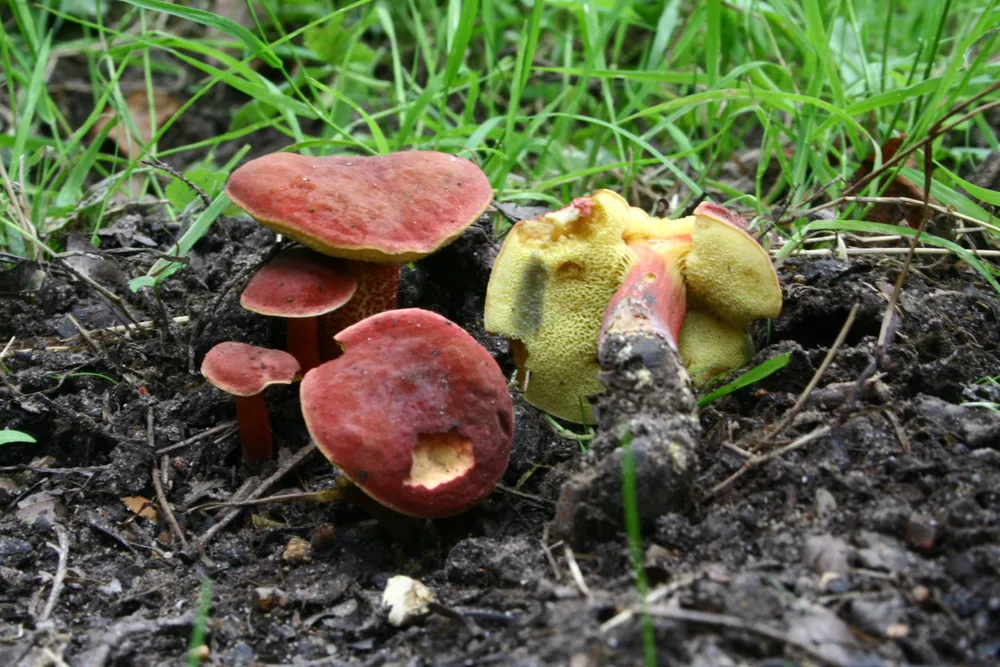
Ruby boleteBoletus rubellus
Expert-verifiedUpdated October 3, 2026
Passport
- Edibility
- Edible
- Season
- Jun — Oct
- Hymenophore
- Pored
- Cap color
- Red
- Size
- Small (up to 5 cm)
- Smell
- Pleasant
- Reviewed
- Yes ✓
Quick answers
Where to look?
Deciduous forest, Mixed forest
When does it appear?
Jun — Oct
Active months: June, July, August, September, October.
How to recognize it? Three signs
- Cap color: Red, Brown
- Cap shape: Convex
- Smell: Pleasant
Fruiting season
June – October
Description
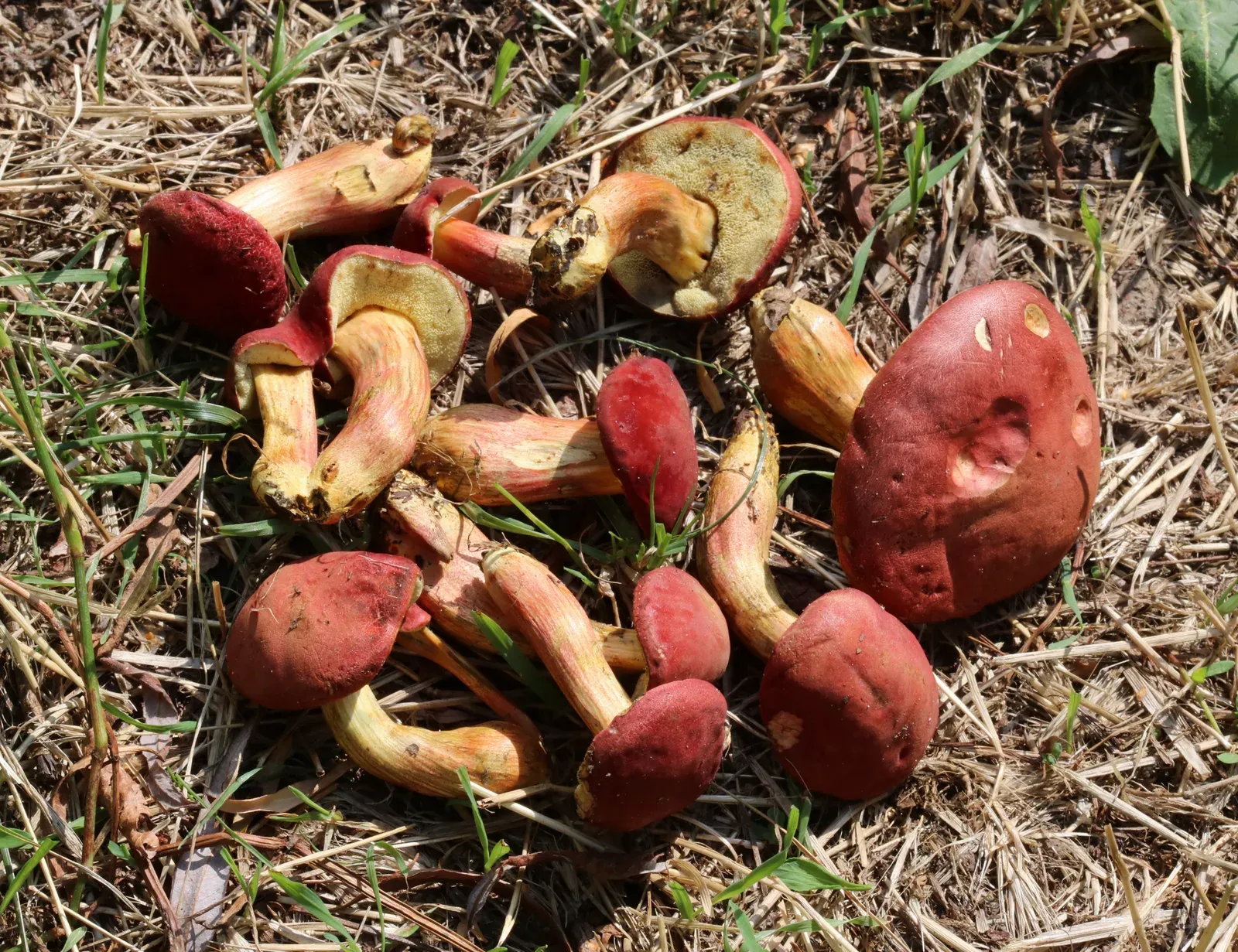
The ruby bolete (Hortiboletus rubellus, in some literature Boletus rubellus) is the brightest of Ukraine's boletes, with a characteristic red-raspberry or bright carmine cap, a reddish net on the stem and a noticeable yellow spot in the flesh near the stem base (a telltale sign that shows up only when you cut it lengthwise). Among the boletes you can't confuse it with anything — no other has such a pure red cap.
Edible. In the kitchen it falls short of the matt bolete and the bay bolete — the flesh is thinner and gets softer when cooked. It stains strongly blue when cut. Good for frying, pickling, and in a mix with other mushrooms. On its own the dish is unimpressive — watery and not very aromatic.
In Ukraine it is found mainly in broadleaf forests and parks: the Carpathians, Prykarpattia, the forest-steppe, and floodplain oak woods in the steppe. It loves warm, sunny spots — forest edges, park alleys, lawns in parks and botanical gardens. It forms mycorrhiza with oak, less often with beech and hornbeam. Season: June — October, peaking in August. It often grows singly or in small groups of 2-5 fruiting bodies, which makes for a poor "economical" basket — it's not a mushroom you go out hunting for on purpose.
Cap
Cap 3-7 cm across, hemispherical in young mushrooms, later becoming convex to flat. Color bright red, raspberry-red, carmine, richer when young, fading to brownish-red with age. The surface is velvety and dry, slightly sticky in damp weather. In old mushrooms it often cracks into polygons, revealing a yellow layer under the skin (not red, as in the red cracking bolete).
Hymenophore
The hymenophore is made of tubes attached to the stem. Color yellow when young, turning yellow-olive with age. The pores are small and stain strongly blue when pressed. Spore print olive-brown.
Stem
Stem 4-7 cm tall, 0.8-1.5 cm thick, cylindrical, often thickening toward the base. Color yellow at the top, with distinct reddish-brown lengthwise streaks and a delicate reddish fibrous net in the lower half. In old mushrooms the stem is redder.
Flesh
The flesh is thin, soft and yellow, and in the lower part of the stem with a noticeable bright yellow or yellow-orange spot when cut lengthwise — a diagnostic feature of the species. When cut, it stains strongly blue (within 30-60 sec).
Smell
Faint, pleasant and mushroomy, with no distinct notes.
›Scientific synonyms (5)
Boletus versicolor C. Martín, Xerocomus rubellus (Krombh.) Quel., Xerocomus versicolor (Rostk.) Gilb., Boletus rubellus Krombh., Hortiboletus rubellus (Krombh.) Simonini
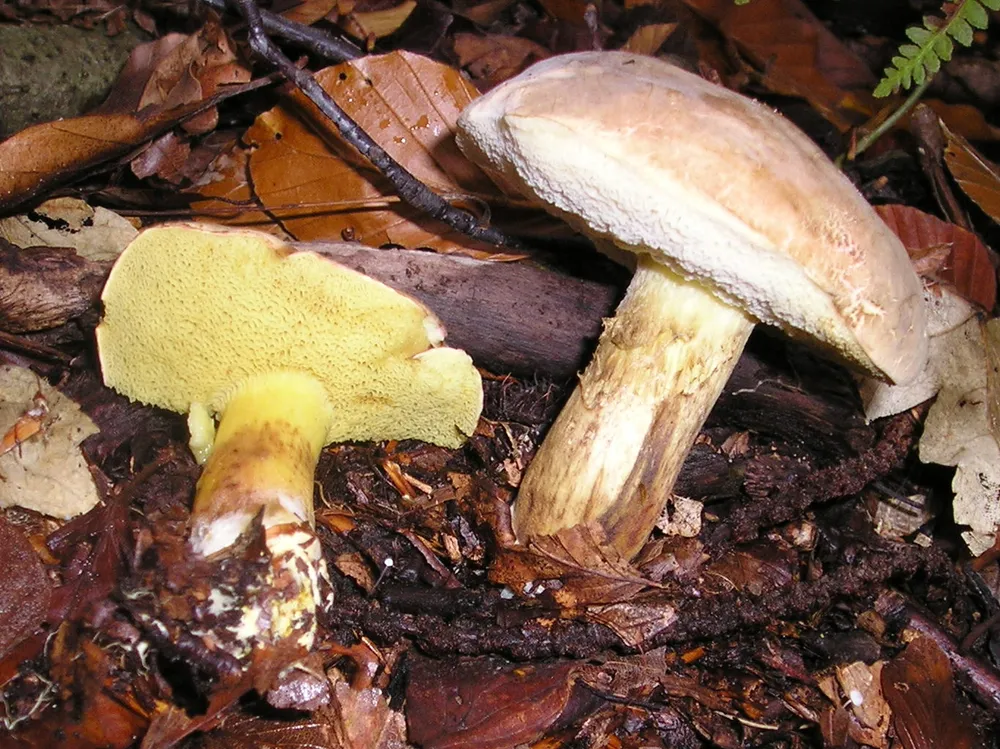
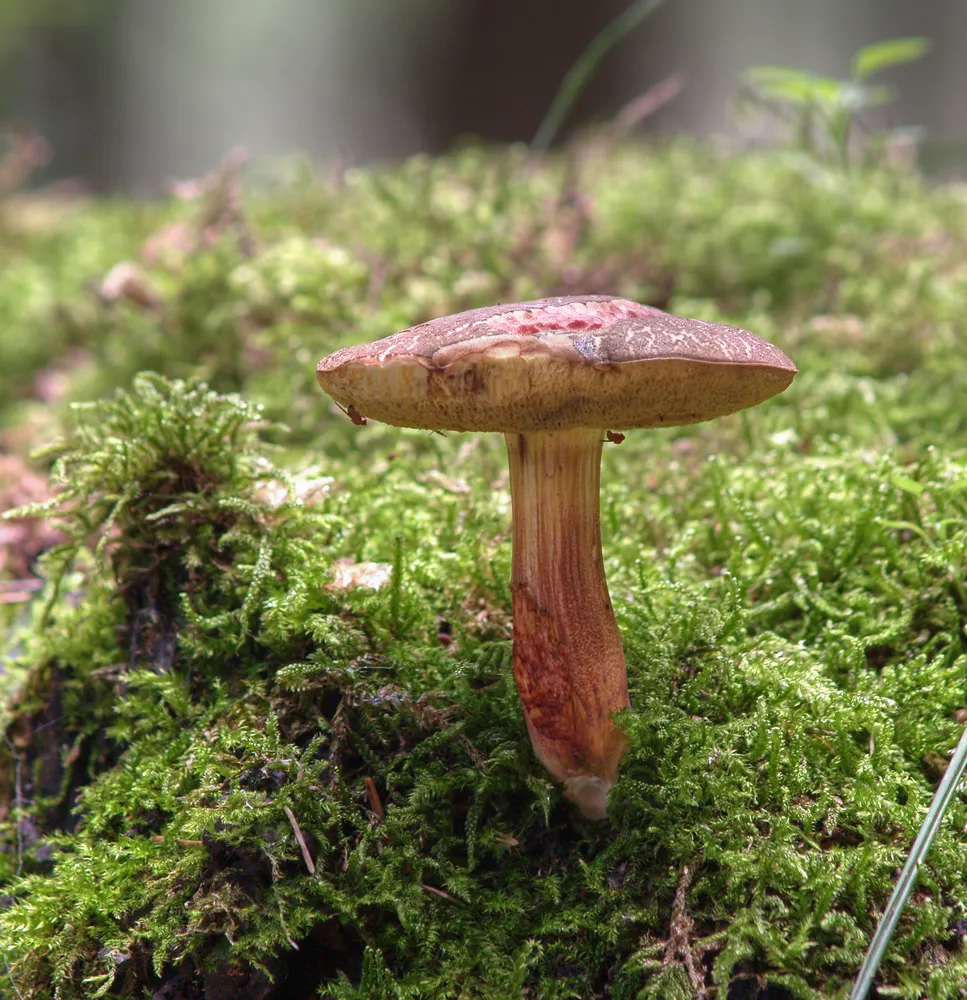
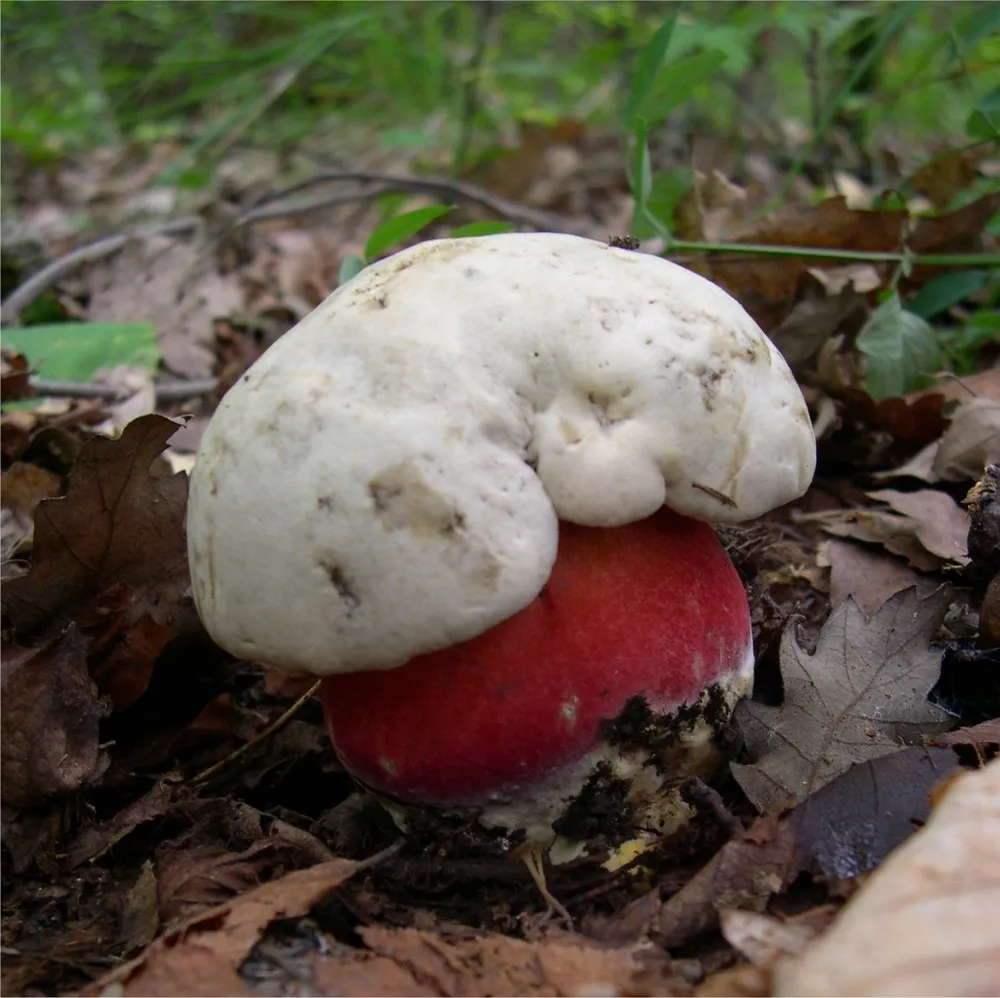
Lookalikes
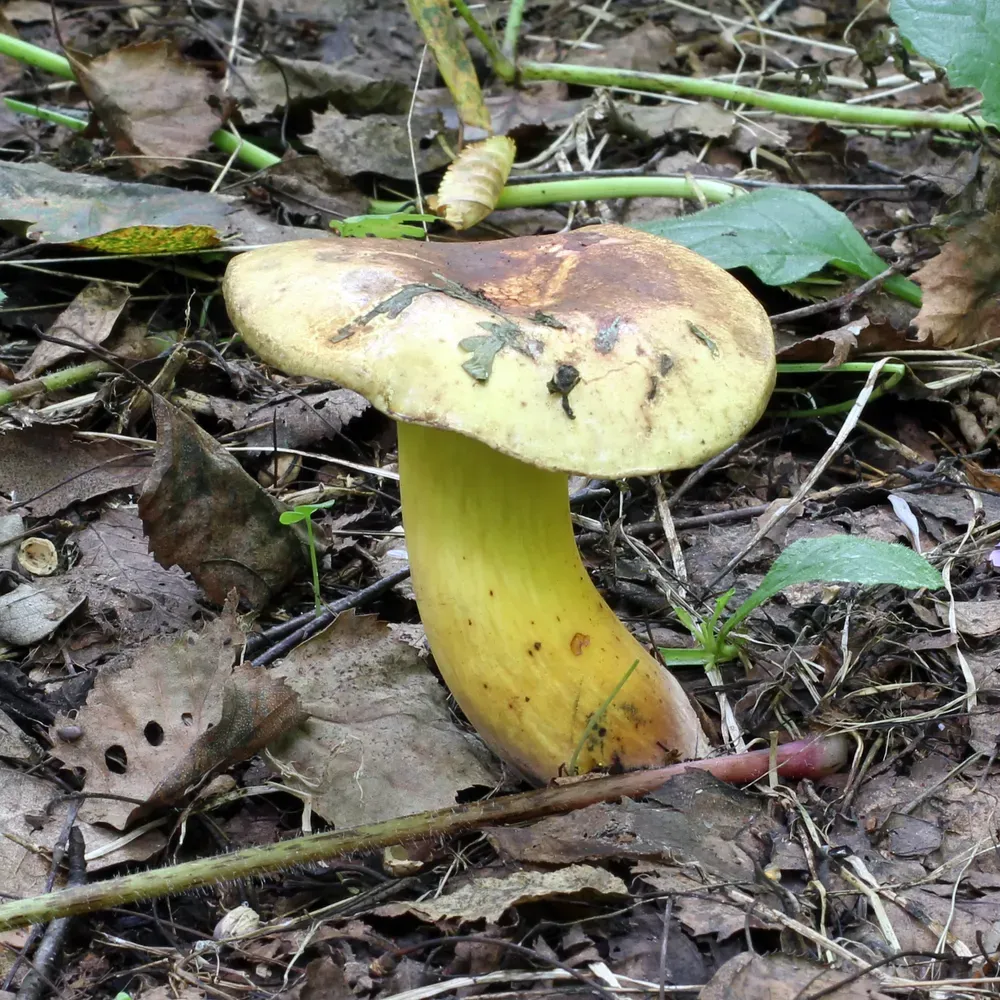
Related species
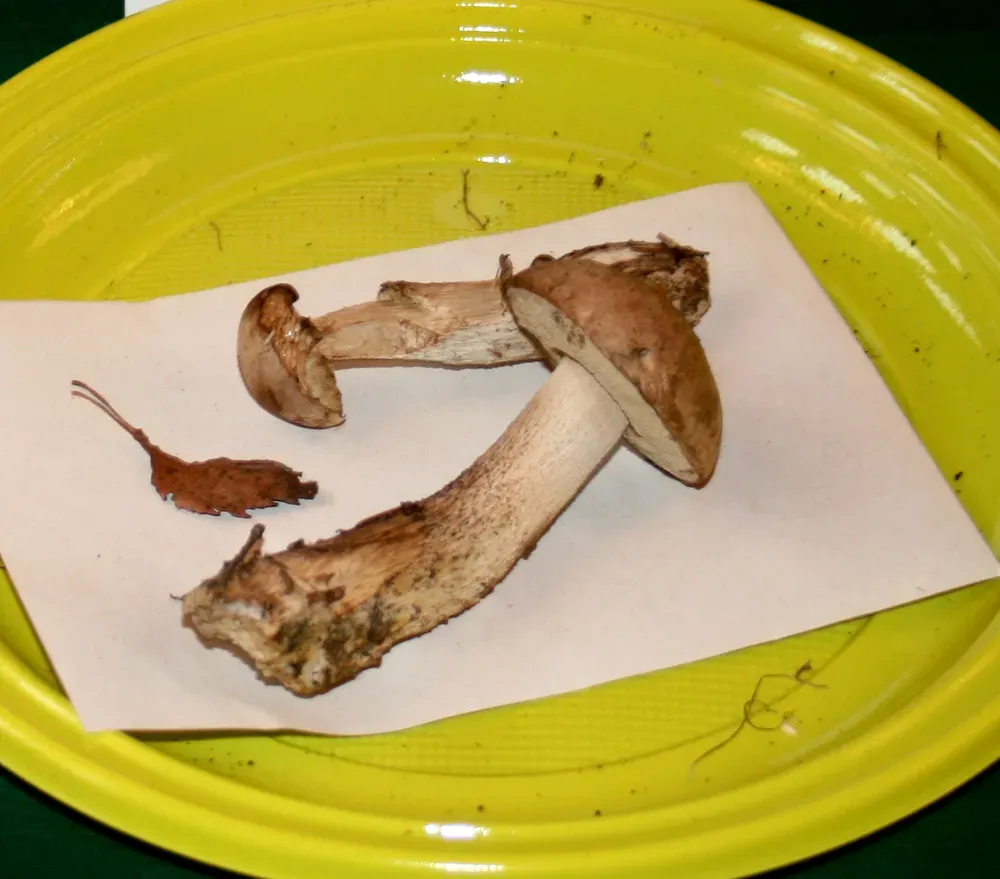
Mushrooms of the same genus and habitat — to study side by side and never mix up.
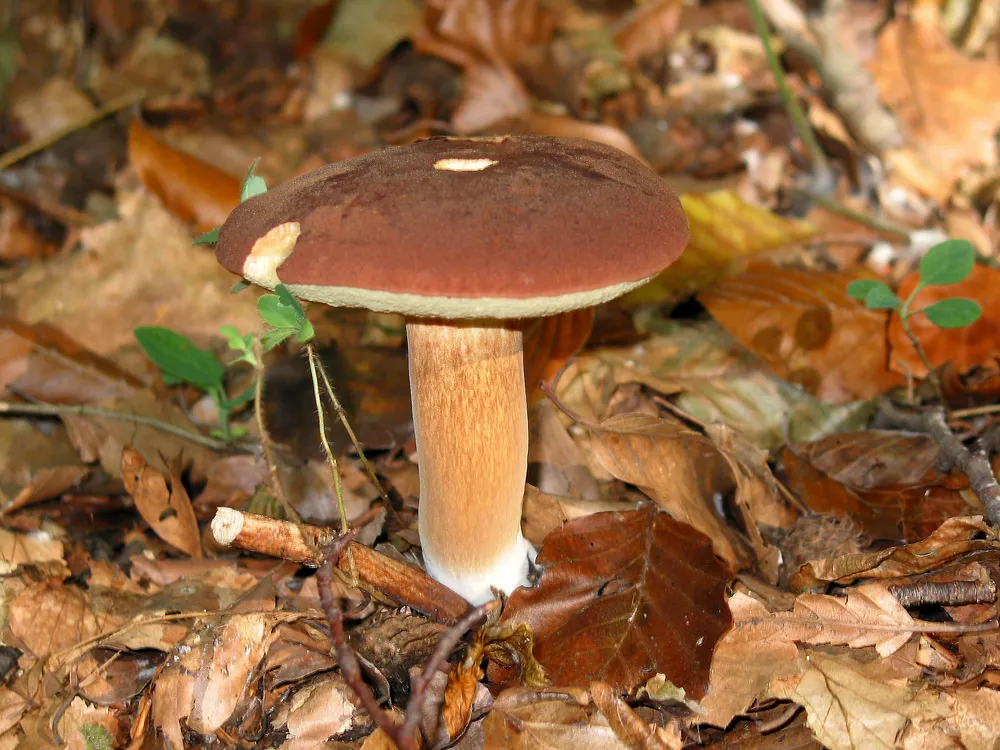
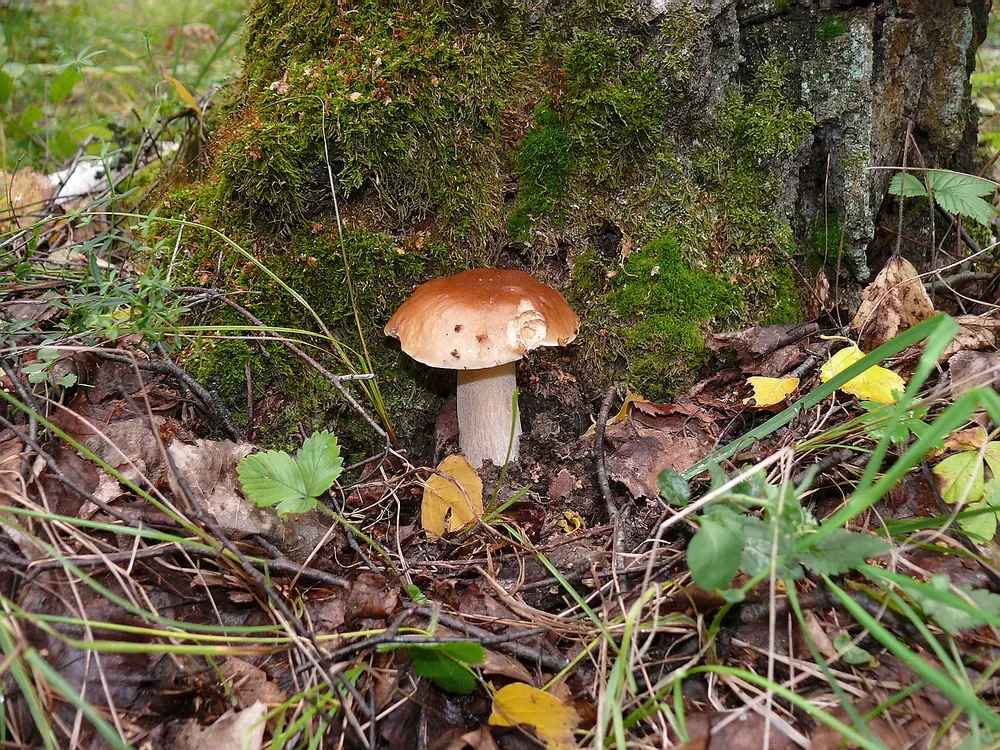
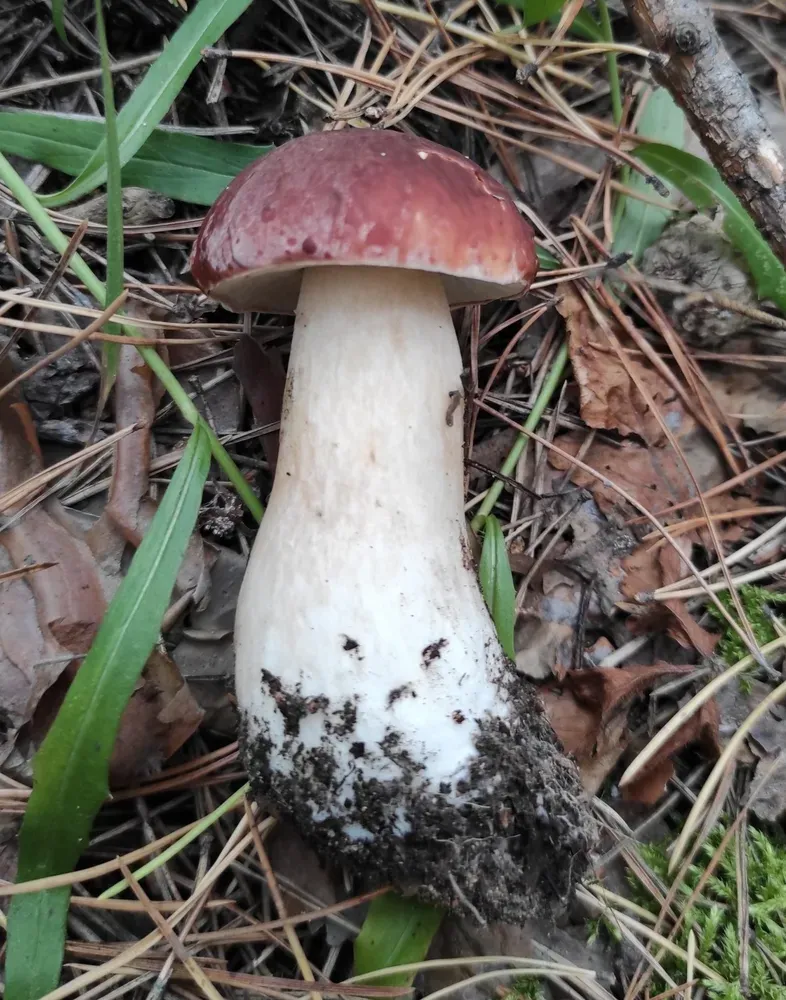
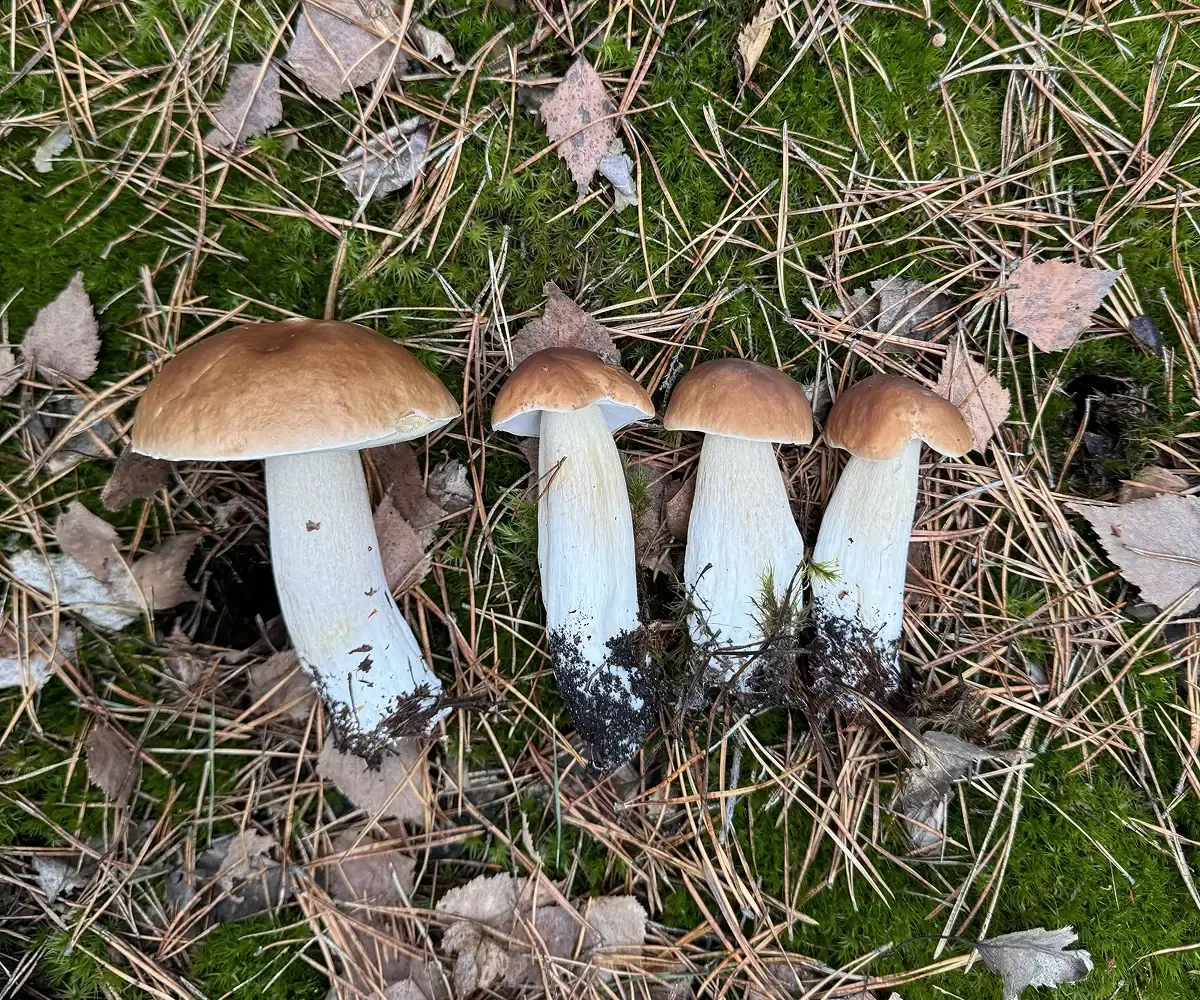
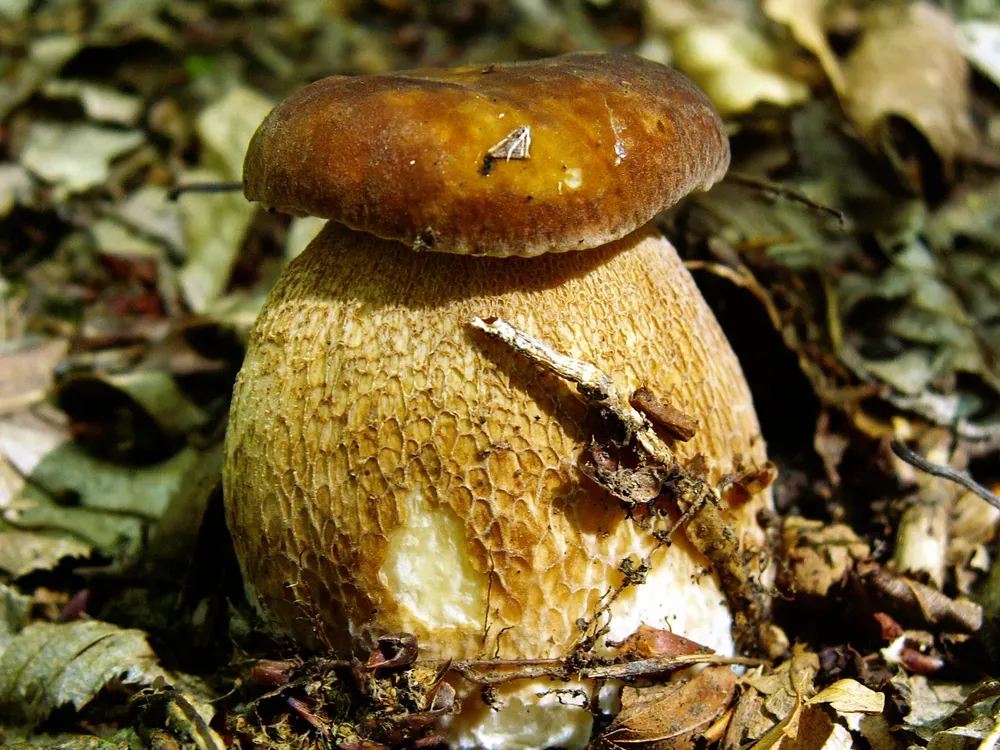
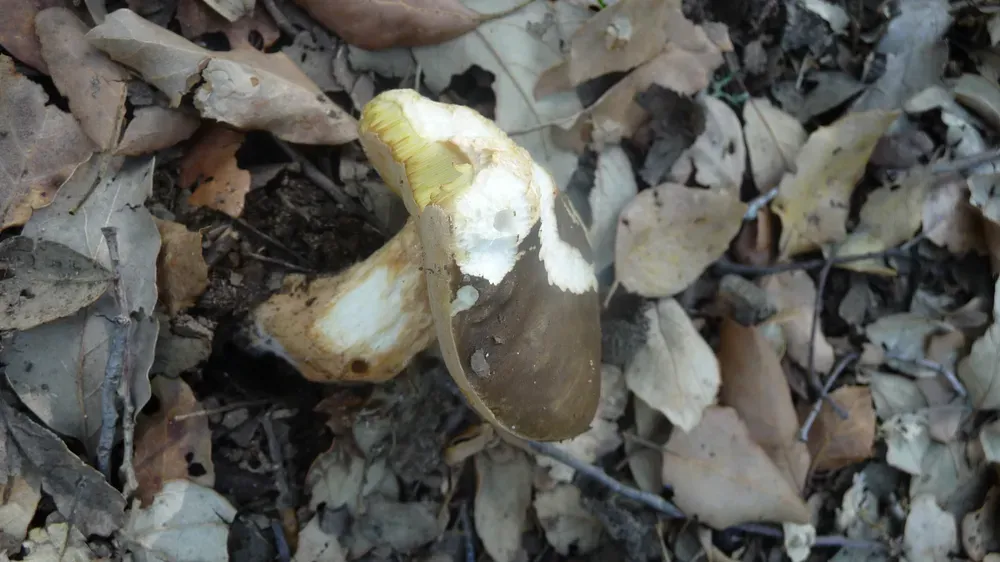
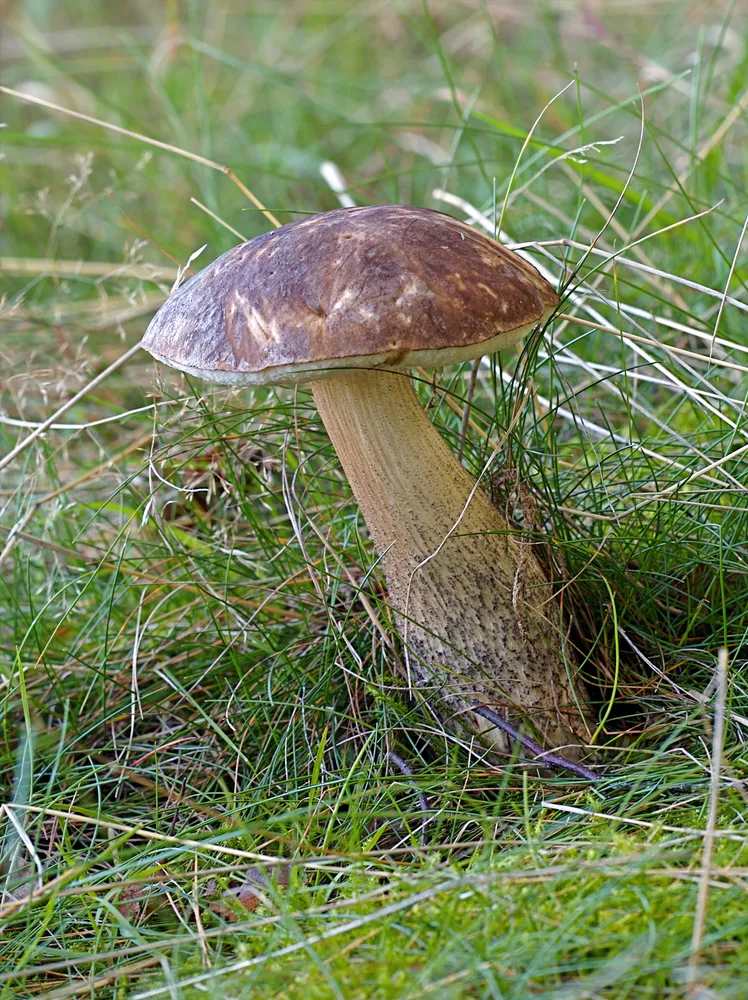
Related reading
 How to identify
Ruby bolete, the most colorful of the Xerocomus group
The ruby bolete is easy to spot by its bright carmine cap. Here's how to tell it apart, where to look, and whe…
May 16, 2026·3 min.webp) Science & taxonomy
Science & taxonomyTypes of Xerocomus boletes: a complete guide
"Xerocomus bolete" isn't one mushroom but a whole family of similar species. We tell you about all the Xerocom…
May 10, 2026·3 min How to identify
What is a Xerocomus bolete, and how do you recognize one?
The moss bolete is a modest but tasty mushroom that loves mossy forest edges. Here's what it is, how to recogn…
May 8, 2026·4 min
Frequently asked questions
Is it safe to eat?
Yes, without restrictions. Young mushrooms can be cooked without boiling first. In old ones the flesh turns watery — better to skip them. There's no need to peel the cap skin.
Why is there a yellow spot at the stem base?
It's an accumulation of yellow pigment (hortiboletin) in the lower part of the stem — a diagnostic feature of the genus Hortiboletus. It's not spoilage and not poison. It doesn't affect taste or safety; on the contrary, it's the best way to make sure the mushroom you found really is the "ruby" one and not some other reddish bolete.
Does it have dangerous look-alikes?
None serious. You could confuse it with a young devil's bolete (Rubroboletus satanas) — which is poisonous, but rare in Ukraine and shaped quite differently: the devil's bolete has a swollen reddish stem with a pronounced red net and red pores (not yellow, as in this bolete). If you see a red cap + yellow pores + a stem without a swelling, it's our bolete, not the devil's.
Where should you look for it?
In warm broadleaf forests and parks — park alleys, the edges of oak and beech woods, lawns with sparse grass. It loves sunny spots, not deep shady forest. It forms mycorrhiza with oak and other broadleaf trees.
Which regions of Ukraine is it found in?
The Carpathians, Prykarpattia, the forest-steppe (especially abundant in the Kyiv, Cherkasy and Vinnytsia regions), and in the southern forest-steppe and northern steppe — in floodplain oak woods and the parks of big cities. It doesn't occur in conifer forests.
When should you look for it?
June — October, peaking in August. It loves warm, humid weather — after summer rains, at air temperatures of 18-25°C.
How do you tell it apart from other reddish mushrooms?
Ruby bolete — red cap, yellow pores, a YELLOW spot at the stem base. Red-capped scaber stalk (Leccinum aurantiacum) — also a red cap, but a dark gray stem with white scales, not reddish. Red cracking bolete — a brownish-red cap with cracks that reveal a red layer under the skin. All are edible, so a mix-up is not critical.
How should you cook it?
On its own — not very interesting (thin, soft flesh). In a mix with other mushrooms — it's fine. Fry it with onion. Pickle it after boiling for 10 min. Drying — the flesh is very thin and almost disappears when dried. To freeze, be sure to boil it first.
Is Ruby bolete edible or poisonous?
Does Ruby bolete have gills or pores?
What does the cap of Ruby bolete look like?
What does the stem of Ruby bolete look like?
Sources
- [1]Вікіпедія (українська)
- [2]Атлас грибів України, Зеров Д.К. (1979)
- [3]MycoBank Database
- [4]Index Fungorum
- [5]GBIF
- [6]iNaturalist Ukraine