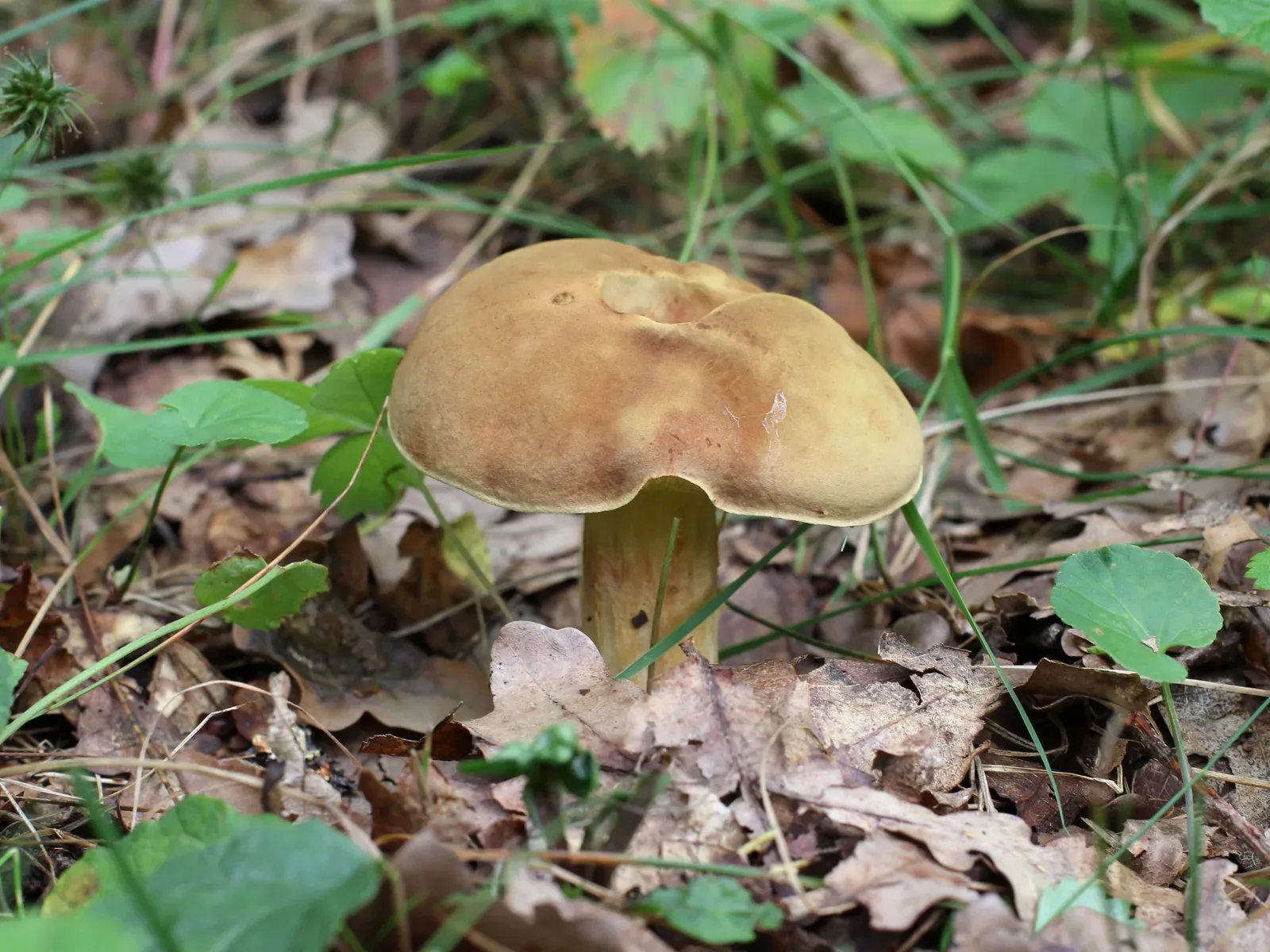
Among mushrooms there's a whole crew of modest but pleasant hard workers, grouped under one gentle word: “moss bolete.” The name says it all: these mushrooms love moss, mossy forest edges and green clearings, where they hide from prying eyes.
The moss bolete isn't as showy as porcini or as famous as the slippery jack, but it has earned its place in the basket. Let's look at what it is, how to recognize it, where to find it and why it turns blue so dramatically when cut.
What is a moss bolete
“Moss bolete” isn't one mushroom but a whole group of related pored mushrooms from the genera Xerocomus, Xerocomellus and their close relatives. They're all relatives of porcini, just more modest and smaller.
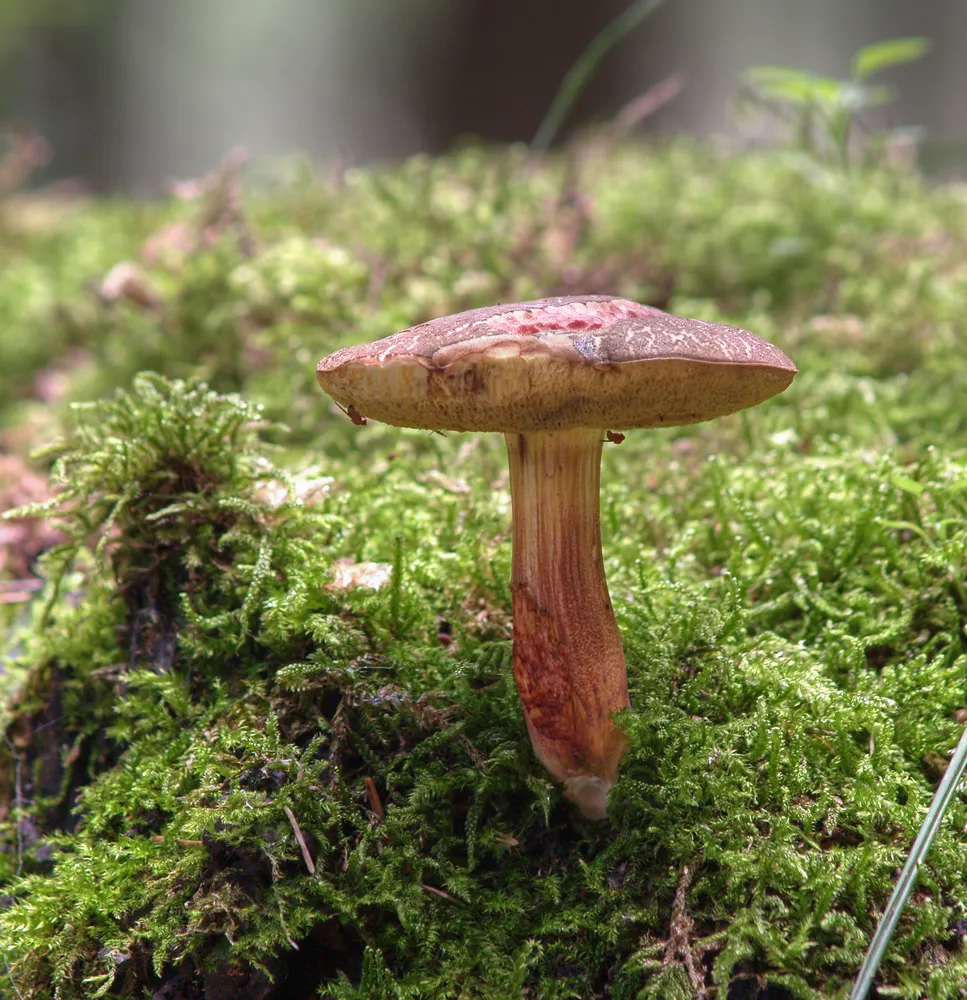
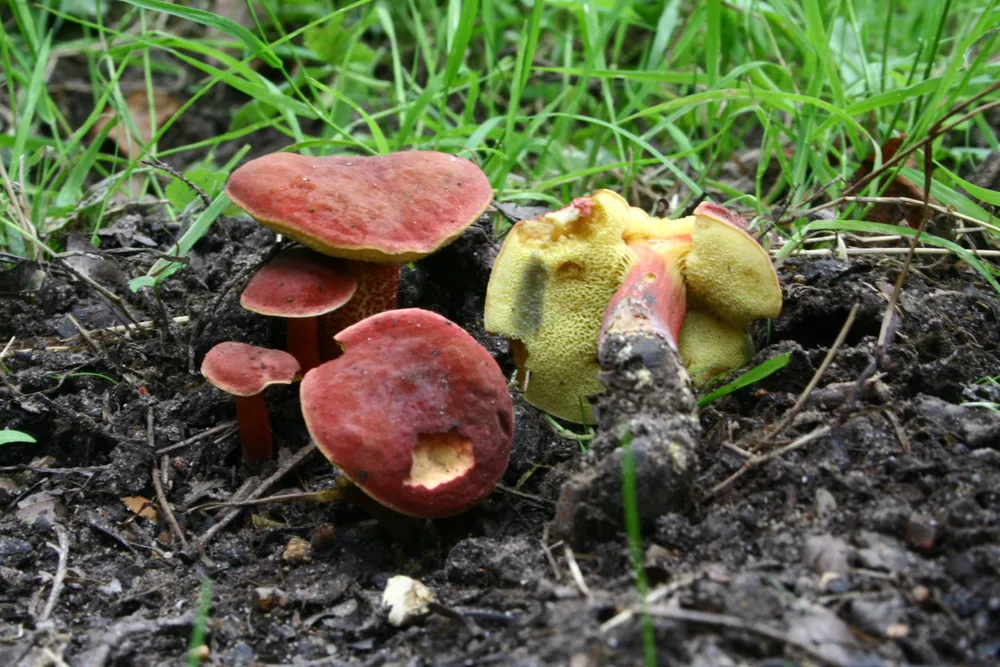
Our best-known species are the suede bolete, red cracking bolete and ruby bolete. They're all edible, grow in similar places and share recognizable features.
What unites them is a love of moss, a velvety cap and a tube layer underneath instead of gills. They're typical “middle-of-the-road forest mushrooms,” and easy to learn to recognize.
What a moss bolete looks like
Moss boletes have a few characteristic features that make them fairly easy to tell apart.
- Cap from olive-green and yellow-brown to chestnut, dry, velvety to the touch; in some species it cracks over time.
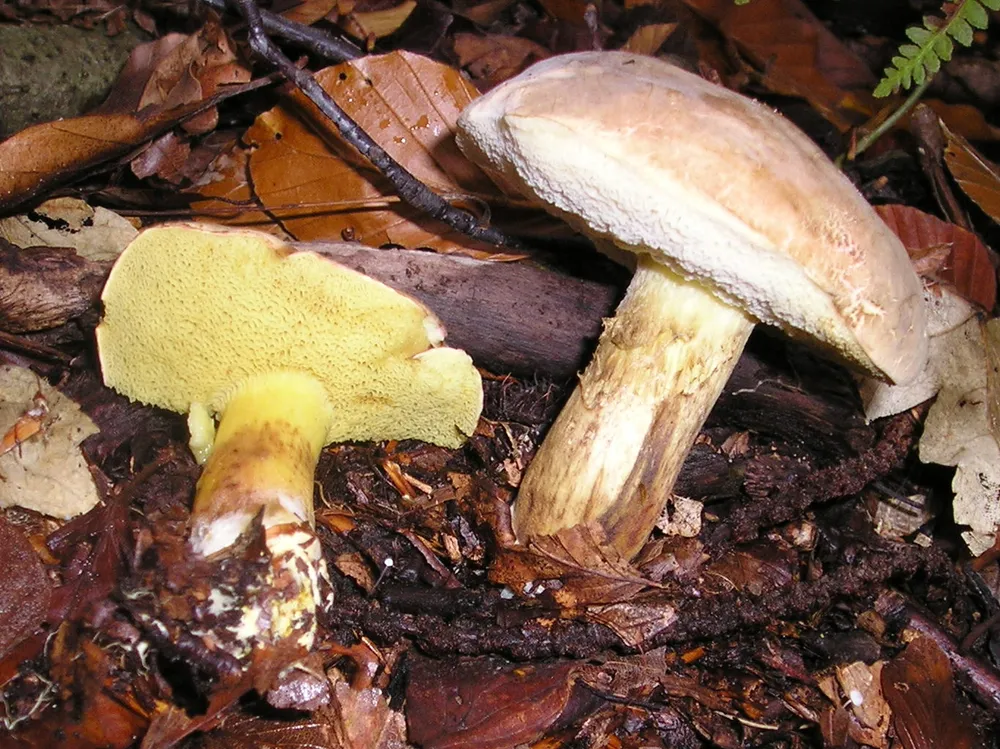
- Tube layer under the cap, yellow or greenish yellow, with large angular pores.
- Stem thinner and more even than in porcini, with no net pattern, sometimes with a reddish tinge.
- Flesh yellowish or whitish; when cut, it often turns blue.
A dry, velvety cap, yellow angular pores and blue bruising when cut are the most reliable set of moss bolete features.
Why moss boletes turn blue when cut
The blue bruising scares beginners, but it's completely harmless and even helps you identify the mushroom.
When you cut or break a moss bolete, its flesh quickly turns blue or green in the air. It's an ordinary chemical reaction: substances in the flesh are oxidized by oxygen. It has nothing to do with poison.
Most edible moss boletes turn blue to some degree, so this sign on its own is no reason to throw a mushroom away. The blue disappears during cooking, and the dish comes out its usual color.
Where and when moss boletes grow
The moss bolete loves bright, not-too-damp forests and, of course, moss.
It's worth looking for:
- in mixed forests, where conifers grow alongside broadleaf trees;
- in coniferous forests and pine forests on mossy patches;
- in deciduous forests, on forest edges, in clearings and along paths;
- on mossy slopes, hummocks and old stumps nearby.
The moss bolete season is long, from June to October. It fruits most abundantly in the second half of summer and early autumn, especially after warm rains.
Is it worth picking
The moss bolete is a good edible mushroom, though less firm than porcini. Young moss boletes are fragrant and pleasant; they're fried, boiled, pickled and dried.
There's one catch: moss bolete flesh is softer and more watery than porcini's, so the mushroom quickly turns spongy with age. For the table, pick mainly young, firm specimens.
Moss boletes have no poisonous lookalikes, but there is one unpleasant relative, the peppery bolete, fiery to the taste. You can recognize it by its reddish pores and sharp, peppery aftertaste. To head into the forest just when moss boletes are coming up, go by our mushroom radar: it shows when moisture and warmth line up well for mushrooms to appear.
Sources
- “Field Guide to the Fungi of Ukraine” (Kyiv, Naukova Dumka Publishing).
- Xerocomus subtomentosus on GBIF, a global biodiversity database.
- Xerocomus on MycoBank, an international fungal nomenclature database.
- Xerocomus subtomentosus on Wikipedia.
Frequently asked questions
What is a moss bolete?
Moss boletes are a group of related pored mushrooms of the genera Xerocomus and Xerocomellus, relatives of porcini. They love moss, have a velvety cap and a yellow tube layer, and often turn blue when cut.
How do you recognize a moss bolete?
By its dry, velvety cap in olive-green or yellow-brown, yellow angular pores underneath and flesh that turns blue when cut. The stem is thin, with no net pattern.
Why does a moss bolete turn blue when cut?
It's a natural reaction: substances in the flesh oxidize in the air. The blue bruising is harmless, is not a sign of poison and disappears during cooking.
Is the moss bolete edible?
Yes, the moss bolete is a good edible mushroom. Young ones are fried, boiled, pickled and dried. Because of their watery flesh, older specimens are better left behind.
Where does the moss bolete grow?
In , and on mossy forest edges, in clearings and on slopes. It loves bright, moss-covered spots.
When should you pick moss boletes?
The season runs from June to October. Moss boletes fruit most abundantly in the second half of summer and early autumn, especially after warm rains.
What kinds of moss boletes are there?
The best known are the , and . They're all edible and similar to each other.
Does the moss bolete have dangerous lookalikes?
There are no deadly poisonous lookalikes. The only one to watch out for is the fiery , which stands out with its reddish pores and hot, peppery taste.
Mushrooms in this article
Related articles
 How to identify
Truffles in Ukraine: do they grow here, and where to look
Truffles aren't just a French delicacy. Several species grow in Ukraine too. Here's which ones, where they occ…
August 24, 2026·2 min Recipes & cooking
How to store fresh mushrooms, and for how long
Fresh mushrooms spoil faster than you might think. Here's how long they keep in the fridge, how to store them…
August 21, 2026·4 min Recipes & cooking
How long to boil mushrooms
Boiling time depends on the type of mushroom and on what you're cooking next. Here's a clear cheat sheet: how…
August 22, 2026·4 min