THIS DATA HAS NOT BEEN VERIFIED BY AN EXPERT. Use at your own risk.
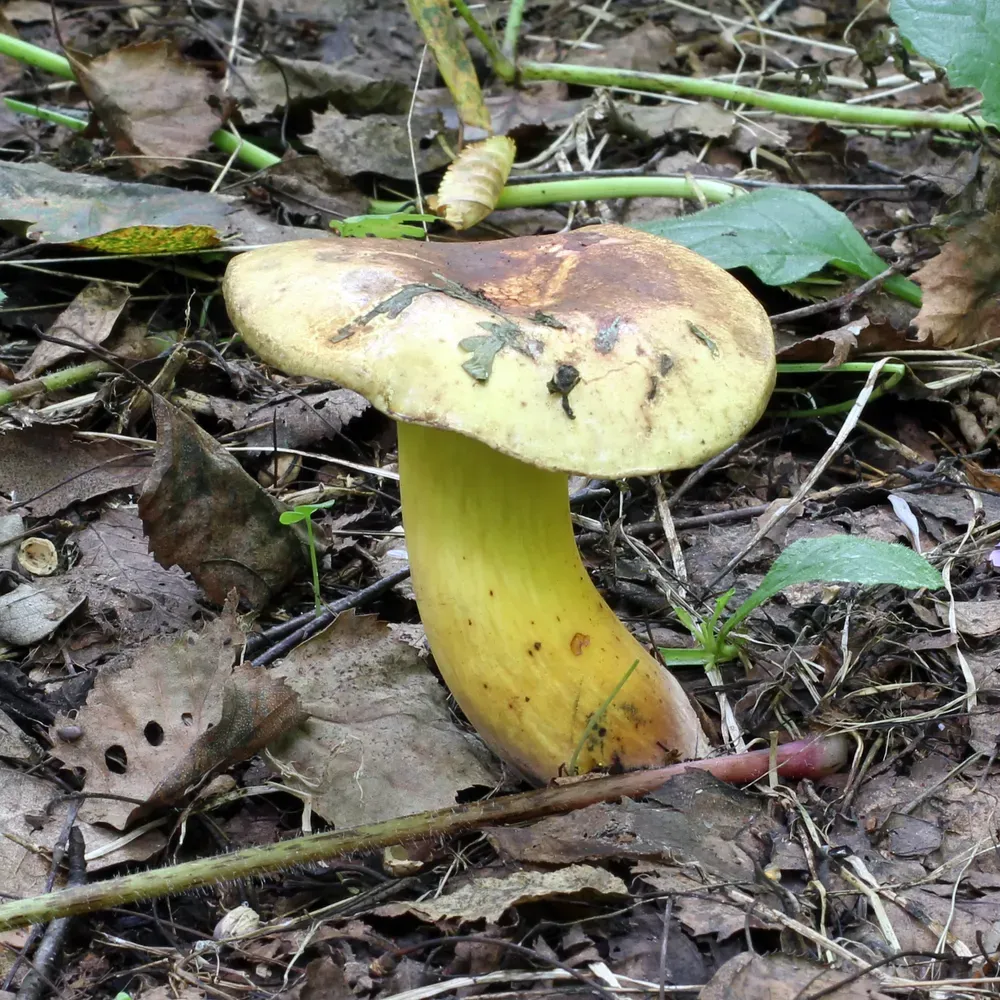
Inkstain boleteCyanoboletus pulverulentus
Under reviewUpdated October 3, 2026
Passport
- Edibility
- Edible
- Season
- Jun — Oct
- Hymenophore
- Pored
- Cap color
- Brown
- Size
- Medium (5–15 cm)
- Smell
- Pleasant
- Reviewed
- Under review
Quick answers
Where to look?
Deciduous forest, Mixed forest
When does it appear?
Jun — Oct
Active months: June, July, August, September, October.
How to recognize it? Three signs
- Cap color: Brown, Dark brown, Olive
- Cap shape: Convex
- Smell: Pleasant
Fruiting season
June – October
Description
The inkstain bolete, known to science as Cyanoboletus pulverulentus, is a forest mushroom that looks unremarkable at first glance but hides a real "trick" under its modest brown exterior. Just touch it, and the mushroom changes color in a flash to a deep ink-blue — and does so faster and more vividly than almost any other member of the bolete family. This species forms mycorrhiza with broadleaf trees, above all oak and beech, and often settles in damp, shady corners of the forest — near streams, in ravines and on woodland edges with old trees.
In Ukraine, the inkstain bolete occurs in broadleaf and mixed forests of Polissia, the Forest-Steppe and the Carpathians, although its small size and plain look mean it is often overlooked. It fruits from early summer to mid-autumn, peaking in July–September, when the forest fills with moisture after warm rains. It's a fairly common, though not abundant, mushroom that delights the eye more with its amazing reaction than with its numbers.
In terms of edibility, the inkstain bolete is an edible mushroom with a pleasant, mild flavor, especially when young. Despite the dramatic bluing, which can frighten an inexperienced forager, it is perfectly safe and is no sign of toxicity. Still, there's one important thing to know: this species tends to accumulate arsenic compounds in its flesh, so overindulging is not recommended. It's a wonderful treat for a small dish, but it shouldn't become a staple of your daily diet.
Cap
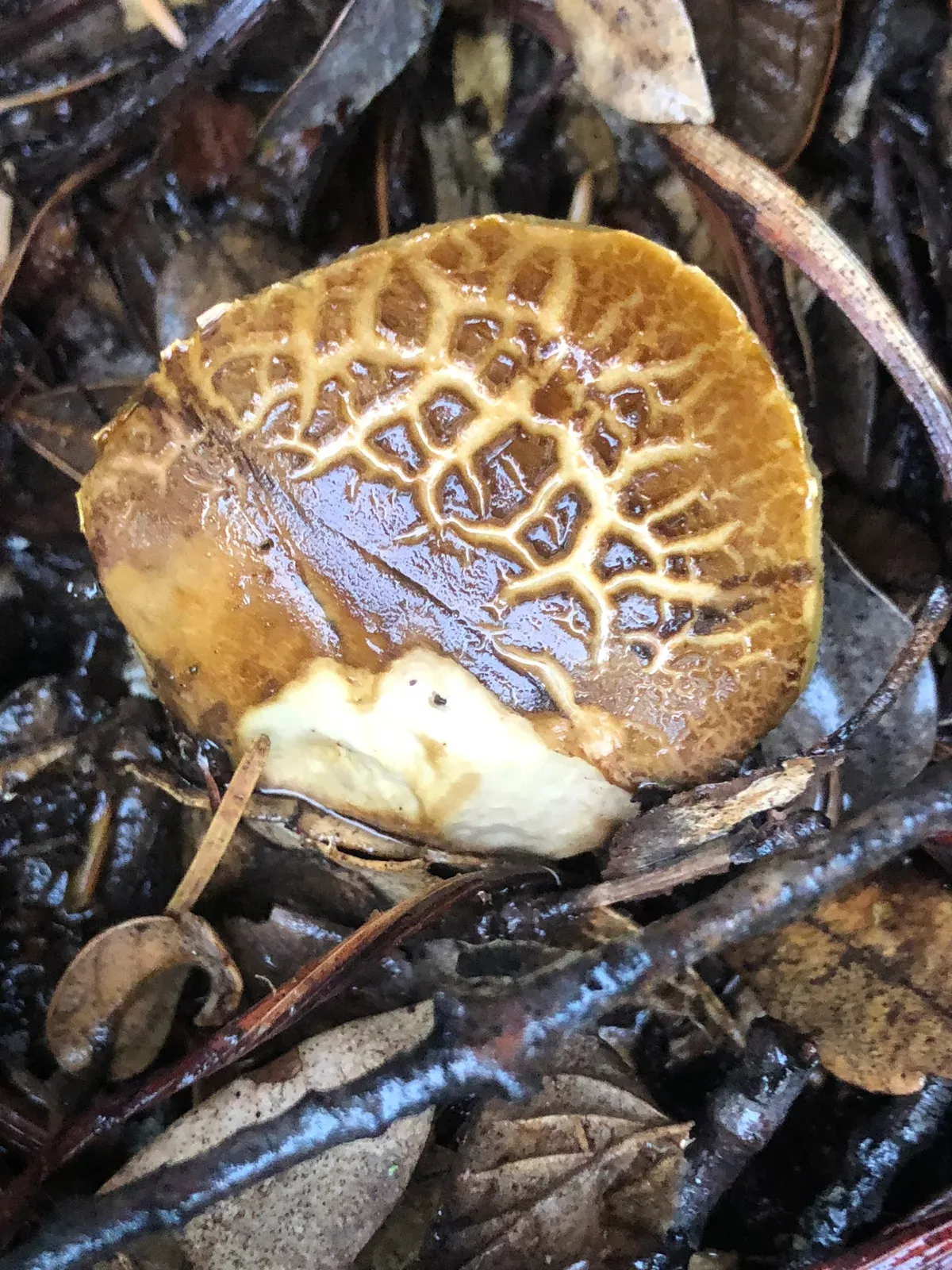
The cap of the inkstain bolete is small, usually 3 to 10 centimeters across. When young it is convex and hemispherical, opening with age to cushion-shaped and almost flat. The cap surface is dry and velvety-felty to the touch, and in mature mushrooms it may develop fine cracks. The color is dark and rich — from chestnut brown and chocolate to olive-brown, sometimes with yellowish tones. Its most striking trait is the instant reaction to touch: at the slightest pressure, the cap surface immediately floods with dark blue, almost black.
Hymenophore
Under the cap lies a tubular hymenophore with small pores that are bright yellow or golden yellow when young, turning olive-yellow as they mature. But the hymenophore's main feature is its lightning-fast and extremely vivid reaction: just touch the pores, and in an instant they flood with a deep ink-blue, almost black color. In the intensity and speed of this bluing, the inkstain bolete outdoes practically every other bolete in our forests.
Stem
The stem of the inkstain bolete is thinner and slimmer than the cap, 4 to 9 centimeters tall, cylindrical or slightly tapering toward the base. It is yellowish at the top and takes on reddish-brown or rusty tones toward the base. There is no net pattern on the stem — its surface is smooth or faintly fibrous. Like the rest of the mushroom, the stem turns blue instantly and intensely when touched or pressed. There is no ring and no volva at all.
Flesh
The flesh of the inkstain bolete is yellowish, fairly soft and thin, especially in the stem. Its defining feature is the fastest and most vivid bluing of any bolete: as soon as the mushroom is cut, the flesh literally within seconds floods with a thick dark blue, almost inky color across the whole cut surface. This reaction is spectacular but perfectly safe. The flesh tastes mild and pleasant, with no bitterness, but because the species can accumulate arsenic, eat it in moderation.
Smell
The smell of the inkstain bolete is faint, mild and typically mushroomy, with no sharp or unpleasant notes. The aroma is not a defining feature of the species, so when identifying it, rely first and foremost on the dark velvety cap and the extraordinarily fast and intense bluing of every part of the mushroom.
›Scientific synonyms (2)
Boletus pulverulentus, Xerocomus pulverulentus
Lookalikes
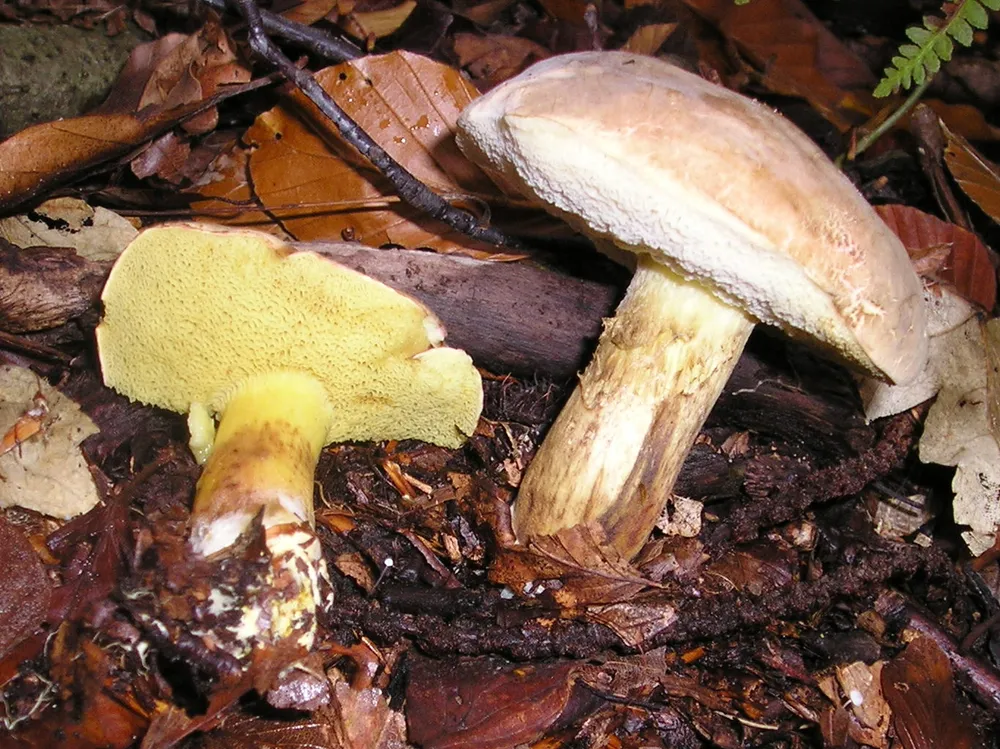
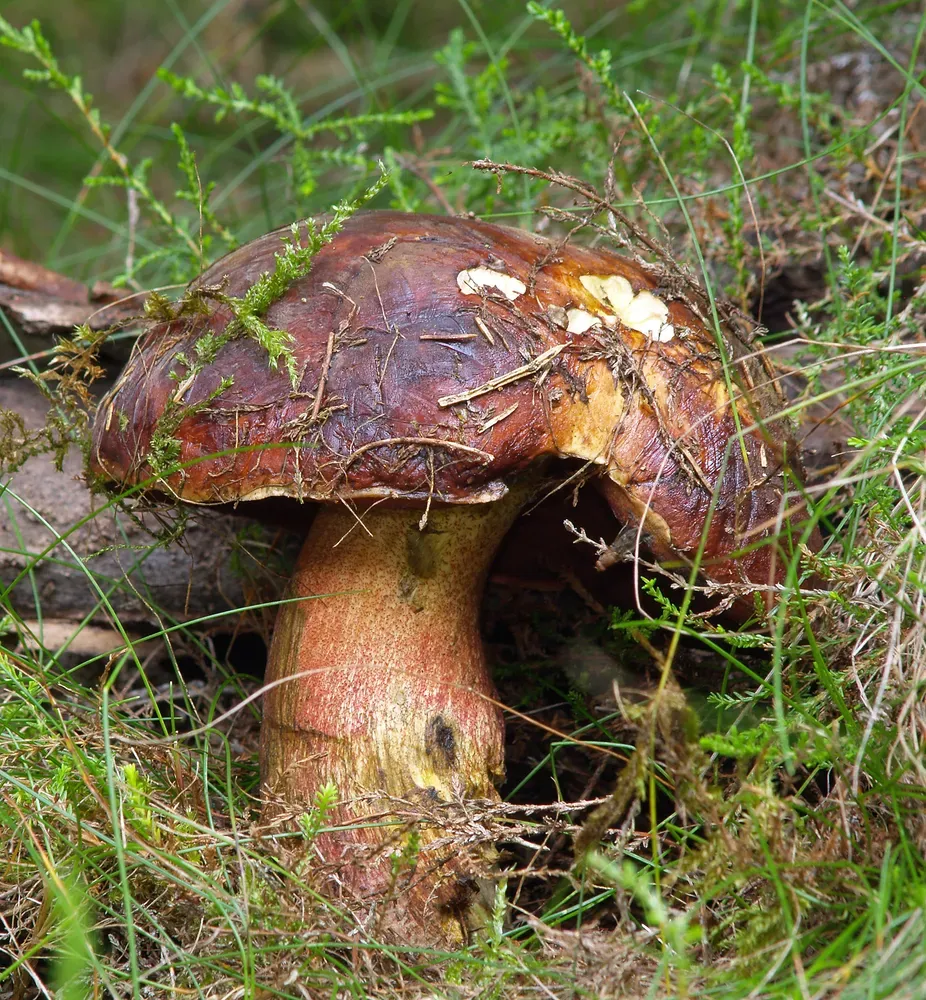
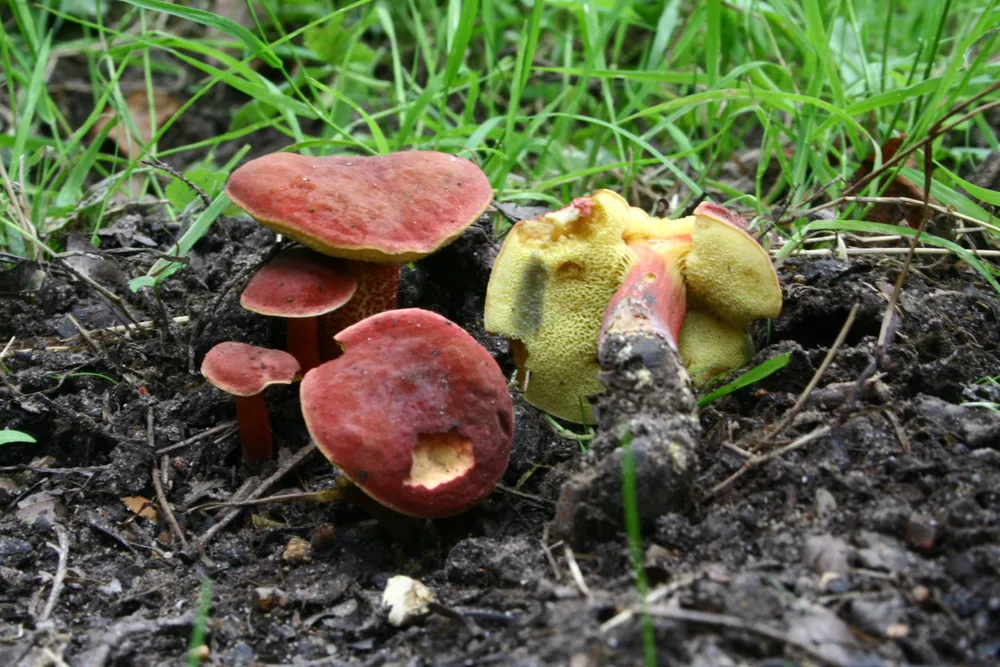
Related species
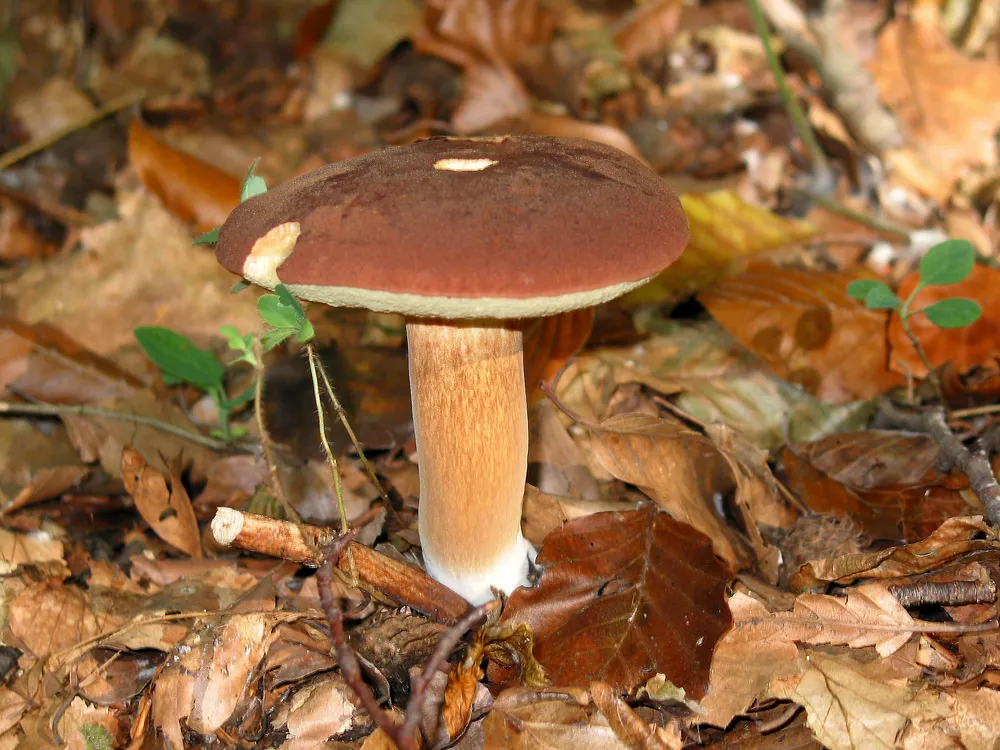
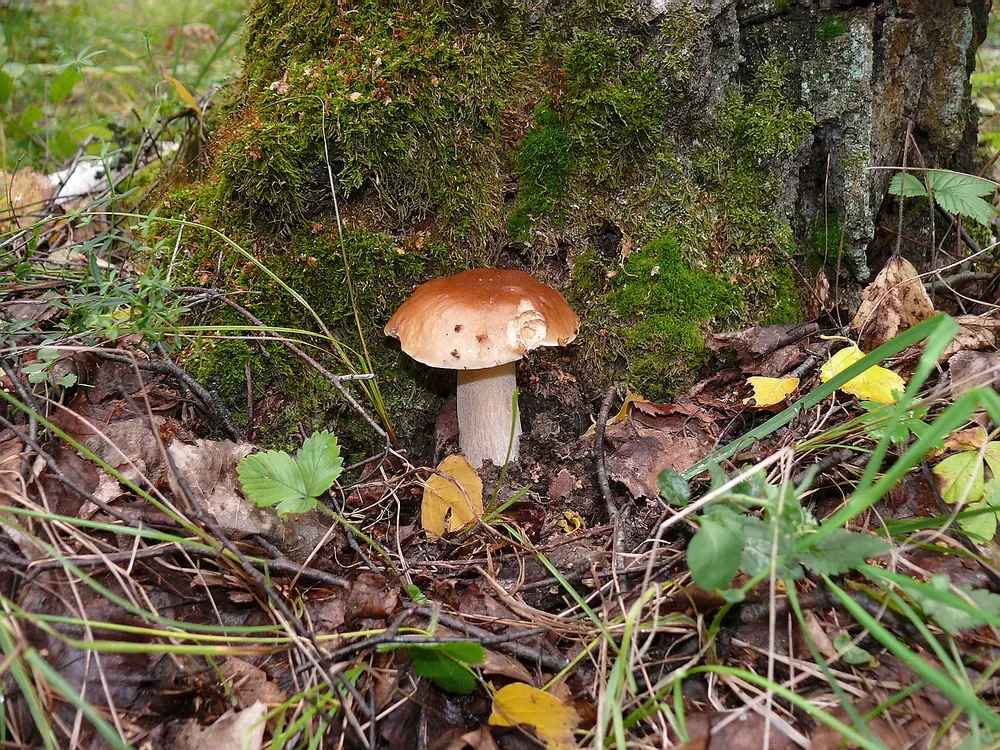
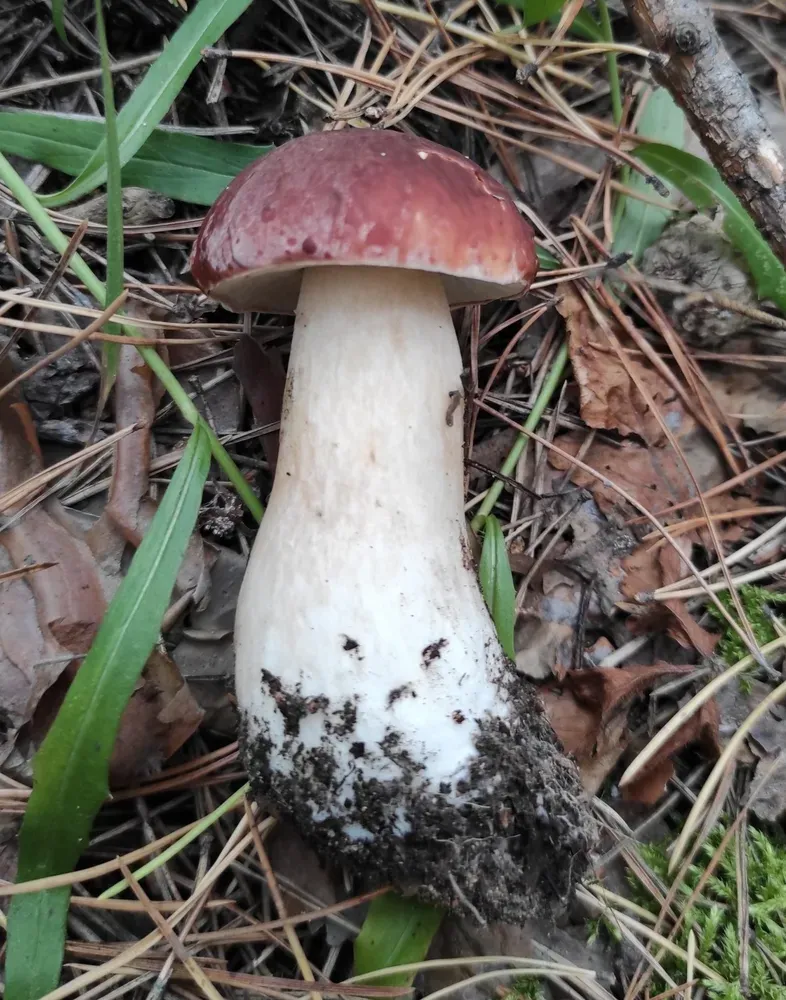
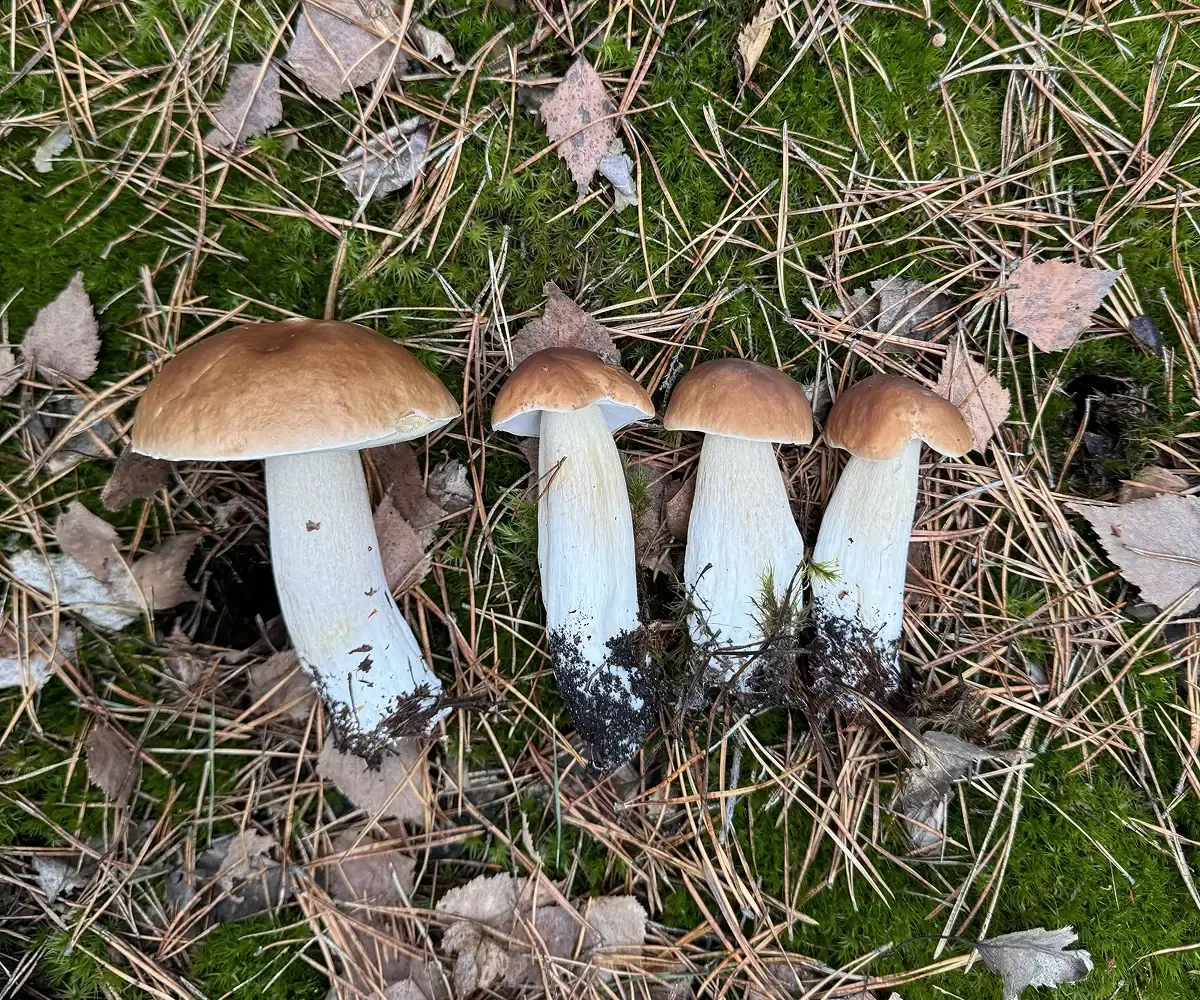
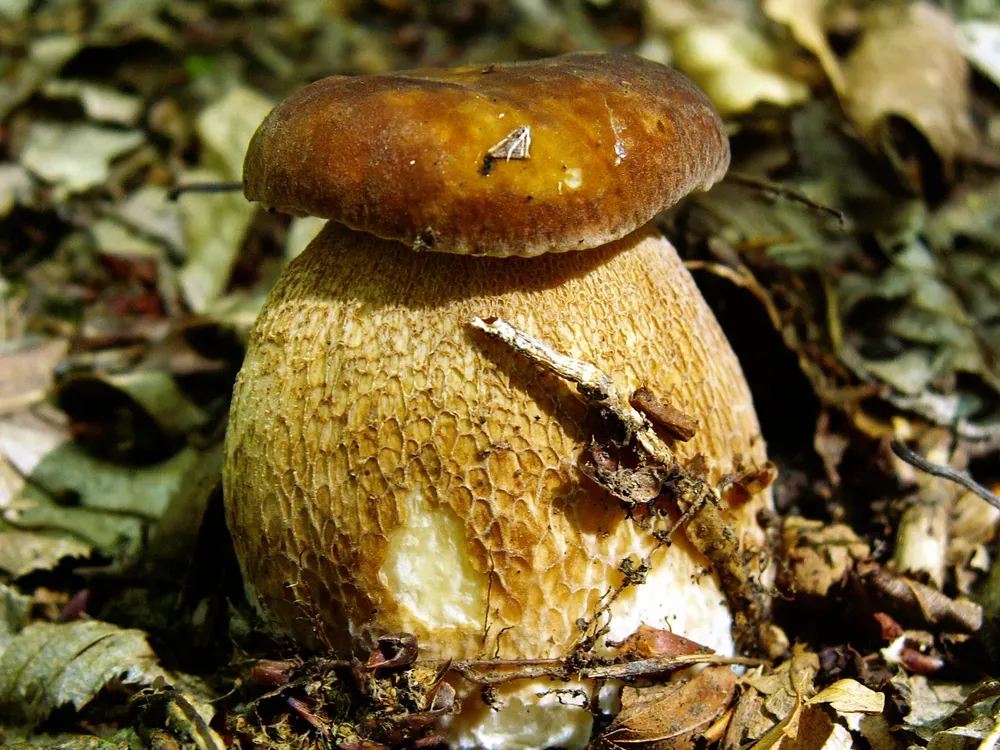
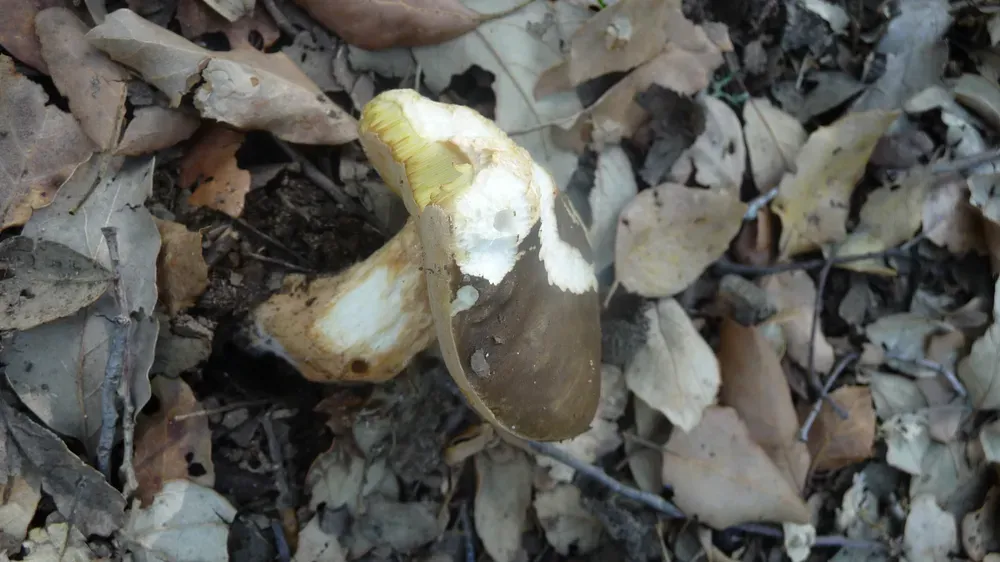
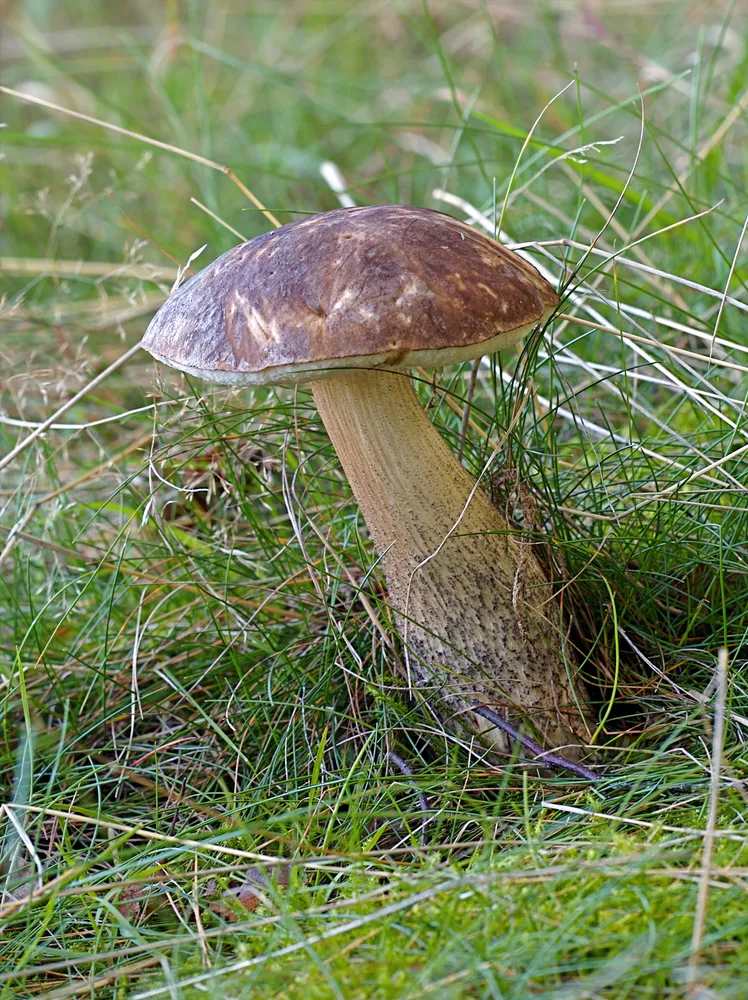
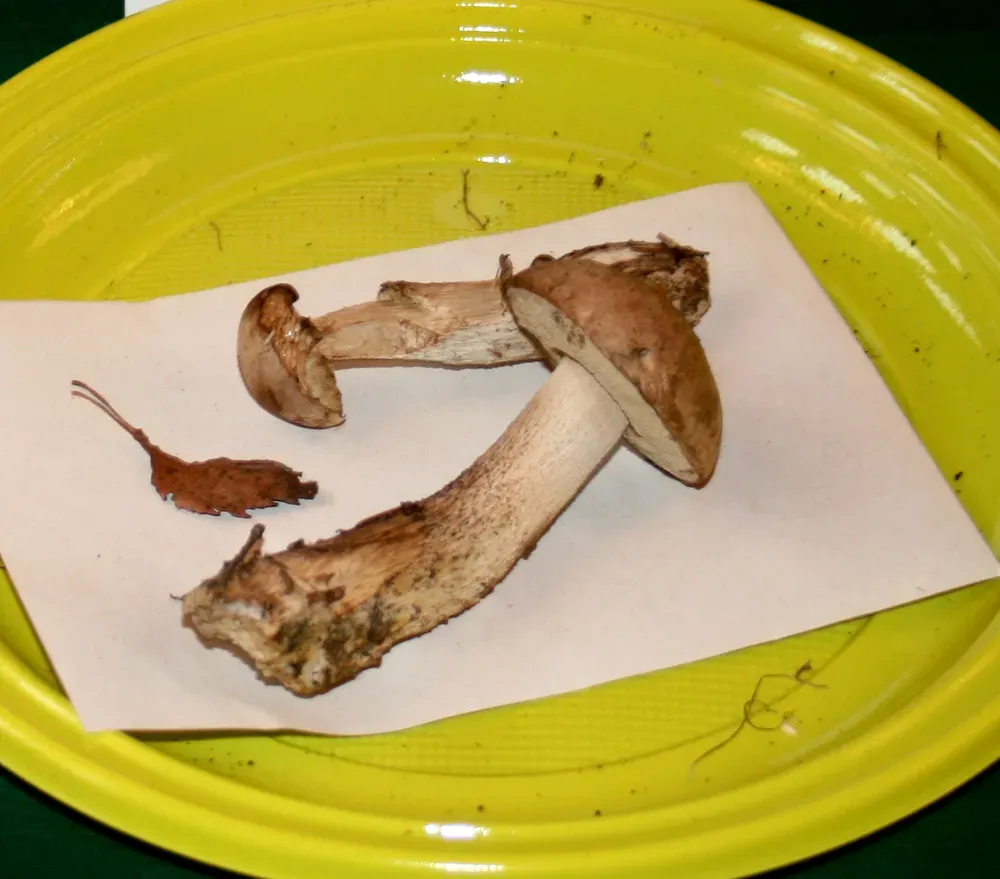
Mushrooms of the same genus and habitat — to study side by side and never mix up.
Related reading
 Where & when to forage
Xerocomus in June: easygoing summer mushrooms
Xerocomus boletes appear as early as the start of summer and stay until fall. Here's where to look for them in…
June 2, 2026·3 min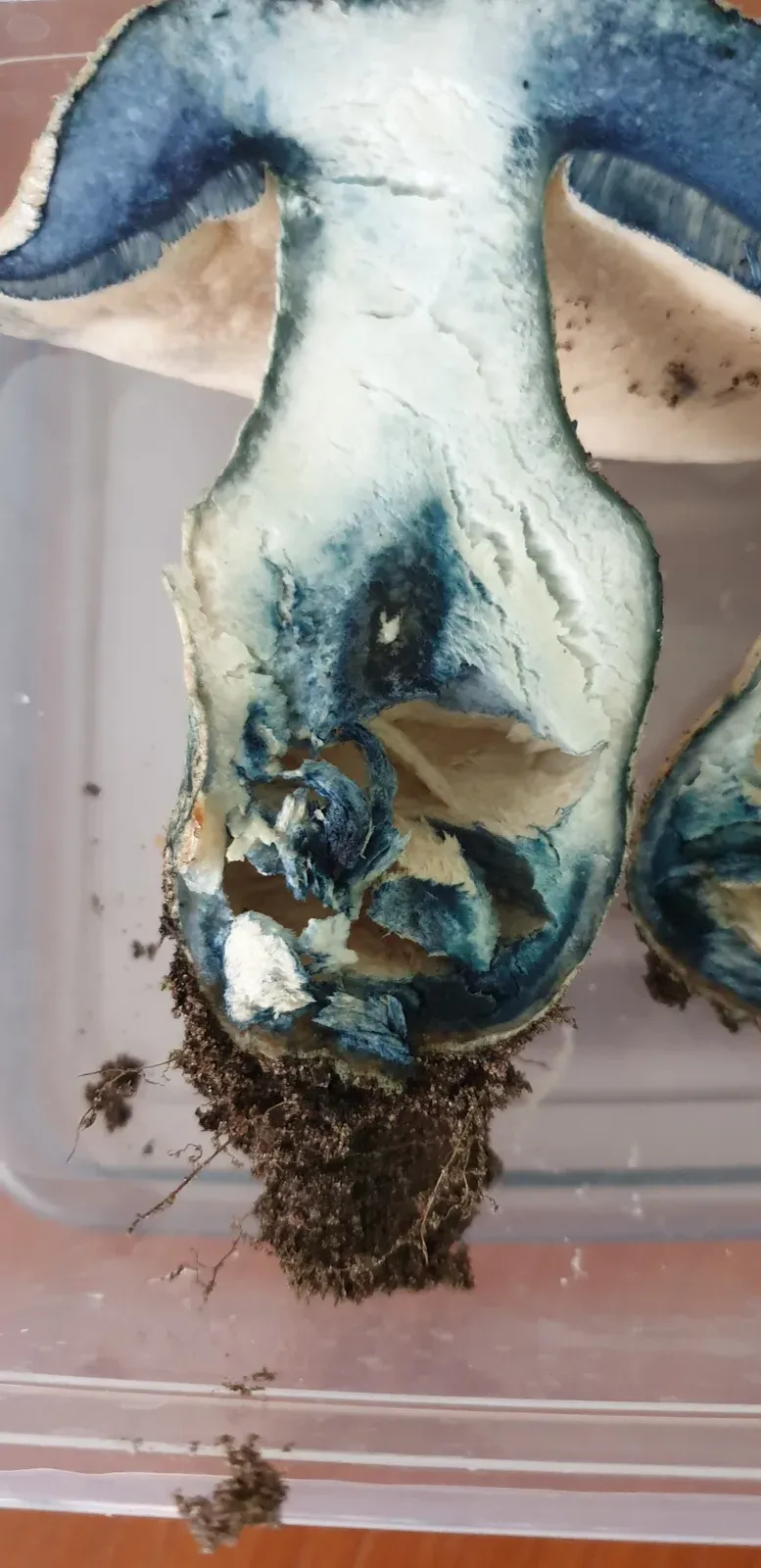 How to identify
Blue-bruising boletes: which ones turn deep blue when cut
The folk name “syniak” (“bruise”) is given to several boletes that instantly turn blue when cut. We explain wh…
May 31, 2026·6 min.webp) Safety
SafetyWhy Xerocomus boletes turn blue when cut, and is it dangerous?
Many people get scared when a Xerocomus bolete turns blue where it's cut. Here's why it happens, whether it me…
May 22, 2026·3 min
Frequently asked questions
Is Inkstain bolete edible or poisonous?
Does Inkstain bolete have gills or pores?
What does the cap of Inkstain bolete look like?
What does the stem of Inkstain bolete look like?
What do Inkstain bolete smell and taste like?
Where does Inkstain bolete grow?
Which trees does Inkstain bolete grow under?
When should you pick Inkstain bolete?
What can Inkstain bolete be confused with?
How do you cook Inkstain bolete?
Can you dry Inkstain bolete?
What is the scientific name of Inkstain bolete?
Sources
- [1]Вікіпедія (українська)
- [2]Атлас грибів України, Зеров Д.К. (1979)
- [3]MycoBank Database
- [4]Index Fungorum
- [5]GBIF
- [6]iNaturalist Ukraine