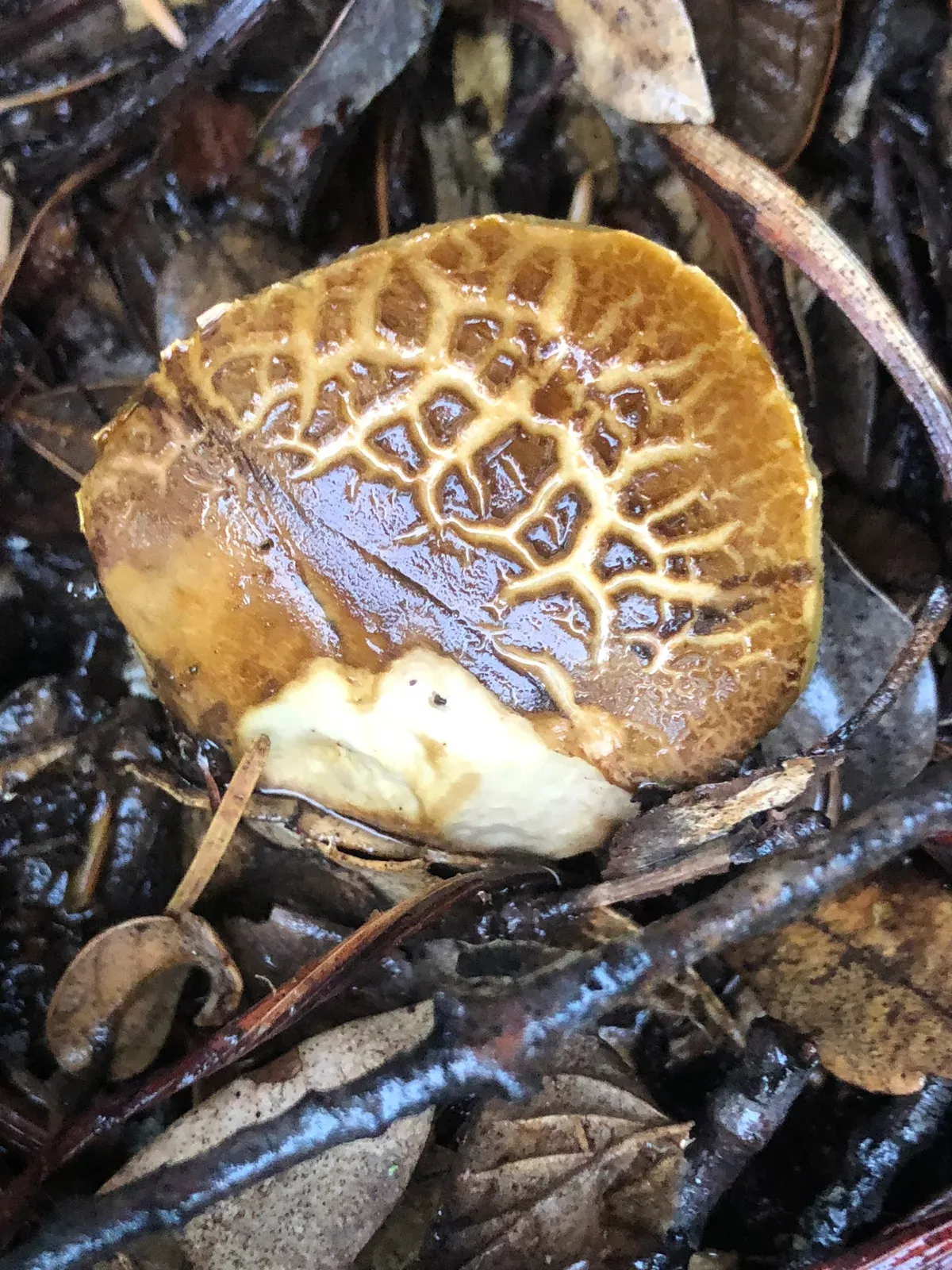
Xerocomus boletes are rarely a forager's main target, yet they often save a June basket. This easygoing pored mushroom appears early, grows almost everywhere and makes a nice addition to prized porcini. It's also great for beginners thanks to its simple, easy-to-spot features.
Let's look at where to find Xerocomus boletes in June, how to recognize them, and why the bluing when cut, which scares beginners so much, is actually harmless.
When and where Xerocomus boletes grow in June
Suede bolete appears from early summer and keeps coming in several flushes right up to fall. It's less fussy about the weather than slippery jacks or porcini, so you'll find it even when other mushrooms are scarce.
As its Ukrainian name, “moss mushroom,” suggests, it loves moss. Look for it in slightly damp, mossy spots in different types of forest.
- **Mixed forest.** Mossy forest edges and clearings where the sun warms the forest floor.
- **Deciduous forest.** Grassy patches under oaks and beeches.
- **Coniferous forest.** Mossy dells in pine woods, where moisture lasts longer.
Xerocomus boletes often grow singly or in small groups, so once you find one, take a careful look around.
How to recognize a Xerocomus bolete
Xerocomus boletes are easy to recognize by a few telltale features.
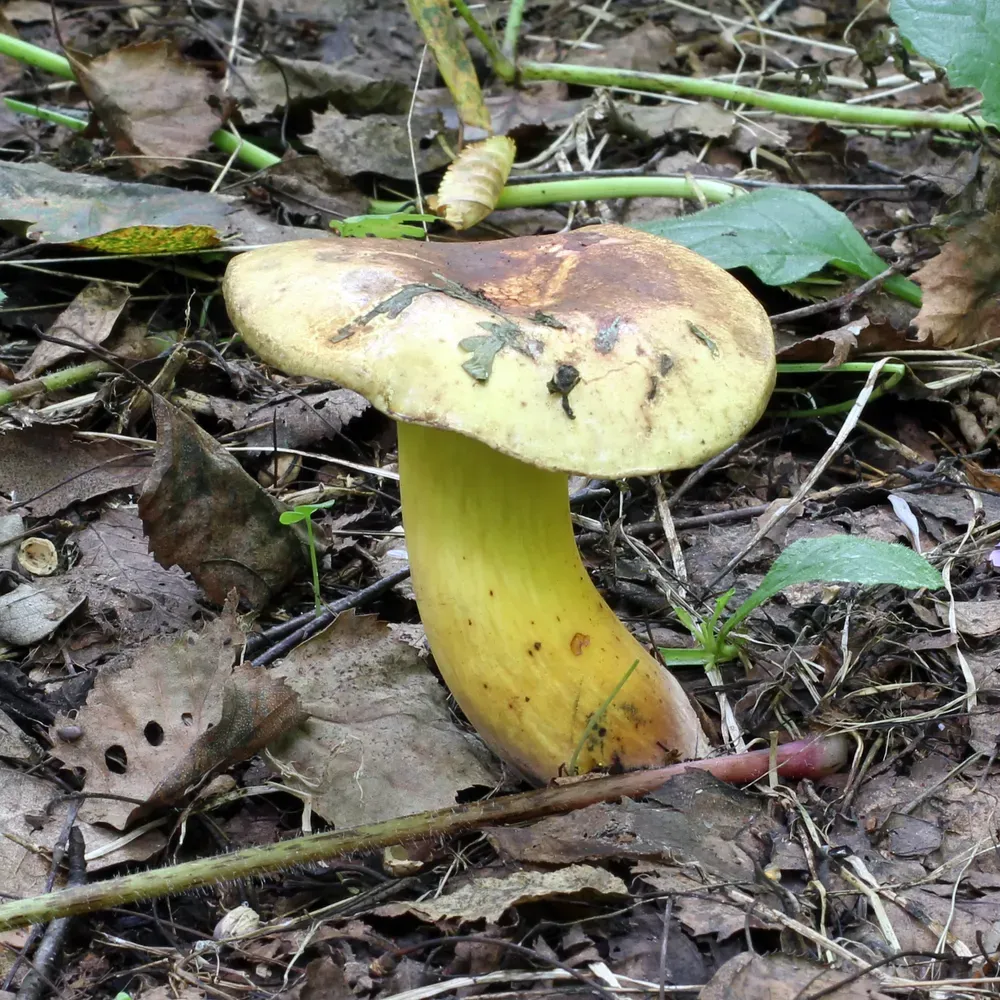
- Cap. Dry and velvety to the touch, in brown, olive or greenish shades. In damp weather it can be a little sticky.
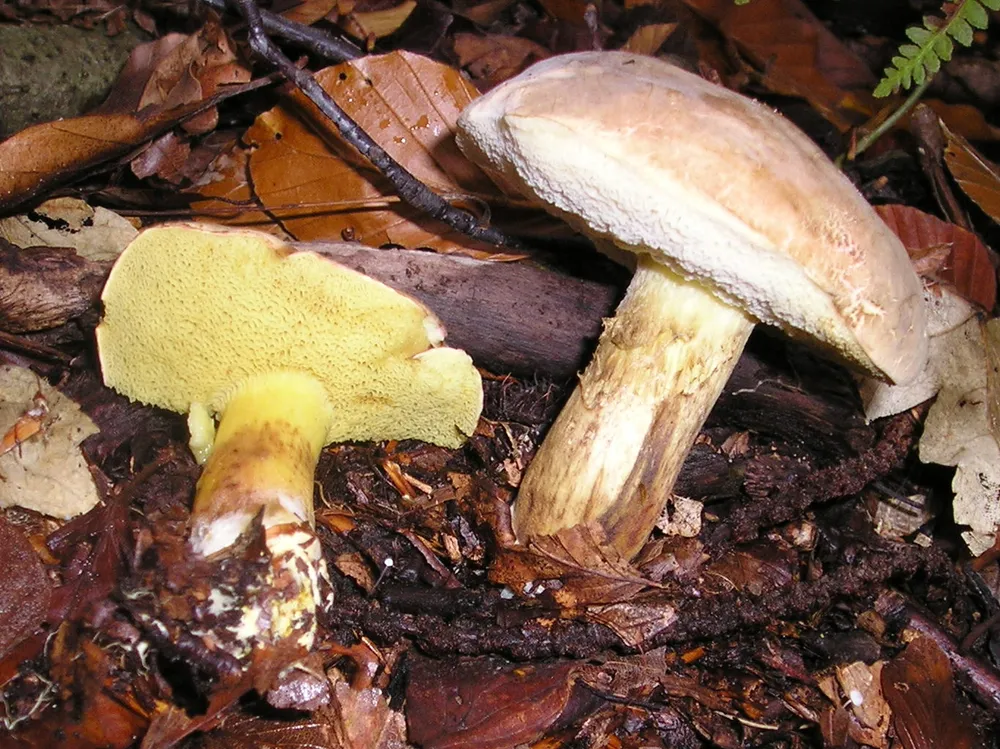
- Tubes. A yellow or greenish-yellow spongy underside instead of gills. The pores are fairly large.
- Stem. Firm, often with a fine net-like or fibrous pattern, no ring.
- Flesh. Yellowish; in many species it turns blue when cut.
Besides the suede bolete, several other Xerocomus-type species grow in our forests. One of them, the inkstain bolete, turns blue especially fast and intensely. They're all edible, though their flesh isn't as firm as porcini.
Why Xerocomus boletes turn blue when cut
A beginner's most common fear: you cut a Xerocomus bolete and the flesh turns blue or green. The first thought is that the mushroom is poisonous. In fact, that's a misunderstanding.
Bluing is ordinary oxidation of compounds in the flesh when exposed to air, the same chemistry as a cut apple browning. It has nothing to do with poison, and the blue disappears completely during cooking.
How strongly they blue depends on the species: some Xerocomus boletes barely change, others turn blue almost instantly. It has no effect on safety. We explain in more detail why Xerocomus boletes turn blue when cut. So if your Xerocomus bolete turned blue, that only confirms it's the real thing.
Tips for picking Xerocomus boletes
Xerocomus boletes are rewarding mushrooms, but they have quirks worth keeping in mind.
- Pick young mushrooms. Old Xerocomus boletes become soft, watery and often wormy, so it's the young, firm ones that are prized.
- Don't confuse them with the peppery bolete. A hot peppery taste and bright rusty-red pores give away the inedible lookalike. The edible Xerocomus bolete tastes pleasant, with no burn.
- Process them quickly. Xerocomus flesh is delicate and spoils quickly, so it's best to process the mushrooms the same day.
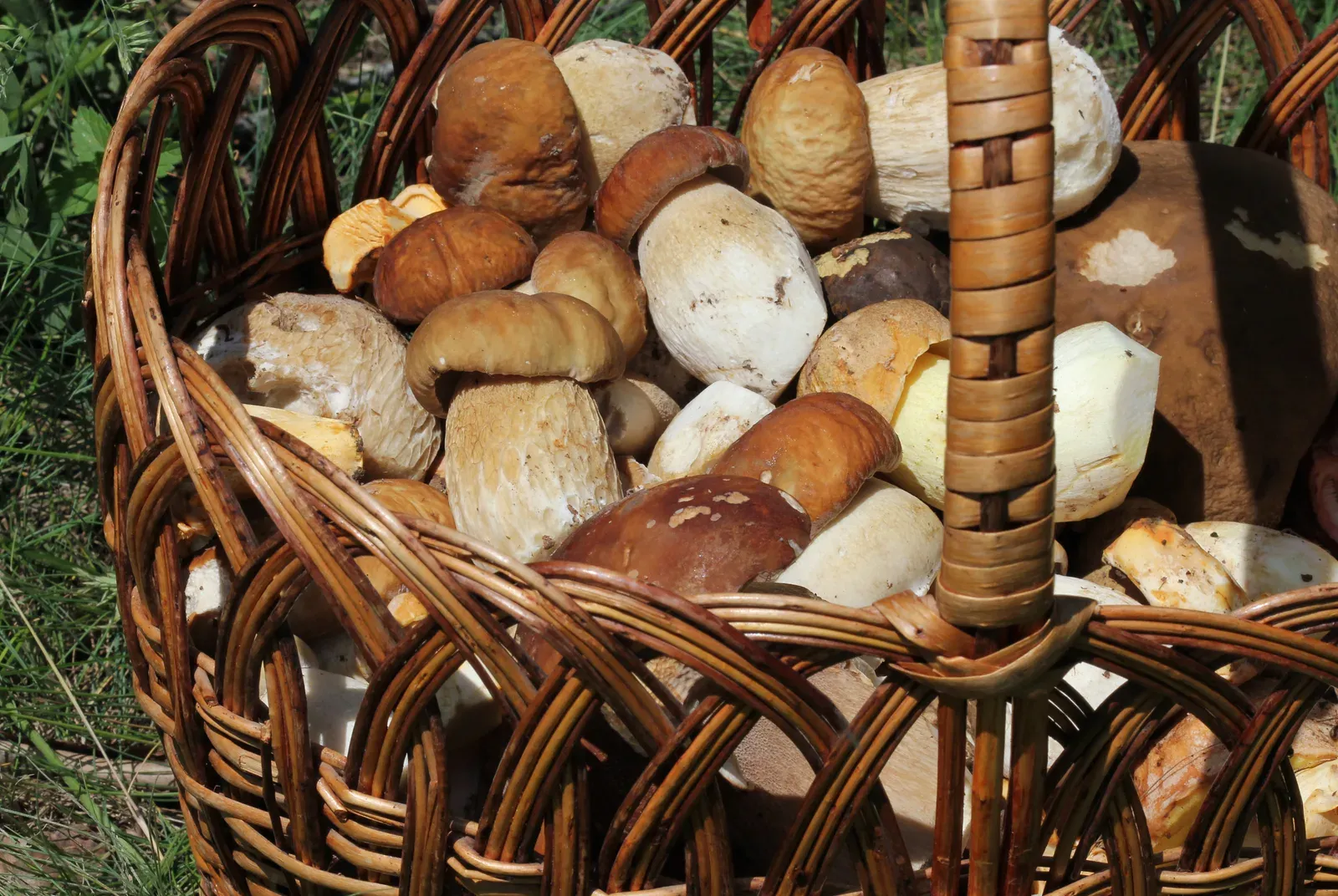
June Xerocomus boletes are great fried and in soups. And the best moment for a trip, a few days after a warm rain, will be shown by our mushroom radar.
Sources
- “Key to the Fungi of Ukraine” (Kyiv, Naukova Dumka publishing house).
- Xerocomus subtomentosus in GBIF, the global biodiversity database.
- Xerocomus in MycoBank, the international fungal nomenclature database.
- Xerocomus subtomentosus on Wikipedia.
Frequently asked questions
Do Xerocomus boletes grow in June?
Yes, appear from early summer and stay until fall. They're less fussy about the weather than porcini or slippery jacks, so you'll find them even on days when mushrooms are scarce.
Where should you look for Xerocomus boletes?
In mossy, slightly damp spots in , and , on forest edges and in clearings. They often grow singly or in small groups.
Why do Xerocomus boletes turn blue when cut?
It's ordinary oxidation of the flesh in air, a harmless reaction similar to an apple browning. We cover this in more detail in .
Can you eat a Xerocomus bolete that has turned blue?
Yes. Bluing is harmless, and the blue disappears during cooking. If all the other features are typical of a Xerocomus bolete, the mushroom is perfectly fine to eat.
How do you recognize a Xerocomus bolete?
By its dry, velvety cap in brown or greenish shades, its yellow spongy tubes with fairly large pores, and its firm stem with no ring.
What can a Xerocomus bolete be confused with?
The main unwanted lookalike is the peppery bolete, given away by its hot, burning taste and bright rusty-red pores. The edible Xerocomus bolete tastes pleasant, with no burn.
Why are Xerocomus boletes sometimes watery?
Old Xerocomus boletes lose their firmness, turn soft and watery, and get wormy. So pick young mushrooms with firm flesh.
When is the best time to go for Xerocomus boletes?
A few days after a warm rain. The best moment for your region will be shown by our .
Mushrooms in this article
Related articles
 Recipes & cooking
How to store fresh mushrooms, and for how long
Fresh mushrooms spoil faster than you might think. Here's how long they keep in the fridge, how to store them…
August 21, 2026·4 min How to identify
Truffles in Ukraine: do they grow here, and where to look
Truffles aren't just a French delicacy. Several species grow in Ukraine too. Here's which ones, where they occ…
August 24, 2026·2 min Recipes & cooking
How long to boil mushrooms
Boiling time depends on the type of mushroom and on what you're cooking next. Here's a clear cheat sheet: how…
August 22, 2026·4 min