.webp)
You cut a Xerocomus bolete and the flesh turned blue, even green, right before your eyes? A beginner's first thought: “It's poisonous, throw it out.” In fact, this is one of the most common mushroom misconceptions.
Bluing in a Xerocomus bolete when cut is a normal, safe reaction, not a sign of poison. Let's look at why it happens, whether you should worry, and how harmless bluing differs from truly alarming signs.
Why Xerocomus boletes turn blue
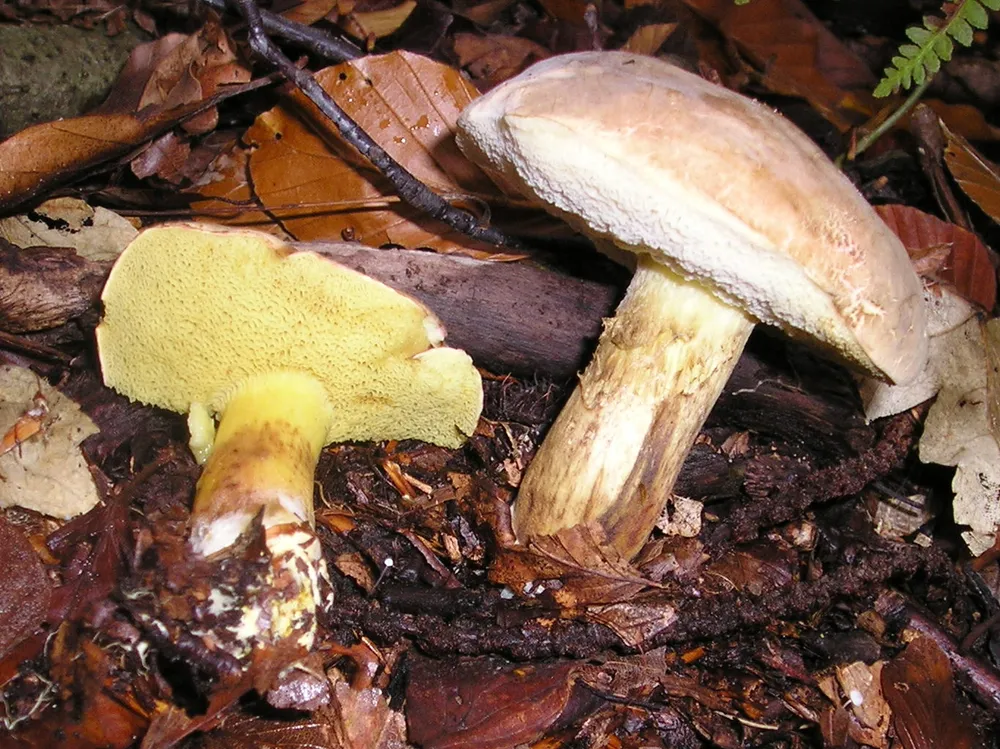
When you cut or break a Xerocomus bolete, its flesh comes into contact with air. It contains special compounds that quickly oxidize in oxygen and turn blue or greenish.
It's the same chemistry as a cut apple or potato going brown, only the color is different. This process has nothing to do with poison.
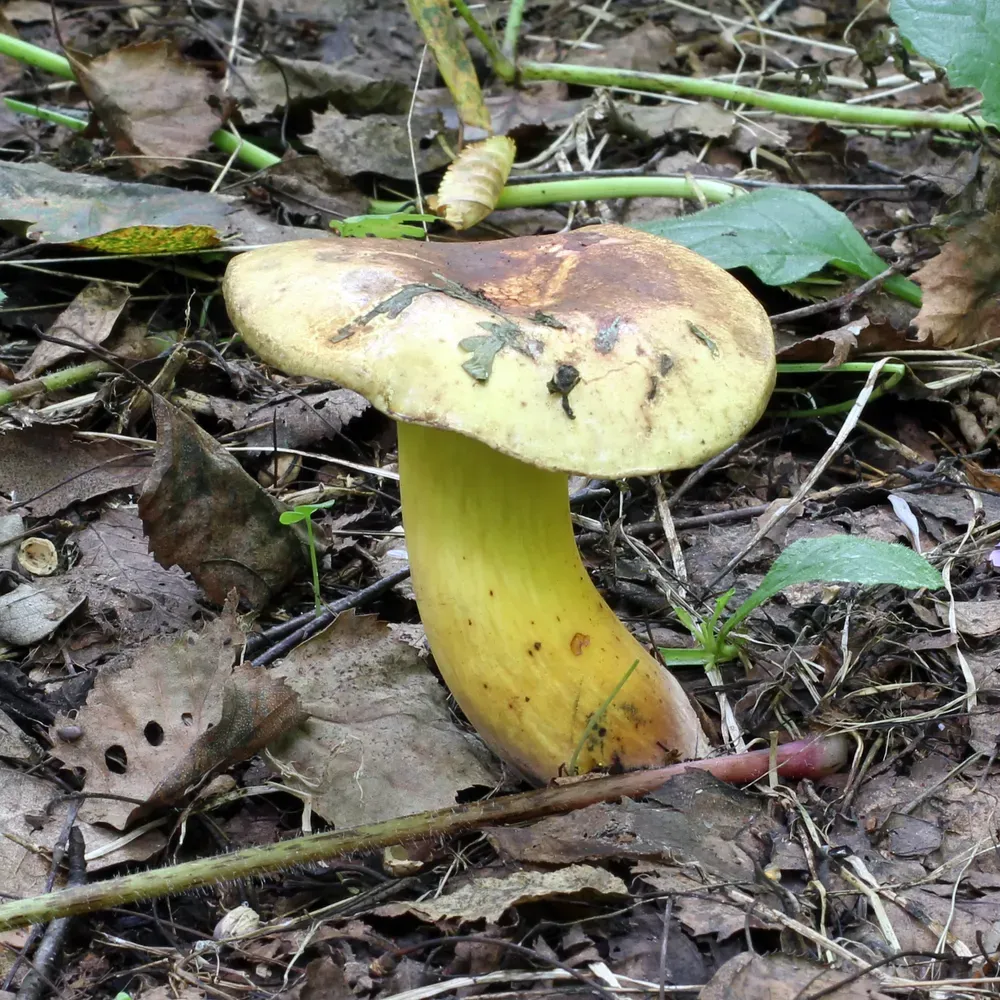
How fast and how vividly the flesh blues depends on the species. Some Xerocomus boletes turn barely noticeably blue, while others, such as the inkstain bolete, darken almost instantly and very intensely.
Does bluing mean poison
No. This is the most important thing to remember: bluing on its own does not mean a mushroom is poisonous.
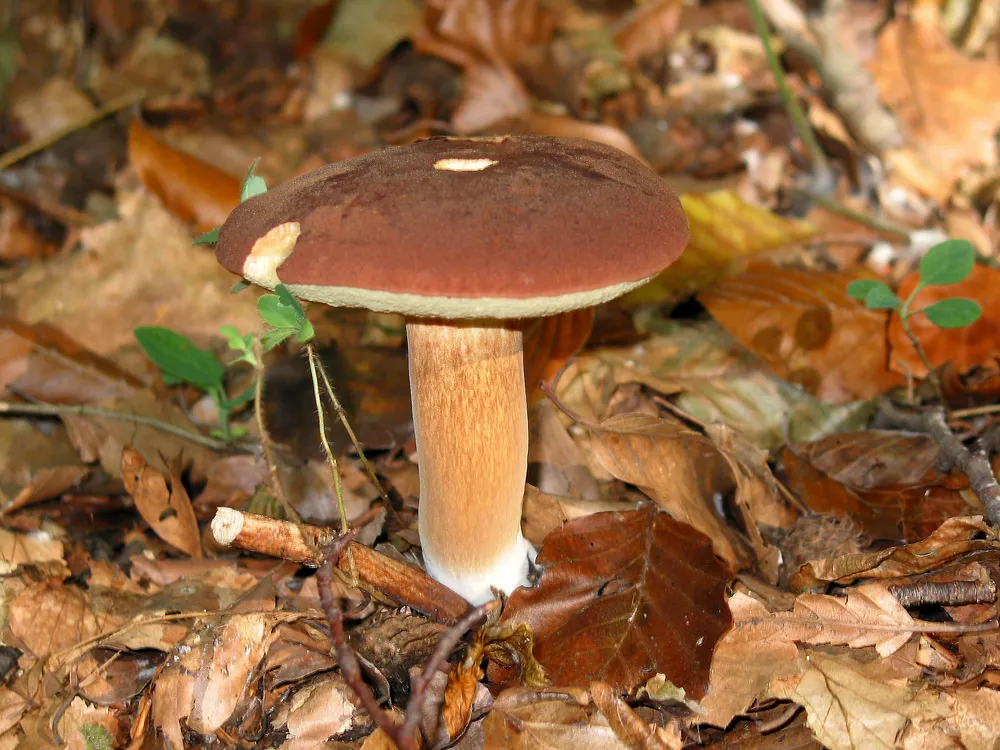
Among the boletes, some excellent edible species turn blue too: Xerocomus boletes, bay bolete, and some other boletes. The blue disappears during cooking, and the dish comes out its usual color, tasty and safe.
So if a Xerocomus bolete has turned blue where you cut it, that only confirms it really is a Xerocomus bolete. There's no need to throw it out because of that.
Where the “blue mushroom” myth came from
The fear of bluing comes from a few genuinely dangerous boletes that also turn blue, for example some poisonous boletes with bright red pores.
But what gives them away isn't the bluing, it's entirely different signs: red or orange pores, bitter or burning-hot flesh, an unpleasant smell. Bluing by itself has nothing to do with it, since both edible and inedible mushrooms turn blue.
That's why you can't go by the color of the cut alone. A mushroom is identified by a combination of features: shape, the color of the cap and pores, the stem, the smell and where it grows.
What to look at instead of the color of the cut
To confidently identify an edible Xerocomus bolete, check several things together.
- Pores. In edible Xerocomus boletes they are yellow or greenish-yellow, not bright red or orange.
- Taste. An edible Xerocomus bolete is neither bitter nor hot. A sharp, peppery taste gives away the peppery bolete.
- Cap. Dry, velvety, in brown or greenish shades.
- Smell. A pleasant mushroomy smell, with no chemical or rotten notes.
If all the features match, bluing on the cut shouldn't worry you. To know exactly when to head to the forest for Xerocomus boletes, check our mushroom radar: it shows when moisture and warmth line up well for mushrooms to appear.
Sources
- “Vyznachnyk hrybiv Ukrainy” (Identification Guide to the Fungi of Ukraine; Kyiv, Naukova Dumka publishing house).
- Cyanoboletus pulverulentus in GBIF, the global biodiversity database.
- Xerocomus in MycoBank, the international fungal nomenclature database.
- Xerocomus subtomentosus on Wikipedia.
Frequently asked questions
Why does a Xerocomus bolete turn blue when cut?
Because compounds in its flesh oxidize in the air and turn blue or greenish. It's an ordinary chemical reaction, similar to a cut apple going brown.
Does bluing mean a Xerocomus bolete is poisonous?
No. Bluing on its own is not a sign of poison. Many excellent edible mushrooms, including Xerocomus boletes and the , turn blue when cut.
Can you eat a Xerocomus bolete that has turned blue?
Yes. Bluing is safe, and the blue disappears during cooking. If the other features are typical of a Xerocomus bolete, the mushroom is perfectly fine for the table.
Why do some Xerocomus boletes turn so intensely blue?
It depends on the species. For example, the turns blue almost instantly and very intensely. How strongly it blues has no bearing on safety.
Which dangerous mushrooms also turn blue?
Some poisonous boletes turn blue too, but what gives them away isn't the bluing, it's bright red or orange pores, a bitter or burning-hot taste and an unpleasant smell.
How do you tell an edible Xerocomus bolete from a dangerous mushroom?
Look at the combination of features: yellow pores, no bitterness or heat, a dry velvety cap and a pleasant smell. Red pores or a hot taste are a reason to pass it by.
Does the blue disappear during cooking?
Yes, the bluing disappears with heat, and the dish takes on its usual color. It has no effect on taste or safety.
Should you be afraid of bluing when picking mushrooms?
There's no need to fear bluing itself. It's far more important to check the pores, taste and smell. If you have any doubt about the species, it's better not to pick the mushroom.
Mushrooms in this article
Related articles
 Science & taxonomy
Bay bolete: health benefits and nutritional value
The bay bolete is a match for porcini in both flavor and nutrition. Here's why the bay bolete is good for you,…
August 20, 2026·2 min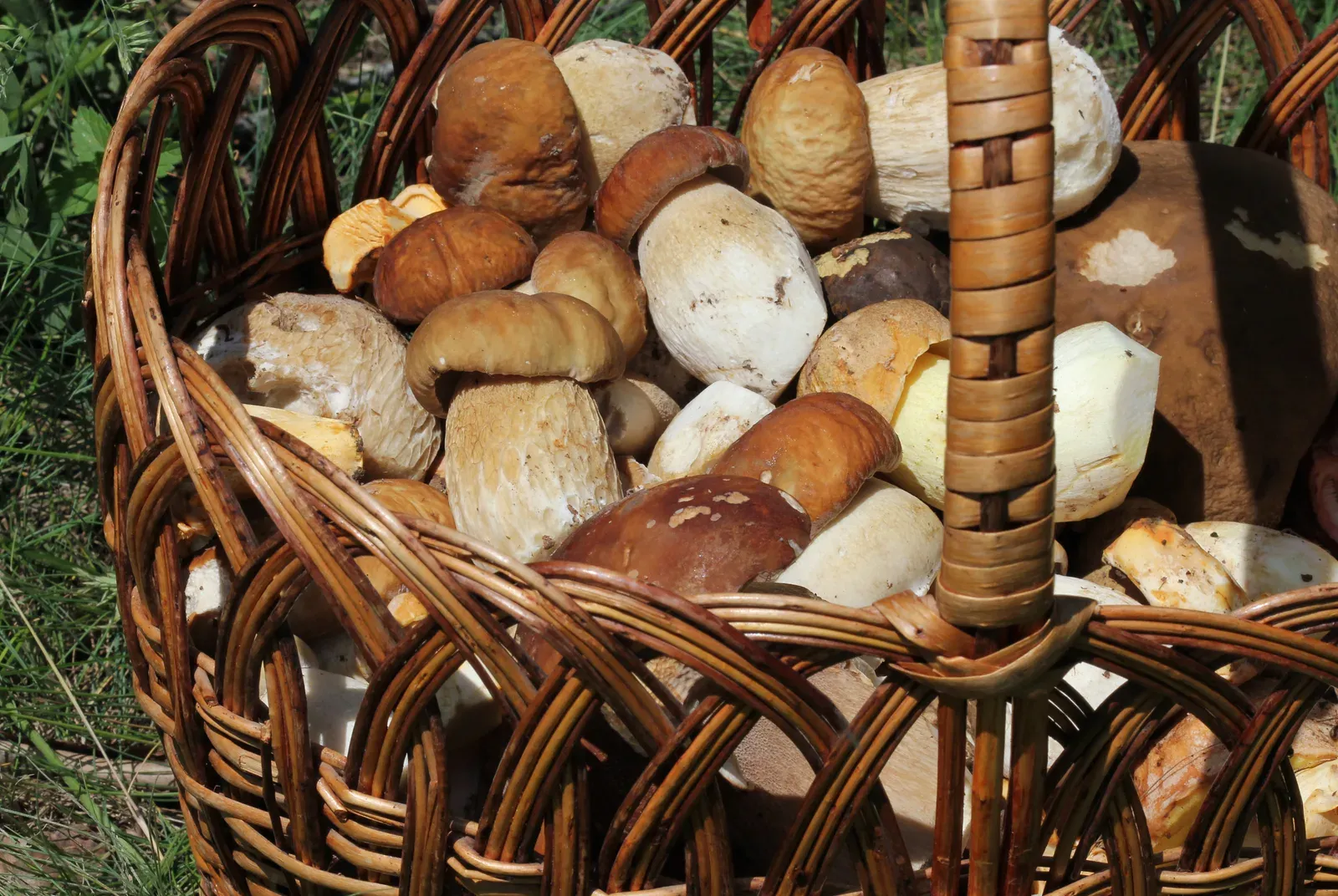 Recipes & cooking
How to store fresh mushrooms, and for how long
Fresh mushrooms spoil faster than you might think. Here's how long they keep in the fridge, how to store them…
August 21, 2026·4 min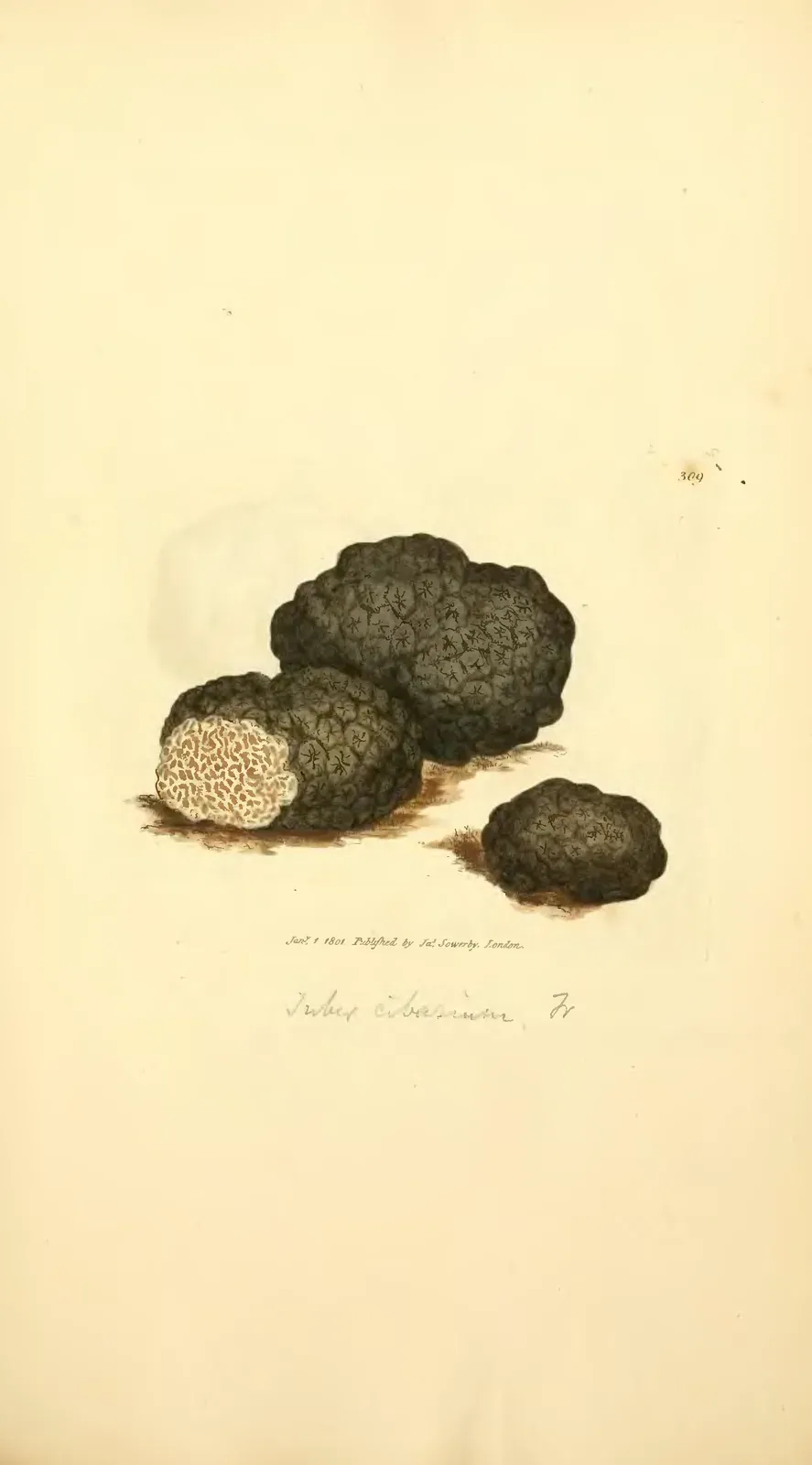 How to identify
Truffles in Ukraine: do they grow here, and where to look
Truffles aren't just a French delicacy. Several species grow in Ukraine too. Here's which ones, where they occ…
August 24, 2026·2 min