.webp)
When a forager says "I picked some moss boletes", they rarely specify which ones. Yet the "moss bolete" isn't one mushroom but a whole family of similar species. There are several in our forests, and all of them are related, edible and fond of mossy spots.
Let's sort this family out step by step: which species of Xerocomus boletes occur in Ukraine, how they differ from one another and how to learn to tell them apart. It's not critical for your basket, but it's very useful for understanding the forest.
What all Xerocomus boletes have in common
All Xerocomus boletes are pored mushrooms of the genera Xerocomus, Xerocomellus and their close relatives, kin to porcini. They share several features:
- a dry cap that feels velvety to the touch;
- a yellow or greenish-yellow tube layer with large, angular pores;
- a thinner, straight stem without a net pattern;
- flesh that, in most species, turns blue when cut.
It's the velvety cap, yellow pores and bluing that unite the whole family. The species differ in cap color, how the flesh behaves and where they grow.
Suede bolete
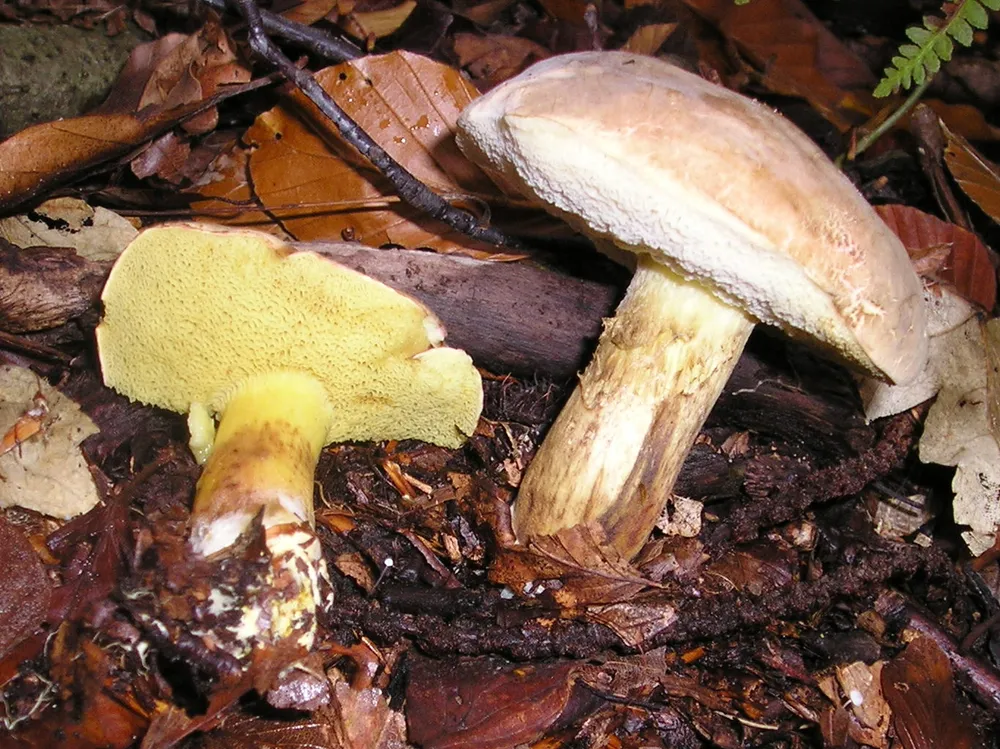
Suede bolete (Xerocomus subtomentosus) is the best-known and most widespread species. It's the one most people picture when they hear "moss bolete".
Its cap is olive-green, yellowish-brown or grayish-brown, dry and velvety. The pores are large and golden yellow. The flesh turns slightly blue or hardly at all. It grows in mixed and coniferous forests on mossy patches.
It's a good edible mushroom and the one picked most often. Because of its yellowish-brown cap, it's sometimes also called the "yellow moss bolete".
Red cracking bolete
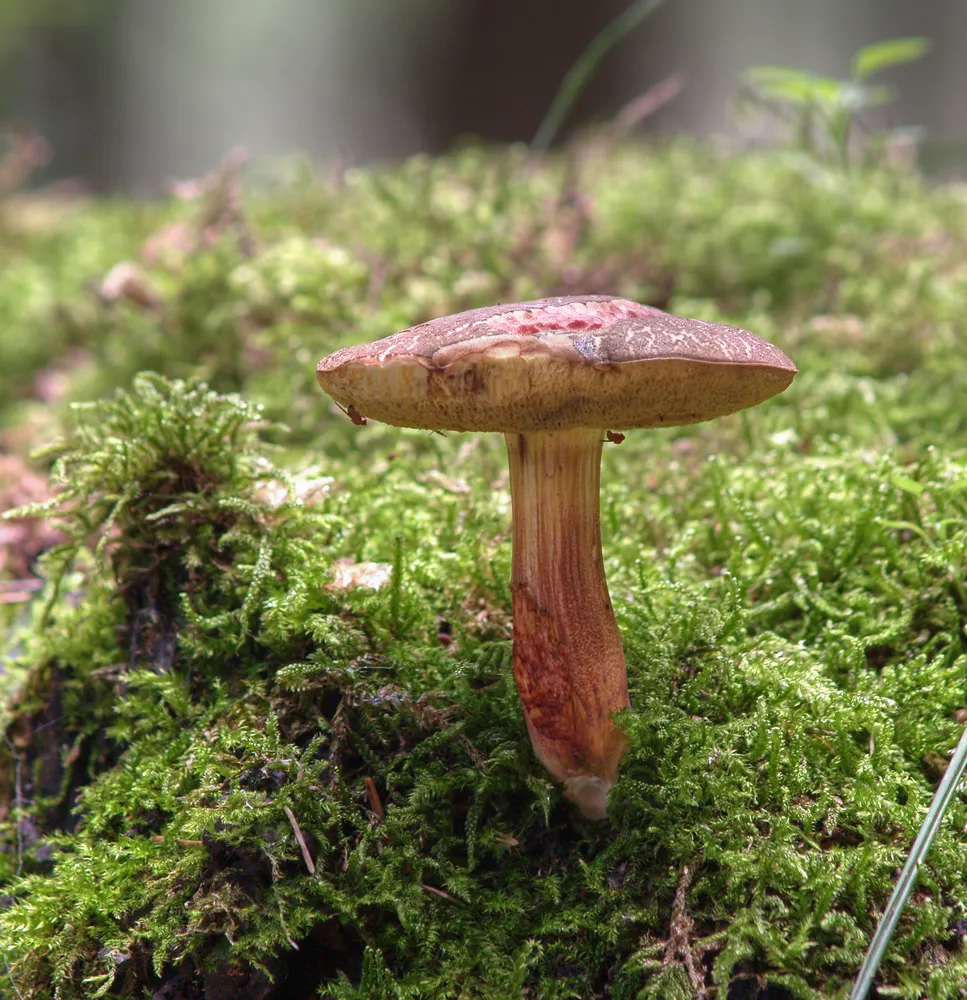
Red cracking bolete (Xerocomellus chrysenteron) is easy to recognize by its cap, which becomes covered in little cracks with age, like parched earth.
Deep in these cracks, pinkish flesh often shows through. The cap is brown or grayish-brown, and the flesh turns noticeably blue when cut. Because of its cracked look, it's often called the "motley moss bolete".
It's edible too, though its flesh is softer and more watery, so the mushroom ages quickly. It's best picked young.
Ruby bolete
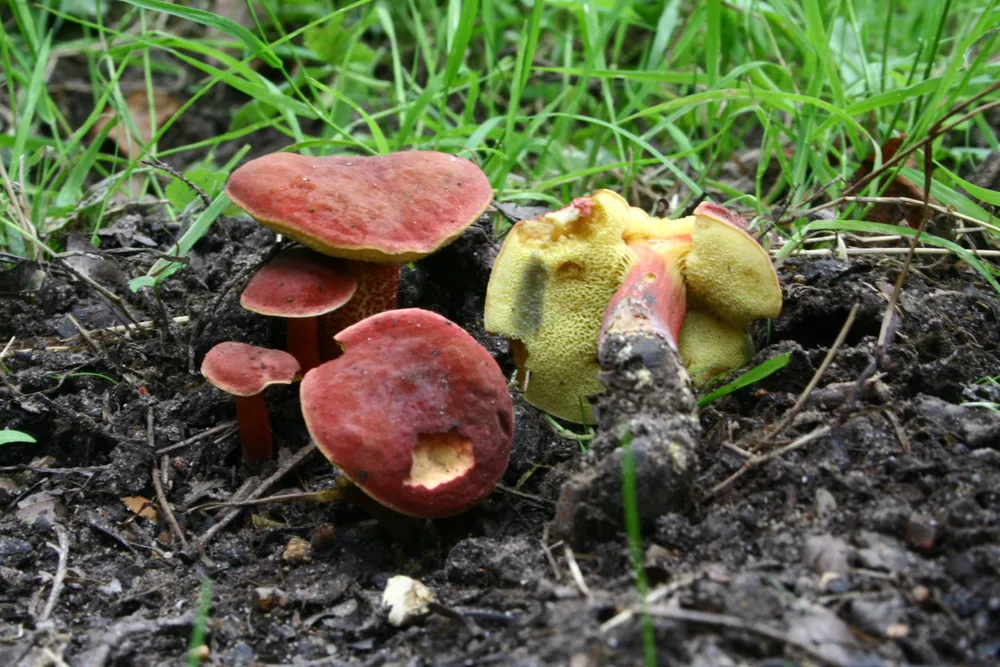
Ruby bolete (Boletus rubellus), or red moss bolete, stands out with its bright reddish or carmine cap.
It's the most colorful of our Xerocomus boletes. Its stem often has a red tint as well, and the flesh turns blue when cut. It loves light deciduous forests, forest edges and clearings, often under oak.
Because of its bright cap, people often search for it as "red moss bolete". The mushroom is edible, but small and fragile.
Xerocomus ferrugineus and other relatives
Besides the three main ones, other Xerocomus boletes and closely related mushrooms also occur in our forests.
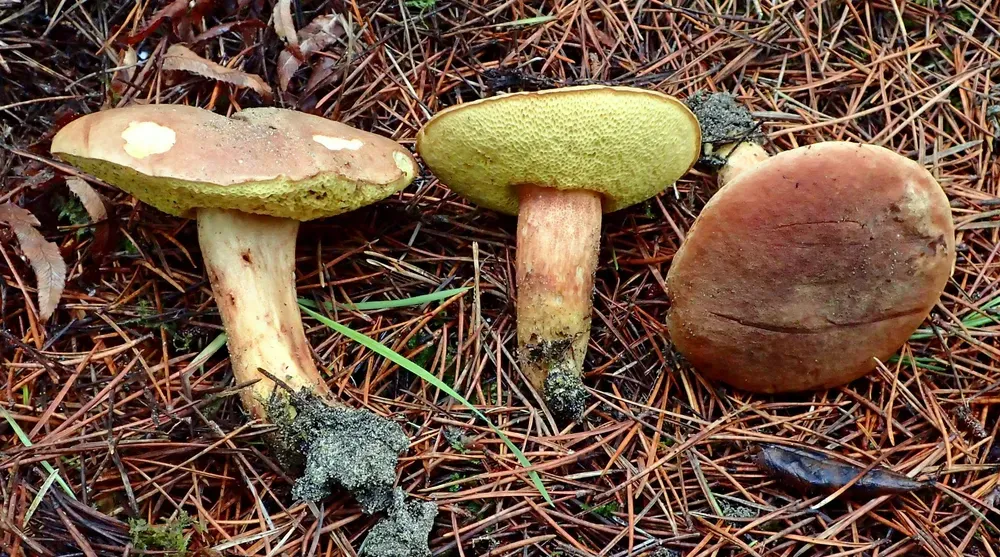
- Xerocomus ferrugineus with a brownish-chestnut cap, similar to the suede bolete;
- sepia bolete with a grayish-brown cracked cap;
- inkstain bolete, which turns blue very strongly and quickly when cut;
- bay bolete, which some foragers also count among the Xerocomus boletes; it's more prized and fleshier than the rest.
All true Xerocomus boletes are edible. The only one to watch out for is the hot peppery bolete, which resembles a small Xerocomus bolete but stands out with its reddish pores and sharp, peppery taste.
The weather will tell you when exactly to go out for Xerocomus boletes. Keep track of conditions with our mushroom radar: it shows when moisture and warmth line up well for mushrooms to appear.
Sources
- "Vyznachnyk hrybiv Ukrainy" (Identification Guide to the Mushrooms of Ukraine; Kyiv, Naukova Dumka publishing house).
- Xerocomus subtomentosus on GBIF, the global biodiversity database.
- Xerocomus on MycoBank, the international fungal nomenclature database.
- Xerocomus subtomentosus on Wikipedia.
Frequently asked questions
How many species of Xerocomus boletes are there?
Several occur in our forests: , , , and a few rarer ones. All of them are related and edible.
How do the species of Xerocomus boletes differ from each other?
Mainly by cap color and how the flesh behaves. The suede bolete is yellowish-brown, the red cracking bolete becomes covered in cracks, and the ruby bolete is red. What unites them is the velvety cap and yellow angular pores.
Which Xerocomus bolete is the most common?
(Xerocomus subtomentosus). It's the one most people picture when they hear "moss bolete", and the one that ends up in the basket.
What is the motley moss bolete?
That's a common name for the : with age its cap becomes covered in little cracks, with pinkish flesh showing through deep inside.
Which Xerocomus bolete is red?
That's the (Boletus rubellus), with a bright red or carmine cap. It's the most colorful of our Xerocomus boletes and grows mainly in deciduous forests.
Are all Xerocomus boletes edible?
Yes, all true Xerocomus boletes are edible. There are no dangerous look-alikes among them, but you should watch out for the hot , which can look like a small Xerocomus bolete.
Is the bay bolete a Xerocomus bolete?
is close to the Xerocomus boletes, and some foragers place it in this group. But it's fleshier and more prized, so it's usually treated separately.
Why do some Xerocomus boletes turn strongly blue?
It's a species trait. For example, the turns blue very quickly and vividly. The bluing is harmless and doesn't mean the mushroom is poisonous.
Mushrooms in this article
Related articles
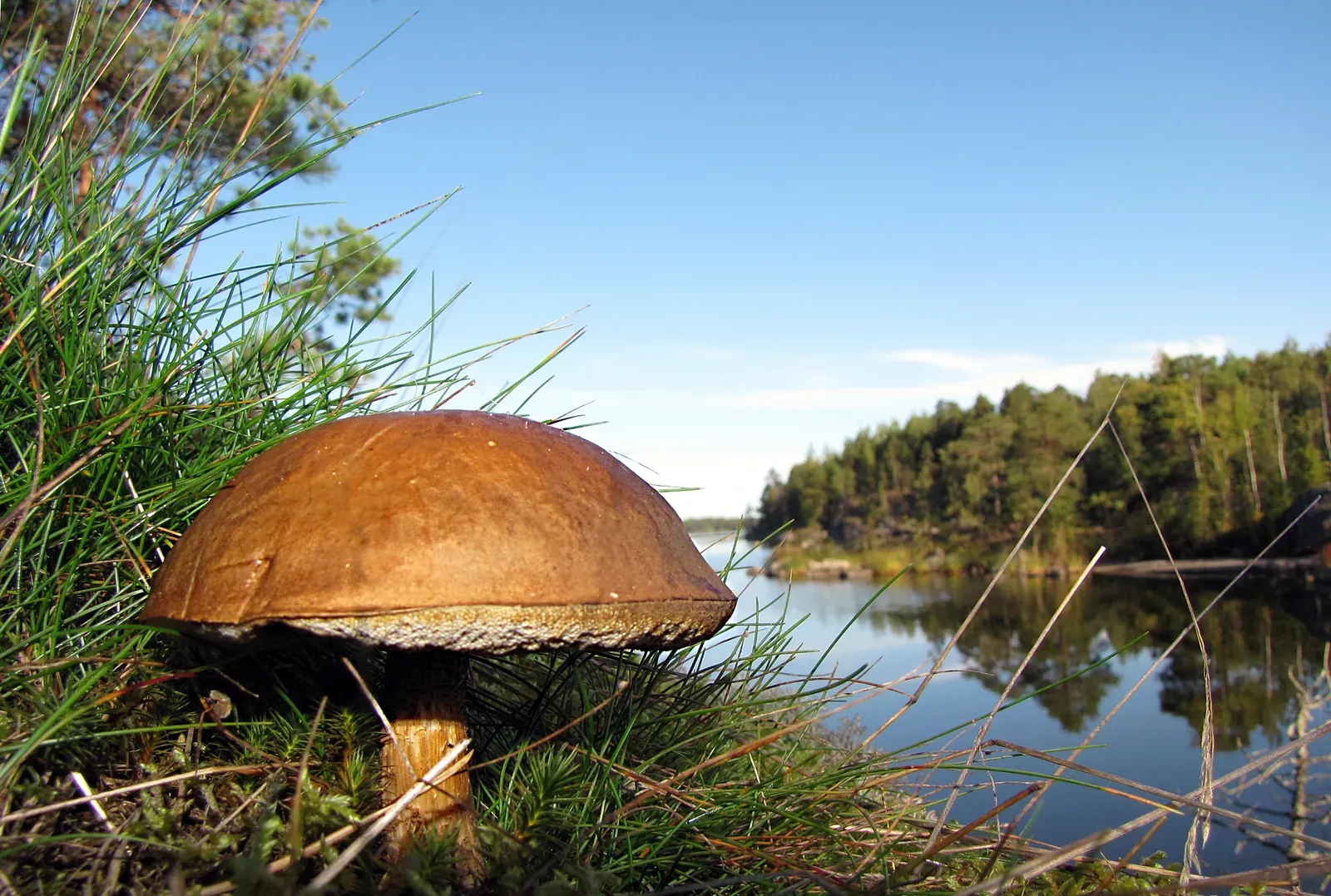 Science & taxonomy
Bay bolete: health benefits and nutritional value
The bay bolete is a match for porcini in both flavor and nutrition. Here's why the bay bolete is good for you,…
August 20, 2026·2 min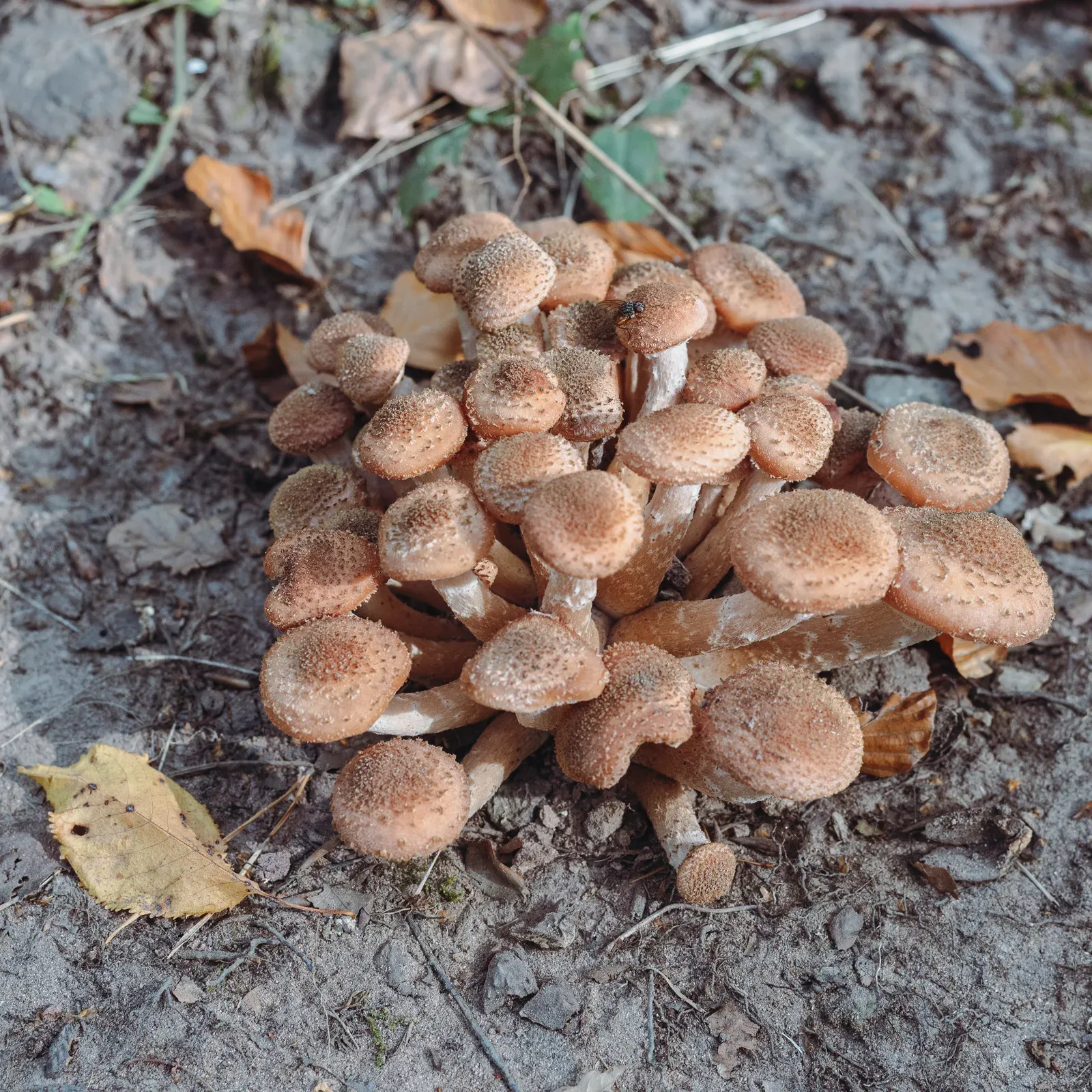 Science & taxonomy
Honey fungus: health benefits and risks
Honey fungus is a nourishing autumn mushroom, rich in protein and minerals. Here's why honey fungus is good fo…
August 20, 2026·2 min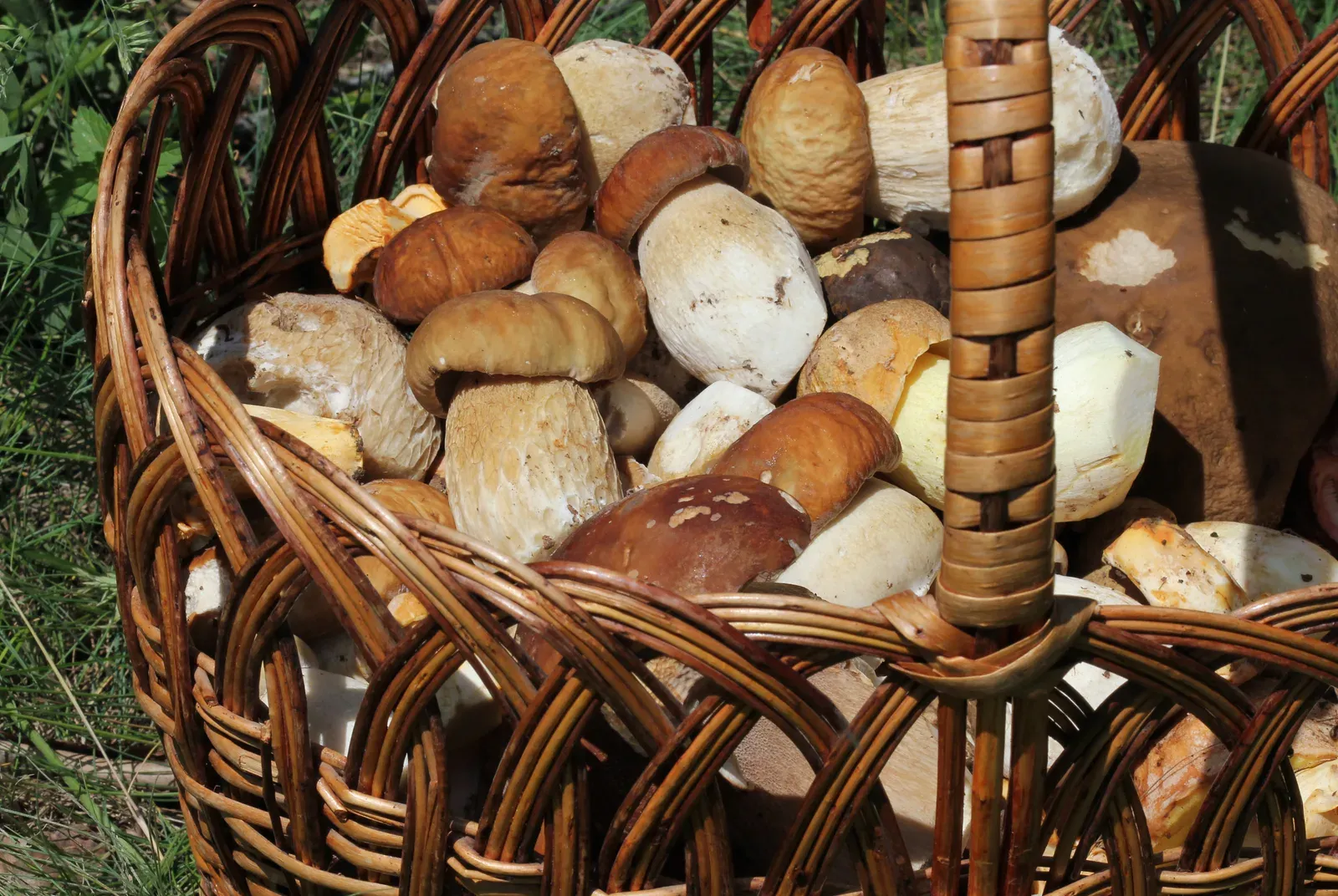 Recipes & cooking
How to store fresh mushrooms, and for how long
Fresh mushrooms spoil faster than you might think. Here's how long they keep in the fridge, how to store them…
August 21, 2026·4 min