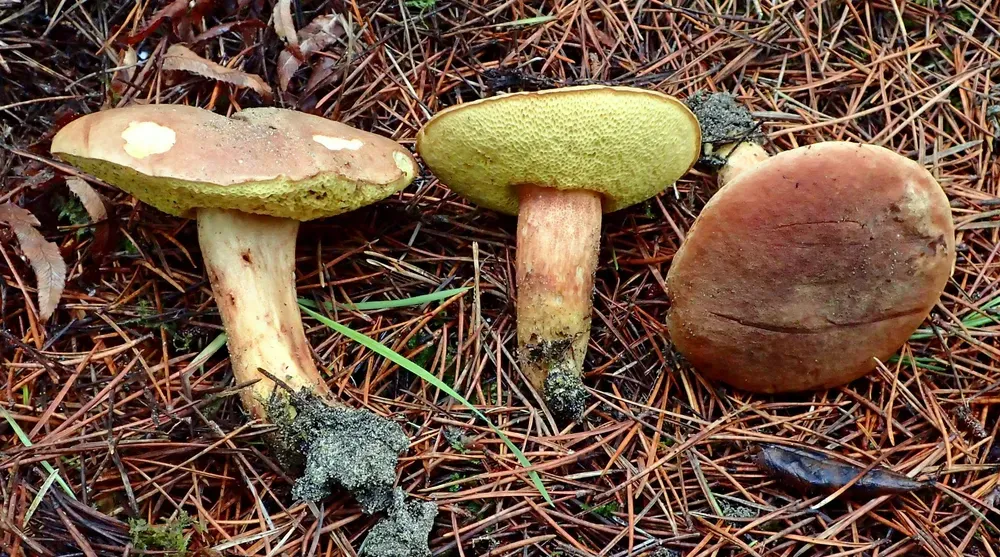
Xerocomus ferrugineus
Expert-verifiedUpdated June 13, 2026
Passport
- Edibility
- Edible
- Season
- Jun — Oct
- Hymenophore
- Pored
- Cap color
- Brown
- Size
- Medium (5–15 cm)
- Smell
- Pleasant
- Reviewed
- Yes ✓
Quick answers
Where to look?
Deciduous forest, Mixed forest
When does it appear?
Jun — Oct
Active months: June, July, August, September, October.
How to recognize it? Three signs
- Cap color: Brown, Orange, Dark brown
- Cap shape: Convex
- Smell: Pleasant
Fruiting season
June – October
Description
Xerocomus ferrugineus is a close relative of the suede bolete (X. subtomentosus), but with a characteristic rusty-chestnut cap. The mushroom got the name "ferrugineus" (rusty) for the rich rust-brown color of its cap. Some mycologists long considered it just a variety of the suede bolete, but modern taxonomy treats it as a separate species with subtle differences.
In Ukraine it grows in deciduous and mixed forests with oak, beech and hornbeam, less often in pine forests with some broadleaf trees. Throughout the forest zone and the Forest-Steppe. It likes moderately moist spots with forest litter. It does not fruit abundantly — single specimens or small groups.
Edibility — good, a category 3 mushroom. The flesh is pale yellow and holds its shape fairly well when cooked. There is no need to parboil it before cooking. It is great fried, stewed and added to soups. You can pickle it, but the flesh is watery — the texture in the jar is mediocre. You can dry it, but the aroma is weak. It is best used fresh on the day you pick it.
Cap
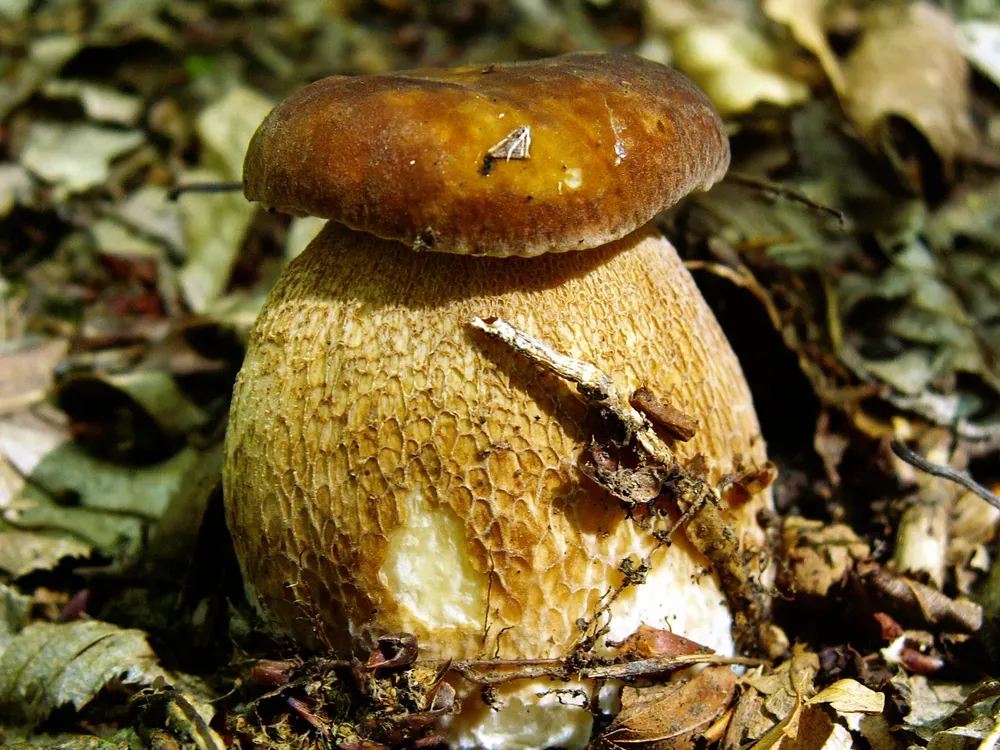
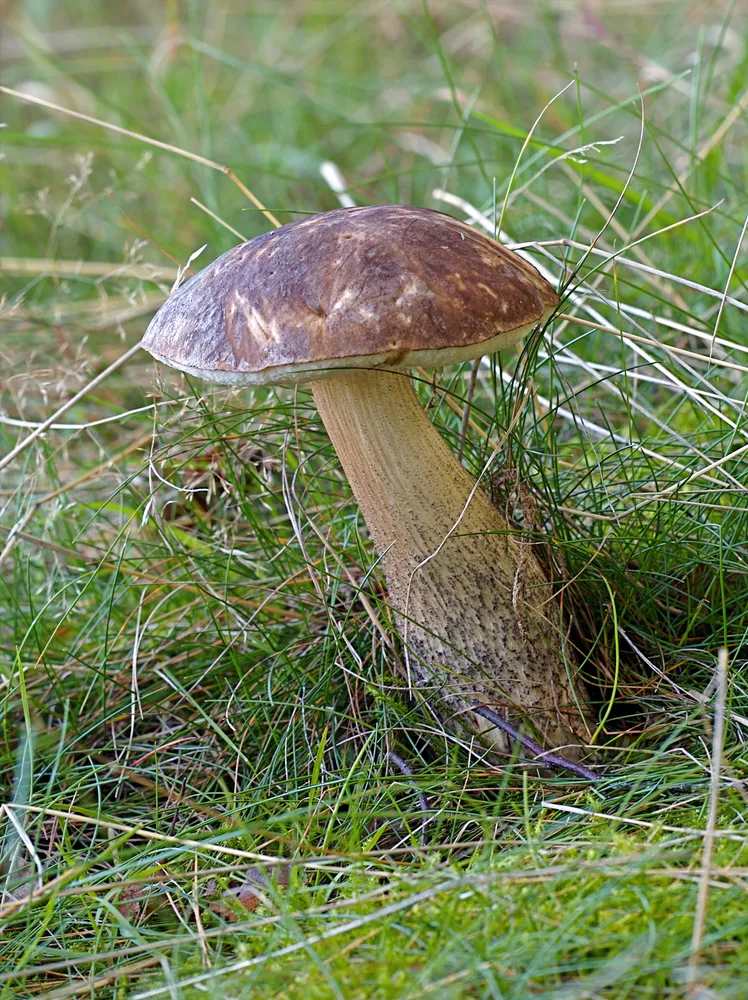
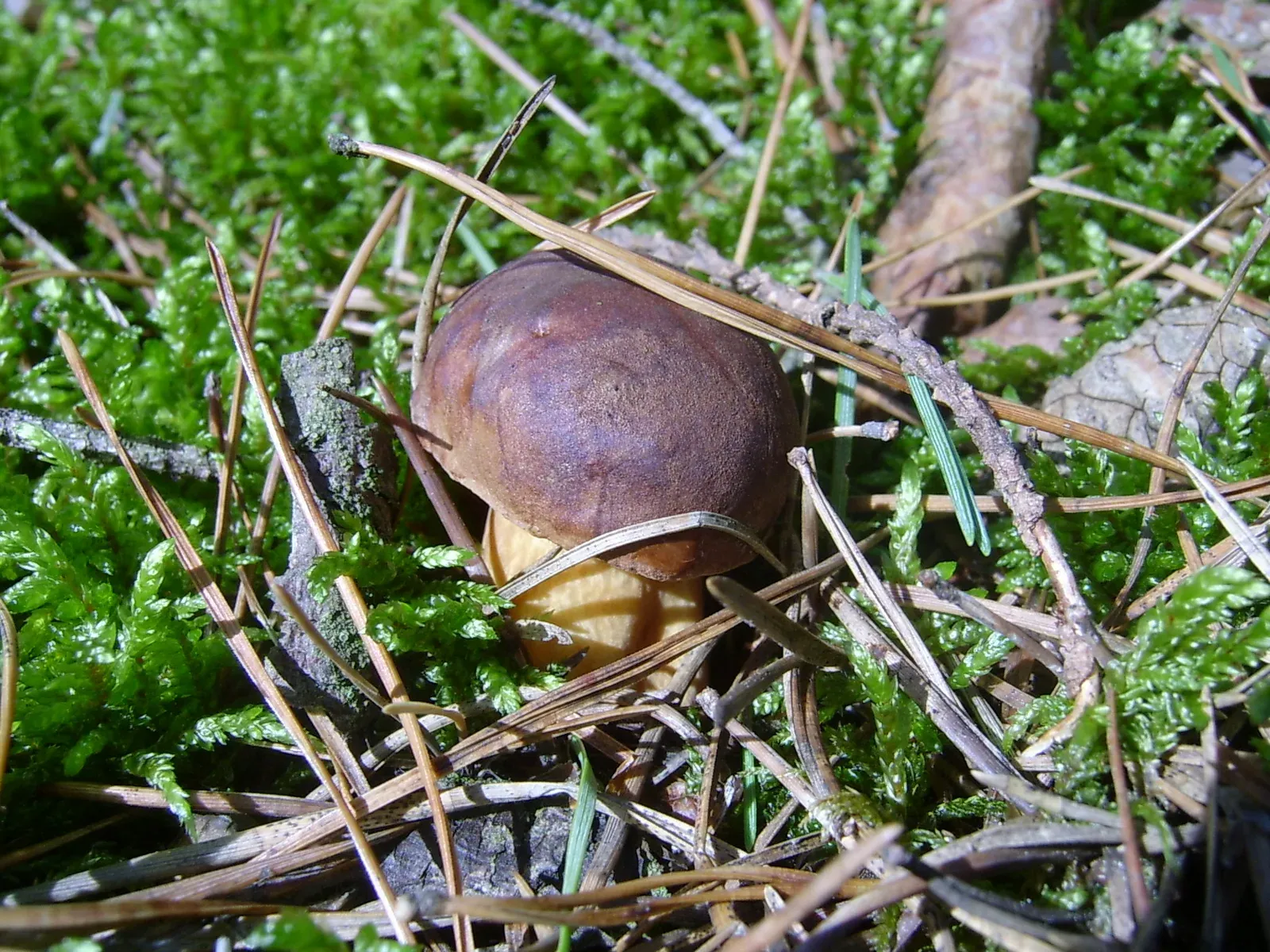
Cap 4–10 cm, hemispherical in young mushrooms, then cushion-shaped. Color rusty brown, chestnut, dark ochre — richer and darker than the suede bolete. The surface is matte, felty-velvety, slightly sticky in wet weather. In dry conditions it can crack into small squares.
Hymenophore
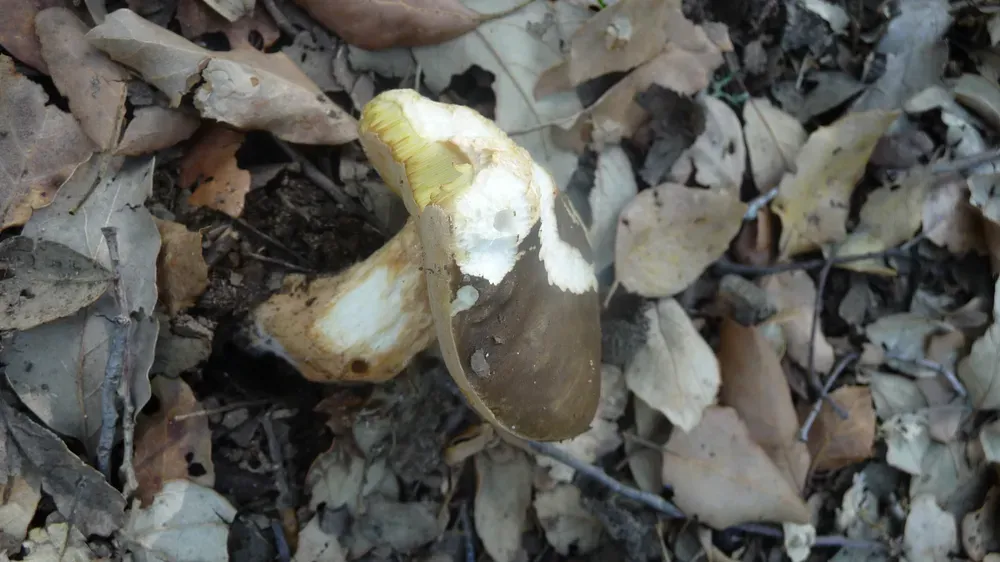
Hymenophore tubular, at first attached to the stem, then notched. Color yellow, olive-yellow in mature ones. Pores angular, small to medium. They turn faintly blue when pressed — less actively than in many other Xerocomus boletes.
Stem
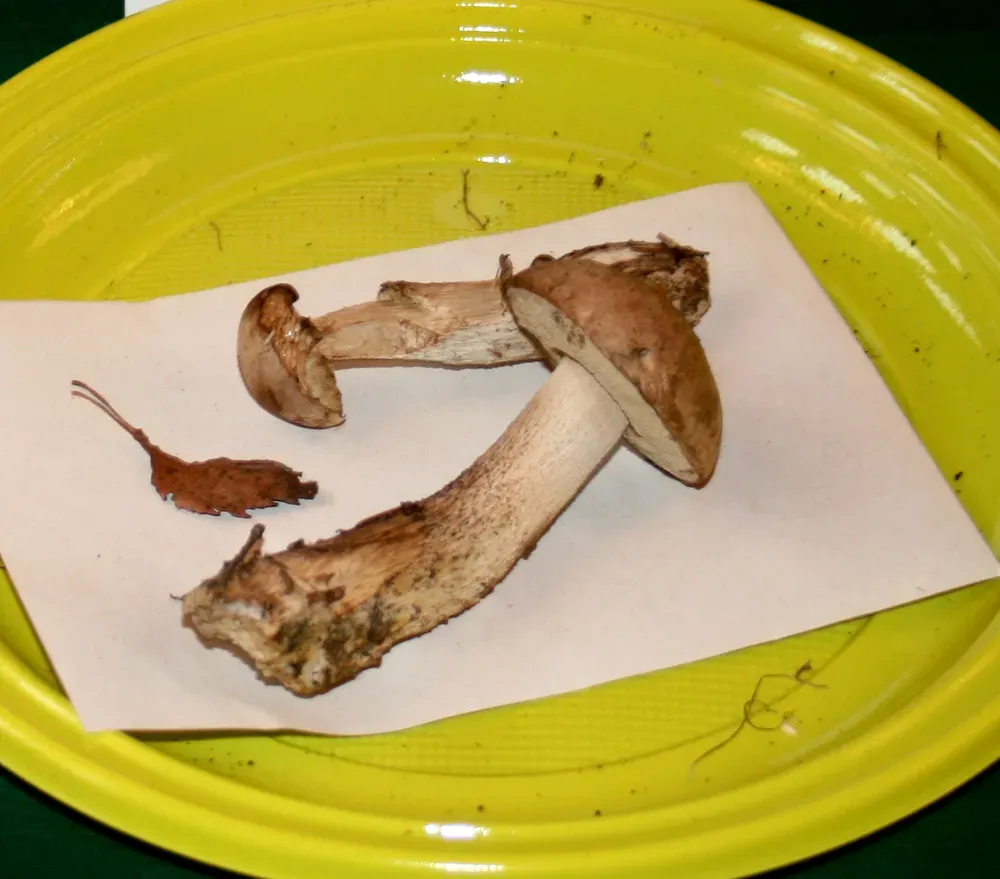
Stem 4–10 cm tall, 1–2 cm thick, cylindrical, sometimes slightly narrowing upward. Color yellowish to brown, with barely visible lengthwise fibers. Sometimes reddish at the base.
Flesh
Flesh pale yellow to yellowish, watery in mature mushrooms, springy in young ones. When cut it slowly turns blue (more weakly than in the suede bolete), then yellow again. Sometimes pinkish in the stem.
Smell
Smell faint, pleasantly mushroomy with a hint of fresh forest litter. Taste mild, neutral.
Lookalikes
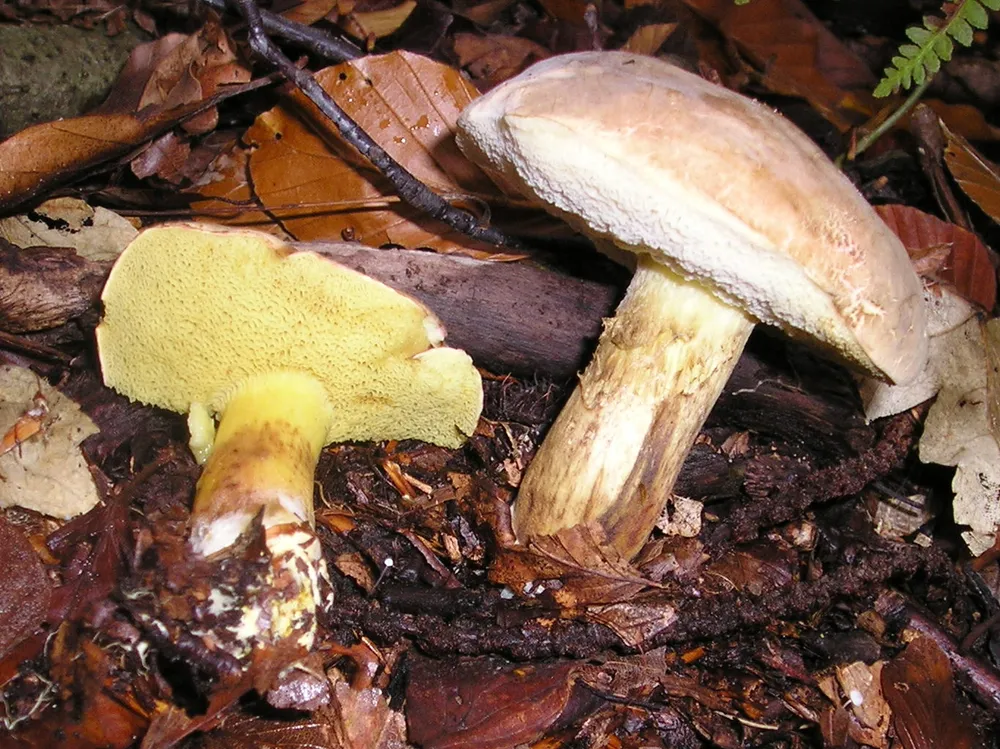
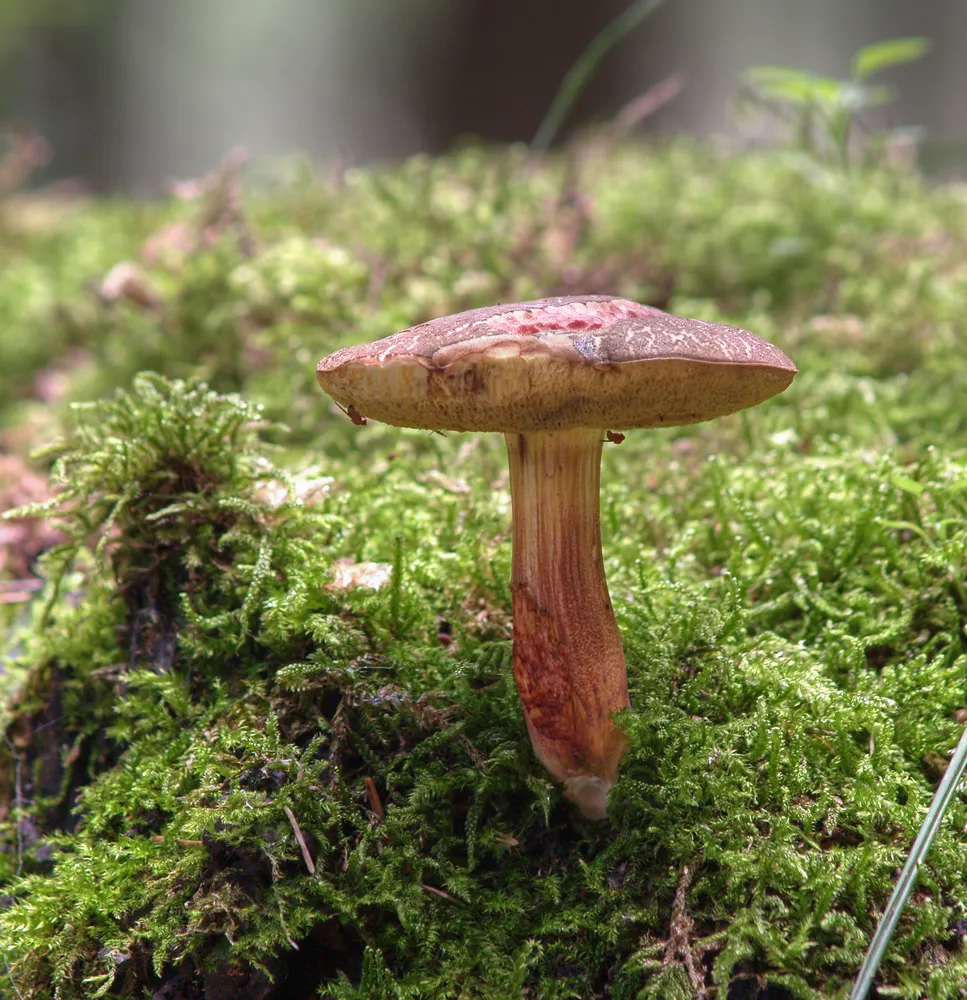
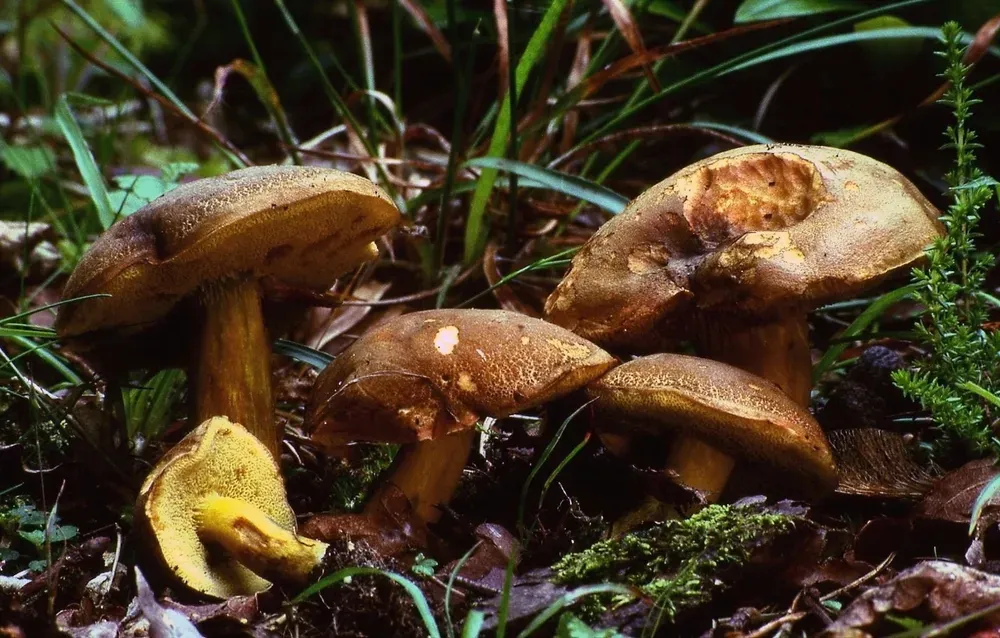
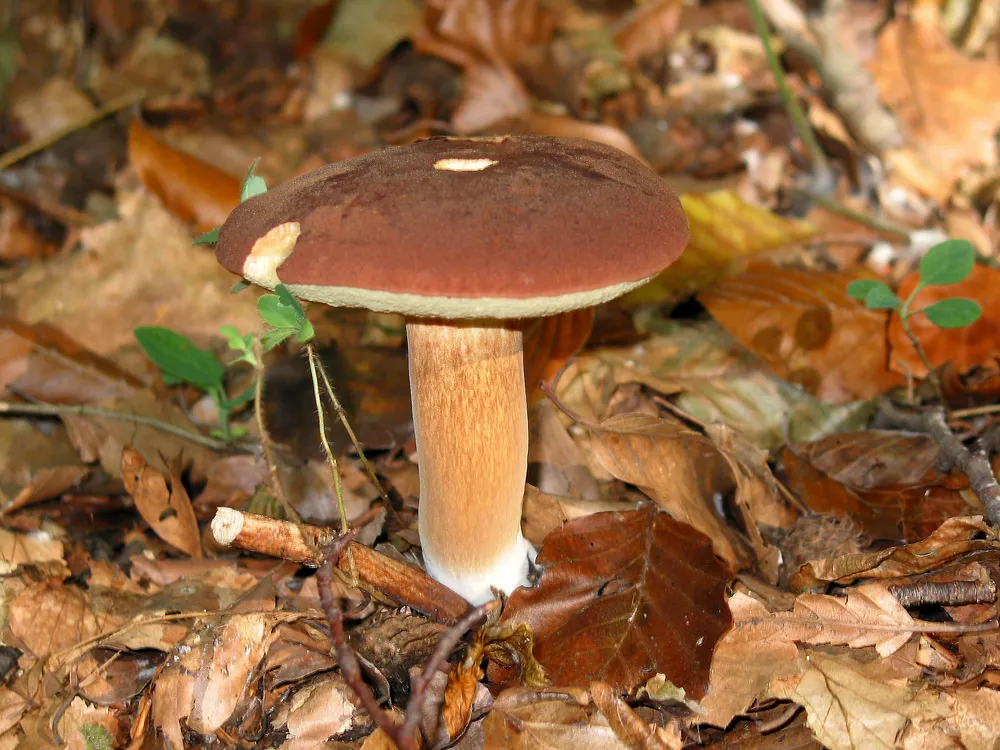
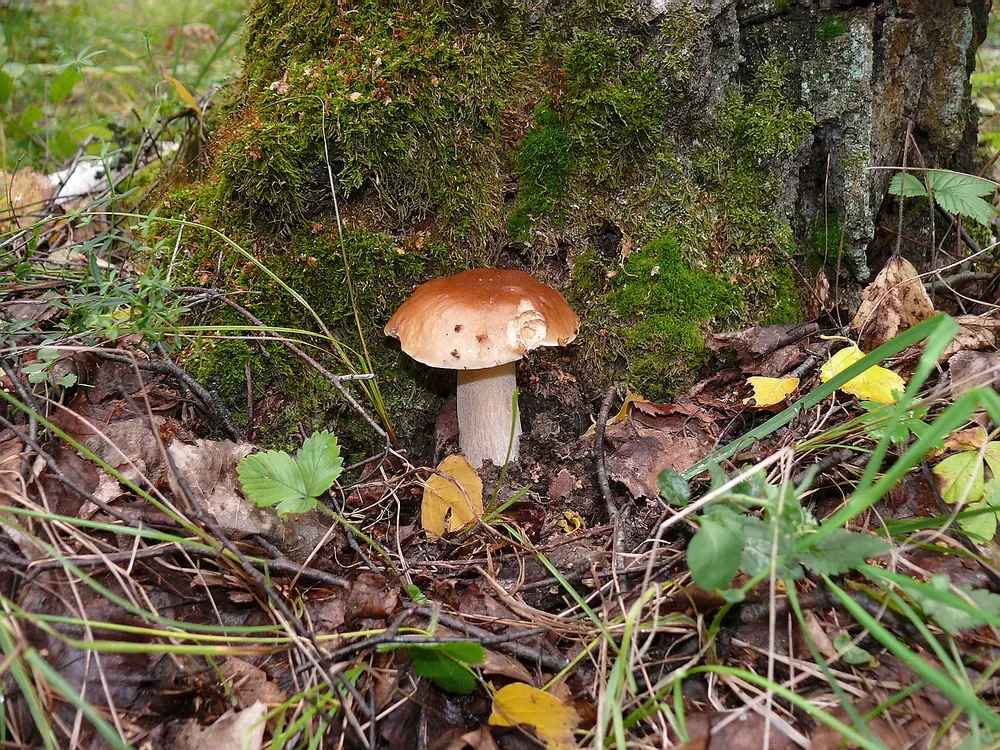
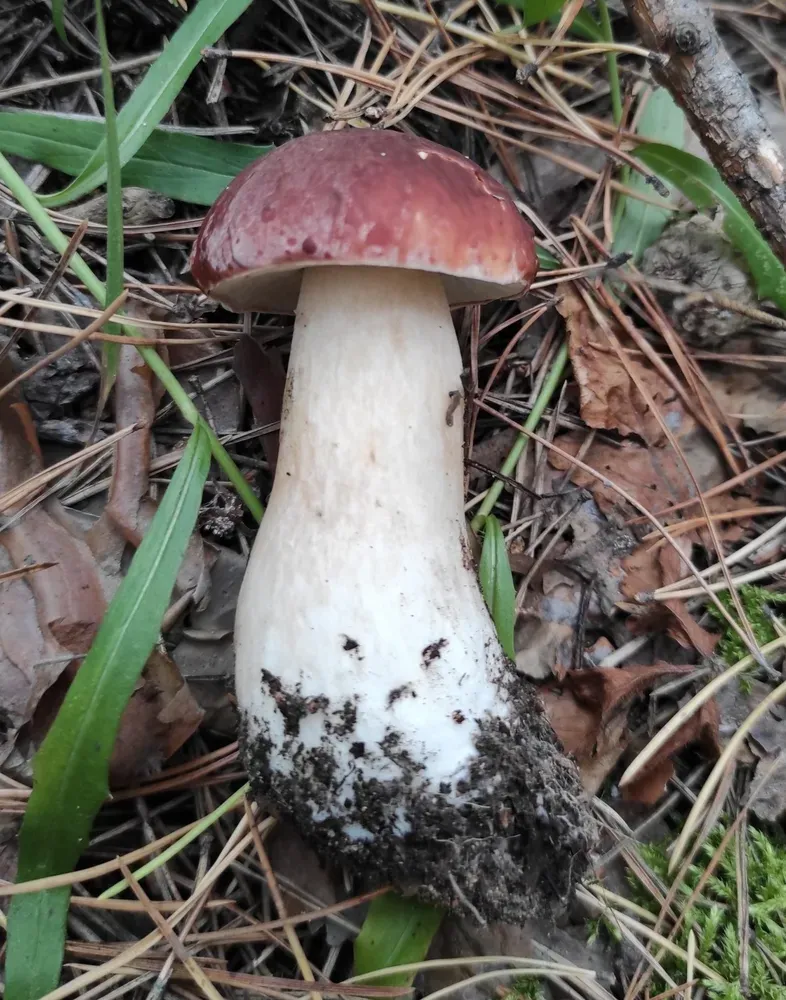
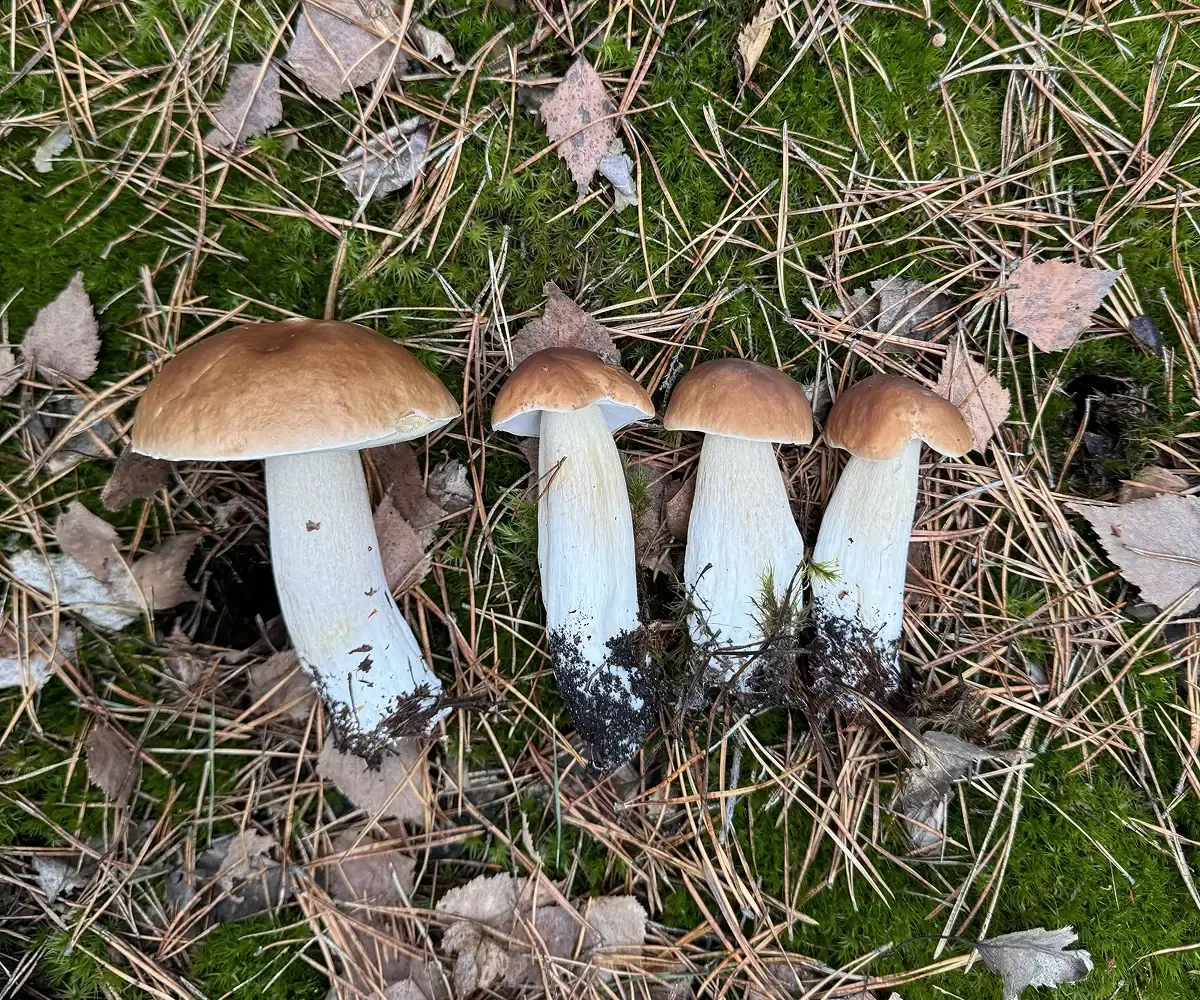
Related species
Mushrooms of the same genus and habitat — to study side by side and never mix up.
Related reading
 Safety
Bay bolete lookalikes: what it gets confused with
The bay bolete gets confused with porcini, with Xerocomus boletes and with the bitter bolete. Here’s which loo…
July 20, 2026·2 min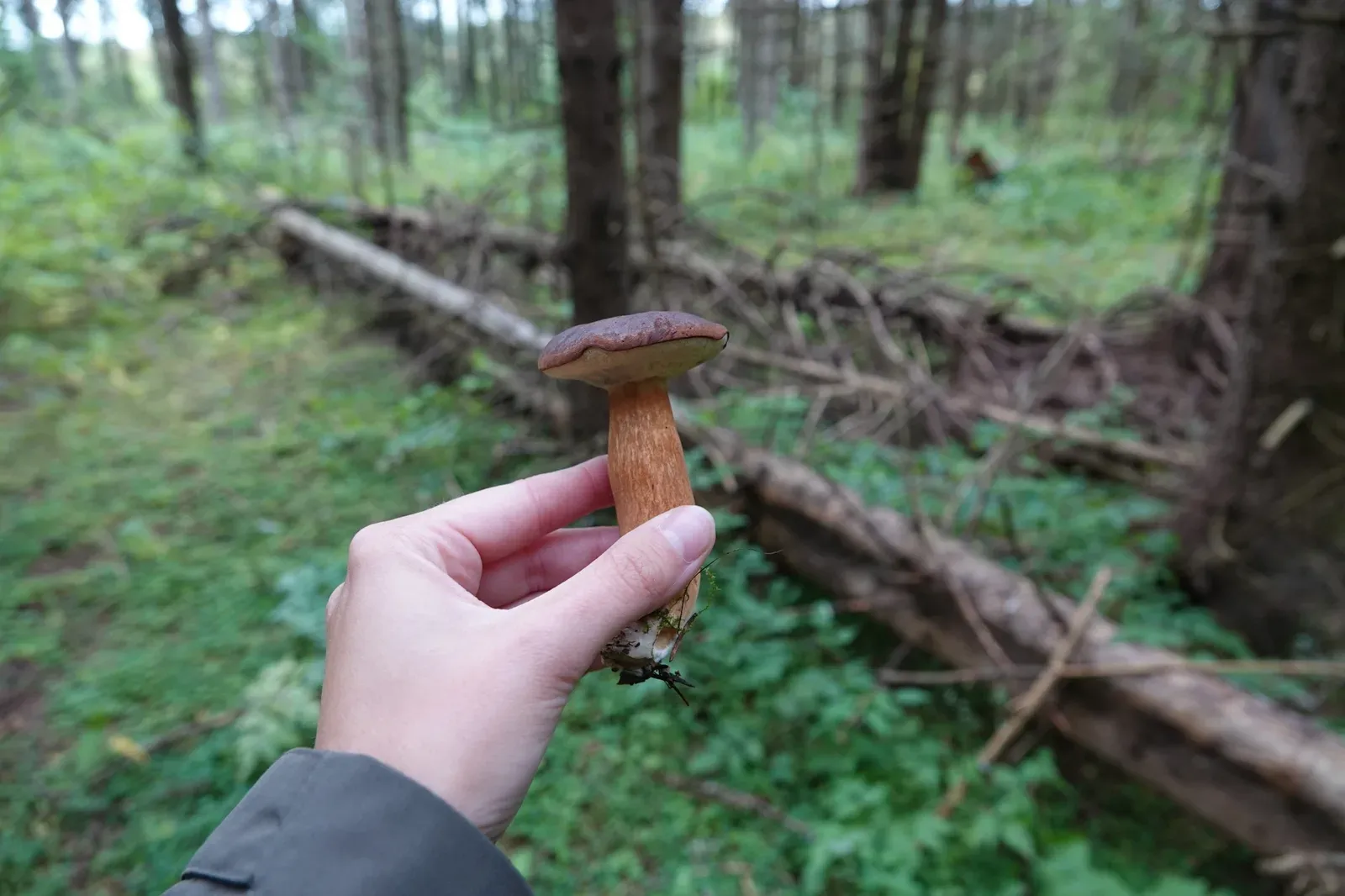 Where & when to forage
When the bay bolete grows and where to find it
The bay bolete is one of the most popular boletes, and in fall it's especially plentiful. Here's when the bay…
July 15, 2026·3 min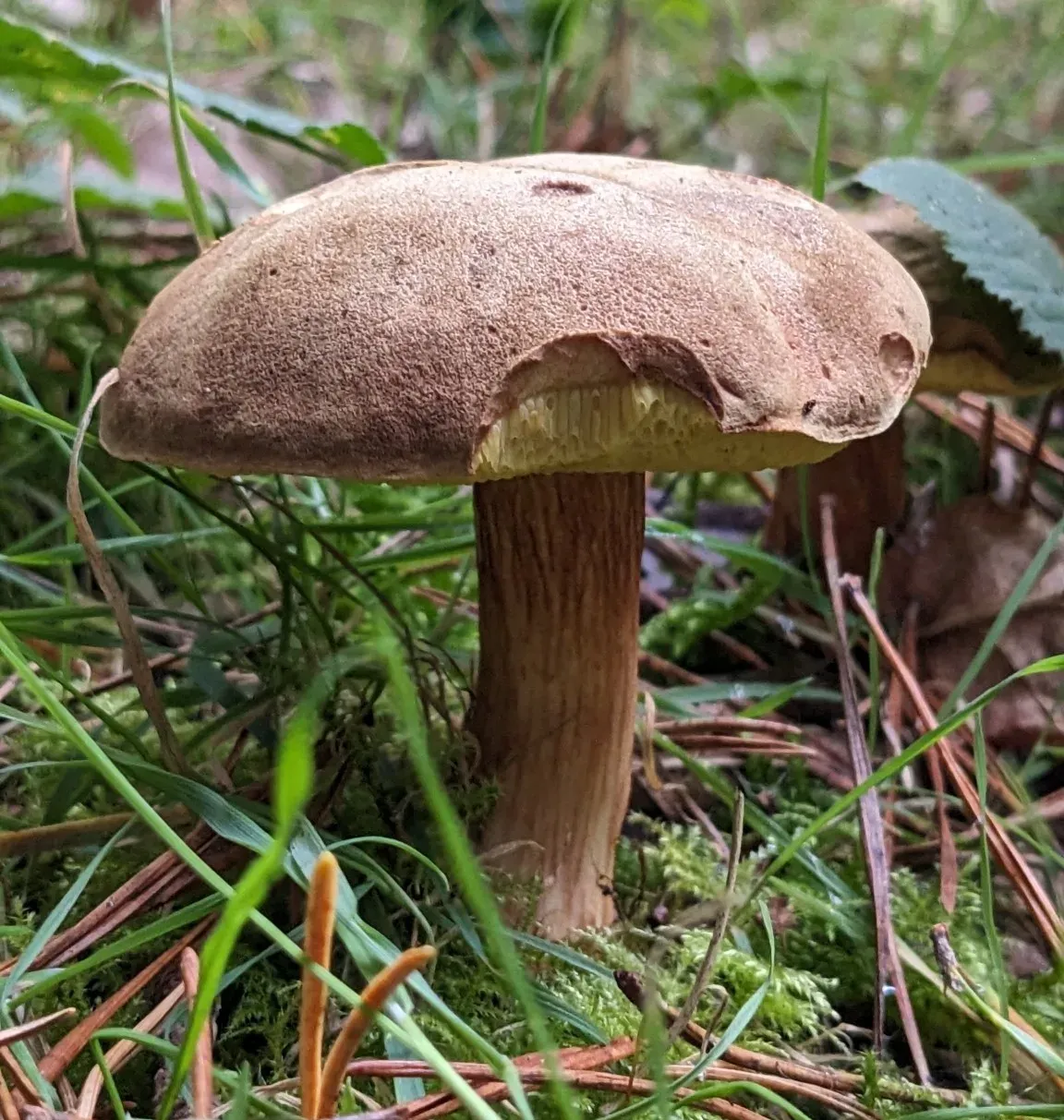 How to identify
The chestnut Xerocomus and the bay bolete
Xerocomus ferrugineus and the bay bolete are close relatives that often get mentioned together. Here's how the…
May 18, 2026·3 min
Frequently asked questions
Is it safe?
Yes. All Xerocomus, Xerocomellus and Imleria boletes in Ukraine are edible. Avoid only mushrooms with RED pores (Rubroboletus — the devil's bolete). Xerocomus ferrugineus has yellow pores — it is safe.
Where to look in Ukraine?
Deciduous and mixed forests with oak, beech and hornbeam, less often with pine. Throughout the forest zone and the Forest-Steppe. It likes moderately moist spots, forest edges and shady ravines. It is rare in the steppe and in pure coniferous pine forests.
When does it fruit?
June — October, peaking in August–September after heavy rains. In very dry years it is rare. It likes moderately humid, warm weather.
How is it different from the suede bolete?
The suede bolete (Xerocomus subtomentosus) has an olive-yellow or greenish-brown cap. Xerocomus ferrugineus is a rich rusty brown, darker. The flesh of the suede bolete blues more actively, that of X. ferrugineus more weakly. Both are edible, both are closely related.
Which trees does it form mycorrhiza with?
Mostly with oak (Quercus), beech (Fagus) and hornbeam (Carpinus). Sometimes with pine in mixed forests. Almost absent from pure coniferous pine forests.
How to cook it?
Clean and slice. No need to parboil. Fry with onion and butter, stew with cream, add to soups and risotto. It pickles only so-so (watery texture). You can dry it, but the aroma is weak — for longer storage it is better to freeze it after a quick fry.
Is it worth looking for this species specifically?
For an ordinary forager — not really. Like all Xerocomus boletes, it is of middling culinary quality. Most foragers pick all these boletes together without telling the species apart — and that's fine, they are all safe. It is of collector's interest mainly to mycologists.
Is Xerocomus ferrugineus edible or poisonous?
Does Xerocomus ferrugineus have gills or pores?
What does the cap of Xerocomus ferrugineus look like?
What does the stem of Xerocomus ferrugineus look like?
What do Xerocomus ferrugineus smell and taste like?
Sources
- [1]Вікіпедія (українська)
- [2]Mushrooms Demystified, David Arora
- [3]Mushrooms (Roger Phillips), Roger Phillips
- [4]Визначник грибів України, Зерова М.Я. та ін. (1979)
- [5]iNaturalist Ukraine
- [6]Species Fungorum
- [7]Index Fungorum
- [8]GBIF
- [9]MycoBank Database
- [10]Атлас грибів України, Зеров Д.К. (1979)