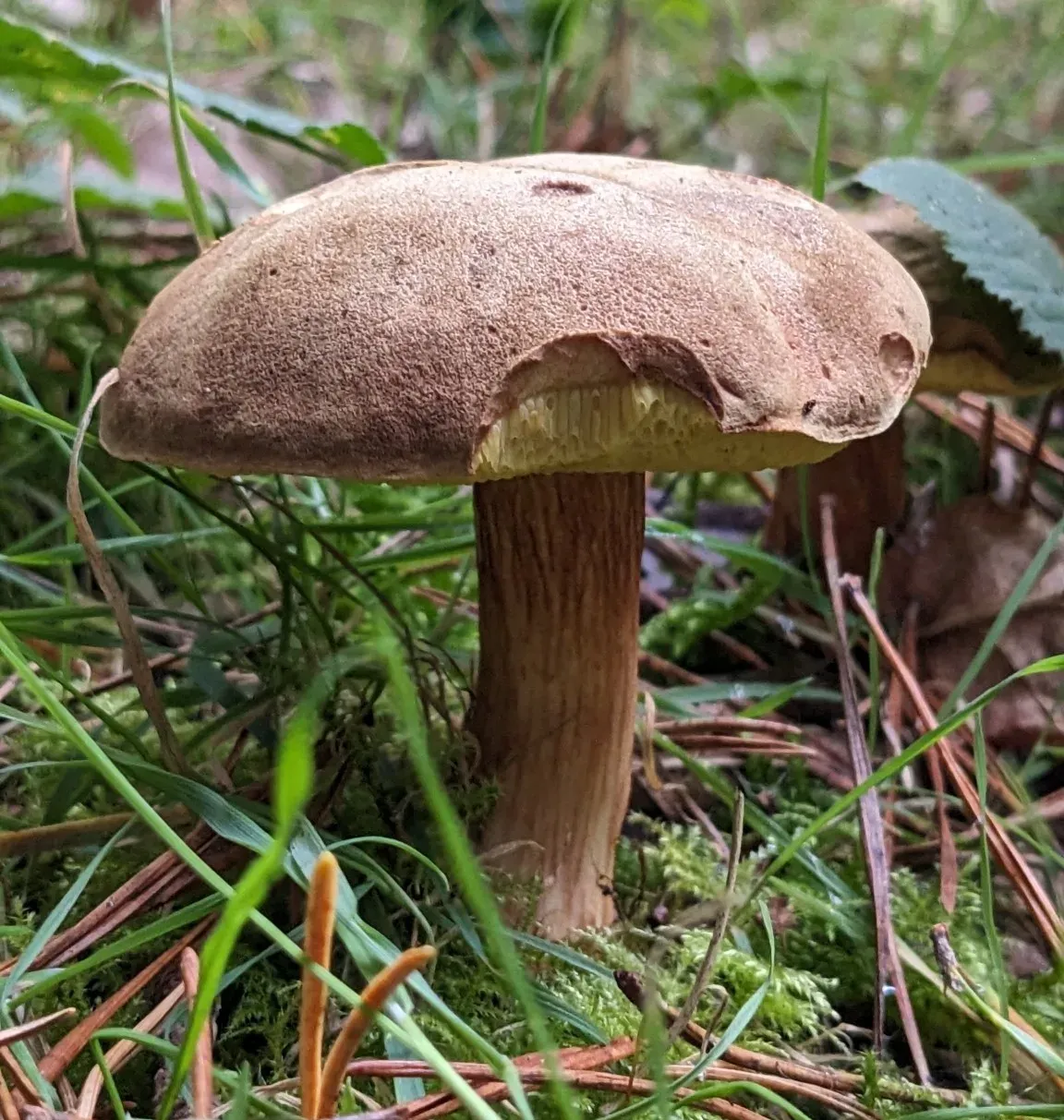
Among the moss boletes and their close kin, there are two that foragers often mention in the same breath: Xerocomus ferrugineus (Xerocomus ferrugineus) and the bay bolete (Boletus badius). Both have brown-chestnut caps and love coniferous forests.
But the difference between them is noticeable, especially in taste. Let's look at how to tell them apart, why the bay bolete is valued much more highly and where to find both.
Xerocomus ferrugineus
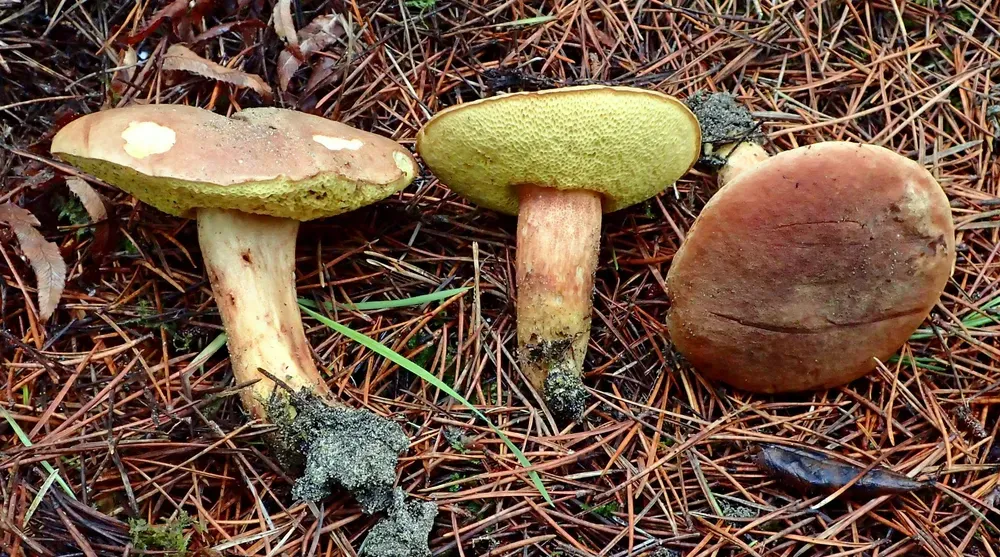
Xerocomus ferrugineus is a close relative of the suede bolete, and the two are easy to mix up.
- Cap brownish chestnut, rusty brown, dry and velvety.
- Tube layer yellowish, with large pores.
- Stem even, thinner than the cap, with no net pattern.
- Flesh whitish or yellowish; when cut, it barely turns blue or turns blue only very slightly.
It differs from the suede bolete mainly by its darker, chestnut-colored cap. It's an edible mushroom, but like all moss boletes, its flesh is softer and watery.
Bay bolete
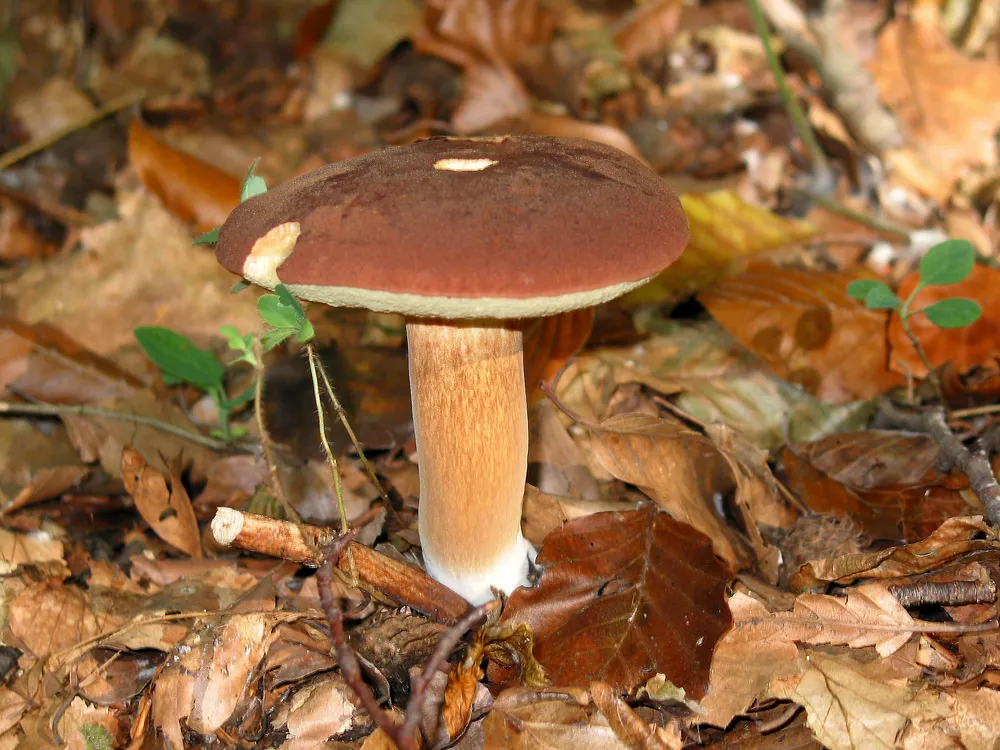
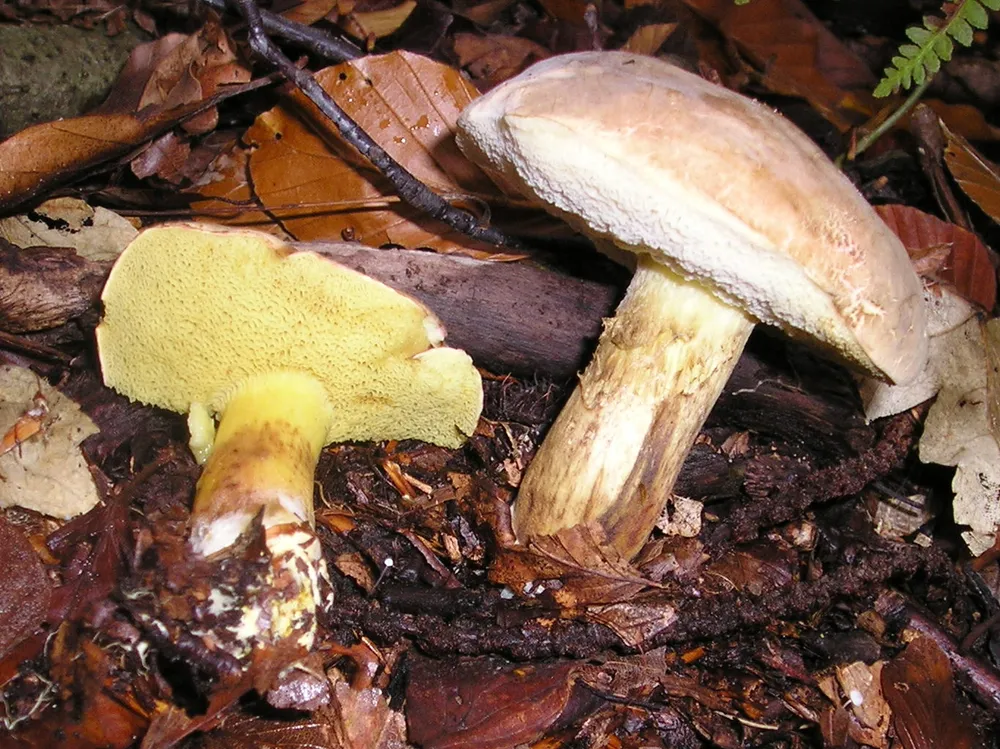
The bay bolete is noticeably more substantial. Many foragers don't count it among the moss boletes at all, because in taste and firmness it's closer to porcini.
- Cap chestnut-brown, dark brown, slightly slimy in wet weather, fairly large and fleshy.
- Tube layer yellowish green, turns blue when pressed.
- Stem thicker and sturdier than in moss boletes, brownish, with no net pattern.
- Flesh firm, whitish; when cut, it turns distinctly blue.
It's the firm, fleshy flesh and vivid blue bruising that set the bay bolete apart from the more modest moss boletes.
How they differ
In short, the difference is in size, firmness and taste.
- Size and flesh. The bay bolete is bigger and fleshier; Xerocomus ferrugineus is smaller and softer.
- Bruising. The bay bolete turns blue clearly and quickly; Xerocomus ferrugineus barely turns blue.
- Taste. The bay bolete is fragrant and firm, close to porcini; the moss bolete is more modest.
That's why the bay bolete is valued much more highly in the basket. But both are edible, and it's just as nice to come across either one.
Where and when to look for them
Both mushrooms love coniferous and mixed forests, especially pine forests.
- in coniferous forests and pine forests on mossy patches;
- in mixed forests, where pine grows alongside birch and oak;
- sometimes in deciduous forests, on forest edges and in clearings.
Their season runs from summer to late autumn. The bay bolete is especially good in autumn: it's firm, clean and stays sound for a long time while still growing.
As with all moss boletes, the only unpleasant lookalike is the fiery peppery bolete with reddish pores. To know when to head into the forest, check our mushroom radar: it shows when moisture and warmth line up well for mushrooms to appear.
Sources
- “Field Guide to the Fungi of Ukraine” (Kyiv, Naukova Dumka Publishing).
- Xerocomus ferrugineus on GBIF, a global biodiversity database.
- Imleria badia on MycoBank, an international fungal nomenclature database.
- Imleria badia on Wikipedia.
Frequently asked questions
How does Xerocomus ferrugineus differ from the bay bolete?
is smaller, with softer flesh that barely turns blue. is bigger and fleshier, with firm flesh that turns distinctly blue, and its taste is closer to porcini.
Is the bay bolete a moss bolete?
The bay bolete is close to the moss boletes, and some foragers include it in this group. But in firmness and taste it's closer to porcini, so it's usually set apart.
How do you recognize Xerocomus ferrugineus?
By its brownish-chestnut, dry, velvety cap, yellowish pores and even, thin stem with no net pattern. When cut, it barely turns blue, which sets it apart from the bay bolete.
Why is the bay bolete valued more highly than moss boletes?
Because it's fleshier, more fragrant and firmer, close to porcini. Moss boletes are more modest, with softer, watery flesh.
Where do Xerocomus ferrugineus and the bay bolete grow?
Mostly in and , in pine forests on mossy patches. They sometimes turn up in .
Why does the bay bolete turn blue when cut?
It's a natural reaction: the flesh oxidizes in the air. In the bay bolete it's especially pronounced, but it's completely harmless and disappears during cooking.
When should you pick the bay bolete?
The season runs from summer to late autumn. The bay bolete is especially good in autumn: then it's firm, clean and stays sound for a long time while still growing.
Do these mushrooms have poisonous lookalikes?
It has no poisonous lookalikes. The only one to watch out for is the fiery , which stands out with its reddish pores and hot, peppery taste.
Mushrooms in this article
Related articles
 How to identify
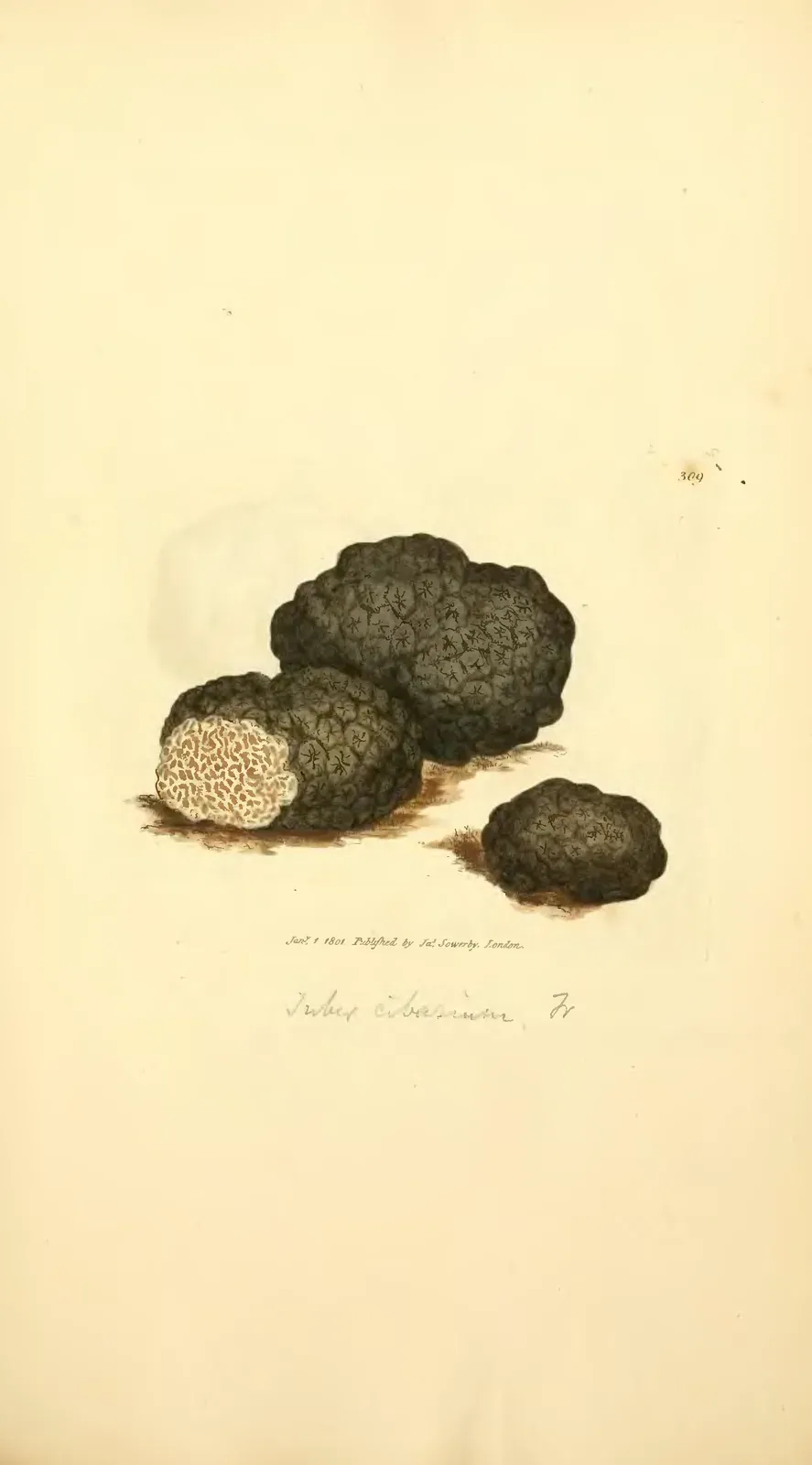
Truffles in Ukraine: do they grow here, and where to look
Truffles aren't just a French delicacy. Several species grow in Ukraine too. Here's which ones, where they occ…
August 24, 2026·2 min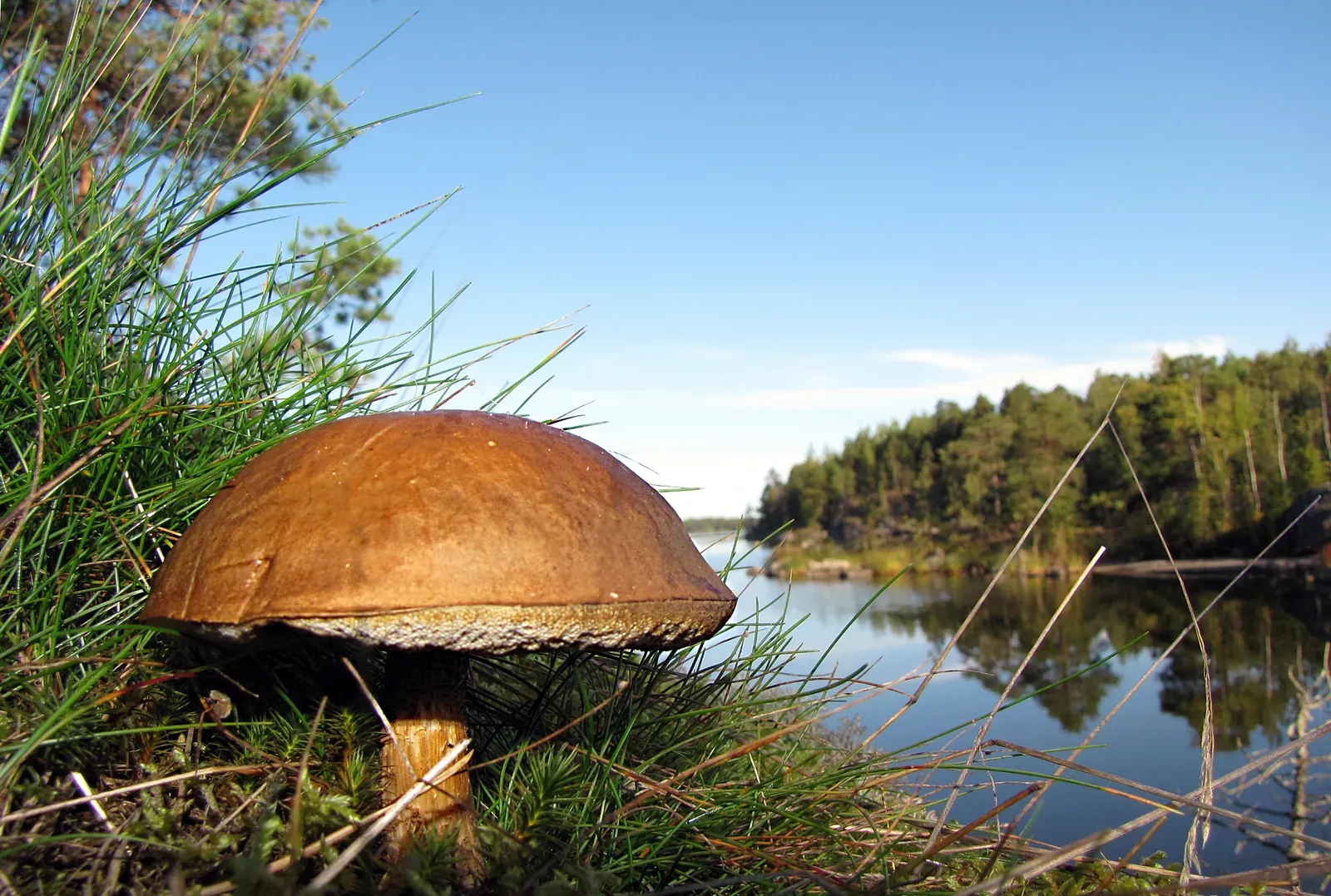 Science & taxonomy
Bay bolete: health benefits and nutritional value
The bay bolete is a match for porcini in both flavor and nutrition. Here's why the bay bolete is good for you,…
August 20, 2026·2 min Recipes & cooking
How to store fresh mushrooms, and for how long
Fresh mushrooms spoil faster than you might think. Here's how long they keep in the fridge, how to store them…
August 21, 2026·4 min