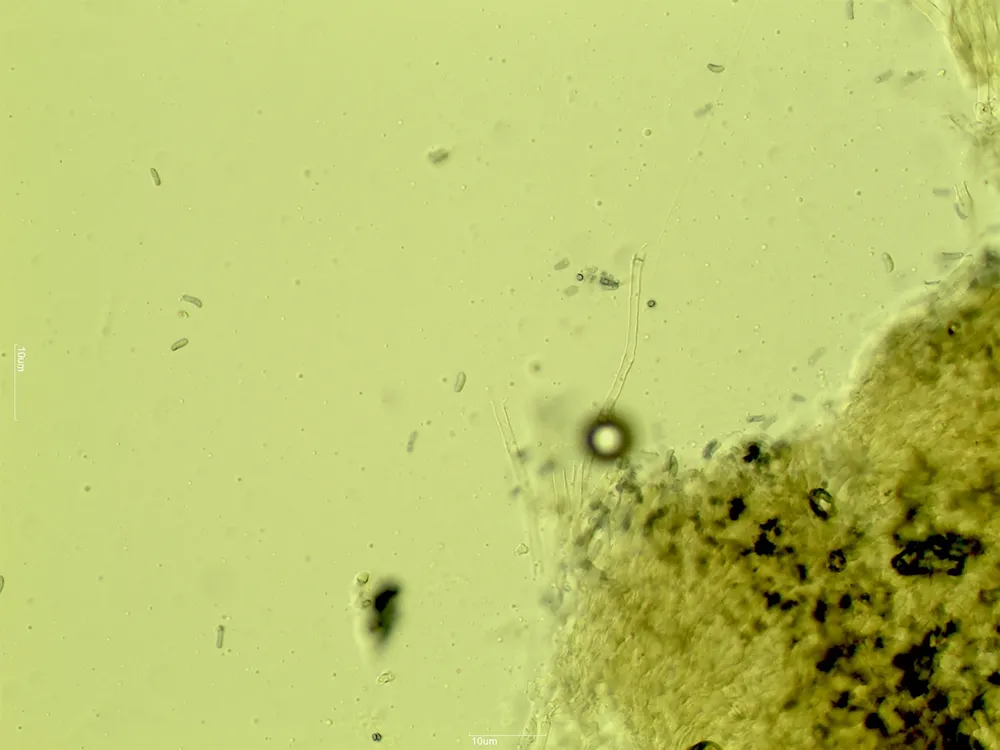
Amylocorticium cebennense
Expert-verifiedUpdated October 3, 2026
Passport
- Edibility
- Inedible
- Season
- May — Oct
- Hymenophore
- Smooth
- Cap color
- White
- Size
- Very small (<3 cm)
- Smell
- Odorless
- Reviewed
- Yes ✓
Quick answers
Where to look?
Conifer forest
When does it appear?
May — Oct
Active months: May, June, July, August, September, October.
How to recognize it? Three signs
- Cap color: White
- Cap shape: Irregular
- Smell: Odorless
Fruiting season
May – October
Description
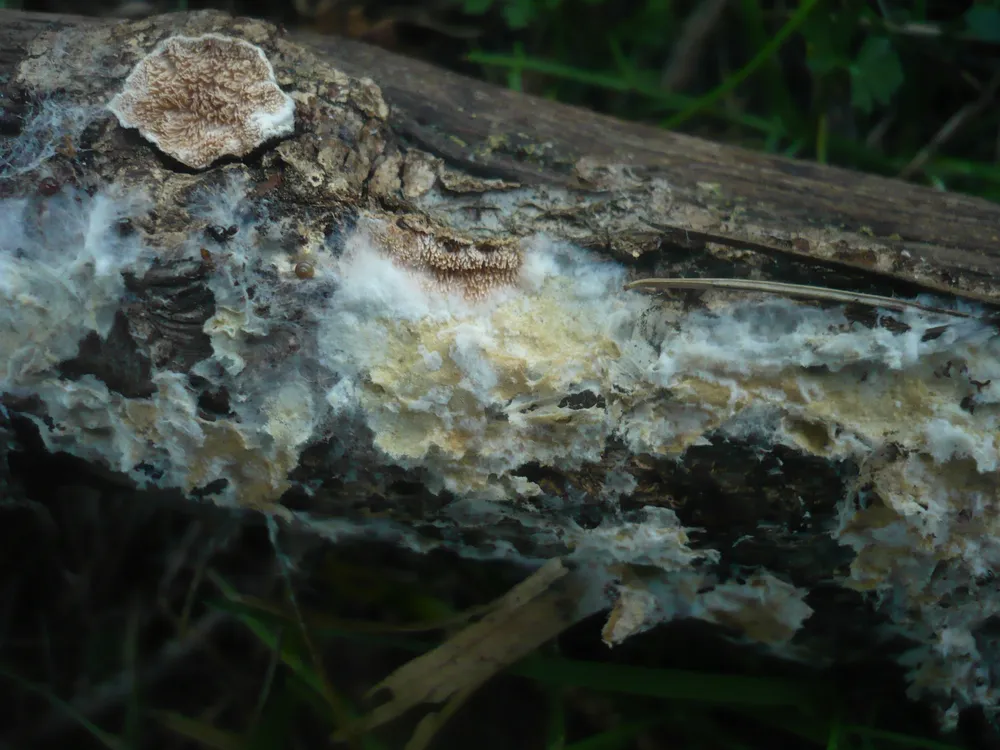
Amylocorticium cebennense is a tiny crust fungus that lives on rotting spruce and pine wood. This is not a mushroom for the basket: its fruiting bodies are flat, soft and fused to the substrate as a white film.
The species causes brown rot — a typical decomposer of conifer wood. A small film on an old stump or fallen trunk is its handiwork: returning the forest to the soil.
In Ukraine, Amylocorticium cebennense is known only from the Carpathians. It is not a common species — to see it, you need to peek under the bark of fallen spruces in damp mountain forests.
Cap
There is no “cap” as such. The fruiting body is soft, spread out and completely fused to the substrate. White, may yellow over time. It looks like a thin film on the wood surface.
Hymenophore
Smooth spore-bearing surface. White, like the whole surface. Spores small (6–9 × 2–2.7 µm), cylindrical, slightly curved.
Stem
There is no stem. The fruiting body is entirely spread out, attached to the substrate over its whole surface.
Flesh
flesh thin, soft. No distinctive color changes.
Smell
No distinctive smell.
›Scientific synonyms (1)
Corticium cebennense Bourdot 1910
Lookalikes
Related species
Mushrooms of the same genus and habitat — to study side by side and never mix up.
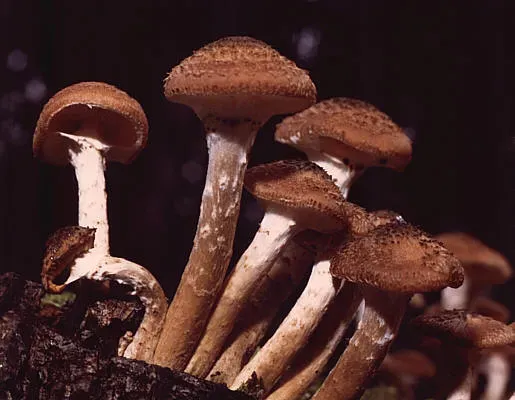
Dark honey fungus
Armillaria ostoyae
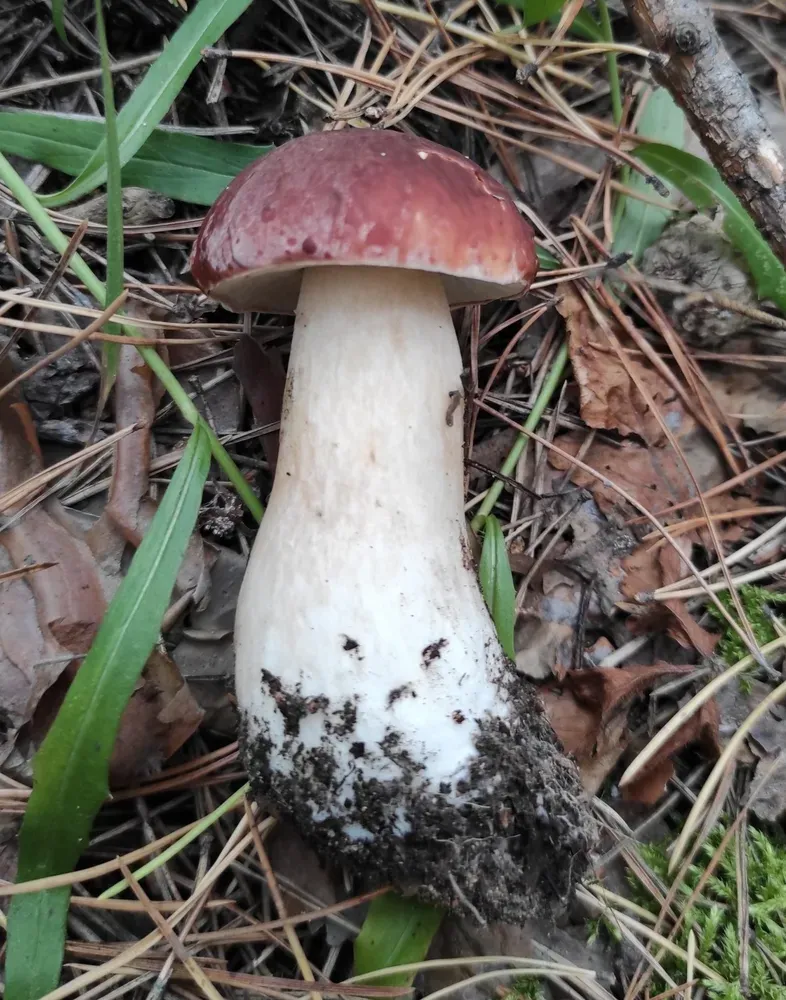
Pine bolete
Boletus pinophilus
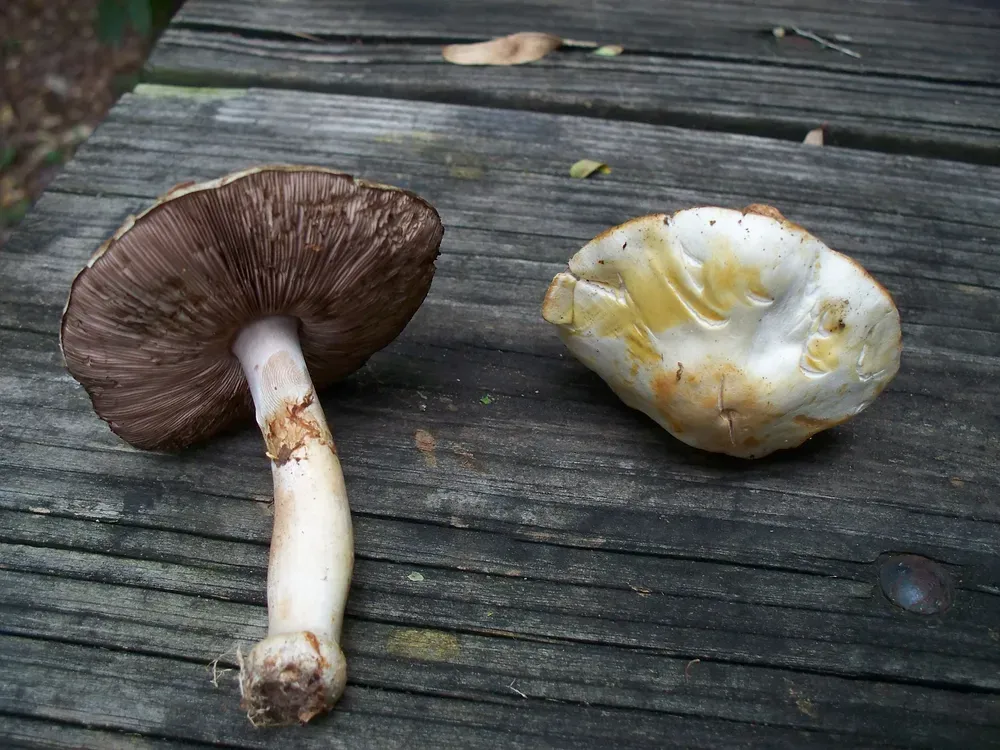
Agaricus abruptibulbus
Agaricus haemorrhoidarius
Agaricus haemorroidarius
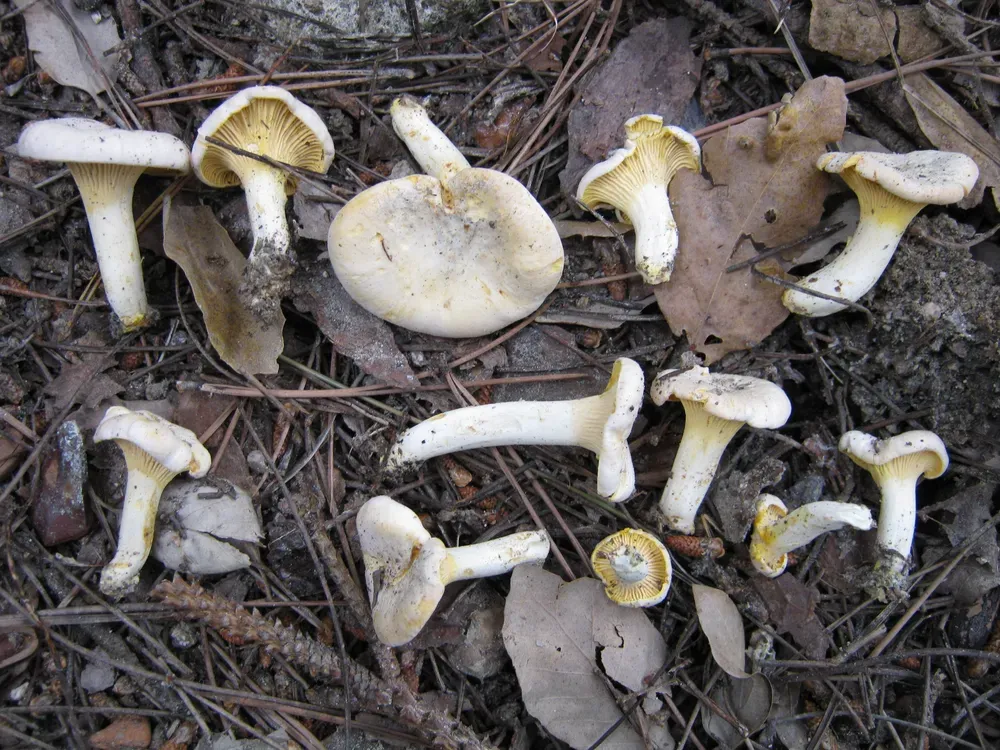
Cantharellus pallens
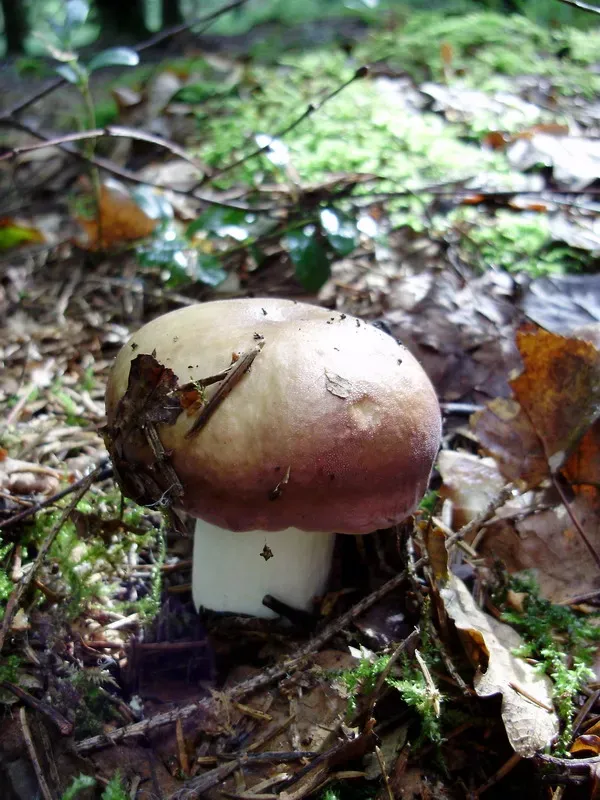
Copper brittlegill
Russula decolorans
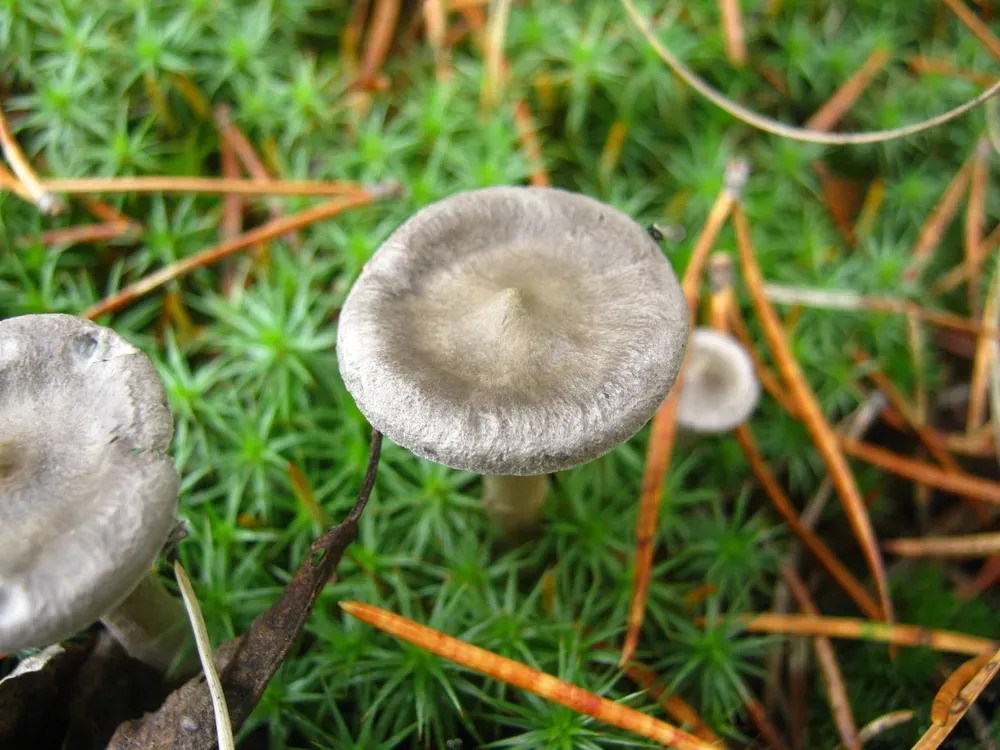
Grayling
Cantharellula umbonata
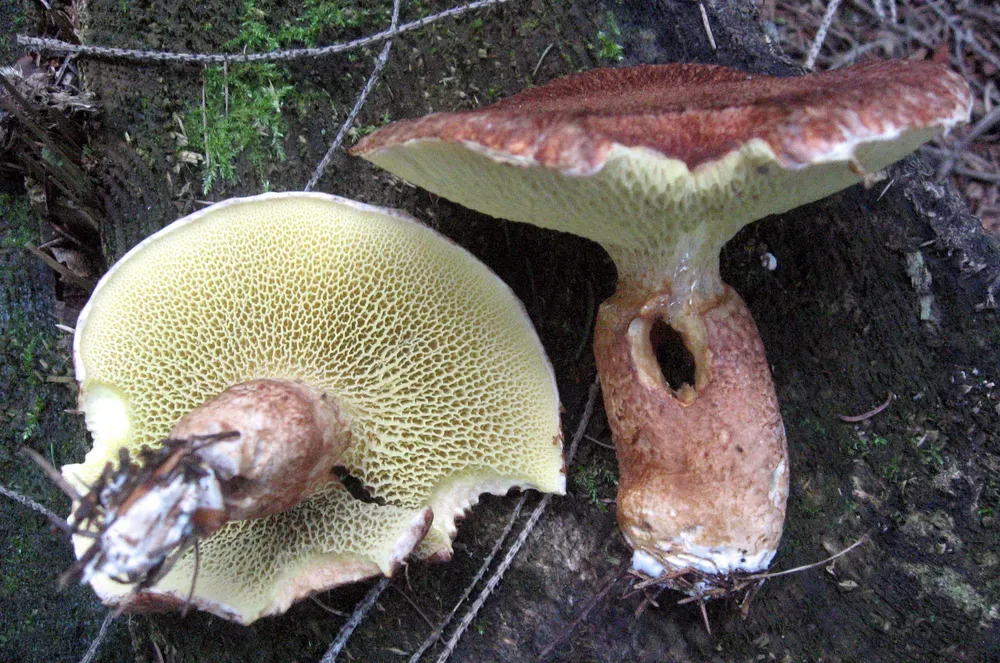
Hollow bolete
Suillus cavipes
Frequently asked questions
Can you eat it?
No. Crust fungi are not eaten — they are leathery films on bark with no culinary value.
Is it dangerous to touch?
No dangerous toxins have been described. You can calmly take a photo and move on.
Where should you look for it?
On rotting conifer wood — spruce, pine. In old Carpathian forests, on fallen trunks and stumps.
Which regions of Ukraine is it found in?
Only in the Carpathians. It is almost never found in Ukraine’s lowland pine forests.
When can you see it?
The fruiting bodies stay visible for a long time rather than having a season in the classic sense. Check under the bark all year round if you know the spot.
Is it better after rain?
Yes, on damp wood the film is fresher and easier to spot. In a dry summer it is easy to miss.
What can it be confused with?
With other white crust fungi — Amphinema, Athelia, Hyphoderma. Without a microscope it is impossible to pin down the species.
How do you recognize it at first glance?
soft white film on rotting conifer wood. No cap, no stem. Altogether — the crust-fungus body type.
Is Amylocorticium cebennense edible or poisonous?
What kind of spore-bearing surface does Amylocorticium cebennense have?
What does the cap of Amylocorticium cebennense look like?
What does the stem of Amylocorticium cebennense look like?
Sources
- [1]Вікіпедія (українська)
- [2]Атлас грибів України, Зеров Д.К. (1979)
- [3]MycoBank Database
- [4]Index Fungorum
- [5]GBIF
- [6]iNaturalist Ukraine