Aleurodiscus amorphus
Expert-verifiedUpdated June 13, 2026
Passport
- Edibility
- Inedible
- Season
- Jan — Dec
- Hymenophore
- Smooth
- Cap color
- Orange
- Size
- Very small (<3 cm)
- Smell
- Odorless
- Reviewed
- Yes ✓
Quick answers
Where to look?
Conifer forest
When does it appear?
Jan — Dec
Active months: January, February, March, April, May, June, July, August, September, October, November, December.
How to recognize it? Three signs
- Cap color: Orange, Pink
- Cap shape: Irregular
- Smell: Odorless
Fruiting season
January – December
Description
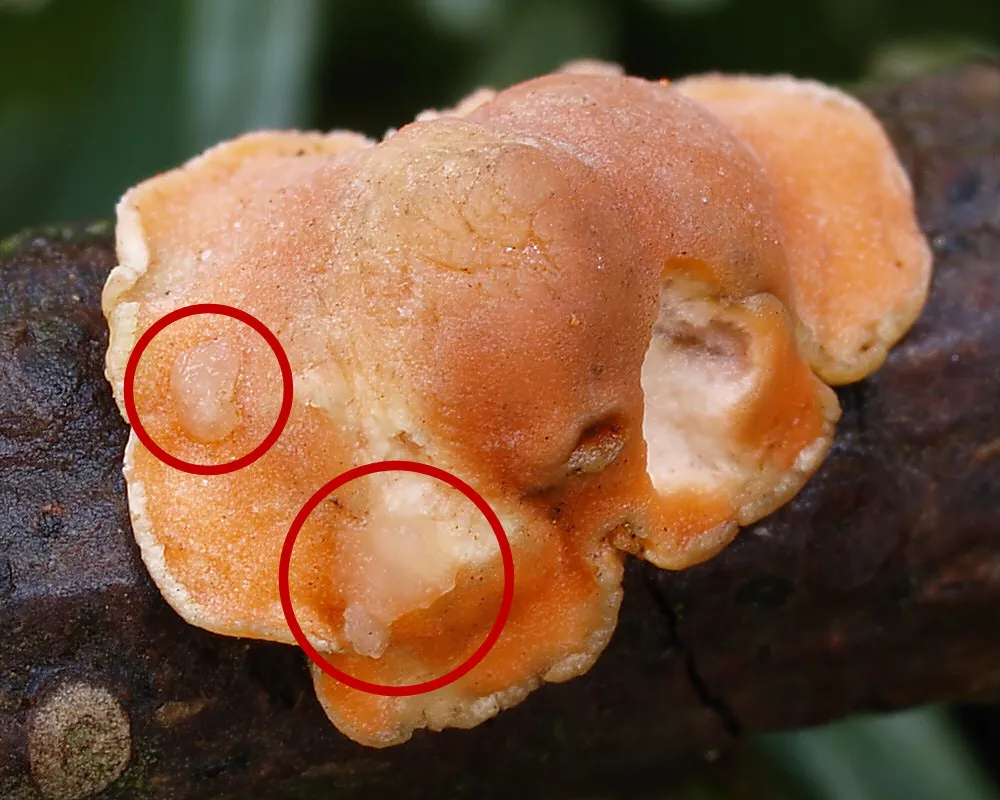
Aleurodiscus amorphus is not a mushroom for the basket. It is a crust fungus: it lives on the bark of conifer trunks and branches, forming flat fruiting bodies fused to the substrate. From the side it looks more like a “layer” on the bark than a classic capped mushroom.
Young fruiting bodies are small (4–6 mm), cup-shaped, orange-pink. Over time they merge into a shapeless mass — hence the name. The surface is leathery-hairy, the spore-bearing surface smooth, reddish, paling as it dries.
In Ukraine, Aleurodiscus amorphus is a rare species, known mainly from the Carpathians. It is a find for an attentive observer who notices old spruce stumps and fallen trunks. It has no culinary interest; its edibility is not described in the literature.
Cap
There is no “cap” as such. The fruiting body is at first cup-shaped, 4–6 mm across, attached to the substrate. Several such cups merge into a shapeless film. The surface is leathery-hairy, orange-pink.
Hymenophore
Smooth type of spore-bearing surface (no gills or tubes). Reddish, paling as it dries. Spores large, 20–25 × 16–20 µm, egg-shaped, with a slightly spiny surface.
Stem
There is no stem. The fruiting body is attached to the substrate bark over its whole surface — the typical crust-fungus growth form.
Flesh
flesh thin, leathery. No pronounced color changes when cut.
Smell
No distinctive smell. This is a mushroom that “doesn’t smell” — especially when dried.
Lookalikes
Related species
Mushrooms of the same genus and habitat — to study side by side and never mix up.
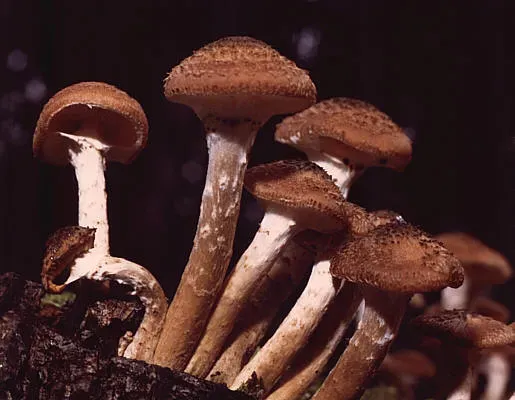
Dark honey fungus
Armillaria ostoyae
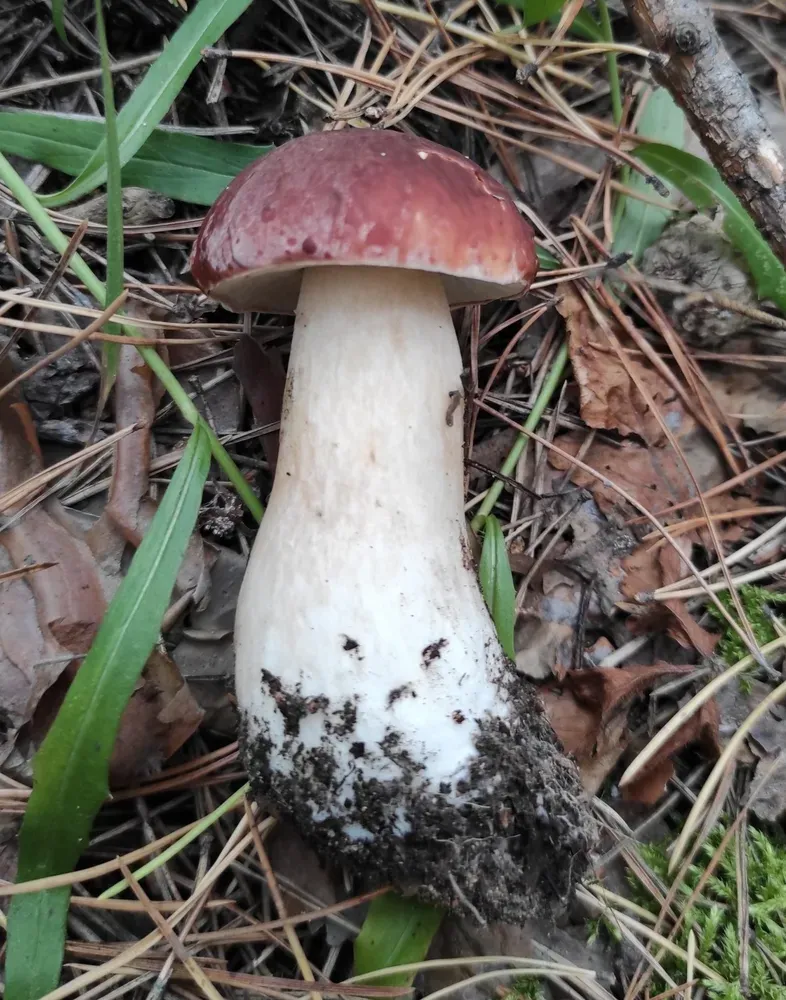
Pine bolete
Boletus pinophilus
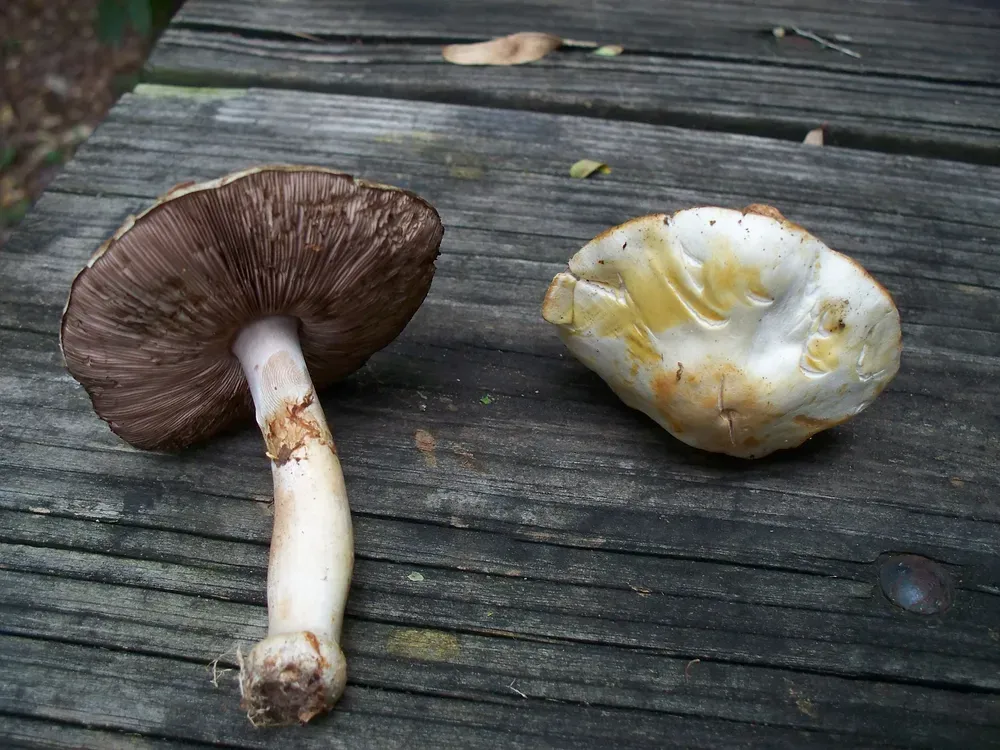
Agaricus abruptibulbus
Agaricus haemorrhoidarius
Agaricus haemorroidarius
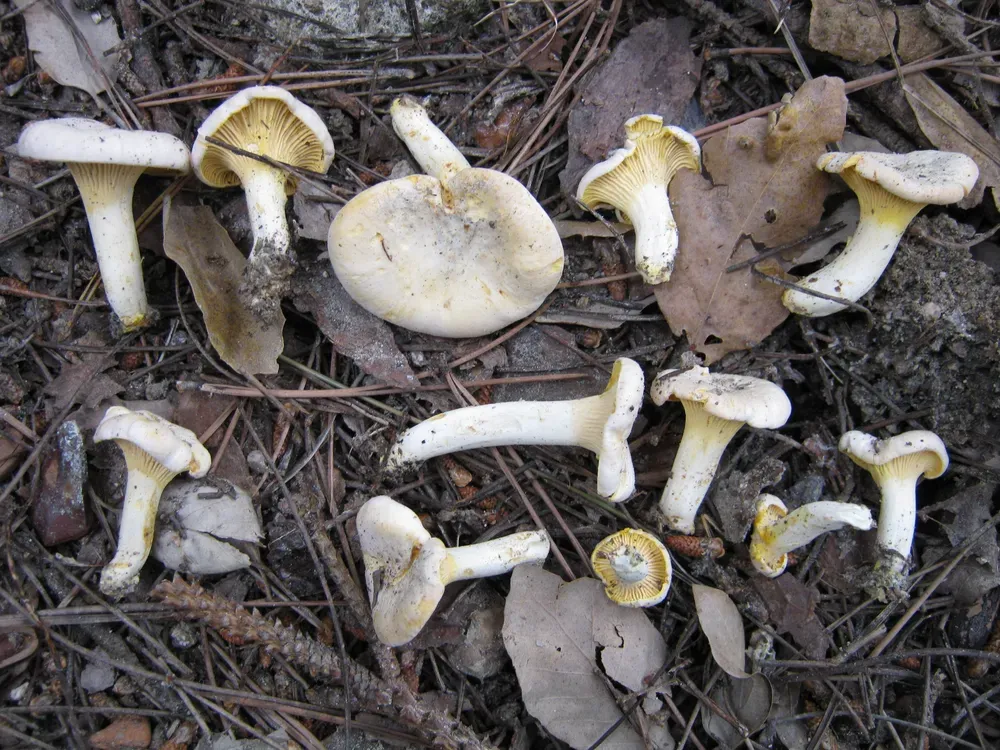
Cantharellus pallens
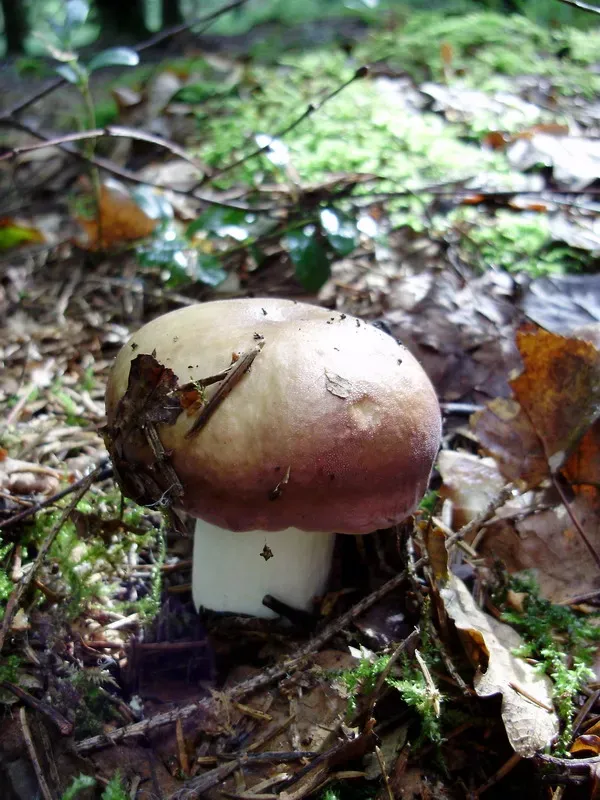
Copper brittlegill
Russula decolorans
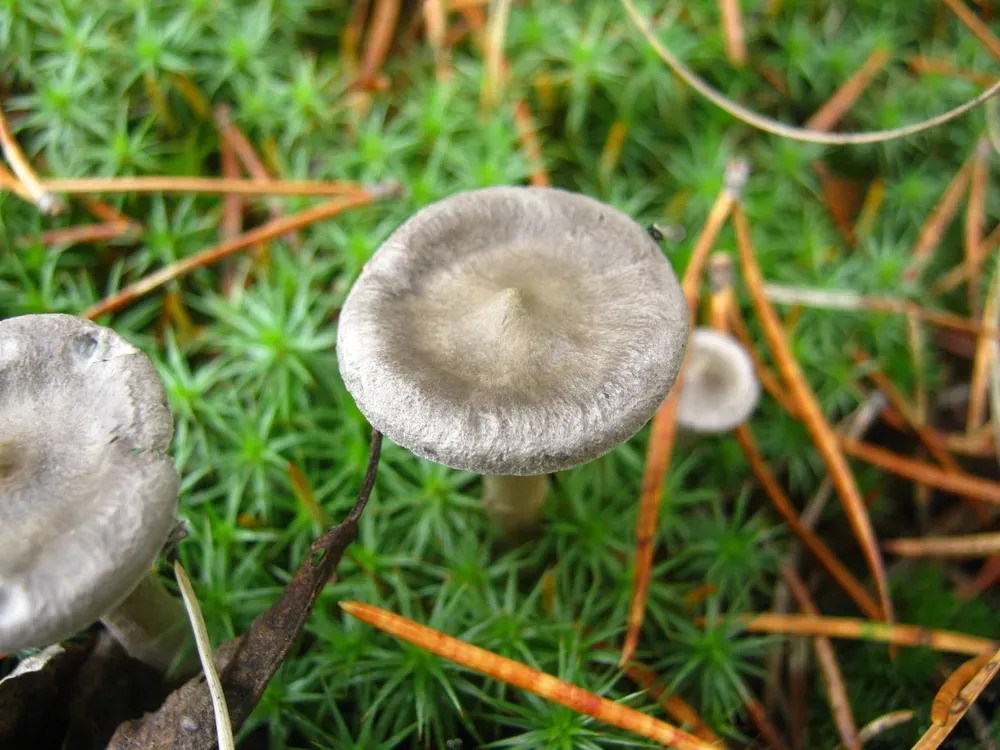
Grayling
Cantharellula umbonata
Hollow bolete
Suillus cavipes
Frequently asked questions
Can you eat it?
No. Like most crust fungi, Aleurodiscus amorphus is not eaten. It has no culinary value; its edibility is not described in the literature.
Is it dangerous to touch?
No dangerous toxins have been described. It is a leathery film on bark — you can calmly examine it, take a photo and move on.
Where should you look for it?
On the bark of trunks and branches of conifers — mostly spruce and fir. In old conifer forests, on fallen trunks and living trees.
Which regions of Ukraine is it found in?
It is a rare species. In Ukraine, known finds come mainly from the Carpathians. It is almost never found in lowland pine forests.
When can you see it?
The fruiting bodies are perennial and visible almost all year. Unlike capped mushrooms, it doesn’t “appear” — it stays on the bark for a long time.
Is it better to look in damp weather?
Yes, after rain its color is brighter — the orange-pink tone is visible from several meters away. In a dry summer the film pales and becomes barely noticeable.
What can it be confused with?
With other crust fungi of the Stereaceae and Peniophoraceae. Exact identification relies on spores under a microscope and the growth pattern.
How do you recognize it at first glance?
Orange-pink color, growth on conifer bark, cup-shaped young bodies that merge into a film. This species does not grow on the bark of broadleaf trees.
Is Aleurodiscus amorphus edible or poisonous?
What kind of spore-bearing surface does Aleurodiscus amorphus have?
What does the cap of Aleurodiscus amorphus look like?
What does the stem of Aleurodiscus amorphus look like?
Sources
- [1]Вікіпедія (українська)
- [2]Атлас грибів України, Зеров Д.К. (1979)
- [3]MycoBank Database
- [4]Index Fungorum
- [5]GBIF
- [6]iNaturalist Ukraine