Amphinema byssoides
Expert-verifiedUpdated June 13, 2026
Passport
- Edibility
- Inedible
- Season
- Jan — Dec
- Hymenophore
- Smooth
- Cap color
- White
- Size
- Very small (<3 cm)
- Smell
- Odorless
- Reviewed
- Yes ✓
Quick answers
Where to look?
Conifer forest, Mixed forest
When does it appear?
Jan — Dec
Active months: January, February, March, April, May, June, July, August, September, October, November, December.
How to recognize it? Three signs
- Cap color: White, Yellow, Orange
- Cap shape: Irregular
- Smell: Odorless
Fruiting season
January – December
Description
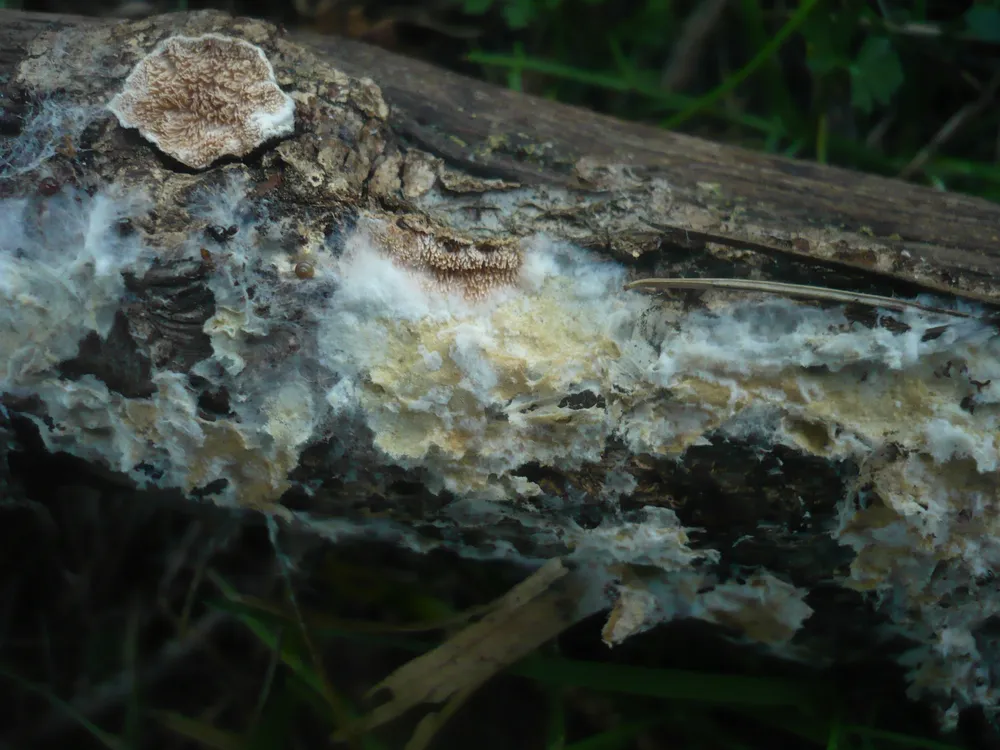
Amphinema byssoides is a tiny crust fungus that lives on dead conifer wood. Its fruiting bodies look like a cottony coating: soft, irregular in shape, densely covering the substrate.
The mycelium colonizes not only wood but also fallen needles and bark, yet fruiting bodies appear only on wood. Young ones are white, then yellow with age and turn ocher-brown. It causes white rot — that is its role in the forest cycle.
Unlike many rare Carpathian relatives, Amphinema byssoides is fairly common: it turns up in Polissia, the Forest-Steppe and the Carpathians. That makes it one of the few crust fungi you can find in any conifer forest in Ukraine, if you look under the bark of fallen pines.
Cap
The fruiting body is spread out, soft and irregular in shape. Its color changes from white to yellowish-brown and turns ocher with age. The surface looks like a cottony coating — hence the name.
Hymenophore
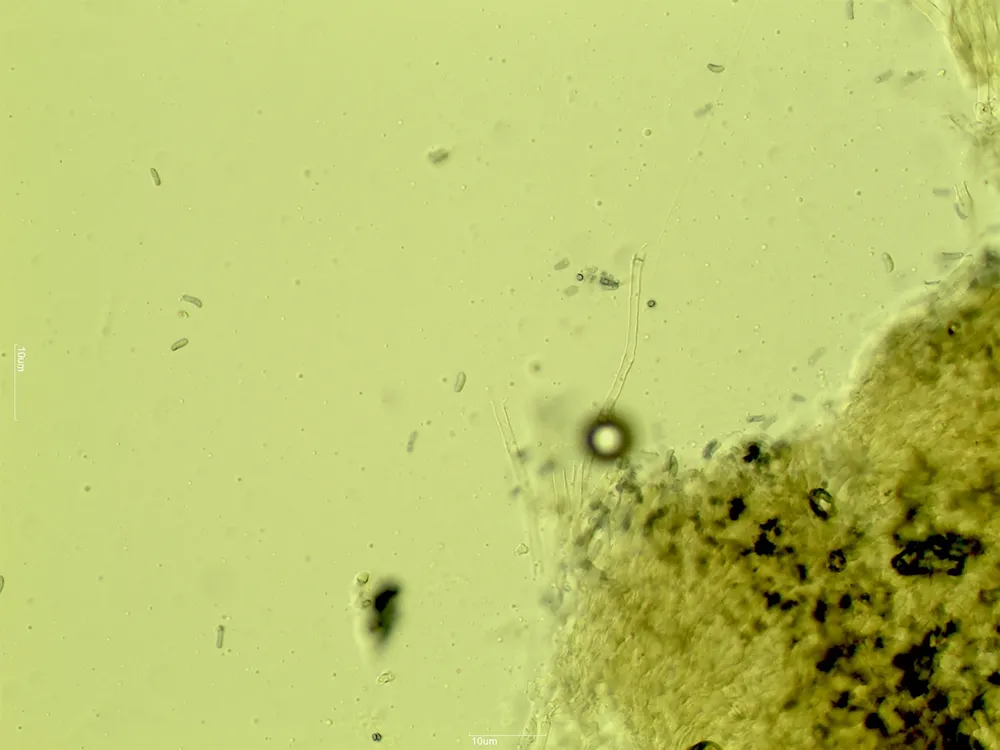
The spore-bearing surface is smooth or has barely visible warts. Spores egg-shaped or ellipsoid, with a single oil droplet inside, colorless or yellowish, 3–5 × 2–3 µm.
Stem
There is no stem. The body is entirely spread out and attached to the substrate over its whole surface.
Flesh
flesh thin, cottony, loose. No color change when cut.
Smell
No distinctive smell.
Lookalikes
Related species
Mushrooms of the same genus and habitat — to study side by side and never mix up.
Bulbous honey fungus
Armillaria gallica
Dark honey fungus
Armillaria ostoyae
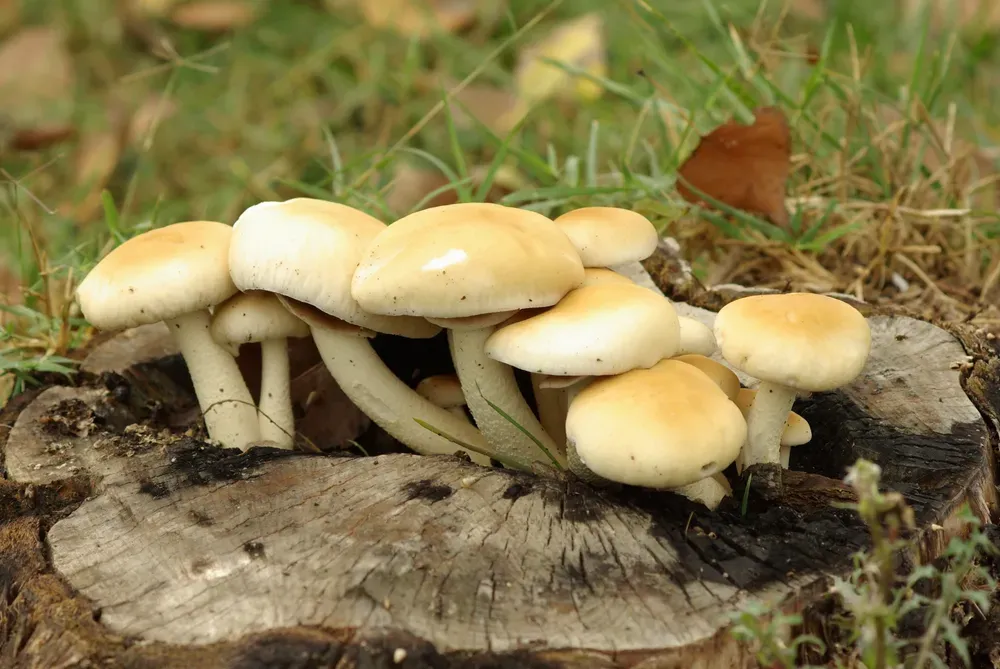
Poplar fieldcap
Cyclocybe aegerita
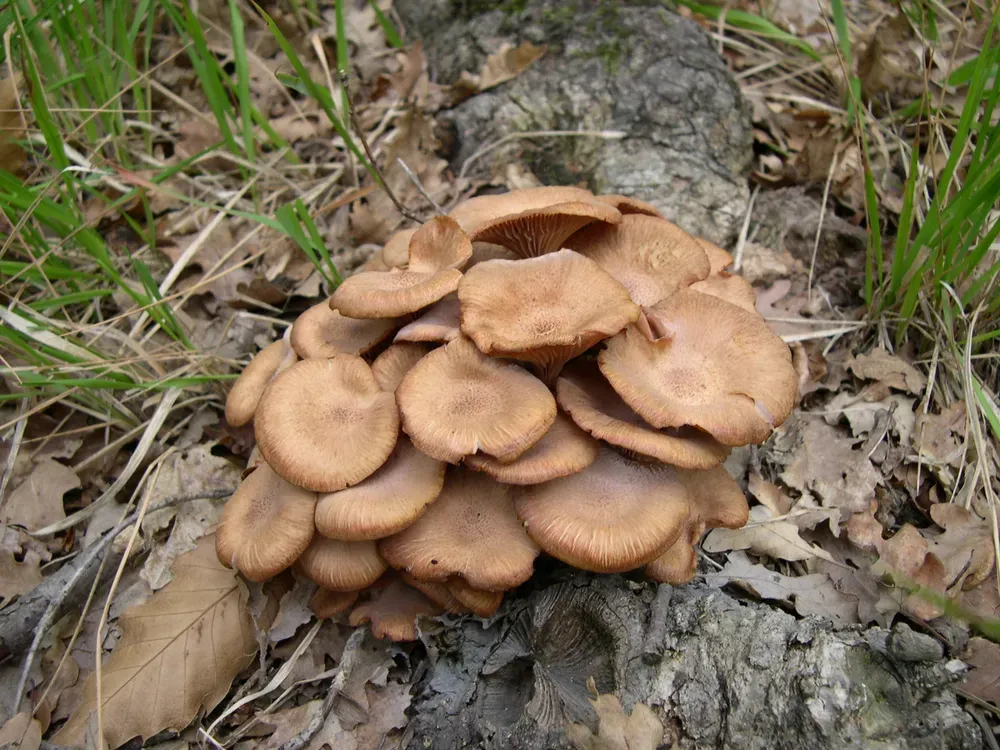
Ringless honey fungus
Desarmillaria tabescens
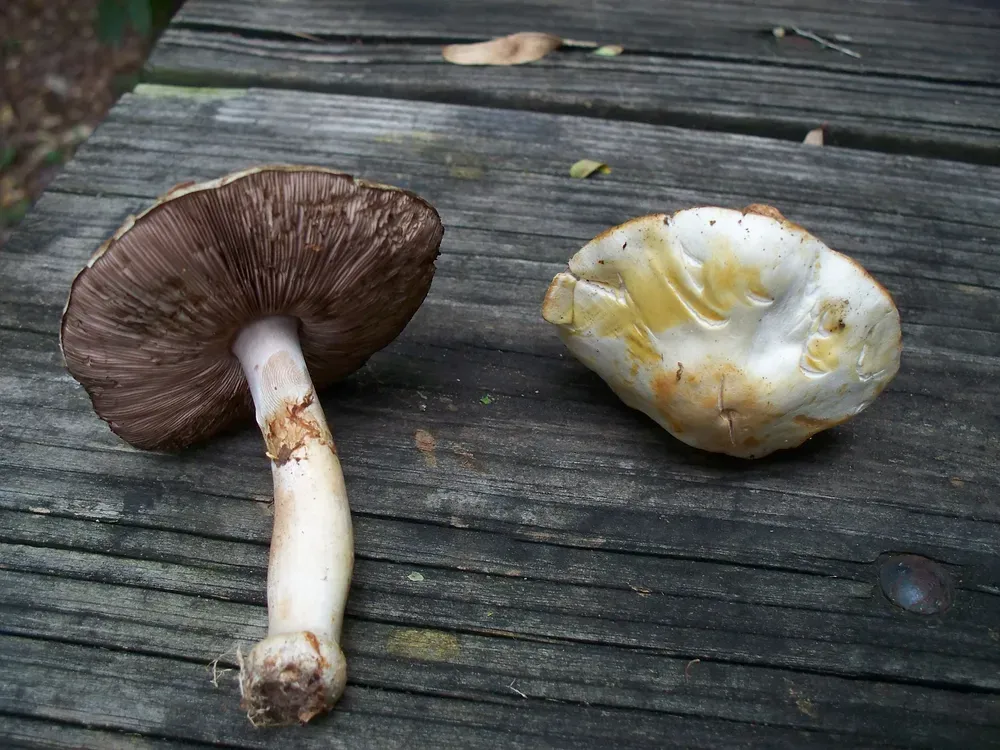
Agaricus abruptibulbus
Agaricus haemorrhoidarius
Agaricus haemorroidarius
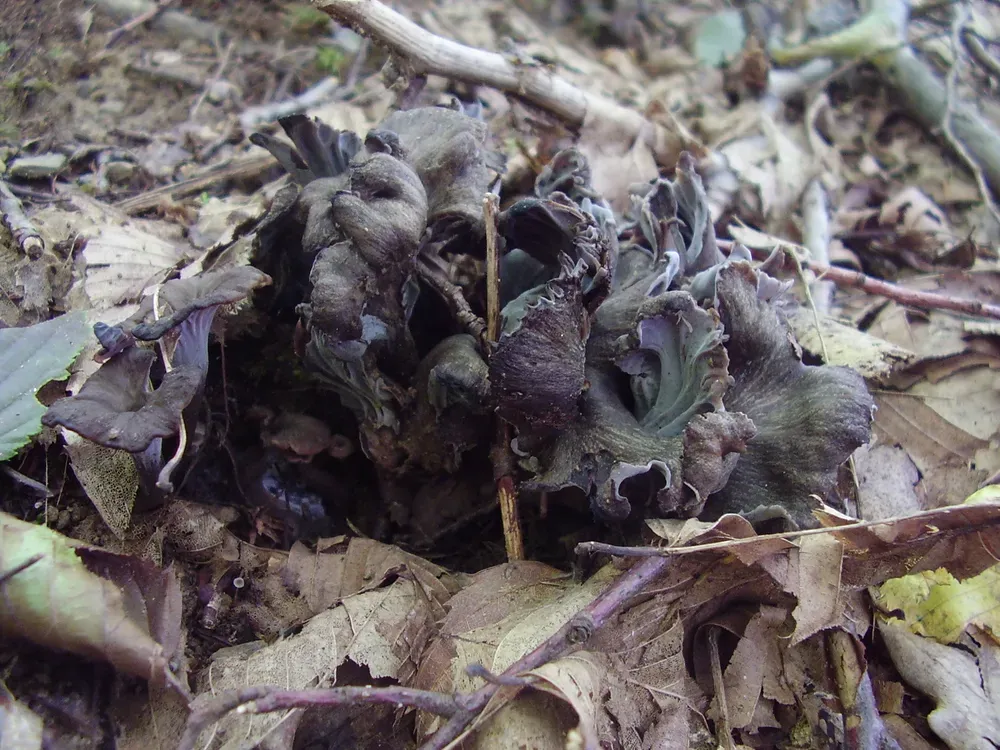
Ashen chanterelle
Cantharellus cinereus
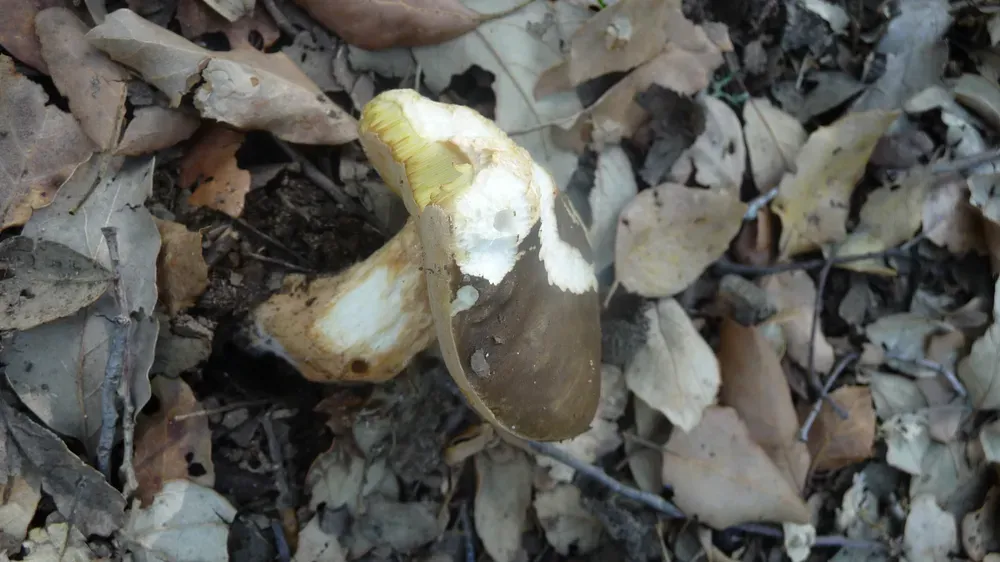
Blushing bolete
Leccinum roseofractum
Frequently asked questions
Can you eat it?
No. Crust fungi have no culinary value at all.
Is it dangerous to touch?
No, no toxins have been described. It is just a forest mold on bark, nothing more.
Where should you look for it?
On dead conifer wood — pines, spruces. On the bark of fallen trunks, on rotting branches, sometimes on stumps.
Which regions of Ukraine is it found in?
Polissia, the Forest-Steppe, the Carpathians. One of the few crust fungi found evenly across the country.
When can you see it?
The fruiting bodies stay visible for a long time. Fresher ones grow in the warm, damp season, but old films can hang on for months.
Is it better to look after rain?
Yes, on a damp substrate the cottony coating is brighter and easier to spot. In a drought it shrinks and darkens.
What is it confused with?
With other white crust fungi of the genera Athelia, Hyphoderma and Amylocorticium. Exact identification relies on spores and hyphal structure.
How do you recognize it at first glance?
Its typical “cottony” look — a soft, fluffy coating on bark. Color white → yellowish → ocher. Grows on conifer wood.
Is Amphinema byssoides edible or poisonous?
What kind of spore-bearing surface does Amphinema byssoides have?
What does the cap of Amphinema byssoides look like?
What does the stem of Amphinema byssoides look like?
Sources
- [1]Вікіпедія (українська)
- [2]Атлас грибів України, Зеров Д.К. (1979)
- [3]MycoBank Database
- [4]Index Fungorum
- [5]GBIF
- [6]iNaturalist Ukraine