Yellow brainTremella mesenterica
Expert-verifiedUpdated October 3, 2026
Passport
- Edibility
- Edible
- Season
- Jan — Dec
- Hymenophore
- Smooth
- Cap color
- Yellow
- Size
- Small (up to 5 cm)
- Smell
- Odorless
- Reviewed
- Yes ✓
Quick answers
Where to look?
Deciduous forest, Mixed forest
When does it appear?
Jan — Dec
Active months: January, February, March, April, May, June, July, August, September, October, November, December.
How to recognize it? Three signs
- Cap color: Yellow, Orange
- Cap shape: Irregular
- Smell: Odorless
Fruiting season
January – December
Description
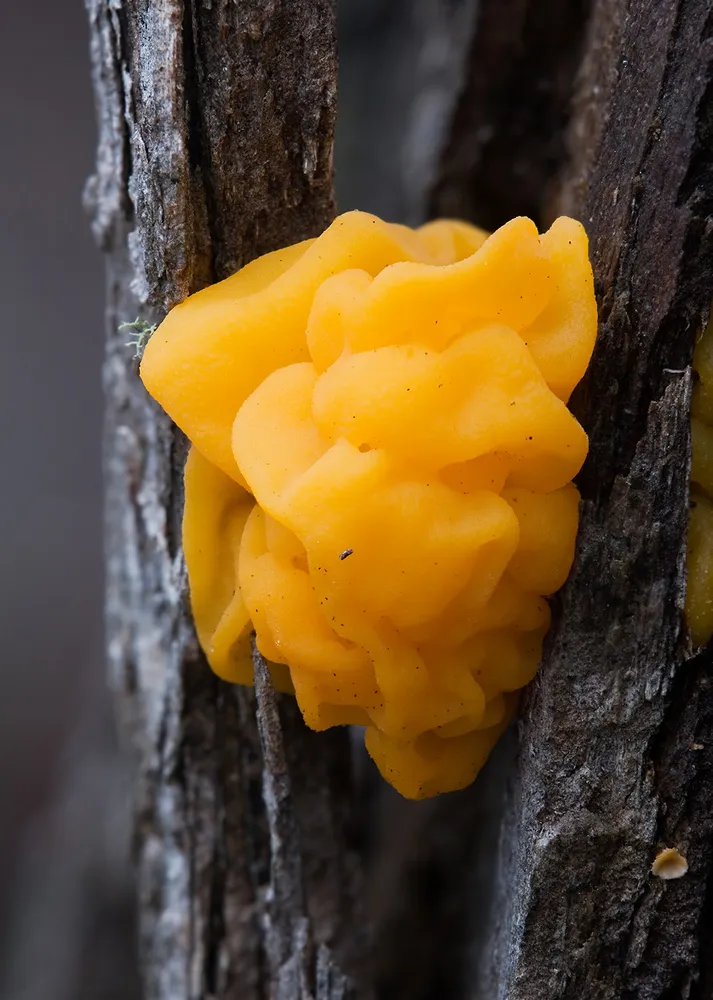
Tremella, or "yellow brain" (Tremella mesenterica, in English-speaking countries "yellow brain mushroom", "witch's butter") is a distinctive bright yellow jelly fungus with a wavy, folded shape that looks like a brain or a yellow jelly pudding. The Latin epithet mesenterica means "intestine-like, folded" (from Greek mesenterion, "the mesentery"), a nod to its distinctive shape.
Fruiting body 3-10 cm across, gelatinous, soft, attached to the substrate by its back with no distinct stem. In wet weather it is clearly jelly-like, soft, with a glossy surface; in dry weather it shrivels, hardens and turns horny, and once moistened it comes back to life and regains its shape. Color bright yellow, lemon yellow, orange-yellow.
Edible — mycological communities list it as edible with limitations: it is bland raw (no distinct taste), but soaks up flavors well and is used in soups and sauces as a thickener and decorative ingredient. In traditional Chinese and Japanese cuisine Tremella is used widely: in sweet soups with berries, in tonic broths, in cosmetic masks (natural hyaluronic acid). In Europe it is less popular and rarely gathered, mostly for culinary experiments.
A distinctive ecological trait — Tremella mesenterica it parasitizes the mycelium of other fungi of the genus Peniophora (thin-skinned crust fungi on wood). So it is not an independent saprotroph but a mycoparasite on fungi that grow on wood. That's why it only grows where Peniophora is present, mostly on fallen branches and trunks of broadleaf trees.
Key features of Tremella mesenterica: Bright yellow gelatinous fruiting body with a wavy, folded shape No stem, attached to the substrate by its side Soft in wet weather, hardens in dry weather, recovers once moistened Spore print white Smell faint, neutral Grows on fallen branches and trunks of broadleaf trees (oak, beech, hornbeam, birch) Flesh gelatinous, with no distinct taste
The main risk is confusing it with its close relative Tremella aurantia (also a yellow jelly, but thicker and less folded, on conifer wood, parasitic on a different crust fungus, Stereum hirsutum, considered inedible). Also with Calocera viscosa (a small orange-yellow coral-like fruiting body on conifer stumps, not jelly-like) and with Bisporella citrina (small yellow disc-shaped ascomycetes on wood).
In Ukraine, Tremella mesenterica is common in broadleaf and mixed forests: the Carpathians, Prykarpattia, Polissia, the forest-steppe. Season: year-round — the fruiting bodies withstand drying out and rewetting, so you can find them even in winter during thaws.
Cap
Fruiting body 3-10 cm across, gelatinous, wavy and folded, with irregular lobes and folds, resembling a wrinkled brain or a piece of yellow jelly pudding. Attached by its side or back to the substrate, with no distinct stem. In wet weather it is soft, jelly-like, glossy and moist; in dry weather it is wrinkled and hard in old specimens. Color bright yellow, lemon yellow, orange-yellow, and mature ones take on a richer orange tint.
Hymenophore
The spore-bearing surface covers the outer surface of the wavy lobes. Smooth, with no gills, pores or spines. Spore print white.
Stem
No stem. The fruiting body is attached to the substrate by its side or back edge (sessile).
Flesh
Flesh gelatinous, soft in wet weather, hard in dry weather. Transparent to translucent, yellowish. Does not change color when cut. No distinct taste (neutral, jelly-like). Smell faint, neutral.
Smell
Faint, neutral, nothing distinctive.
›Scientific synonyms (3)
Elvela mesenterica Schaeff., Tremella lutescens Pers., Tremella quercina Pollini
Related species
Mushrooms of the same genus and habitat — to study side by side and never mix up.
Bulbous honey fungus
Armillaria gallica
Dark honey fungus
Armillaria ostoyae
Poplar fieldcap
Cyclocybe aegerita
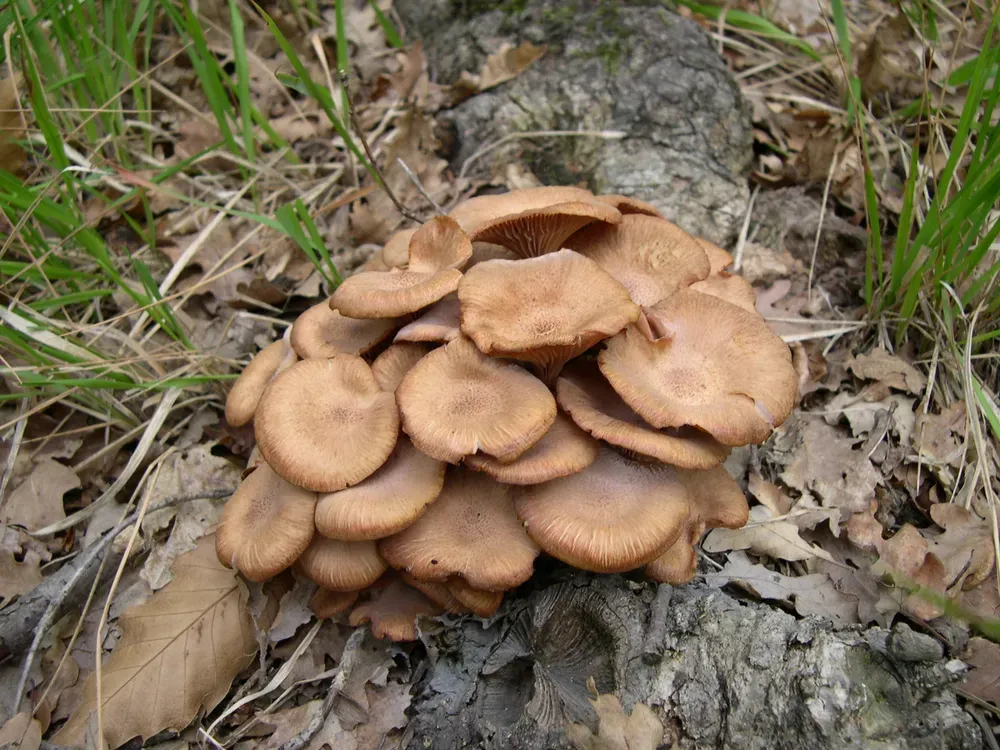
Ringless honey fungus
Desarmillaria tabescens
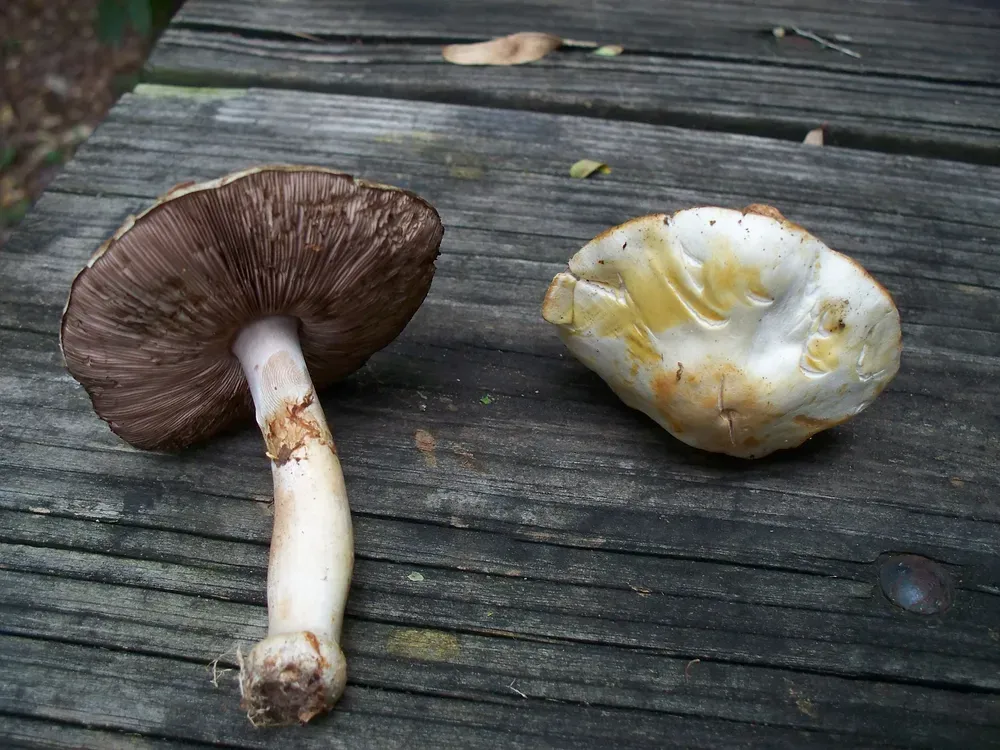
Agaricus abruptibulbus
Agaricus haemorrhoidarius
Agaricus haemorroidarius
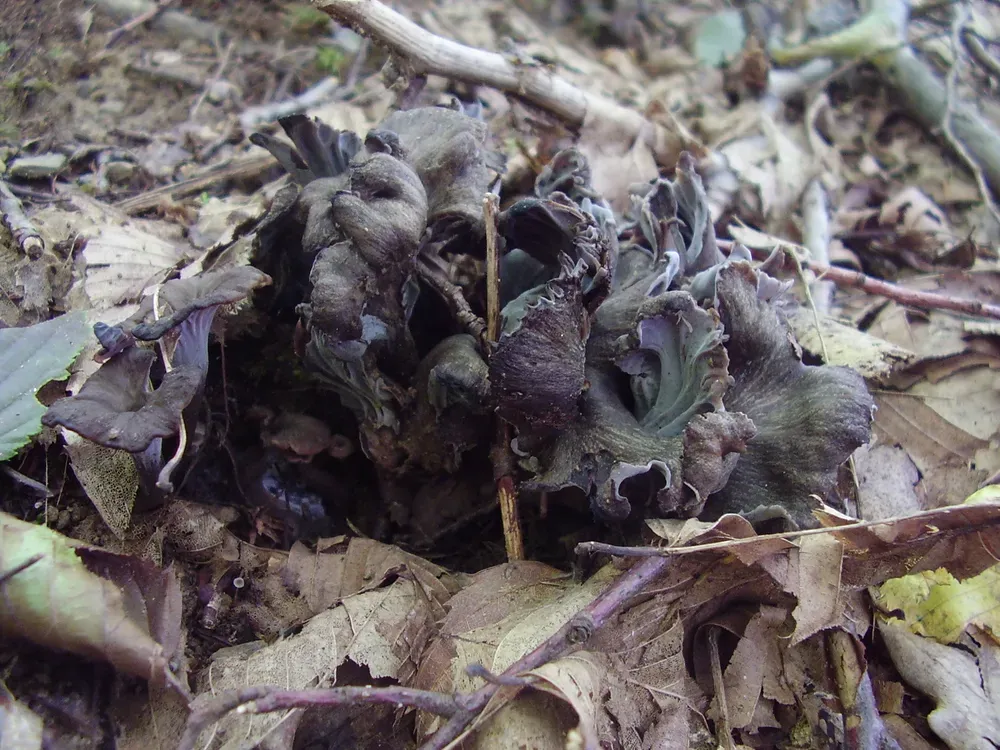
Ashen chanterelle
Cantharellus cinereus
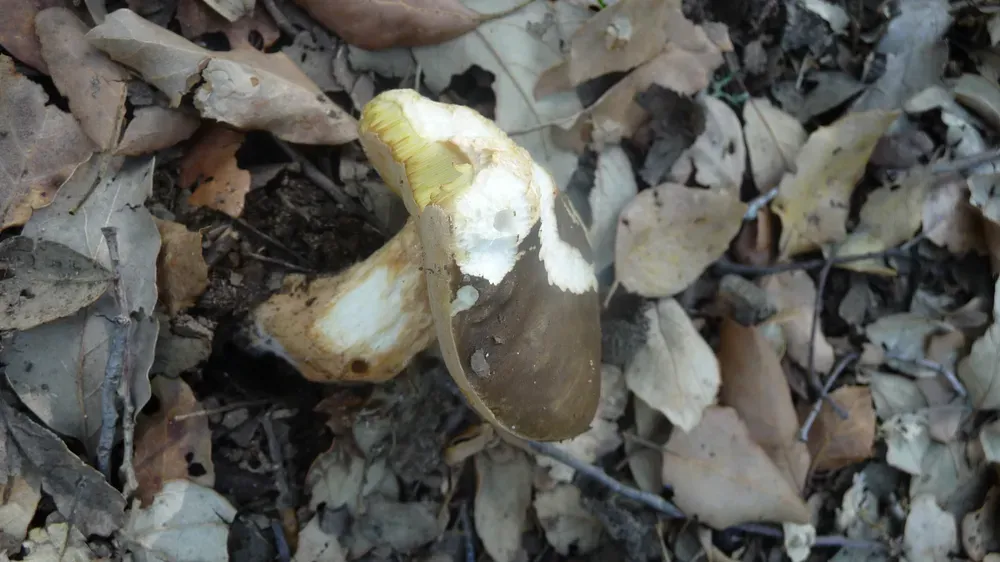
Blushing bolete
Leccinum roseofractum
Frequently asked questions
Can you eat it?
Yes, it's edible, but it has no taste on its own — its main value is its texture (gelatinous) and its ability to soak up the flavors of a dish. In Asian cuisine (Chinese, Japanese), Tremella is a traditional ingredient of sweet soups with berries, tonic broths, dishes with chicken broth. In Europe it is rarely used because it has no distinct mushroom flavor.
How do you cook it?
Rinse it and cut into 2-3 cm pieces, then add to broth, vegetable stew, or a sweet berry compote. Cook for 10-15 min so it soaks up the flavors. In Asian cooking it is a common ingredient of "longevity soup" (with ginseng and goji berries). Don't overcook it, or it turns rubbery.
Does it have dangerous lookalikes?
No seriously poisonous ones. Among yellow jelly fungi on wood, there's nothing truly dangerous. But Tremella aurantia on conifer wood is less valuable in the kitchen, and Bisporella citrina is a tiny yellow ascomycete on wood, not edible (too small).
Where should you look for it?
On fallen branches and trunks of broadleaf trees (oak, beech, hornbeam, birch), especially where Peniophora crust fungi (its host) are present. On firewood, in broadleaf forests, in parks. Especially abundant after rain — a dry, shriveled yellow brain comes back to life within 1-2 hours.
Which regions of Ukraine is it found in?
Common throughout the forest zone: the Carpathians, Prykarpattia, Polissia, the forest-steppe. In the steppe, it grows in planted shelterbelts.
When should you look for it?
Year-round — one of the most consistently visible mushrooms. It grows actively in the wet season (spring to autumn), but dried fruiting bodies can be seen in winter too: after a thaw and some moisture they revive within 1-2 hours and start releasing spores again.
What does it look like?
It resembles Tremella aurantia — on conifer wood, thicker, parasitizes Stereum hirsutum. Also like Calocera viscosa — a yellow-orange coral fungus on conifer stumps (clearly branched, not jelly-like). Also like Dacrymyces palmatus — also a yellow jelly, but smaller. Also like Bisporella citrina — small yellow disc-shaped ascomycetes.
Is Yellow brain edible or poisonous?
What kind of spore-bearing surface does Yellow brain have?
What does the cap of Yellow brain look like?
What does the stem of Yellow brain look like?
What do Yellow brain smell and taste like?
Sources
- [1]Вікіпедія (українська)
- [2]Атлас грибів України, Зеров Д.К. (1979)
- [3]MycoBank Database
- [4]Index Fungorum
- [5]GBIF
- [6]iNaturalist Ukraine