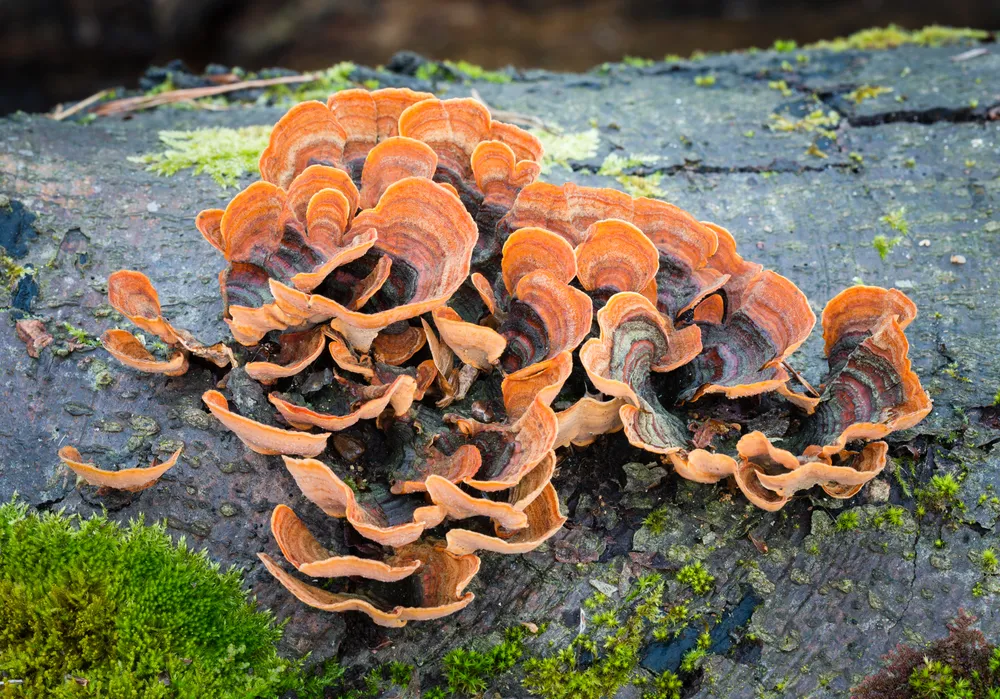
Hairy curtain crustStereum hirsutum
Expert-verifiedUpdated October 3, 2026
Passport
- Edibility
- Inedible
- Season
- Jan — Dec
- Hymenophore
- Smooth
- Cap color
- Yellow
- Size
- Small (up to 5 cm)
- Smell
- Odorless
- Reviewed
- Yes ✓
Quick answers
Where to look?
Deciduous forest, Mixed forest
When does it appear?
Jan — Dec
Active months: January, February, March, April, May, June, July, August, September, October, November, December.
How to recognize it? Three signs
- Cap color: Yellow, Orange, Brown
- Cap shape: Irregular
- Smell: Odorless
Fruiting season
January – December
Description
The hairy curtain crust (Stereum hirsutum) is one of the most widespread bracket fungi in Europe, a small yellow-orange fungus on dead hardwood. The Latin epithet hirsutum means "hairy, bristly" — capturing its signature trait exactly: the upper surface of the fruiting body is covered in dense, short, stiff hairs, like felt or fur. The fruiting bodies are small, 1-4 cm across, thin, spatula-shaped to fan-shaped, leathery, attached to the substrate by the side or back — with no distinct stem.
Inedible — the flesh is very thin, leathery, cardboard-like, with no culinary value. Nobody forages it. A saprotroph of dead hardwood (beech, oak, hornbeam, birch, willow) — one of the key wood decomposers in forests, important for the natural cycle of decay.
A distinctive feature — the fungus is very resistant to drying out: dried fruiting bodies stay on branches and stumps for years, and after the first rains they revive and start producing spores again. Old descriptions even called the species a "long-lived fungus" — a single fruiting body can last up to 5-7 years.
Key features of Stereum hirsutum: A small (1-4 cm), fan-shaped fruiting body with no stem Upper surface densely covered with short, stiff hairs (like felt) Yellow-orange to rusty-brown coloring Underside (hymenium) smooth, with no pores, gills or spines — typical of the genus Stereum Flesh very thin, leathery Grows on dead hardwood Often grows in groups or overlapping, tile-like tiers on a single trunk
Its main interest is mycological (an indicator of the stage of wood decay) and artistic/photographic (the fungus is very photogenic, with a striking banded pattern on the upper surface).
In Ukraine, Stereum hirsutum is common everywhere on dead hardwood: the Carpathians, the Carpathian foothills, Polissia, the forest-steppe, the steppe (in shelterbelts). Season — year-round (the fruiting bodies withstand drying out).
Cap
Fruiting body 1-4 cm across, thin, leathery, spatula-shaped to fan-shaped, attached by the side or back. Upper surface densely covered with short (up to 0.3 cm) stiff hairs — like felt. Color distinctly zoned — banded: alternating yellow-orange, ocher, rusty-brown and gray-brown concentric zones. Older areas turn gray-brown. The margin in young specimens is bright yellow-orange, sharp.
Hymenophore
Smooth, with no pores, gills or spines — typical of the genus Stereum ("stereum" from Greek stereo — "hard, smooth"). Color of the underside yellow-ocher when young, brownish gray with age. Spore print white.
Stem
No stem. The fruiting body is attached to the substrate by its side or back edge (sessile).
Flesh
Flesh very thin, leathery, tough, brownish yellow. Useless in the kitchen — like cardboard. Smell faint, neutral.
Smell
Faint, neutral, with no notable features.
›Scientific synonyms (8)
Helvella acaulis Pers. (1778), Auricularia reflexa Bull. (1786), Thelephora hirsuta Willd. (1787), Boletus auriformis Bolton (1788), Auricularia aurantiaca Schumach. (1803), Thelephora reflexa (Bull.) Lam. & DC. (1805), Stereum hirsutum var. cristulatum Quél. (1872), Stereum reflexum (Bull.) Sacc. (1916)
Lookalikes
Related species
Mushrooms of the same genus and habitat — to study side by side and never mix up.
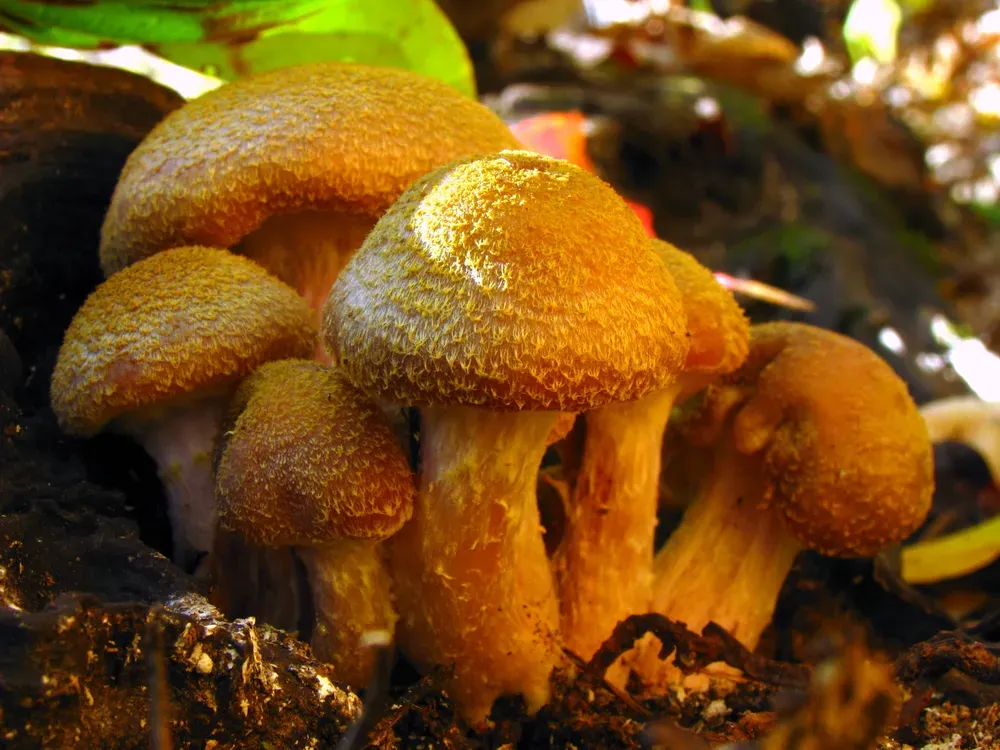
Bulbous honey fungus
Armillaria gallica
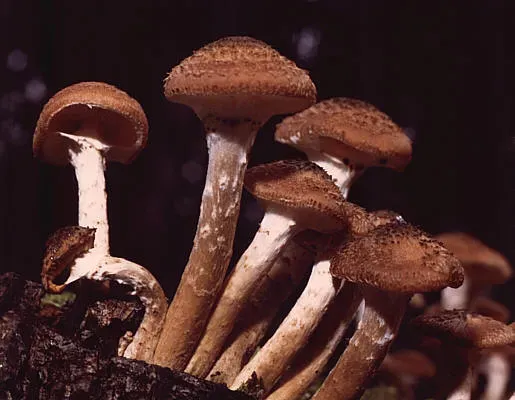
Dark honey fungus
Armillaria ostoyae
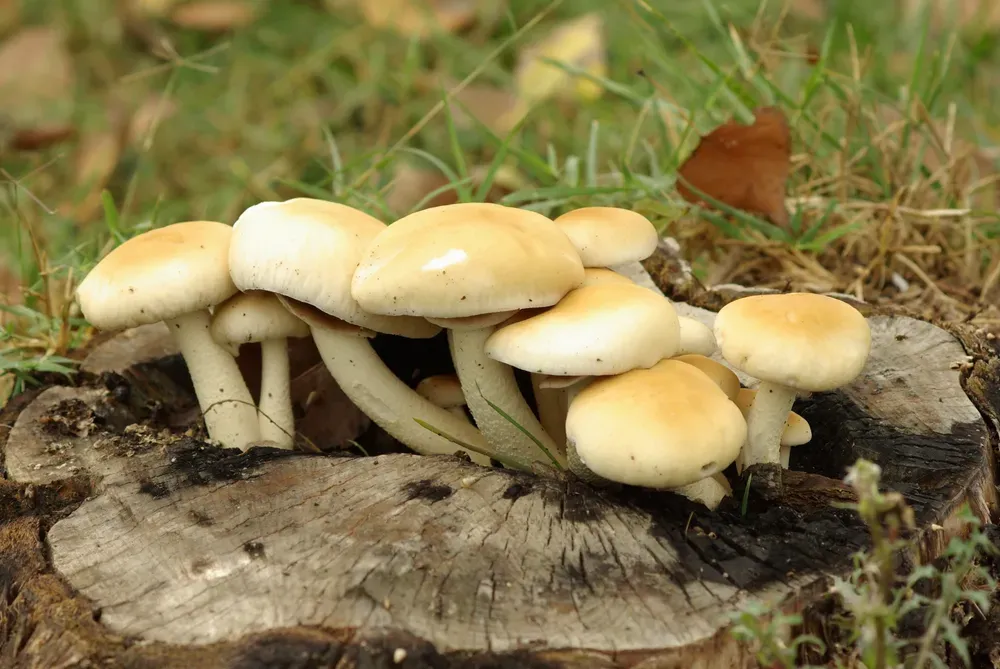
Poplar fieldcap
Cyclocybe aegerita
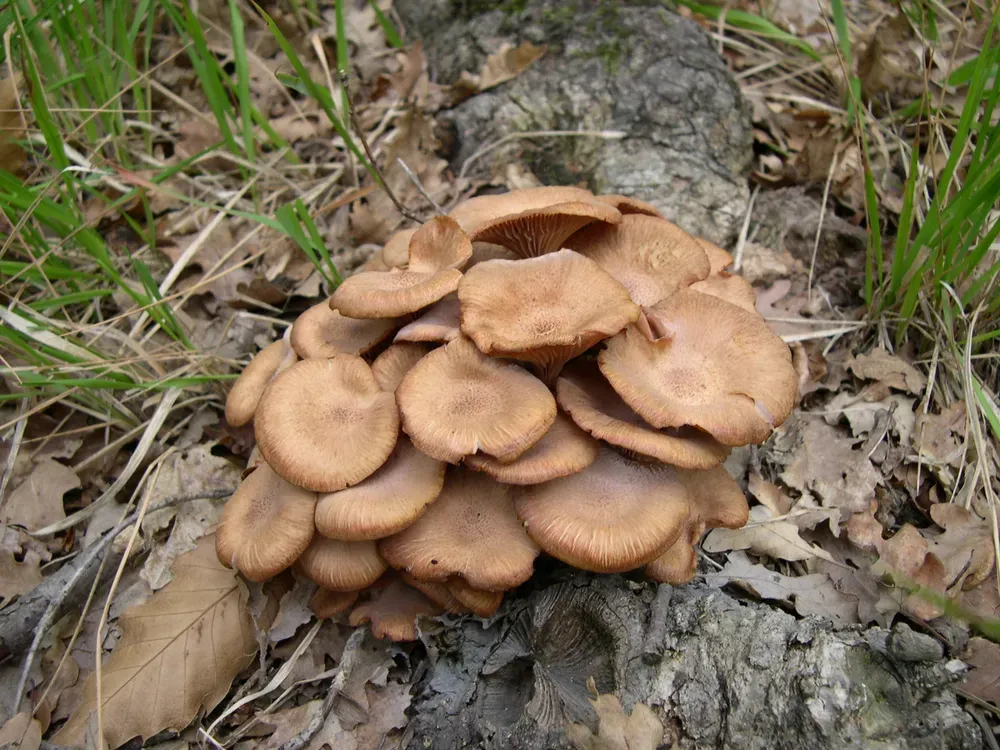
Ringless honey fungus
Desarmillaria tabescens
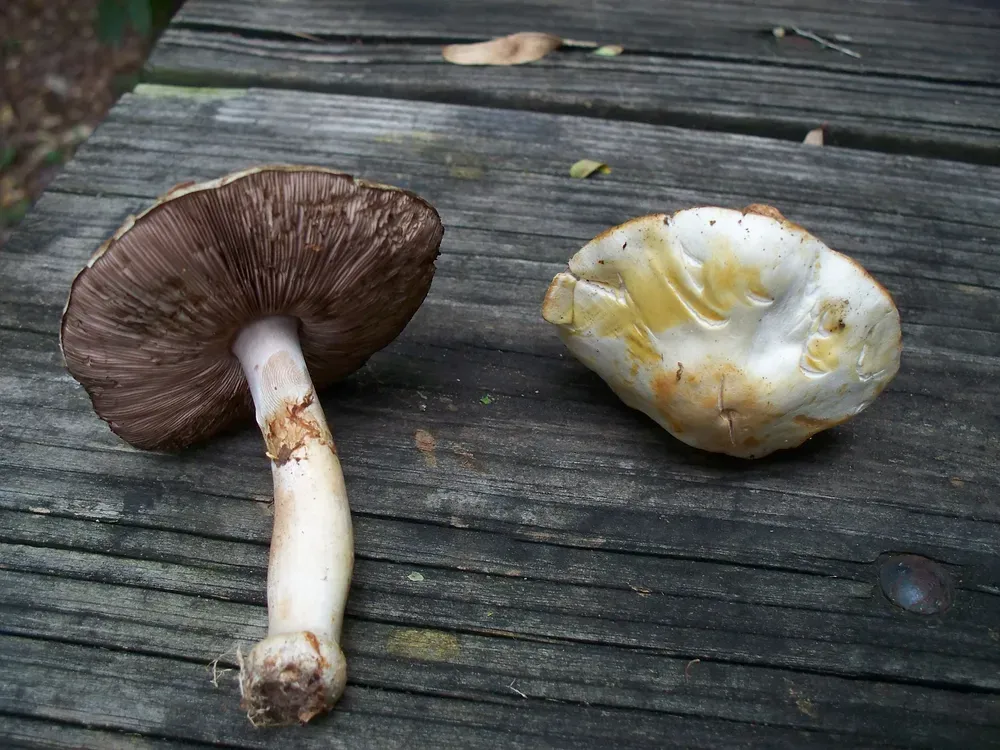
Agaricus abruptibulbus
Agaricus haemorrhoidarius
Agaricus haemorroidarius
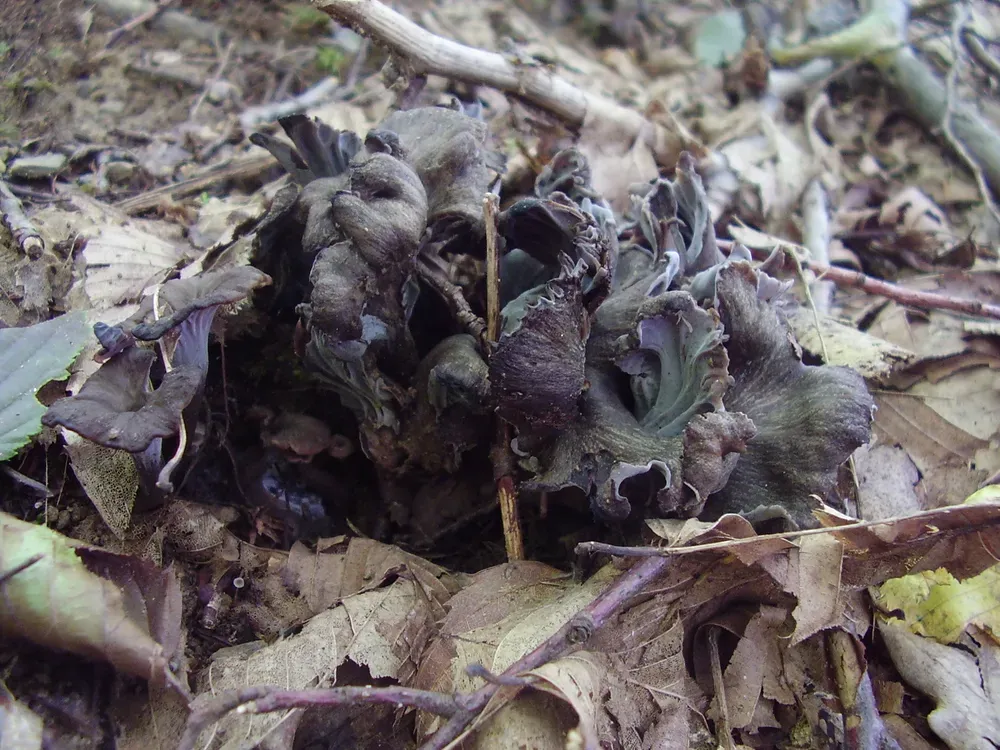
Ashen chanterelle
Cantharellus cinereus
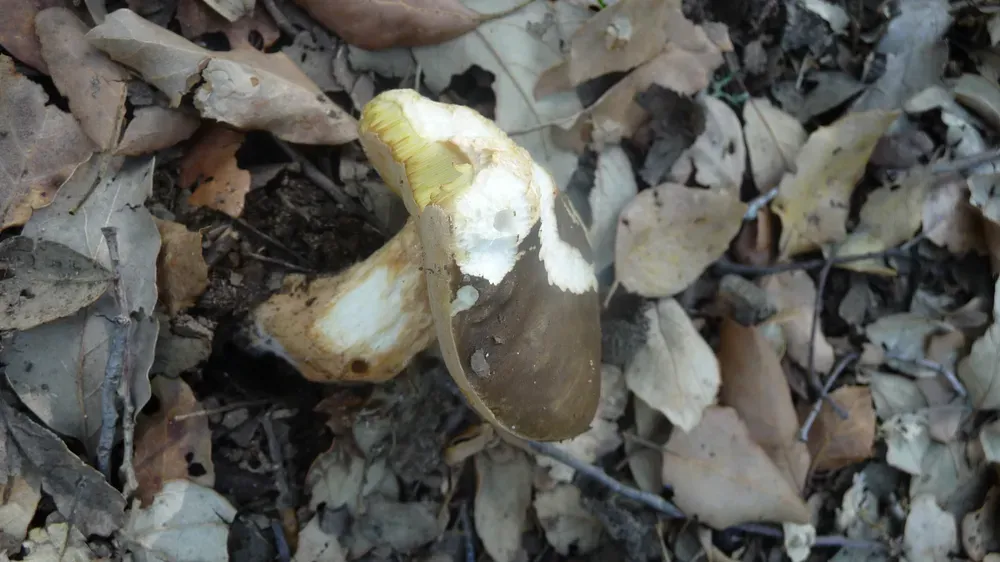
Blushing bolete
Leccinum roseofractum
Frequently asked questions
Is it poisonous?
Not poisonous, but inedible because of its tough, leathery flesh — it's simply impossible to chew. No culinary value.
How do you identify it for sure?
Four features. (1) A small (1-4 cm), fan-shaped fruiting body WITHOUT a stem on hardwood. (2) Upper surface densely covered with stiff hairs like felt. (3) A distinctly banded yellow-orange-brown upper surface. (4) Underside — SMOOTH, with no pores, gills or spines (unlike bracket fungi with pores or other fungi).
Is it a pest?
Not for a healthy tree, S. hirsutum only attacks wood that is already dead (fallen trunks, cut stumps, dry branches). In the natural cycle it's a useful decomposer, important for breaking down wood in forests. It doesn't parasitize living trees.
Where should you look for it, so you'll recognize it?
On dead wood of broadleaf trees (beech, oak, hornbeam, birch, willow, poplar) — fallen trunks, dry branches, cut stumps, firewood in the woodshed. A common find in any broadleaf or mixed forest. It often grows in overlapping, tile-like tiers of 10-50 fruiting bodies on a single trunk.
Which regions of Ukraine is it found in?
Common everywhere: the Carpathians, the Carpathian foothills, Polissia, the forest-steppe, the steppe (in shelterbelts). One of the most widespread fungi in human-made environments — on firewood, in yards, in parks.
When can you find it?
Year-round — on dead wood. Active growth during the damp season (March–November), but dried fruiting bodies are visible in winter too, and they come back to life after rain. One of the most consistently visible fungi of the year.
Which mushrooms is it confused with?
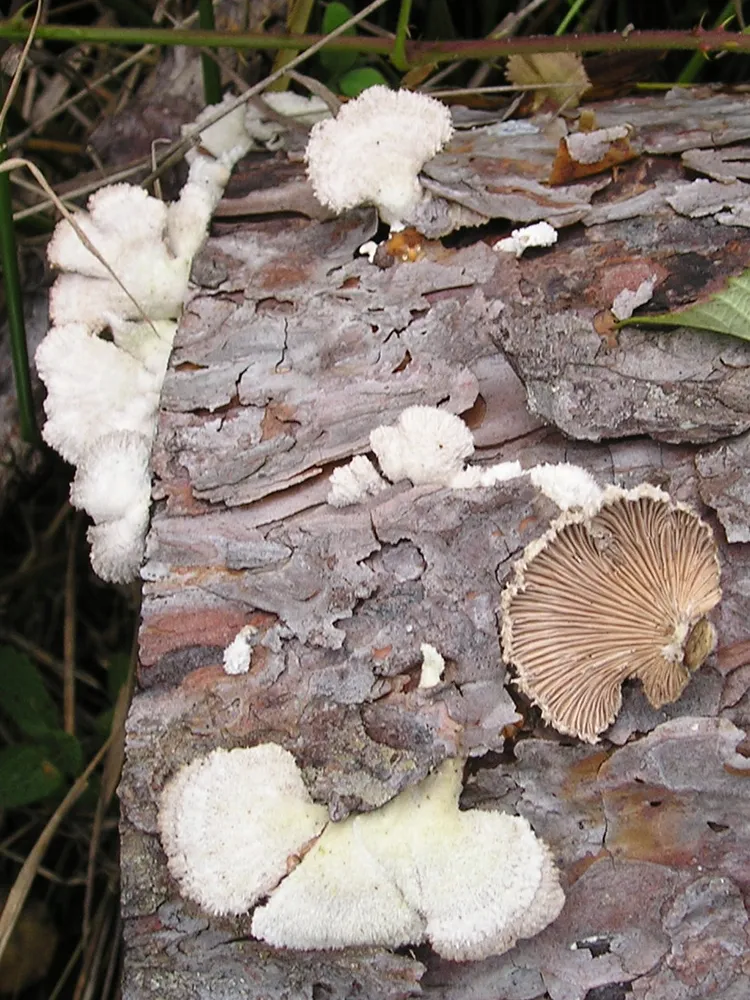
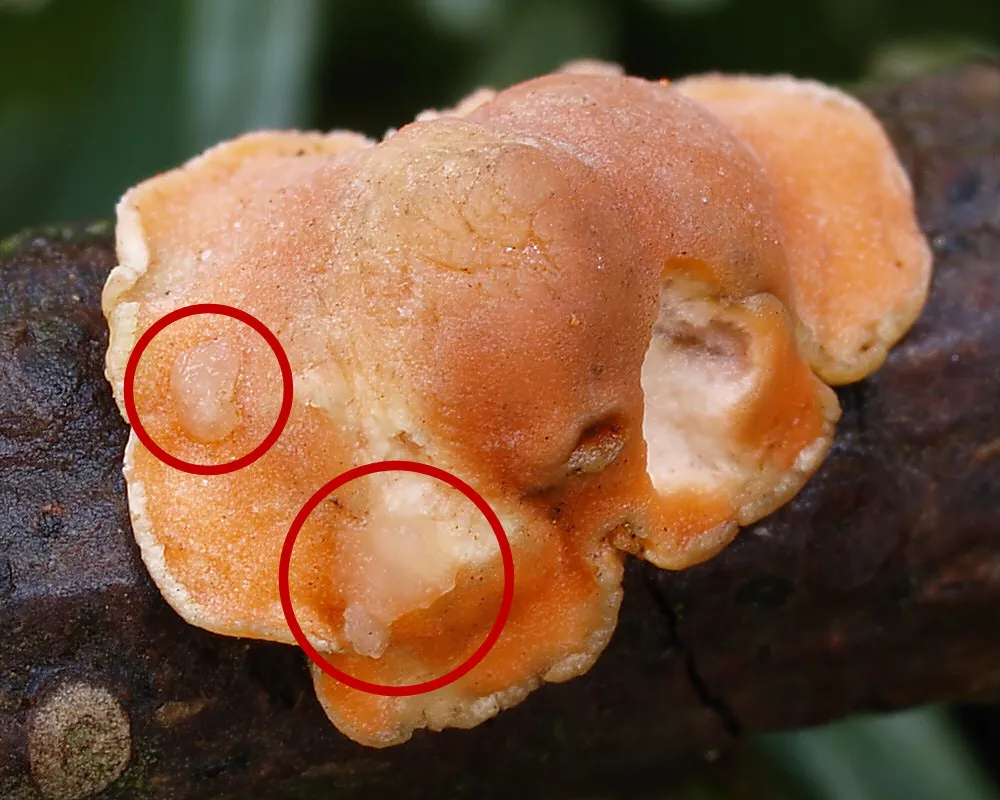
With Stereum subtomentosum — a close relative, only finely hairy (not bristly). With Trametes versicolor (turkey tail) — also banded, but with distinct pores on the underside (not smooth). With Schizophyllum commune (splitgill) — also small and on wood, but with split gills underneath.
Is Hairy curtain crust edible or poisonous?
What kind of spore-bearing surface does Hairy curtain crust have?
What does the cap of Hairy curtain crust look like?
What does the stem of Hairy curtain crust look like?
What do Hairy curtain crust smell and taste like?
Sources
- [1]Вікіпедія (українська)
- [2]Атлас грибів України, Зеров Д.К. (1979)
- [3]MycoBank Database
- [4]Index Fungorum
- [5]GBIF
- [6]iNaturalist Ukraine