THIS DATA HAS NOT BEEN VERIFIED BY AN EXPERT. Use at your own risk.
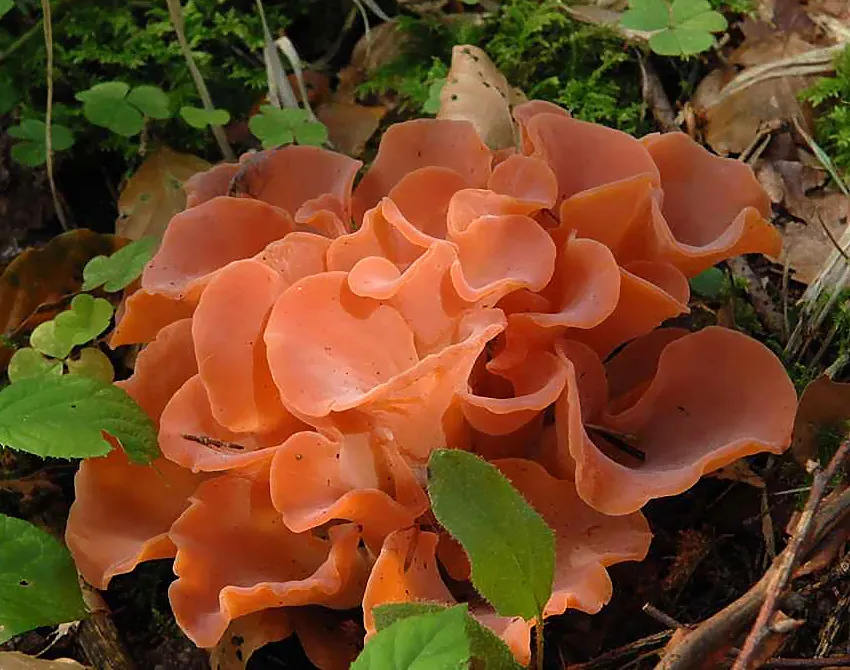
Apricot jellyGuepinia helvelloides
Under reviewUpdated October 3, 2026
Passport
- Edibility
- Edible
- Season
- Jun — Oct
- Hymenophore
- Smooth
- Cap color
- Pink
- Size
- Medium (5–15 cm)
- Smell
- Odorless
- Reviewed
- Under review
Quick answers
Where to look?
Conifer forest, Mixed forest
When does it appear?
Jun — Oct
Active months: June, July, August, September, October.
How to recognize it? Three signs
- Cap color: Pink, Orange, Red
- Cap shape: Irregular
- Smell: Odorless
Fruiting season
June – October
Description
The apricot jelly, known to science as Guepinia helvelloides (formerly Tremiscus helvelloides), is a bright jelly fungus of a delicate salmon, pinkish-apricot color, shaped like an ear, a tongue or a petal rolled into a cone. Its unusual look and color make it easy to recognize: among green moss or brown needles it glistens like a piece of fruit jelly. It is a jelly fungus from the auricularioid group, a saprotroph that lives on soil next to buried rotting wood, most often in conifer forests.
In Ukraine, the apricot jelly occurs in conifer and mixed forests, in damp, shady spots with a moss cover where dead wood lies hidden. It fruits in summer and autumn — from June to October; the mushroom appears singly or in small groups, often after rain, when its jelly-like flesh swells with moisture.
In terms of edibility, the apricot jelly is an edible mushroom, although its taste is rather bland and nondescript. Its springy, jelly-like flesh is eaten even raw — added to salads for its bright color and pleasant crunchy texture — pickled, or even candied like a jelly dessert. Young specimens are best, since old ones become tough and rubbery. It is more of a decorative addition to dishes than a filling food, but its unusual look makes the mushroom a coveted find.
Cap
There is no true cap. The fruiting body is jelly-like, springy, lobed or tongue-shaped, often rolled into a cone or funnel, 4 to 10 centimeters tall and up to 10–17 wide. The surface is smooth, with a matte sheen. The color is vivid — salmon pink, apricot, reddish pink, even across the whole fruiting body. The jelly-like consistency and salmon color make this mushroom unlike anything else.
Hymenophore
The hymenophore is smooth and located on the outer (convex, lower) surface of the fruiting body; that is where the spores form. There are no gills, tubes or spines. The spore print is whitish. The inner (concave) surface is somewhat paler and matte. A smooth spore-bearing layer on a jelly-like body is a typical feature of auricularioid fungi.
Stem
There is hardly any distinct stem; the fruiting body narrows downward into a short stem-like base, up to 5 centimeters long, often covered in white, felty mycelium and attached to the soil or to hidden wood. The whole structure is jelly-like and springy, firmer in the lower part, almost cartilaginous.
Flesh
The flesh is jelly-like, springy, translucent, salmon pink, softer in the upper part and firmer, almost cartilaginous, in the stem. It does not change color when cut. The taste is bland, watery and nondescript, without bitterness. Thanks to its springy, crunchy texture, the flesh is eaten even raw in salads; old specimens become tough.
Smell
The smell is faint, almost imperceptible, without sharp notes. The scent is not a defining feature; the mushroom is recognized by its bright salmon-pink color, jelly-like springy flesh and tongue-shaped, lobed form.
›Scientific synonyms (3)
Tremiscus helvelloides (DC.) Donk, Phlogiotis helvelloides (DC.) G.W. Martin, Gyrocephalus rufus (Jacq.) Bref.
Lookalikes
.webp)
Related species
Mushrooms of the same genus and habitat — to study side by side and never mix up.
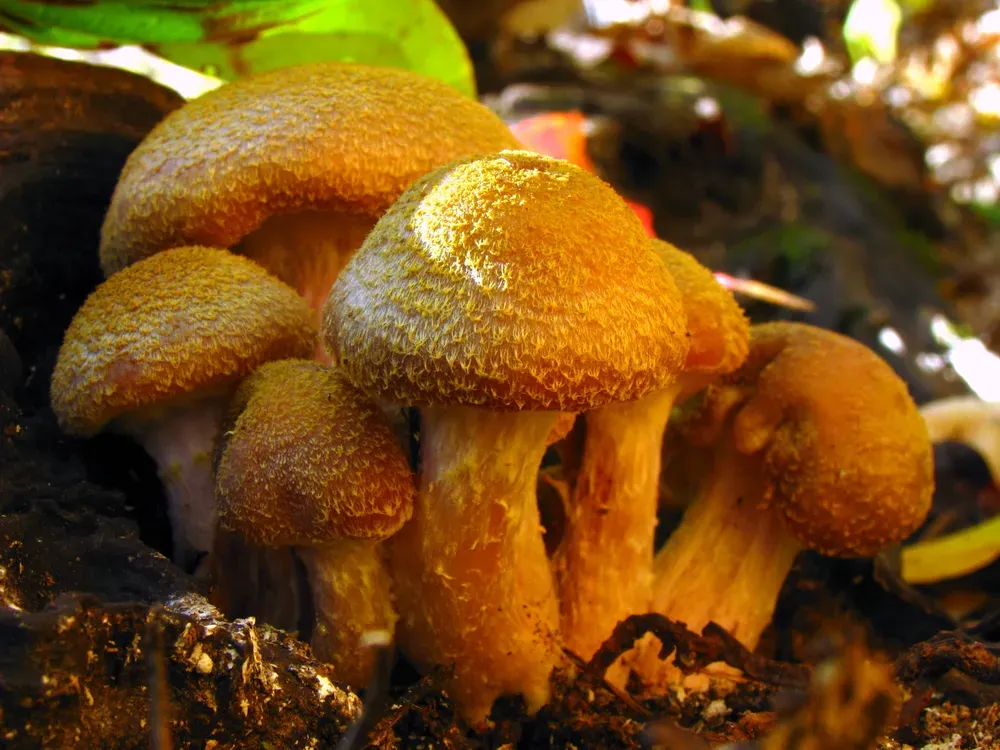
Bulbous honey fungus
Armillaria gallica
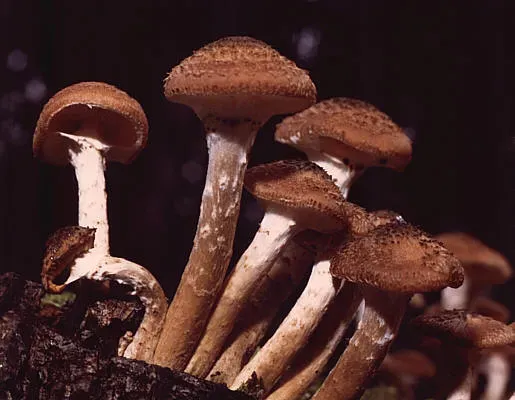
Dark honey fungus
Armillaria ostoyae
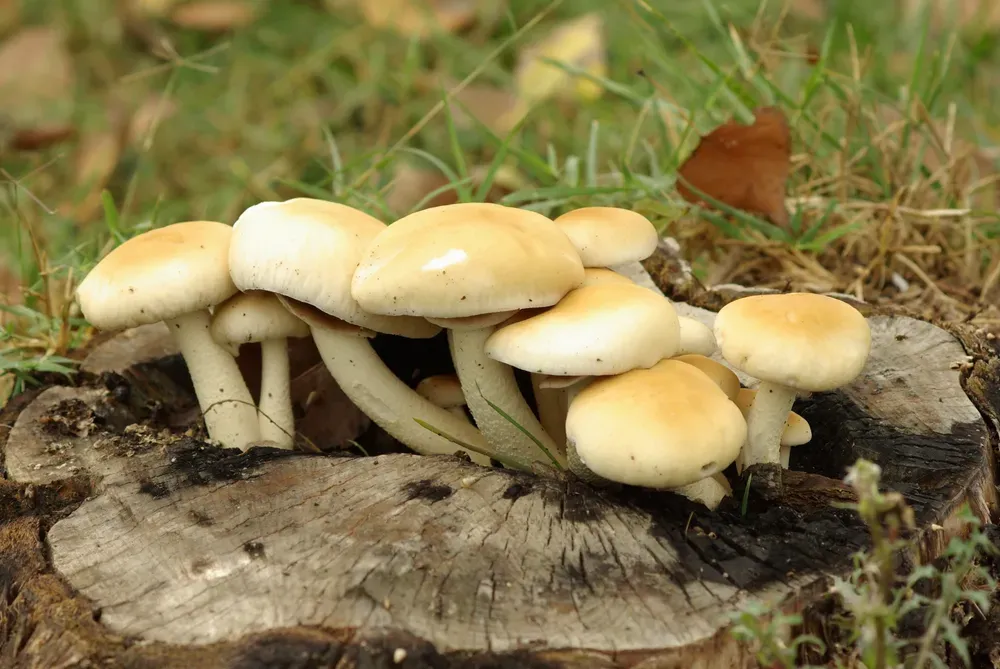
Poplar fieldcap
Cyclocybe aegerita
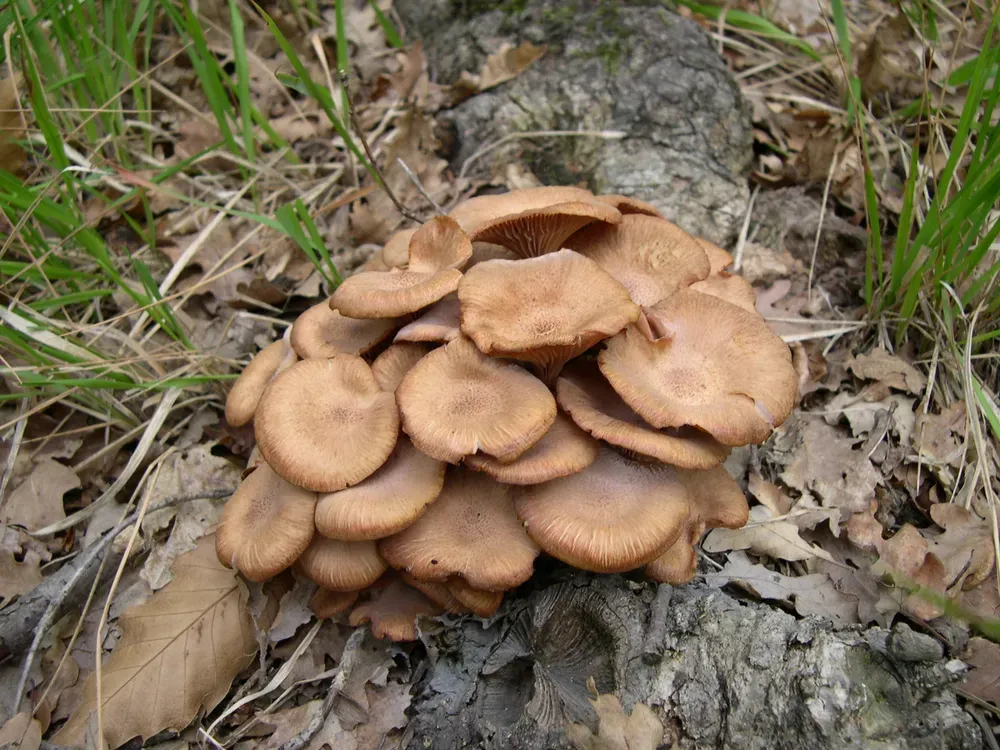
Ringless honey fungus
Desarmillaria tabescens
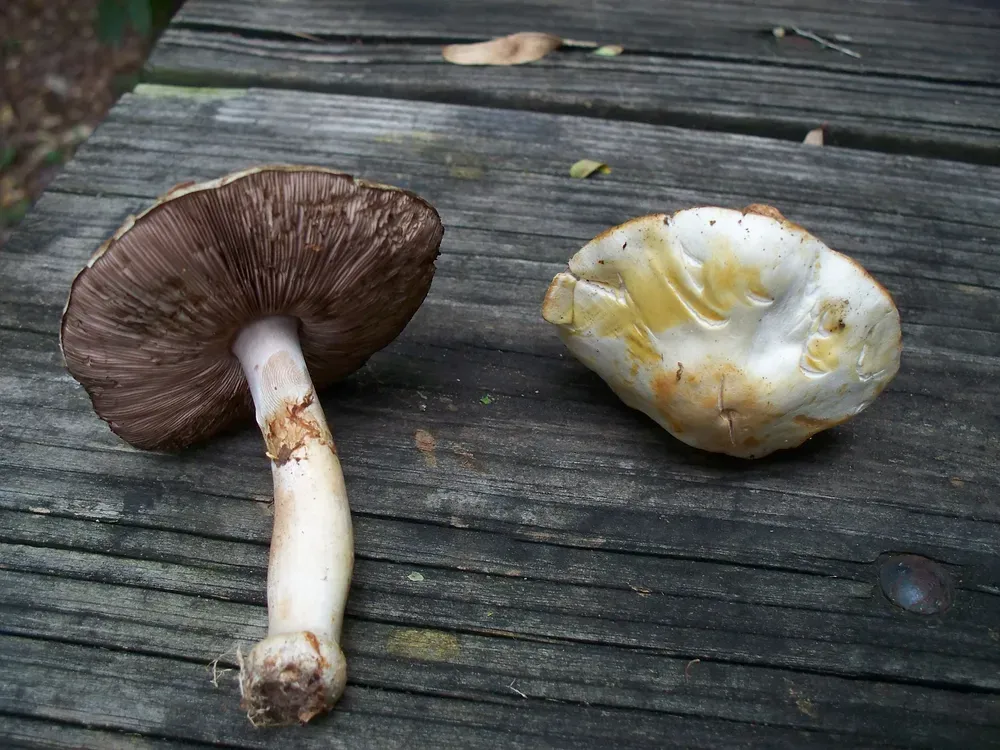
Agaricus abruptibulbus
Agaricus haemorrhoidarius
Agaricus haemorroidarius
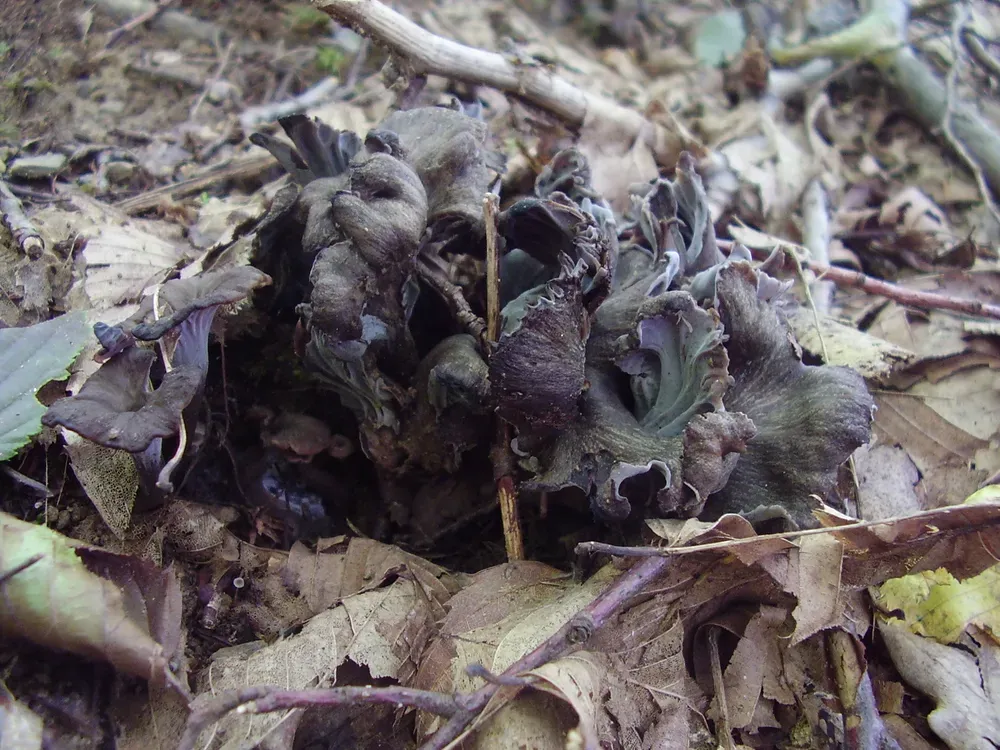
Ashen chanterelle
Cantharellus cinereus
Blushing bolete
Leccinum roseofractum
Frequently asked questions
Is Apricot jelly edible or poisonous?
What kind of spore-bearing surface does Apricot jelly have?
What does the cap of Apricot jelly look like?
What does the stem of Apricot jelly look like?
What do Apricot jelly smell and taste like?
Where does Apricot jelly grow?
Which trees does Apricot jelly grow under?
When should you pick Apricot jelly?
What can Apricot jelly be confused with?
How do you cook Apricot jelly?
Can you dry Apricot jelly?
What is the scientific name of Apricot jelly?
Sources
- [1]Вікіпедія (українська)
- [2]Атлас грибів України, Зеров Д.К. (1979)
- [3]MycoBank Database
- [4]Index Fungorum
- [5]GBIF
- [6]iNaturalist Ukraine