Upright coralRamaria stricta
Expert-verifiedUpdated August 15, 2026
Passport
- Edibility
- Inedible
- Season
- Aug — Oct
- Hymenophore
- Smooth
- Cap color
- Yellow
- Size
- Small (up to 5 cm)
- Smell
- Pleasant
- Reviewed
- Yes ✓
Quick answers
Where to look?
Deciduous forest, Mixed forest
When does it appear?
Aug — Oct
Active months: August, September, October.
How to recognize it? Three signs
- Cap color: Yellow, Brown
- Cap shape: Irregular
- Smell: Pleasant, Anise
Fruiting season
August – October
Description
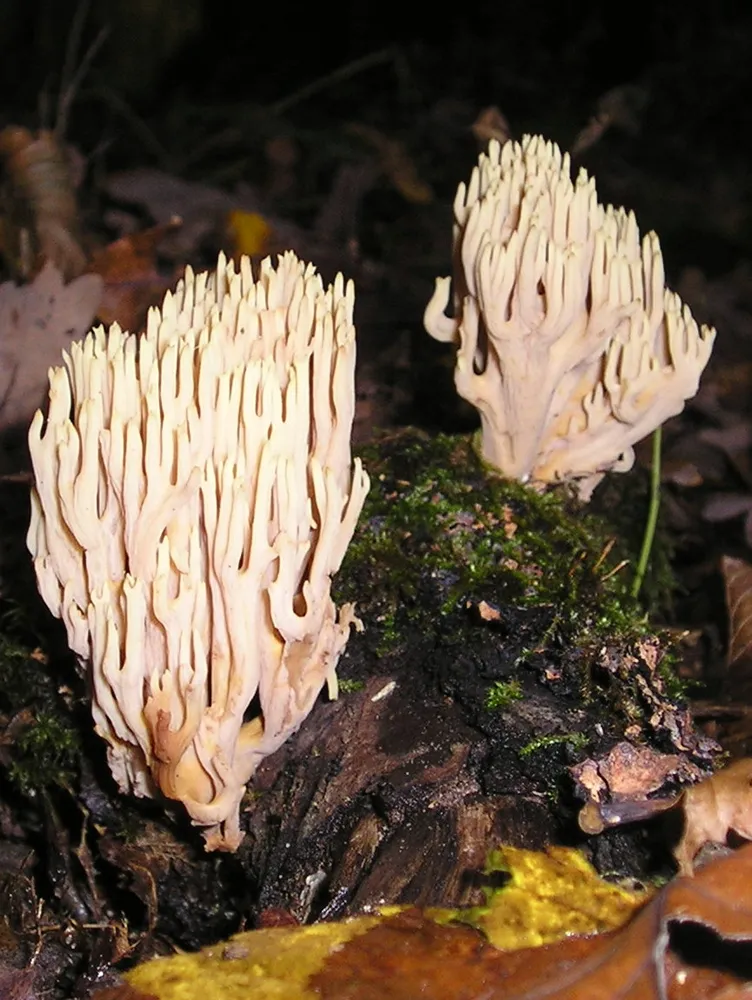
Upright coral (Ramaria stricta) is the most common and easiest-to-find coral fungus, but it's inedible because of its tough, bitterish flesh. The Latin epithet stricta means "tightly gathered, straight" — the branches rise vertically and in parallel, thin like a little brush. Unlike the fleshy R. botrytis and R. aurea, this coral is smaller and lacier, with a distinctly wood/litter-based ecology (it grows on stumps and dead wood, not on soil).
Color: ochre-yellow to brownish-yellow, turning brown with age. The branch tips are thin, pointed, the same color as the branches, often browning. Quickly turns brown when cut or pressed — a characteristic reaction. The smell is faintly mushroomy with a hint of anise or conifer needles, the taste distinctly bitter, astringent — which is the main reason nobody eats it.
Not poisonous — it causes no acute gastrointestinal reactions, but it's bitter and tough, and it spoils the flavor of soups and fried dishes. Older literature sometimes mentions it as "conditionally edible after long boiling" — in practice it keeps a bitterish aftertaste even then, so people avoid it.
In Ukraine R. stricta is common in deciduous and mixed forests: the Carpathians, Prykarpattia, Polissia, the forest-steppe. On dead wood of beech, oak and hornbeam, less often conifers. A wood saprotroph. The season runs August — October.
Its practical value: learning to recognize it, so you don't confuse it with edible corals or waste time picking it.
Cap
A bushy fruiting body with no cap. Size 5-10 cm tall, 3-7 cm across. Branches thin, straight, parallel, rising vertically, like a little brush or broom. Color ochre-yellow, becoming brownish-yellow to brown with age. The branch tips are thin, pointed, the same color, often darker at the base.
Hymenophore
The spore-bearing layer covers the surface of the branches. Spore print ochre.
Stem
Shared base short, thin, 1-3 cm tall, 0.5-1 cm across, ochre-white with fine felty threads at the bottom (where it attaches to the substrate).
Flesh
Flesh thin, limp, yellowish. Quickly turns brown when pressed or cut — a characteristic reaction and an important diagnostic. Taste distinctly bitter, astringent.
Smell
Faintly mushroomy with a hint of anise or fresh conifer cones.
Lookalikes
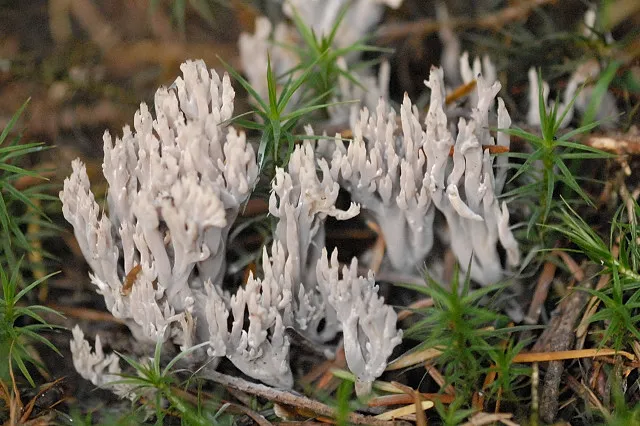
Related species
Mushrooms of the same genus and habitat — to study side by side and never mix up.
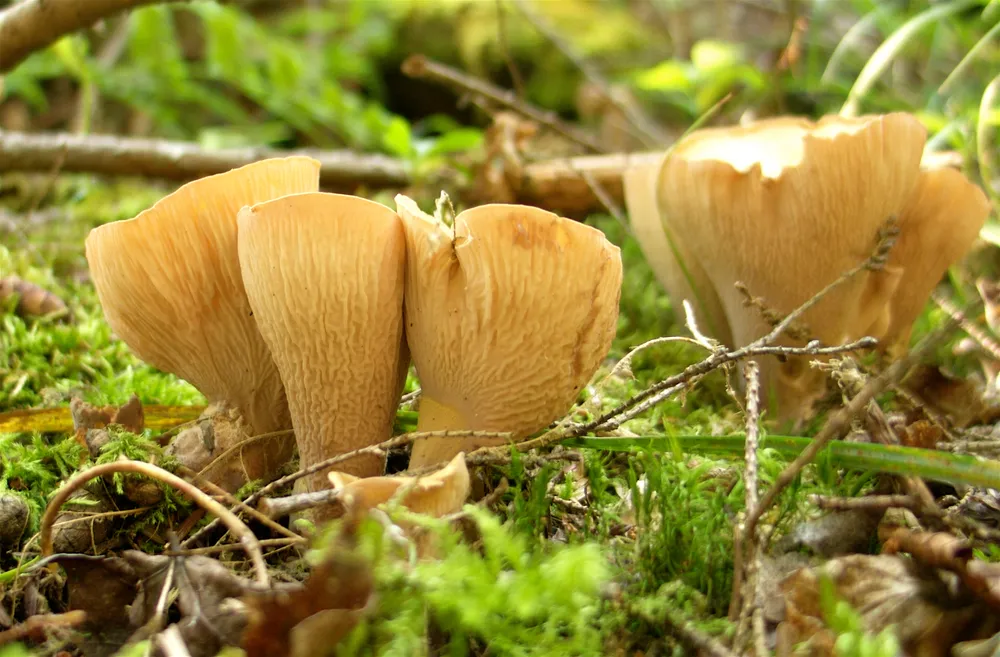
Pig's ear
Gomphus clavatus
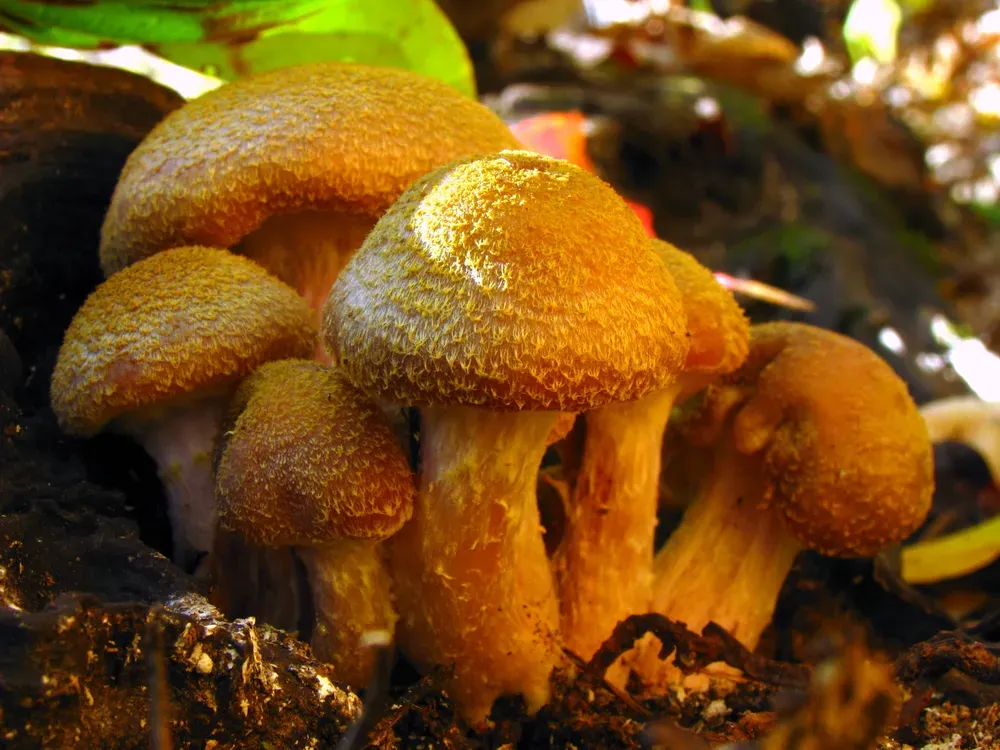
Bulbous honey fungus
Armillaria gallica
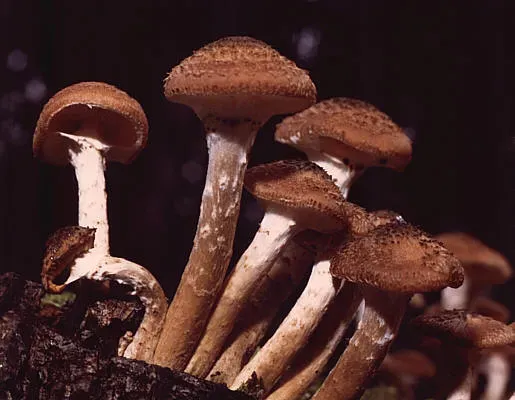
Dark honey fungus
Armillaria ostoyae
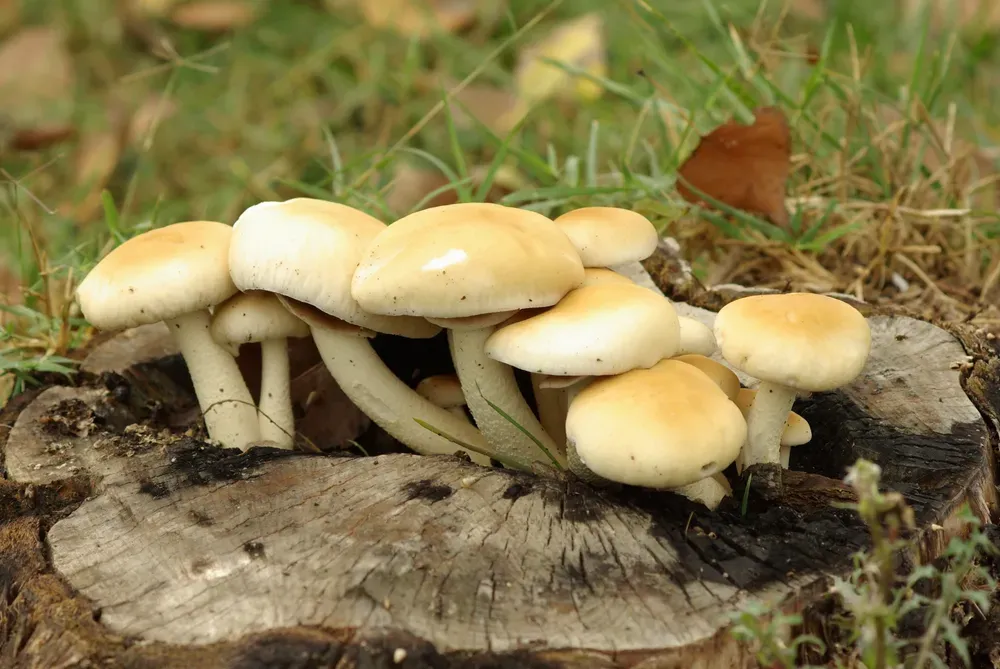
Poplar fieldcap
Cyclocybe aegerita
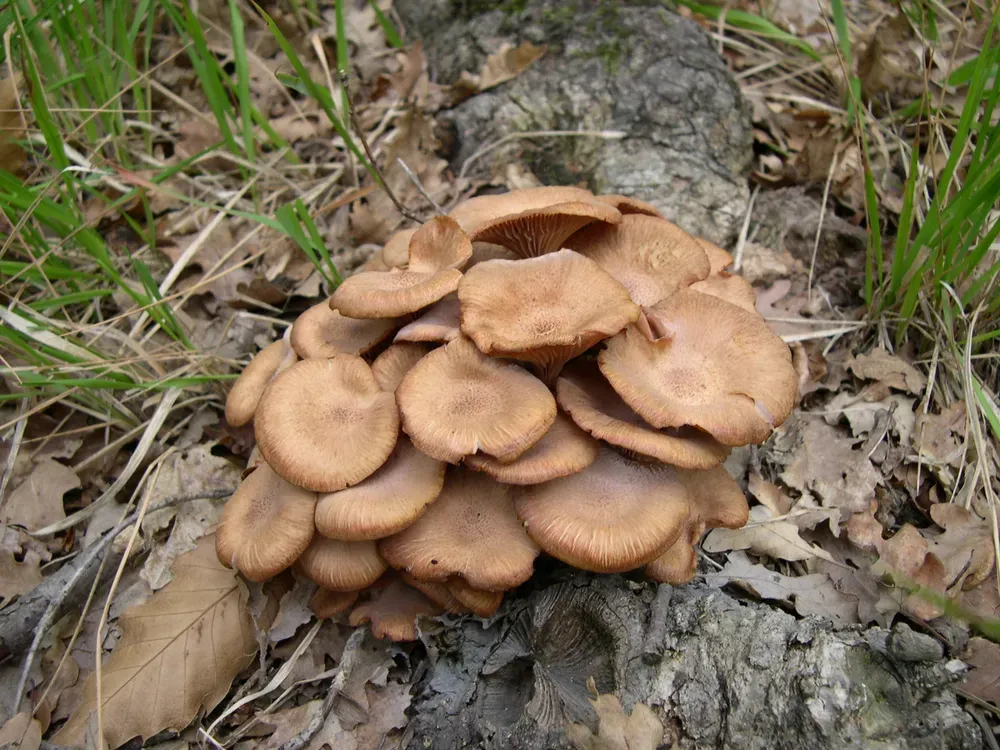
Ringless honey fungus
Desarmillaria tabescens
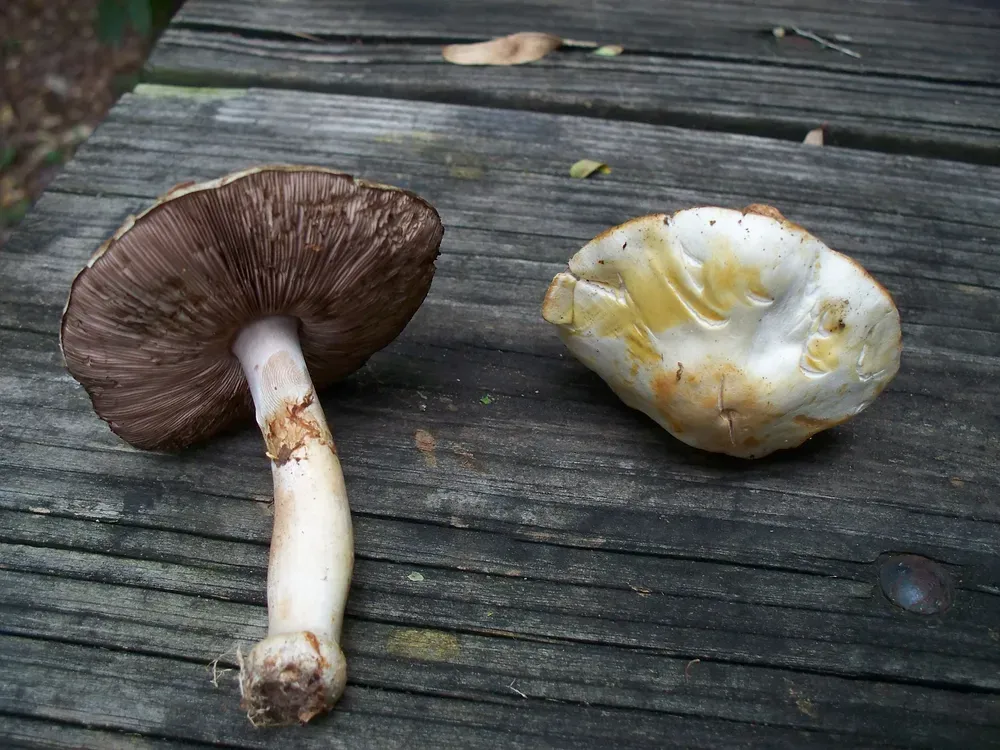
Agaricus abruptibulbus
Agaricus haemorrhoidarius
Agaricus haemorroidarius
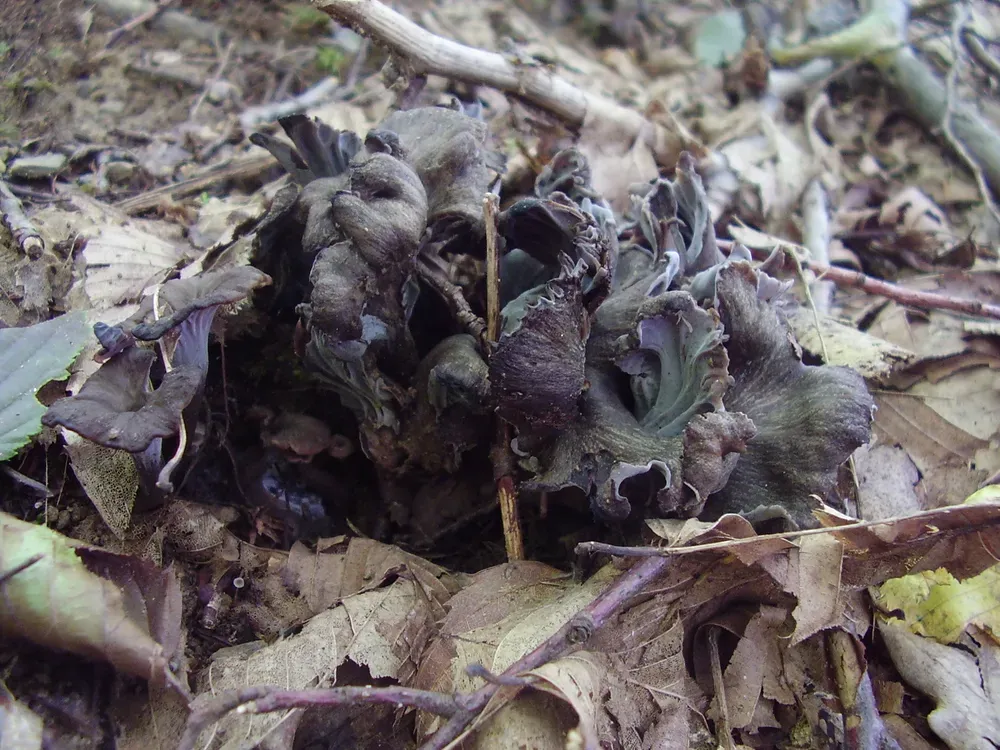
Ashen chanterelle
Cantharellus cinereus
Frequently asked questions
Is it poisonous?
No, not poisonous — it causes no serious gastrointestinal reactions. But it's bitter and tough, with no culinary value.
How do you tell it from edible corals?
Key features of R. stricta: (1) thin, straight, parallel branches, a lacy bush; (2) yellow-ochre to brownish-yellow color, no pink tips; (3) grows on wood (stumps, rotting wood), not on soil; (4) the flesh quickly turns brown when pressed; (5) bitter taste. The edible R. botrytis is a compact bush with pink tips, growing on soil; R. aurea is golden-yellow, on soil, and fleshier.
Can you eat it after long boiling?
Not worth it. Even after 30 minutes of boiling with a change of water, a bitterish aftertaste remains. There's no culinary point — the same spot often has genuinely tasty mushrooms.
Where to look for it, so you learn to recognize it?
On dead wood — old stumps, fallen trunks, rotting branches of beech, oak and hornbeam, less often pine and spruce. In deciduous and mixed forests. This is the key difference from edible corals — those grow on soil.
Where in Ukraine does it grow?
Common throughout Ukraine's forest zone: the Carpathians, Prykarpattia, Polissia, the forest-steppe. Rarer in the steppe — only in shelterbelts and ravine forests.
When should you look for it?
August — October, peaking in September. It likes a damp autumn.
What is it confused with?
With R. abietina (green-staining coral) — also lacy, but turns green when damaged and grows among conifers. With young R. botrytis and R. aurea — but those grow on soil and are fleshier. With Calocera viscosa — a small, jelly-like coral fungus on stumps (a different texture).
Is Upright coral edible or poisonous?
What kind of spore-bearing surface does Upright coral have?
What does the cap of Upright coral look like?
What does the stem of Upright coral look like?
What do Upright coral smell and taste like?
Sources
- [1]Вікіпедія (українська)
- [2]Атлас грибів України, Зеров Д.К. (1979)
- [3]MycoBank Database
- [4]Index Fungorum
- [5]GBIF
- [6]iNaturalist Ukraine