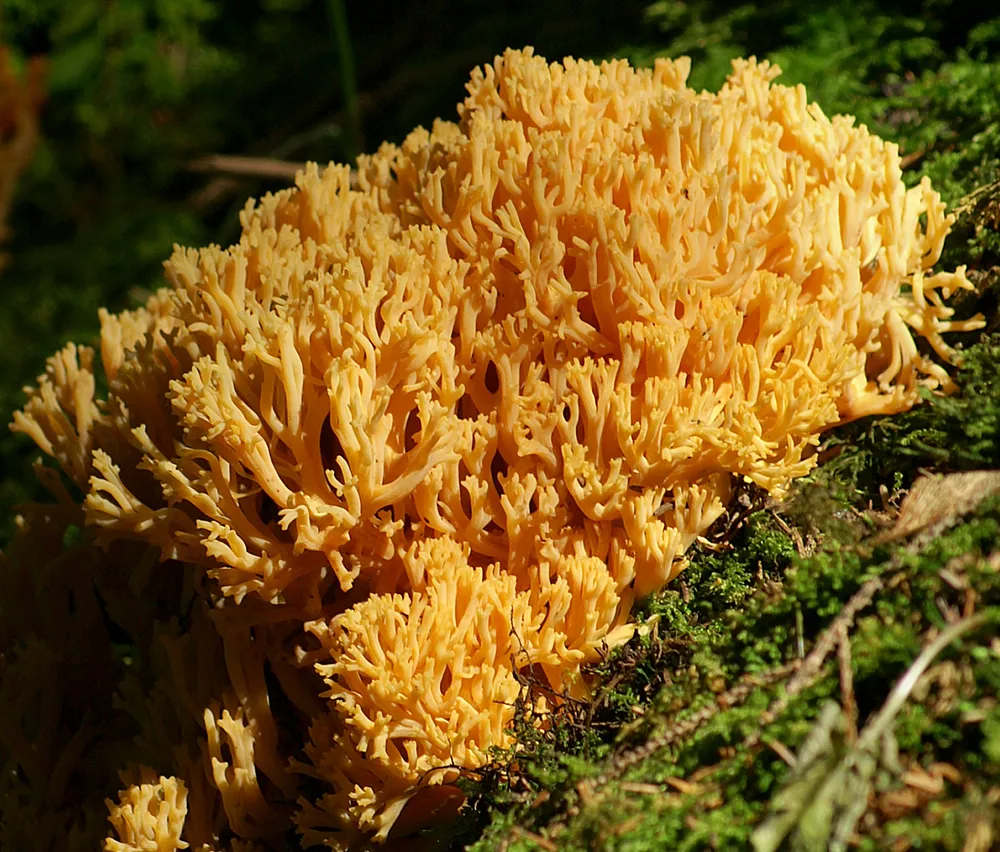
Ramaria aurea
Expert-verifiedUpdated October 3, 2026
Passport
- Edibility
- Conditionally edible
- Season
- Aug — Oct
- Hymenophore
- Smooth
- Cap color
- Yellow
- Size
- Medium (5–15 cm)
- Smell
- Odorless
- Reviewed
- Yes ✓
Quick answers
Where to look?
Deciduous forest
When does it appear?
Aug — Oct
Active months: August, September, October.
How to recognize it? Three signs
- Cap color: Yellow, Orange
- Cap shape: Irregular
- Smell: Odorless
Fruiting season
August – October
Description
Ramaria aurea — a bright yellow-gold coral mushroom with slender branching "fingers" that grows in beech and oak forests. The Latin epithet aurea — "golden" — captures its color perfectly: a rich yellow-gold, turning ochre-tinged with age. The cluster is less compact than in R. botrytis: the branches are thin, long, parallel and straight, without the telltale pink tips.
By European tradition, it is conditionally edible: young specimens can be cooked after mandatory boiling for 10-15 min, discarding the water, otherwise they cause gastrointestinal upset (nausea, diarrhea). Older ones taste bitter, and the laxative effect gets stronger. Some sources (notably American and some German ones) put it on the "avoid" list because reactions are inconsistent — it affects different people differently.
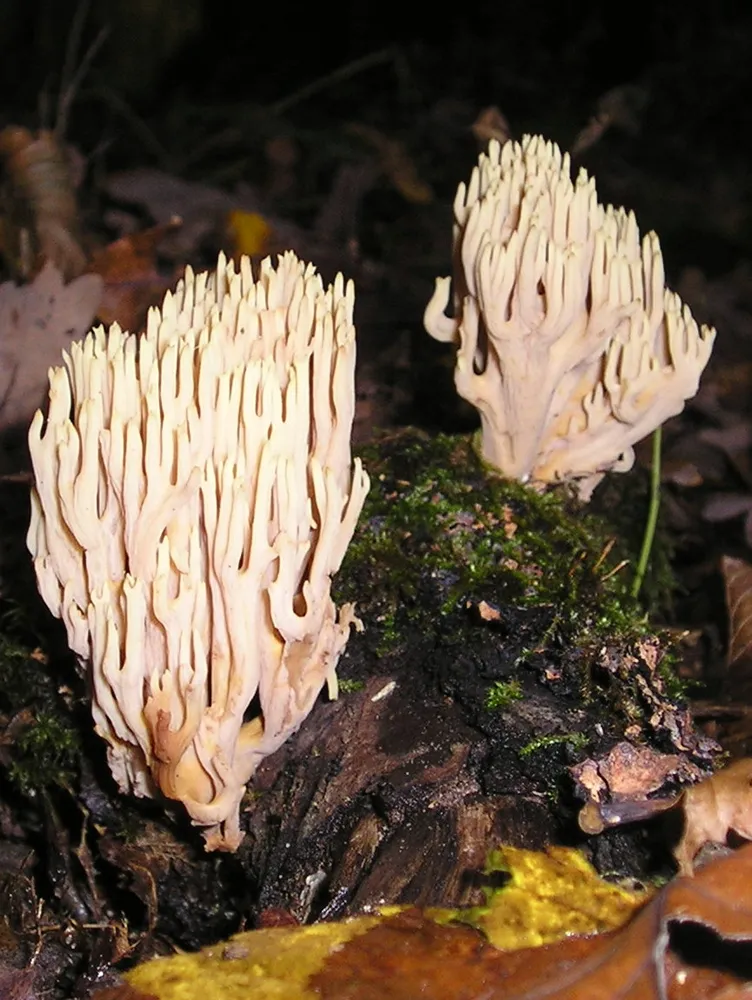
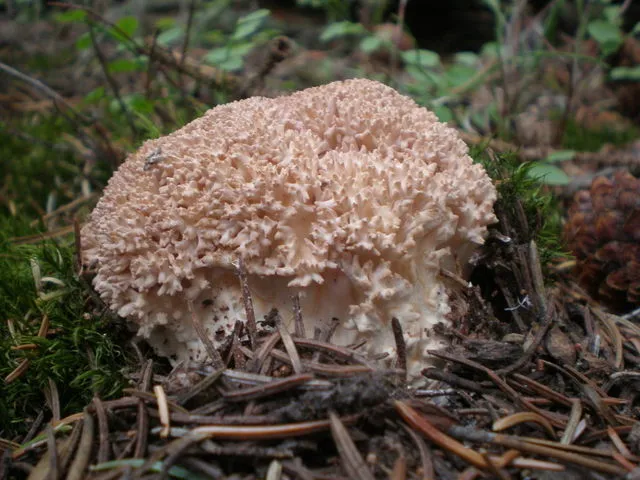
The main risk is confusing it with R. formosa (salmon coral), which looks very similar but is salmon-orange, not pure yellow, and causes severe diarrhea. When in doubt, leave it. If the cluster is lacy and yellow, be careful; R. botrytis (edible) looks completely different (compact, with pink tips).
In Ukraine, Ramaria aurea is found in the beech and oak forests of the Carpathians, Prykarpattia and western Podillia, and less often in Polissia. It forms mycorrhiza with beech and oak. Season: August — October. It often grows in groups of 2-5 clusters on the forest floor.
Cap
A bushy fruiting body with no distinct cap or stem. Overall size: 8-15 cm tall, 10-20 cm across. It consists of a slender lower trunk and numerous parallel, straight "fingers" pointing upward. Color: rich yellow-gold, bright lemon when young, turning ochre with age. The branch tips are blunt, the same color as the branches themselves (unlike R. botrytis).
Hymenophore
The spore-bearing layer covers the surface of the branches. Spore print ochre-yellow.
Stem
The shared base is short, 2-4 cm tall, 1-2 cm thick, whitish-yellow, and divides into numerous branches. Surface smooth, white-yellow.
Flesh
Flesh firm, white or pale yellow, toughening with age. It may turn slightly brown when pressed — a weak reaction. Taste mild at first, then slightly bitter, especially in older fruiting bodies.
Smell
Faintly mushroomy, nothing distinctive. None of the fruity notes typical of R. botrytis.
Lookalikes
Related species
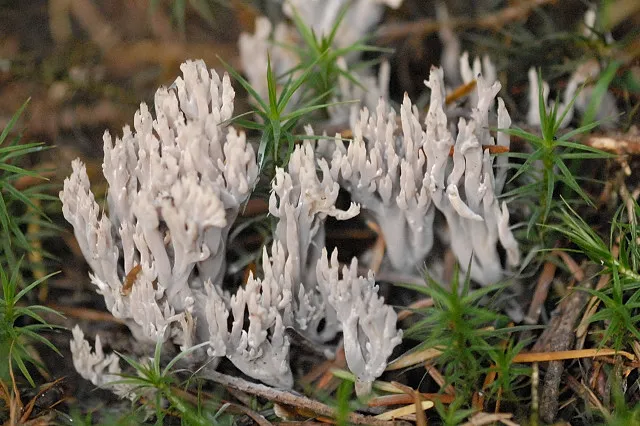
Mushrooms of the same genus and habitat — to study side by side and never mix up.
Bitter coral
Ramaria fennica
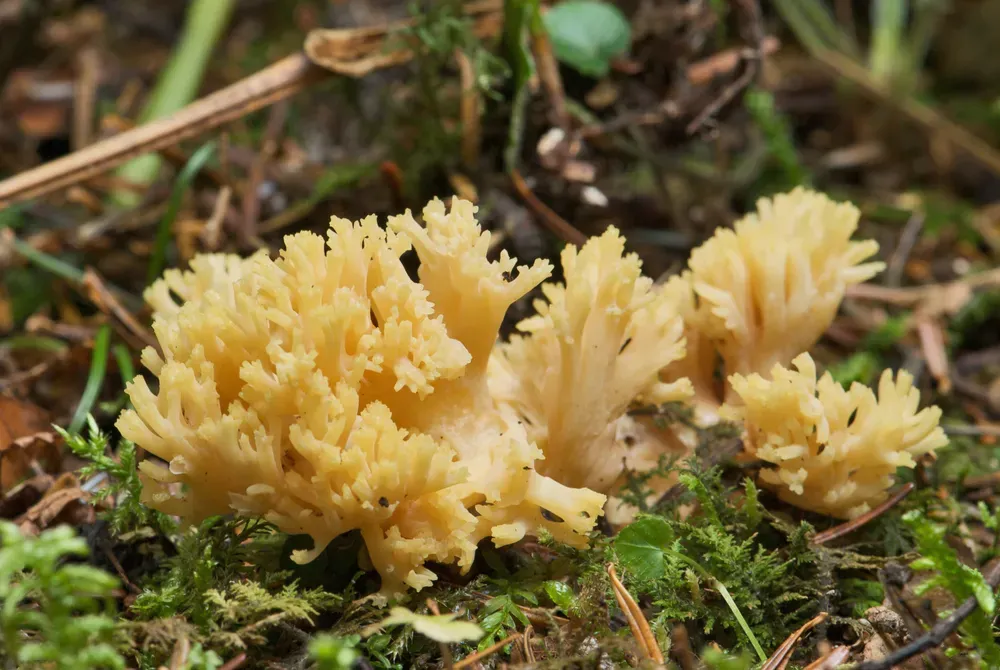
Ramaria flava
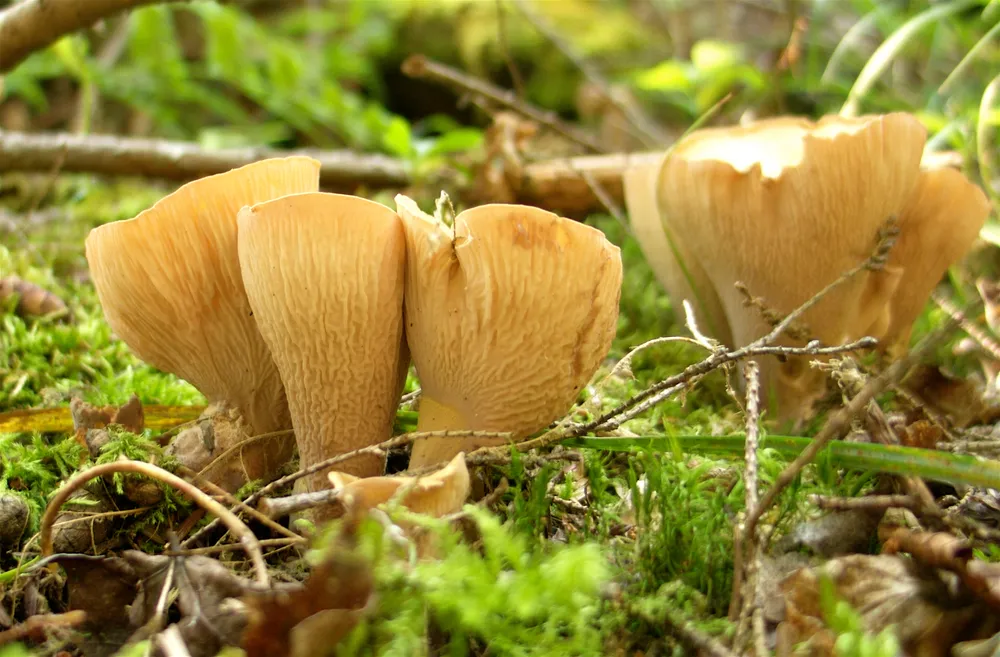
Pig's ear
Gomphus clavatus
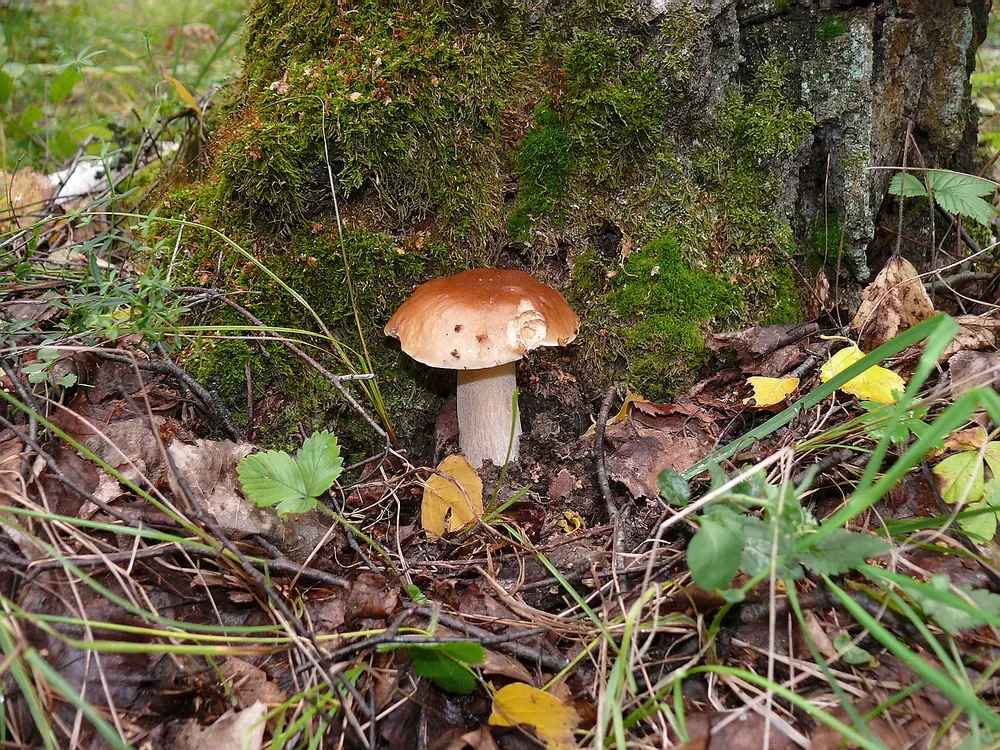
Boletus betulicola
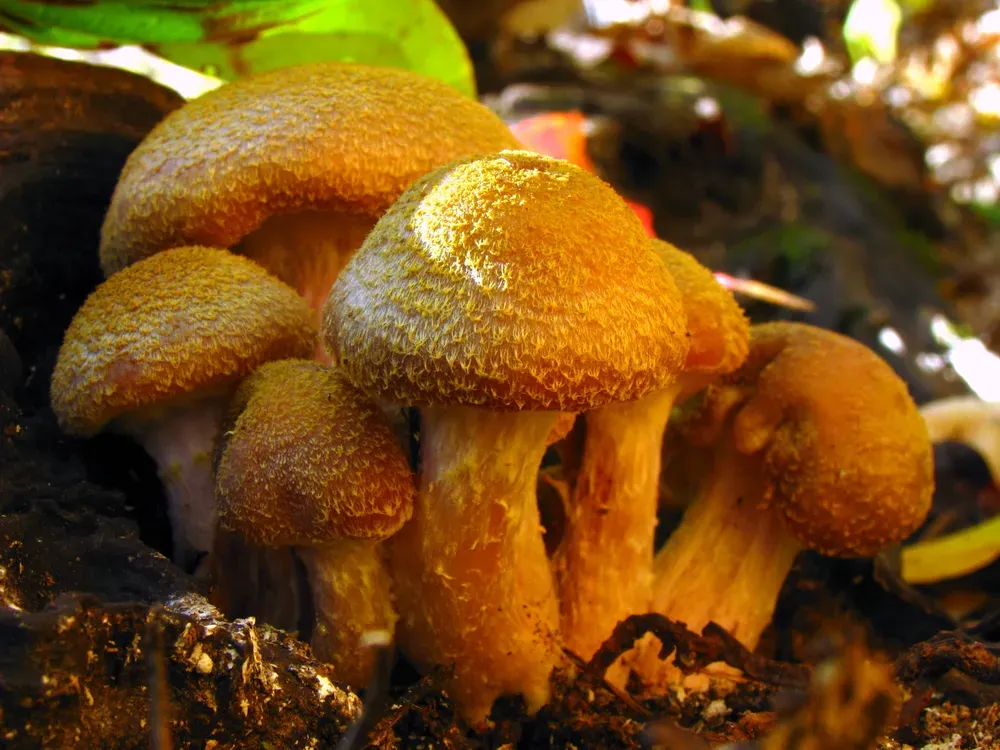
Bulbous honey fungus
Armillaria gallica
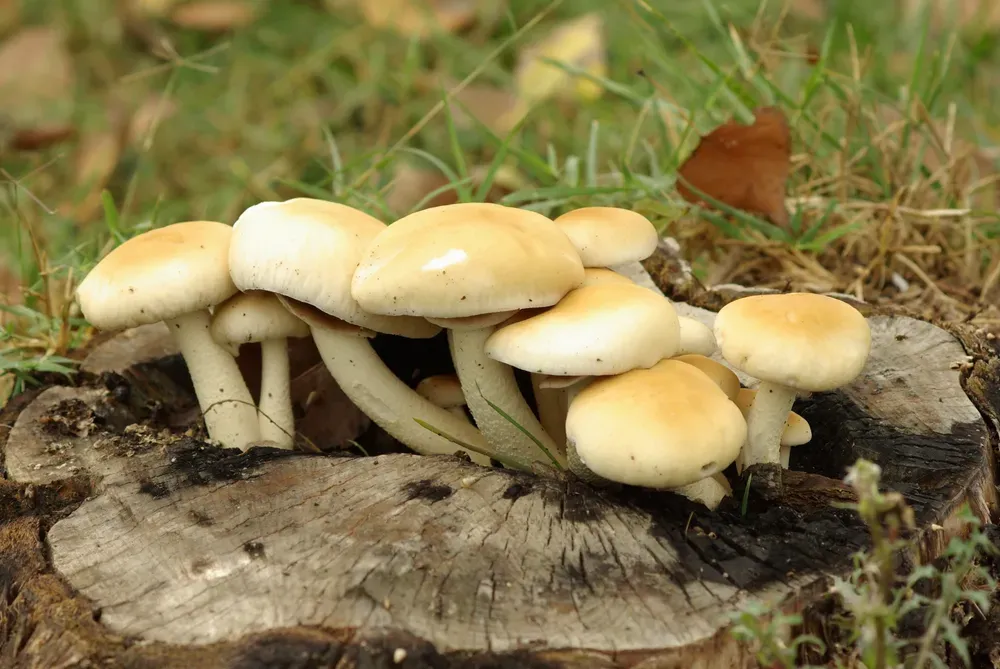
Poplar fieldcap
Cyclocybe aegerita
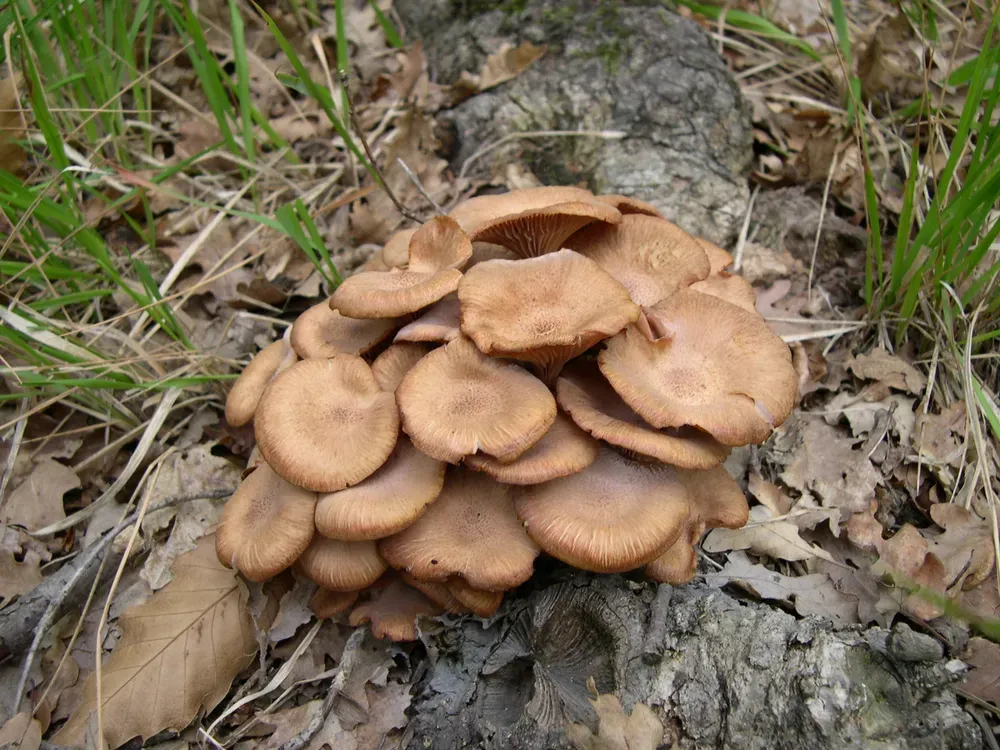
Ringless honey fungus
Desarmillaria tabescens
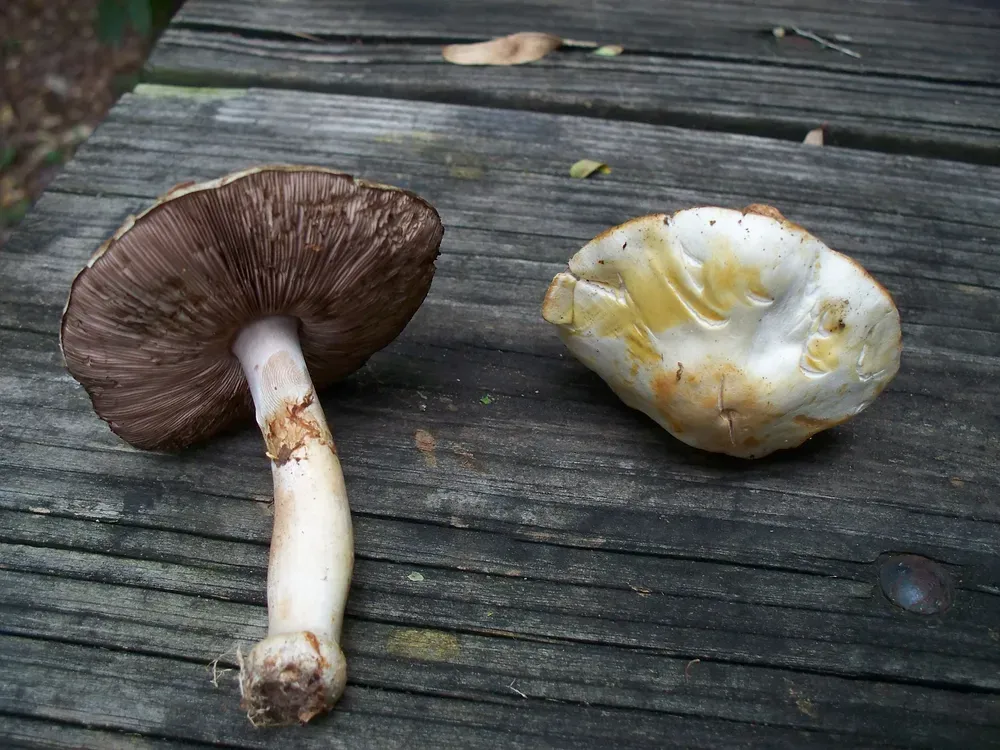
Agaricus abruptibulbus
Frequently asked questions
Is it worth picking?
Not for beginners. This is a conditionally edible mushroom with inconsistent reactions and a risk of confusion with the outright laxative R. formosa. If you know the difference, enjoy the taste of coral fungi and are ready for mandatory boiling — go ahead. Otherwise, walk past and focus on unmistakable species (porcini, honey fungus, chanterelle).
How do you tell it from the laxative R. formosa?
By color. R. aurea is pure yellow-gold, lemon, ochre. R. formosa is salmon-orange, pinkish, flesh-orange, often with pale yellow tips on salmon-colored branches. If there's even a hint of orange/pink — skip it, better safe than sorry. R. formosa causes severe diarrhea even after boiling.
Does it really have to be boiled?
Yes. No exceptions. 10-15 min in salted water, then discard the water. Without this, gastrointestinal upset within 2-6 hours of eating is guaranteed.
How do you cook it after boiling?
Like any coral mushroom: fry it with onions and cream, stew it, add it to soups. Pickling works well. Drying isn't worth it — the flesh turns glassy. First try — a small portion (50 g), then wait 6-8 hours to see how you react.
Where should you look for it?
In beech and oak forests on limestone bedrock. On the forest floor among moss, near old trees. It loves shady, damp spots. It often grows in groups of 2-5 clusters.
Which regions of Ukraine is it found in?
Mostly in the Carpathians, Prykarpattia and western Podillia — in beech and oak woodlands. Less often in Polissia, in old oak groves on limestone.
When should you look for it?
August — October, peaking in September. It loves a warm autumn with moderate rain.
What else does it resemble, besides R. formosa?
It resembles R. flava — also yellow, but with softer branches and forked tips; also conditionally edible. It also resembles R. stricta (upright coral) — more yellow-brown, with very thin straight branches, bitter, inedible. And young Calocera viscosa — a small gelatinous coral-like fungus on conifer stumps (a completely different habit and size).
Is Ramaria aurea edible or poisonous?
What kind of spore-bearing surface does Ramaria aurea have?
What does the cap of Ramaria aurea look like?
What does the stem of Ramaria aurea look like?
Sources
- [1]Вікіпедія (українська)
- [2]Атлас грибів України, Зеров Д.К. (1979)
- [3]MycoBank Database
- [4]Index Fungorum
- [5]GBIF
- [6]iNaturalist Ukraine