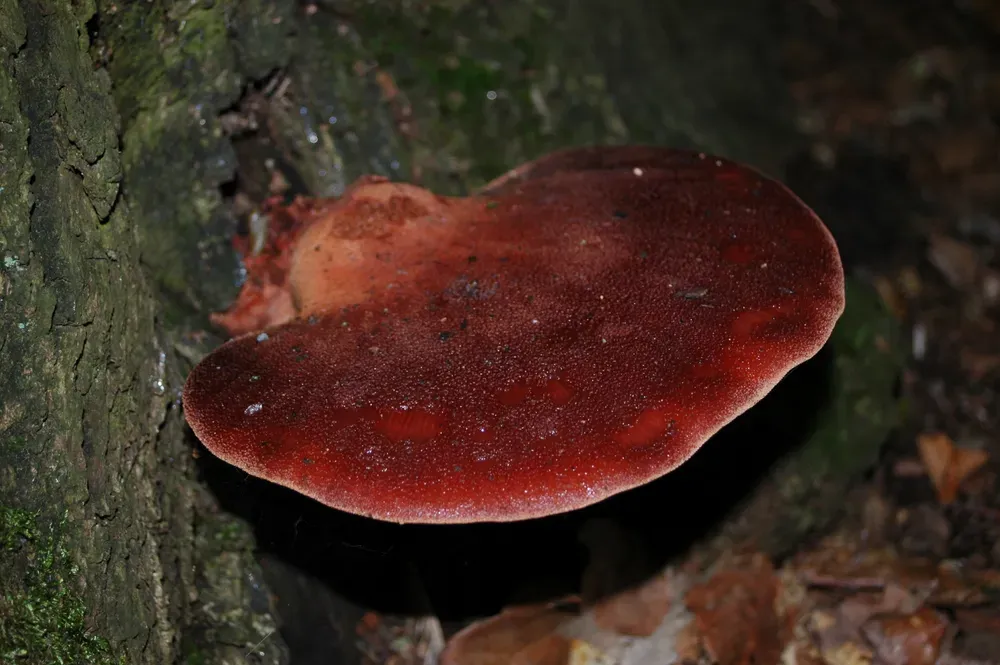
Beefsteak fungusFistulina hepatica
Expert-verifiedUpdated October 3, 2026
Passport
- Edibility
- Edible
- Season
- Jul — Oct
- Hymenophore
- Pored
- Cap color
- Red
- Size
- Large (over 15 cm)
- Smell
- Sour
- Reviewed
- Yes ✓
Quick answers
Where to look?
Deciduous forest, Mixed forest
When does it appear?
Jul — Oct
Active months: July, August, September, October.
How to recognize it? Three signs
- Cap color: Red, Brown
- Cap shape: Irregular
- Smell: Sour
Fruiting season
July – October
Description
The beefsteak fungus (Fistulina hepatica) is a mushroom that's hard to mistake for anything else on a tree. Its tongue-shaped, side-attached fruiting body, bright red or purplish blood-red, really does look like a piece of fresh liver stuck to an oak trunk. Hence the Latin “hepatica”, the Ukrainian name (“the liver one”) and the English “beefsteak fungus”. Foragers who see it for the first time often think it's some kind of medical curiosity rather than an ordinary European mushroom.
The beefsteak fungus parasitizes old oaks (less often beeches and chestnuts), mostly where the bark is deeply wounded or in tree hollows. It actively decays the heartwood but leaves the tree alive for many years — the wood takes on a characteristic brown “oak” color that woodworkers call “brown oak” and value for making furniture. In Ukraine the mushroom occurs in the oak forests of Polissia, the Carpathian foothills, Zakarpattia, the Forest-Steppe and mountainous Crimea — not often, but regularly.
It's fully edible, but only when young. A fresh beefsteak fungus has a sourish, “meaty” taste with a hint of lemon and oak bark. Raw, it's sliced thin and served as a “vegetarian carpaccio” with olive oil and Parmesan. Braised, its texture resembles tongue or beef steak. Old specimens become tough, sour-bitter and inedible. A big plus — it rarely gets wormy thanks to the high acidity of its flesh.
Cap
The fruiting body is tongue-shaped or fan-shaped, side-attached, joined to the substrate by a short lateral outgrowth. Size 10–20 cm (sometimes up to 30) across, 2–6 cm thick. The color is bright red, purplish red, dark blood-red; young mushrooms have pink and orange tints, old ones are dark brownish red. The surface is rough and coarse, with tiny papillae.
Hymenophore
The hymenophore is tubular, but unique among all mushrooms: each tube stands separately, not fused to its neighbors — like a bundle of thin tubes. Yellowish at first, then reddish brown. The pores are small and round. They darken when pressed.
Stem
There is no stem, or it is very short and lateral, a small outgrowth at the base of the fruiting body. The mushroom attaches directly to the tree bark.
Flesh
The flesh is very juicy, filled with a clear red liquid, with whitish veins (hence the comparison with liver). The texture is fibrous, like muscle meat. The cut surface shows a marbled pattern. In old mushrooms it becomes tough and sour.
Smell
Smell faint, sourish, with a note of fresh oak inner bark. Taste distinctive — sourish, with a lemony, meaty tinge. A slight acidity is a normal trait of the species.
›Scientific synonyms (10)
Thelephora bucreas Spreng. 1806, Boletus buglossum Retz. 1769, Fistulina buglossum (Retz.) Pers. 1794, Boletus bulliardii J.F. Gmel. 1792, Fistulina endoxantha Speg. 1921, Fistulina hepatica var. endoxantha (Speg.) J.E. Wright 1961, Boletus esculentus With. 1776, Agarico-carnis lingua-bovis Paulet 1793, Buglossus quercinus Wahlenb. 1820, Fistulina sarcoides St.-Amans 1821
Lookalikes
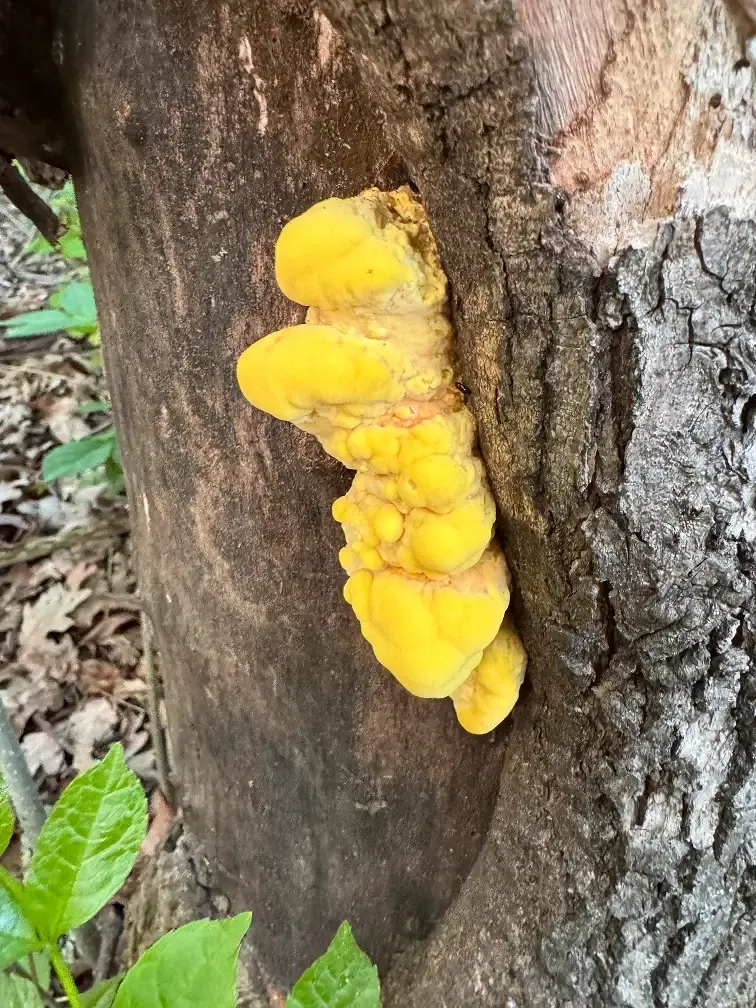
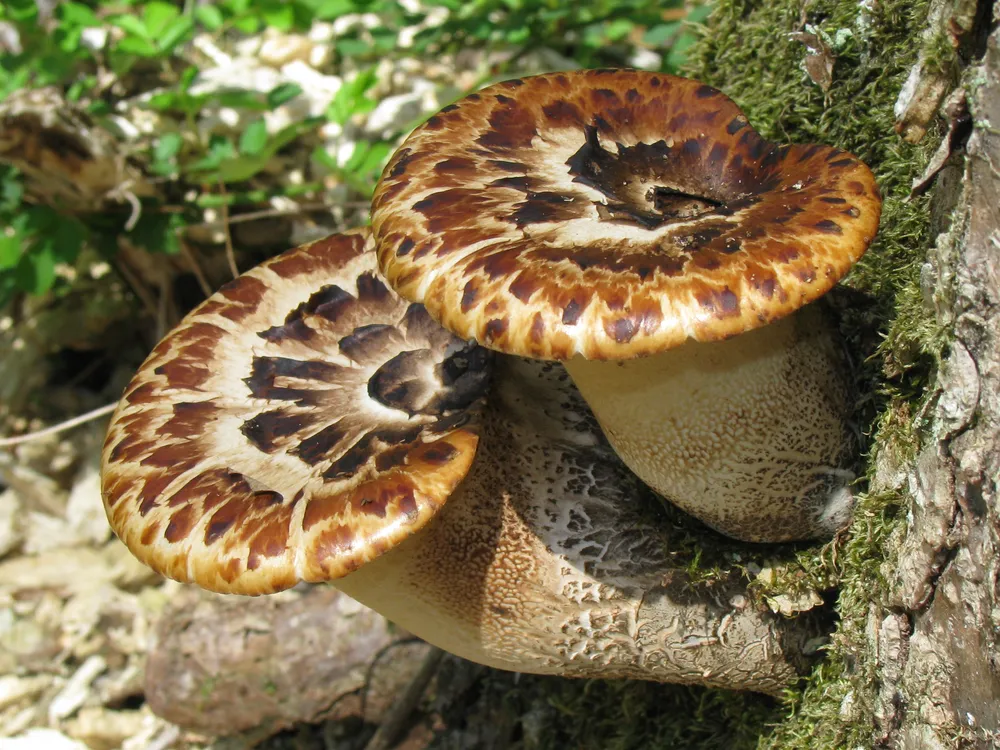
Related species
Mushrooms of the same genus and habitat — to study side by side and never mix up.
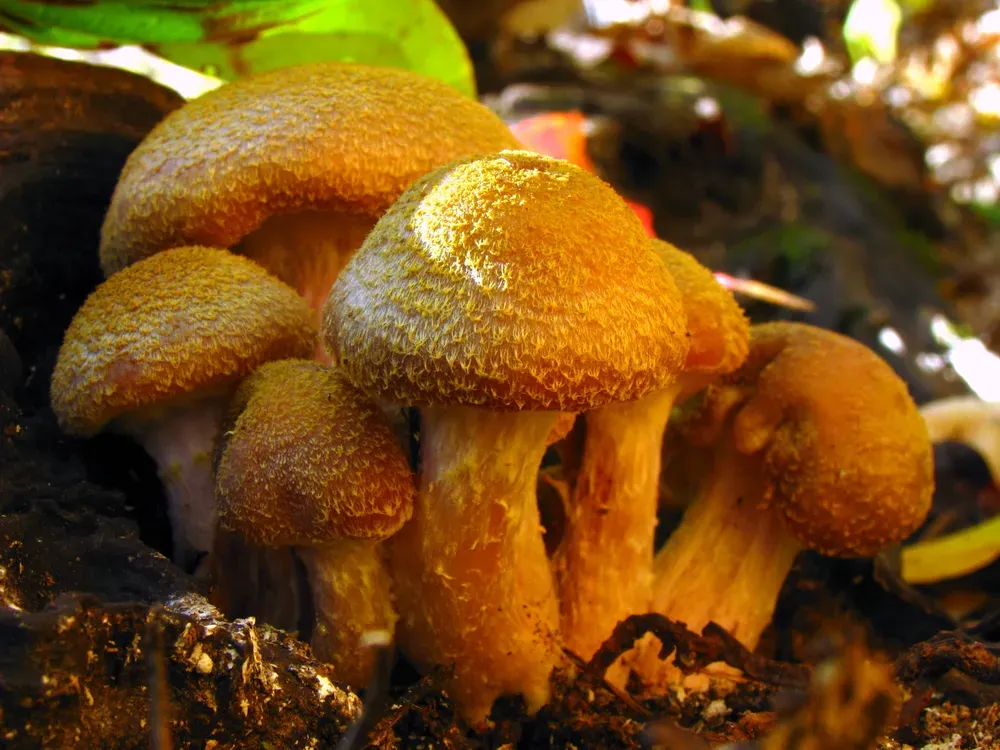
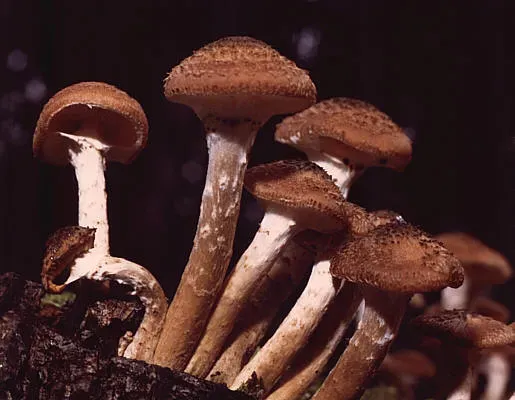
Bulbous honey fungus
Armillaria gallica
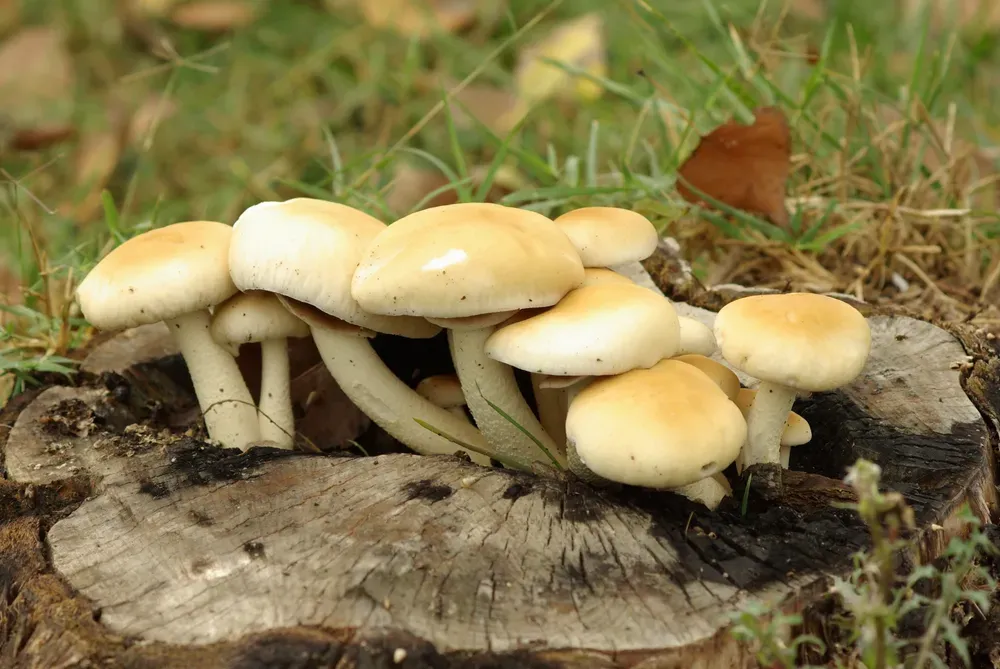
Dark honey fungus
Armillaria ostoyae
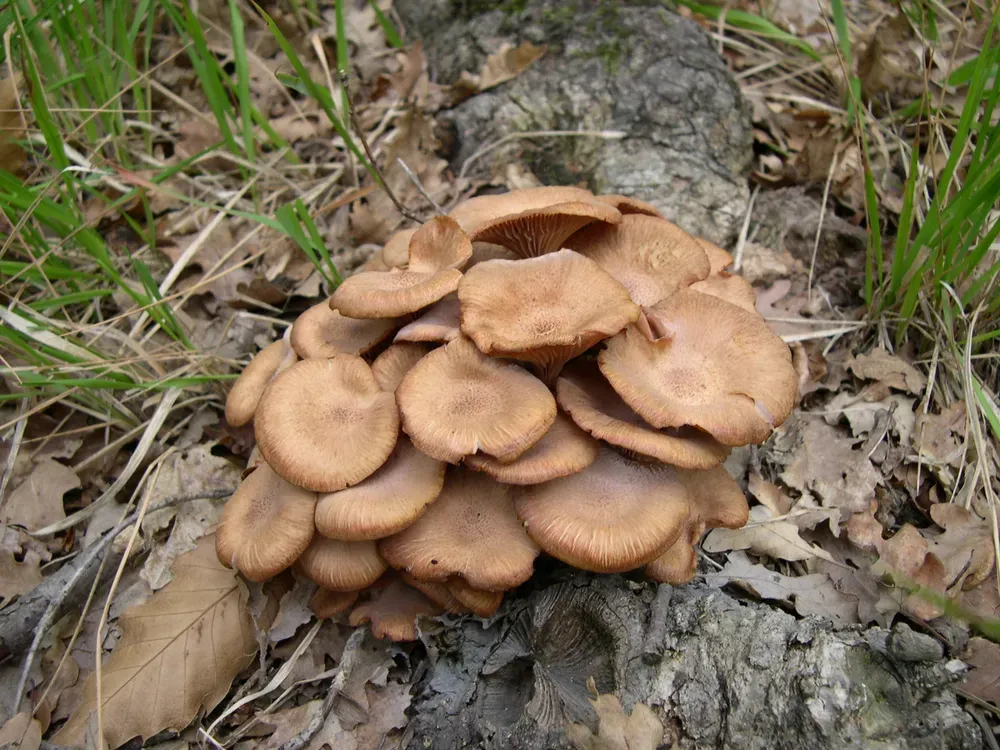
Poplar fieldcap
Cyclocybe aegerita
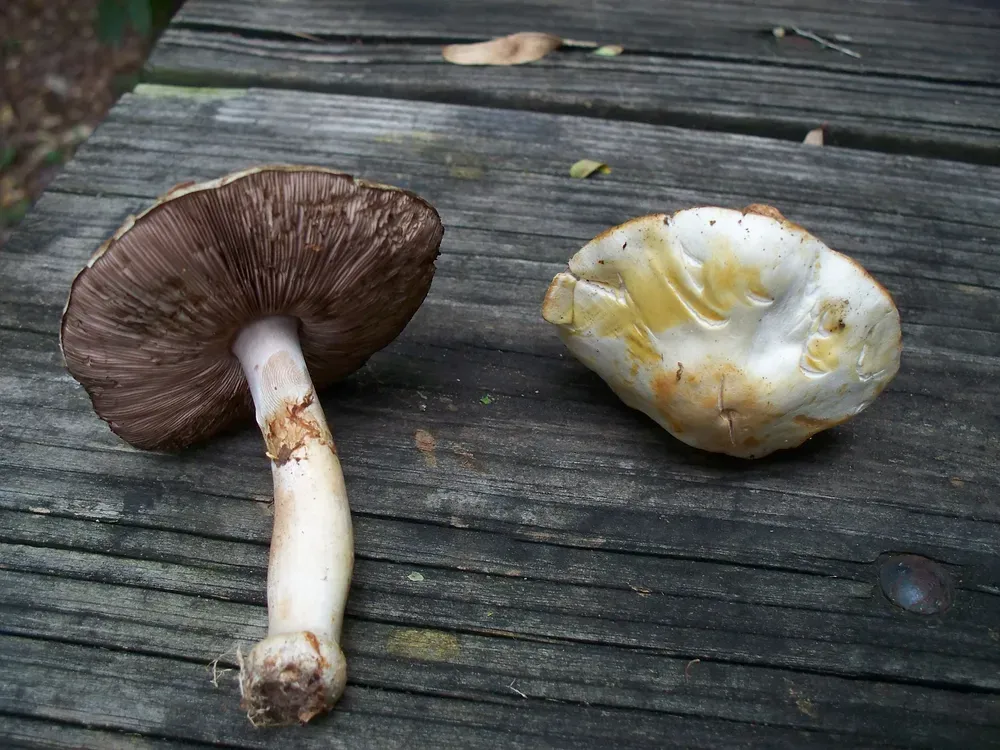
Ringless honey fungus
Desarmillaria tabescens
Agaricus abruptibulbus
Agaricus haemorrhoidarius
Agaricus haemorroidarius
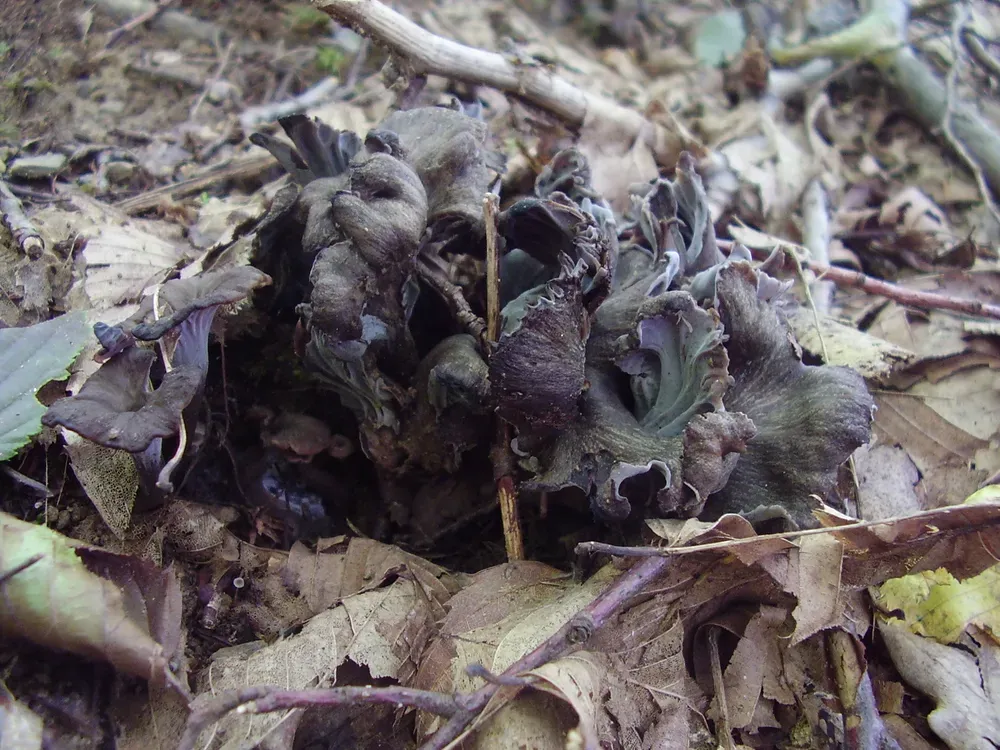
Ashen chanterelle
Cantharellus cinereus
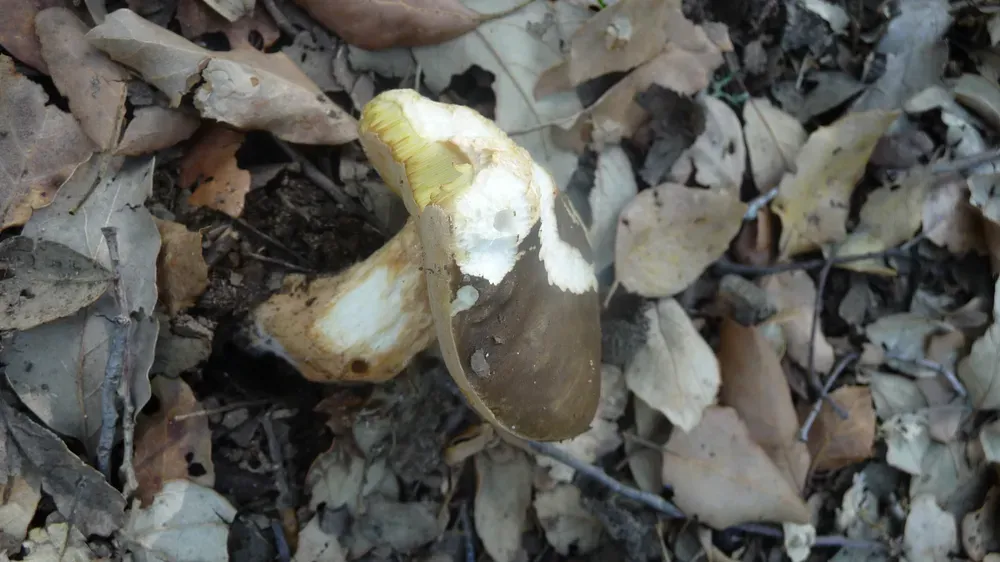
Blushing bolete
Leccinum roseofractum
Frequently asked questions
Is the beefsteak fungus safe to eat?
Yes, but only young, bright red specimens. Old dark brownish-red ones become tough and inedibly sour. The flesh contains a lot of oxalic acid and tannins — people with kidney disease or kidney stones should limit how much they eat.
Are there dangerous lookalikes?
There are no seriously dangerous lookalikes. A young beefsteak fungus is so recognizable by its color and shape that it's hard to confuse with anything. Some bracket fungi of the genus Pycnoporus are also red, but they're dry, hard and not juicy — don't mix them up.
Where to look in Ukraine?
On old living oaks (Quercus robur, Q. petraea), less often on beeches and chestnuts. Look in hollows, bark wounds and at the base of old trunks. Polissia, the Carpathian foothills, Zakarpattia, the Forest-Steppe, mountainous Crimea. It doesn't occur in young oak forests.
When does it fruit?
August to October, peaking in September. A fruiting body lives 2–4 weeks, then turns black and falls off. Young, edible ones are best picked within the first 7–10 days after they appear — while they're still red and juicy.
How do you cook the beefsteak fungus?
Slice a young one thinly, 5–7 mm. To eat raw (as carpaccio), drizzle with lemon and olive oil and sprinkle with Parmesan. For braising, soak it first for 1–2 hours to reduce the acidity, then braise with onion in cream. A fresh mushroom keeps in the fridge for 2–3 days.
Does it harm trees?
Yes, technically it's a parasite, slowly decaying the oak's heartwood. But the process takes decades, and the tree lives another 20–40 years after infection. What's more, the “brown oak” of an infected tree is valued in woodworking more highly than clean pale wood — it's used for expensive furniture and parquet.
Does it grow in tree hollows?
Yes, often right inside a hollow or at its base. The mushroom doesn't attack the bark of young trees — it needs old trees with mechanical damage. Hollows in chestnuts, oak stumps and broken-off branches are typical places to find it.
Can you dry it?
Yes, but the result is peculiar: dried beefsteak fungus becomes hard and sour and is little like the fresh one. It's better preserved by pickling in wine vinegar — there it keeps its characteristic sour, meaty taste and pairs well with hard cheese and wine.
Is Beefsteak fungus edible or poisonous?
Does Beefsteak fungus have gills or pores?
What does the cap of Beefsteak fungus look like?
What does the stem of Beefsteak fungus look like?
Sources
- [1]Вікіпедія (українська)
- [2]Атлас грибів України, Зеров Д.К. (1979)
- [3]MycoBank Database
- [4]Index Fungorum
- [5]GBIF
- [6]iNaturalist Ukraine