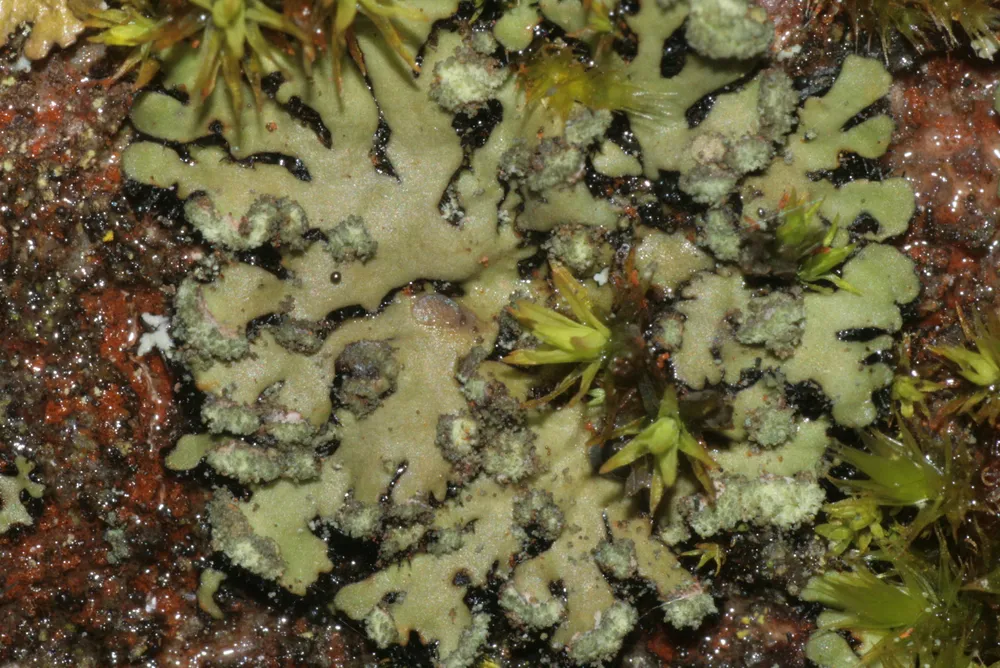
Phaeophyscia orbicularis
Expert-verifiedUpdated June 13, 2026
Passport
- Edibility
- Inedible
- Season
- Jan — Dec
- Hymenophore
- Smooth
- Cap color
- Grey
- Size
- Small (up to 5 cm)
- Smell
- Odorless
- Reviewed
- Yes ✓
Quick answers
Where to look?
Deciduous forest, Mixed forest
When does it appear?
Jan — Dec
Active months: January, February, March, April, May, June, July, August, September, October, November, December.
How to recognize it? Three signs
- Cap color: Grey, Dark brown, Black
- Cap shape: Flat
- Smell: Odorless
Fruiting season
January – December
Description
Phaeophyscia orbicularis is a common Ukrainian epiphytic lichen of the Physciaceae family that grows on the bark of broadleaf trees (especially poplar, willow, ash and maple), on wooden fences, and on the concrete and stone walls of cities. It's one of the most widespread "urban" lichens — tolerant of moderate air pollution, so it turns up even in the centers of big cities, where more sensitive lichens can't survive.
Like all lichens, it's a symbiotic organism made of a fungal partner (the mycobiont, an ascomycete) and an algal partner (the photobiont, a green coccoid alga). Modern taxonomy places it in the kingdom Fungi because of its fungal partner. The thallus looks like a dark gray or gray-brown rosette that clings tightly to the surface, with characteristic tiny "warts" — soredia, used for asexual reproduction.
Not edible — lichens of this group are eaten by neither people nor animals. Its great ecological value is as an indicator of moderately clean air. In cities with critical pollution levels (SO₂, NOx), Phaeophyscia is the first of the "urban" lichens to disappear, so finding it on a tree is a good sign for air quality.
Cap
The thallus forms a round rosette 2-8 cm across, with leaf-like lobes 1-3 mm wide that lie flat against the bark. The upper surface is dark gray, gray-brown to almost black, with a characteristic matte finish. The lower surface is dark, black, with tufts of hyphae (rhizines) that anchor the lichen to its surface.
Hymenophore
Apothecia (sexual fruiting structures with ascospores) are rare in the wild — dark brown, 0.5-1.5 mm across, in the center of the rosette. Most reproduction happens through soredia: tiny whitish or gray "clumps" of mycelium and algae on the thallus surface that break off easily and are carried by the wind.
Stem
There's no stem — the lichen attaches to its surface with the whole underside of the thallus through rhizines (hyphal "rootlets").
Flesh
The thallus tissue is dense, leathery-cartilaginous, brittle when dry, and becomes elastic when wet. The internal structure is layered: upper cortex, algal layer, a medulla of hyphae, and a lower cortex with rhizines.
Smell
The smell is faint, a specific "lichen" smell, slightly earthy or mossy. To most people it's practically odorless.
Related species
Mushrooms of the same genus and habitat — to study side by side and never mix up.
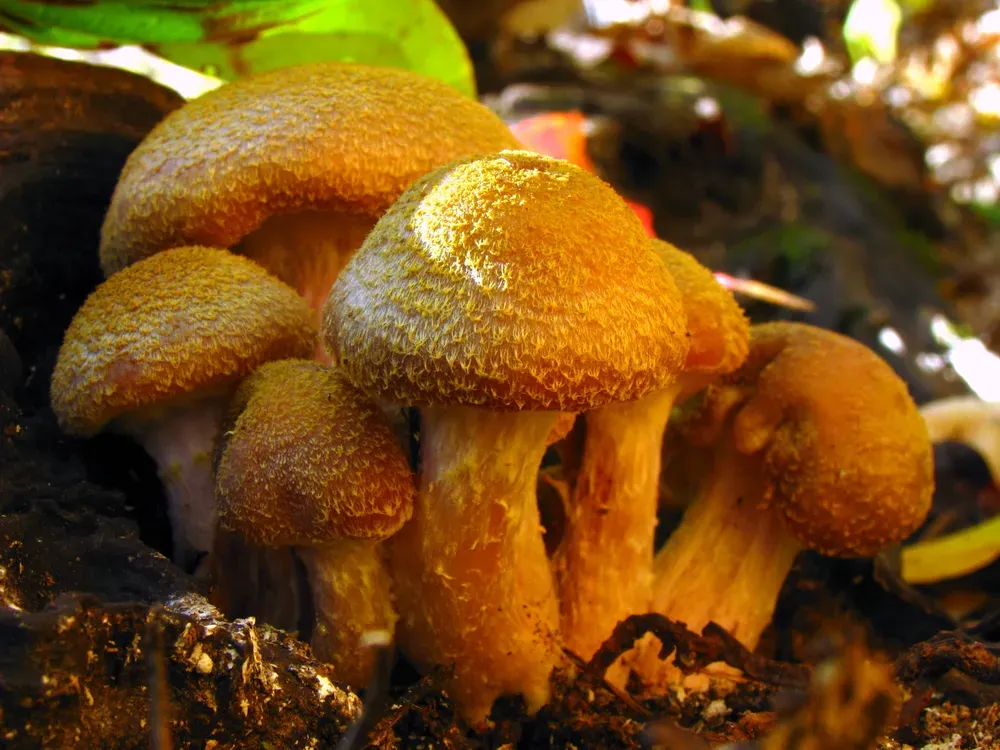
Bulbous honey fungus
Armillaria gallica
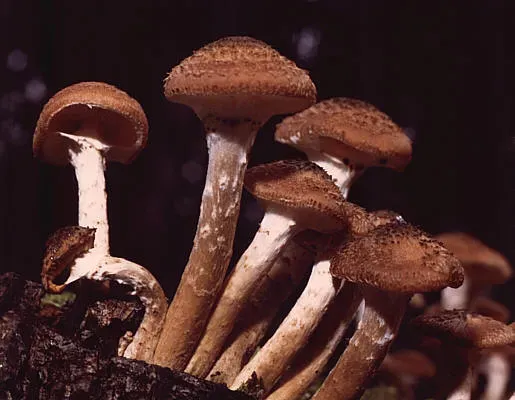
Dark honey fungus
Armillaria ostoyae
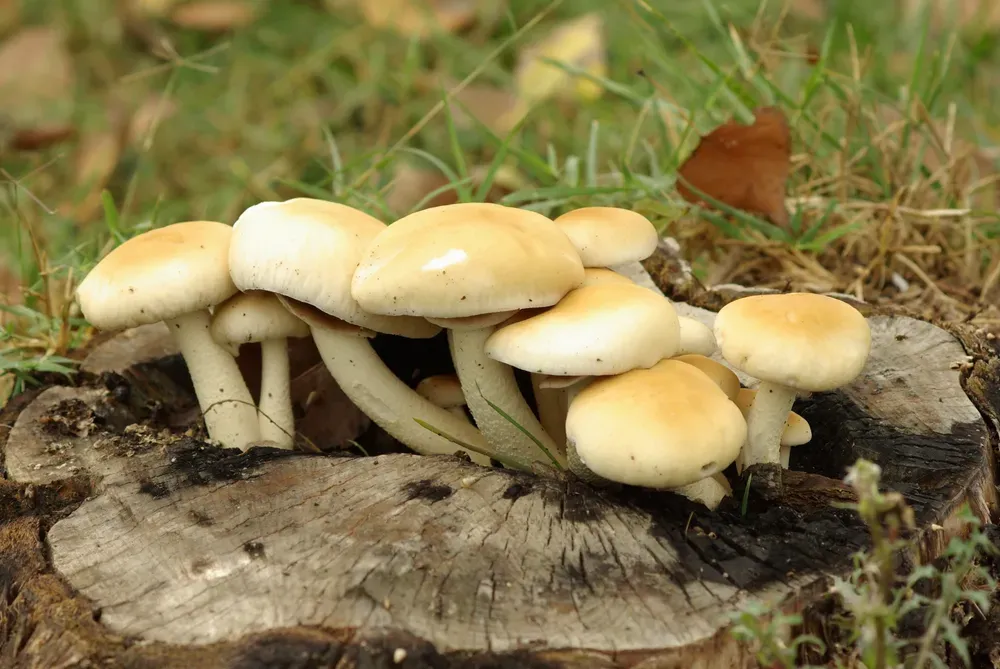
Poplar fieldcap
Cyclocybe aegerita
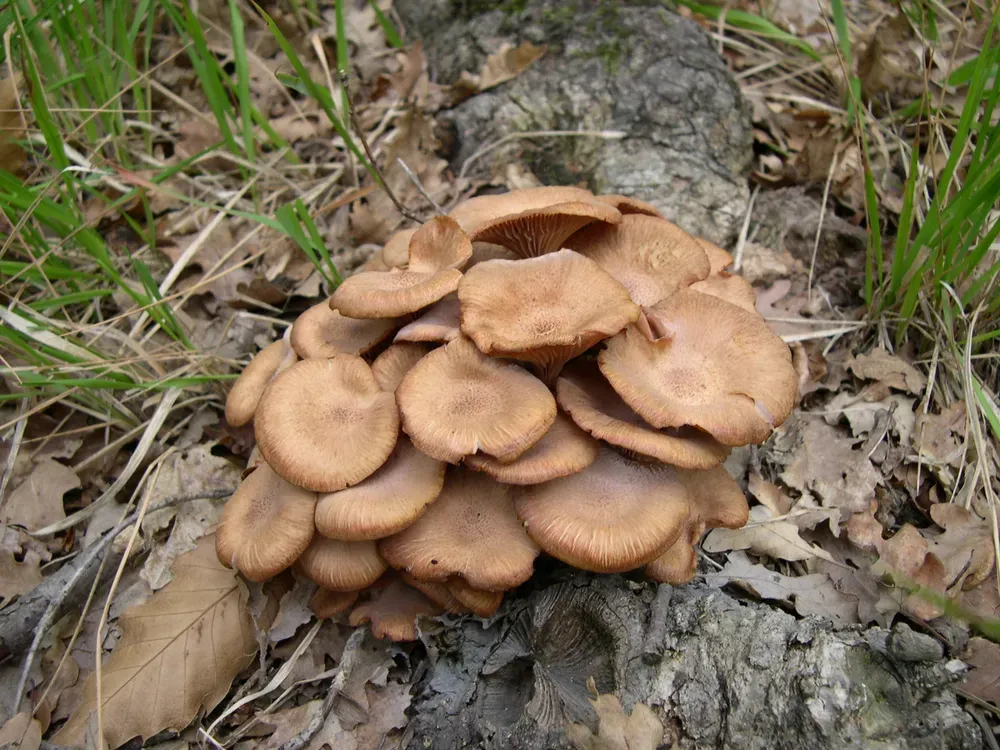
Ringless honey fungus
Desarmillaria tabescens
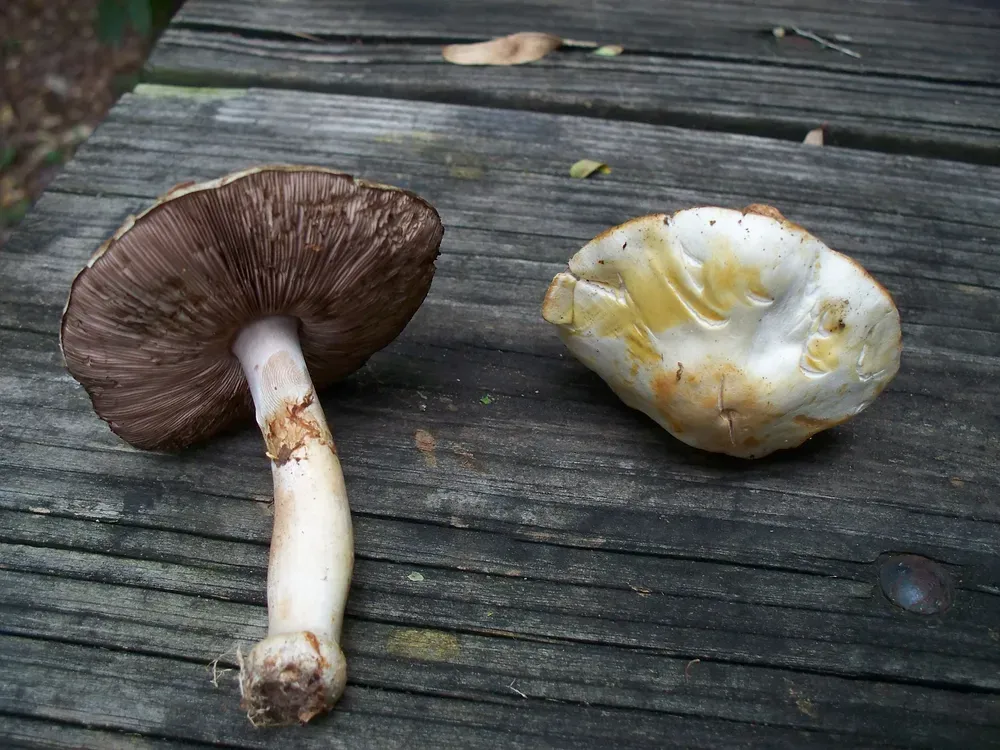
Agaricus abruptibulbus
Agaricus haemorrhoidarius
Agaricus haemorroidarius
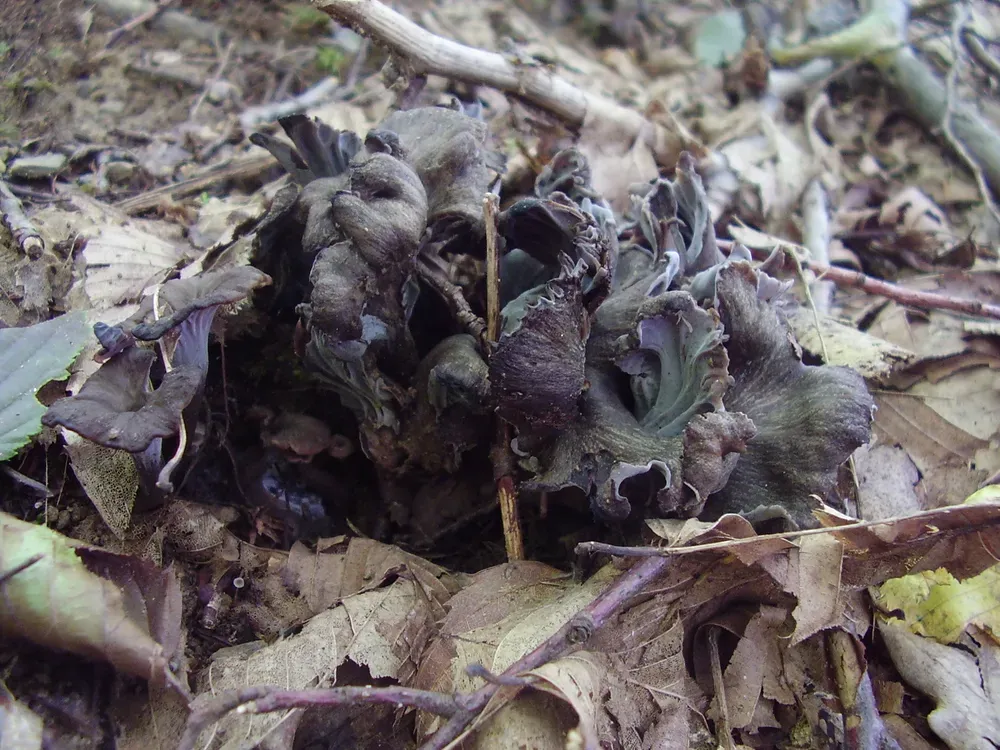
Ashen chanterelle
Cantharellus cinereus
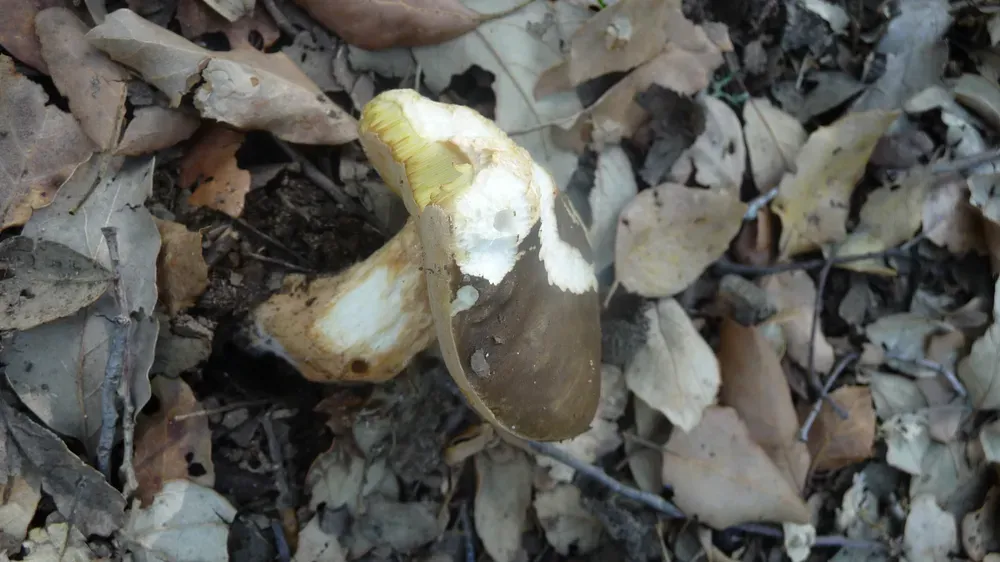
Blushing bolete
Leccinum roseofractum
Frequently asked questions
Is this a mushroom in the usual sense?
It's a lichen — a symbiotic organism made of a fungal mycobiont and an algal photobiont. Modern taxonomy places lichens in the kingdom Fungi (because of the fungal partner). But it's not a "mushroom" in the traditional sense (with a cap and a stem, for your basket).
Can you eat it?
No. Lichens of the genus Phaeophyscia aren't eaten — they have practically no nutritional value for people, plus they may accumulate heavy metals and atmospheric pollutants from the city air where they grow.
Where does it grow?
On the bark of broadleaf trees — especially poplar, willow, ash, maple and linden. Also on wooden fences, palisades, and the concrete and stone walls of buildings. One of the most widespread "urban" lichens — it grows even in city centers.
In which regions of Ukraine?
Throughout Ukraine — in towns, villages, parks and on trees in fields. It's tolerant of moderate air pollution, so it survives where more sensitive lichens die off.
When can you see it?
All year round — lichens don't fruit seasonally. They grow slowly (1-2 mm a year) and live for decades. They're especially noticeable on damp days, when the thallus darkens with moisture.
What is it confused with?
With Physcia stellaris — also a rosette-shaped lichen, but lighter, gray-blue. With Hypogymnia — bushy-lobed, not flat and leaf-like. With Xanthoria parietina — bright yellow-orange. Phaeophyscia is dark gray with a matte surface.
Why does it matter for ecology?
It's a bioindicator of air quality. Lichens are absent from places with critical levels of SO₂ and nitrogen oxide pollution. Phaeophyscia orbicularis is more tolerant than most, but even it disappears in industrial zones. If there's Phaeophyscia on a poplar by the road, the air is moderately clean.
Are any lichens edible at all?
Yes — northern peoples traditionally eat "Iceland moss" (Cetraria islandica), "reindeer lichen" (Cladonia rangiferina) and some Umbilicaria species. They're rich in polysaccharides and are prepared with long soaking to remove the bitterness. Phaeophyscia isn't part of this group.
Is Phaeophyscia orbicularis edible or poisonous?
What kind of spore-bearing surface does Phaeophyscia orbicularis have?
What does the cap of Phaeophyscia orbicularis look like?
What does the stem of Phaeophyscia orbicularis look like?
Sources
- [1]Вікіпедія (українська)
- [2]Атлас грибів України, Зеров Д.К. (1979)
- [3]MycoBank Database
- [4]Index Fungorum
- [5]GBIF
- [6]iNaturalist Ukraine