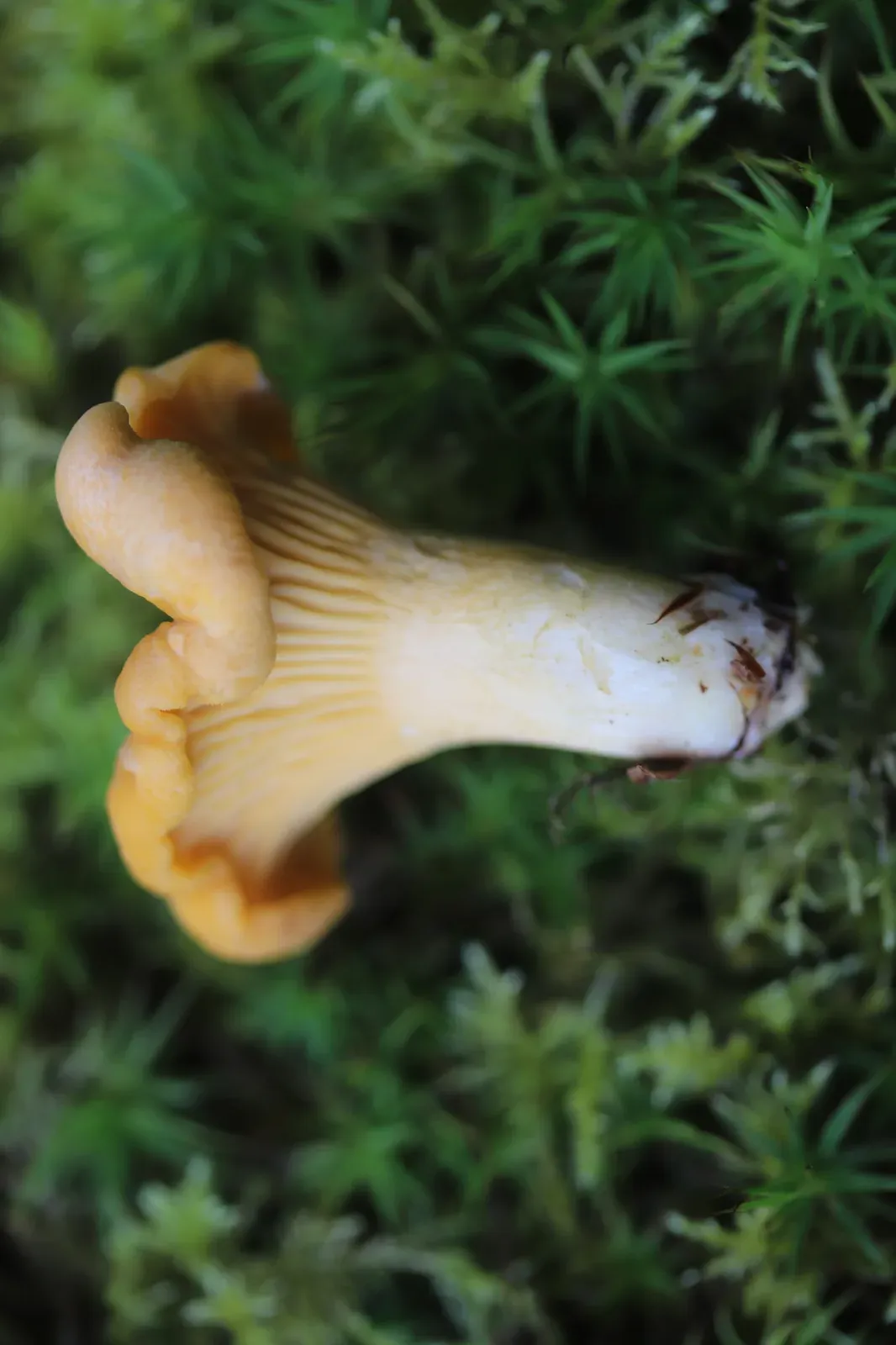
The great thing about the chanterelle is that even a beginner can handle it in the kitchen. It is almost never wormy, holds its shape well and doesn't go mushy. Still, a few tricks are worth knowing so the mushroom doesn't turn bitter, stays firm and keeps its fruity aroma, both fresh and in your winter stores.
Let's follow the chanterelle's whole journey through the kitchen: from cleaning to frying, freezing and drying.
How to clean chanterelles
Cleaning chanterelles is easy, because the mushroom grows clean and is almost never wormy.
Usually it's enough to shake off the forest debris, pick the needles and leaves out of the ridges under the cap and trim the dirty bottom of the stem. You hardly need to check the flesh for worms, because the chanterelle is naturally protected against them.
It's best to wash chanterelles quickly under running water, without leaving them to soak. The mushroom holds its shape well, but excess water will turn frying into steaming. After washing, tip the chanterelles into a colander and let them drain.
How to fry chanterelles
Frying is the best way to bring out the chanterelle's flavor, and there's one main trick to it.
- First, cook off the moisture. Put the chanterelles in a dry or lightly greased pan and keep them over medium heat until they release their juice.
- Then add fat. Once the moisture has evaporated, add oil or butter and fry until golden.
- Add the onion later. So it doesn't burn, add it when the mushrooms are almost done.
- Salt at the end. Salting early draws out the juice, and the mushrooms stew instead of frying.
This order gives you firm, golden chanterelles rather than soggy ones. A spoonful of sour cream and fresh herbs go nicely at the end.
Do chanterelles need boiling?
Unlike many mushrooms, the chanterelle doesn't have to be boiled first.
It's a safe mushroom with no deadly poisonous look-alikes, so pre-boiling isn't a safety requirement. People do it only to soften the slightly rubbery flesh of older mushrooms or before pickling.
If you're sure of the species, young chanterelles can go straight into the pan. But when it comes to identifying the mushroom itself, extra caution never hurts: check our piece on chanterelle look-alikes so you don't confuse it with the false one.
How to preserve chanterelles for winter
The chanterelle keeps well in several ways, so stocking up is easy.
- Freezing them fried. The most reliable method. The chanterelles are fried first, cooled and then frozen. Raw frozen ones often turn bitter, so fried ones come out best.
- Drying. Chanterelles are dried in an oven or dehydrator at a low temperature. Dried ones work well in soups and sauces, though their aroma is weaker.
- Pickling. Young chanterelles are pickled in a spiced brine. Before that they're boiled so they release their excess water.
It's worth remembering why fresh frozen chanterelles often turn bitter while fried ones don't: it's the heat treatment that removes the slight bitterness. We write more about the chanterelle's benefits and freshness in a separate article.
Sources
- “Key to the Fungi of Ukraine” (Kyiv, Naukova Dumka publishing house).
- Cantharellus cibarius in GBIF, the global biodiversity database.
- Cantharellus cibarius in MycoBank, the international fungal nomenclature database.
- Cantharellus cibarius on Wikipedia.
Frequently asked questions
Do chanterelles need soaking or boiling before frying?
No, it's not necessary. The chanterelle is safe and has no deadly look-alikes, so young mushrooms can go straight into the pan. People boil them only to soften older mushrooms or before pickling.
How do you fry chanterelles so they don't go soggy?
First cook off the moisture in a dry pan, then add fat and fry until golden. Add salt at the end, because salting early draws out the juice and the mushrooms stew instead of frying.
How do you clean chanterelles?
Shake off the forest debris, pick the needles and leaves out of the ridges, trim the dirty part of the stem and give them a quick rinse under water. Chanterelles are clean and almost never wormy, so cleaning is simple.
Why do raw frozen chanterelles taste bitter?
Raw chanterelles contain substances that give a slight bitterness, which becomes more noticeable after freezing. That's why it's better to fry chanterelles before freezing; then the bitterness disappears.
What's the best way to freeze chanterelles?
Fry, cool and freeze. This is more reliable than freezing them raw, because it removes the bitterness and saves space. In winter you just need to reheat them.
Can you dry chanterelles?
Yes, in an oven or dehydrator at a low temperature. Dried chanterelles work well in soups and sauces, though their aroma is weaker than fresh or fried ones.
Should you wash chanterelles before drying?
Before drying, it's better not to wet chanterelles but just clean them with a dry brush, because moisture gets in the way of drying. Wash the mushrooms that are going to be fried or pickled.
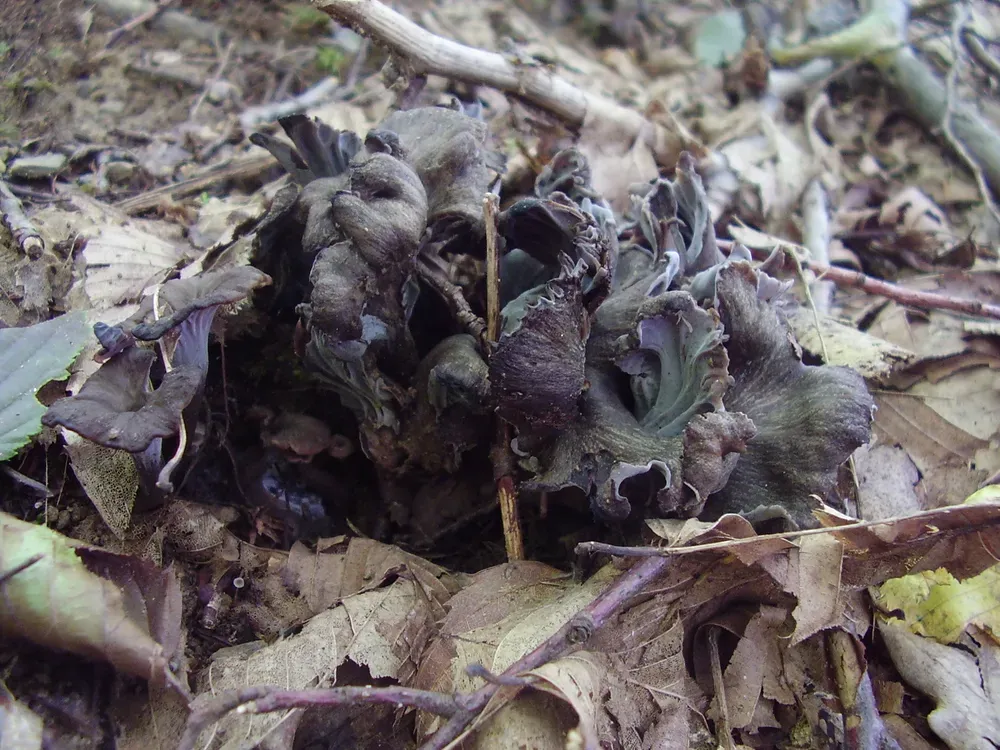
Does the ashen chanterelle work in the same dishes?
Yes. is cooked just like the classic one: it's fried, stewed and preserved. It has similar firm flesh and a pleasant aroma.
Mushrooms in this article
Related articles
 Recipes & cooking
How to store fresh mushrooms, and for how long
Fresh mushrooms spoil faster than you might think. Here's how long they keep in the fridge, how to store them…
August 21, 2026·4 min Recipes & cooking
How long to boil mushrooms
Boiling time depends on the type of mushroom and on what you're cooking next. Here's a clear cheat sheet: how…
August 22, 2026·4 min How to identify
Truffles in Ukraine: do they grow here, and where to look
Truffles aren't just a French delicacy. Several species grow in Ukraine too. Here's which ones, where they occ…
August 24, 2026·2 min