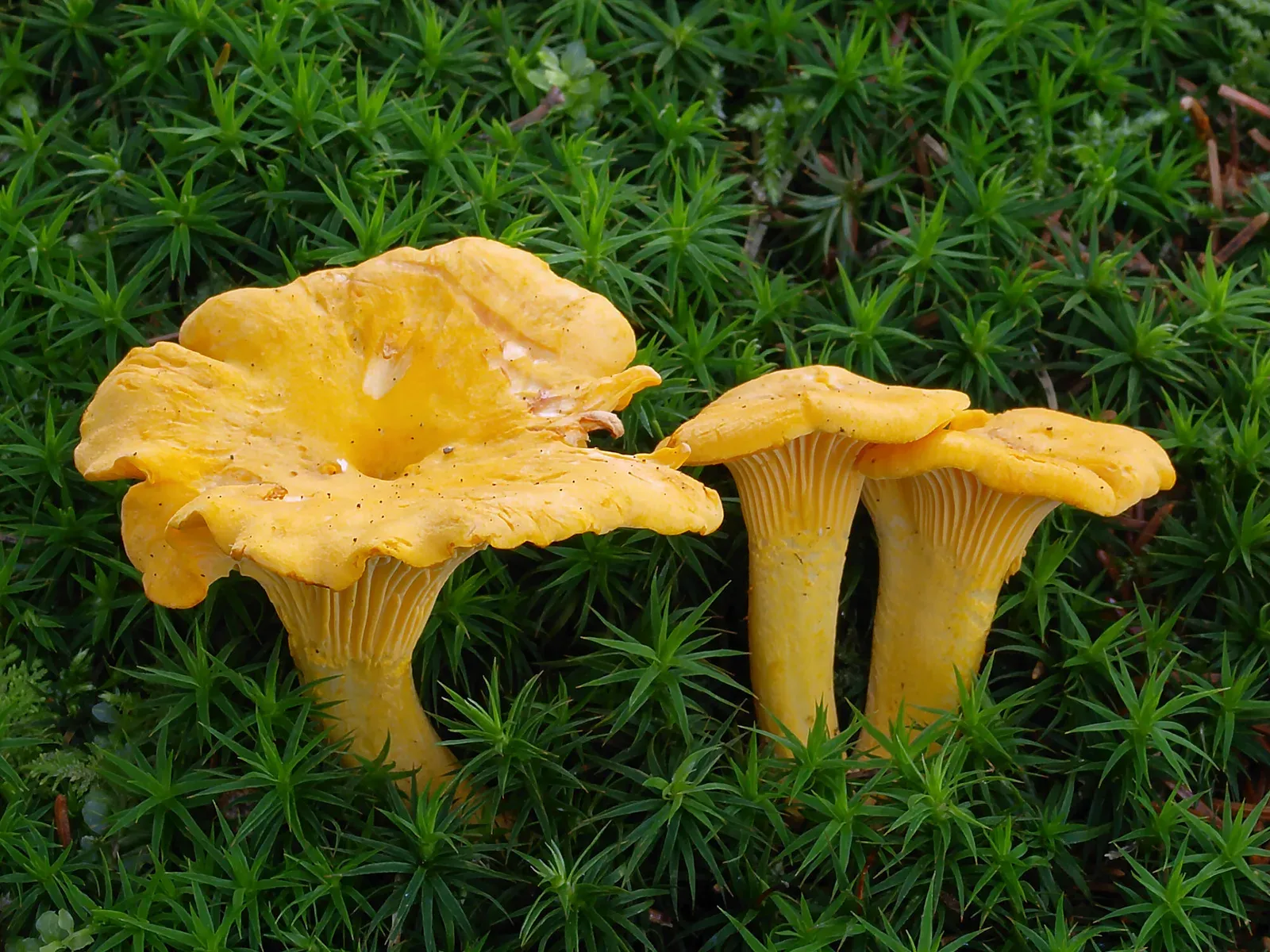
The chanterelle is rightly considered one of the safest mushrooms for beginners: it's bright, fragrant and has almost no dangerous lookalikes. Almost, because one similar mushroom does exist, and that's the false chanterelle. Luckily, telling them apart is easy, and the false chanterelle itself isn't deadly.
Let's look at how the true chanterelle differs from the false one, which other mushrooms resemble it, and why the chanterelle remains a great choice for beginners.
What makes the true chanterelle stand out
The true chanterelle has several traits that make it easy to recognize.
- Color. An even egg-yolk yellow or light orange, the same on the cap and the stem.
- Ridges instead of gills. Under the cap there are no true gills but thick, forked ridges that run down the stem.
- Shape. The cap is funnel-shaped, with a wavy, uneven edge, like a little funnel.
- Flesh and smell. Firm, springy, with a pleasant fruity aroma. Chanterelles are almost never wormy.
It's the combination of an even yellow color, ridges and springy flesh that sets the true chanterelle apart from all its lookalikes.
How the false chanterelle differs
The false chanterelle really does look like the true one, but it has its own telltale signs.
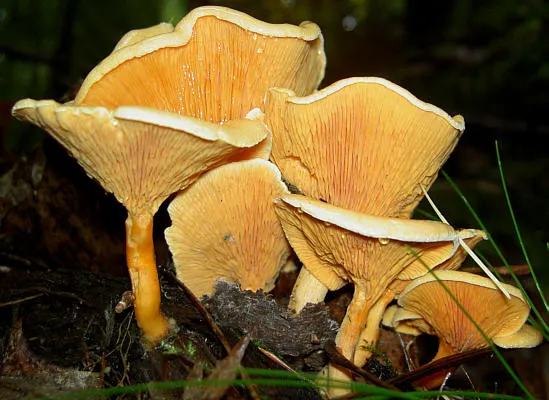
- Brighter, uneven color. More often a deep orange, reddish, with a darker center and a paler edge.
- True thin gills. Underneath, instead of thick ridges, there are crowded thin gills, like on ordinary mushrooms.
- Thinner flesh. Softer and not as springy as in the true chanterelle.
- Grows differently. Often on rotting wood, decaying stumps and litter, not simply in the soil.
The false chanterelle isn't deadly, but it can cause digestive upset in sensitive people, so it doesn't go in the basket. We've gathered all the differences in our true vs. false chanterelle comparison.
Other similar mushrooms
Besides the false chanterelle, there are a few related chanterelles, and all of them are safe.
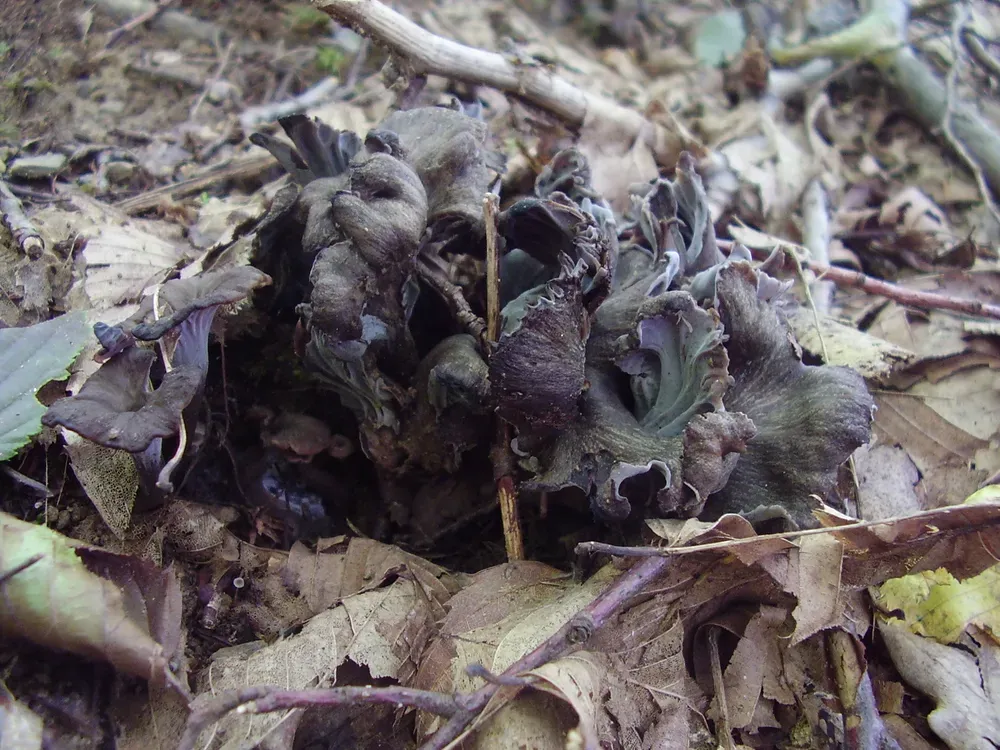
- **Ashen chanterelle.** Dark gray, even blackish, but also edible and fragrant. Its color keeps it from being confused with the true one.
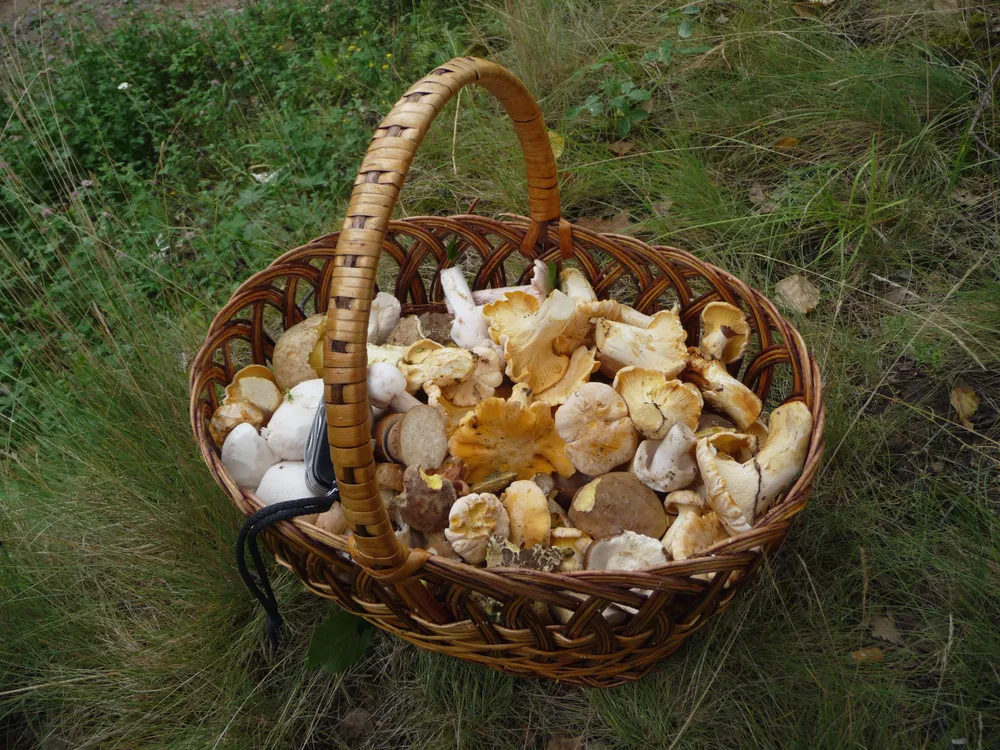
Most importantly, the chanterelle has no deadly poisonous lookalikes, unlike many gilled mushrooms. That's what makes it such a good mushroom for beginners.
How not to go wrong with chanterelles
A few simple checks will clear up any doubt.
- Look under the cap. Thick, forked ridges mean a true chanterelle, crowded thin gills mean the lookalike.
- Judge the color. Even egg-yolk yellow is the true one, bright orange with a dark center is the false one.
- Check the flesh. Springy flesh that doesn't crumble is a sign of the true chanterelle.
- See where it grows. On rotting wood it's more likely the lookalike than a good chanterelle.
Chanterelles love damp forests and are among the first to appear, as early as the start of summer. We write about when to go looking for them in our piece on the first chanterelles of June, and for the right moment, check the mushroom radar.
Sources
- “Field Guide to the Fungi of Ukraine” (Kyiv, Naukova Dumka publishing house).
- Cantharellus cibarius on GBIF, the global biodiversity database.
- Hygrophoropsis aurantiaca on MycoBank, the international fungal nomenclature database.
- Hygrophoropsis aurantiaca on Wikipedia.
Frequently asked questions
Does the chanterelle have poisonous lookalikes?
There are no deadly poisonous ones, and that's a big advantage of the chanterelle. There's only the , which isn't deadly but can cause digestive upset in sensitive people.
How does the false chanterelle differ from the true one?
The true one has thick, forked ridges underneath and an even egg-yolk yellow color. The false one has crowded thin gills, a bright orange color with a darker center and softer, thinner flesh.
Is the false chanterelle poisonous?
Not deadly, but it's inedible and can cause digestive upset in sensitive people. That's why it doesn't go in the basket, though mixing it up isn't all that frightening.
How do you tell a chanterelle by the underside of the cap?
The true chanterelle has thick, forked ridges underneath that run down the stem. The false one and ordinary mushrooms have crowded thin gills there. This is the most reliable sign.
Why are chanterelles almost never wormy?
Their firm flesh contains substances that insect larvae dislike, so worms avoid chanterelles. That's why even old mushrooms are usually clean.
Is the ashen chanterelle edible?
Yes. is dark, almost blackish, but edible and fragrant. Because of its unusual color, it isn't confused with the true chanterelle.
Where does the false chanterelle grow most often?
Mostly on rotting wood, decaying stumps and in litter. The true chanterelle, by contrast, grows straight from the soil, in damp forests among moss.
Is the chanterelle good for beginners?
Yes, it's one of the safest mushrooms. It has no deadly lookalikes, and it's bright and easy to recognize. The main thing is to check the ridges under the cap and the even color.
Mushrooms in this article
Related articles
 Recipes & cooking
How to store fresh mushrooms, and for how long
Fresh mushrooms spoil faster than you might think. Here's how long they keep in the fridge, how to store them…
August 21, 2026·4 min How to identify
Truffles in Ukraine: do they grow here, and where to look
Truffles aren't just a French delicacy. Several species grow in Ukraine too. Here's which ones, where they occ…
August 24, 2026·2 min Safety
False morel: why this spring mushroom is dangerous
The false morel looks like a morel, but it contains a poison. Here's how to recognize it, why it's dangerous a…
August 24, 2026·2 min