Goblet funnelPseudoclitocybe cyathiformis
Expert-verifiedUpdated October 3, 2026
Passport
- Edibility
- Edible
- Season
- Oct — Dec
- Hymenophore
- Gilled
- Cap color
- Brown
- Size
- Small (up to 5 cm)
- Smell
- Odorless
- Reviewed
- Yes ✓
Quick answers
Where to look?
Deciduous forest, Mixed forest
When does it appear?
Oct — Dec
Active months: October, November, December.
How to recognize it? Three signs
- Cap color: Brown, Dark brown, Grey
- Cap shape: Funnel-shaped
- Smell: Odorless
Fruiting season
October – December
Description
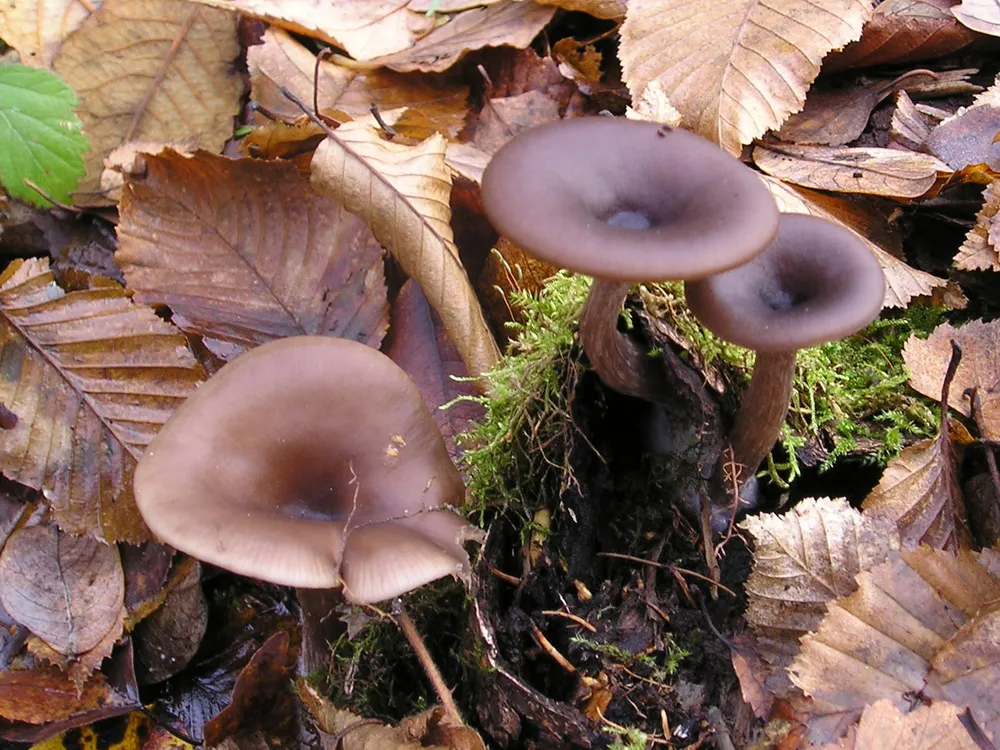
The goblet funnel (Pseudoclitocybe cyathiformis) is one of the few noticeable mushrooms of late autumn and early winter. When most forest dwellers have already finished fruiting, it keeps appearing among fallen leaves and moss right up to the first lasting frosts. Its distinctive funnel- or goblet-shaped cap, dark grayish-brown, sits on a thin stem — like a tiny tea bowl for forest wizards. The color may seem gloomy, but it matches the autumn forest tone for tone, so the mushroom often goes unnoticed.
This is an edible mushroom with no great culinary ambitions — the flesh is thin and brittle, with no pronounced taste and a faint aroma. It works fried with other mushrooms, or added to soups and sauces as a supporting ingredient. Its value is mostly seasonal — it is one of the few fresh forest mushrooms of late October and November, when the choice is small. Pick only young ones with firm flesh; old specimens fall apart into mush when cooked.
In Ukraine it is widespread in deciduous and mixed forests — mostly with oak, beech, hornbeam and birch. A saprotroph on rotting wood and forest litter. It likes forest edges, the slopes of wooded ravines and spots with a thick layer of fallen leaves. Season October–December, rarely into January — one of the latest forest mushrooms. It often grows in groups of 5-20 fruiting bodies, sometimes in rings.
Cap
Cap 3-8 cm across, convex in young mushrooms, later becoming funnel-shaped or goblet-shaped, with a sunken center and a thin wavy margin. Color gray-brown to chocolate-gray, darker in wet weather and paler in dry weather (hygrophanous). Surface smooth, silky and glossy when young, matte when old, with barely visible radial veins.
Hymenophore
Gilled hymenophore. Gills distant, strongly decurrent down the stem (a characteristic feature). Color grayish-white to cream, turning light brown with age. Spore print white.
Stem
Stem 3-8 cm tall, 0.5-1.2 cm thick, slender, cylindrical or slightly thickened toward the base. Color gray-brown, similar to the cap, with white mycelial down at the bottom. Surface lengthwise fibrous, no ring. The stem flesh becomes hollow in old mushrooms.
Flesh
Flesh thin, watery, grayish and brittle. Does not change color when cut. No pronounced taste or smell.
Smell
Faintly mushroomy, neutral, with no distinct notes. Mild taste. In old mushrooms — sourish and unpleasant.
›Scientific synonyms (4)
Pseudoclitocybe cyathiformis (Bull.) Singer, Agaricus cyathiformis Bull., Clitocybe cyathiformis (Bull.) P. Kumm., Clitocybe cyathiformis
Lookalikes
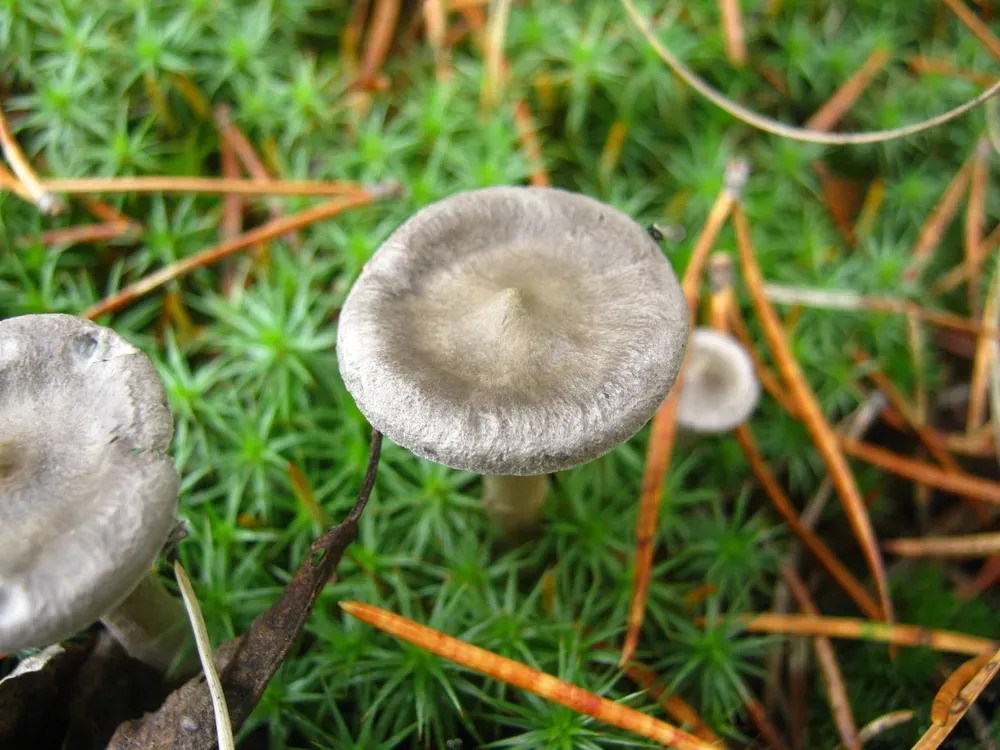
Related species
Mushrooms of the same genus and habitat — to study side by side and never mix up.
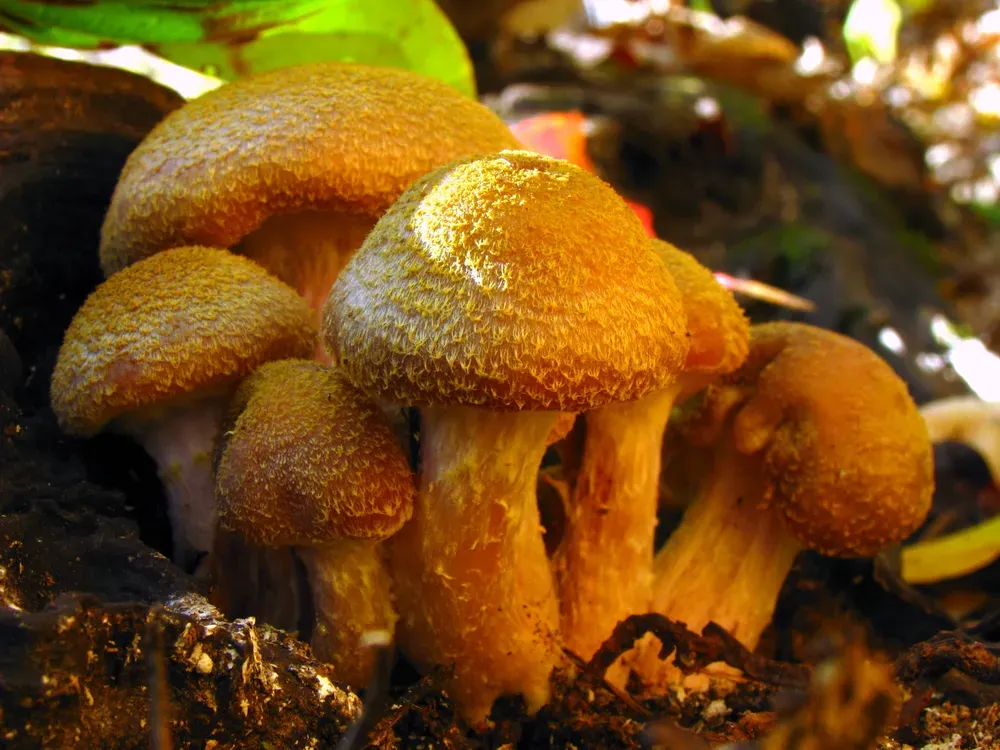
Bulbous honey fungus
Armillaria gallica
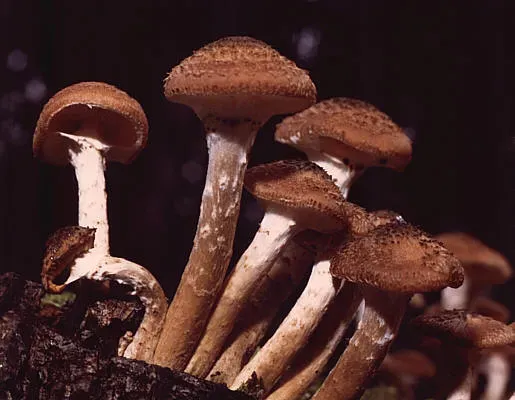
Dark honey fungus
Armillaria ostoyae
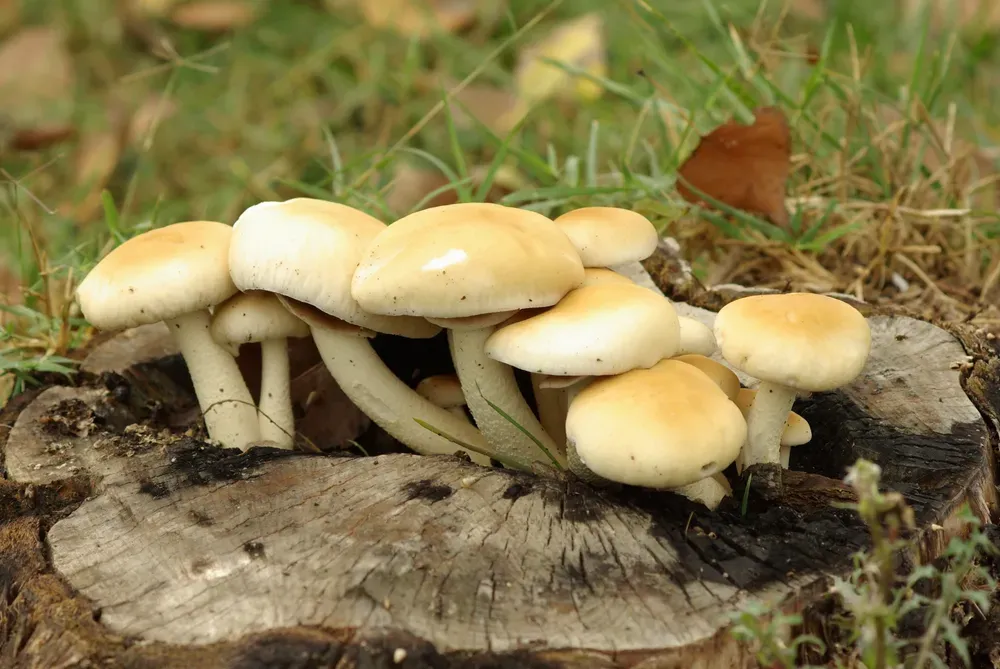
Poplar fieldcap
Cyclocybe aegerita
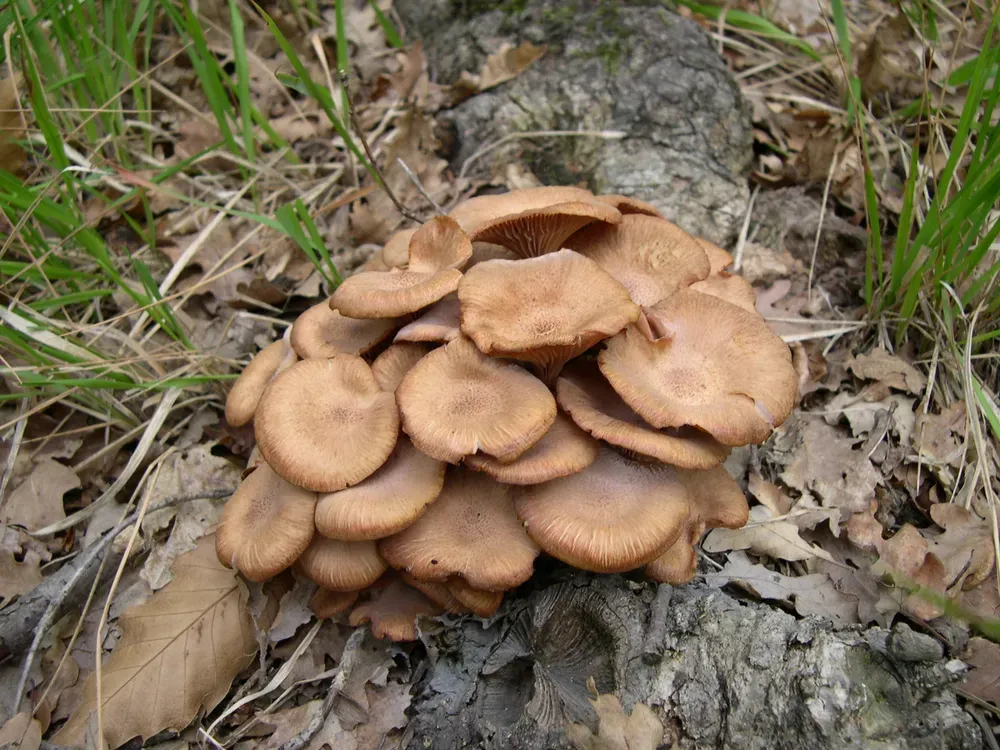
Ringless honey fungus
Desarmillaria tabescens
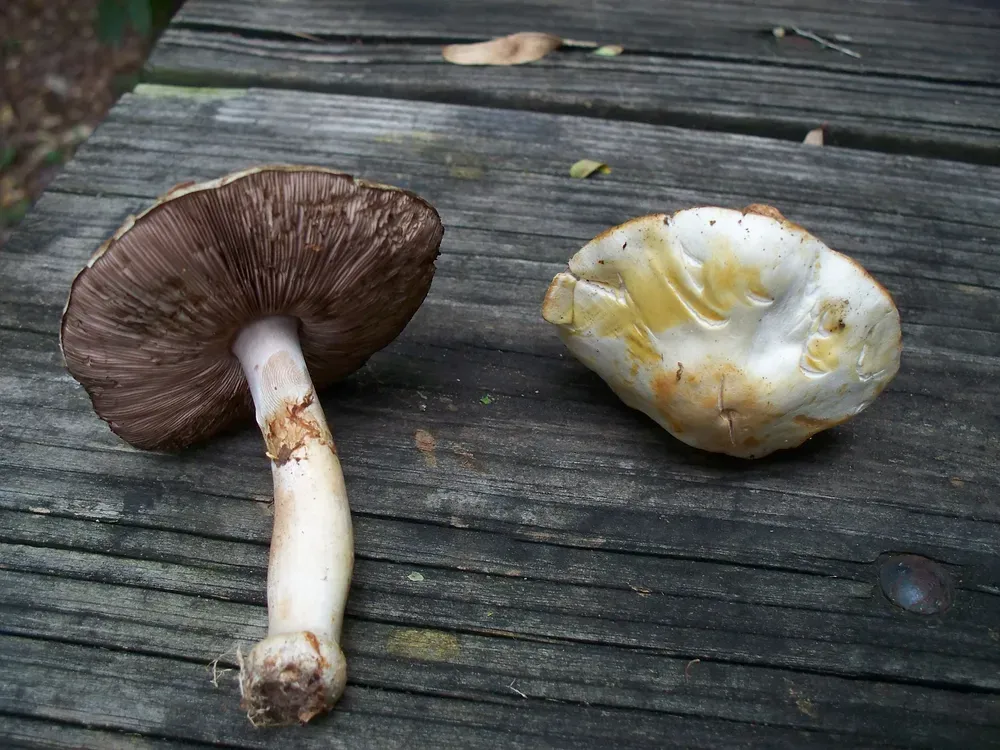
Agaricus abruptibulbus
Agaricus haemorrhoidarius
Agaricus haemorroidarius
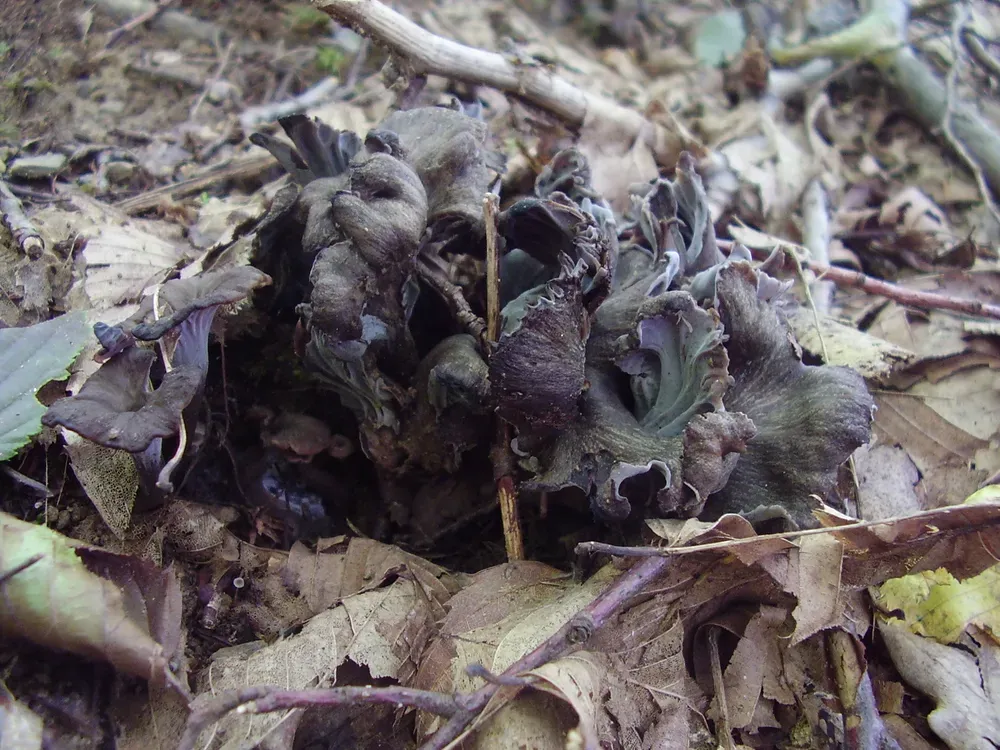
Ashen chanterelle
Cantharellus cinereus
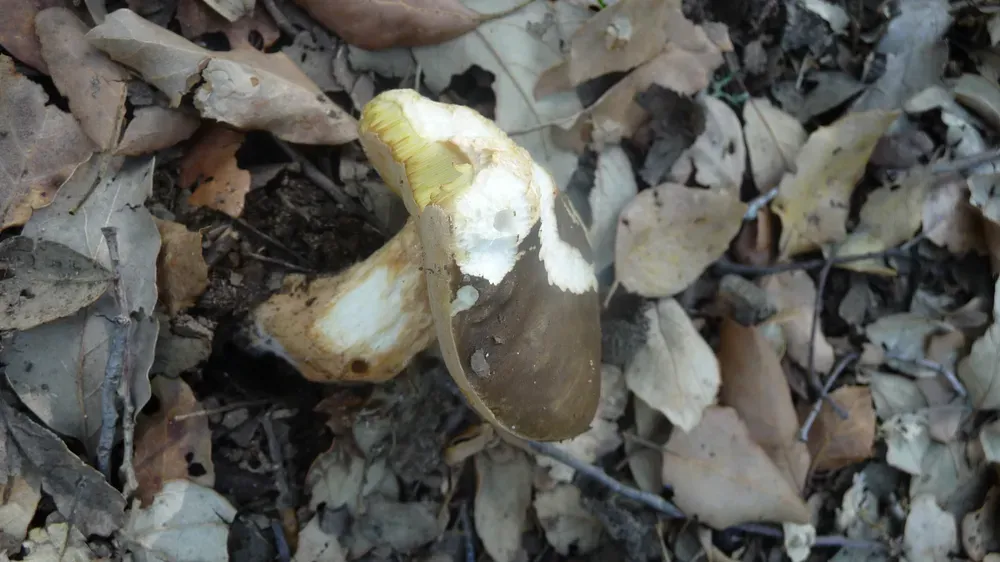
Blushing bolete
Leccinum roseofractum
Frequently asked questions
Is it safe to eat?
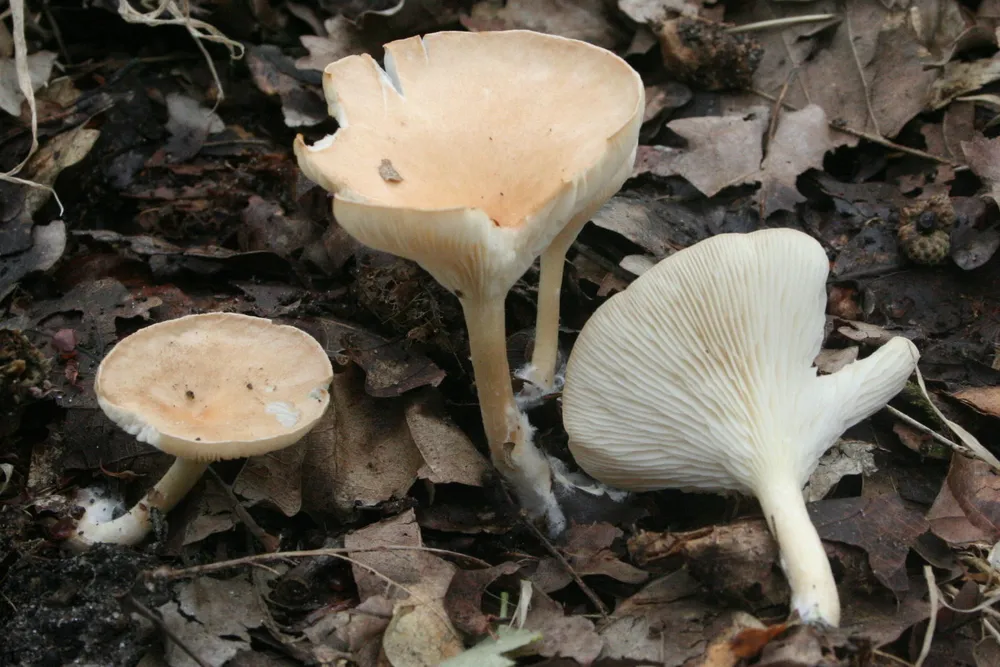
Yes, it is edible. But it is not a mushroom worth a trip to the forest — its culinary value is small. Take only young ones with firm flesh; old specimens are watery and tasteless. It has practically no poisonous look-alikes, but small Clitocybe containing muscarine (C. rivulosa, C. dealbata) do occur — so check the features: funnel shape, decurrent gills, gray-brown tone.
How should you cook it?
Clean and slice. You can fry it straight away for 10-15 min or stew it with other mushrooms. In soups, add it at the end of cooking so it doesn't boil down to mush. For pickling and drying it falls short of better species — not worth the effort.
Why take only young mushrooms?
The thin flesh quickly turns watery, sourish and unpleasantly smelly. A young goblet funnel makes a decent panful; an old one makes mush with a sewer-like smell. Your guide: cap firmness (firm — good, limp — skip it), intact gills (not broken), no spots.
Where should you look for it?
In deciduous and mixed forests — under oak, beech, hornbeam and birch. It likes forest edges, the slopes of wooded ravines, spots with a thick layer of fallen leaves and mossy patches. It often grows on rotting branches hidden under the leaves. In young plantations and pine forests it is less common.
Which regions of Ukraine is it found in?
Throughout the forest zone — the Carpathians, Prykarpattia, Polissia and all three forest-steppe belts. In the steppe — in ravine (bairak) forests. Widespread overall, especially in oak and beech forests.
When should you look for it?
October to December, peaking in November. One of the latest forest mushrooms — it fruits right up to the first lasting frosts. In a warm December you can find it among half-fallen leaves. It does not fruit in summer heat.
What is it confused with?
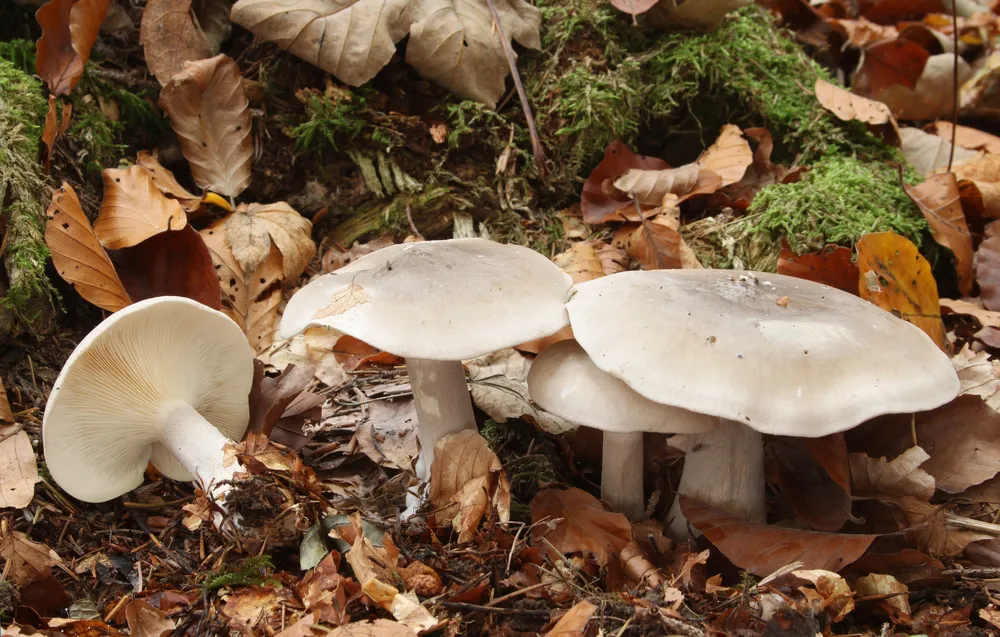
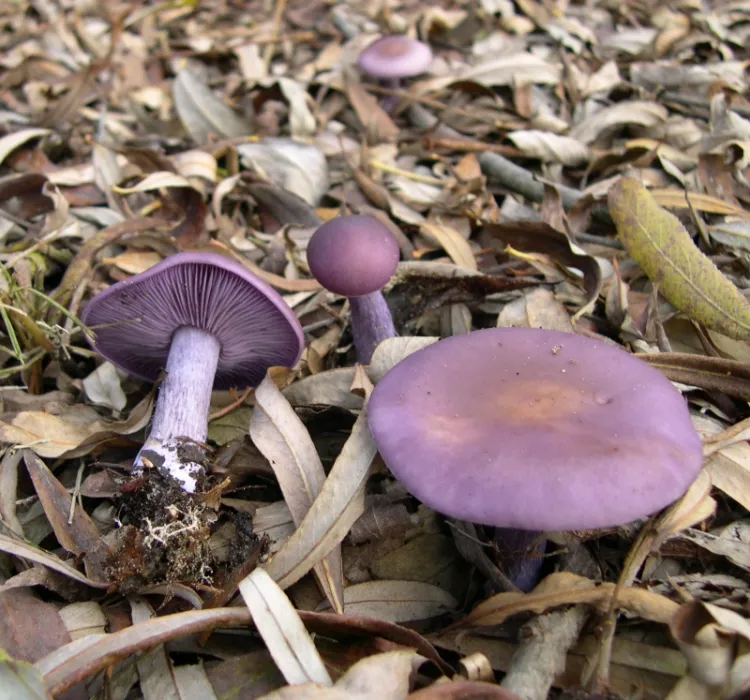
With Lepista nuda (wood blewit) — also a late autumn mushroom, but it has a violet tint on the cap and stem. With Clitocybe nebularis (clouded funnel) — also gray with decurrent gills, but much larger (10-20 cm) and with a mealy smell. More dangerous ones: Clitocybe rivulosa and C. dealbata — whitish poisonous species containing muscarine, without the gray-brown tone. Our key difference: funnel shape + dark gray-brown color + late fruiting.
Is it a good mushroom for a beginner to pick?
Yes, relatively safe for building experience — the genus Pseudoclitocybe contains no deadly poisonous species, and a gray-brown funnel-shaped mushroom with decurrent gills in October–December is a distinctive find. But not for your first outing: first learn foraging well on easily recognized species (porcini, chanterelle, honey fungus), then add more modest species like this one to your repertoire.
Is Goblet funnel edible or poisonous?
Does Goblet funnel have gills or pores?
What does the cap of Goblet funnel look like?
What does the stem of Goblet funnel look like?
Sources
- [1]Вікіпедія (українська)
- [2]Атлас грибів України, Зеров Д.К. (1979)
- [3]MycoBank Database
- [4]Index Fungorum
- [5]GBIF
- [6]iNaturalist Ukraine