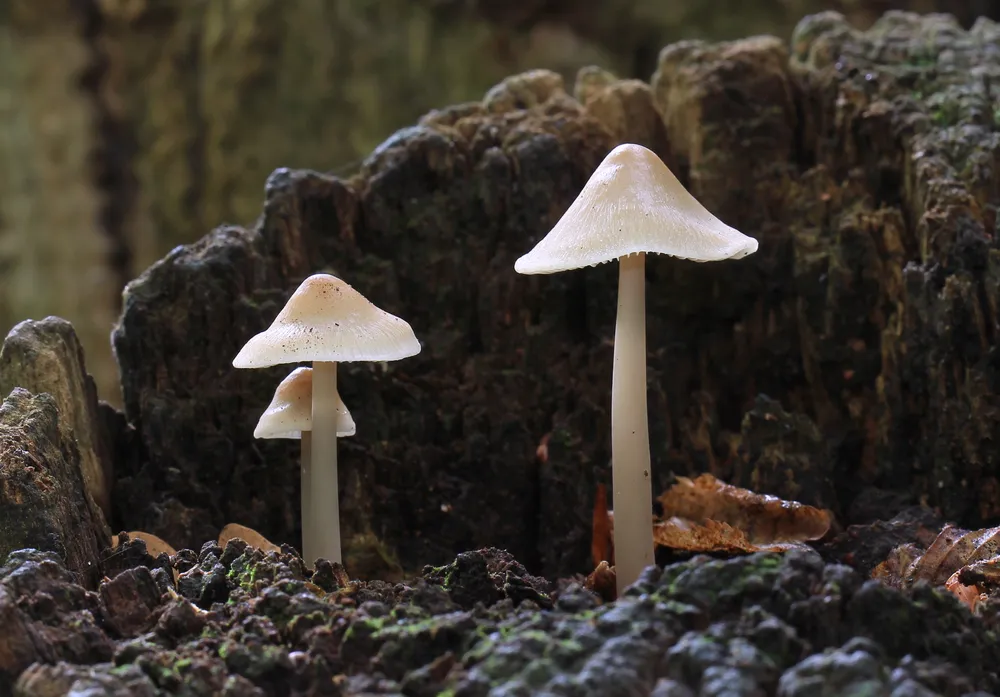
Common bonnetMycena galericulata
Expert-verifiedUpdated October 3, 2026
Passport
- Edibility
- Inedible
- Season
- May — Nov
- Hymenophore
- Gilled
- Cap color
- Grey
- Size
- Small (up to 5 cm)
- Smell
- Floury
- Reviewed
- Yes ✓
Quick answers
Where to look?
Deciduous forest, Mixed forest
When does it appear?
May — Nov
Active months: May, June, July, August, September, October, November.
How to recognize it? Three signs
- Cap color: Grey, Brown
- Cap shape: Conical
- Smell: Floury, Radish-like
Fruiting season
May – November
Description
The common bonnet (Mycena galericulata) is one of the largest and most widespread bonnets in Ukraine. Unlike most of its tiny relatives, its cap can reach 4-6 cm, and it always grows in clusters on stumps and dead wood of broadleaf trees — oak, beech, hornbeam, poplar. Its silhouette is distinctive: a grayish-brown bell-shaped cap with a sharp bump + a long pale stem with a whitish base in the moss. It's often visible from afar as a cluster of "umbrellas" on an old stump.
Inedible — not poisonous, but worthless in the kitchen: the flesh is thin and watery, with a faint radish-like or mealy taste. Some Western field guides label it "technically edible," but no sensible forager goes looking for it. It's more interesting from a forest-ecology angle: as a major decomposer of moderately rotted broadleaf stumps and logs.
In Ukraine it occurs throughout the forest and forest-steppe zones: the Carpathians, Polissia, the forest-steppe, and parks in large cities. A saprotroph — it grows on dead wood (stumps, fallen trunks, bark cracks of weakened trees). Season: May to November, peaking in June (the summer flush) and September-October (the main one). It often grows in big clusters of 10-50 fruit bodies on a single stump — a distinctive "nest" of gray-brown umbrellas.
Cap
Cap 2-6 cm across; in young mushrooms bell-shaped or conical with a sharp central bump, becoming convex with age while keeping the same bump. Color gray-brown, darker to dark gray in wet weather, paler to beige in dry weather. The surface is smooth, with fine radial grooves from the margin to the center (the gills show through). The cap margin is thin and often splits in old mushrooms.
Hymenophore
Gills — whitish when young, turning pinkish with age, moderately crowded, with distinctive cross-veins between them. Attachment to the stem notched (adnexed). Spore print white.
Stem
Stem 5-12 cm tall, 0.3-0.6 cm thick, long, thin, cylindrical, fragile. Color pale grayish-white above, darker toward the base. The surface is smooth. The stem base is often wrapped in whitish, felty mycelium — a characteristic feature of the species on mossy stumps.
Flesh
Flesh thin, watery, whitish, more fibrous in the stem. Does not change color when cut. Smell faint; in some populations slightly mealy or radish-like. Taste mild, with a light mealy note.
Smell
Faint; in some populations with a note of flour (like fresh bread) or radish. Not distinctive enough for a confident ID.
›Scientific synonyms (4)
Agaricus galericulatus Scop., Agaricus conicus Huds., Agaricus crispus Batsch, Prunulus galericulatus (Scop.) Murrill
Lookalikes
.webp)
Related species
Mushrooms of the same genus and habitat — to study side by side and never mix up.
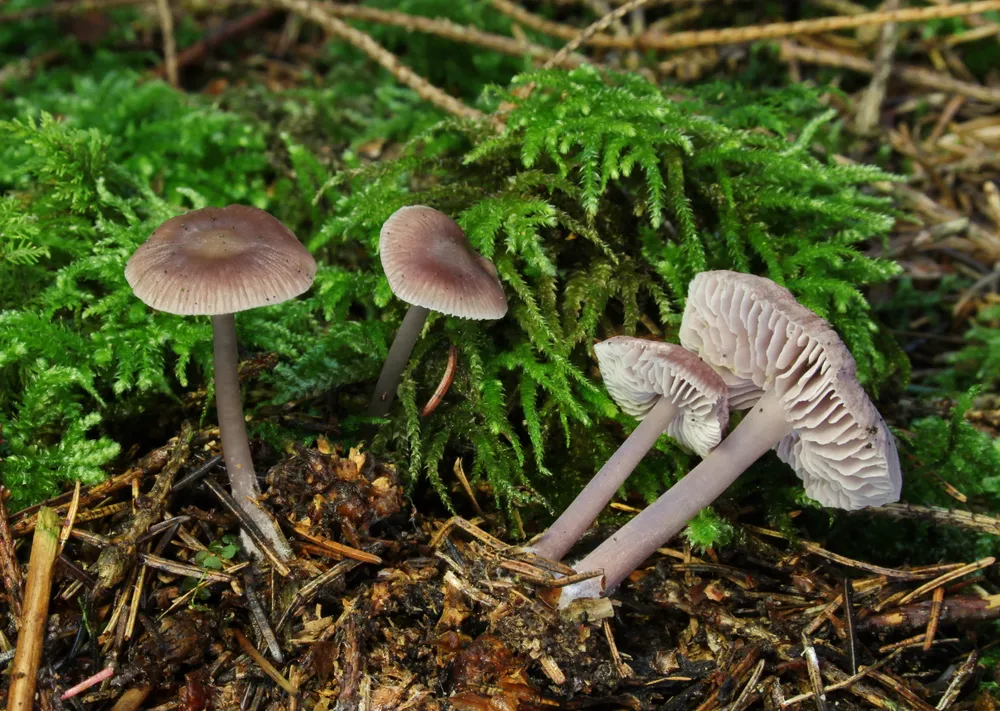
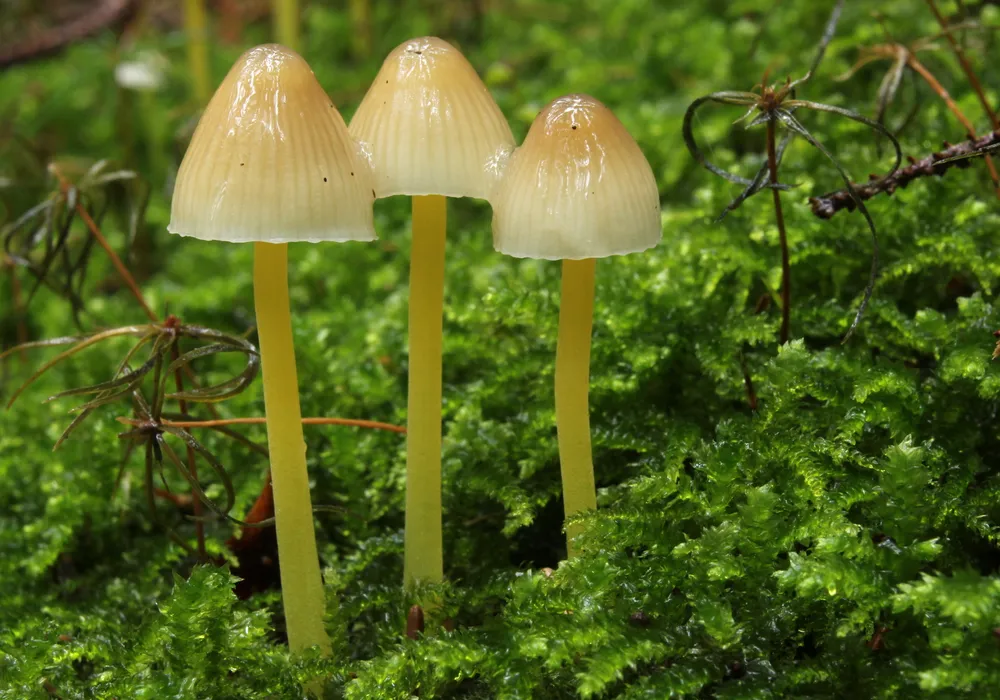
Lilac bonnet
Mycena pura
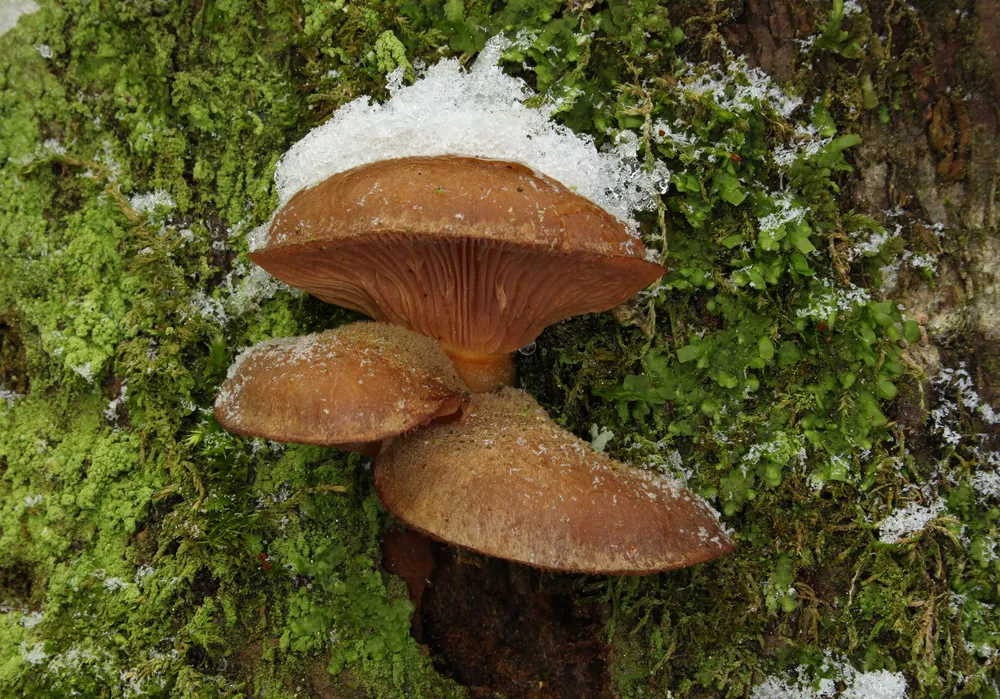
Olive oysterling
Panellus serotinus
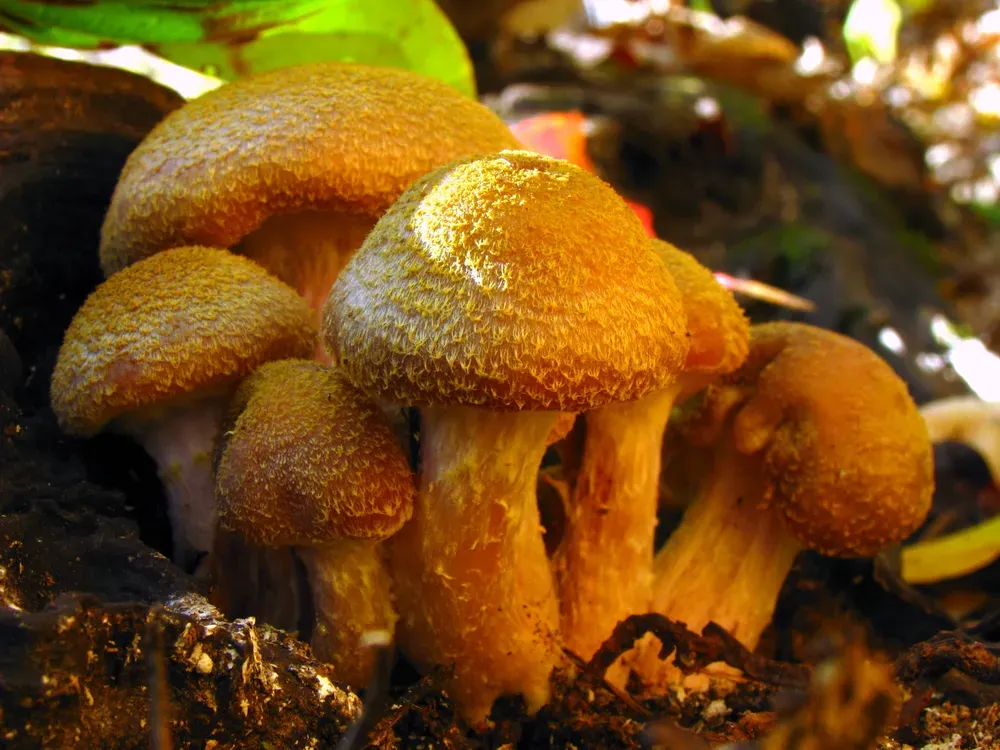
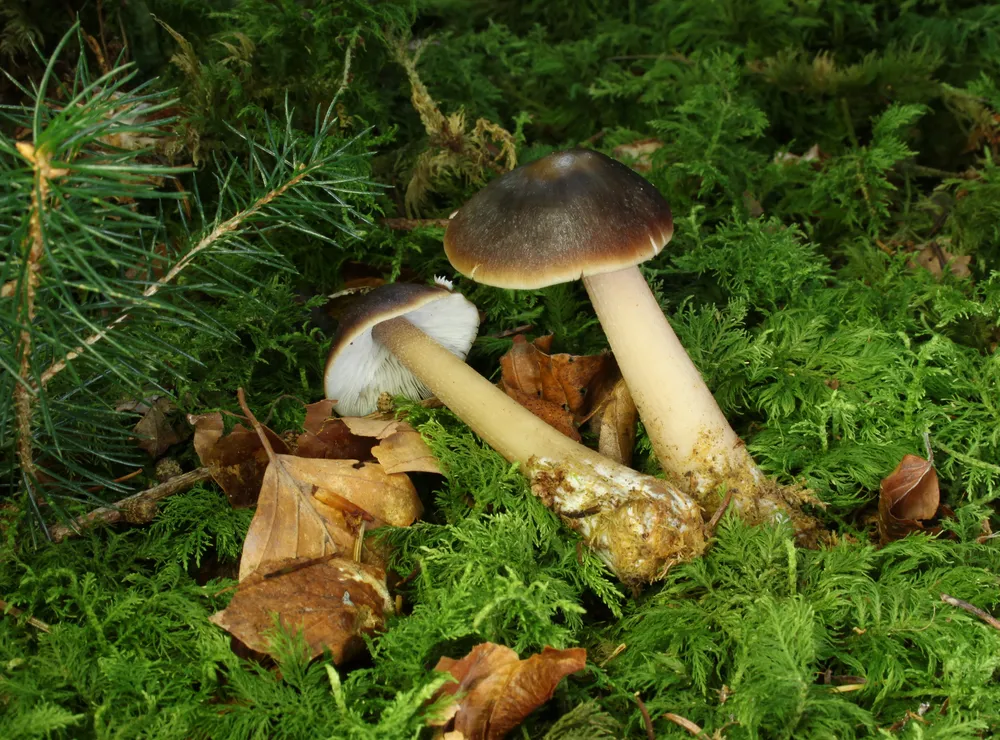
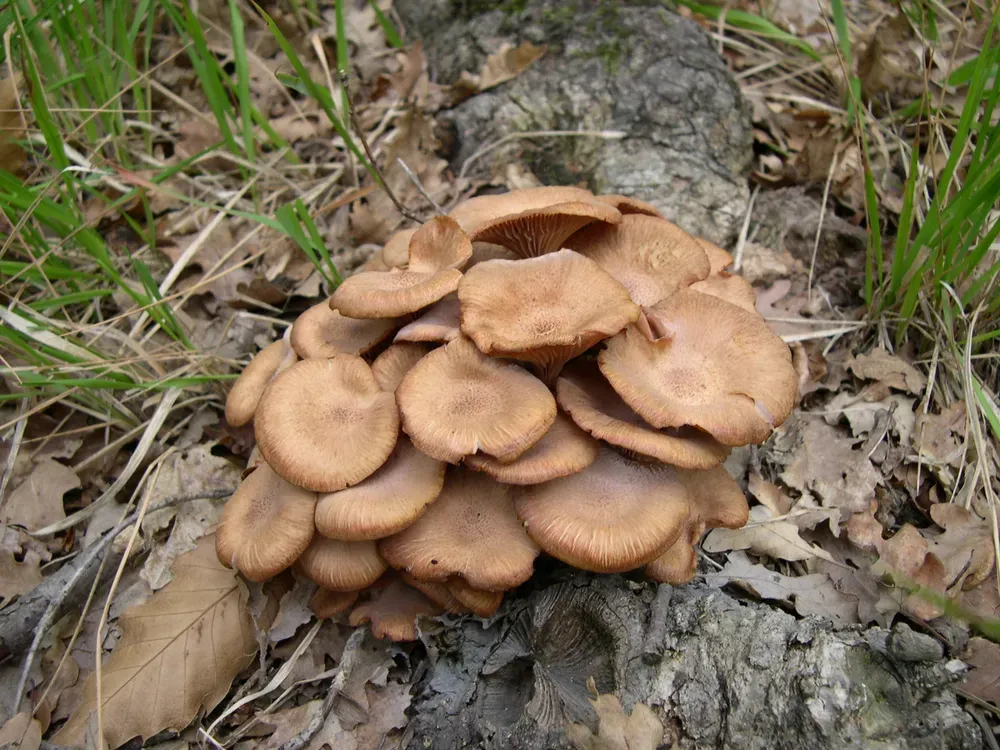
Bulbous honey fungus
Armillaria gallica
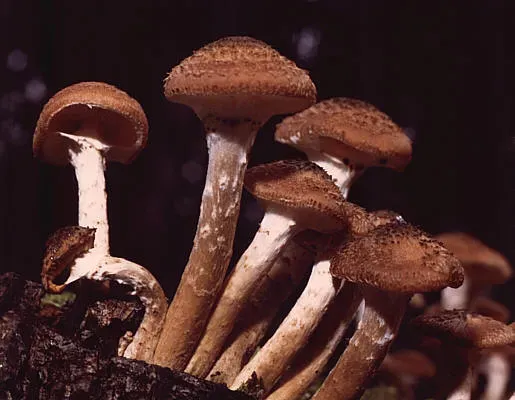
Dark honey fungus
Armillaria ostoyae
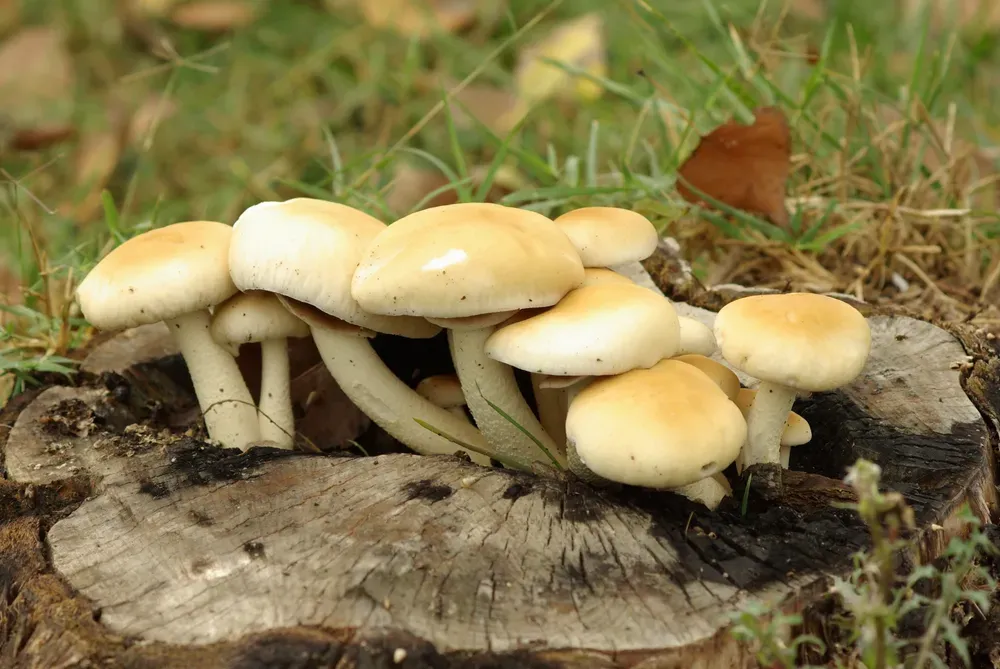
Poplar fieldcap
Cyclocybe aegerita
Ringless honey fungus
Desarmillaria tabescens
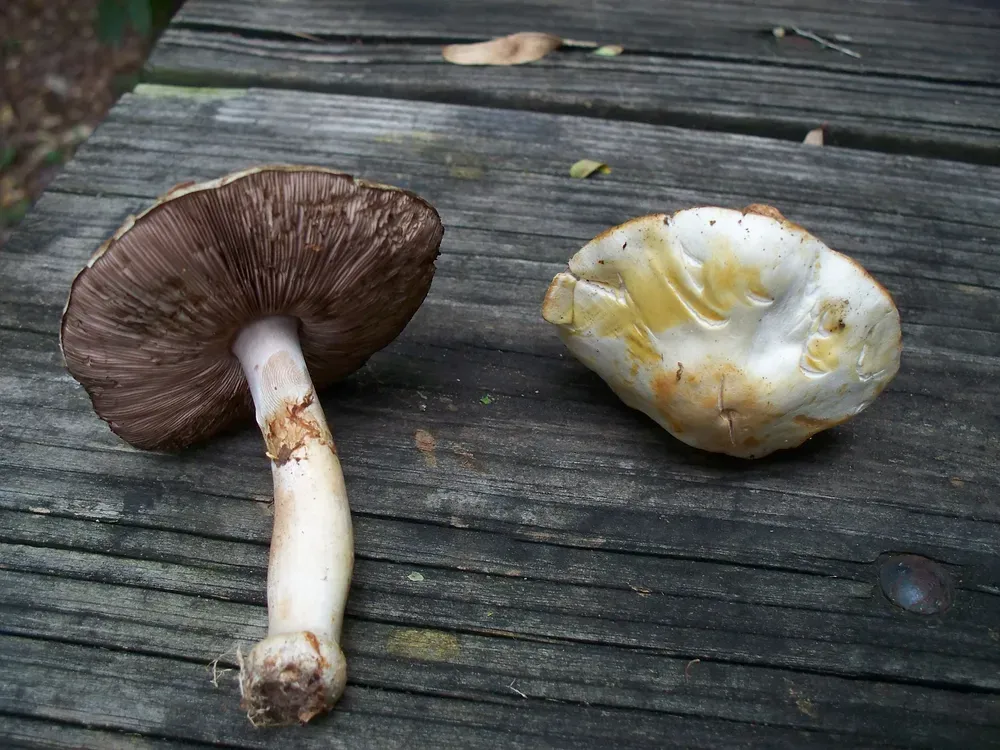
Agaricus abruptibulbus
Agaricus haemorrhoidarius
Agaricus haemorroidarius
Frequently asked questions
Can you eat it?
Technically not poisonous, but worthless in the kitchen — the flesh is thin, watery, and has no real taste. There's no point in picking it. Some sources label it "conditionally edible," but that's more of an academic formality: no sensible forager goes looking for it.
Does it have dangerous lookalikes?
Nothing serious. Its closest relatives are other bonnets and Collybia-type toughshanks, all inedible or of no culinary interest. In theory it could be confused with young funeral bells (Galerina marginata) — and they are deadly poisonous! The key difference: the galerina has a brown spore print and a darker cap, the bonnet has a white print and a gray cap with white gills. If you see a mushroom with brown gills on a stump — DON'T pick it. This is the most important difference.
What if you eat it by accident?
The common bonnet itself won't do anything critical. There may be mild stomach discomfort from the thin, watery flesh, but not serious poisoning. The threat is confusing it with the funeral bell (deadly toxin: amanitin). So: don't taste bonnets from stumps, don't try them raw, and don't mix them with honey fungus without a confident ID.
Where should you look for it?
On stumps and fallen wood of broadleaf trees — oak, beech, hornbeam, poplar, birch, less often maple and ash. It likes moderately rotted wood with moss. A saprotroph. Often grows in clusters in deep cracks in stumps.
Which regions of Ukraine is it found in?
Throughout the forest and forest-steppe zones. Especially abundant in the Carpathians (old-growth beech forests), Polissia (old oak woods), and the forest-steppe (floodplain oak groves). In the steppe — in floodplain poplar woods and parks in large cities.
When should you look for it?
May to November, peaking in June (the summer flush after rain) and September-October. One of the longest seasons of any mushroom. It survives the first frosts.
How do you tell it from the funeral bell?
Most important: the color of the spore print and the gills. The bonnet has a white print and whitish/pinkish gills. The galerina has a brown print and dark rusty gills. If you tap a mushroom over a sheet of paper and see a brown deposit an hour later, it's a galerina, and you must not eat it. Second feature: the galerina has a distinct dark ring on the stem; the bonnet has no ring.
Is it worth going out for?
No. It's no "quiet hunting" prize — it has no culinary value. But it's worth knowing by sight, because it often grows next to young honey fungus and the funeral bell. Once you know the common bonnet's distinctive bell-shaped silhouette, you'll find it easier to spot the real danger on a stump.
Is Common bonnet edible or poisonous?
Does Common bonnet have gills or pores?
What does the cap of Common bonnet look like?
What does the stem of Common bonnet look like?
Sources
- [1]Вікіпедія (українська)
- [2]Атлас грибів України, Зеров Д.К. (1979)
- [3]MycoBank Database
- [4]Index Fungorum
- [5]GBIF
- [6]iNaturalist Ukraine