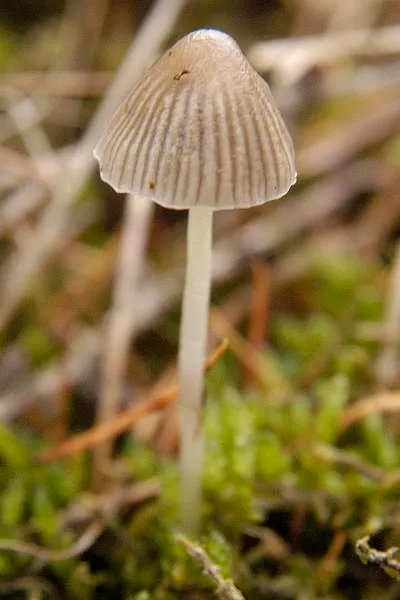
Nitrous bonnetMycena leptocephala
Expert-verifiedUpdated October 3, 2026
Passport
- Edibility
- Inedible
- Season
- Aug — Nov
- Hymenophore
- Gilled
- Cap color
- Grey
- Size
- Very small (<3 cm)
- Smell
- Chemical
- Reviewed
- Yes ✓
Quick answers
Where to look?
Deciduous forest, Mixed forest, Conifer forest
When does it appear?
Aug — Nov
Active months: August, September, October, November.
How to recognize it? Three signs
- Cap color: Grey, Brown
- Cap shape: Conical
- Smell: Chemical
Fruiting season
August – November
Description
The nitrous bonnet (Mycena leptocephala) is one of the smallest and most modest bonnets in Ukraine, with a distinctive faint chlorine-bleach smell, which is why some foragers call it the "chlorine bonnet." The cap is barely 1–1.5 cm across, gray-brown, with a sharp little bump, and the stem is as thin as a thread. By looks alone it's easily confused with a dozen other tiny bonnets of the forest litter — the key clue is the smell: rub a piece between your fingers and you'll catch a light whiff of household cleaner.
Inedible — far too small and of no culinary value. Some sources mention faint traces of muscarine, so it should never go in your basket. On a mid-autumn walk for real mushrooms, these little bonnet cousins are background noise, not a find.
In Ukraine it occurs throughout the forest zone. A saprotroph, it grows on conifer and broadleaf litter, on rotting twigs, and in moss. Season: August to November. Usually solitary or in small groups of 3-5 fruit bodies among fallen leaves.
Cap
Cap 0.5-1.5 cm across, conical or bell-shaped with a sharp little bump, with radial grooves. Color gray-brown, ash-gray, darker in the center. The surface is smooth, slightly damp in rain.
Hymenophore
Gills — grayish-white, distant. Attachment notched (adnexed). Spore print white.
Stem
Stem 4-7 cm tall, 0.1 cm thick — very thin, threadlike, fragile. Color grayish-white above, darker toward the base. The surface is smooth. The base often has whitish mycelium.
Flesh
Flesh very thin, grayish-white. Does not change color when cut. Smell faint, chlorine-bleach — the main diagnostic feature.
Smell
Faint, chlorine-bleach, with a note of household cleaner or freshly sliced cucumber. It comes out when you rub the flesh between your fingers.
›Scientific synonyms (3)
Agaricus leptocephalus Pers., Agaricus alcalinus var. leptocephalus (Pers.) Fr., Mycena alcalina var. chlorinella J.E. Lange
Lookalikes
.webp)
Related species
Mushrooms of the same genus and habitat — to study side by side and never mix up.
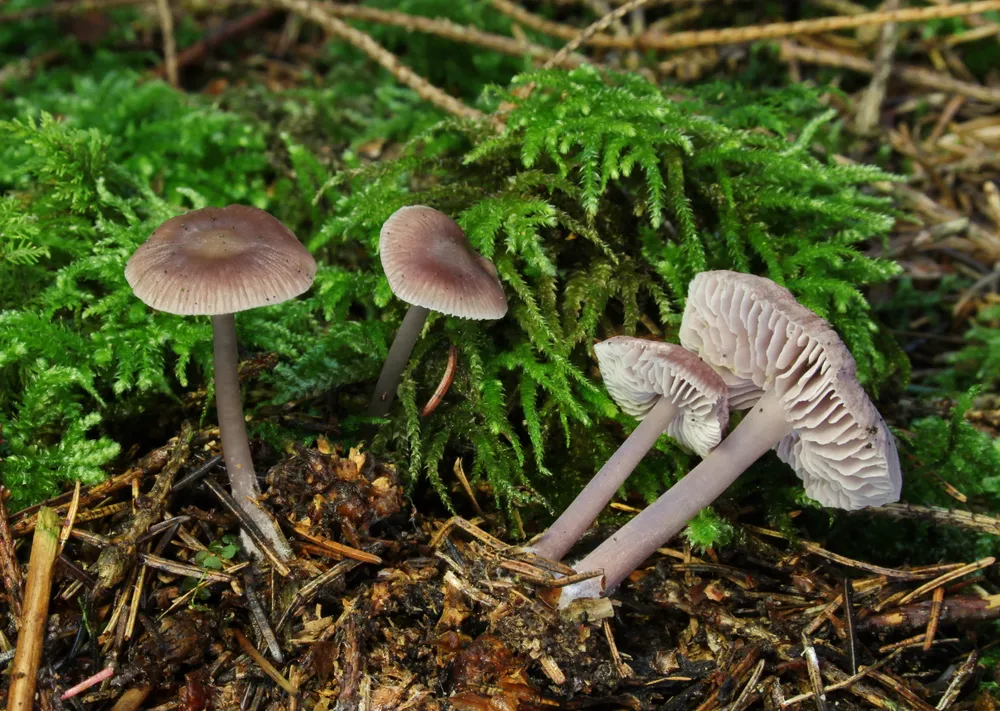
Lilac bonnet
Mycena pura
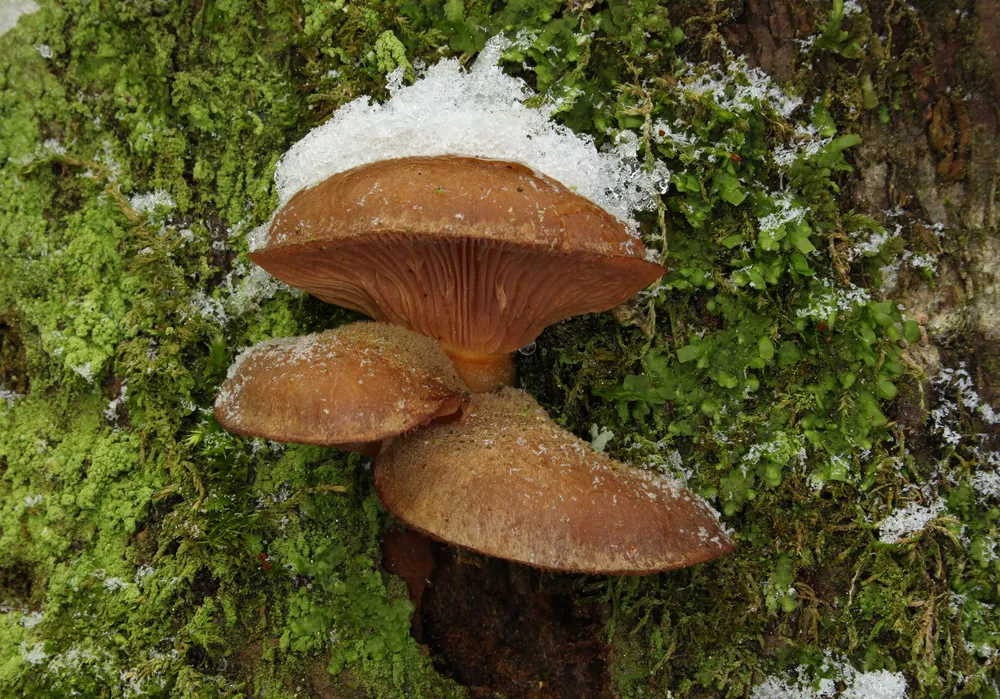
Olive oysterling
Panellus serotinus
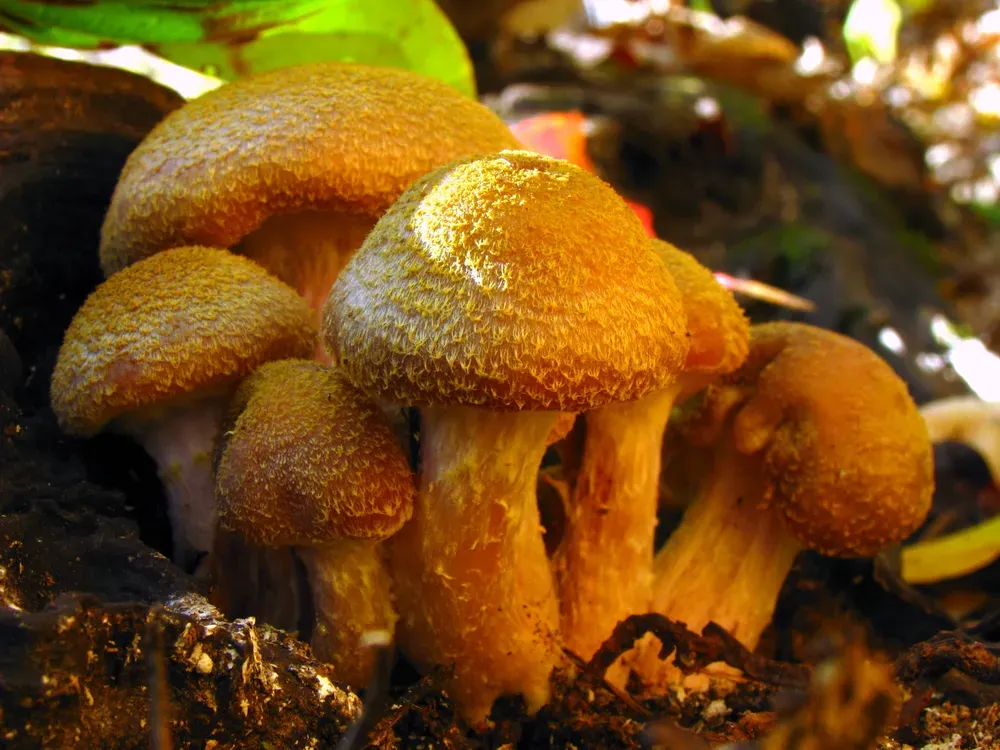
Bulbous honey fungus
Armillaria gallica
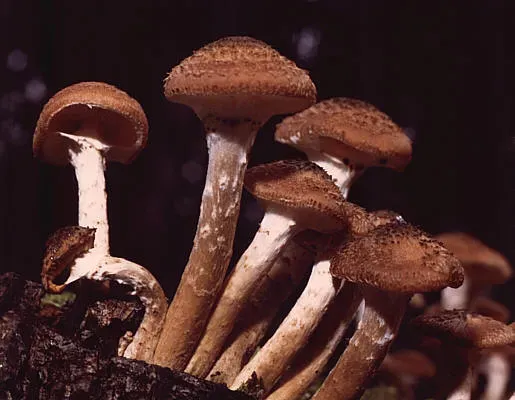
Dark honey fungus
Armillaria ostoyae
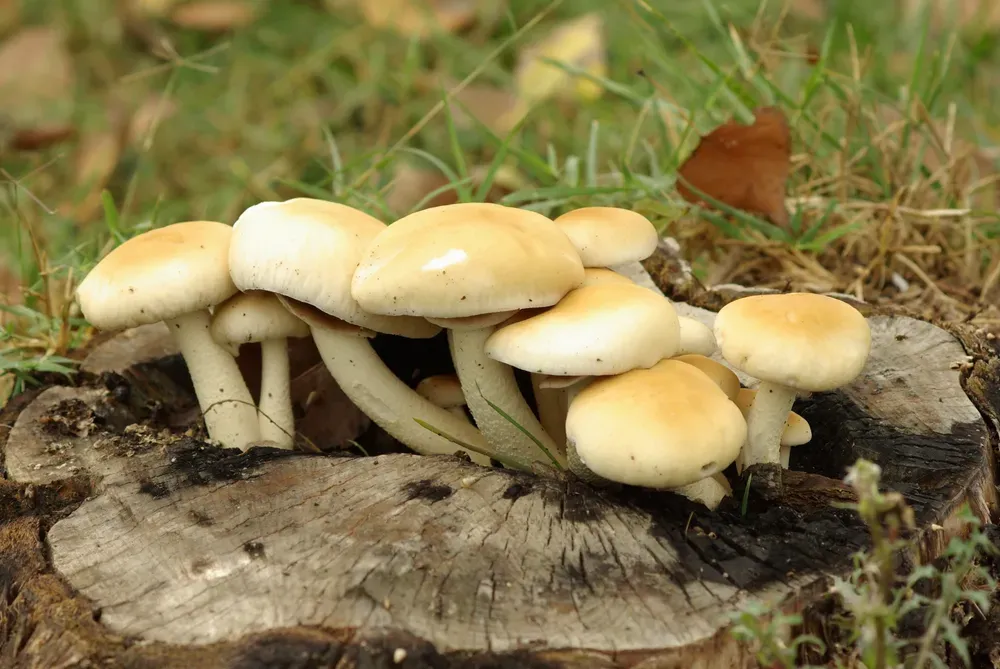
Poplar fieldcap
Cyclocybe aegerita
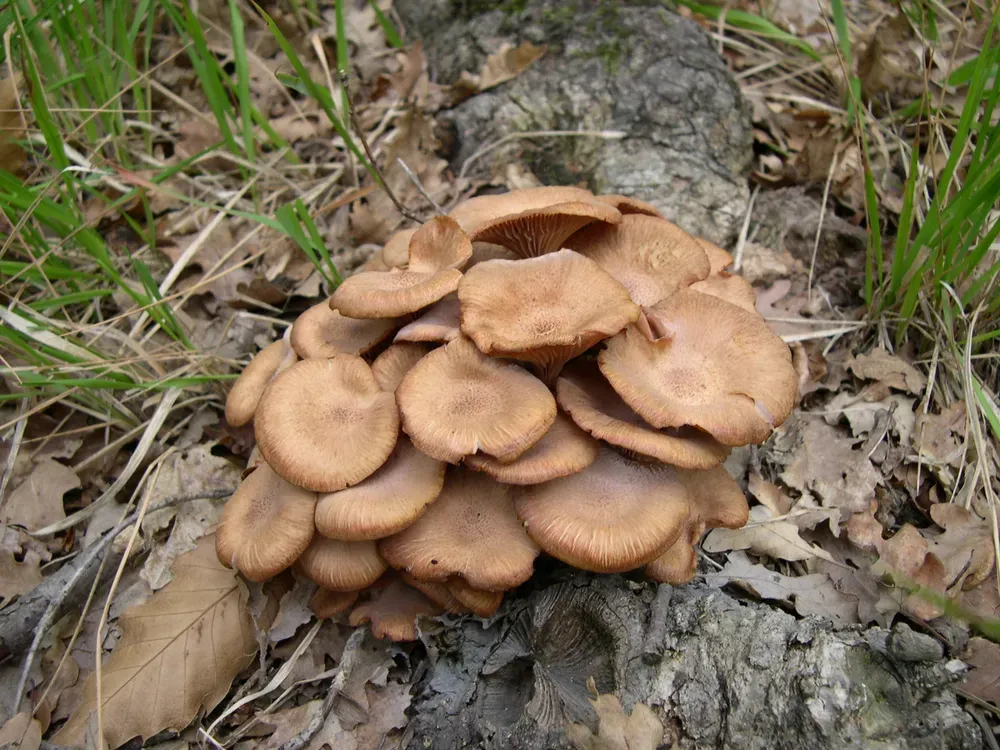
Ringless honey fungus
Desarmillaria tabescens
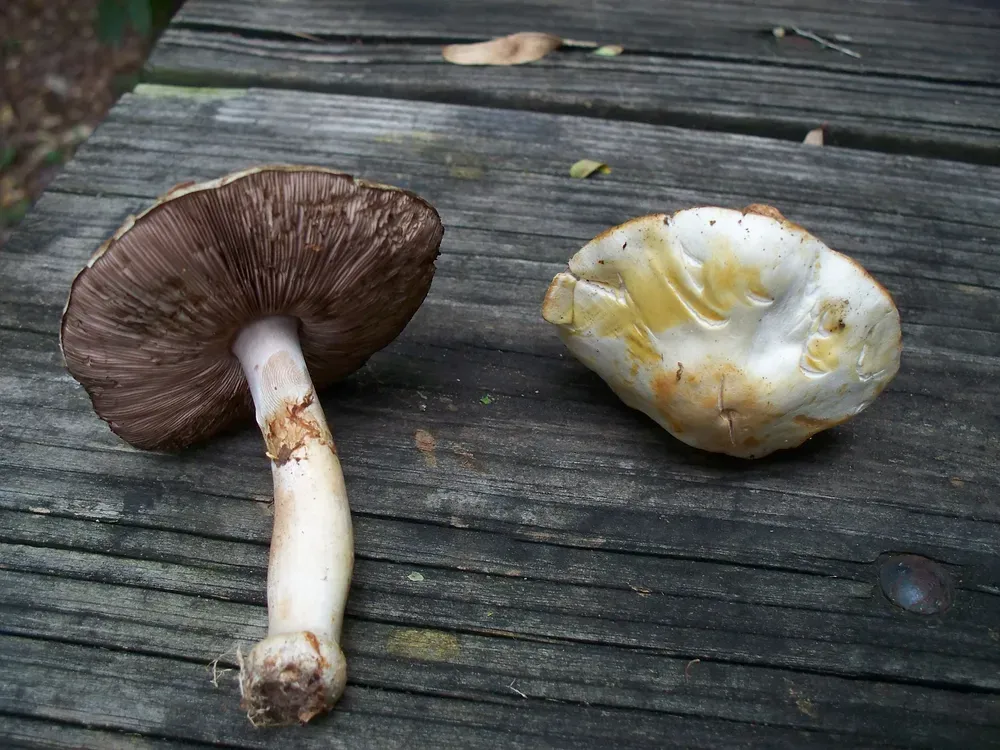
Agaricus abruptibulbus
Agaricus haemorrhoidarius
Agaricus haemorroidarius
Frequently asked questions
Can you eat it?
No. Too small and of no culinary value. Traces of muscarine have been reported in some species of the genus Mycena — a theoretical risk. The careful forager's rule: bonnets don't go in the basket.
Does it have dangerous lookalikes?
Not among the tiny bonnets. The real danger on forest litter is young funeral bells (Galerina marginata), which are deadly poisonous. The galerina has a brown spore print and a ring on the stem; the bonnet has a white print and a stem without a ring.
What's that chlorine smell?
It's natural volatile compounds in the species — phenolic and aldehyde substances reminiscent of bleach. In mycology, it's a diagnostic feature for telling bonnets apart. It's not a sign of spoilage and is not dangerous at this scale.
Where should you look for it?
On forest litter — among fallen leaves, needles, and moss. It likes damp, shady spots. A saprotroph, not tied to any particular tree. In all forest types: broadleaf, mixed, and coniferous.
Which regions of Ukraine is it found in?
Throughout the forest zone: the Carpathians, Polissia, the forest-steppe. One of the most common small litter-decomposing mushrooms.
When should you look for it?
August to November, peaking in September-October. It survives the first frosts.
How do you tell it from other small bonnets?
By its smell. Among the gray-brown bonnets of the forest litter, only M. leptocephala has a pronounced chlorine note. For most of the others you need a microscope or a careful step-by-step comparison of features. If you rub a bonnet and smell chlorine, there's an 80% chance it's our species.
Is it worth paying attention to?
As a find for the pot — no. As a diagnostic exercise — yes. Telling small bonnets apart (milking, common, yellowleg, nitrous) is great training in attentiveness, especially for beginners who later move on to serious edible species.
Is Nitrous bonnet edible or poisonous?
Does Nitrous bonnet have gills or pores?
What does the cap of Nitrous bonnet look like?
What does the stem of Nitrous bonnet look like?
Sources
- [1]Вікіпедія (українська)
- [2]Атлас грибів України, Зеров Д.К. (1979)
- [3]MycoBank Database
- [4]Index Fungorum
- [5]GBIF
- [6]iNaturalist Ukraine