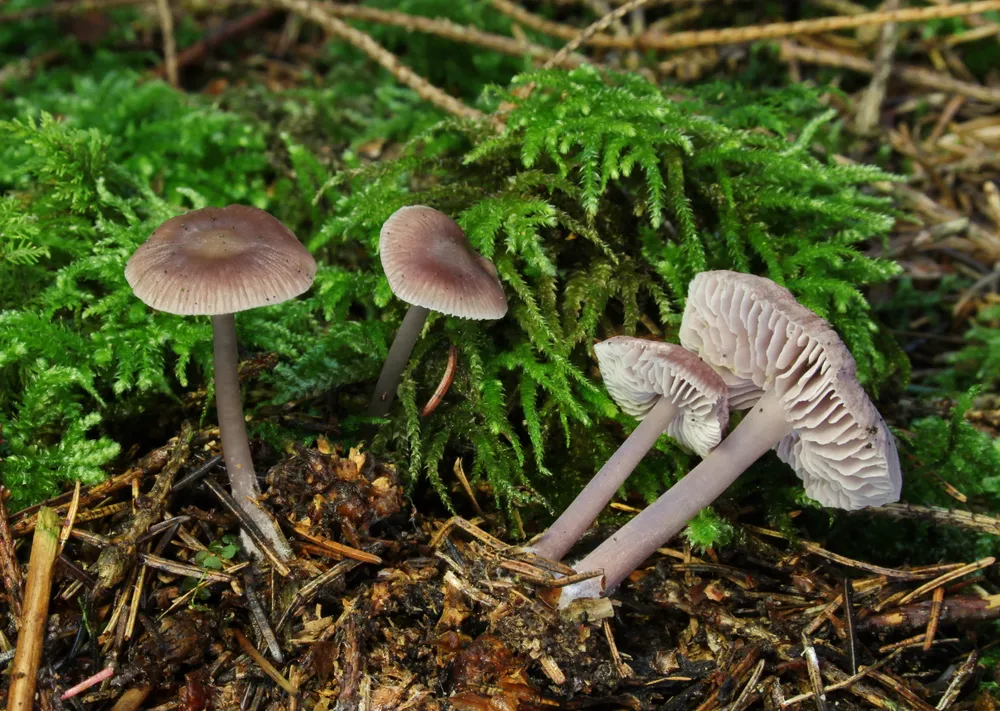
Lilac bonnetMycena pura
Expert-verifiedUpdated October 3, 2026
Passport
- Edibility
- Poisonous
- Season
- Aug — Nov
- Hymenophore
- Gilled
- Cap color
- Pink
- Size
- Small (up to 5 cm)
- Smell
- Radish-like
- Reviewed
- Yes ✓
POISONOUS
Eating it causes poisoning. Do not pick it unless you have identified it with certainty.
Contains muscarine in dangerous doses (a muscarinic receptor agonist: it acts like acetylcholine and causes muscarinic syndrome) and traces of psilocybin and related tryptamines (psychoactive). Poisoning symptoms appear 30 min - 2 h after eating: heavy salivation, sweating, nausea, vomiting, abdominal pain, constricted pupils, and in severe cases psychoactive effects (hallucinations, panic, tachycardia). Symptoms last 6-12 hours. The antidote for muscarinic syndrome is atropine, given by a doctor. Symptomatic treatment: gastric lavage, activated charcoal, IV fluids. No serious fatal cases have been reported, but among the "mild" poisonous species it is one of the most genuinely dangerous. Children are especially vulnerable.
If you suspect poisoning, call an ambulance immediately: 112 (the European emergency number) or your local emergency number
Quick answers
Where to look?
Deciduous forest, Mixed forest
When does it appear?
Aug — Nov
Active months: August, September, October, November.
How to recognize it? Three signs
- Cap color: Pink, Violet
- Cap shape: Convex
- Smell: Radish-like
Fruiting season
August – November
Description
The lilac bonnet (Mycena pura) is the largest and prettiest of Ukraine's bonnets, with a characteristic pinkish-violet or lilac cap. It looks like a small wood blewit (Lepista nuda) or a young blewit, which is why it sometimes ends up in the basket by mistake. But it is a poisonous mushroom: it contains muscarine in dangerous doses and traces of psilocybin and its derivatives. Modern Western sources unanimously label it toxic.
Poisoning symptoms: nausea, heavy salivation, sweating, abdominal pain, and in severe cases psychoactive effects from psilocybin (hallucinations, panic, disorientation). The antidote for muscarine poisoning is atropine (given by a doctor). Symptoms usually pass within 6-12 hours and no serious consequences have been reported, but it is unpleasant and dangerous, especially for children.
In Ukraine it is found throughout the forest zone: the Carpathians, Polissia, the forest-steppe. A saprotroph, it grows on humus-rich soil in deciduous and mixed woods, among fallen leaves. The season runs August to November. It often grows in groups of 5-15 fruiting bodies, especially in wet autumns. If you see a pink-lilac "little blewit," don't pick it. It's not an edible "young blewit"; it's a toxic Mycena.
Cap
Cap 2-6 cm across, bell-shaped when young, later opening to convex with a low bump. Color pink, lilac, violet-purple, less often pale pink or grayish lilac, with radial grooves from the margin to the center. Surface smooth, shiny in wet weather.
Hymenophore
Gilled hymenophore; gills broad, distant, whitish to pale pink or lilac. Attachment notched. Spore print white.
Stem
Stem 4-8 cm tall, 0.3-0.8 cm thick, cylindrical, fragile. Color pinkish lilac, matching the cap, paler lower down. Surface smooth, with fine lengthwise fibers.
Flesh
Flesh thin, pink to whitish, watery. Does not change color when cut. Smell a characteristic radish smell: the key diagnostic feature of the species.
Smell
A distinct radish smell, like raw radish or horseradish. It comes out when you crush the flesh. This is the most reliable feature of the species.
›Scientific synonyms (3)
Agaricus purus Pers., Gymnopus purus (Pers.) Gray, Prunulus purus (Pers.) Murrill
Lookalikes
Related species
Mushrooms of the same genus and habitat — to study side by side and never mix up.
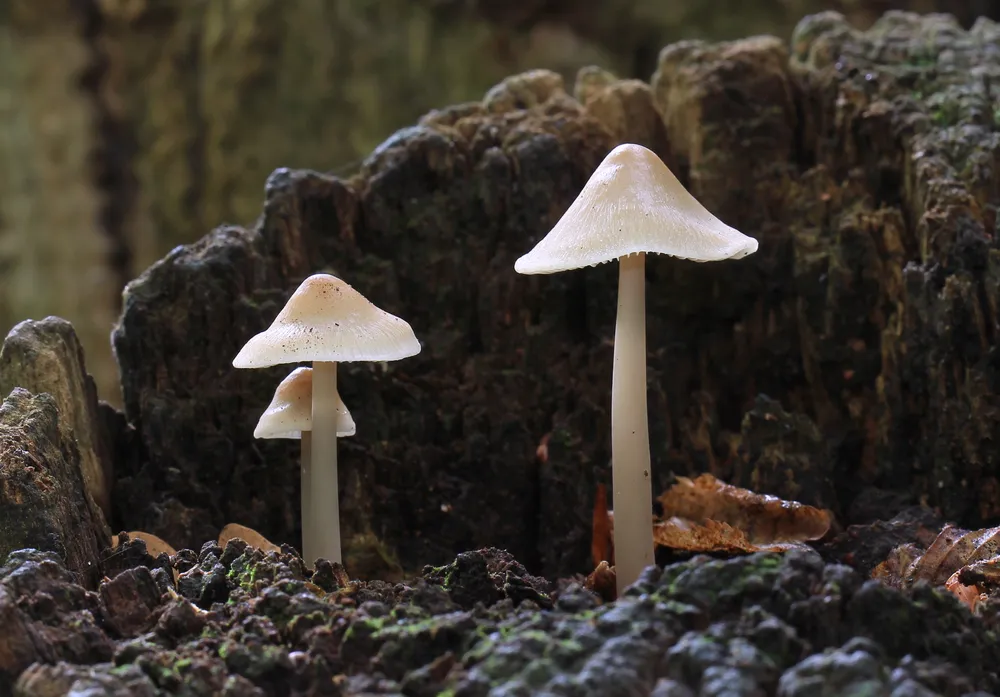
Common bonnet
Mycena galericulata
.webp)
Milking bonnet
Mycena galopus
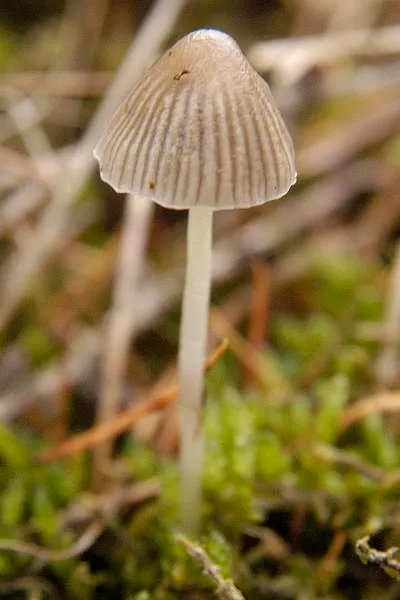
Nitrous bonnet
Mycena leptocephala
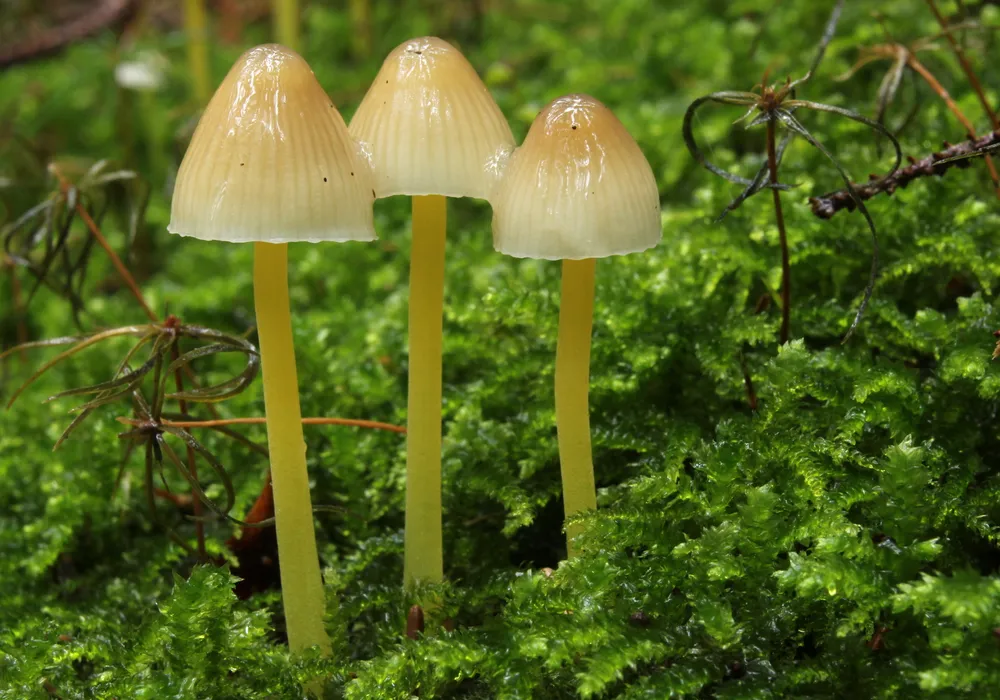
Yellowleg bonnet
Mycena epipterygia
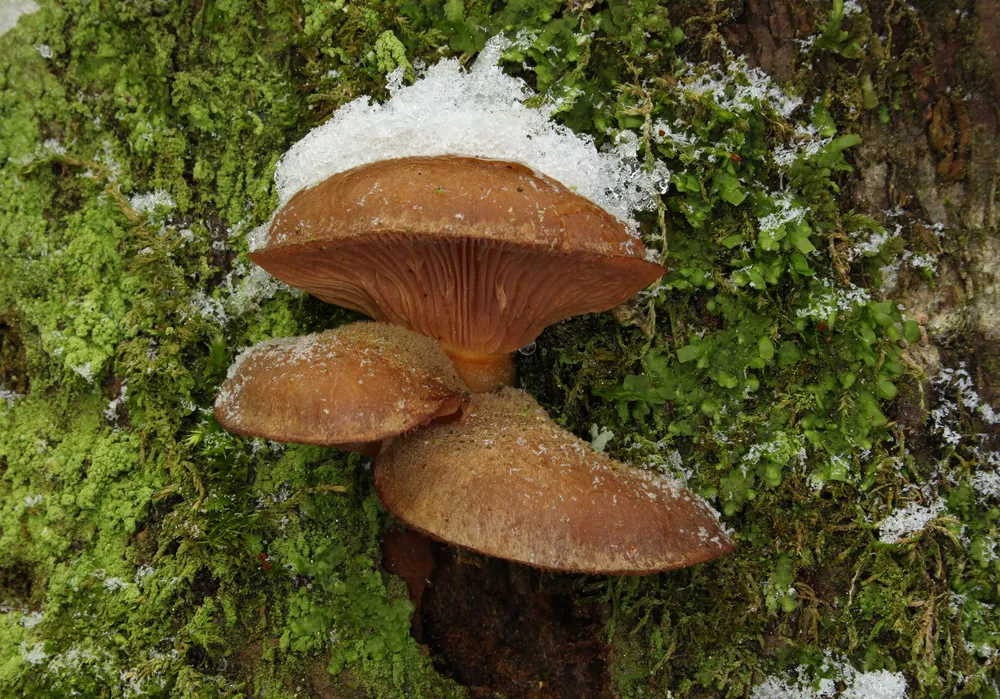
Olive oysterling
Panellus serotinus
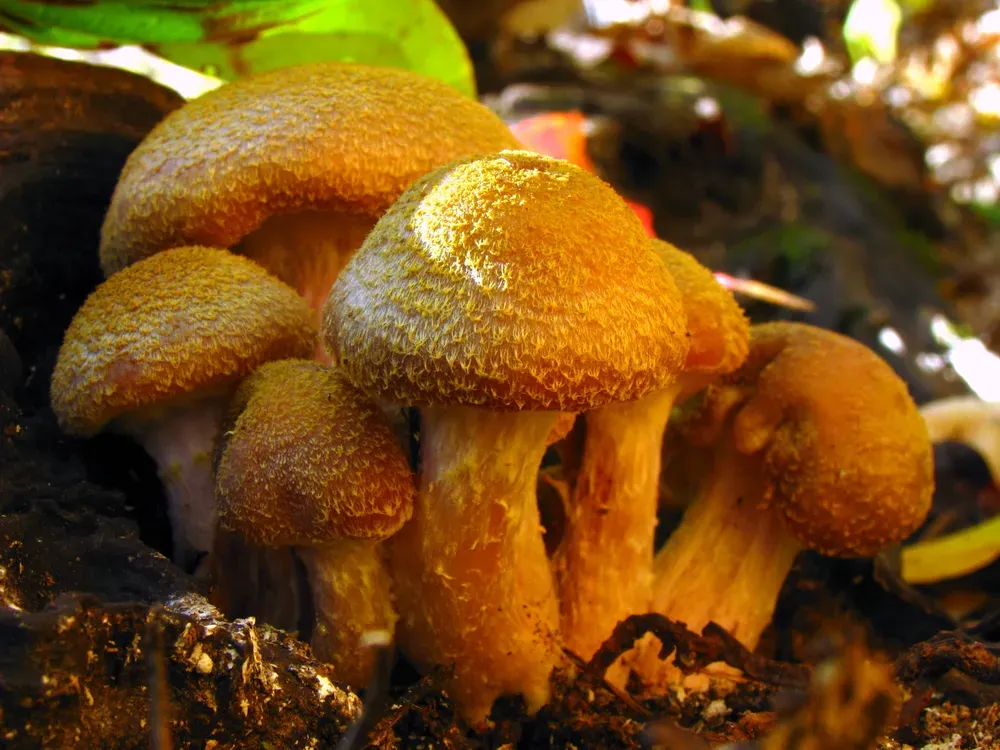
Bulbous honey fungus
Armillaria gallica
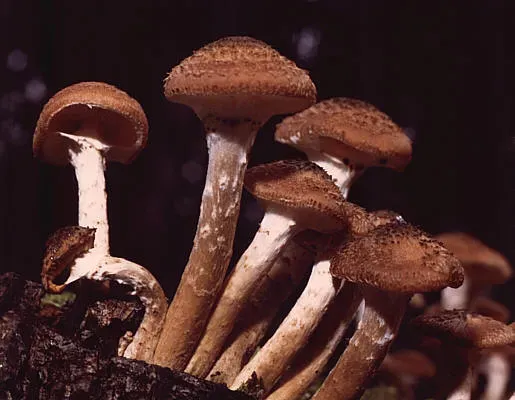
Dark honey fungus
Armillaria ostoyae
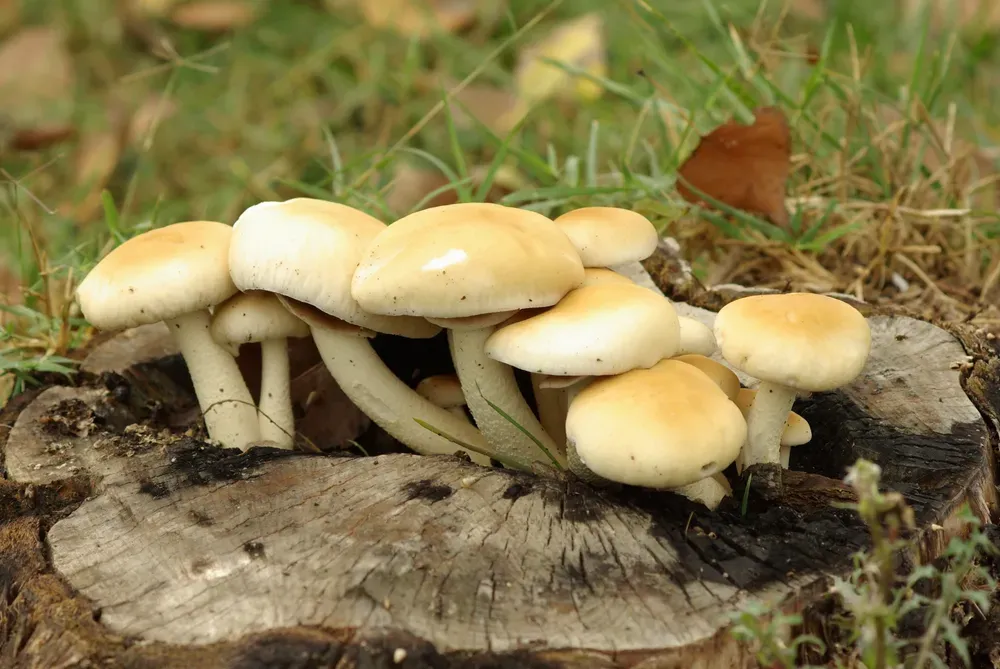
Poplar fieldcap
Cyclocybe aegerita
Frequently asked questions
Can you eat it?
No, absolutely not. It is a poisonous mushroom that causes muscarinic syndrome and psychoactive effects. Don't taste it, don't try it, don't mix it into a basket of edible mushrooms. Modern Western mycologists label the species toxic.
What happens if you eat it by accident?
After 30 min - 2 h: heavy salivation, sweating, nausea, abdominal pain, constricted pupils, tachycardia. In severe cases, hallucinations, panic and disorientation from psilocybin. What to do: call an ambulance right away (112 or your local emergency number), say you suspect a muscarine-containing mushroom, and if possible keep the leftover mushrooms for identification. Don't try to "wait it out": muscarinic syndrome is treated with atropine, which a doctor gives. Don't induce vomiting at home, and take activated charcoal only on a doctor's advice.
Is it dangerous for children and dogs?
Yes, especially for children: muscarinic syndrome develops faster and more severely in them. If a child has eaten a mushroom with a pink cap, call emergency services immediately. For dogs it is toxic too, with the same symptoms (drooling, tremors, vomiting). Photograph the mushroom you found from several angles: this will help the toxicologists.
How can you reliably tell it apart from edible pink mushrooms?
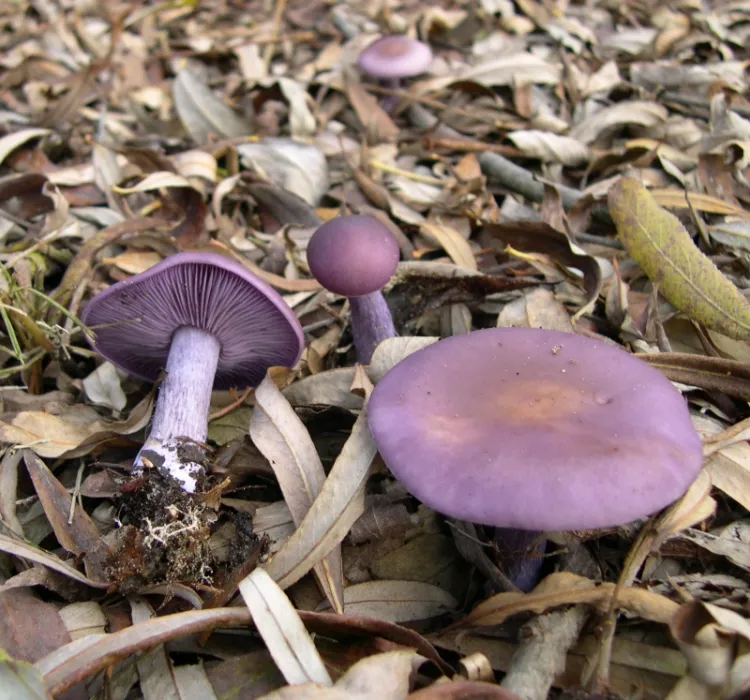
Among Ukraine's edible "pink" mushrooms are the wood blewit (Lepista nuda) and the field blewit (L. saeva). Their caps are much larger (5-15 cm) and meatier, and the stem is thick (1-2 cm) and violet throughout. The lilac bonnet is smaller (2-6 cm), fragile, with a thin stem and a distinct radish smell. Smell is the most reliable clue: true blewits smell pleasantly fruity and perfumed, the bonnet sharply of radish.
Where should you look for it?
In deciduous and mixed woods, on humus-rich soil among fallen leaves. It likes damp spots and shady woodland edges. A saprotroph. In conifer forests it is rarer, mostly in mixed stands with some beech or oak.
Which regions of Ukraine is it found in?
Throughout the forest and forest-steppe zone: the Carpathians, Polissia (especially plentiful in beech and oak woods), the forest-steppe. In the steppe, in floodplain oak woods.
When should you look for it?
Better to ask "when to avoid it." August to November, peaking in September-October. Its season overlaps with the wood blewit's, hence the highest risk of mix-ups in September.
Which edible mushrooms is it confused with?
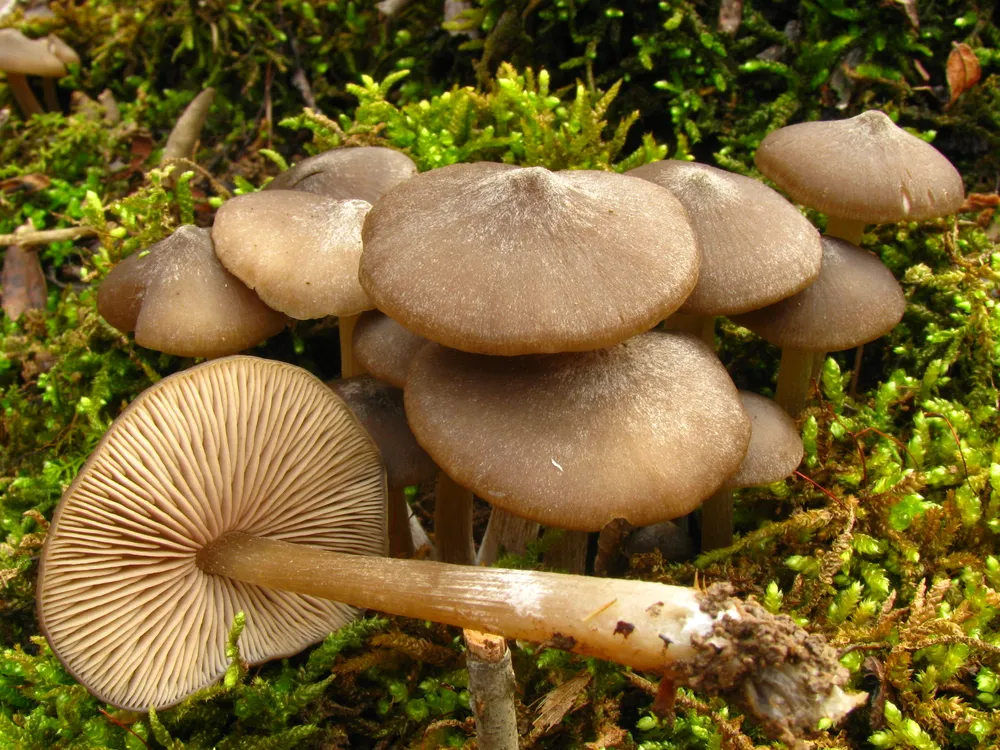
First and foremost, the wood blewit (Lepista nuda), because of the similar pink-lilac color. Key differences: the wood blewit is larger (5-15 cm), meatier, with no radish smell (it smells fruity); its gills are violet, not white. The second mistake is with young Collybia (toughshanks) with a pinkish tint; also not critical. The third is with a young elastic saddle with pinkish tints; also not edible.
Is Lilac bonnet edible or poisonous?
Does Lilac bonnet have gills or pores?
What does the cap of Lilac bonnet look like?
What does the stem of Lilac bonnet look like?
Sources
- [1]Вікіпедія (українська)
- [2]Атлас грибів України, Зеров Д.К. (1979)
- [3]MycoBank Database
- [4]Index Fungorum
- [5]GBIF
- [6]iNaturalist Ukraine