.webp)
Milking bonnetMycena galopus
Expert-verifiedUpdated October 3, 2026
Passport
- Edibility
- Inedible
- Season
- Aug — Nov
- Hymenophore
- Gilled
- Cap color
- Grey
- Size
- Very small (<3 cm)
- Smell
- Radish-like
- Reviewed
- Yes ✓
Quick answers
Where to look?
Deciduous forest, Mixed forest, Conifer forest
When does it appear?
Aug — Nov
Active months: August, September, October, November.
How to recognize it? Three signs
- Cap color: Grey, Brown, Dark brown
- Cap shape: Conical
- Smell: Radish-like, Odorless
Fruiting season
August – November
Description
The milking bonnet (Mycena galopus) is a small gilled mushroom with a distinctive trait: when the stem is damaged, a drop of white, milky fluid oozes out, just like milk. Hence the Latin name galopus ("milk foot") and the Ukrainian name "bilosokova" ("white-juiced"). It's the most reliable diagnostic feature of the species among the tiny bonnets of the forest litter.
Inedible — not poisonous, but too small, thin-fleshed, and of no culinary value at all. The flesh is flimsy and watery, with a faint radish smell in some forms. There's no point in cutting it for the basket — even a dozen fruit bodies give you less than a spoonful of flesh. The mushroom is more interesting from a forest-mycology point of view: bonnets as an indicator of healthy forest litter.
Very common in Ukraine — one of the most frequent inhabitants of fallen leaves and needles in all forest types: the Carpathians, Polissia, the forest-steppe. A saprotrophic decomposer — it returns the cellulose and lignin of fallen leaves to the soil. Season: August to November, peaking in September-October. It often grows in huge groups (dozens or hundreds of fruit bodies) in the wet leaf carpet.
Cap
Cap 1-2.5 cm across, conical or bell-shaped, with a noticeable bump in the center and fine radial grooves from the margin to the center (a hallmark of the genus Mycena). Color gray-brown, dark gray with an olive tint, the center darker. The cap margin is thin and fragile, often splitting in old mushrooms.
Hymenophore
Gills — whitish to pale gray, moderately distant, with noticeable cross-veins between them. Attachment to the stem notched with a small decurrent tooth. Spore print white.
Stem
Stem 4-8 cm tall, 0.1-0.2 cm thick — very thin, threadlike, fragile. Color grayish-white above, dark gray to brownish toward the base. The surface is smooth. When the stem is snapped, a drop of white, milky fluid oozes out — this is the species' main diagnostic feature. In old, dried-out mushrooms the juice may not appear, but a dry whitish trace remains.
Flesh
Flesh very thin, watery, white. Smell faint; in some forms slightly radish-like or chlorine-like. Taste mild, unremarkable.
Smell
Faint; in some populations with a note of radish or a damp cellar. Not distinctive enough for an ID.
›Scientific synonyms (3)
Agaricus lactescens Schrad., Agaricus galopus Pers., Mycena galopoda (Pers.) P. Kumm. (1871)
Lookalikes
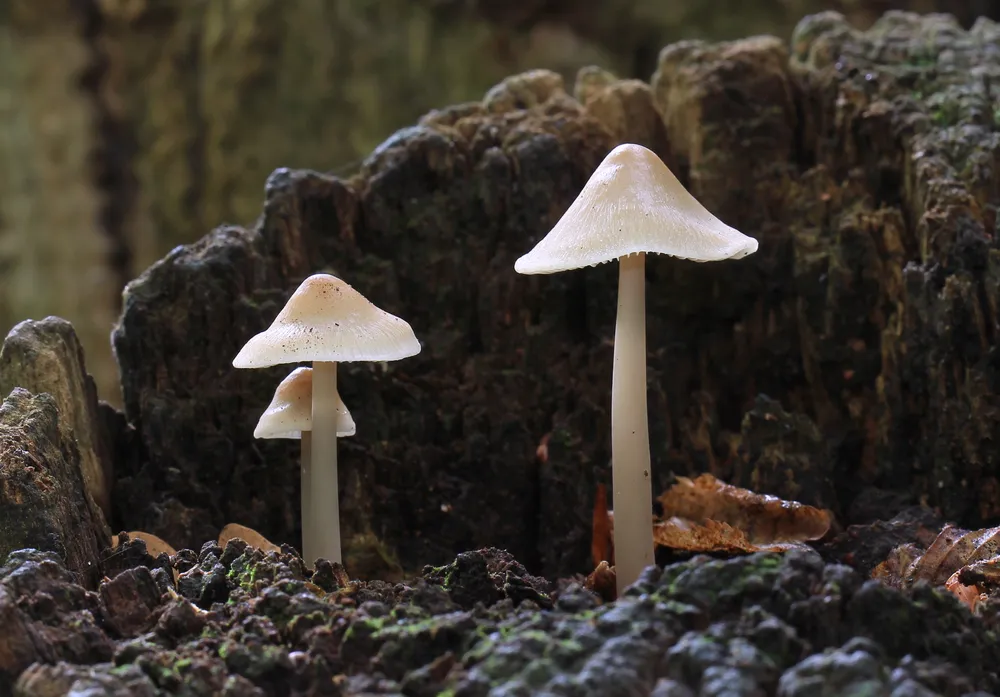
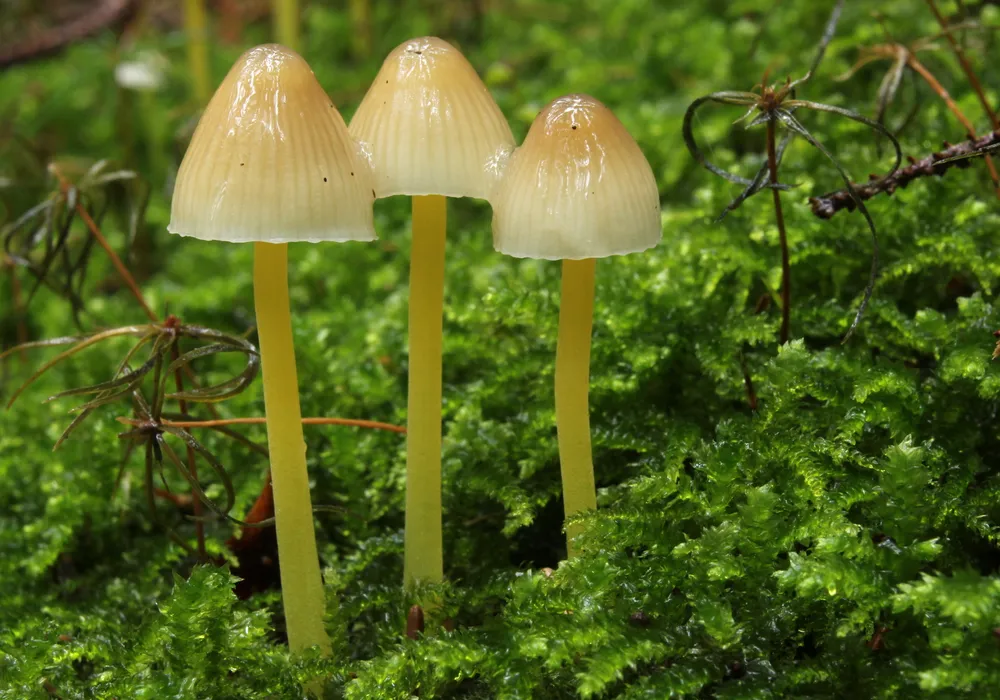
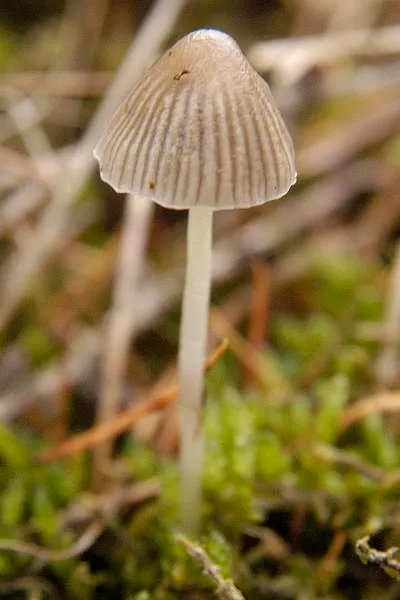
Related species
Mushrooms of the same genus and habitat — to study side by side and never mix up.
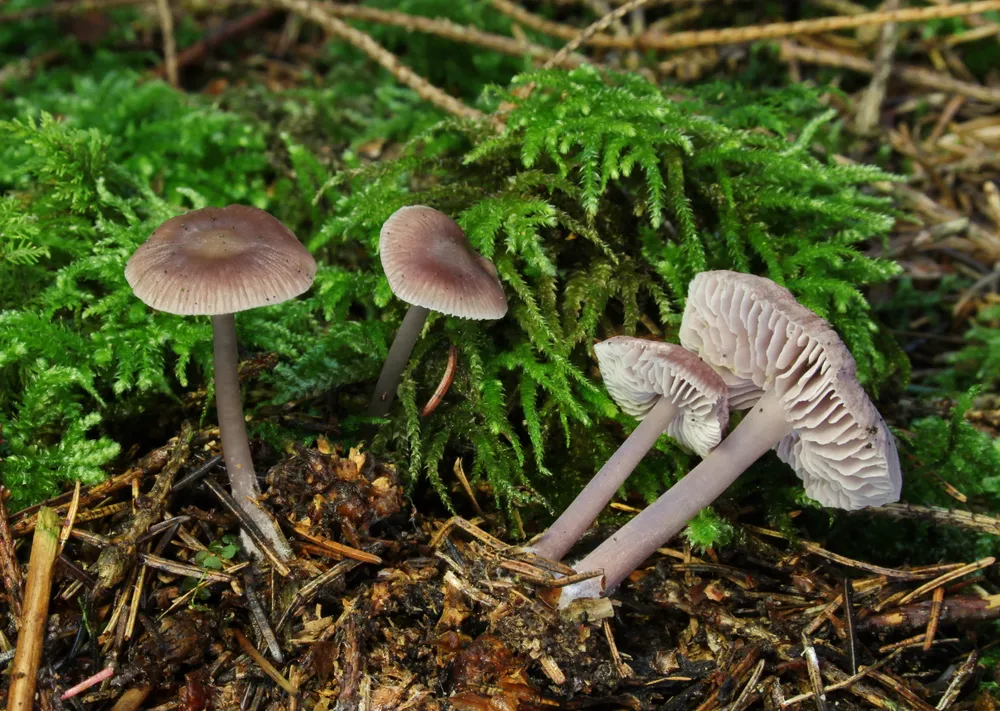
Lilac bonnet
Mycena pura
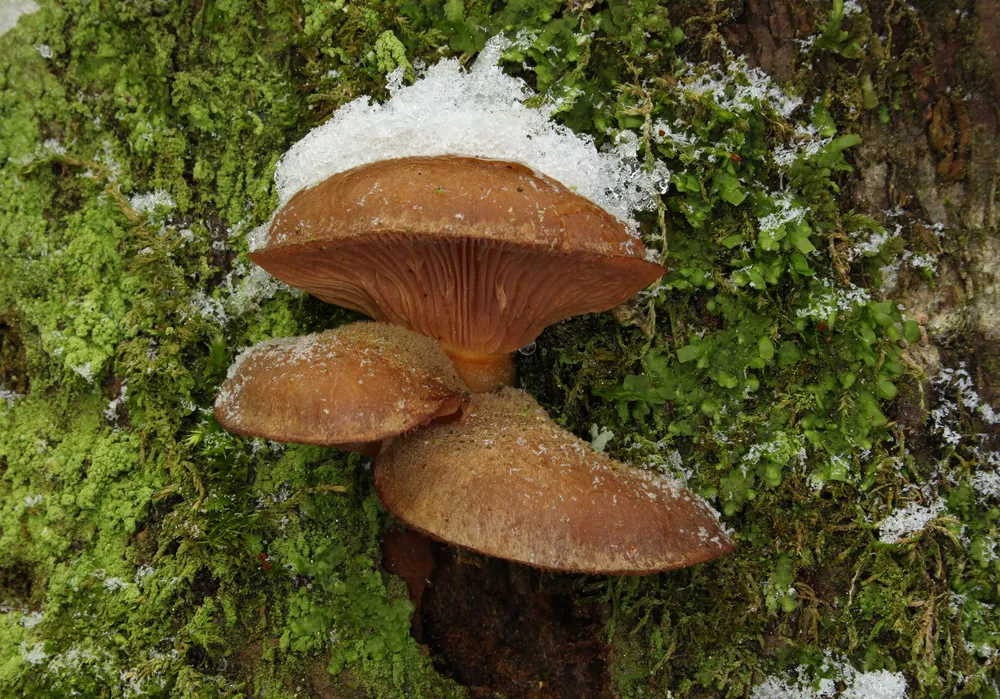
Olive oysterling
Panellus serotinus
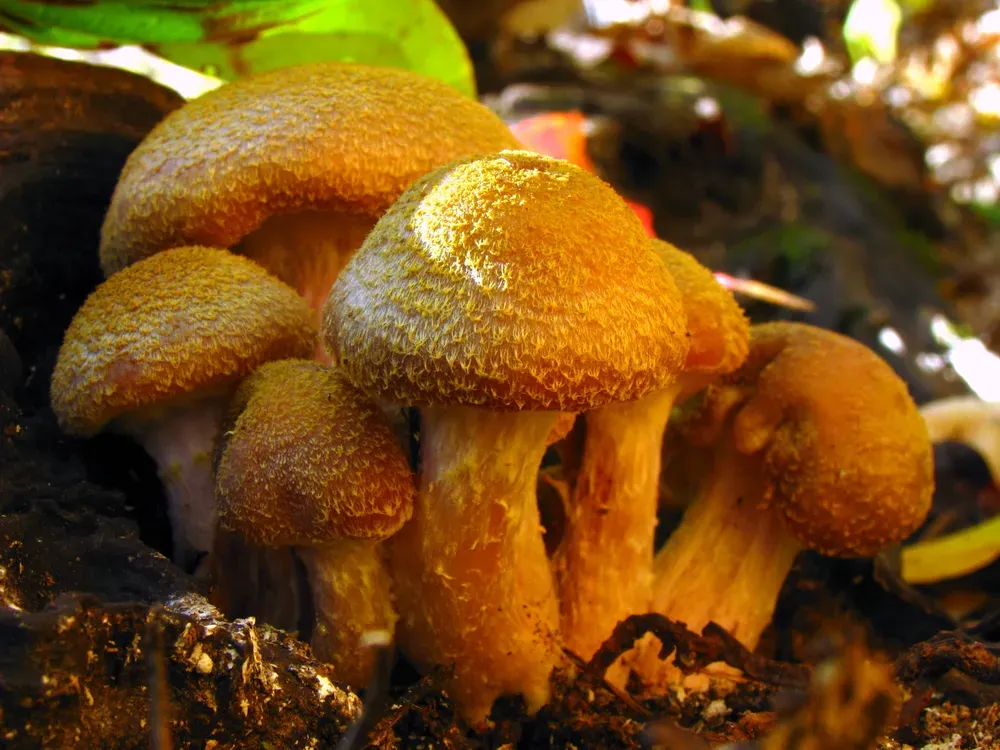
Bulbous honey fungus
Armillaria gallica
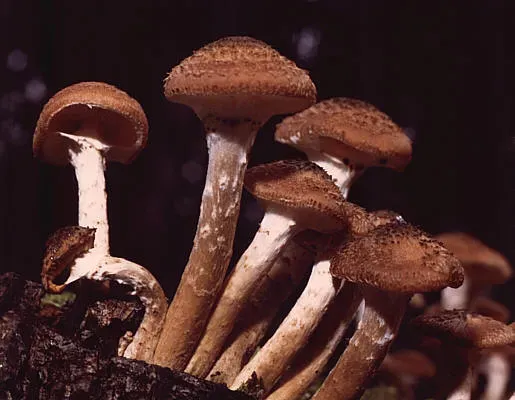
Dark honey fungus
Armillaria ostoyae
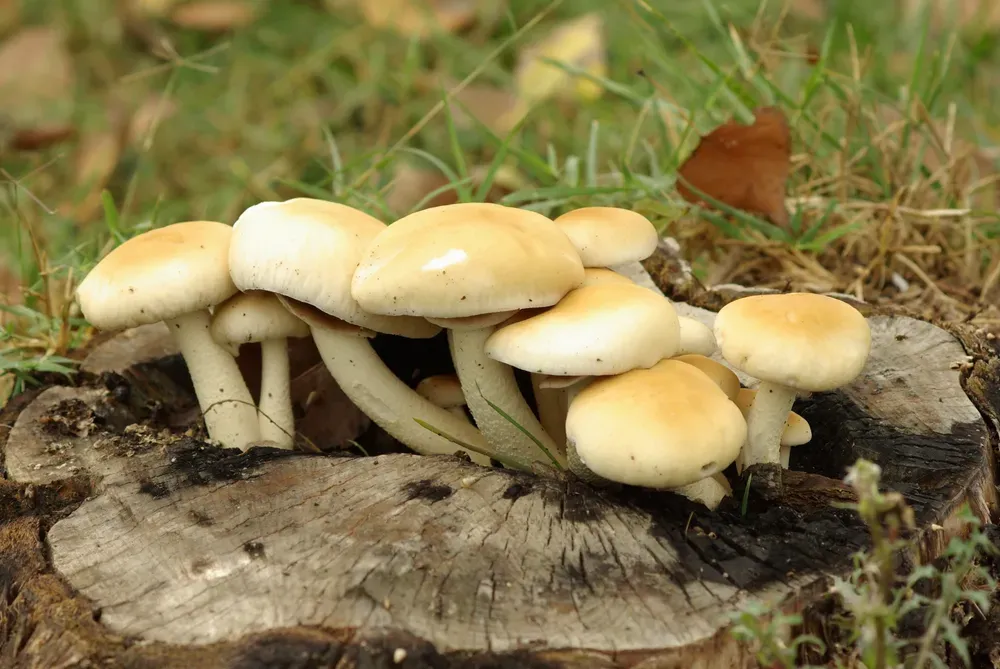
Poplar fieldcap
Cyclocybe aegerita
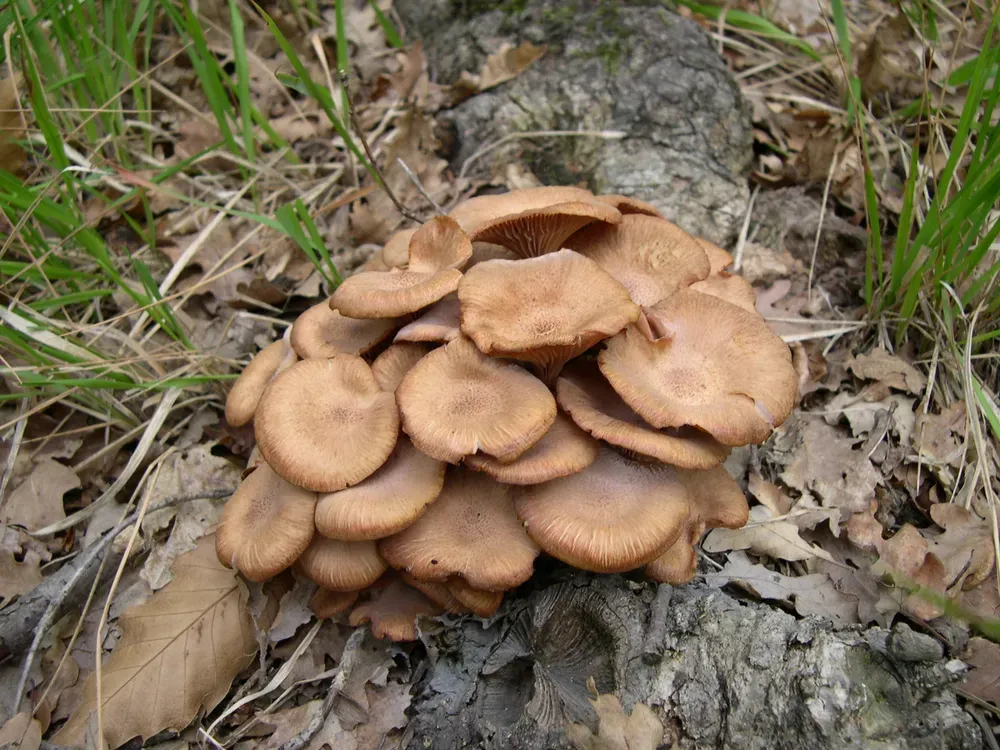
Ringless honey fungus
Desarmillaria tabescens
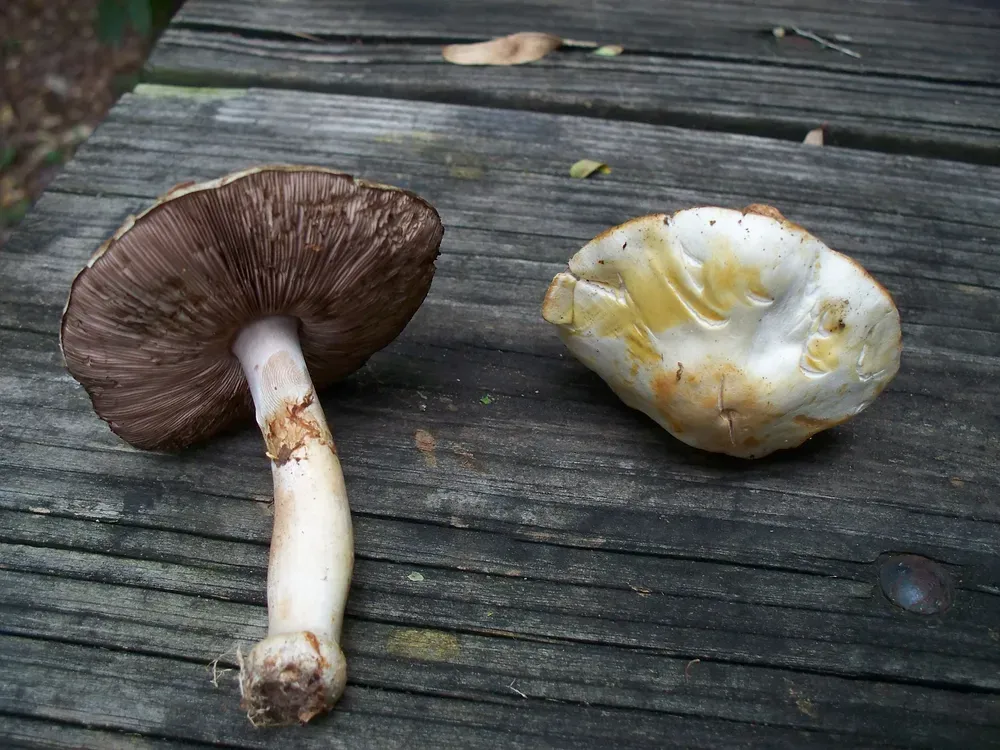
Agaricus abruptibulbus
Agaricus haemorrhoidarius
Agaricus haemorroidarius
Frequently asked questions
Can you eat it?
Technically not poisonous, but inedible in practice — too small, with watery, tasteless flesh. There's no point in picking it. Weak toxins (muscarine in very small doses) have been reported in some bonnets, so the careful forager's rule: bonnets don't go in the basket.
What's that white fluid in the stem?
It's milky juice (latex) — a watery emulsion of fungal compounds that some species of tiny mushrooms produce as protection against burrowing insects. White and plentiful in young, fresh mushrooms. It's not poison, not a virus, and not a sign of ripeness — just ordinary biochemistry of the genus.
Can it be dangerous for a dog or a child?
The genus Mycena isn't described in the literature as seriously poisonous, but a test dose of any unknown mushroom is a potential risk for a child or an animal. If you see that a child or dog has eaten bonnets, keep an eye on them; if you suspect symptoms (nausea, weakness), seek medical help and bring a photo of the mushroom.
Where should you look for it?
In the forest litter — among fallen leaves and needles. It likes a damp microclimate: shady hollows, mossy patches, around tree trunks. One of the most frequent small mushrooms in all forest types: broadleaf, mixed, and coniferous.
Which regions of Ukraine is it found in?
Throughout the forest zone and in the shelterbelts of the forest-steppe. Especially abundant in damp Carpathian forests, Polissia spruce stands, and floodplain oak groves.
When should you look for it?
August to November, peaking in September-October. It survives the first frosts. It often fruits later than most large mushrooms.
How do you tell it from other bonnets?
Among Ukrainian bonnets, milky juice in the stem is a diagnostic trait of only a few species: Mycena galopus (white), Mycena haematopus (blood-red, on broadleaf stumps), Mycena sanguinolenta (pink). If the juice in your find is white and it's growing in broadleaf litter — there's a 90% chance it's the milking bonnet.
Is it worth paying attention to?
Yes, as an interesting example of fungal biochemistry. Milky juice in a tiny mushroom is a defense mechanism usually associated with the big milk caps (Lactarius). Here it works on a miniature scale. A find is a great excuse to take a photo of the drop of juice at the broken stem.
Is Milking bonnet edible or poisonous?
Does Milking bonnet have gills or pores?
What does the cap of Milking bonnet look like?
What does the stem of Milking bonnet look like?
Sources
- [1]Вікіпедія (українська)
- [2]Атлас грибів України, Зеров Д.К. (1979)
- [3]MycoBank Database
- [4]Index Fungorum
- [5]GBIF
- [6]iNaturalist Ukraine