THIS DATA HAS NOT BEEN VERIFIED BY AN EXPERT. Use at your own risk.
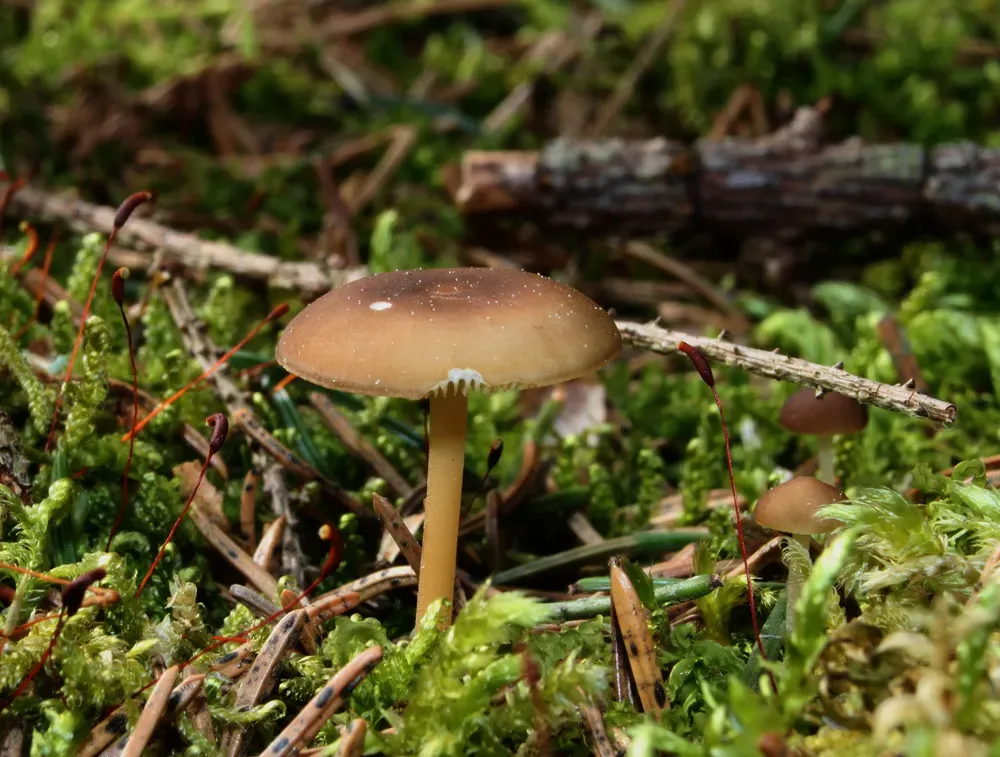
Sprucecone capStrobilurus esculentus
Under reviewUpdated October 3, 2026
Passport
- Edibility
- Edible
- Season
- Mar — Oct
- Hymenophore
- Gilled
- Cap color
- Brown
- Size
- Very small (<3 cm)
- Smell
- Pleasant
- Reviewed
- Under review
Quick answers
Where to look?
Conifer forest, Mixed forest
When does it appear?
Mar — Oct
Active months: March, April, May, October.
How to recognize it? Three signs
- Cap color: Brown, Grey, Dark brown
- Cap shape: Convex, Flat
- Smell: Pleasant
Fruiting season
March, April, May, October
Description
The sprucecone cap, known to science as Strobilurus esculentus, is a tiny spring mushroom that grows on last year's spruce cones half-buried in the soil or in fallen needles. Its appearance announces the start of the mushroom year: when almost nothing else is growing yet, the slender stems of the sprucecone caps are already rising above the conifer litter. It is a highly specialized saprotroph — it decomposes spruce cones only, so that's the tree to look under.
In Ukraine, the sprucecone cap occurs in spruce forests and mixed forests with spruce, mainly in the Carpathians, Polissia and other areas where this tree grows. Its fruiting season is early spring, March through May, as soon as the snow melts; occasionally it also appears in autumn. The mushroom grows in groups on cones, often in large numbers.
In terms of edibility, the sprucecone cap is an edible mushroom, but because of its tiny size its culinary value is modest. Young caps have a mild, pleasant taste; they are added to scrambled eggs or fried in a batch when you manage to gather enough. The tough, thread-like stems are usually discarded. For a spring forager, it is more a pleasant first find of the season than a filling haul.
Cap
The cap of the sprucecone cap is tiny — 0.5 to 2.5 centimeters across. When young it is convex to bell-shaped, becoming almost flat with age. The surface is smooth, dry or slightly moist, matte. The coloring is gray-brown, dark brown or olive-gray, darker in the center and paler at the margin. The small dark cap on a long, thin stem makes the mushroom look like a tiny nail.
Hymenophore
The hymenophore is gilled. The gills are white or cream, fairly crowded, attached to the stem or almost free. The spore print is white. Against the darker cap the pale gills stand out well; combined with growth on spruce cones, this reliably sets the species apart.
Stem
The stem is very thin and long relative to the cap — up to 8 centimeters tall and 1–2 millimeters thick, springy like a piece of wire. At the top it is pale yellowish-brown, darkening downward to reddish-brown, and the base continues into a characteristic root-like extension (pseudorhiza) that reaches down to the buried cone. There is no ring and no volva.
Flesh
The flesh is extremely thin, pale in the cap, tough and fibrous in the stem. It does not change color when cut. The taste is mild and pleasant, without bitterness. Because of the tiny size and tough stem, only the caps are good for the table, and even they have modest culinary value.
Smell
The smell is faint, pleasant and mushroomy, with no sharp notes. The aroma is not a defining feature; you recognize this mushroom primarily by its tiny size, growth on spruce cones, long thin stem with a root-like extension and its early spring season.
›Scientific synonyms (2)
Collybia esculenta (Wulfen) P. Kumm. (1871), Pseudohiatula esculenta (Wulfen) Singer (1951)
Lookalikes
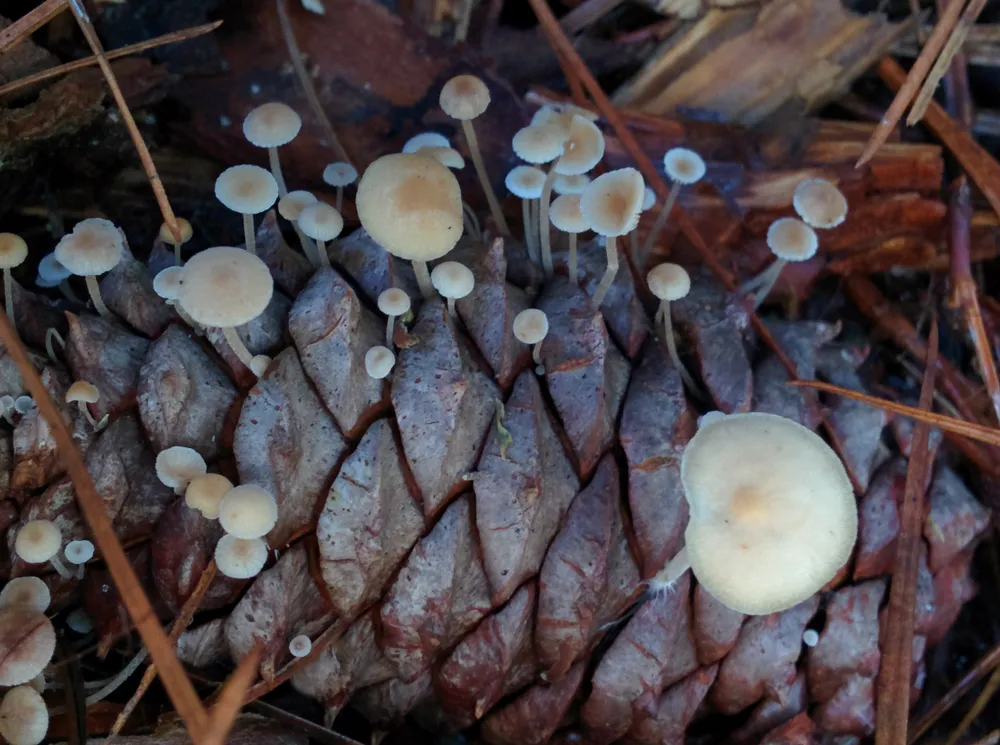
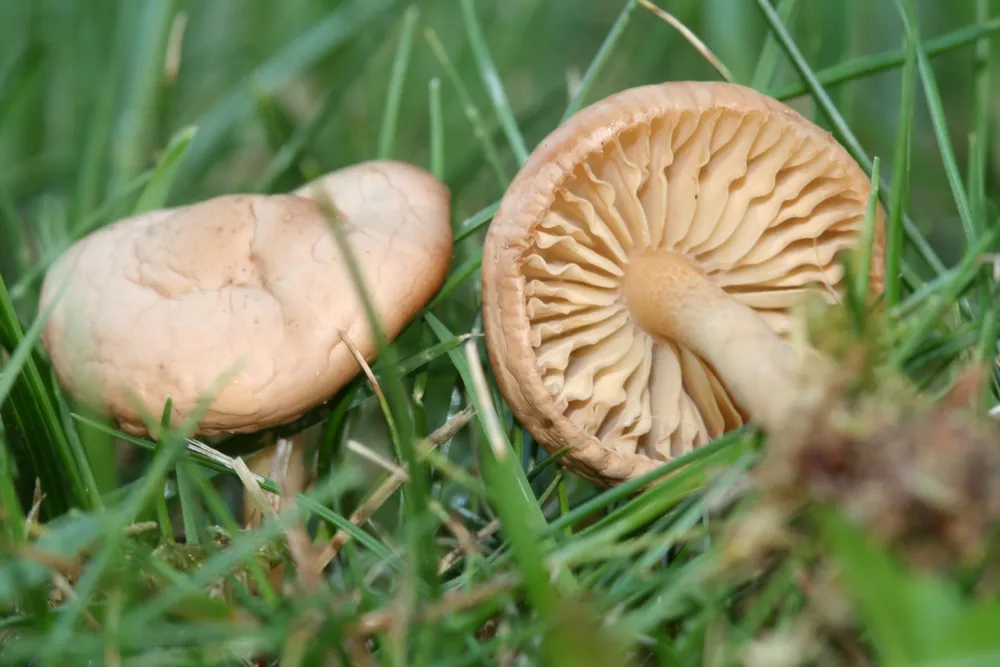
Related species
Mushrooms of the same genus and habitat — to study side by side and never mix up.
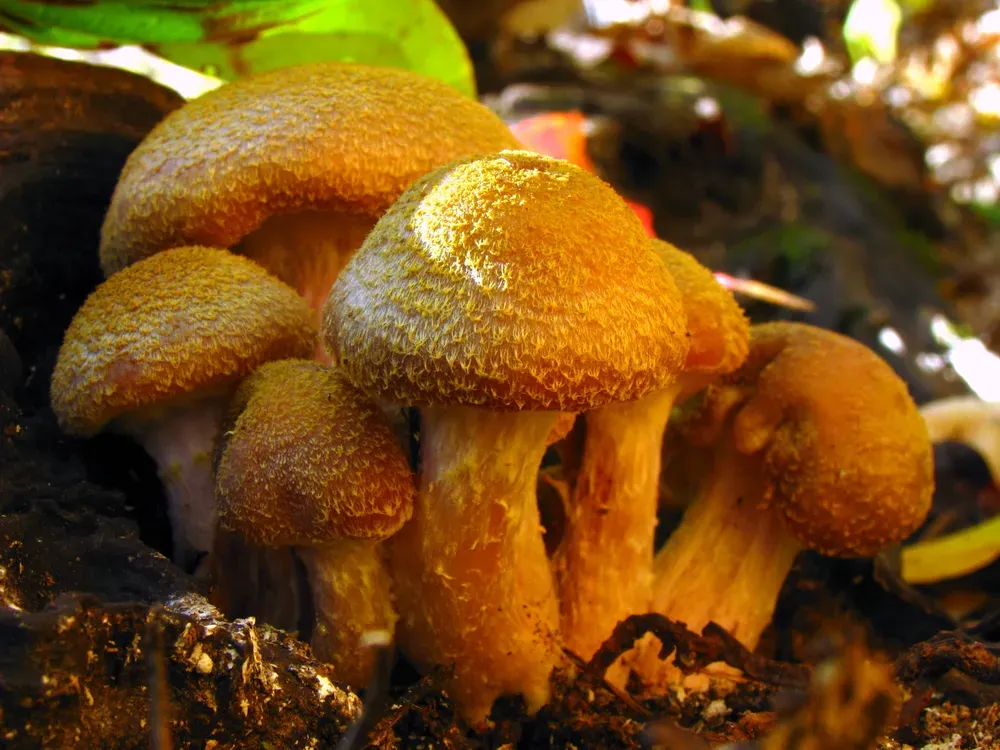
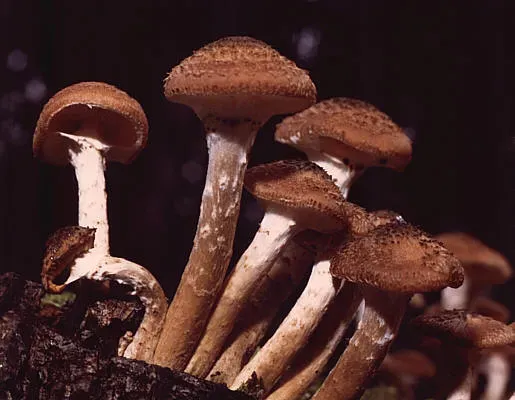
Bulbous honey fungus
Armillaria gallica
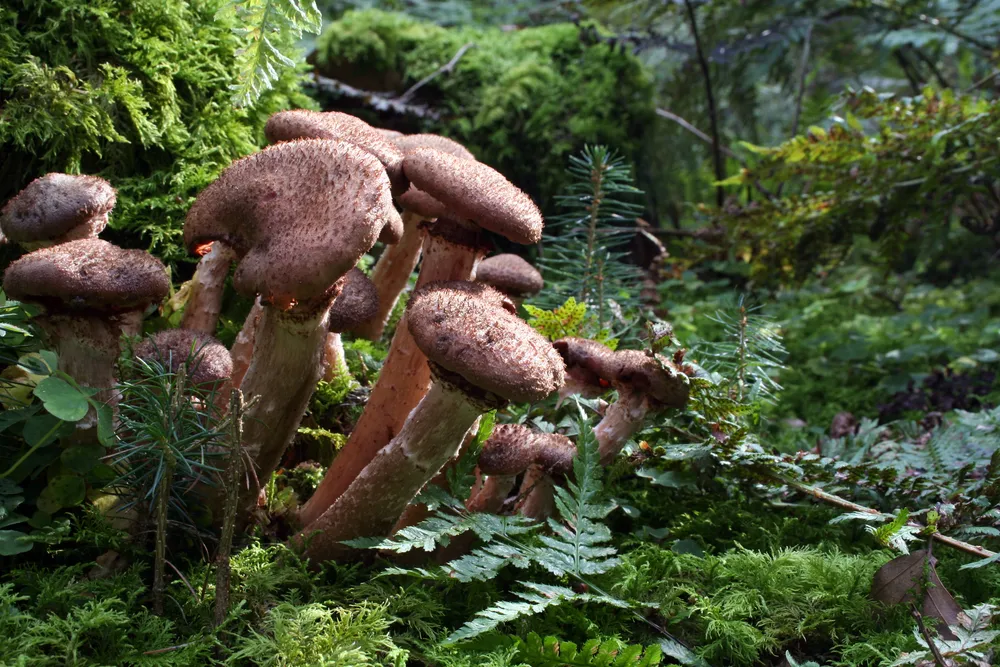
Dark honey fungus
Armillaria ostoyae
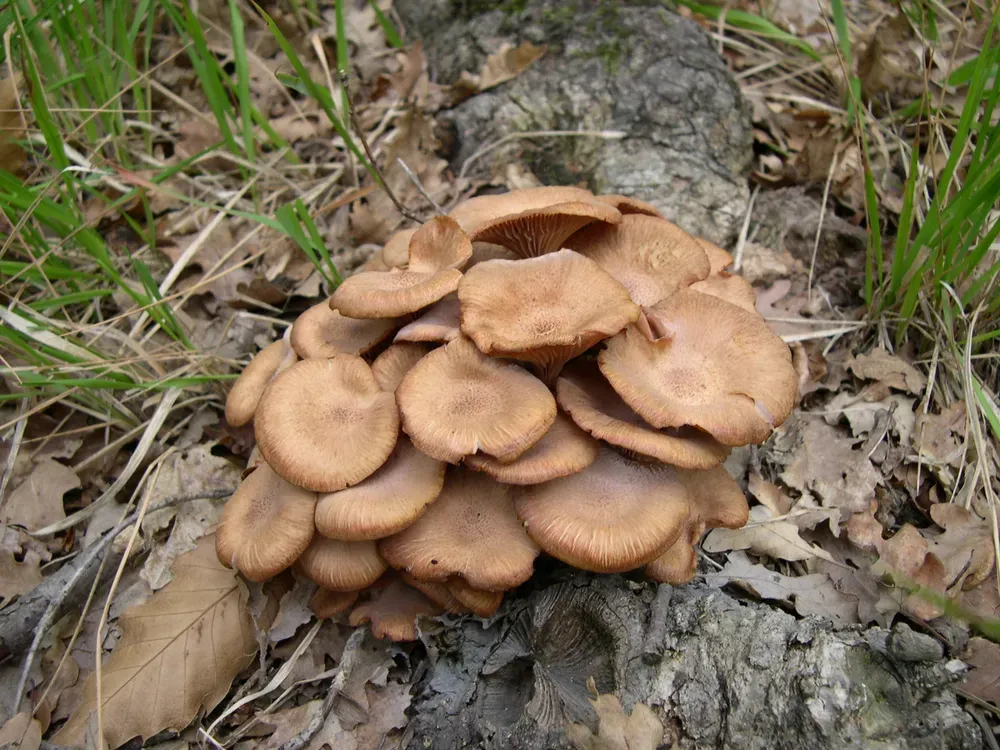
Honey fungus
Armillaria mellea
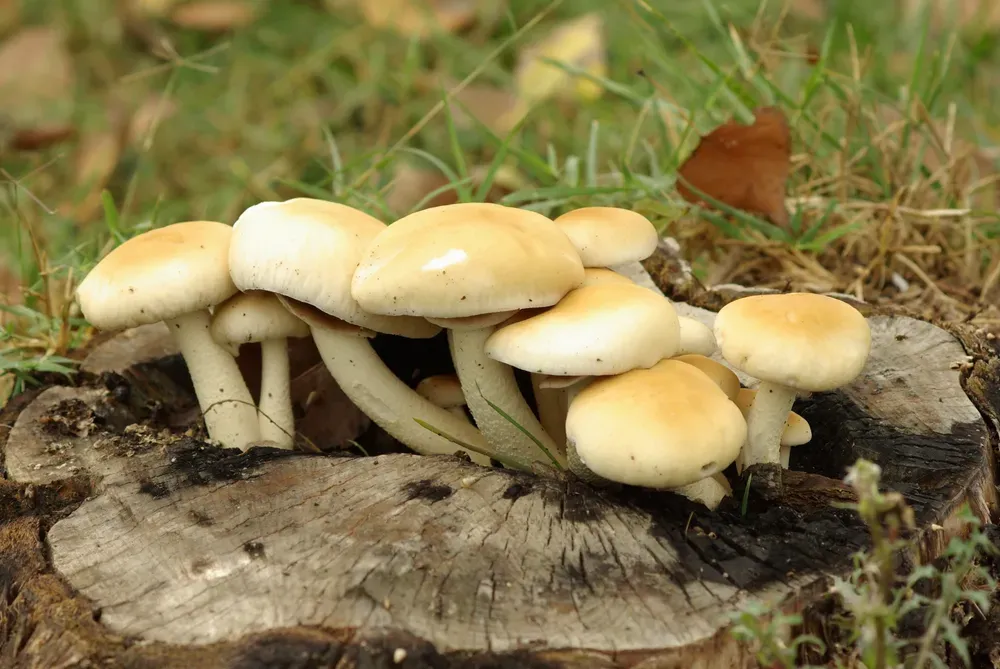
Ringless honey fungus
Desarmillaria tabescens
Poplar fieldcap
Cyclocybe aegerita
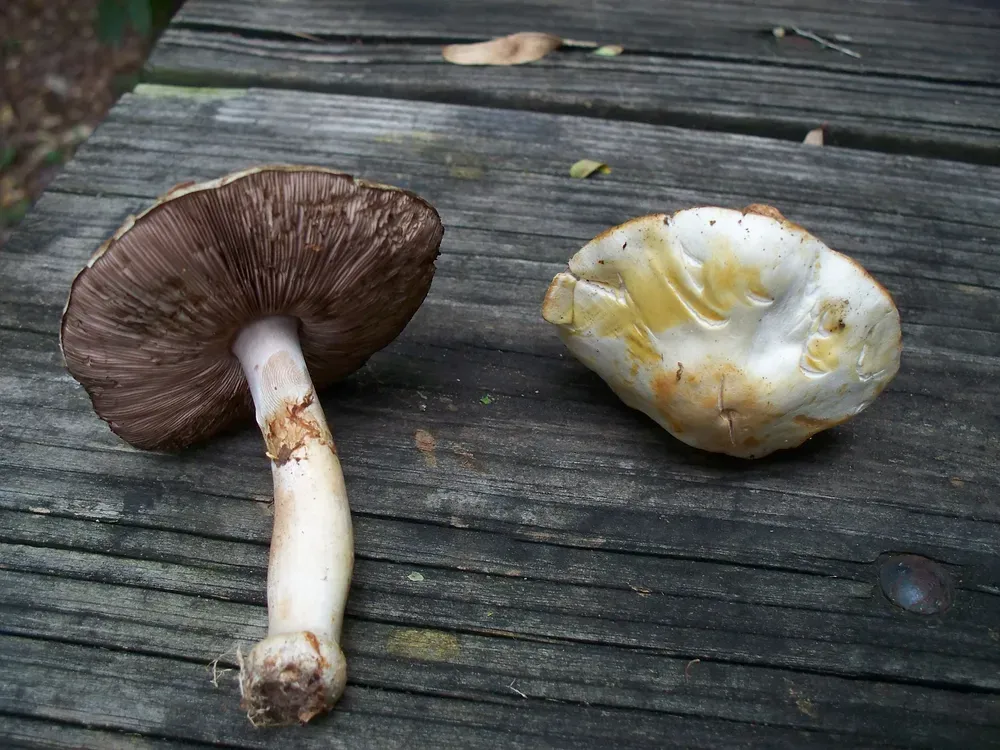
Agaricus abruptibulbus
Agaricus haemorrhoidarius
Agaricus haemorroidarius
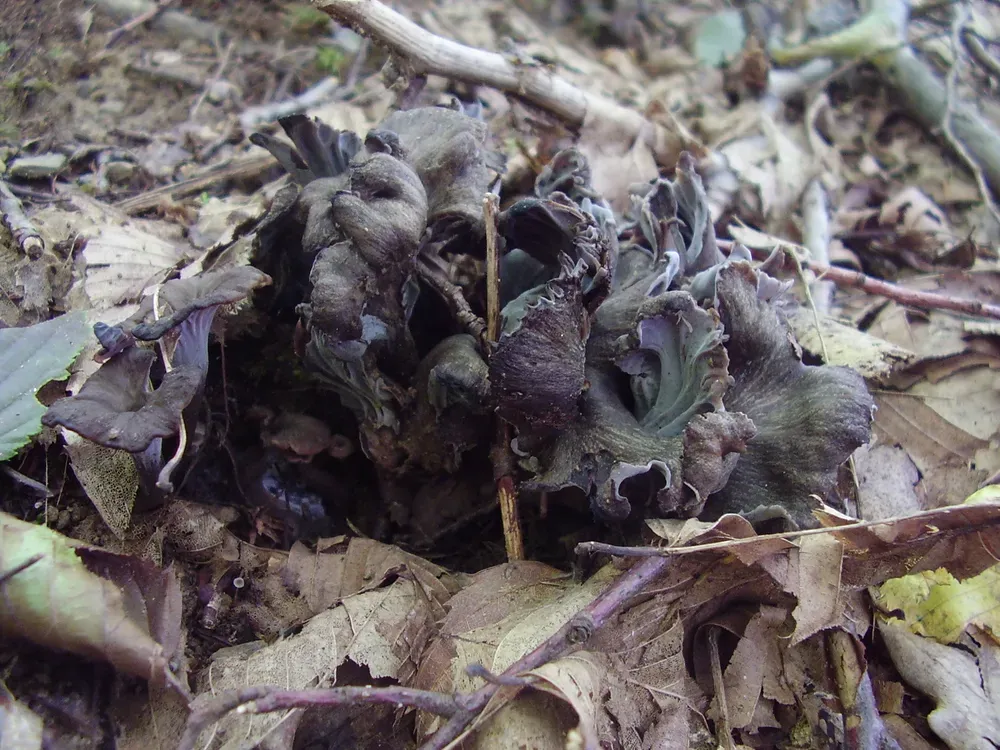
Ashen chanterelle
Cantharellus cinereus
Frequently asked questions
Is Sprucecone cap edible or poisonous?
Does Sprucecone cap have gills or pores?
What does the cap of Sprucecone cap look like?
What does the stem of Sprucecone cap look like?
What do Sprucecone cap smell and taste like?
Where does Sprucecone cap grow?
Which trees does Sprucecone cap grow under?
When should you pick Sprucecone cap?
What can Sprucecone cap be confused with?
How do you cook Sprucecone cap?
Can you dry Sprucecone cap?
What is the scientific name of Sprucecone cap?
Sources
- [1]Вікіпедія (українська)
- [2]Атлас грибів України, Зеров Д.К. (1979)
- [3]MycoBank Database
- [4]Index Fungorum
- [5]GBIF
- [6]iNaturalist Ukraine