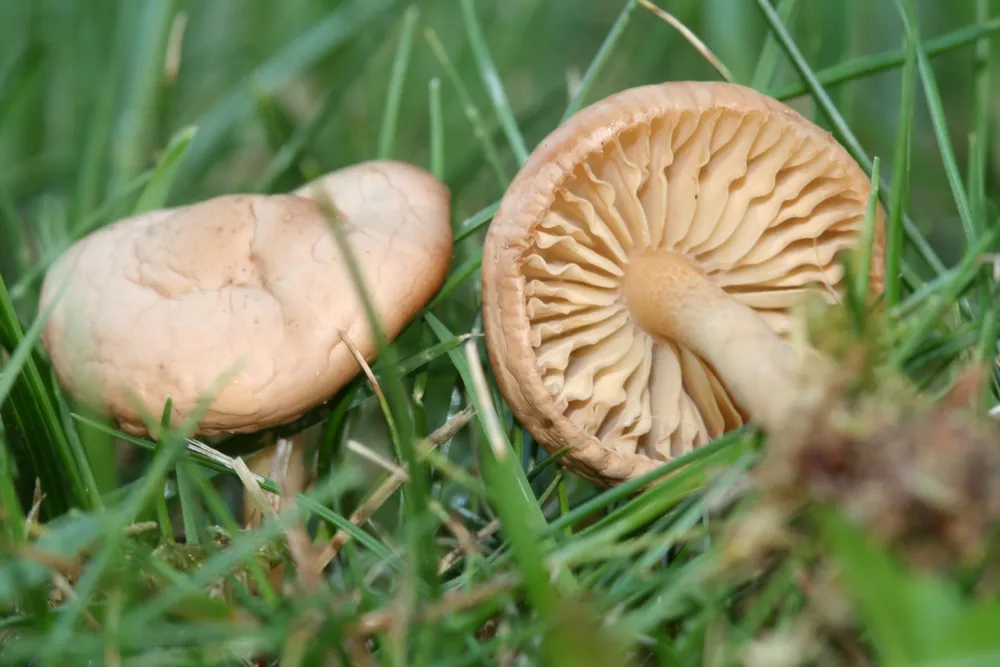
Fairy ring champignonMarasmius oreades
Expert-verifiedUpdated October 3, 2026
Passport
- Edibility
- Edible
- Season
- May — Nov
- Hymenophore
- Gilled
- Cap color
- Cream
- Size
- Small (up to 5 cm)
- Smell
- Pleasant
- Reviewed
- Yes ✓
Quick answers
Where to look?
Deciduous forest
When does it appear?
May — Nov
Active months: May, June, July, August, September, October, November.
How to recognize it? Three signs
- Cap color: Cream, Yellow, Orange
- Cap shape: Umbonate
- Smell: Pleasant, Almond
Fruiting season
May – November
Description
The fairy ring champignon (Marasmius oreades) is a classic "steppe" mushroom of meadows, lawns and pastures. It's also called the "witches' ring mushroom" or the "steppe champignon" because of its distinctive habit of growing in large circles 1-10 meters across, which shepherds of old linked to the dances of fairies and witches. This isn't a myth — the mushroom really does spread in a circle, because the mycelium grows outward from the center, and the grass in the ring itself turns brighter green thanks to nitrogen mineralization.
Edible, very tasty. In the kitchen it's one of the best "grassland" mushrooms. The flesh is meaty in the cap, the stem is fibrous (it's usually cut off or dried separately for broth). A strong mushroom aroma that really opens up when dried — dried fairy ring champignons make one of the most aromatic mushroom seasonings. Good for frying, pickling, and especially for drying (traditionally strung on a thread and hung in the shade). In molecular gastronomy it's the base for restaurant-quality mushroom broth.
In Ukraine it is found all over the country — on meadows, lawns, pastures, forest edges. A saprotroph that grows in humus-rich soil among grass roots. The season is May — November, with flushes after every warm rain. One of the hardiest mushrooms — it tolerates drought (it dries out, then "revives" after rain and opens its cap again, which is rare in the mushroom world) and light frosts. Always ready to pick when there's enough moisture.
Cap
Cap 2-5 cm across, hemispherical when young, becoming convex-flat over time with a distinct low umbo in the center. Color light ocher, creamy beige, reddish cream, darker in wet weather, paler in dry. Surface smooth, slightly sticky in wet weather. The cap margin often has fine grooves. A unique trait: a dried-out cap can "revive" after rain — it regains its shape and the gills resume releasing spores.
Hymenophore
Gilled hymenophore — the gills are distant, broad, whitish to cream, with a distinctive attachment to the stem (often free or notched). Spore print white. The contrast of distant broad gills + white spore print are diagnostic features.
Stem
Stem 4-8 cm tall, 0.2-0.5 cm thick, thin, cylindrical, very fibrous and springy — it practically doesn't snap when bent. Color light cream to ocher, matching the cap. Surface smooth, with no ring and no volva. It doesn't snap — it only bends — a diagnostic feature.
Flesh
Flesh thin in the cap, fibrous in the stem, white to cream. When cut it does not change color. A distinct, pleasant mushroom smell with a fruity or almond note. Taste mild and aromatic.
Smell
A distinct, pleasant mushroom smell with a fruity-almond note. It opens up when you rub the flesh and especially when dried. This is one of the most aromatic Ukrainian mushrooms.
›Scientific synonyms (4)
Agaricus oreades Bolton, Collybia oreades (Bolton) P. Kumm., Scorteus oreades (Bolton) Earle, Agaricus caryophyllaeus
Lookalikes
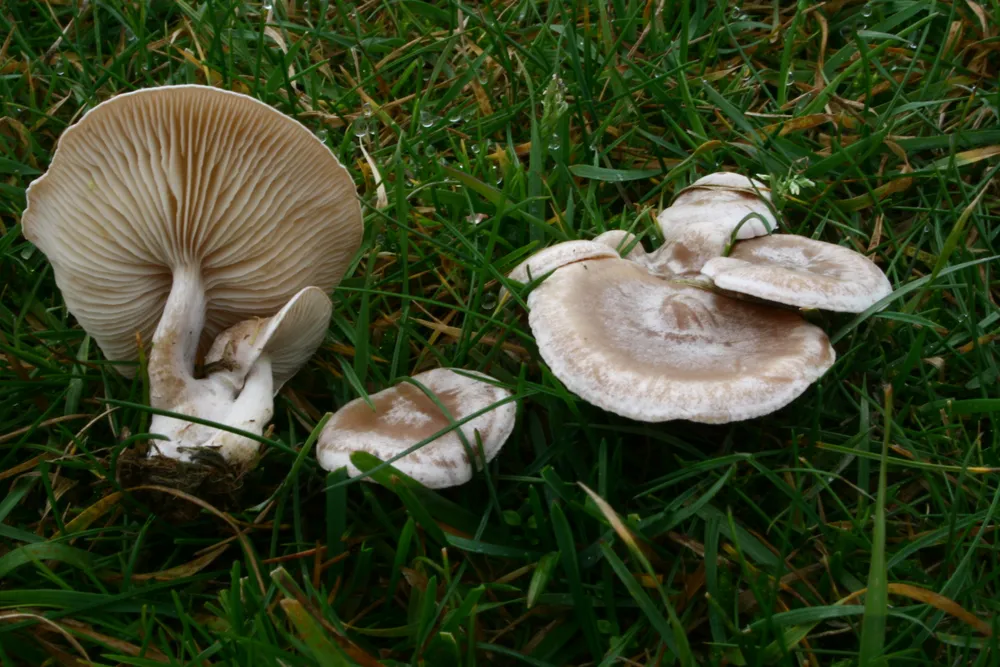
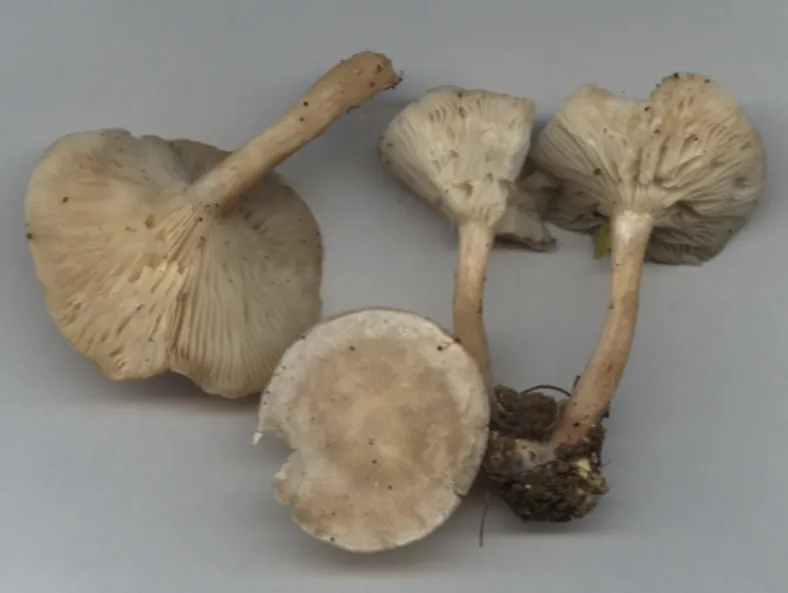
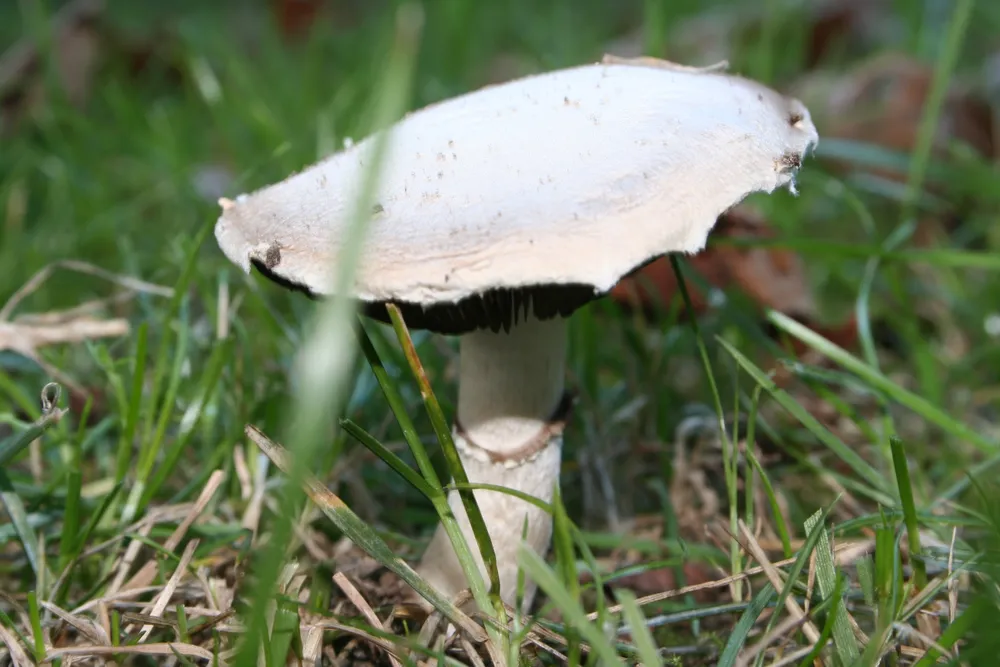
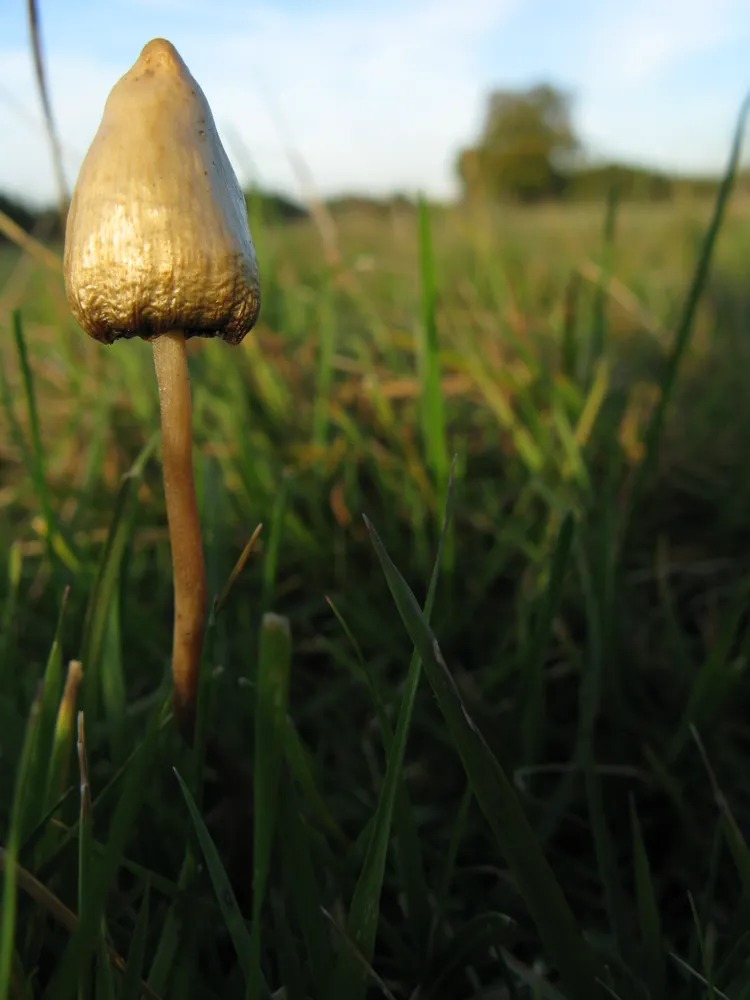
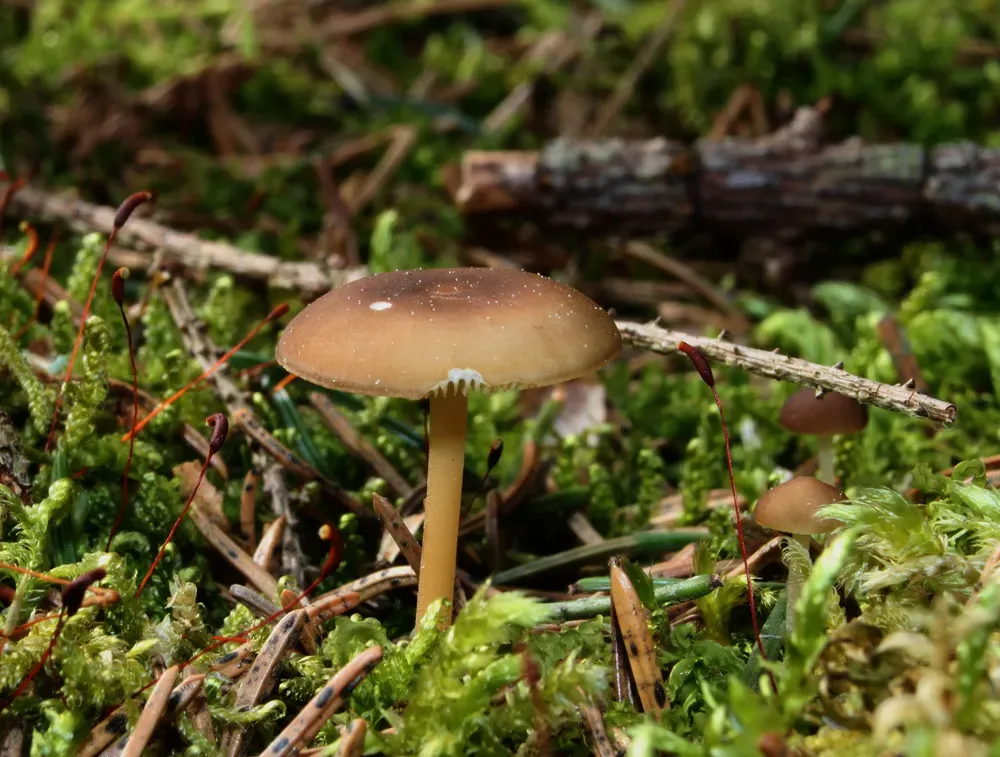
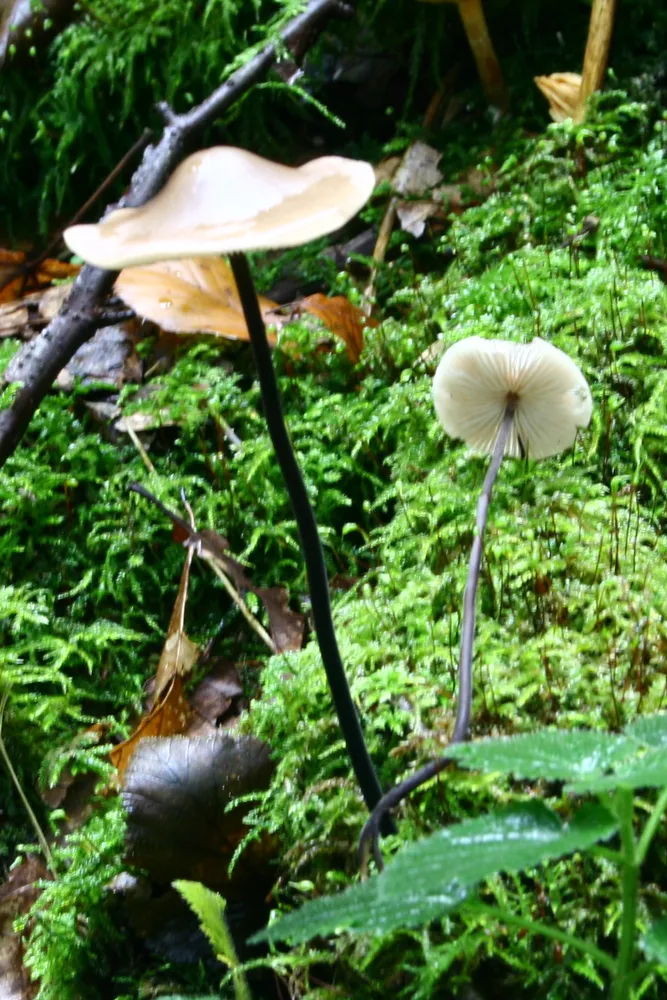
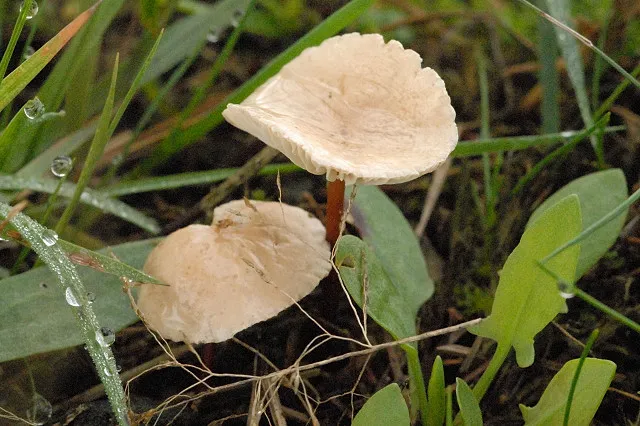
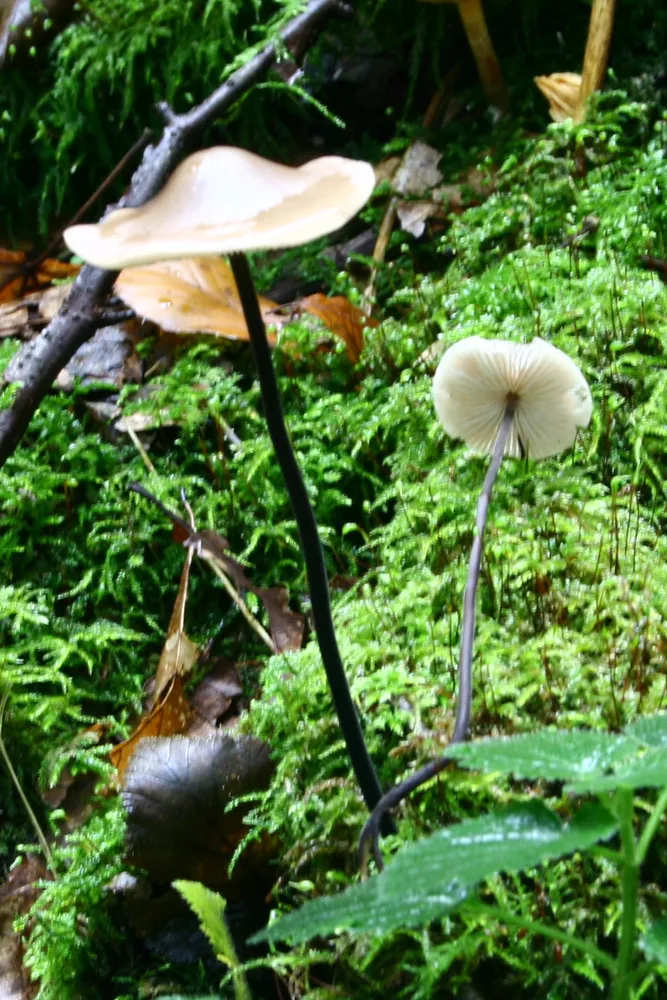
Related species
Mushrooms of the same genus and habitat — to study side by side and never mix up.
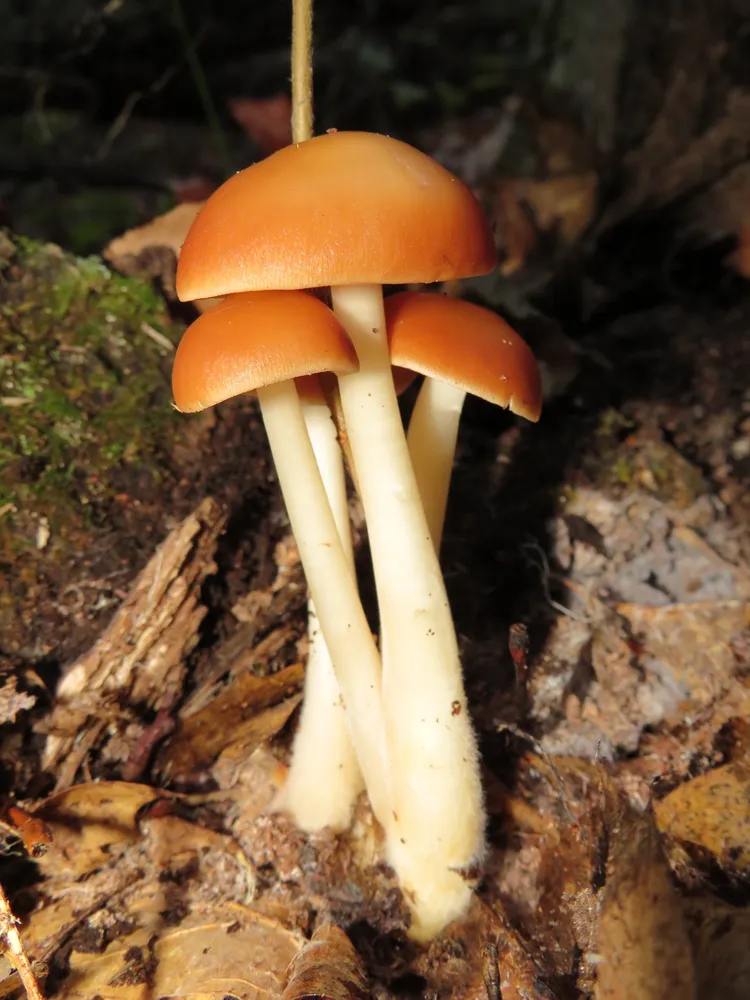
Russet toughshank
Gymnopus dryophilus
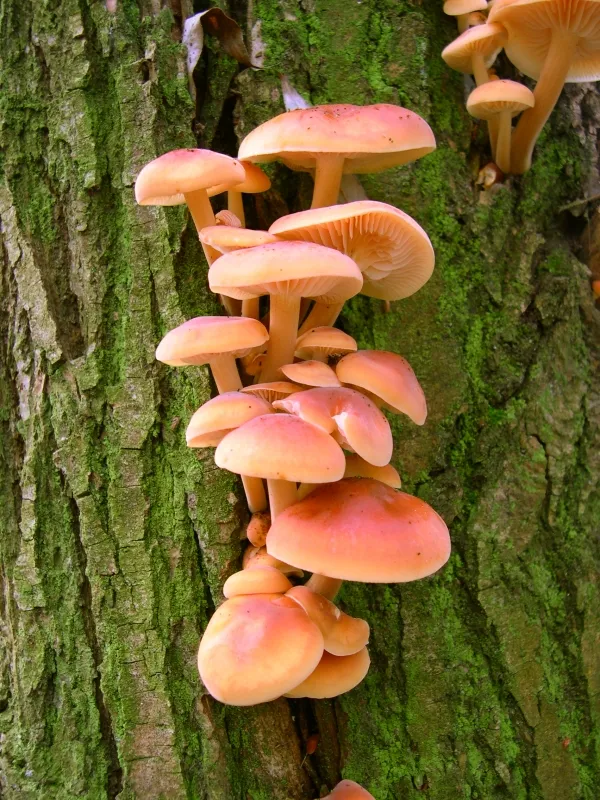
Velvet shank
Flammulina velutipes
_Singer_172533.webp)
Baeospora myriadophylla
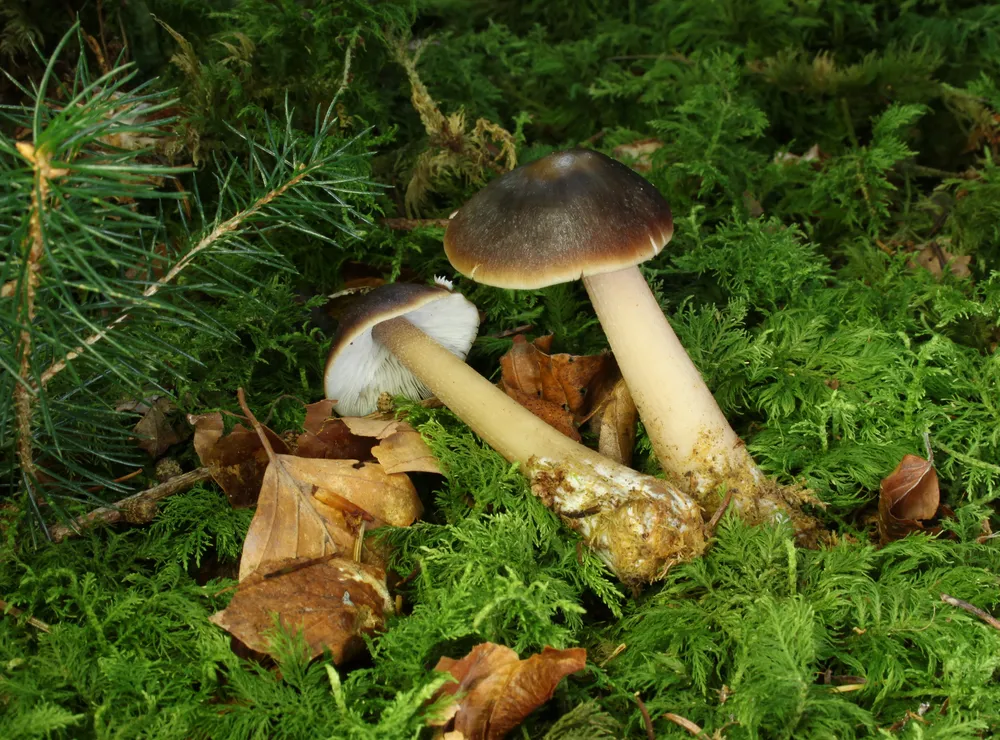
Butter cap
Rhodocollybia butyracea
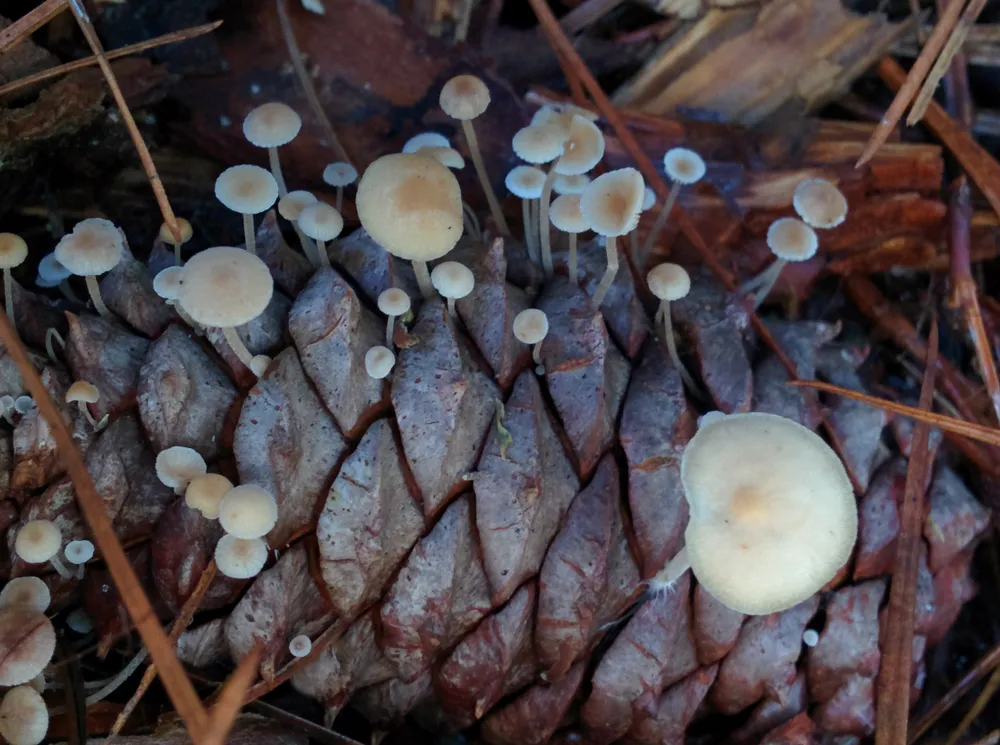
Conifercone cap
Baeospora myosura
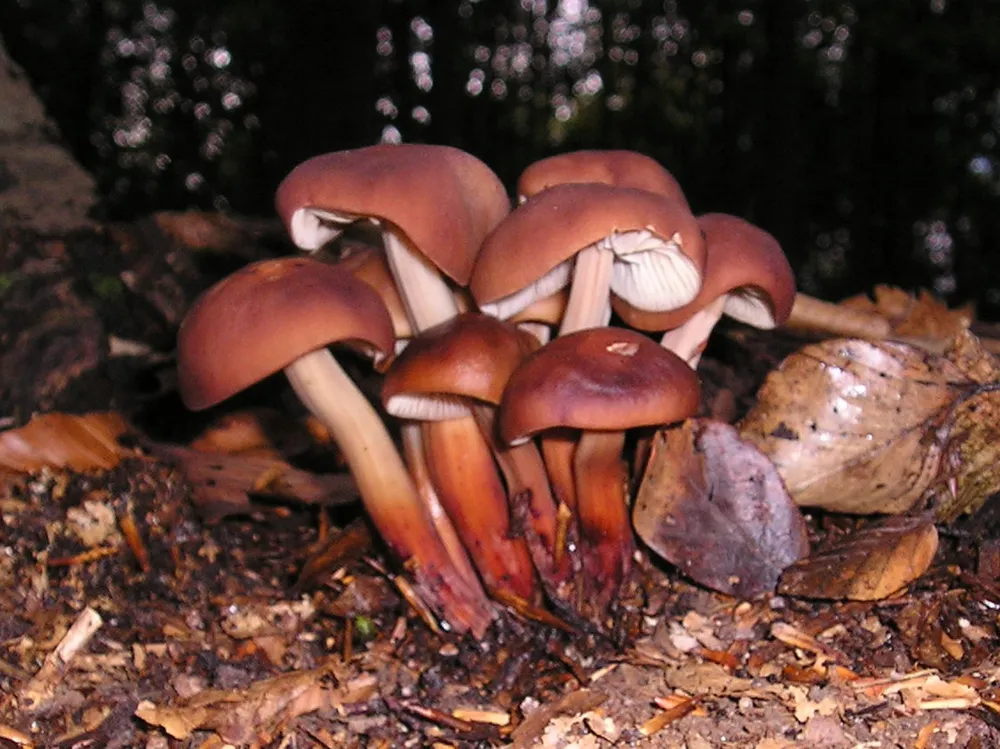
Spindle toughshank
Gymnopus fusipes
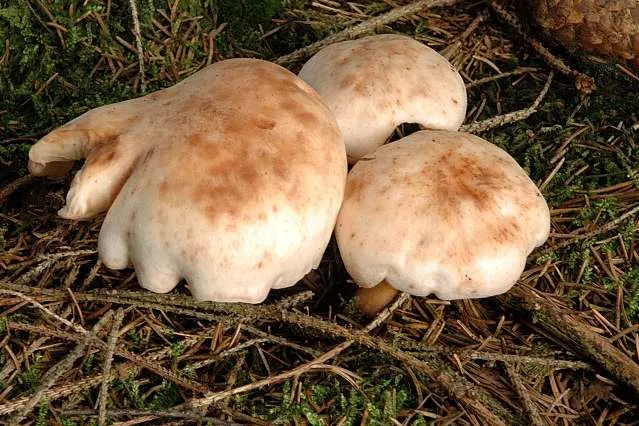
Spotted toughshank
Rhodocollybia maculata
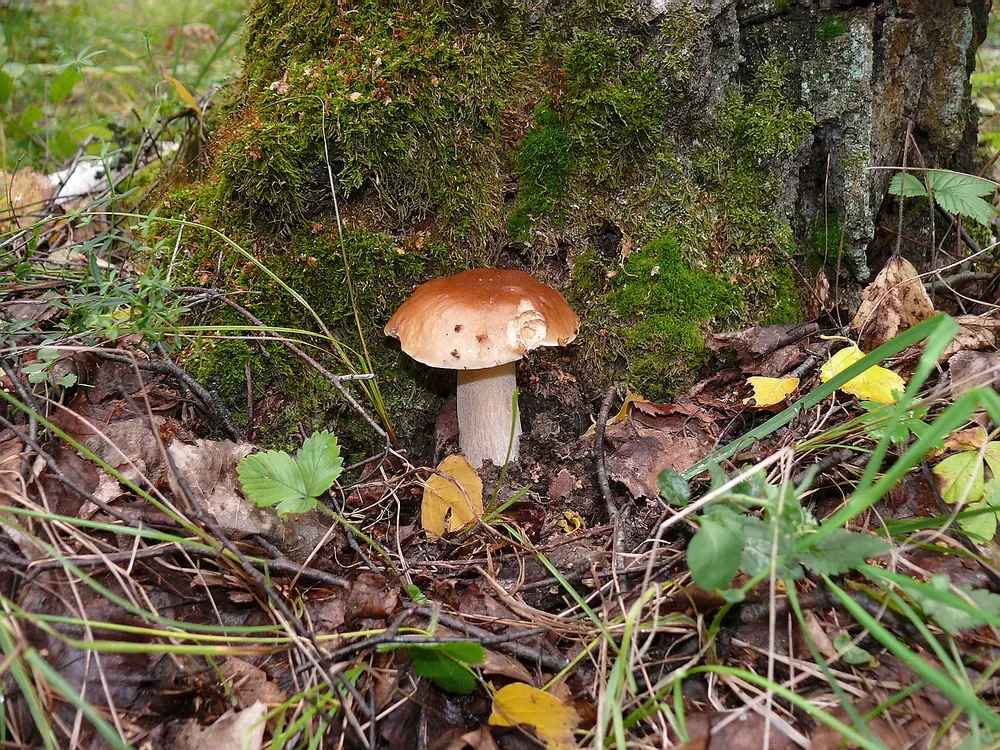
Boletus betulicola
Related reading
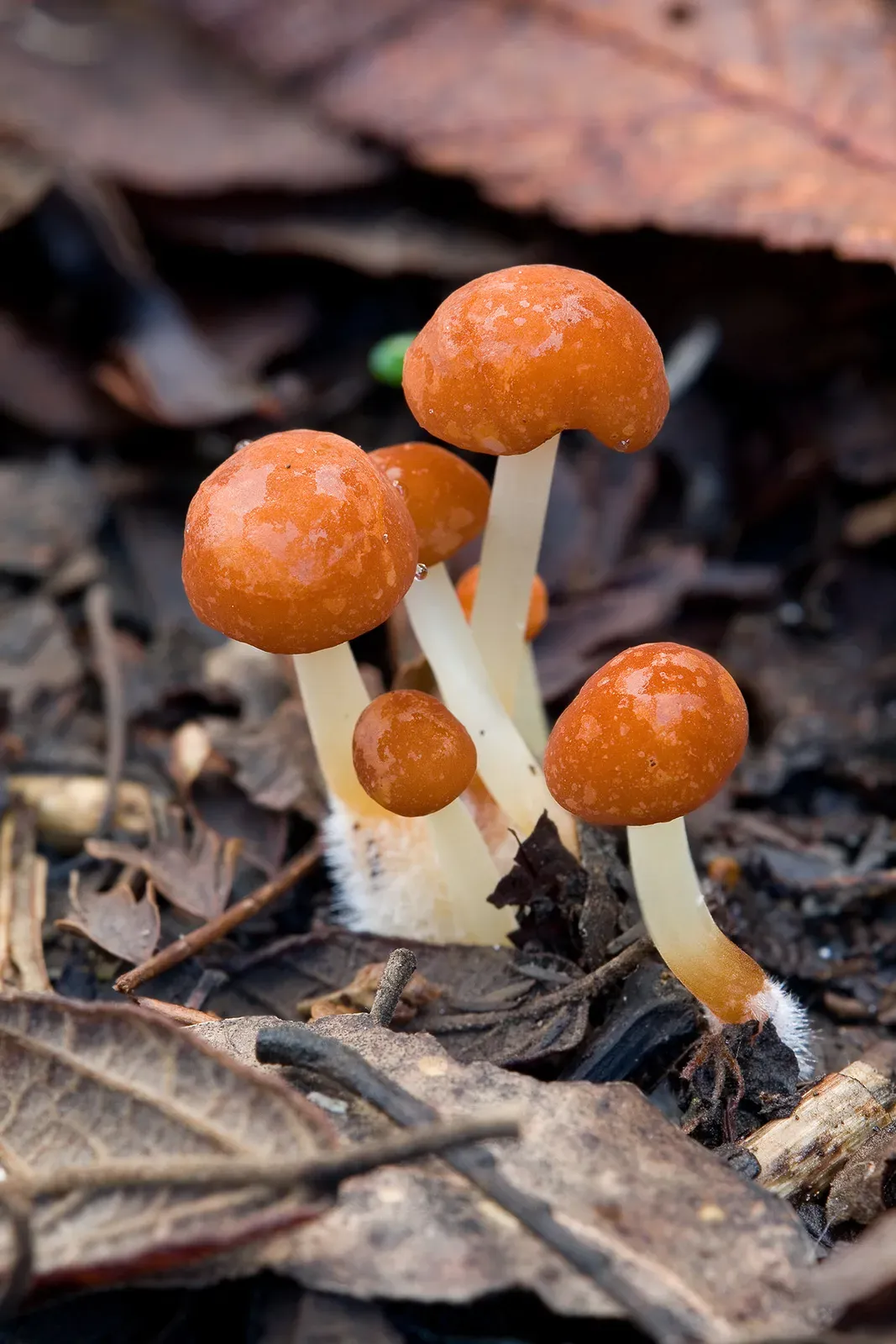 Safety
Can you pick mushrooms in cities and parks?
Mushrooms grow on city lawns, in parks and yards too, but you shouldn't eat them. Here's why urban mushrooms a…
August 22, 2026·3 min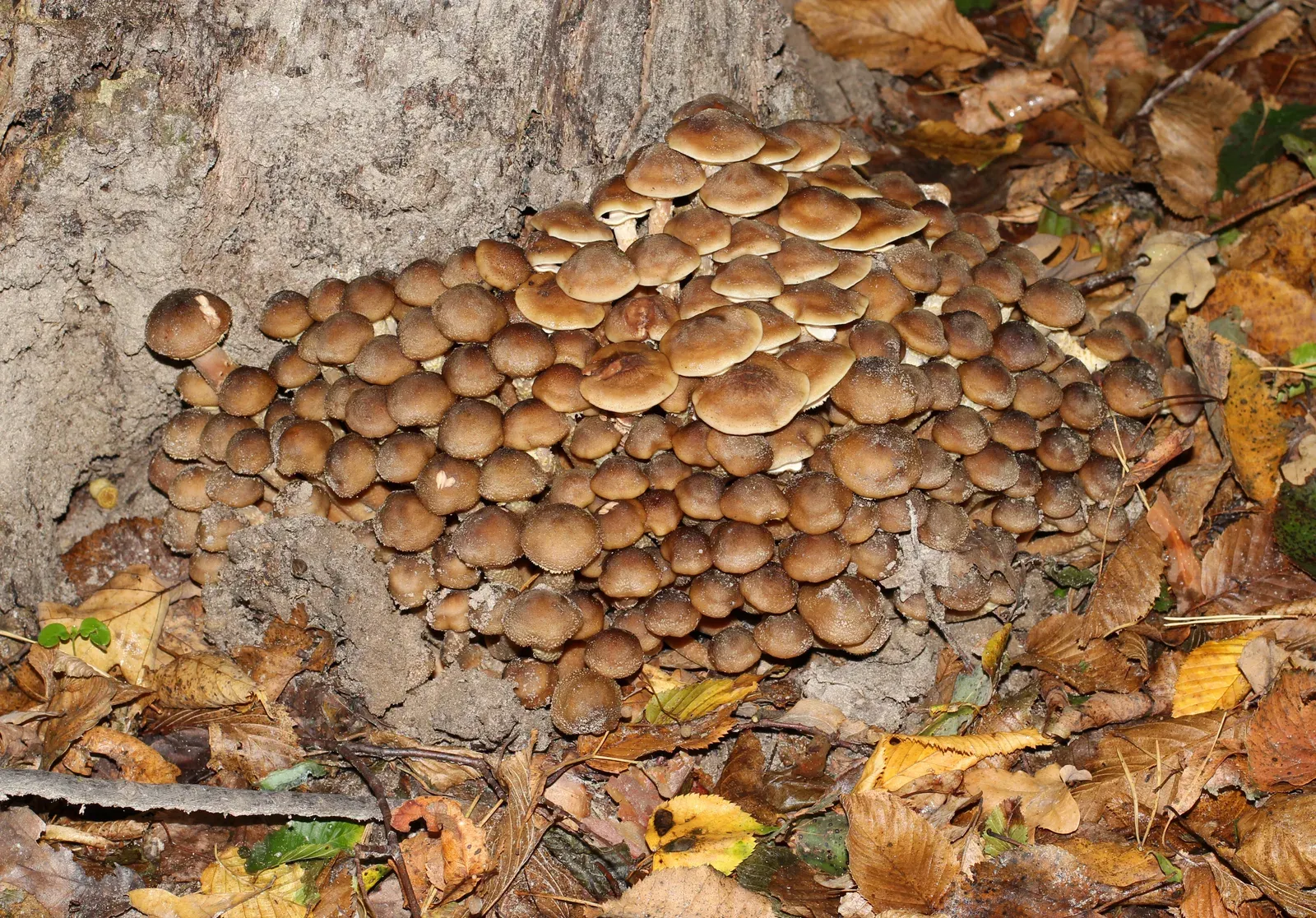 Where & when to forage
When does honey fungus season start in Ukraine?
Honey fungus is the signature mushroom of golden autumn. The first clusters appear as early as late August, an…
July 10, 2026·3 min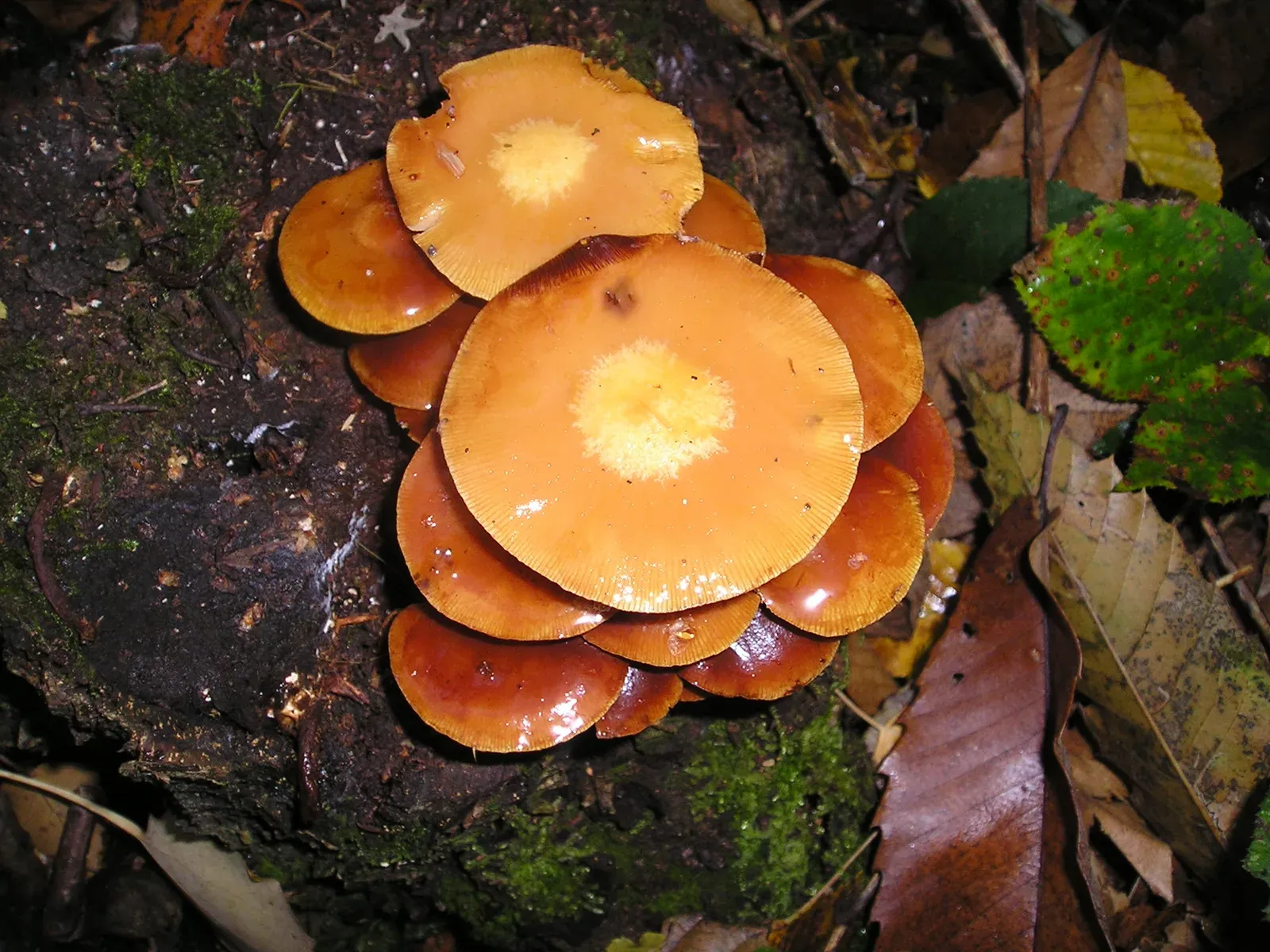 How to identify
Types of honey fungus in Ukraine: a complete guide
There's more than one kind of honey fungus: there are summer, autumn, meadow and even winter ones. Here are th…
June 10, 2026·3 min
Frequently asked questions
Is it safe to eat?
Yes, without restrictions. Young mushrooms are best — in older ones the stem becomes very fibrous, so it's better to cut it off. You can cook it without boiling first. You should NOT pick it on lawns in city parks — heavy metals and pesticides build up there. In botanical gardens, out-of-town meadows and natural pastures it's safe.
Does it have dangerous lookalikes?
Not many serious ones. The most important thing is to tell it apart from fool's funnel (Clitocybe rivulosa) and ivory funnel (C. dealbata) — poisonous white meadow mushrooms containing muscarine. The key difference: in Clitocybe the gills are decurrent and crowded, in the fairy ring champignon — free or notched, and distant. In Clitocybe the color is whitish to gray, in the fairy ring champignon — reddish cream with a distinct umbo. In Clitocybe the stem is brittle, in the fairy ring champignon it's springy and doesn't snap. If you find a white mushroom in a meadow, suspect Clitocybe — DON'T pick it.
What happens if you make a mistake?
If you accidentally eat a Clitocybe instead of a fairy ring champignon — muscarine syndrome after 30 minutes - 2 hours: salivation, sweating, nausea, abdominal pain, tachycardia, and in severe cases — breathing problems. The antidote is atropine (given by a doctor). Not fatal, but severe. Calling an ambulance is a must.
Where should you look for it?
On meadows, lawns, pastures, forest edges, woodland clearings — among grass roots. It loves sunny open spots with short grass. It grows in characteristic "fairy rings" — 1 to 10 meters across, widening outward from the center year after year.
Which regions of Ukraine is it found in?
All over the country: the Carpathians, the Carpathian foothills, Polissia, the forest-steppe, the steppe. In the steppe zone it is especially abundant in the natural steppes and pastures of the Kherson, Zaporizhzhia and Odesa regions. One of the few mushrooms that does well in the open steppe.
When should you look for it?
May — November, with flushes after every warm rain. Unlike forest mushrooms that wait for seasonal conditions, the fairy ring champignon fruits year-round whenever there's enough moisture and the temperature is above +5°C. Dried out by the sun, it "revives" after the first drops of rain, which makes it perhaps the hardiest mushroom of all.
Why is the stem so fibrous?
It's an evolutionary adaptation to drought — the fibrous stem doesn't dry out completely, letting the mushroom survive a dry spell and "come back to life" after rain. In most "fleshy" forest mushrooms the stem is new every day, in Marasmius it's reusable. That's also what makes it practically useless in the kitchen, so people usually take only the caps.
How do you cook it?
Drying is the best way. String the caps on a thread in the shade, and in 3-5 days you'll have an aromatic seasoning. Grind the dried mushrooms into powder and add it to soups, meat, sauces. Fry the young caps with onions. Pickle them after a short boil of 5-7 minutes. Stems separately into broth (they aren't edible because they're so fibrous, but they make a fragrant stock). Goes very well with potatoes, meat and omelets.
Is Fairy ring champignon edible or poisonous?
Does Fairy ring champignon have gills or pores?
What does the cap of Fairy ring champignon look like?
What does the stem of Fairy ring champignon look like?
Sources
- [1]Вікіпедія (українська)
- [2]Атлас грибів України, Зеров Д.К. (1979)
- [3]MycoBank Database
- [4]Index Fungorum
- [5]GBIF
- [6]iNaturalist Ukraine