_Singer_172533.webp)
Baeospora myriadophylla
Expert-verifiedUpdated October 3, 2026
Passport
- Edibility
- Inedible
- Season
- Jul — Oct
- Hymenophore
- Gilled
- Cap color
- Violet
- Size
- Very small (<3 cm)
- Smell
- Odorless
- Reviewed
- Yes ✓
Quick answers
Where to look?
Deciduous forest, Mixed forest
When does it appear?
Jul — Oct
Active months: July, August, September, October.
How to recognize it? Three signs
- Cap color: Violet, Brown
- Cap shape: Convex
- Smell: Odorless
Fruiting season
July – October
Description
Baeospora myriadophylla is a small gilled mushroom with a characteristic bluish or violet-gray tint. You can find it on rotting trunks and fallen logs of broadleaf trees, where it feeds on decaying wood.
The mushroom is small: the cap barely reaches 3 cm, and the stem is thin as a thread. Its color is that rare case where violet and blue tones in a mushroom look natural and understated. White and violet hairs are visible on the stem — a useful identification feature.
The mushroom has no culinary value and is not edible. It's more of a treat for the attentive observer who loves the small details of the forest.
Cap
Cap convex to flattened, 1–3 cm across. Bluish, sometimes with a brownish-ochre tint — especially in older fruiting bodies.
Hymenophore
Gilled hymenophore. Gills crowded, relatively broad. Spore print white. Spores small, 3.5–5 × 2.2–3 µm.
Stem
Stem 1–6 cm tall, very thin (1–2 mm). Grayish-blue, with characteristic white and violet hairs. No ring or volva.
Flesh
flesh thin, fragile. Bluish-gray, no notable change when cut.
Smell
Faintly mushroomy, no sharp notes.
›Scientific synonyms (1)
Agaricus myriadophyllus Peck 1873
Lookalikes
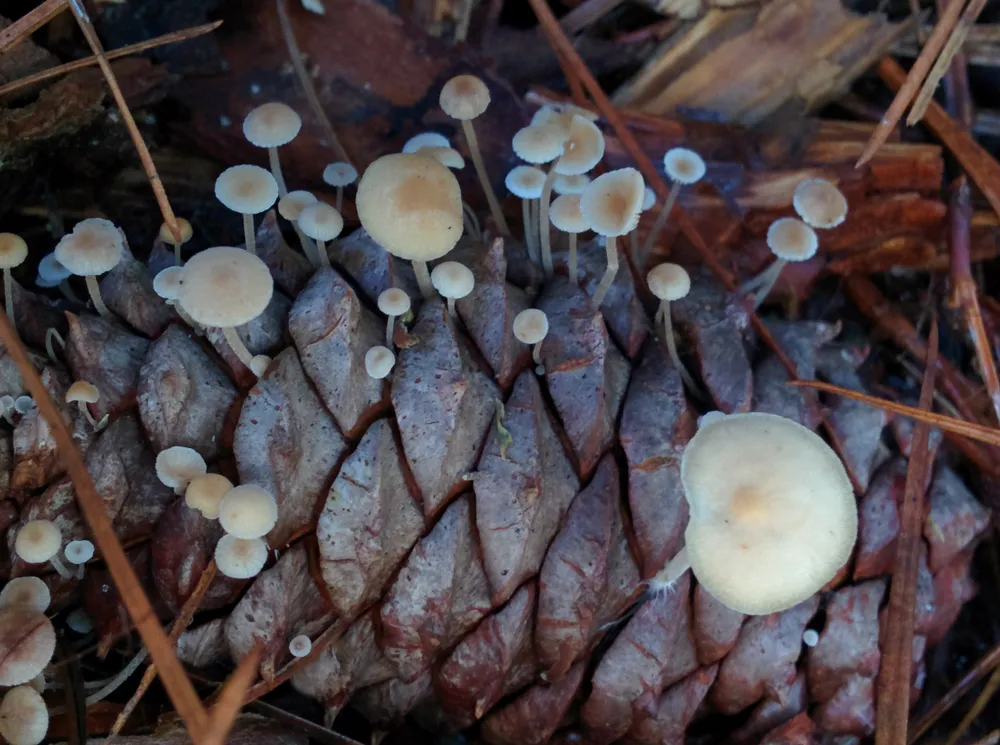
Related species
Mushrooms of the same genus and habitat — to study side by side and never mix up.
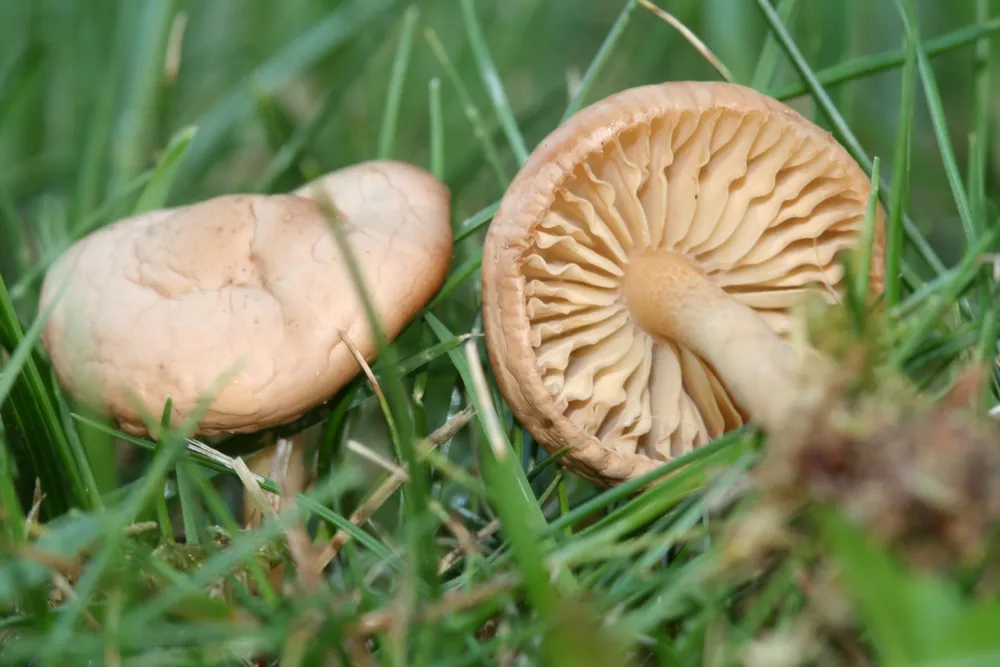
Fairy ring champignon
Marasmius oreades
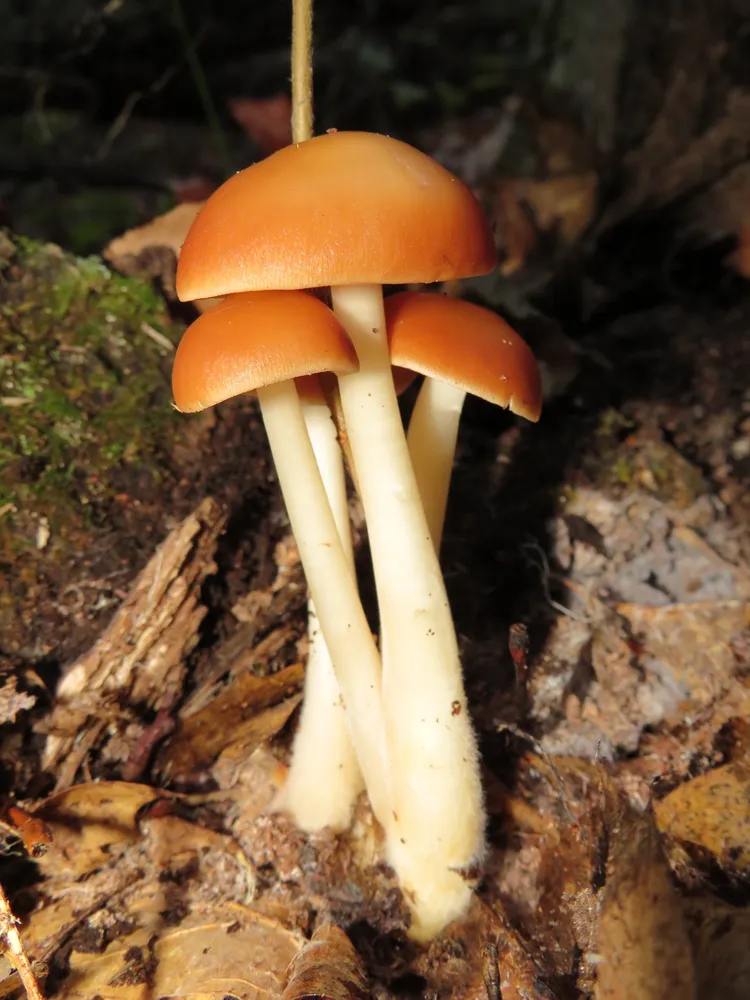
Russet toughshank
Gymnopus dryophilus
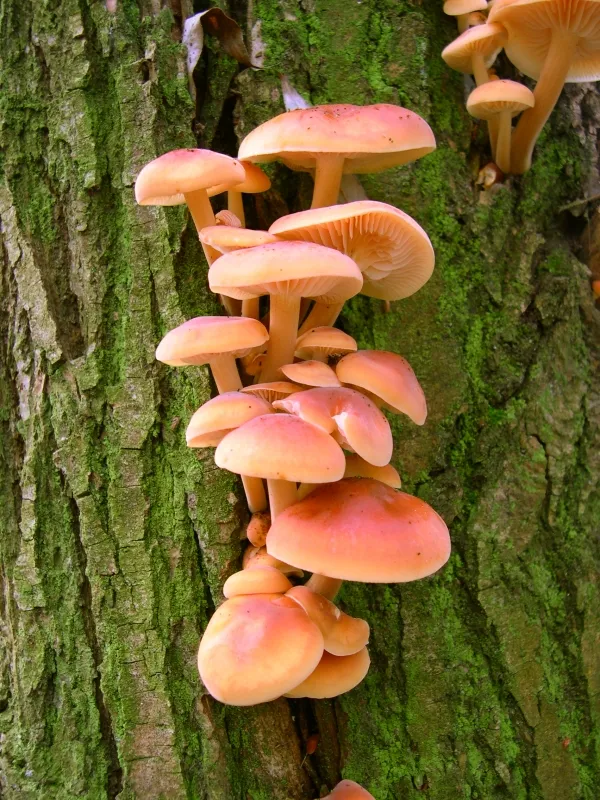
Velvet shank
Flammulina velutipes
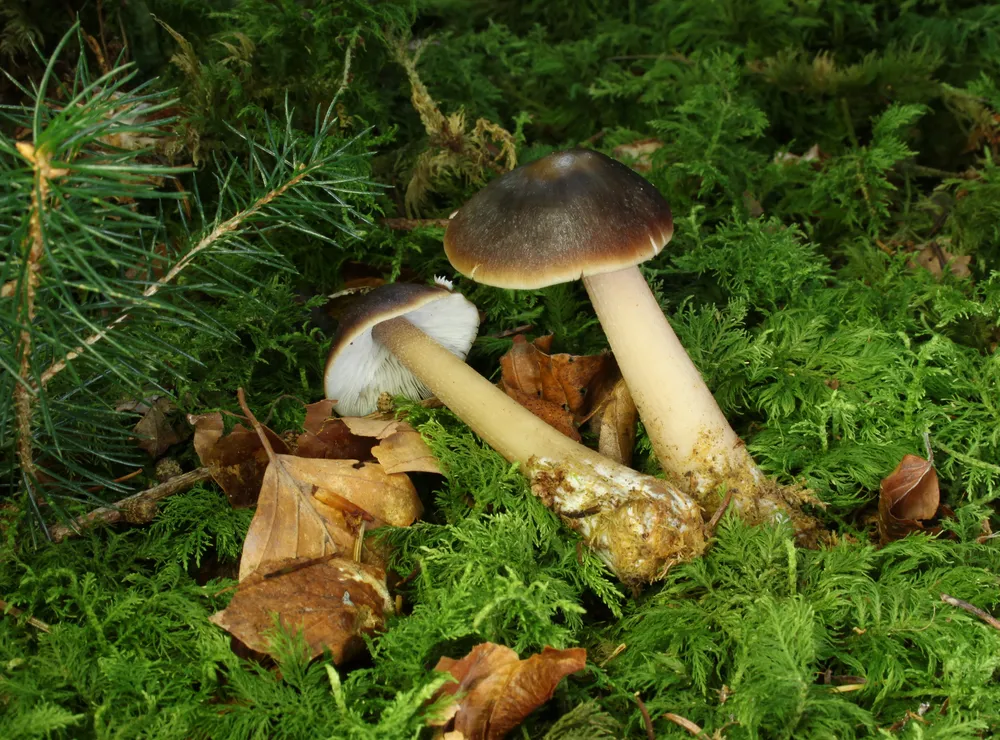
Butter cap
Rhodocollybia butyracea
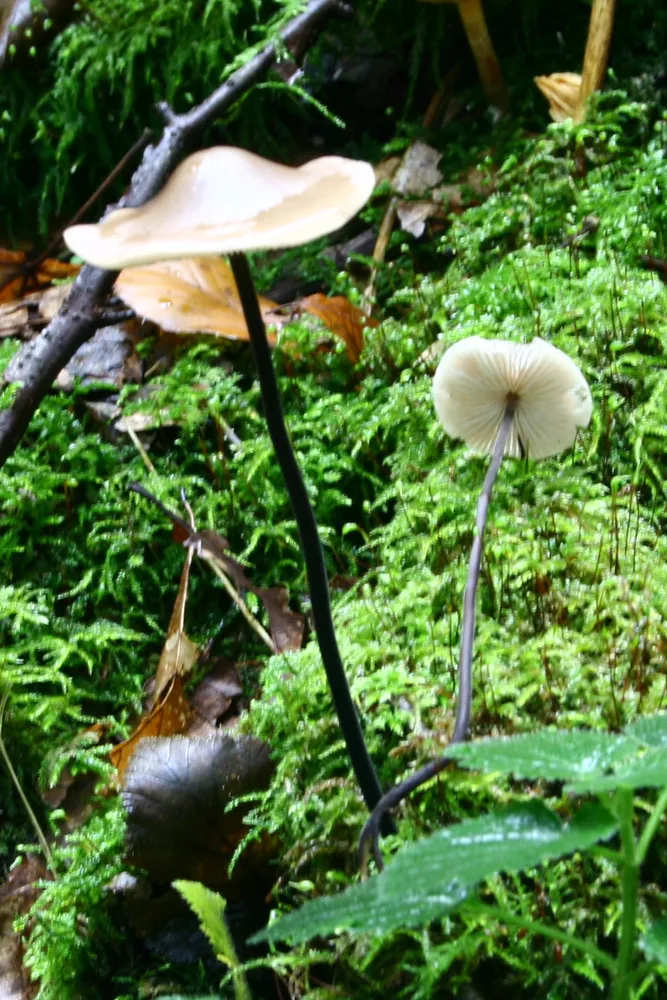
Mycetinis prasiosmus
Marasmius prasiosmus
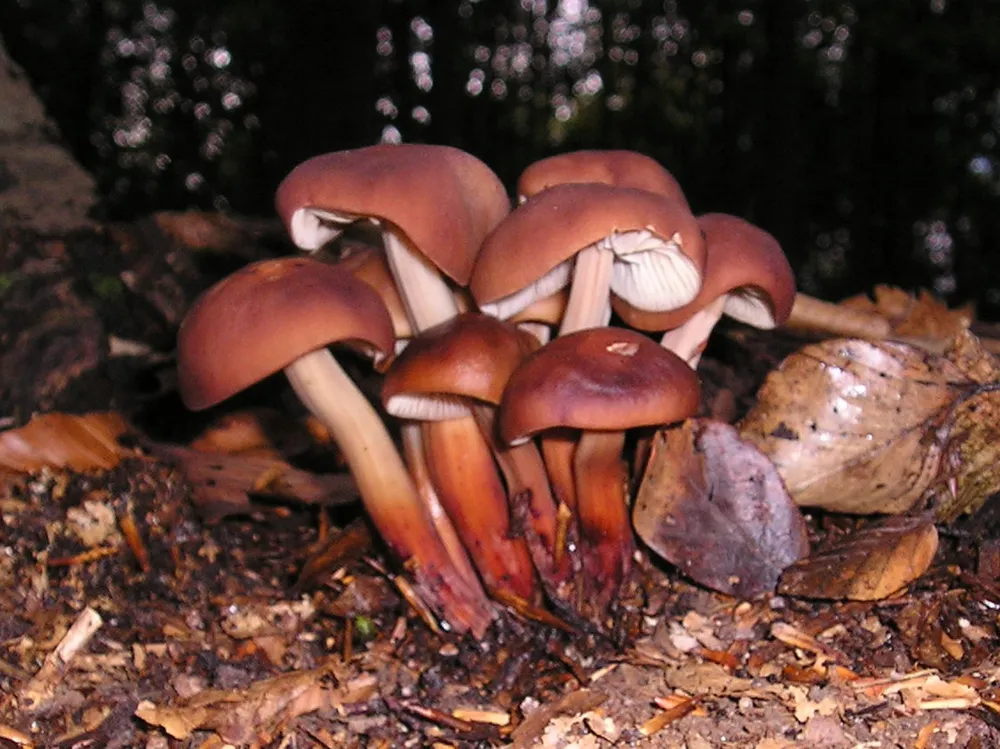
Spindle toughshank
Gymnopus fusipes
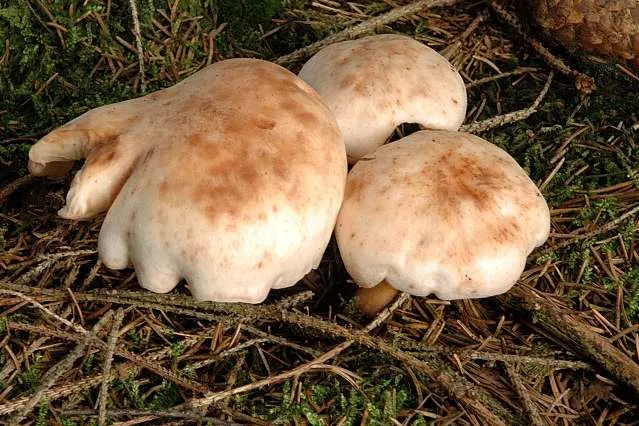
Spotted toughshank
Rhodocollybia maculata
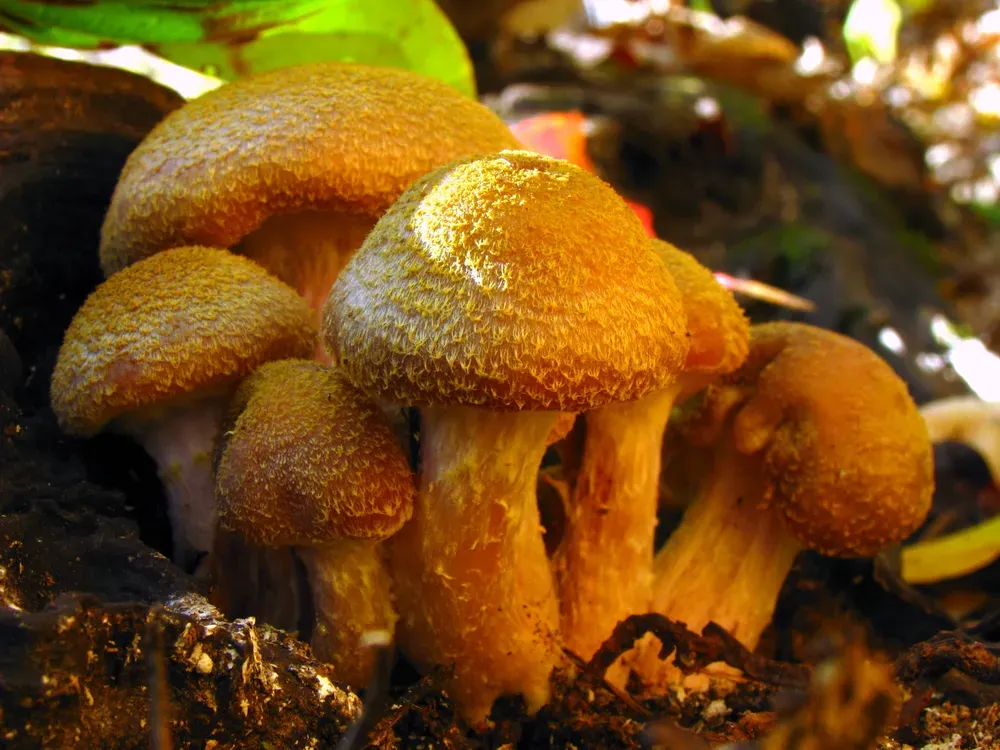
Bulbous honey fungus
Armillaria gallica
Frequently asked questions
Can you eat it?
No, this mushroom isn't eaten. It's tiny, has no food value, and descriptions in Ukrainian sources don't confirm it as edible.
Is it dangerous?
No specific toxins have been described. It's simply a small gilled species with no notable food or toxic significance.
Where should you look for it?
On rotting trunks and fallen logs of broadleaf trees. In old broadleaf and mixed forests, especially where birch, aspen or beech logs lie.
Does it grow on conifers?
Typically, no. Baeospora myriadophylla prefers broadleaf substrate.
When can you see it?
Summer–autumn, but the literature gives no exact months for Ukrainian forests. Look on damp, rotting logs.
Is it better after rain?
Yes, on wet wood the cap's bluish tint is brighter and easier to spot.
What is it confused with?
With other small gilled mushrooms on wood — Mycena, Strobilurus. The bluish tint and violet hairs on the stem are characteristic features of Baeospora myriadophylla specifically.
How do you identify it for sure?
Look at the stem color — grayish-blue with violet hairs. In its Mycena relatives the stem is usually paler and lacks such hairs.
Is Baeospora myriadophylla edible or poisonous?
Does Baeospora myriadophylla have gills or pores?
What does the cap of Baeospora myriadophylla look like?
What does the stem of Baeospora myriadophylla look like?
Sources
- [1]Вікіпедія (українська)
- [2]Атлас грибів України, Зеров Д.К. (1979)
- [3]MycoBank Database
- [4]Index Fungorum
- [5]GBIF
- [6]iNaturalist Ukraine