Butter capRhodocollybia butyracea
Expert-verifiedUpdated October 3, 2026
Passport
- Edibility
- Conditionally edible
- Season
- Aug — Nov
- Hymenophore
- Gilled
- Cap color
- Brown
- Size
- Small (up to 5 cm)
- Smell
- Odorless
- Reviewed
- Yes ✓
Quick answers
Where to look?
Conifer forest, Deciduous forest, Mixed forest
When does it appear?
Aug — Nov
Active months: August, September, October, November.
How to recognize it? Three signs
- Cap color: Brown, Cream
- Cap shape: Umbonate
- Smell: Odorless
Fruiting season
August – November
Description
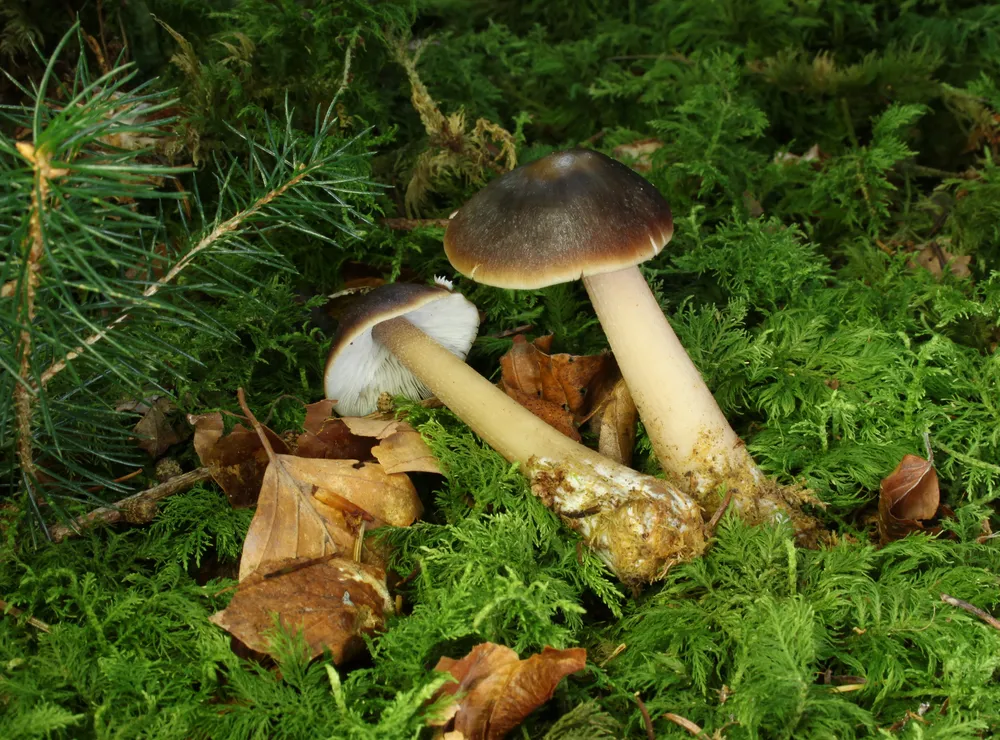
Butter cap (Rhodocollybia butyracea, synonym — Collybia butyracea) — a common forest mushroom whose defining feature is built into its name: a cap with a buttery, greasy sheen, as if smeared with fat, especially in wet weather. The Latin epithet butyracea (from Latin butyrum — butter) captures this exactly. Cap 3-7 cm across, convex to flat with a small umbo in the center, brownish to brown with a pronounced hygrophanous effect (dark in wet weather, light cream when dry).
Conditionally edible: young fruiting bodies can be cooked after a short boil; the flesh is fairly tender with a neutral taste, but its culinary value is low. People rarely gather it on its own — it goes into a mix with genuinely tasty mushrooms (honey fungus, slippery jacks) as a "filler". Old Soviet literature lists it as "edible, category 4"; today the recommendation is to boil it for 10 min first for safety.
Its main trait is a very long fruiting season: August — November, and in some seasons right up to the first frosts. It often appears en masse in late autumn, when most tasty mushrooms are already gone. A saprotroph of conifer and broadleaf litter.
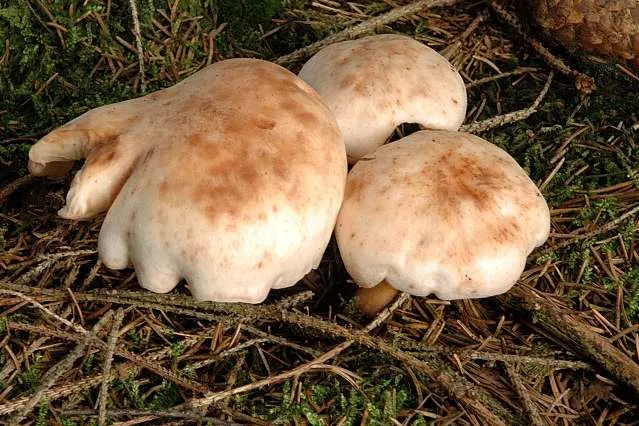
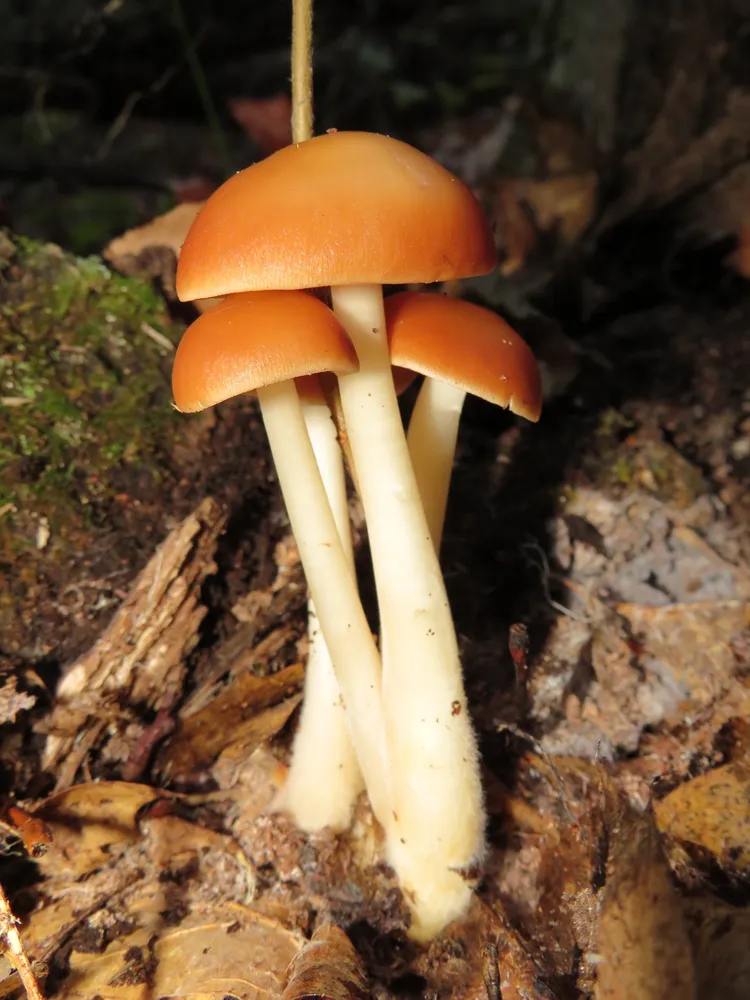
Don't confuse it with the spotted toughshank (R. maculata) — similar in size but larger, with characteristic rusty spots on a white cap and a bitterish taste. Don't confuse it with Gymnopus dryophilus (russet toughshank) — a thinner reddish stem, and a cap without a greasy sheen.
In Ukraine the butter cap is common throughout the forest zone: the Carpathians, Prykarpattia, Polissia, the forest-steppe. In the steppe — in planted shelterbelts and ravine (bairak) forests. It often grows in groups of 5-20 fruiting bodies on conifer or broadleaf litter.
Cap
Cap 3-7 cm across, when young convex, becoming with age flat-expanded with a small umbo in the center (a characteristic shape). Cap skin smooth, with a pronounced buttery-greasy sheen in wet weather — hence the name. Strongly hygrophanous: in wet weather — dark chestnut-brown in the center, lighter toward the margin; when dry — light creamy brown, ochre and faded. The margin is even, thin, often with lengthwise striations where the gills show through.
Hymenophore
Gilled hymenophore — the gills are adnate or free from the stem, crowded, thin, whitish to cream, turning cream-pink with age. Spore print pale pink to cream — a typical trait of the genus Rhodocollybia ("pink Collybia").
Stem
Stem 3-7 cm tall, 0.3-0.8 cm thick, cylindrical, noticeably thickening toward the base (often with a characteristic "root-like" extension into the substrate). Color ochre-brownish, darker toward the base. Surface smooth, with lengthwise fibers. The stem flesh is tougher and more fibrous than the cap's.
Flesh
Flesh thin and tender in the cap, tough and fibrous in the stem. Color whitish to cream. Doesn't change color when cut. Smell faintly mushroomy, taste mild, neutral, normally without bitterness.
Smell
Faint, neutral, mushroomy, nothing distinctive.
›Scientific synonyms (1)
Collybia butyracea (Bull.) P.Kumm.
Lookalikes
,_to_serve_as_an_atlas_to_the_Handbook_of_British_Fungi_(Pl._81)_(8163893789).webp)
Related species
Mushrooms of the same genus and habitat — to study side by side and never mix up.
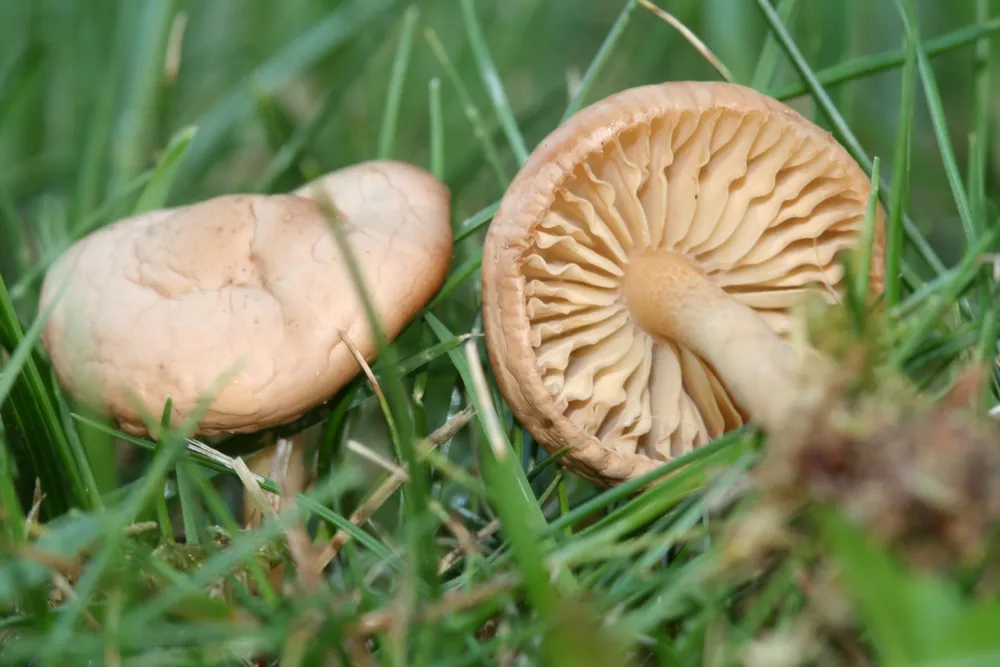
Fairy ring champignon
Marasmius oreades
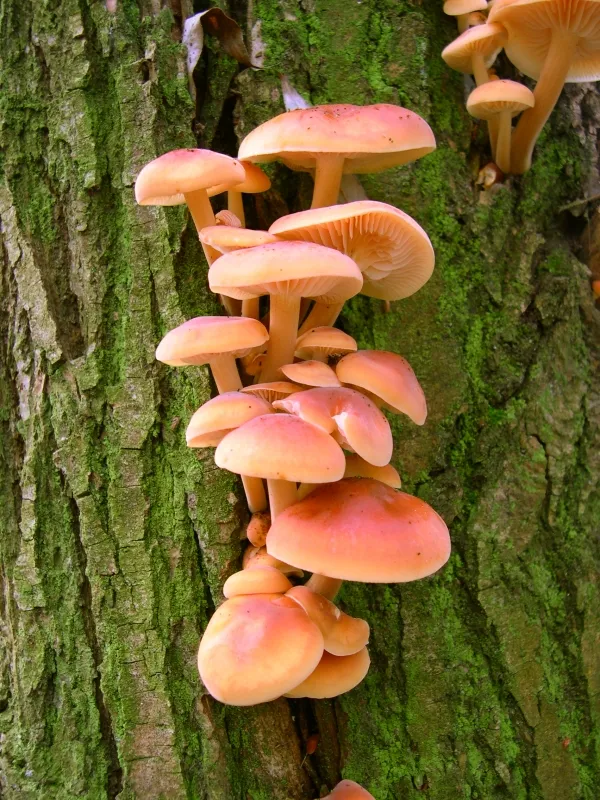
Velvet shank
Flammulina velutipes
_Singer_172533.webp)
Baeospora myriadophylla
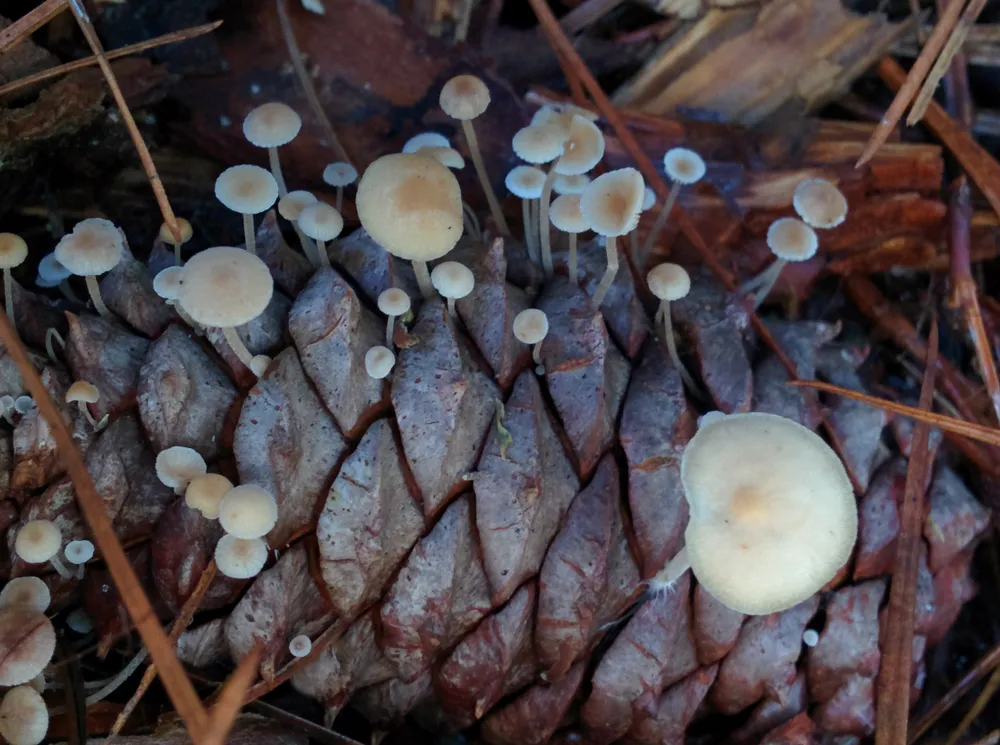
Conifercone cap
Baeospora myosura
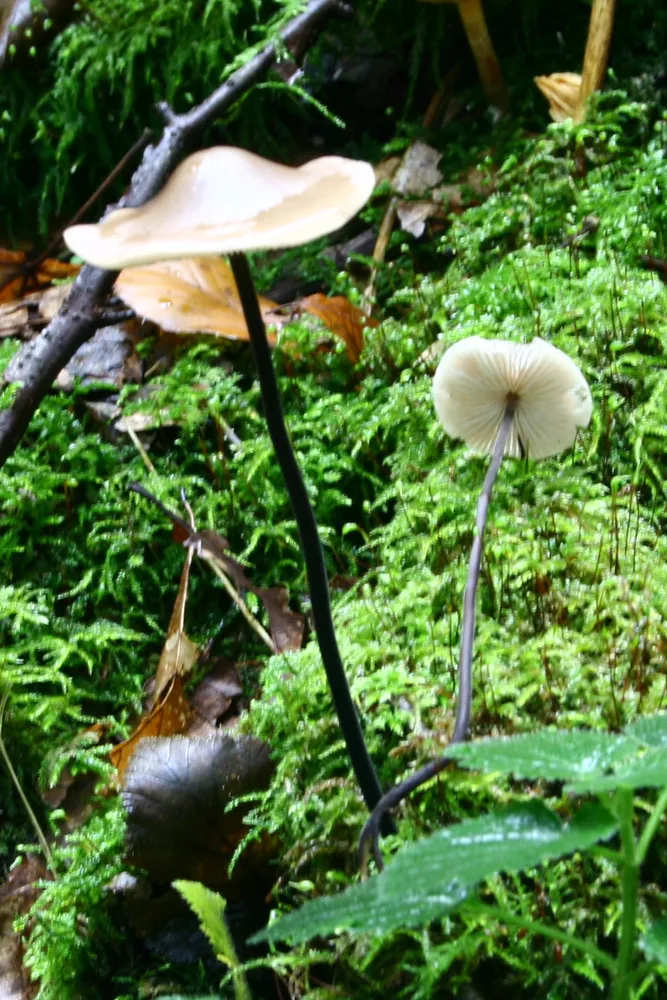
Mycetinis prasiosmus
Marasmius prasiosmus
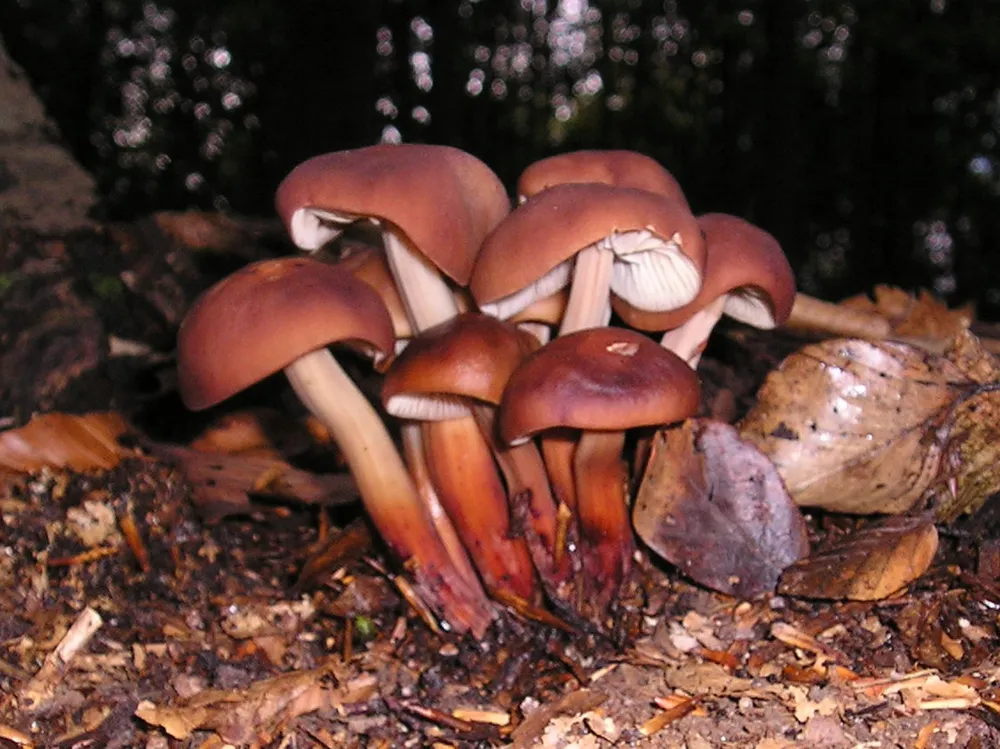
Spindle toughshank
Gymnopus fusipes
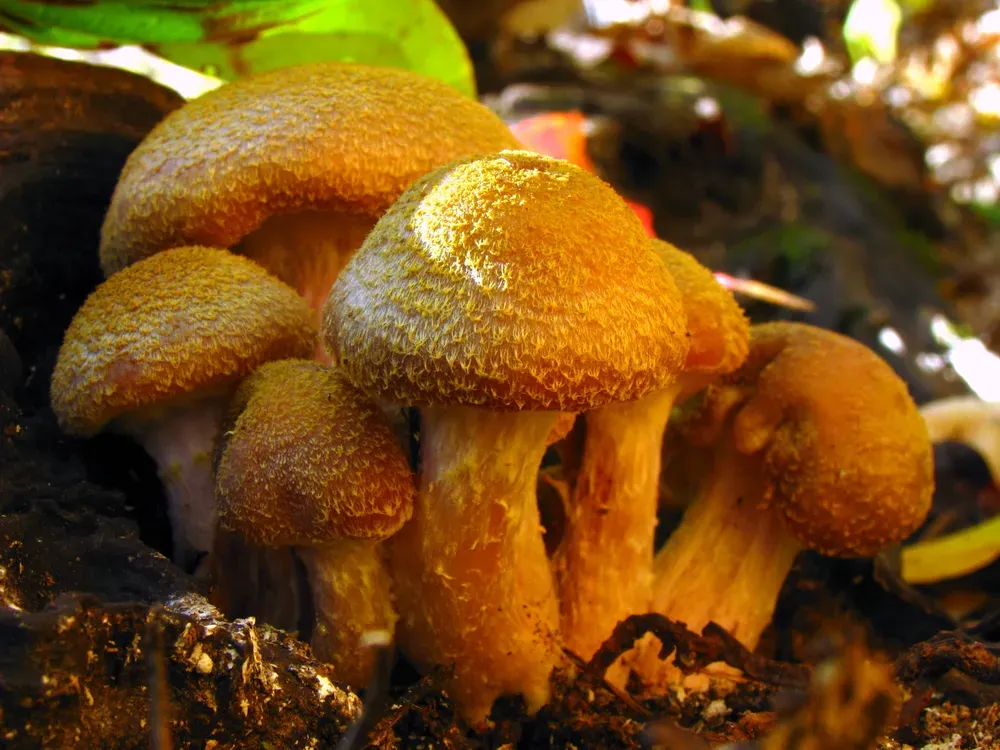
Bulbous honey fungus
Armillaria gallica
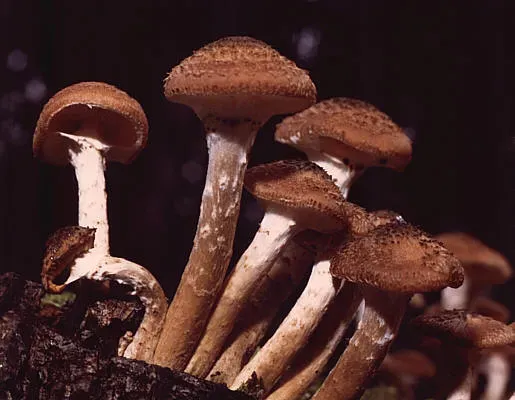
Dark honey fungus
Armillaria ostoyae
Frequently asked questions
Is it worth picking?
You can, but without much enthusiasm. Its culinary value is low — a mushroom with a neutral taste and tough stem flesh. In a mix with more aromatic mushrooms (honey fungus, slippery jacks), it's fine. On its own — uninteresting. If you find it late in autumn, when other mushrooms are already gone, it's an option.
How do you tell it apart from similar species?
Key features of R. butyracea: (1) a buttery, greasy sheen on the cap in wet weather; (2) strong hygrophaneity — it turns light ochre when dry; (3) a stem thickening toward the base with a "root"; (4) pink spore print; (5) a mild, neutral taste. R. maculata has rusty spots and tastes bitter. The russet toughshank has no greasy sheen and a thinner stem.
How should you cook it?
Young fruiting bodies: boil for 10 min first, drain the water. Then fry with onions, stew, or add to soup. Pickling is fine. Drying works poorly — the flesh loses its flavor. Old fruiting bodies with dark caps aren't worth it — the flesh turns limp and woody.
Where should you look for it?
On conifer and broadleaf litter in pine, spruce, mixed spruce-broadleaf, beech and oak forests. It loves damp, shaded spots with a thick layer of forest litter. It often grows in groups of 5-20 fruiting bodies.
Which regions of Ukraine is it found in?
Common throughout the forest zone: the Carpathians, Prykarpattia, Polissia, the forest-steppe. In the steppe — in planted shelterbelts and ravine (bairak) forests.
When should you look for it?
One of the longest-fruiting species: August — November, peaking in September-October. In warm autumns — up to the first frosts. It's valuable because it appears when other mushrooms are already gone.
What mushrooms is it confused with?
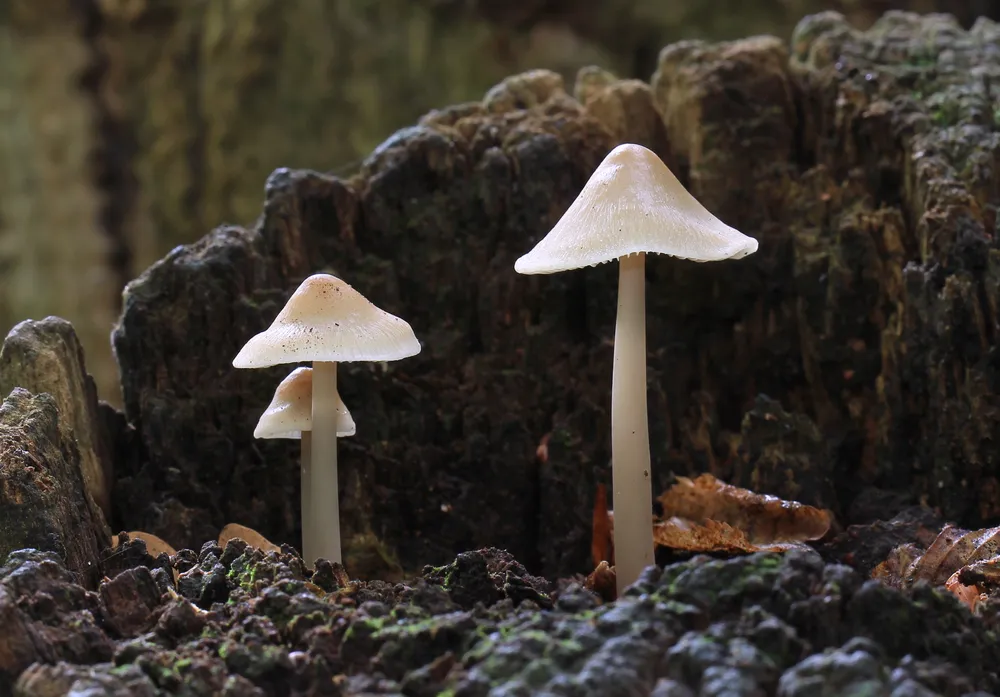
With R. maculata (spotted toughshank) — larger, with rusty spots on a white cap, bitter. With Gymnopus dryophilus (russet toughshank) — no greasy sheen, a thinner reddish stem. With Mycena galericulata (common bonnet) — smaller, on wood, thinner stem. With Clitocybe vibecina — smells of flour (this one has no such smell).
Is it different from "honey fungus"?
Yes — the butter cap grows on soil/litter, honey fungus (Armillaria) grows on wood (stumps, roots). Armillaria has a ring on the stem; the butter cap has none. Armillaria's spore print is white, the butter cap's is pink.
Is Butter cap edible or poisonous?
Does Butter cap have gills or pores?
What does the cap of Butter cap look like?
What does the stem of Butter cap look like?
Sources
- [1]Вікіпедія (українська)
- [2]Атлас грибів України, Зеров Д.К. (1979)
- [3]MycoBank Database
- [4]Index Fungorum
- [5]GBIF
- [6]iNaturalist Ukraine