,_to_serve_as_an_atlas_to_the_Handbook_of_British_Fungi_(Pl._81)_(8163893789).webp)
Lyophyllum immundum
Expert-verifiedUpdated October 3, 2026
Passport
- Edibility
- Unknown
- Season
- Aug — Nov
- Hymenophore
- Gilled
- Cap color
- Grey
- Size
- Small (up to 5 cm)
- Smell
- Odorless
- Reviewed
- Yes ✓
Quick answers
Where to look?
Deciduous forest, Mixed forest
When does it appear?
Aug — Nov
Active months: August, September, October, November.
How to recognize it? Three signs
- Cap color: Grey, Brown
- Cap shape: Convex
- Smell: Odorless
Fruiting season
August – November
Description
Lyophyllum immundum is a small, inconspicuous gilled mushroom with a gray-brown cap and a paler stem, one of the drab, hard-to-separate species of the genus Lyophyllum. It is rare, found mostly in broadleaf forests among fallen leaves. The name "immundum" ("dirty") reflects its typical tone — a muted, dusty-looking gray that camouflages the mushroom well in leaf litter. It's one of those species found mostly by amateur mycologists on targeted searches, not by ordinary foragers.
This mushroom has an uncertain culinary status — at MycoNote we mark it as unknown as a deliberately safe position. Some species of the genus Lyophyllum are considered edible after boiling, but identifying the exact species without a microscope is practically impossible. The genus is taxonomically difficult: it includes edible species (L. decastes, the clustered domecap), conditionally edible ones and species of little value. The principle: if you don't have a confident species-level identification, don't pick it to eat. The culinary value of L. immundum, even if it is safe, is low — the flesh is thin and lacks a pronounced flavor. It's not worth the risk.
In Ukraine it occurs in the forest and forest-steppe zones, in broadleaf and mixed forests. It is a saprotroph on forest litter. Season: August–November, peaking in September–October. Finds are rare, mostly single or in groups of 2-5 fruiting bodies. In the Carpathians, Polissia and the forest-steppe you can sometimes find it among moss under oak or beech.
Cap
Cap 3-7 cm across, hemispherical to convex in young mushrooms, becoming flat and spread out with a small bump in the center with age. Color: gray-brown, mousy brown, earthy gray — muted, with no bright tones. The surface is silky-matte and smooth; in wet weather it is slightly darker.
Hymenophore
The hymenophore is made of gills. The gills are crowded, thin, notched where they meet the stem. Color whitish to grayish, becoming cream-ocher with age. Spore print white.
Stem
Stem 4-7 cm tall, 0.5-1.2 cm thick, cylindrical, slightly thickened in the lower part. Color whitish to cream, with white mycelial down at the base. The surface is lengthwise fibrous, with no ring.
Flesh
The flesh is thin, whitish to grayish, soft. It does not change color when cut. No pronounced smell.
Smell
Faint, neutral, mushroomy, not distinctive. Do not taste it — its safety status is undetermined.
›Scientific synonyms (3)
Agaricus immundus Berk., Gyrophila immunda (Berk.) Quél., Tricholoma immundum (Berk.) Quél.
Lookalikes

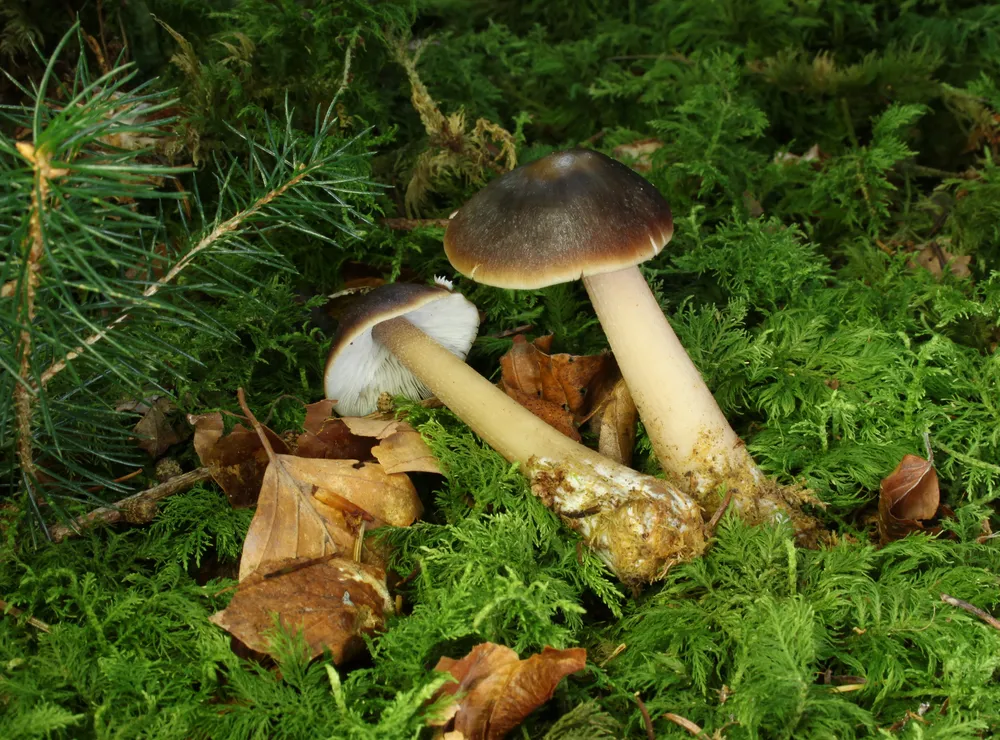
Related species
Mushrooms of the same genus and habitat — to study side by side and never mix up.
Gilded domecap
Lyophyllum favrei
Lyophyllum fumatofoetens
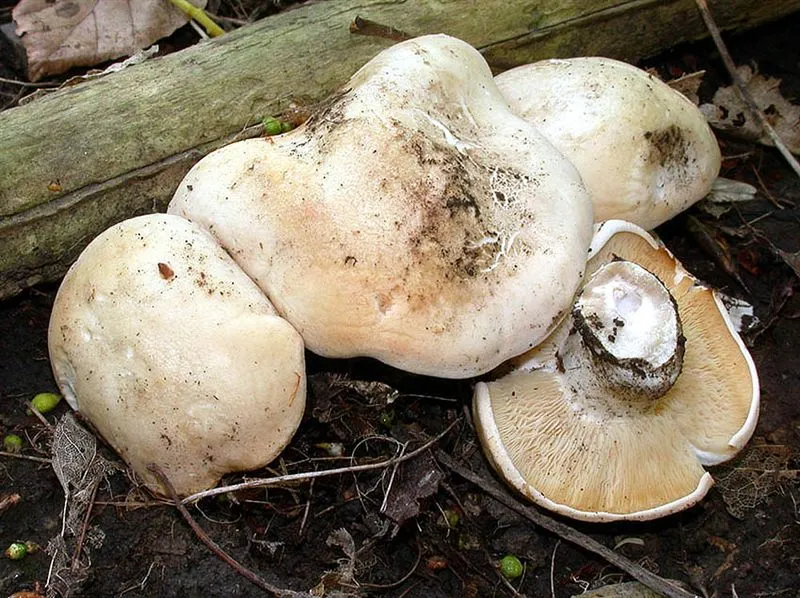
St George's mushroom
Calocybe gambosa
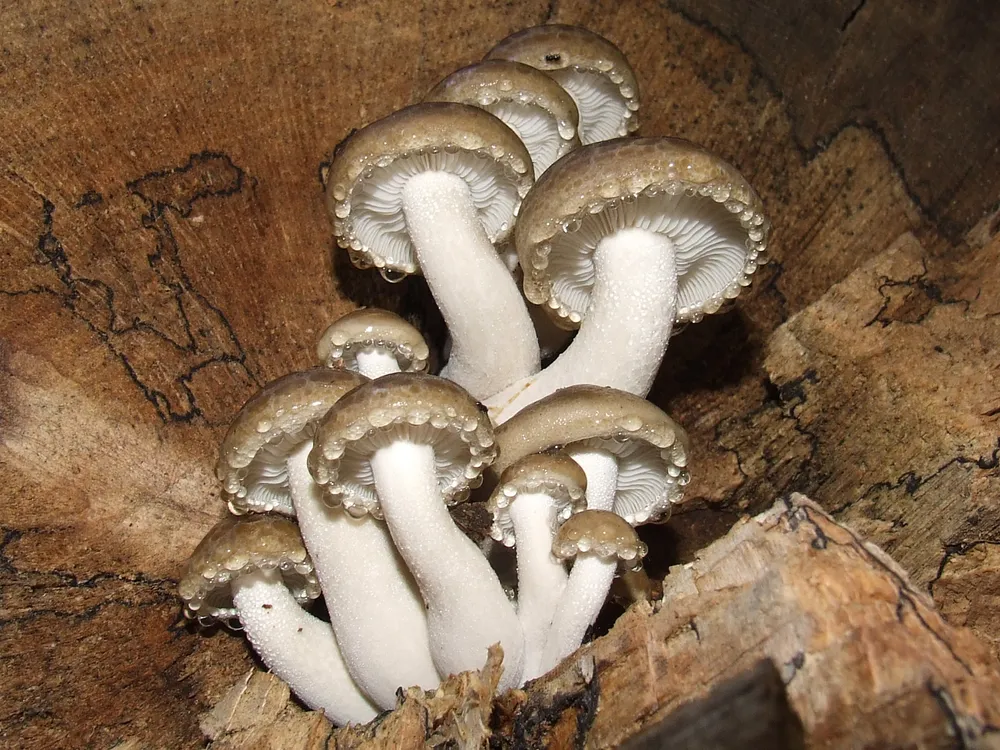
Elm oyster
Hypsizygus ulmarius
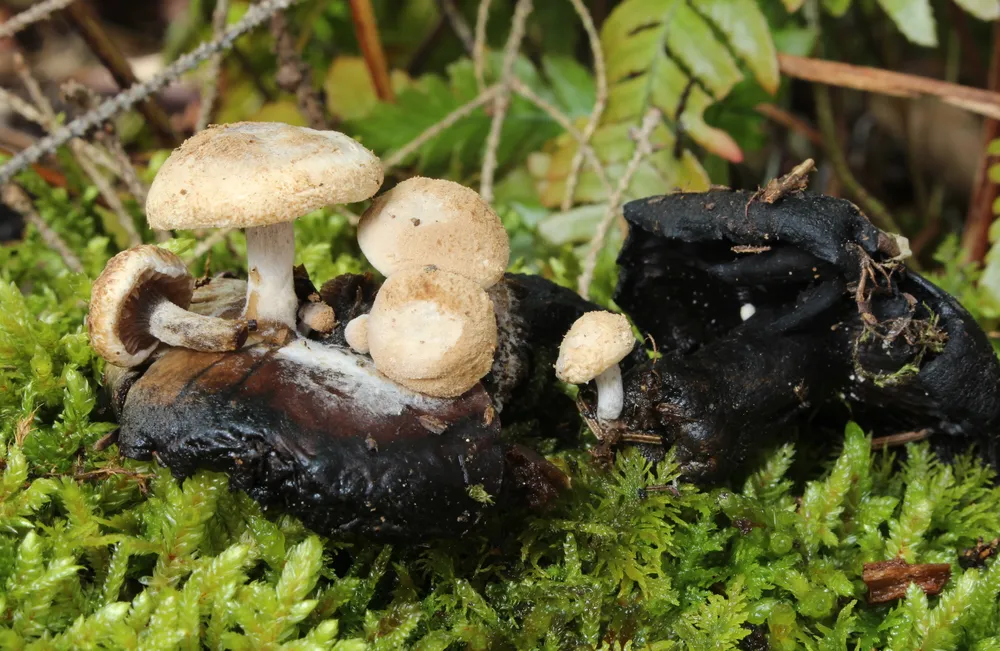
Powdery piggyback
Asterophora lycoperdoides
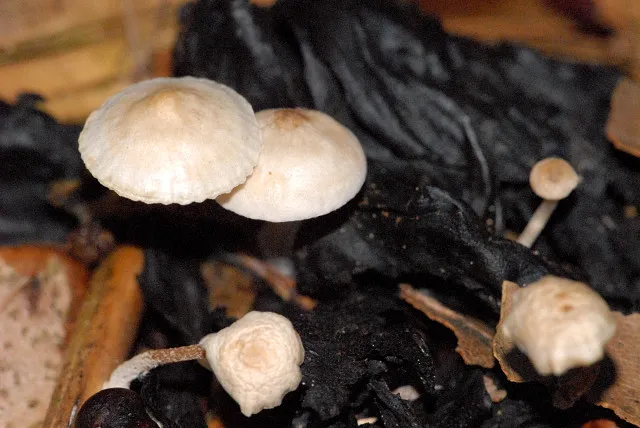
Silky piggyback
Asterophora parasitica
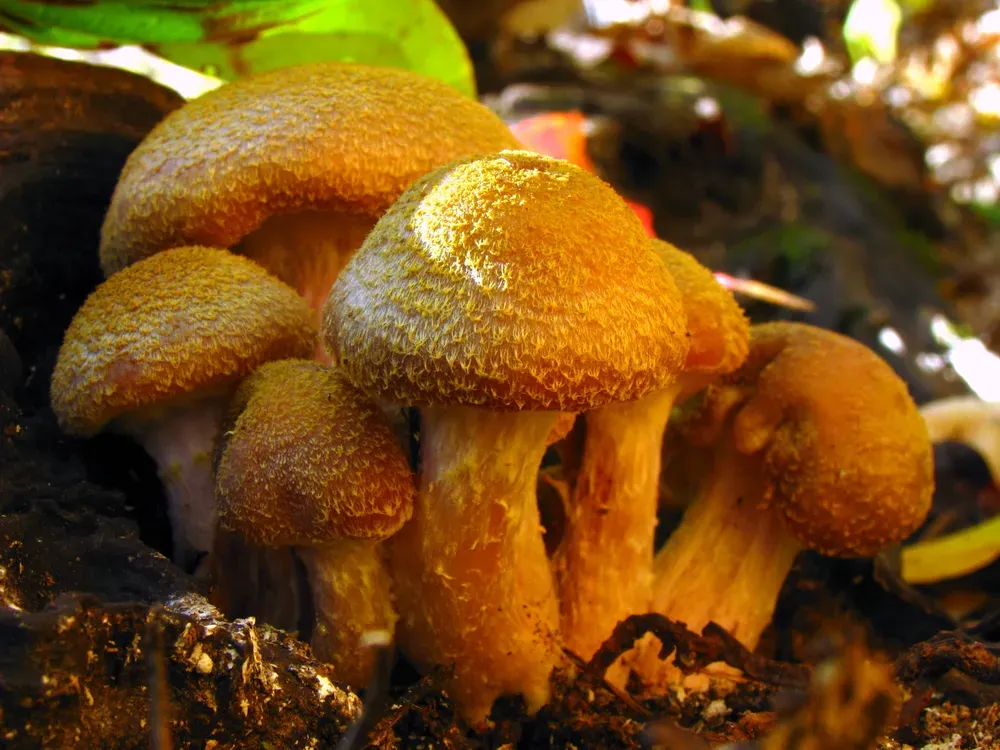
Bulbous honey fungus
Armillaria gallica
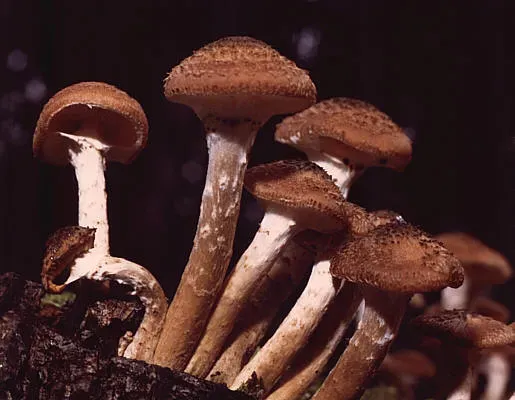
Dark honey fungus
Armillaria ostoyae
Frequently asked questions
Can you eat it?
We don't recommend it. Species-level identification without a microscope is practically impossible (the genus Lyophyllum is taxonomically difficult), and the genus includes conditionally edible species and species of little value. Culinary value is low — the flesh is thin and lacks a pronounced flavor. It's safer to skip this species.
What happens if you eat it by accident?
Probably nothing, or mild gastrointestinal upset (nausea, discomfort) in some people. No serious toxins have been described in the genus Lyophyllum. If you've eaten it, keep an eye on how you feel; if symptoms appear, see a doctor and bring samples of the mushroom for identification.
Why is the status "unknown"?
The cautious forager's rule at MycoNote: when there is no confident culinary tradition and the risk of confusion with other species in the genus remains, we mark it unknown and recommend skipping it. That doesn't mean the mushroom is definitely poisonous; it means we don't have enough data to recommend eating it.
Where should you look for it?
In broadleaf and mixed forests — mostly under oak, beech and hornbeam. It loves damp spots with a thick layer of leaf litter, forest edges and the slopes of forest ravines. A saprotroph. It often grows singly or in groups of 2-5 fruiting bodies.
Which regions of Ukraine is it found in?
An uncommon species in the Carpathians, Prykarpattia, Polissia, and the Western and Right-Bank forest-steppe. Every find has scientific value — it's worth documenting with photos and the location.
When should you look for it?
August — November, peaking in September–October. It loves a damp, cool autumn.
What is it confused with?
With other small gray gilled mushrooms: species of the genera Tricholoma (knights), Clitocybe, Collybia. Without microscopic analysis of spores and basidia, reliably identifying the species is impossible. Hence the rule: any small gray mushroom with a white spore print and no clear distinguishing features — don't take it to eat.
What should you do if you find it?
Photograph it in its habitat and in your hand from different angles. Save the location of the find (coordinates on your phone). If you're curious, you can make a spore print (white paper, 6 hours) and look for similar identifications on iNaturalist UA. But don't eat it. This mushroom's value is scientific, not culinary.
Is Lyophyllum immundum edible or poisonous?
Does Lyophyllum immundum have gills or pores?
What does the cap of Lyophyllum immundum look like?
What does the stem of Lyophyllum immundum look like?
Sources
- [1]Вікіпедія (українська)
- [2]Атлас грибів України, Зеров Д.К. (1979)
- [3]MycoBank Database
- [4]Index Fungorum
- [5]GBIF
- [6]iNaturalist Ukraine