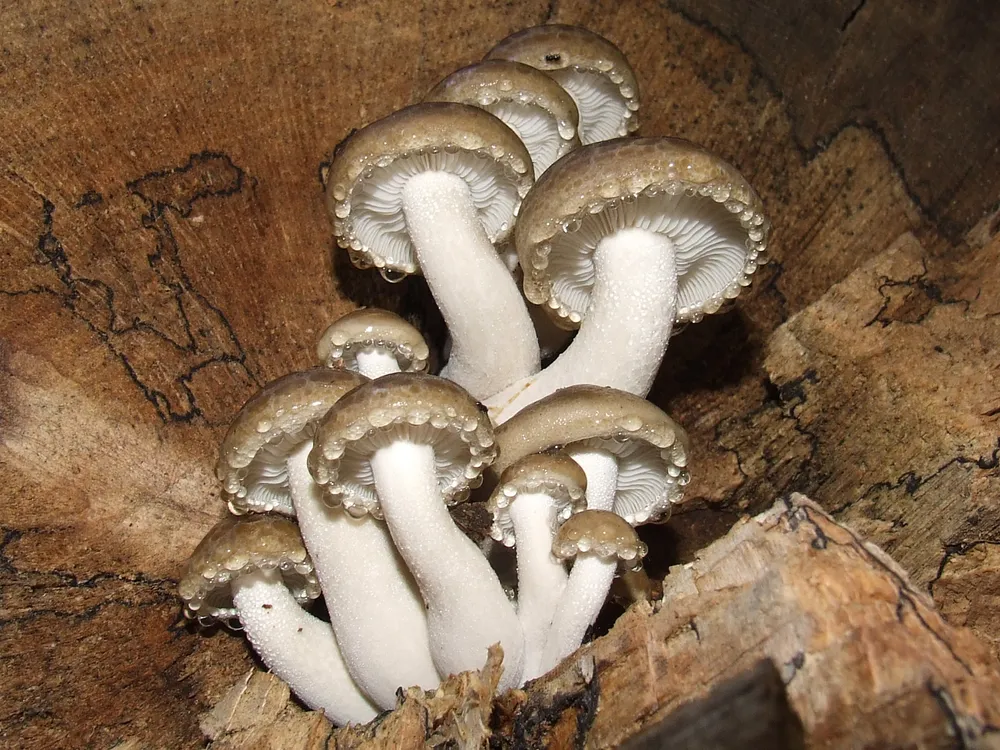
Elm oysterHypsizygus ulmarius
Expert-verifiedUpdated October 3, 2026
Passport
- Edibility
- Edible
- Season
- Aug — Nov
- Hymenophore
- Gilled
- Cap color
- White
- Size
- Large (over 15 cm)
- Smell
- Pleasant
- Reviewed
- Yes ✓
Quick answers
Where to look?
Deciduous forest, Mixed forest
When does it appear?
Aug — Nov
Active months: August, September, October, November.
How to recognize it? Three signs
- Cap color: White, Cream
- Cap shape: Convex
- Smell: Pleasant, Floury
Fruiting season
August – November
Description
The elm oyster is a truly big forest mushroom. It grows up to 15-20 cm across, with a white or cream convex cap on a sturdy, thick stem. It grows in groups of 2-5 fruit bodies right on the trunks of living or recently dead elms, poplars and willows, less often on other deciduous trees. It's a weak parasite — it attacks weakened trees, causing white rot of the wood. In the wild it isn't common, but it is cultivated in Japan and Korea under the name “buna-shimeji” (although buna-shimeji is more often the closely related Hypsizygus marmoreus).
a good edible mushroom with firm white flesh. Good for frying, stewing, pickling and adding to soups. Raw, the flesh can be slightly bitter — a short boil (5-10 min) is enough to get rid of the bitterness. The mushroom holds its shape when cooked and doesn't go mushy. A valuable find for your basket — big fruit bodies and no dangerous lookalikes.
In Ukraine it is uncommon but consistently found in floodplain elm and poplar forests and in city parks with old elms and poplars. It occurs mainly in the Forest-Steppe and the southern part of the forest zone. Season: August–November, peaking in September–October.
Cap
Cap 6-15 (up to 20) cm, at first hemispherical, then convex-spreading to flat. Color white, cream, the center may be light grayish-brown. Surface smooth, dry, slightly shiny in wet weather. In old mushrooms it may crack into scales in the center.
Hymenophore
Gilled hymenophore. Gills close, adnate or slightly decurrent. Color white to cream. Spore print white to pale cream.
Stem
Stem 5-12 cm tall, 1.5-3 cm thick, cylindrical, often eccentric (off-center from the cap) or curved at the base. Color white to cream. Surface fibrous, sometimes with white downy patches in the lower part (remnants of mycelium). No ring.
Flesh
The flesh white, dense, meaty, firm when young. The color doesn't change when cut. It may taste slightly bitter raw — a short boil is enough.
Smell
Faint, pleasant mushroomy smell, sometimes with a mealy note. Mild taste, slightly bitter when raw.
›Scientific synonyms (6)
Agaricus ulmarius Bull. 1791, Lyophyllum ulmarium (Bull.) Kühner 1938, Micromphale ulmarium (Bull.) Murrill, Pleurotus ulmarius f. burtianus Pilát 1935, Pleurotus ulmarius f. coriipellis (Fr.) Pilát 1935, Pleurotus ulmarius f. gigantean Ferd. & Winge 1920
Lookalikes
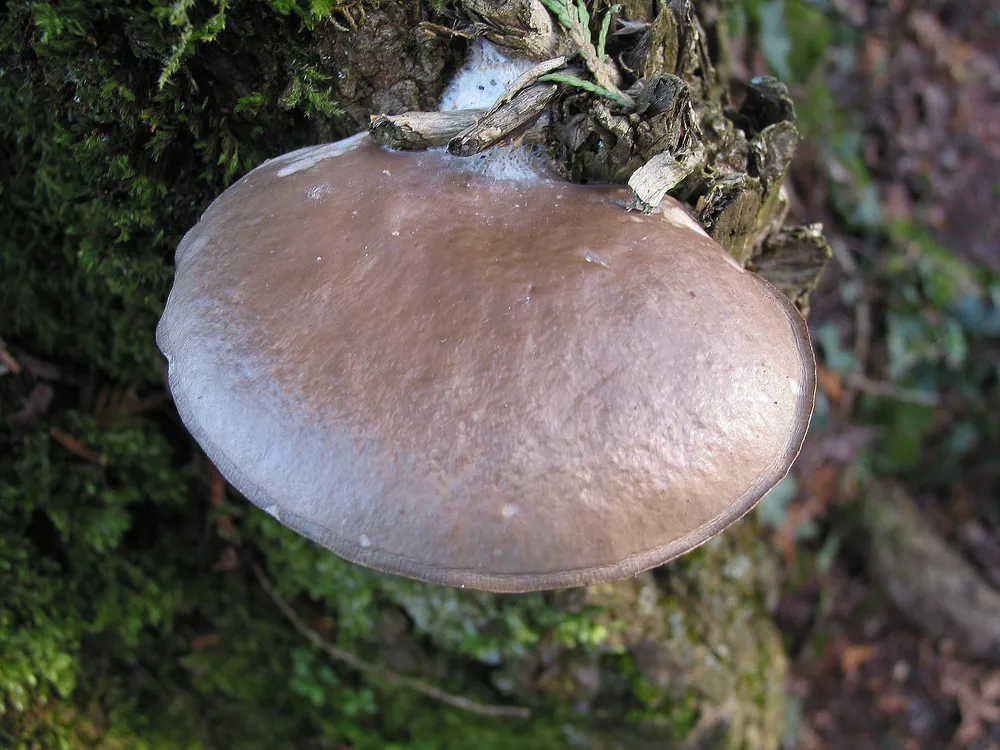
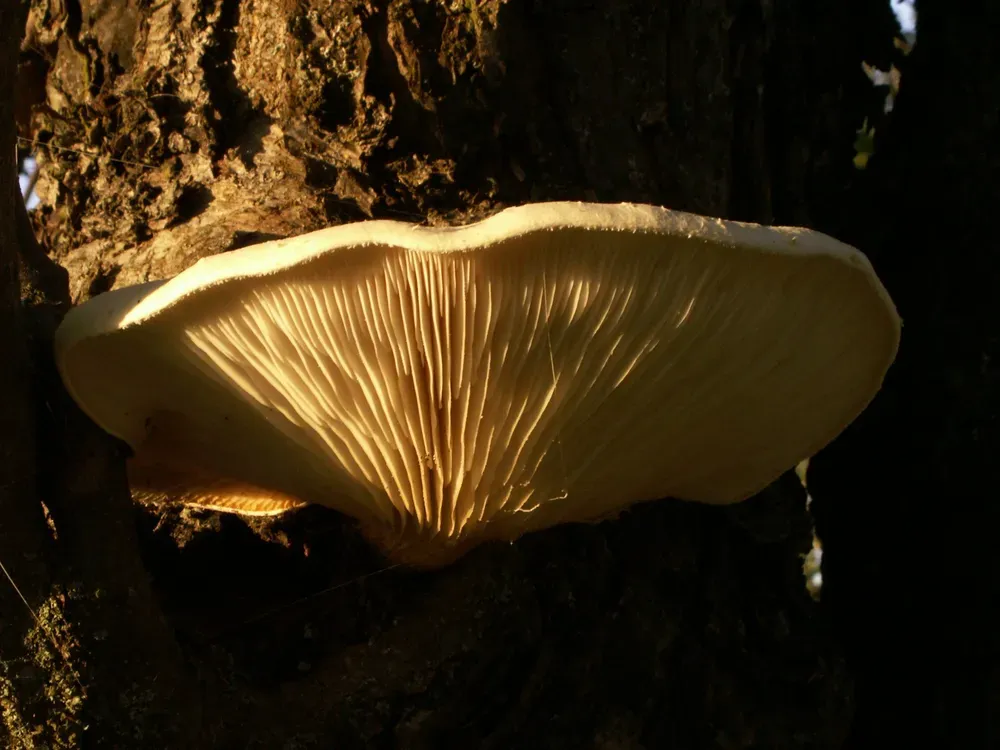
Related species
Mushrooms of the same genus and habitat — to study side by side and never mix up.
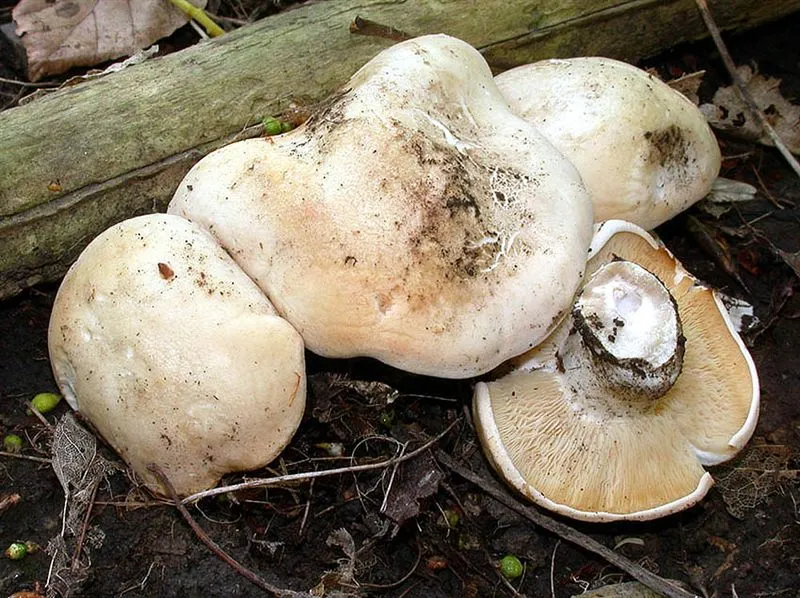
St George's mushroom
Calocybe gambosa

Clustered domecap
Lyophyllum decastes
Gilded domecap
Lyophyllum favrei
Lyophyllum fumatofoetens
,_to_serve_as_an_atlas_to_the_Handbook_of_British_Fungi_(Pl._81)_(8163893789).webp)
Lyophyllum immundum
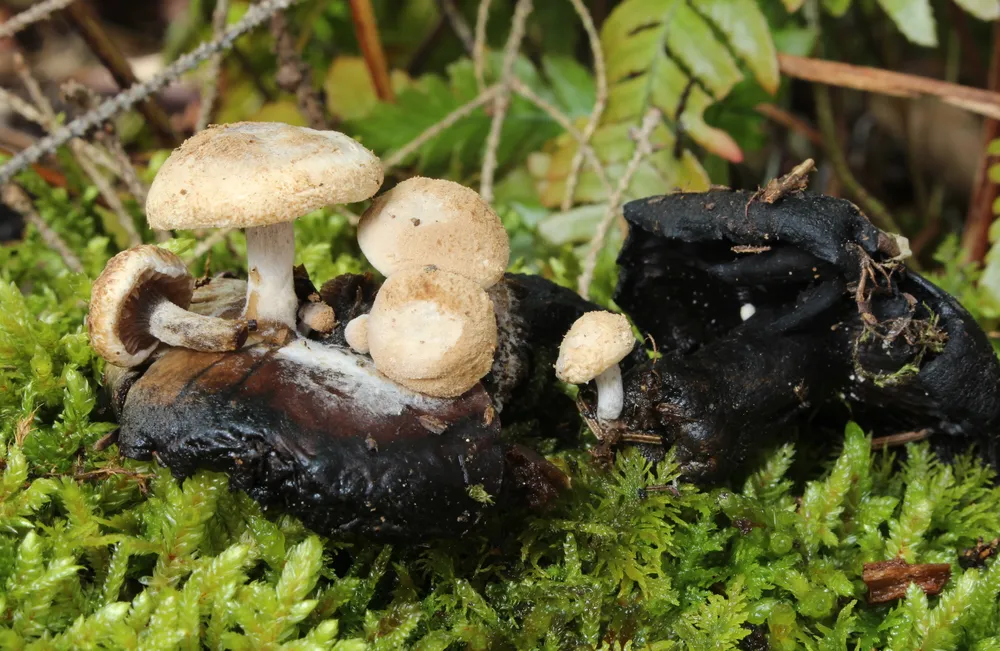
Powdery piggyback
Asterophora lycoperdoides
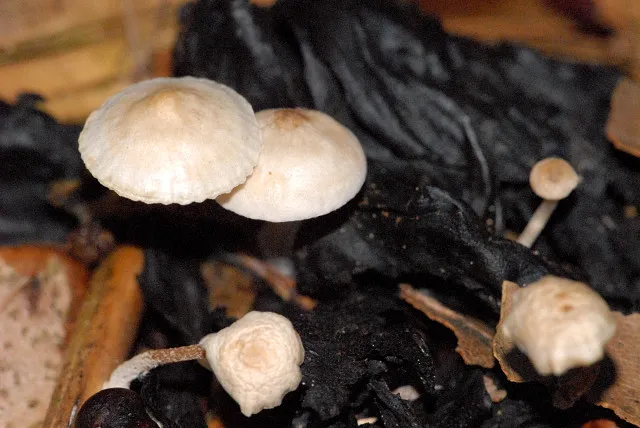
Silky piggyback
Asterophora parasitica
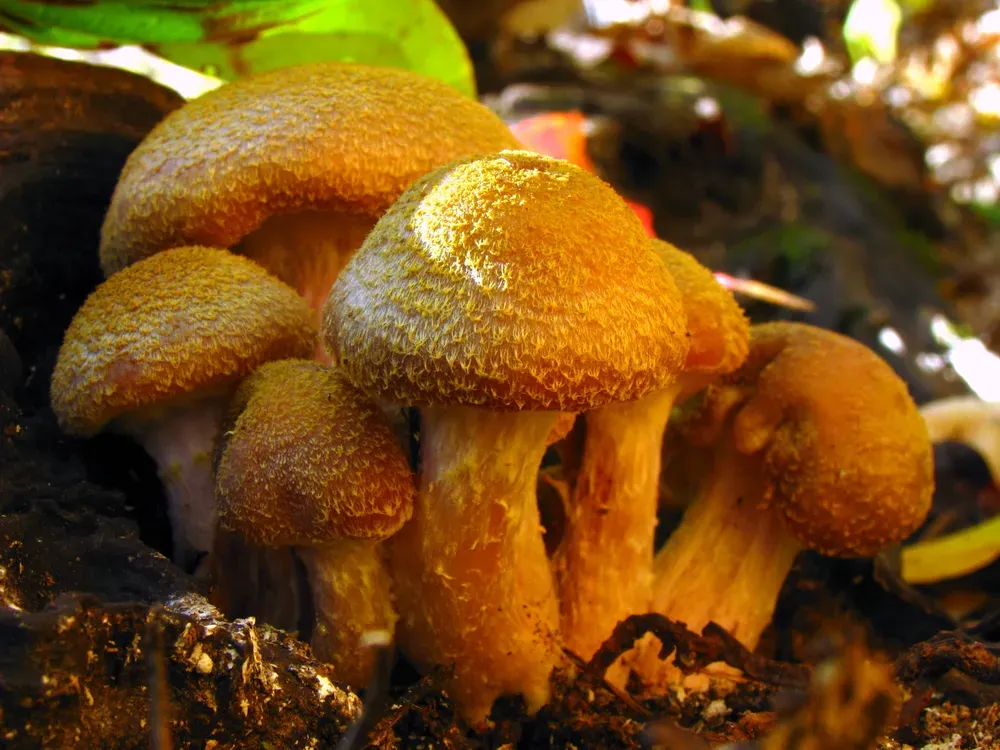
Bulbous honey fungus
Armillaria gallica
Frequently asked questions
Is it safe to eat?
Yes, it's a good edible mushroom. Safe to pick — there are no dangerous lookalikes among mushrooms growing on elm and poplar trunks in the same months. It's best to boil it briefly (5-10 min) before frying — this removes any slight bitterness.
Why should you boil it?
Not because of toxicity — the mushroom isn't poisonous. The raw flesh just sometimes has a slightly bitter aftertaste, especially in older fruit bodies. 5-10 minutes of boiling removes the bitterness completely, and the cap becomes softer too. Young mushrooms may not be bitter at all.
Where to look for it?
On the trunks of living or recently dead deciduous trees — mainly elms, poplars and willows, less often maple and ash. In groups of 2-5 fruit bodies, 0.5-3 m above the ground. In floodplain forests, on riverbanks, in old parks and avenues with old elms and poplars.
Which regions of Ukraine does it grow in?
Mainly in the Forest-Steppe (Khmelnytskyi, Vinnytsia, Cherkasy, Kyiv, Poltava, Sumy and Kharkiv regions) and the southern part of Polissia, where there are floodplain elm-poplar forests. Rare in the Carpathians. In the steppe — only in floodplains and park plantings with old poplars.
When to look for it?
August–November. Peak fruiting — September–October. It tolerates the first frosts. In a warm autumn it can fruit until November.
Does it appear in summer?
The first fruit bodies sometimes appear in August, especially in a wet summer. But the typical season is early to mid-autumn. Summer drought stops fruiting completely.
What is it confused with?
With the oyster mushroom (Pleurotus ostreatus) — both grow on deciduous trunks. The difference: the oyster mushroom's stem is side-attached (lateral), short, sometimes almost absent; the elm oyster's stem is central or eccentric and fully developed. Plus, the oyster mushroom is gray-blue or brown, while the elm oyster is white. Both are edible — a mix-up isn't dangerous.
Are there dangerous lookalikes?
Among wood-growing mushrooms with a white cap and a central stem in the same months, there are no seriously dangerous lookalikes. It's essential to make sure the mushroom is growing on wood (a trunk, a fallen log) and not on the ground — on the ground, big white caps carry far more serious risks (for example, the destroying angel). On elm or poplar, pick with confidence.
Is Elm oyster edible or poisonous?
Does Elm oyster have gills or pores?
What does the cap of Elm oyster look like?
What does the stem of Elm oyster look like?
Sources
- [1]Вікіпедія (українська)
- [2]Атлас грибів України, Зеров Д.К. (1979)
- [3]MycoBank Database
- [4]Index Fungorum
- [5]GBIF
- [6]iNaturalist Ukraine