Branching oysterPleurotus cornucopiae
Expert-verifiedUpdated October 3, 2026
Passport
- Edibility
- Edible
- Season
- Apr — Nov
- Hymenophore
- Gilled
- Cap color
- White
- Size
- Large (over 15 cm)
- Smell
- Anise
- Reviewed
- Yes ✓
Quick answers
Where to look?
Deciduous forest, Mixed forest
When does it appear?
Apr — Nov
Active months: April, May, June, July, August, September, October, November.
How to recognize it? Three signs
- Cap color: White, Cream, Brown
- Cap shape: Funnel-shaped
- Smell: Anise, Floury
Fruiting season
April – November
Description
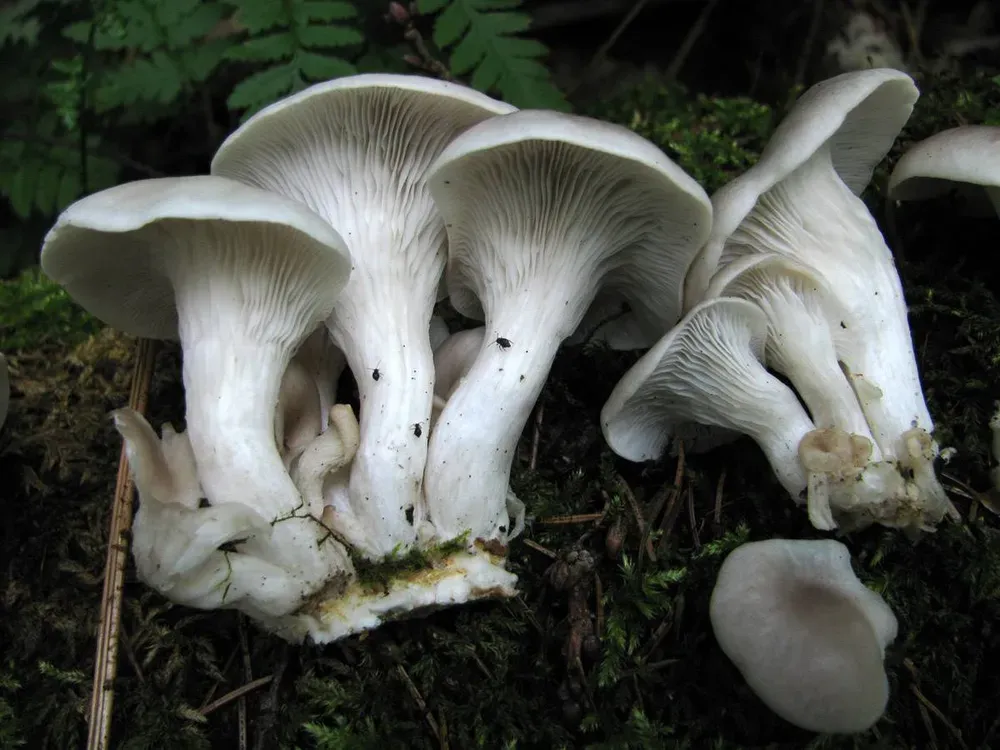
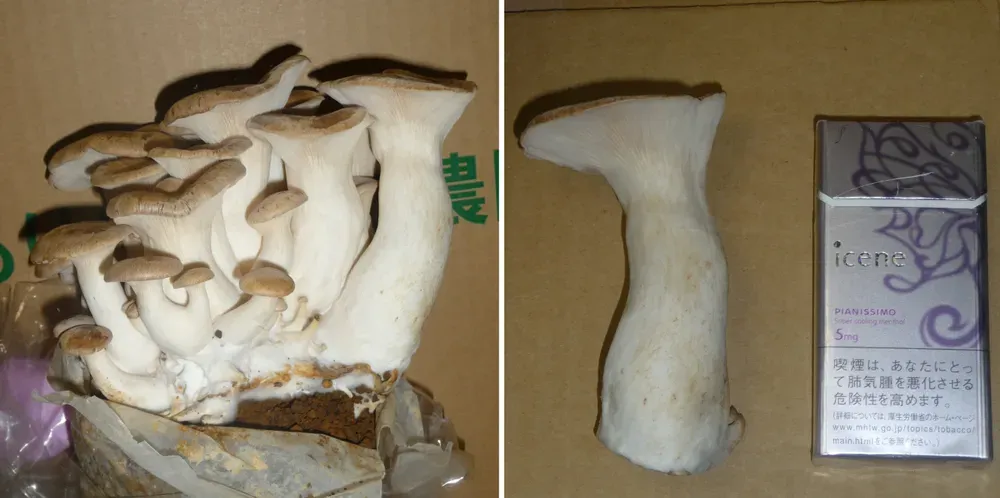
The branching oyster (Pleurotus cornucopiae) is a close relative of the common oyster mushroom, but with a distinctive “horn-like” outline that gave it its name. Instead of the flat, sideways-spread caps of the oyster mushroom, the branching oyster has funnel-shaped caps with a deeply sunken center, sometimes split at the margin as if cut from a sheet of paper. Very photogenic.
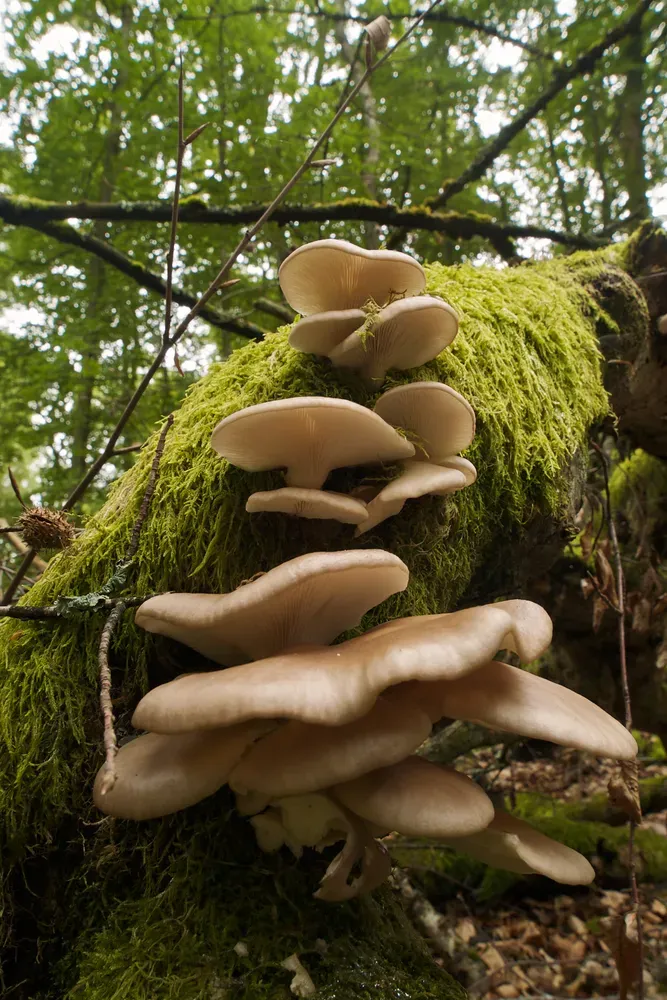
In Ukraine it grows in broadleaf woods — oak, beech, elm — on stumps, fallen trunks and in hollows of living trees. It occurs throughout the forest zone and the Forest-Steppe, most often in floodplain woods, parks and orchards. Season — from spring to late fall, especially abundant from August to November. Like the oyster mushroom, it forms big clusters of 10–30 fruiting bodies at once.
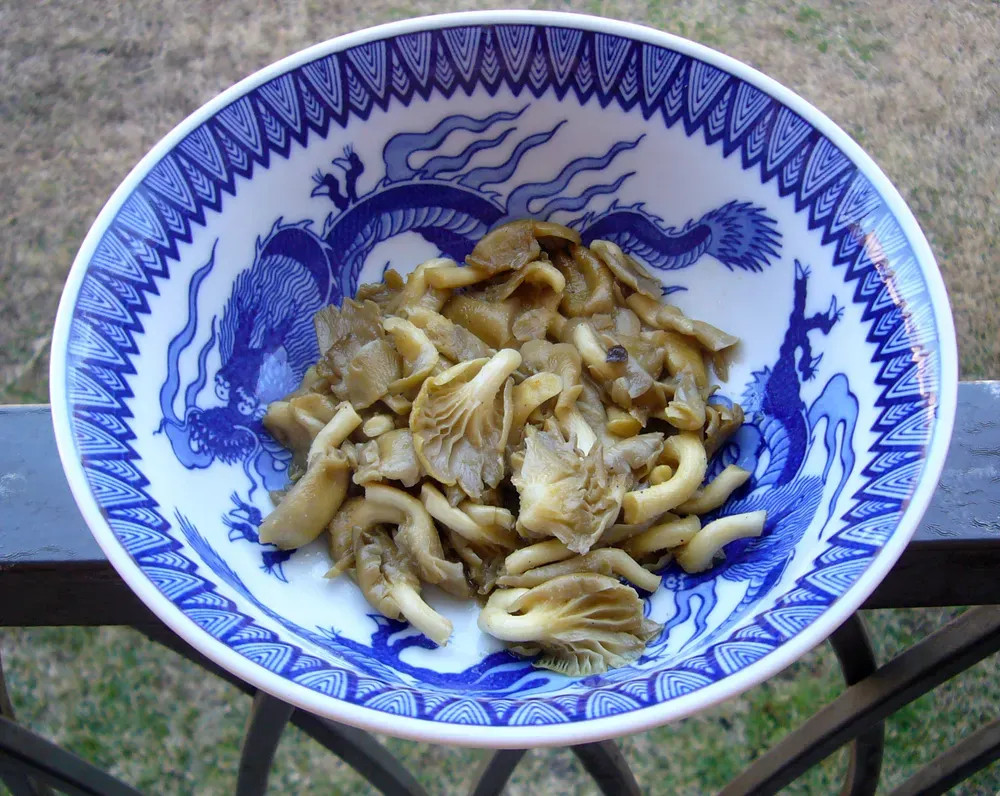
Edibility is good, a category 3 mushroom. Young soft specimens taste much like the oyster mushroom, with a delicate texture and a distinctive “mushroomy” aroma with notes of anise and flour. Old ones get tough, especially in the stem — best removed. It is cultivated in Europe (France, Poland, Italy), though less commercially than P. ostreatus. Great fried, braised, in soups, Asian dishes and fillings.
Cap
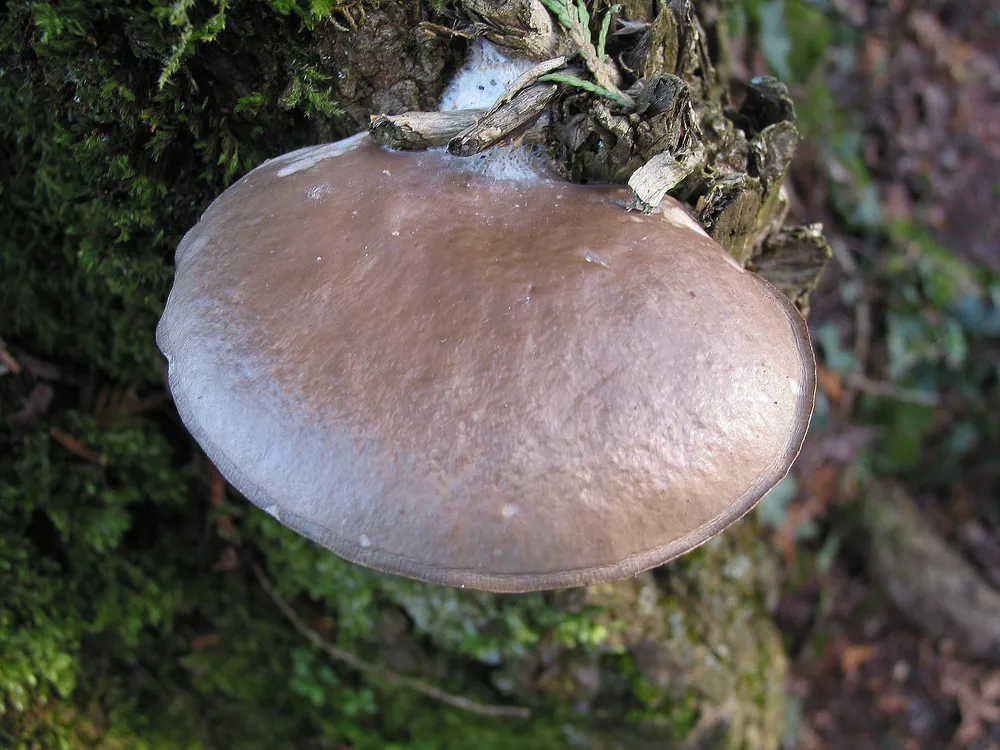
Cap up to 15 cm across, funnel-shaped with a deeply sunken center — the hallmark of the species (hence the name “cornucopiae” — “horn of plenty”). Whitish when young, turning creamy brown or ocher with age. Surface smooth, slightly sticky in wet weather. The margins are often wavy, sometimes raggedly torn.
Hymenophore
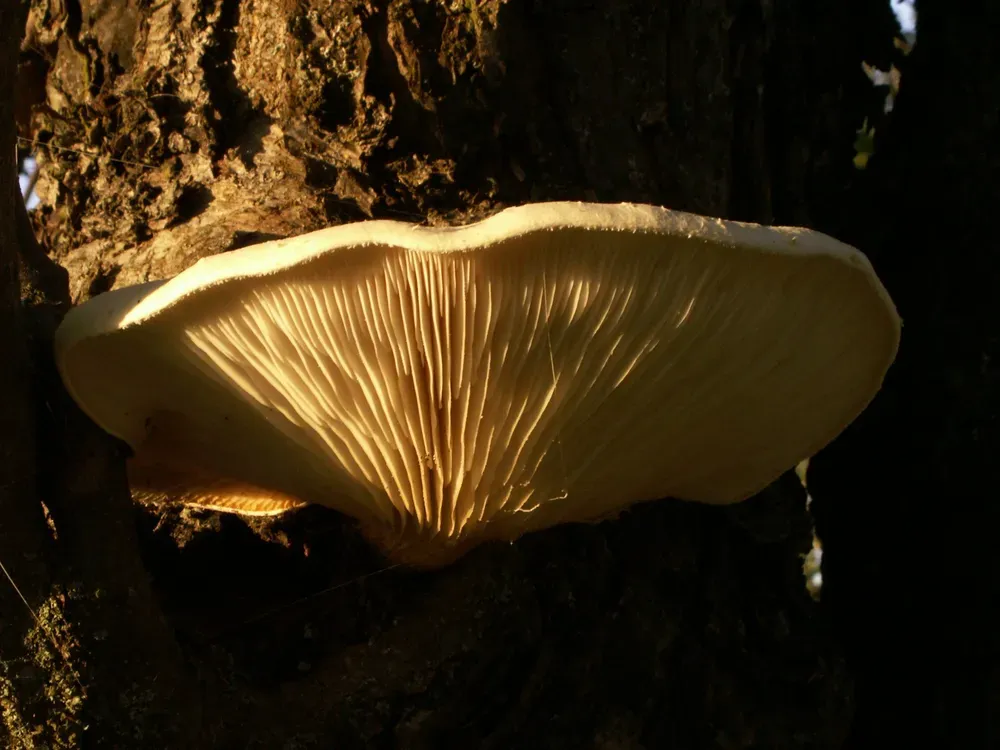
The gills run far down the stem and form a distinctive network (“anastomoses”) on the lower part of the stem — the gills interweave like a cobweb. White, cream with age. Spore print white or pale lilac.
Stem
A stem is always present (unlike the oyster mushroom, where it often almost merges with the cap), 3–12 cm tall, 1–2 cm thick. Sometimes branched, central or slightly off-center. White, cream in mature ones. Tough and fibrous in old ones.
Flesh
The flesh is white, springy in young ones, getting tougher with age, especially in the stem. It does NOT change color when cut. The texture is like the oyster mushroom’s, but a little denser and springier.
Smell
The smell is distinctive — a blend of anise and flour notes over a faint mushroomy base. Stronger in young specimens. The taste is mild, with a hint of hazelnut.
›Scientific synonyms (2)
Dendrosarcus cornucopiae, Pleurotus sapidus
Lookalikes
Related species
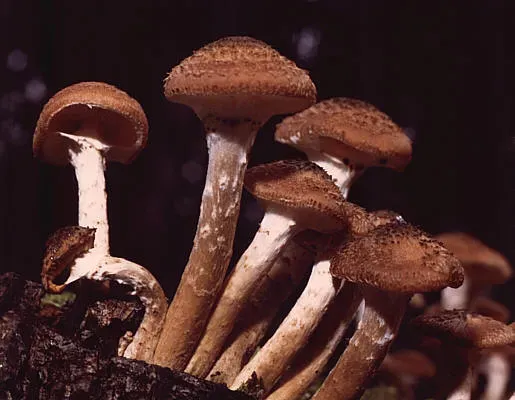
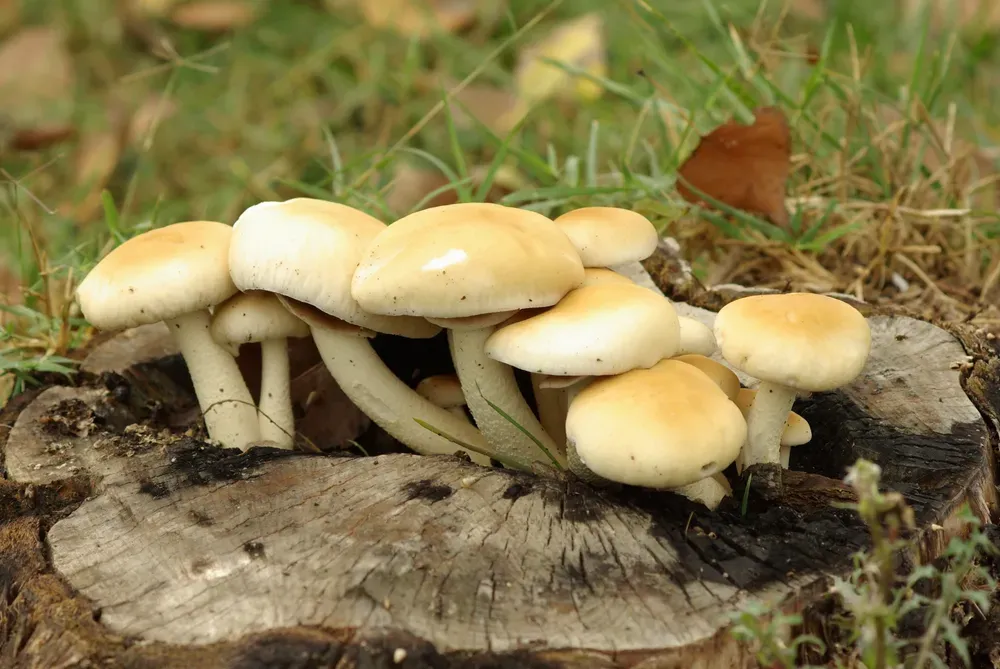
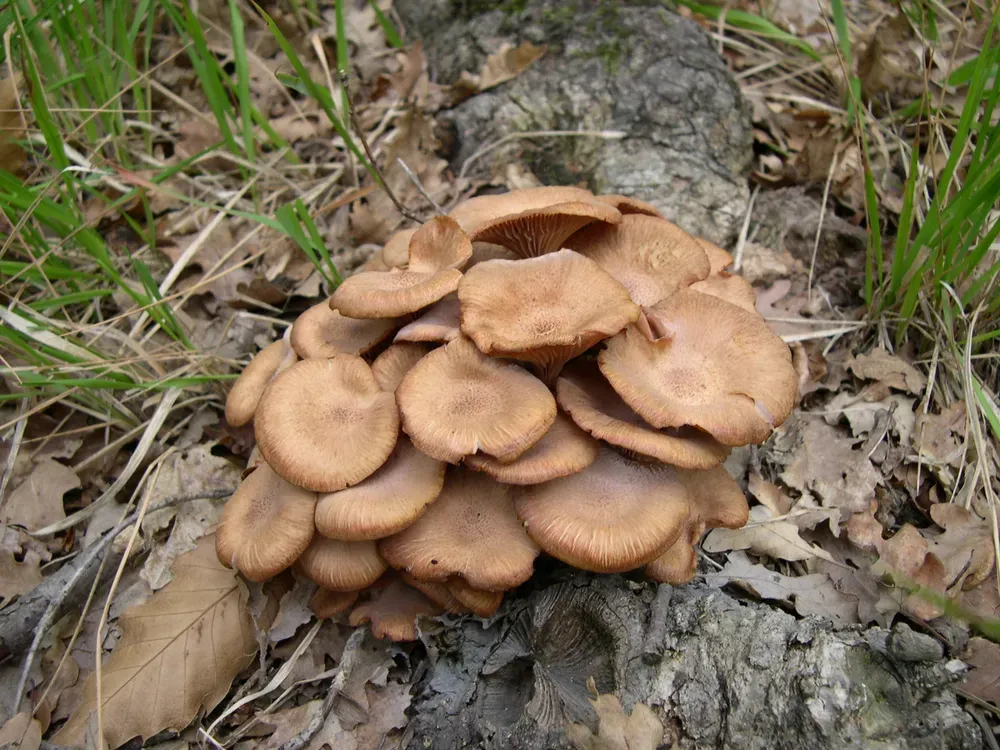
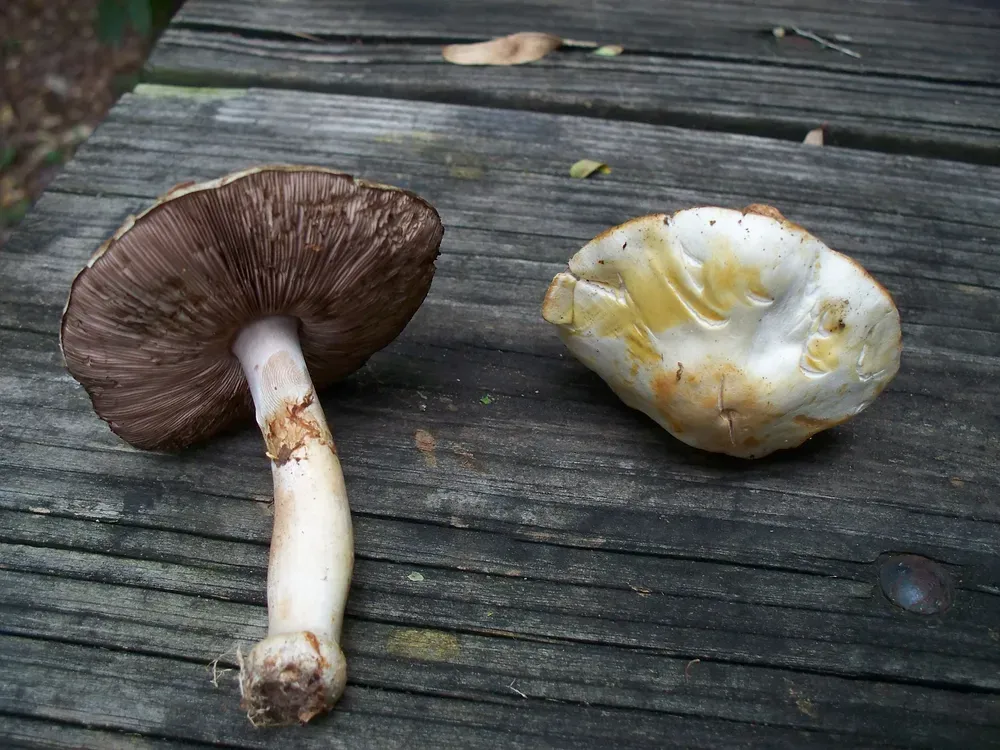
Mushrooms of the same genus and habitat — to study side by side and never mix up.
Bulbous honey fungus
Armillaria gallica
Dark honey fungus
Armillaria ostoyae
Poplar fieldcap
Cyclocybe aegerita
Ringless honey fungus
Desarmillaria tabescens
Agaricus abruptibulbus
Agaricus haemorrhoidarius
Agaricus haemorroidarius
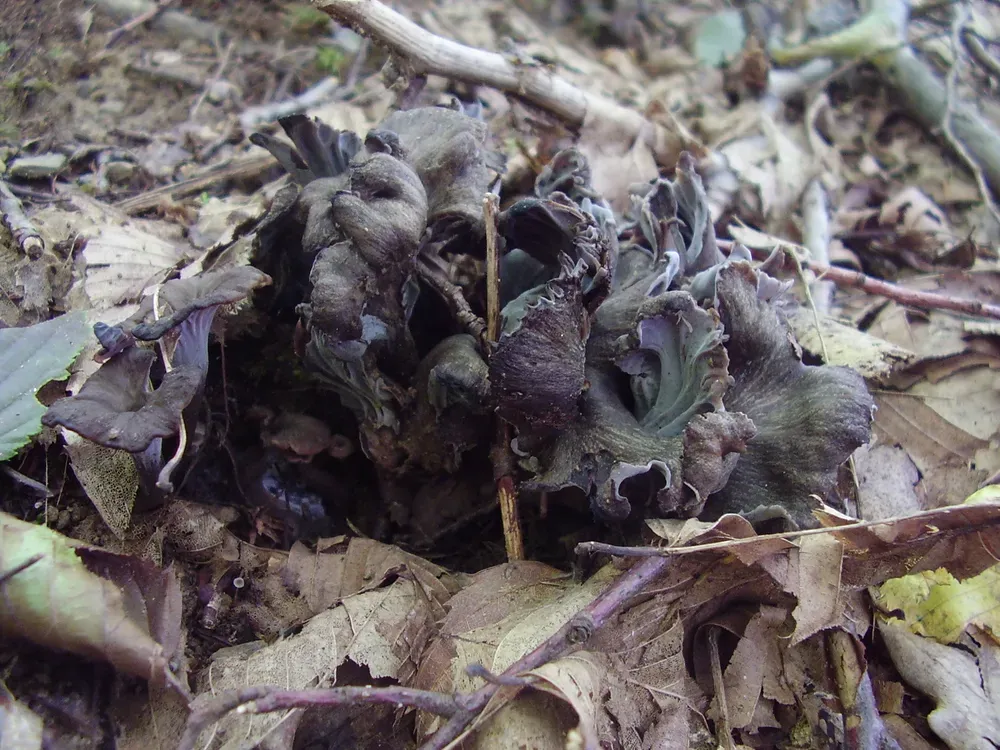
Ashen chanterelle
Cantharellus cinereus
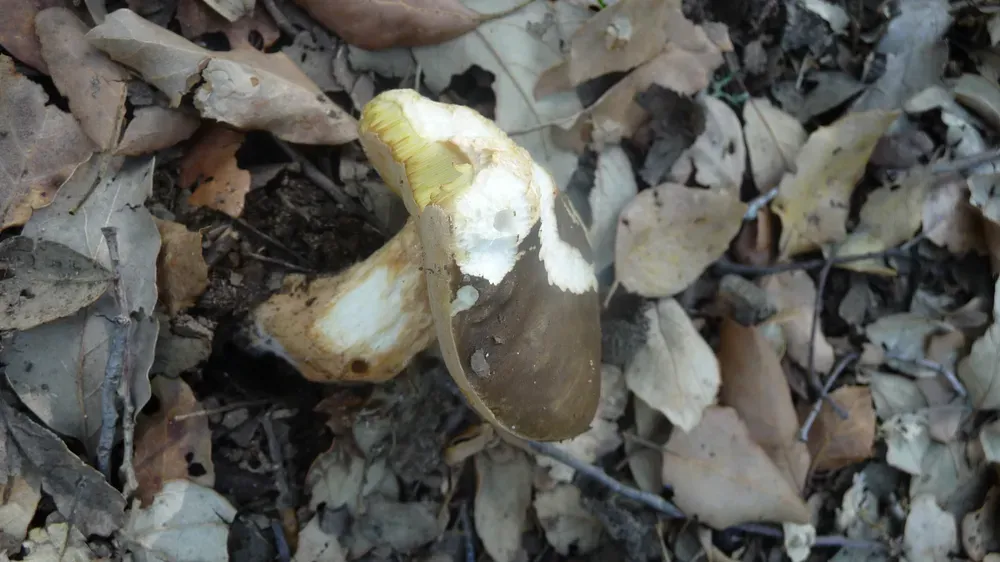
Blushing bolete
Leccinum roseofractum
Frequently asked questions
Can it be confused with a poisonous mushroom?
There are no serious dangerous look-alikes. All oyster mushroom species in Ukraine are edible. Just avoid small dark side-growing mushrooms on conifers — these are other genera (Crepidotus, Pleurocybella), and among them are conditionally edible and inedible ones.
How to recognize the branching oyster?
Four features together: a funnel-shaped cap with a deeply sunken center (not flat!), gills that run far down the stem and form a network on its lower part, a central or slightly off-center stem (always present), and growth on hardwood. The anise-and-flour aroma is an extra marker.
Where to look in Ukraine?
On stumps, fallen trunks and in hollows of broadleaf trees — oak, beech, elm, poplar, more rarely maple and ash. Throughout the forest zone and the Forest-Steppe. More abundant in floodplain woods and old parks. It does not grow in conifer forests.
When does it fruit?
The season is very long: from April (sometimes from March in mild springs) to November. Most abundant in August–October. It can fruit on the same tree for several years in a row, with several flushes per season.
How is it different from the oyster mushroom?
The oyster mushroom (P. ostreatus) has a flat or slightly convex cap, dark gray or gray-blue, and almost no stem. The branching oyster has a pale funnel-shaped cap, a clearly present stem, and gills that form a network on the lower part of the stem.
Does it grow on conifers?
Very rarely, if at all. The branching oyster is strictly a broadleaf species. If you find an “oyster-like mushroom” on pine or spruce, it is a different species (possibly Pleurocybella porrigens — NOT edible, neurotoxic). Always check the substrate.
How to cook it?
Remove the tough stem (especially in mature ones). Slice the cap into strips. Quickly fry with onion and garlic (3–5 min over high heat), add to soups (especially Asian ones), braise with cream, or use in dumpling fillings. Cooking time is shorter than for most mushrooms.
Can you grow it at home?
Yes, the branching oyster is cultivated on wheat straw and oak and beech logs. The cycle is shorter than for the oyster mushroom — 2–3 months to the first flush on straw. Ready-made home-growing kits are available in Europe and the US.
Is Branching oyster edible or poisonous?
Does Branching oyster have gills or pores?
What does the cap of Branching oyster look like?
What does the stem of Branching oyster look like?
Sources
- [1]Вікіпедія (українська)
- [2]Атлас грибів України, Зеров Д.К. (1979)
- [3]MycoBank Database
- [4]Index Fungorum
- [5]GBIF
- [6]iNaturalist Ukraine