THIS DATA HAS NOT BEEN VERIFIED BY AN EXPERT. Use at your own risk.
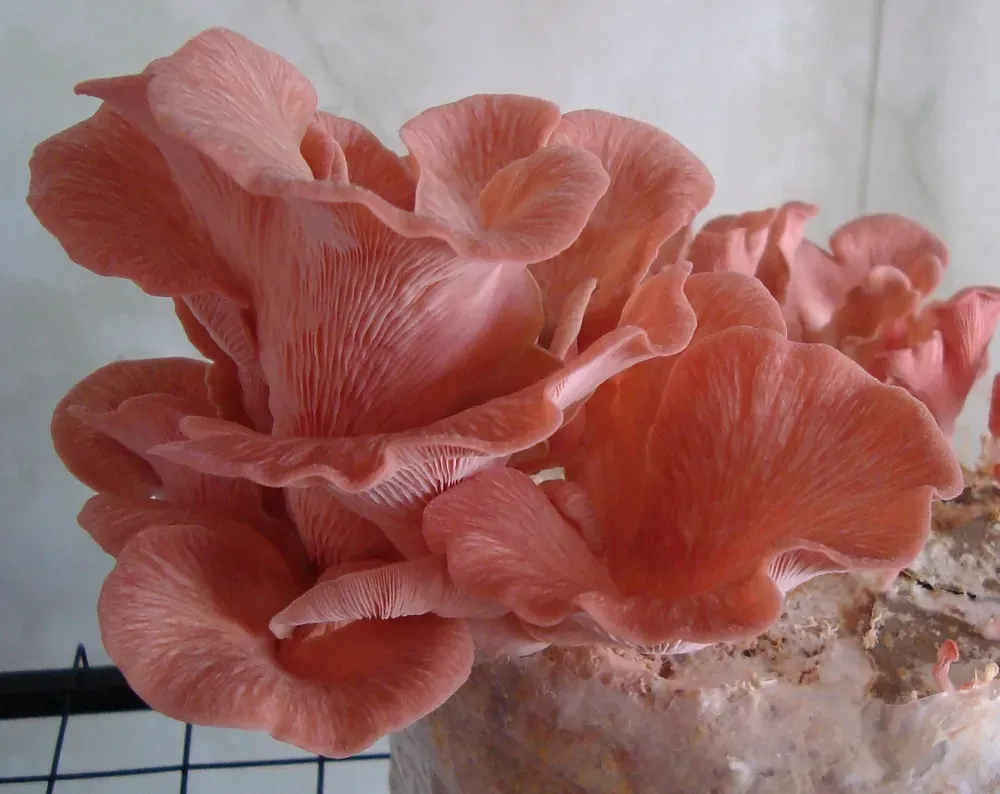
Pink oyster mushroomPleurotus djamor
Under reviewUpdated October 3, 2026
Passport
- Edibility
- Edible
- Season
- Jun — Oct
- Hymenophore
- Gilled
- Cap color
- Pink
- Size
- Small (up to 5 cm)
- Smell
- Pleasant
- Reviewed
- Under review
Quick answers
Where to look?
Deciduous forest, Mixed forest
When does it appear?
Jun — Oct
Active months: June, July, August, September, October.
How to recognize it? Three signs
- Cap color: Pink, Red, Cream
- Cap shape: Flat, Irregular
- Smell: Pleasant
Fruiting season
June – October
Description
The pink oyster mushroom, known to science as Pleurotus djamor, is a tropical relative of the common oyster mushroom that stuns with the vivid pink-coral color of its delicate fan-shaped caps. Fused in clusters like a bouquet, these little mushrooms decorate the dead wood of broadleaf trees. In the wild the species is found in the tropics and subtropics, while in our latitudes it is known mainly as a popular cultivated mushroom, happily grown at home and on farms for its bright looks and fast growth.
In Ukraine the pink oyster mushroom does not occur in the wild because it loves warmth, but it is easy to grow on sawdust, straw and other plant debris — only a few weeks pass from inoculation to harvest. Cultivated clusters of pink caps appear year-round in home and commercial settings.
In terms of edibility, the pink oyster mushroom is a good edible mushroom. Its thin, tender flesh has a mild flavor that, when fried, reminds some people of bacon or seafood. Sadly, the bright pink color almost completely disappears during cooking, leaving the usual pale shade. Young mushrooms taste best; with age the flesh becomes thinner and tougher. Pink oyster mushrooms are fried, stewed and added to all kinds of dishes.
Cap
The cap of the pink oyster mushroom is small — from 2 to 6, rarely up to 10 centimeters across. It is fan-shaped, tongue-shaped or lobed, with a thin, often wavy margin. The surface is smooth or faintly velvety, dry and matte. The color is the species' main glory: bright pink, coral or salmon in young mushrooms, fading with age to pale pink and cream. The mushrooms grow fused in dense, tiered clusters.
Hymenophore
The hymenophore is gilled. The gills are pink or pinkish-cream, matching the cap, fairly crowded, running noticeably down the short stem or decurrent to the point of attachment. The spore print is pale pink or lilac. The pink decurrent gills make this species easy to recognize among the oyster mushrooms.
Stem
The stem is short or almost absent, usually lateral or off-center, pinkish-white; often several mushrooms are fused at a common base into a single cluster. The surface is smooth. There is no ring and no volva. The stem flesh is tougher than the cap, so mostly the caps are eaten.
Flesh
The flesh is thin, tender, pinkish or whitish, and does not change color when cut. The taste is mild and pleasant; when fried it reminds some people of bacon or seafood. Because the flesh is so thin, young caps are chosen for the table. During cooking the bright pink color almost disappears.
Smell
The smell is pleasant, mushroomy, slightly sweetish in fresh specimens. The aroma is not a defining feature; the mushroom is recognized above all by the bright pink-coral color of its caps, its growth in dense clusters on broadleaf wood and its pink decurrent gills.
›Scientific synonyms (2)
Pleurotus salmoneostramineus Lj.N. Vassiljeva, Agaricus djamor Rumph. ex Fr. (1821)
Lookalikes
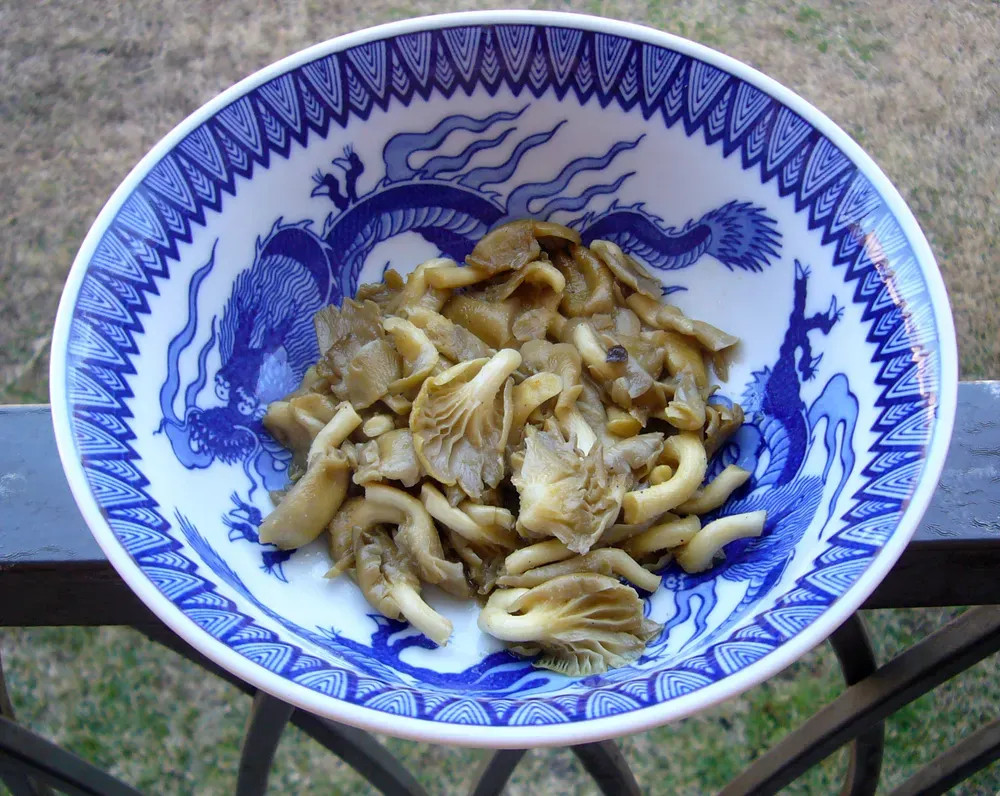
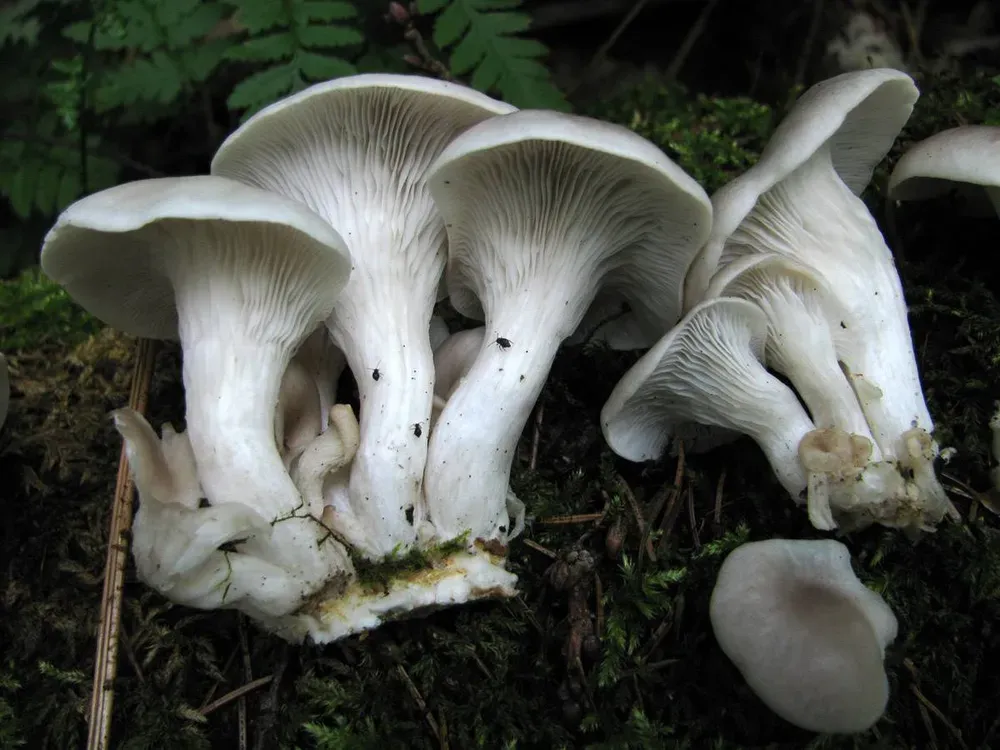
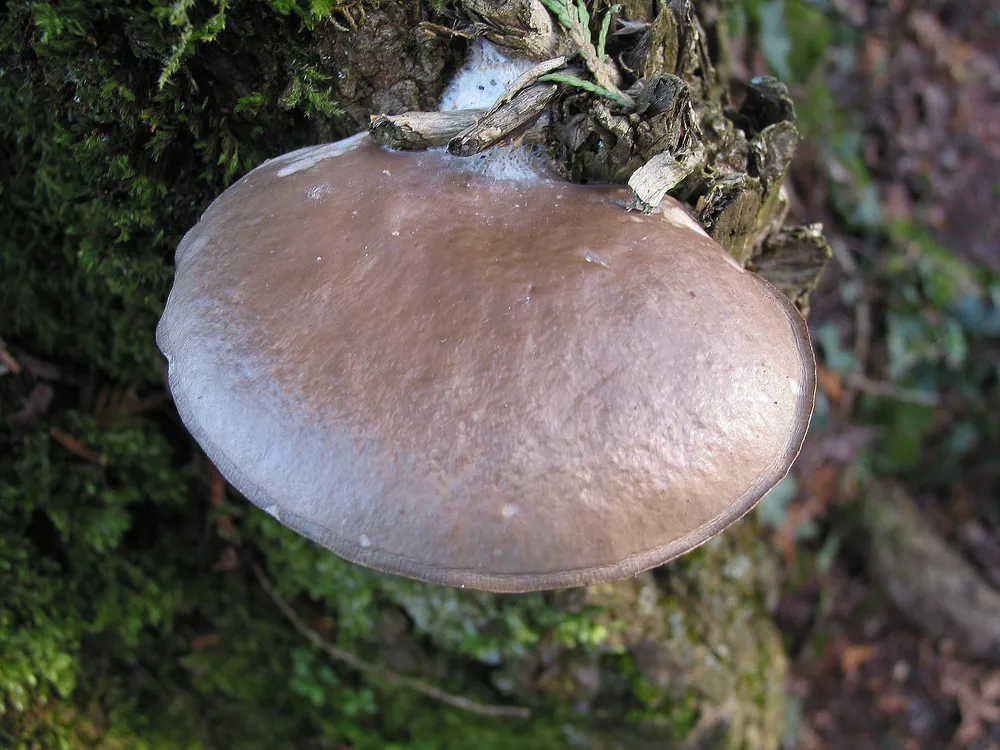
Related species
Mushrooms of the same genus and habitat — to study side by side and never mix up.
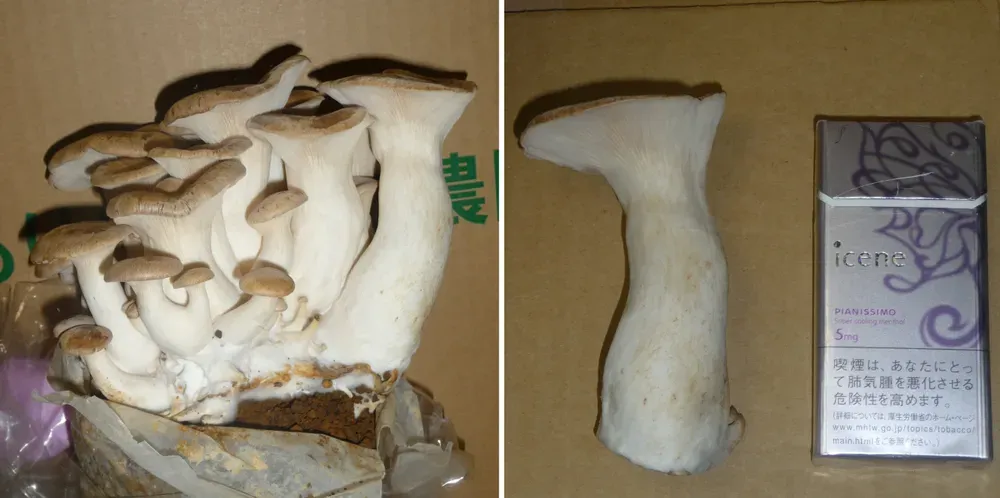
King oyster
Pleurotus eryngii
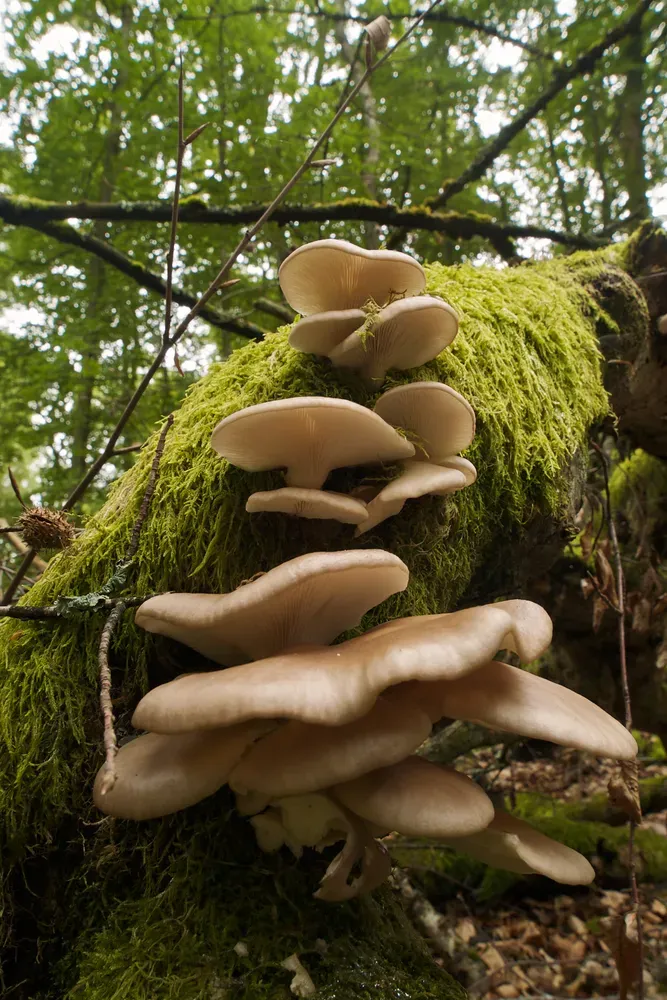
Pale oyster
Pleurotus pulmonarius
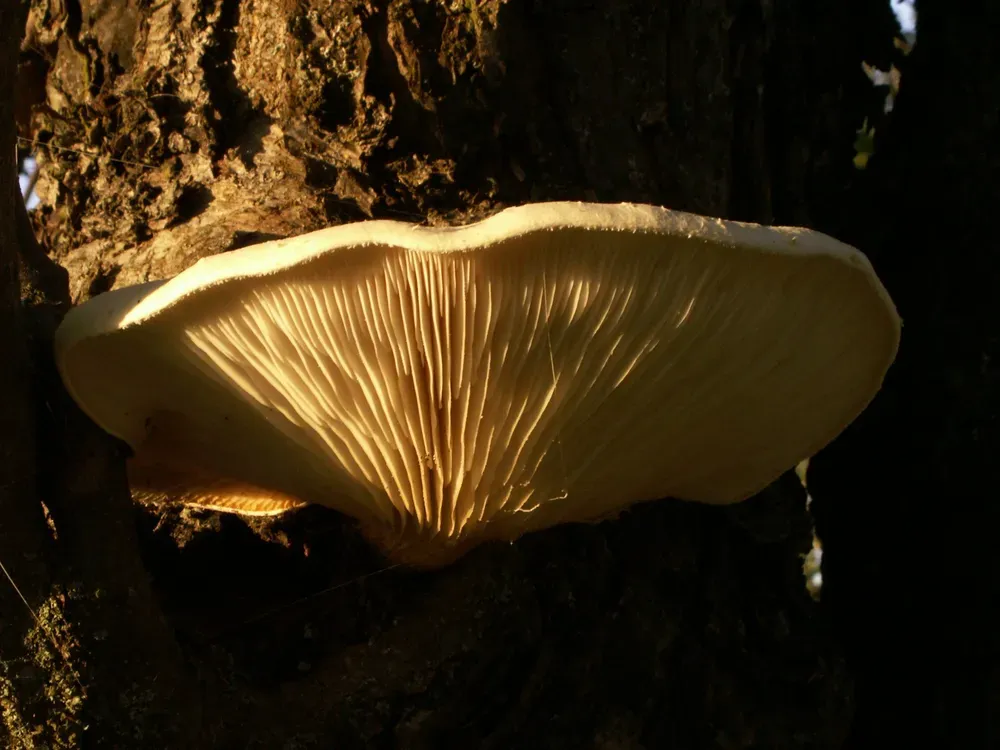
Veiled oyster
Pleurotus dryinus
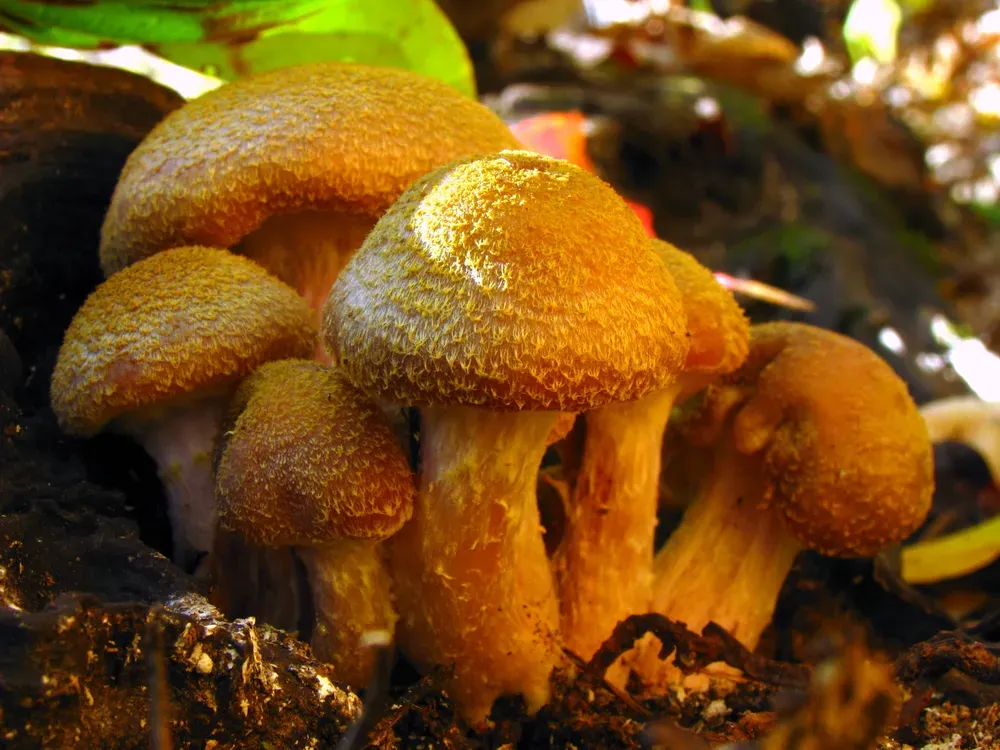
Bulbous honey fungus
Armillaria gallica
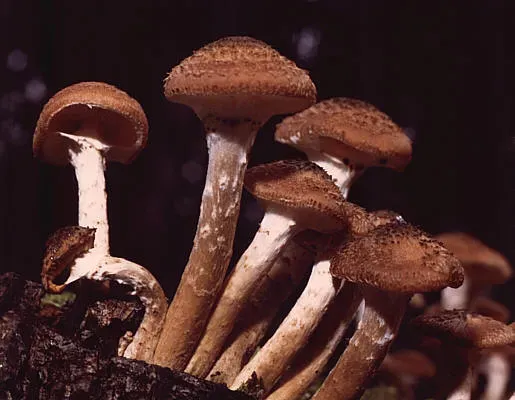
Dark honey fungus
Armillaria ostoyae
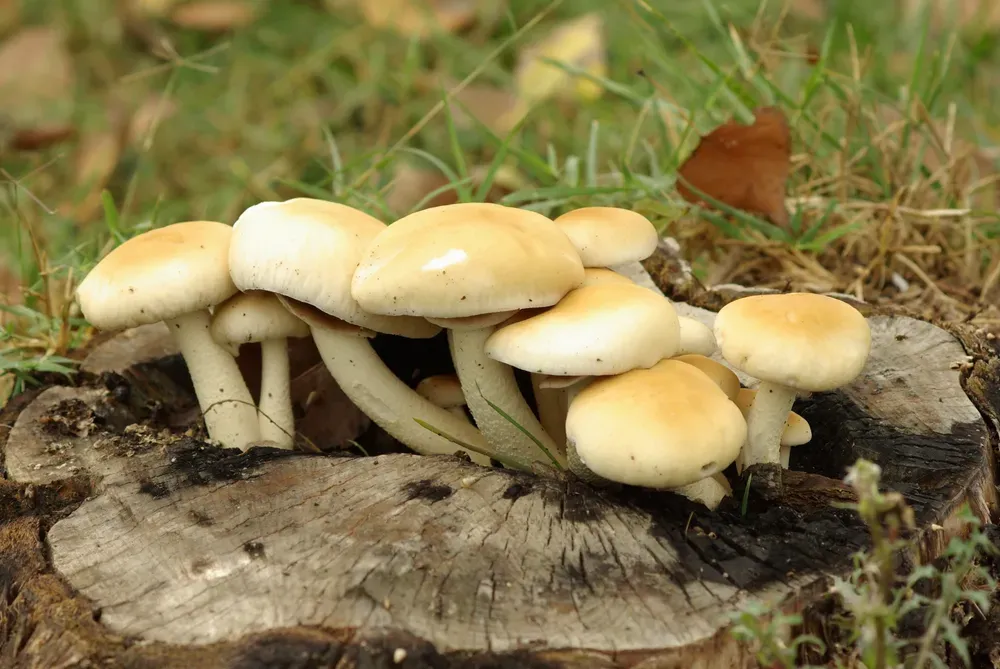
Poplar fieldcap
Cyclocybe aegerita
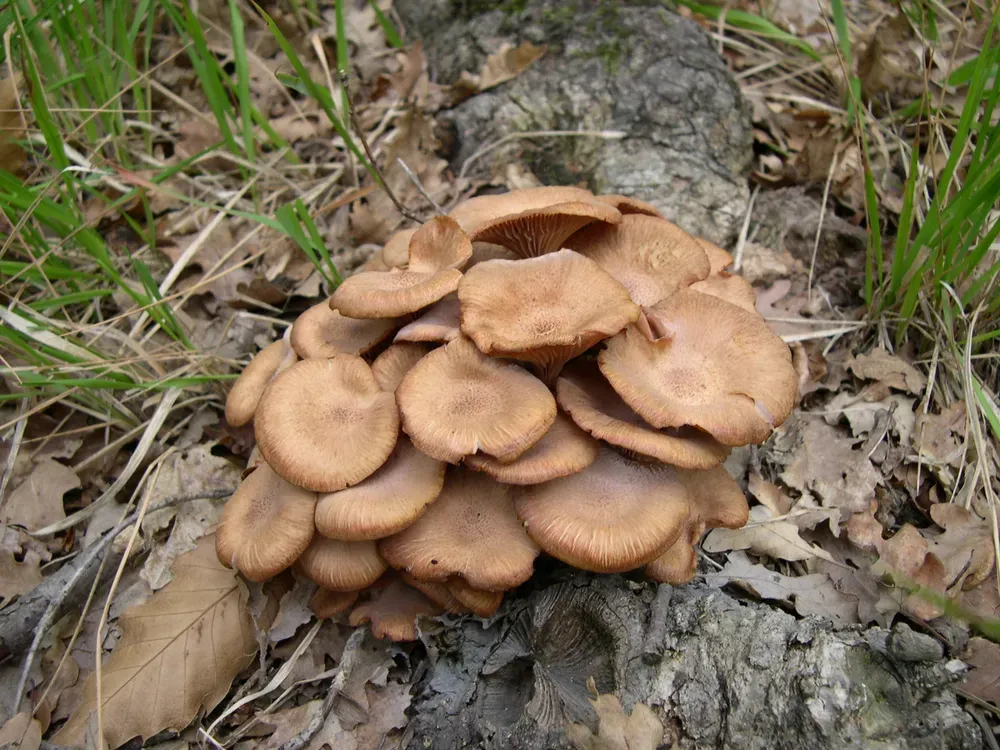
Ringless honey fungus
Desarmillaria tabescens
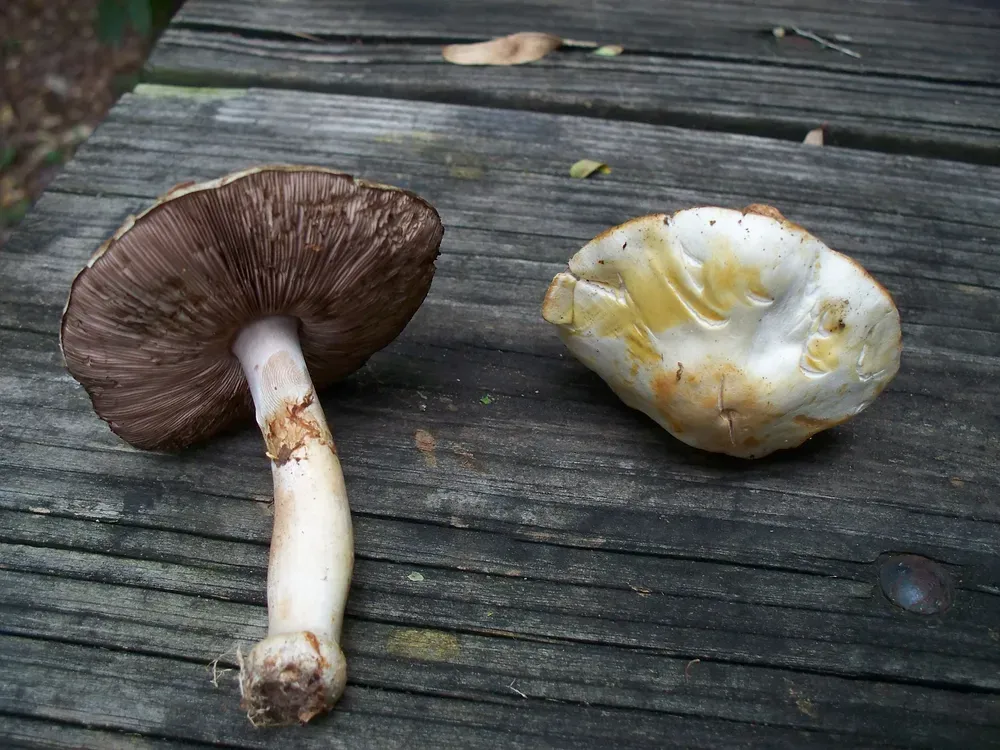
Agaricus abruptibulbus
Related reading
._Paddenstoel_op_els_01.webp)
Frequently asked questions
Is Pink oyster mushroom edible or poisonous?
Does Pink oyster mushroom have gills or pores?
What does the cap of Pink oyster mushroom look like?
What does the stem of Pink oyster mushroom look like?
What do Pink oyster mushroom smell and taste like?
Where does Pink oyster mushroom grow?
When should you pick Pink oyster mushroom?
What can Pink oyster mushroom be confused with?
How do you cook Pink oyster mushroom?
Can you dry Pink oyster mushroom?
What is the scientific name of Pink oyster mushroom?
Sources
- [1]Вікіпедія (українська)
- [2]Атлас грибів України, Зеров Д.К. (1979)
- [3]MycoBank Database
- [4]Index Fungorum
- [5]GBIF
- [6]iNaturalist Ukraine